The First Complications
Six watches, 500 pieces each, roughly one new complication every two years. The decade that turned a design classic into a horological platform — collectors treat the six as a single set.
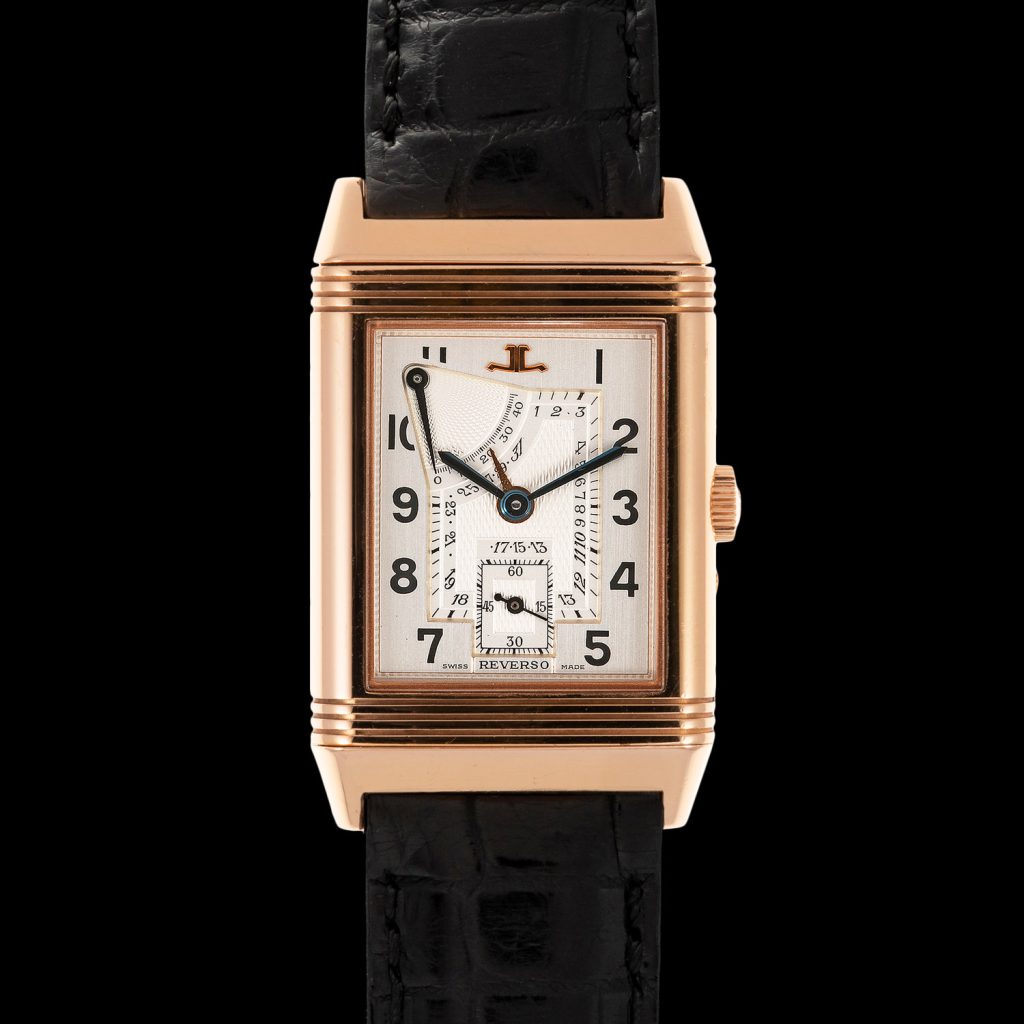
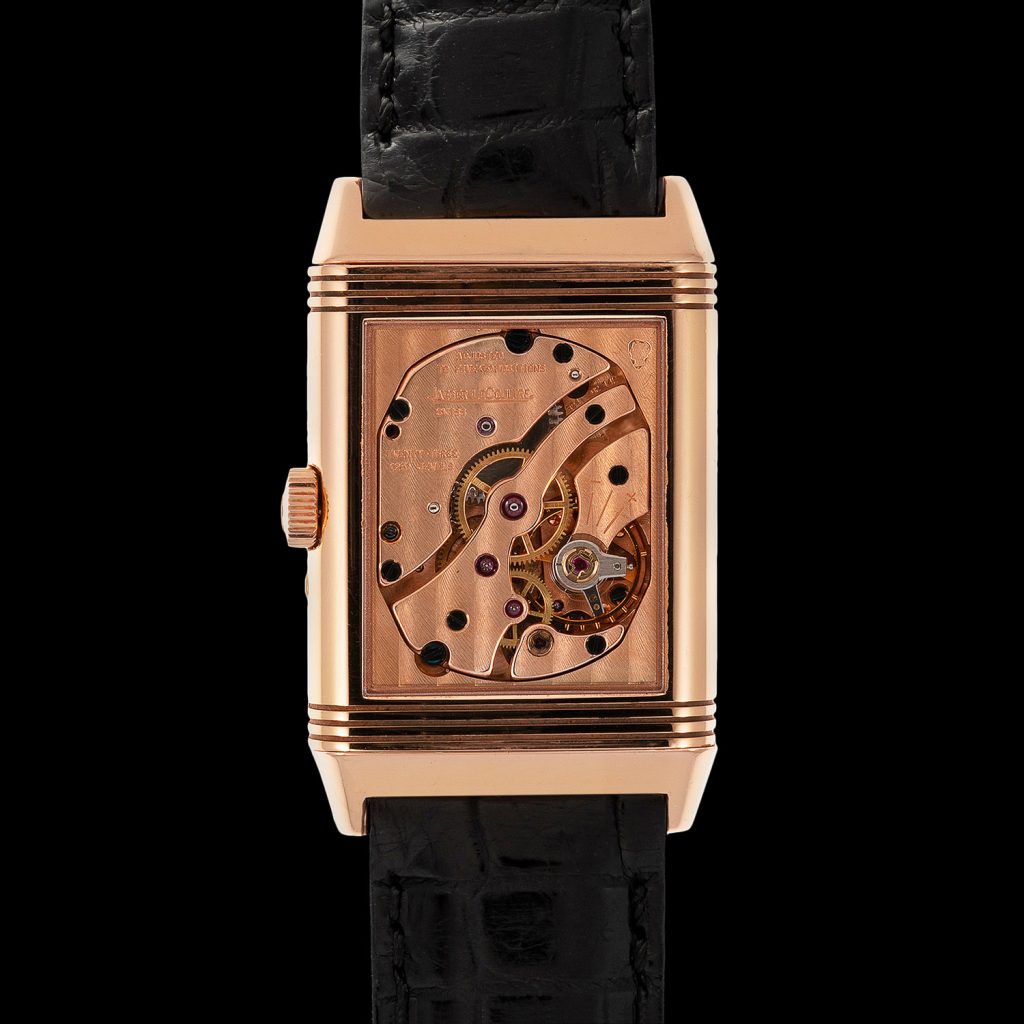
Year: 1991 Calibre: Cal. 824
Material: Pink gold
Market: International
The watch that created the Grande Taille case. Power reserve and date, and the first Reverso ever given a transparent case-back so the movement could be seen.
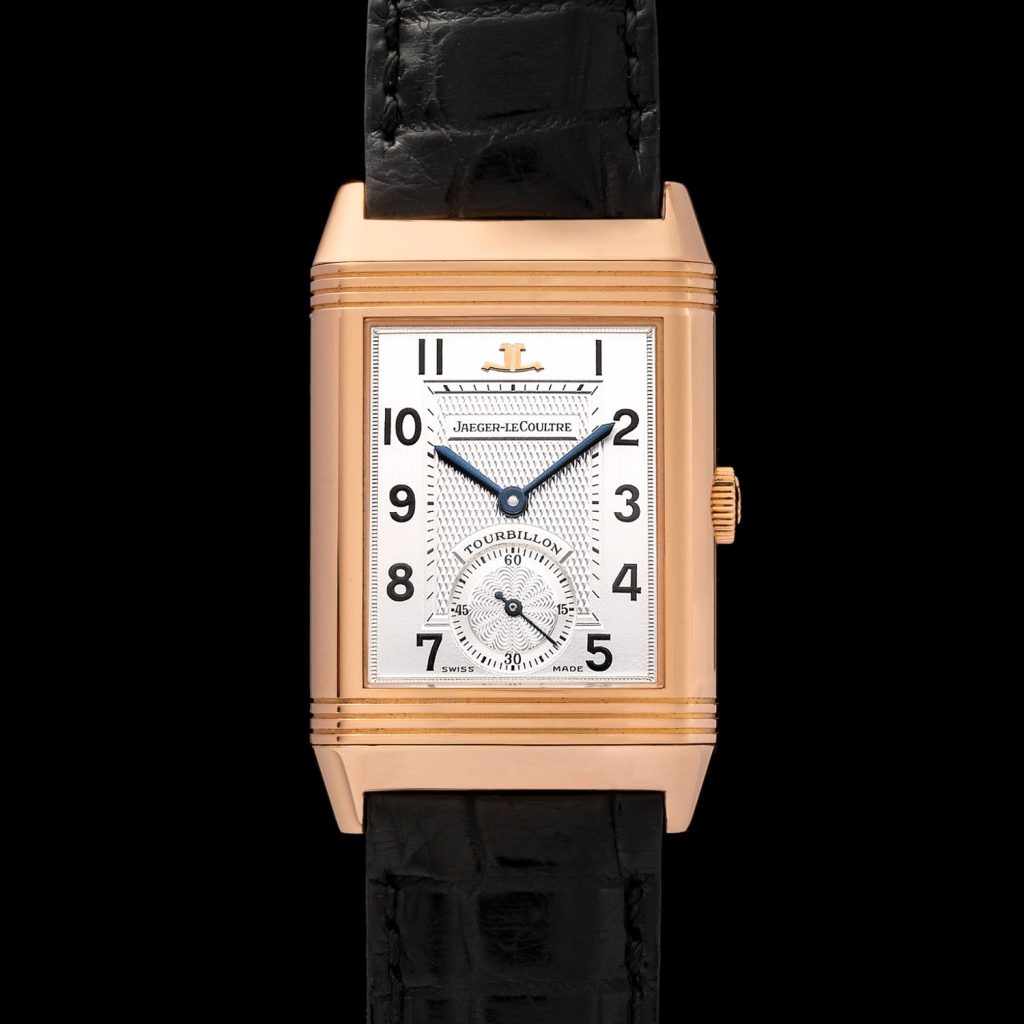
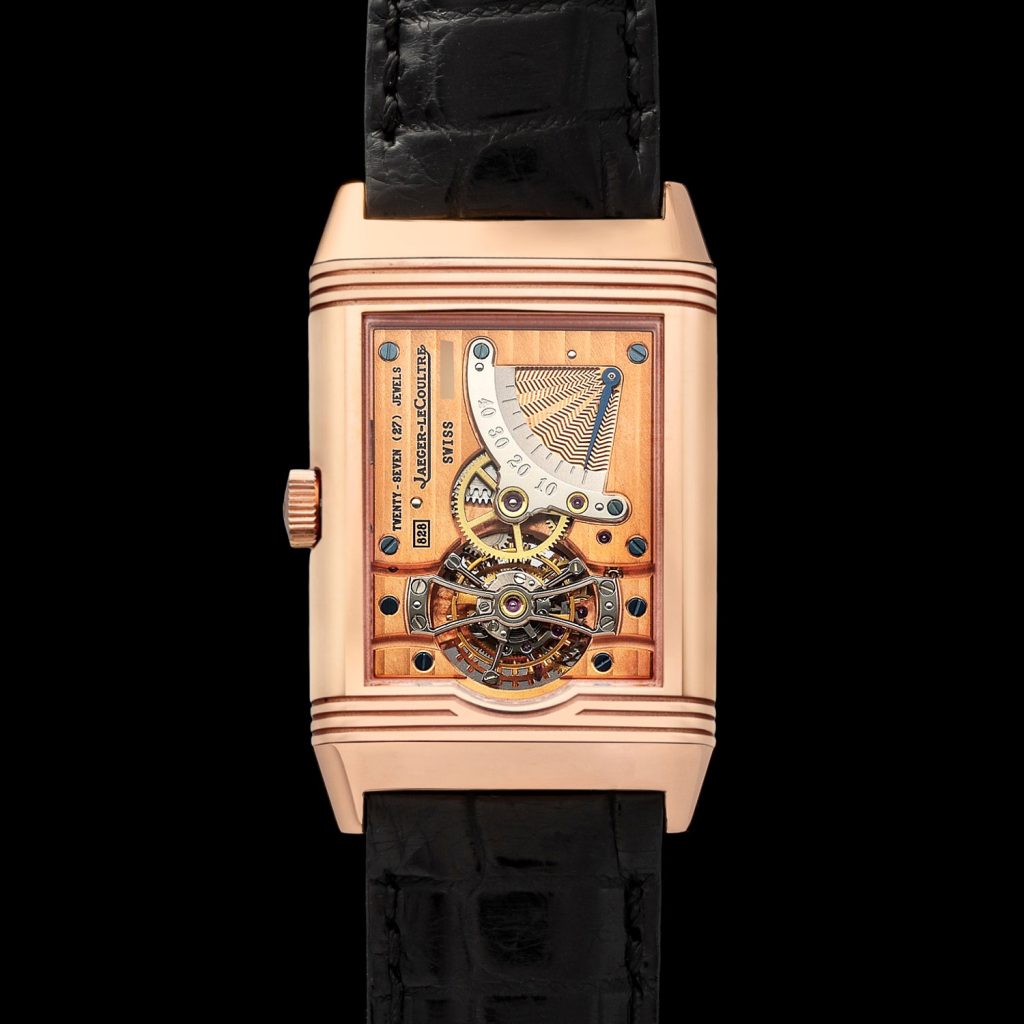
Year: 1993 Calibre: Cal. 828
Material: Pink gold
Market: International
Jaeger-LeCoultre’s first modern tourbillon, and it went straight into the rectangle.
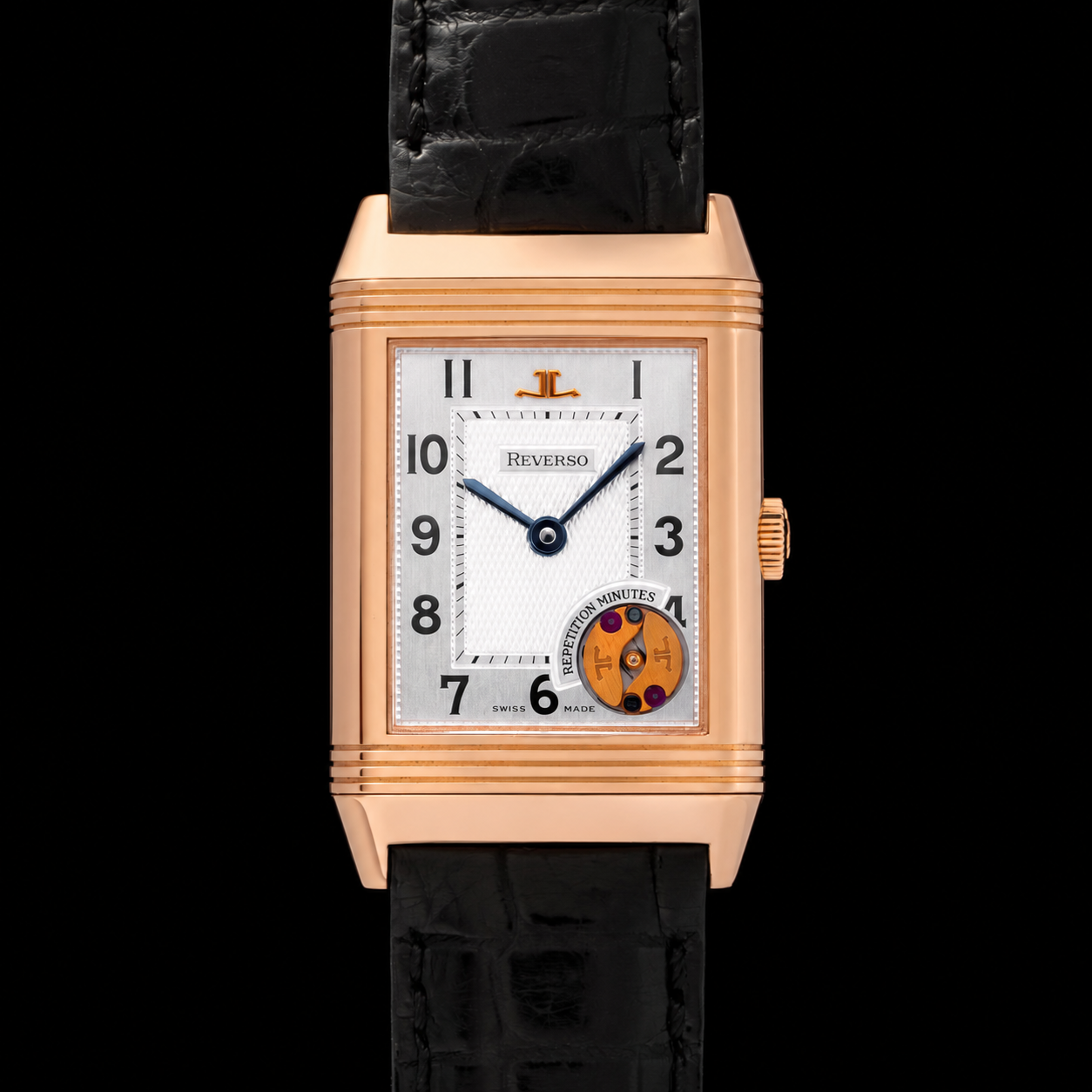
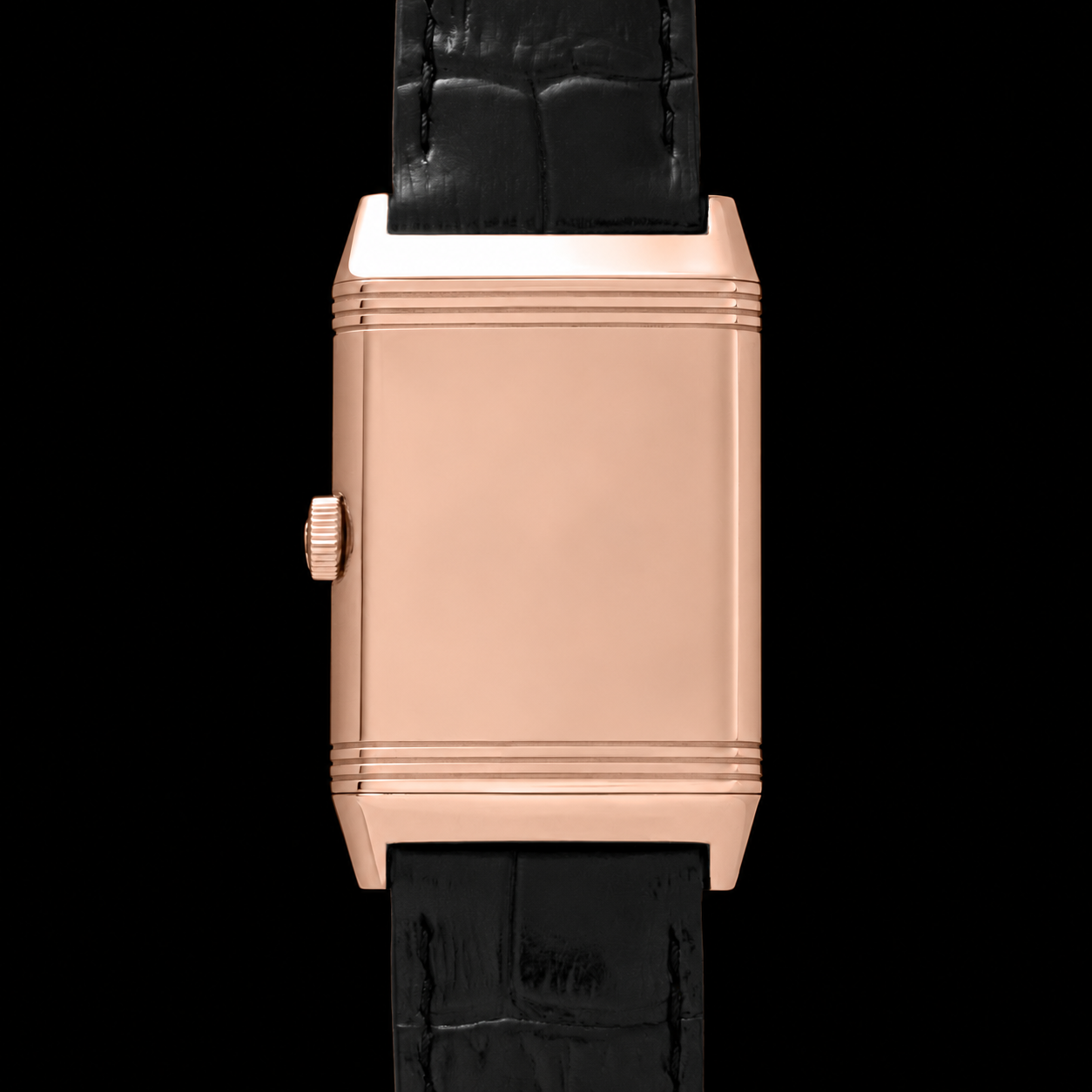
Year: 1994 Calibre: Cal. 943
Material: Pink gold
Market: International
The world’s first rectangular minute-repeater movement.
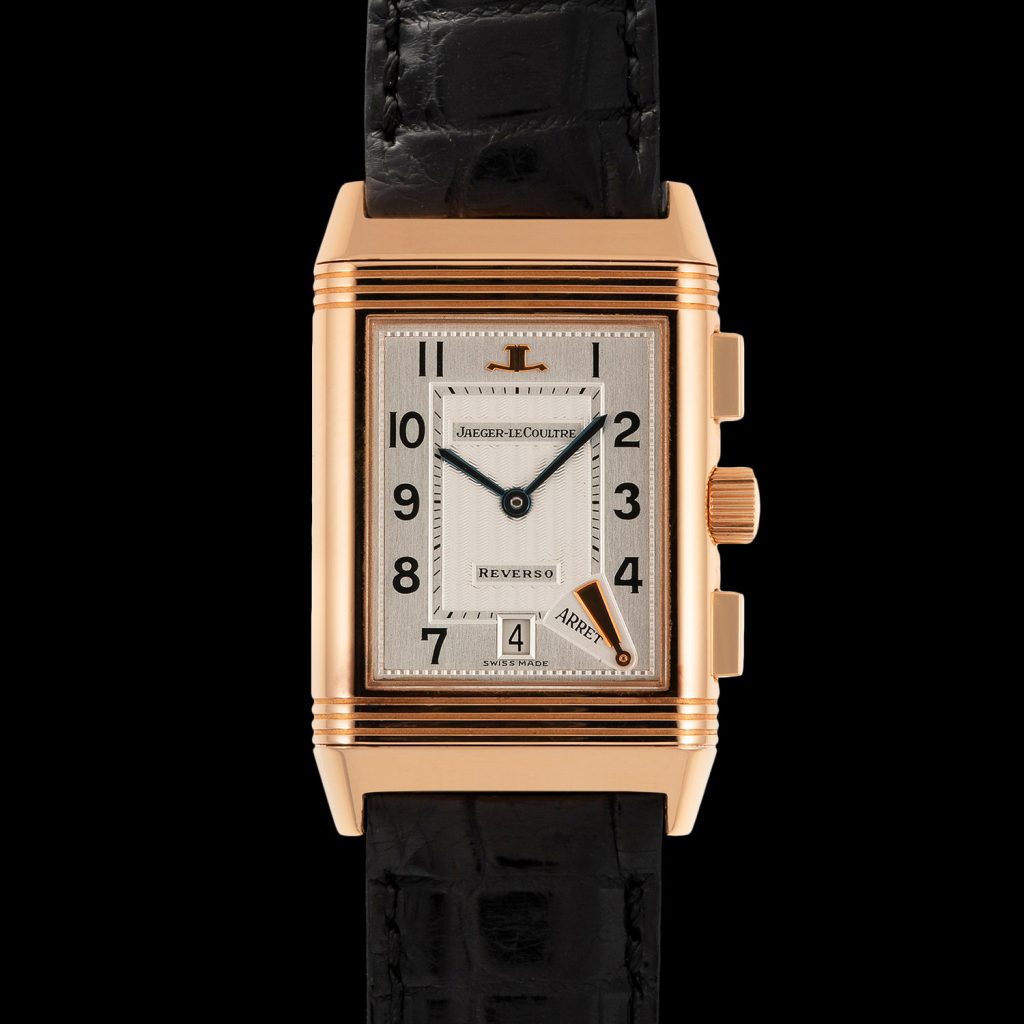
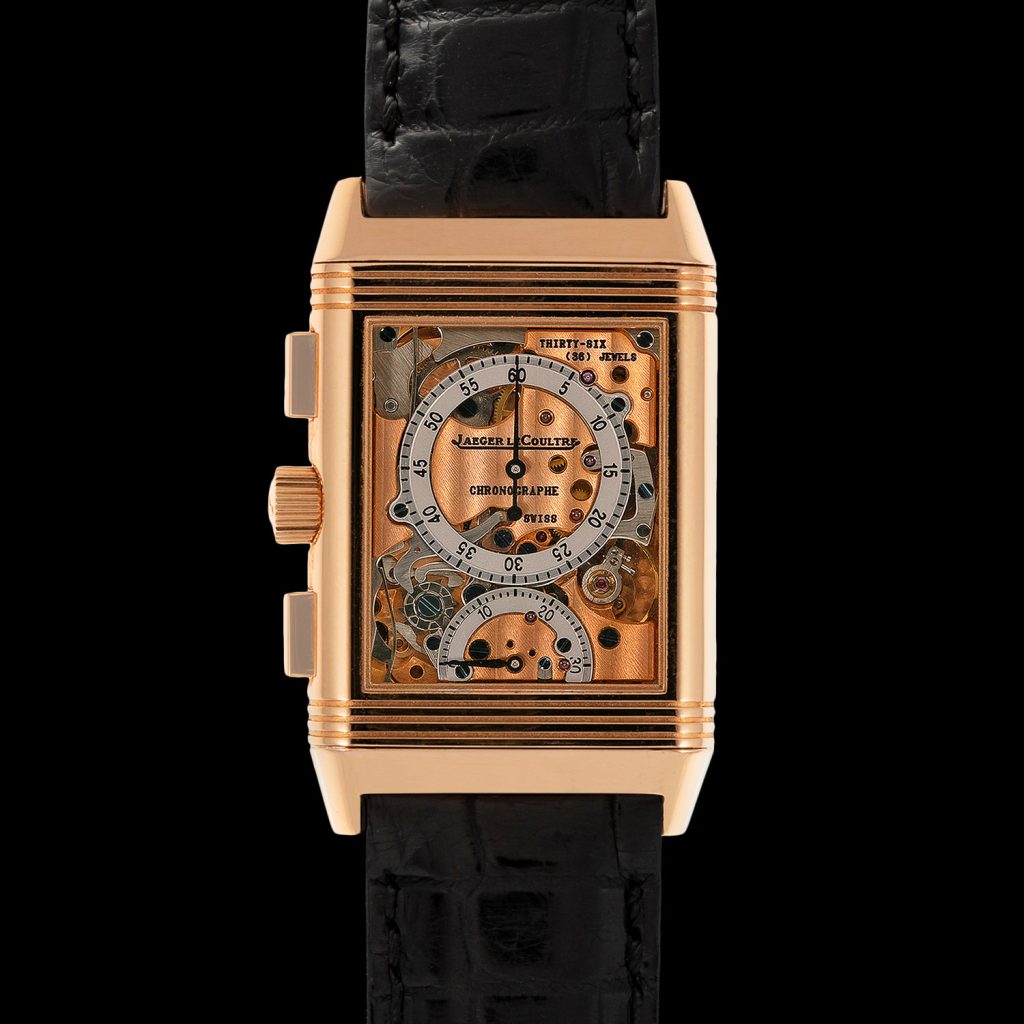
Year: 1996 Calibre: Cal. 829
Material: Pink gold
Market: International
A chronograph split across two dials with a retrograde hand — the sensible answer to a rectangular face.
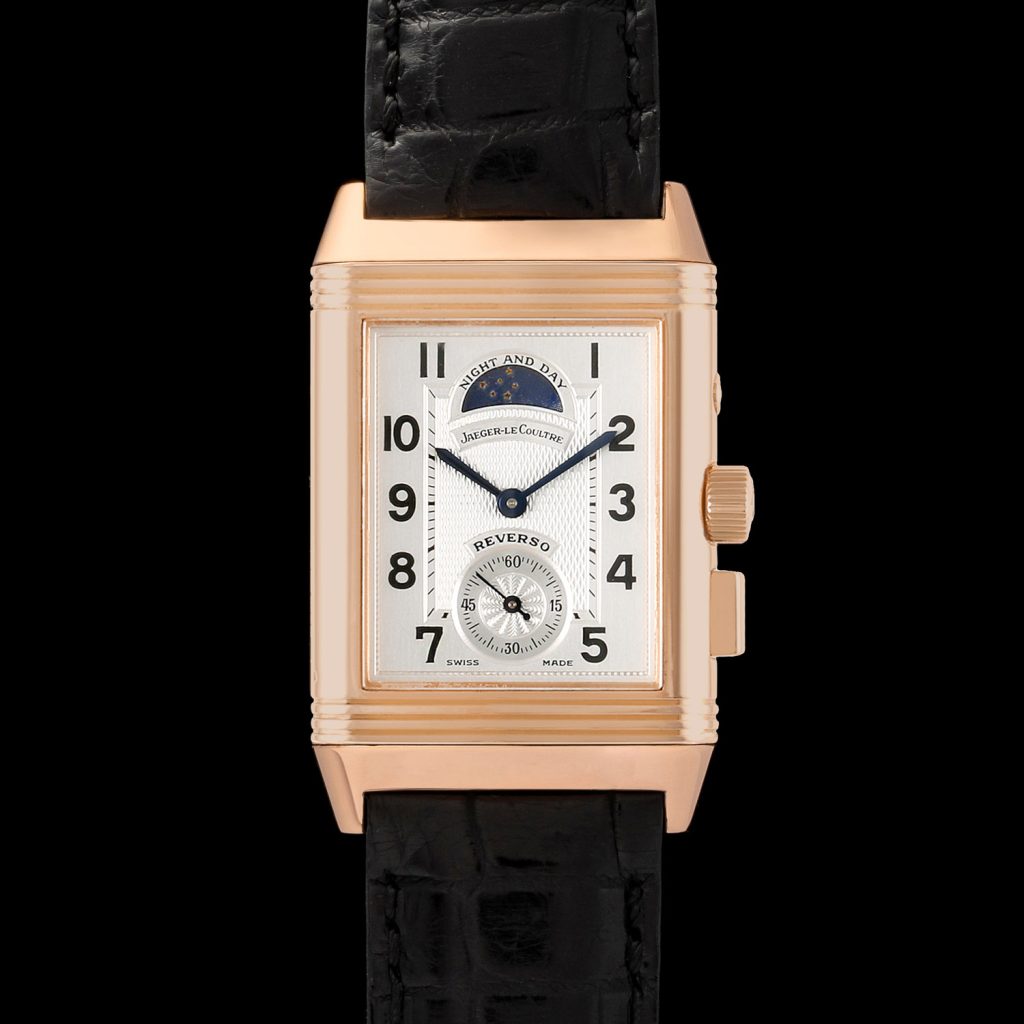
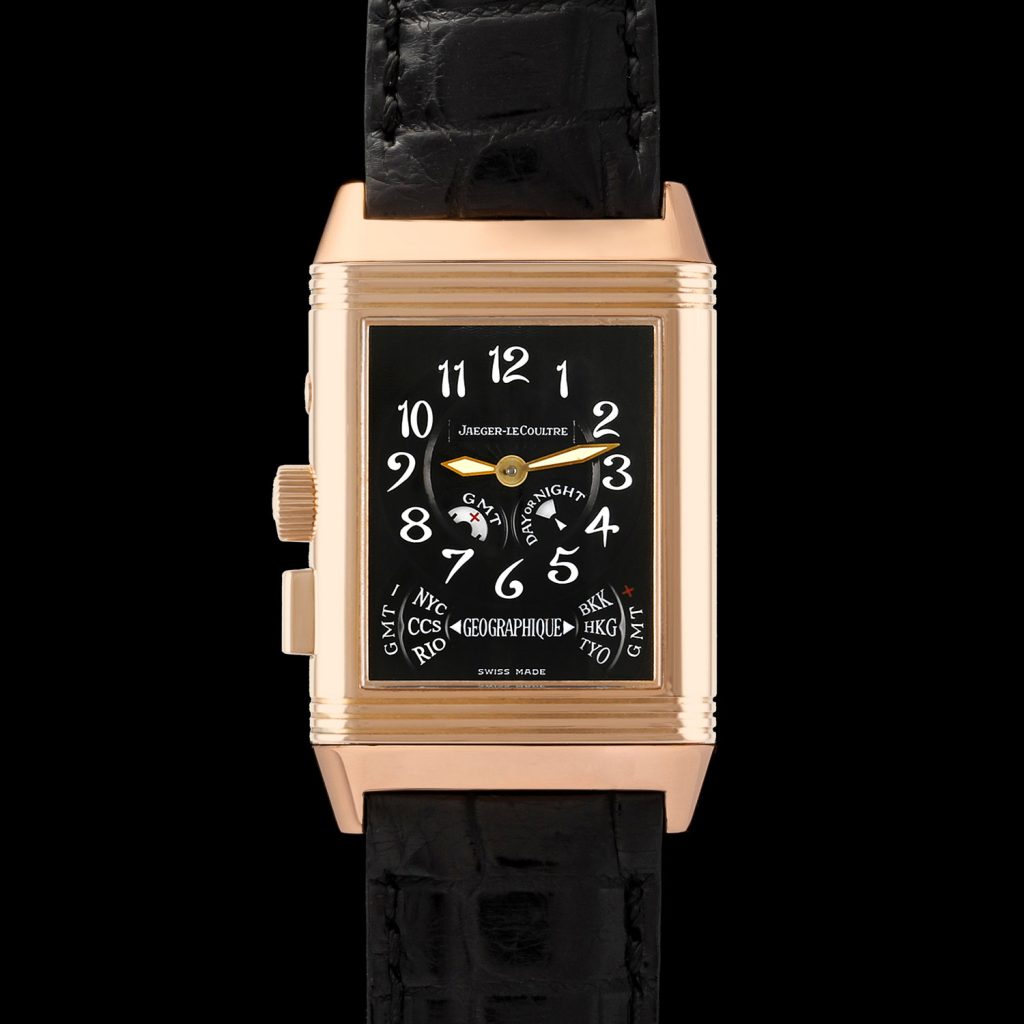
Year: 1998 Calibre: Cal. 858
Material: Pink gold
Market: International
World time with a city selector on the back; not revisited until the 2025 Tribute Geographic.
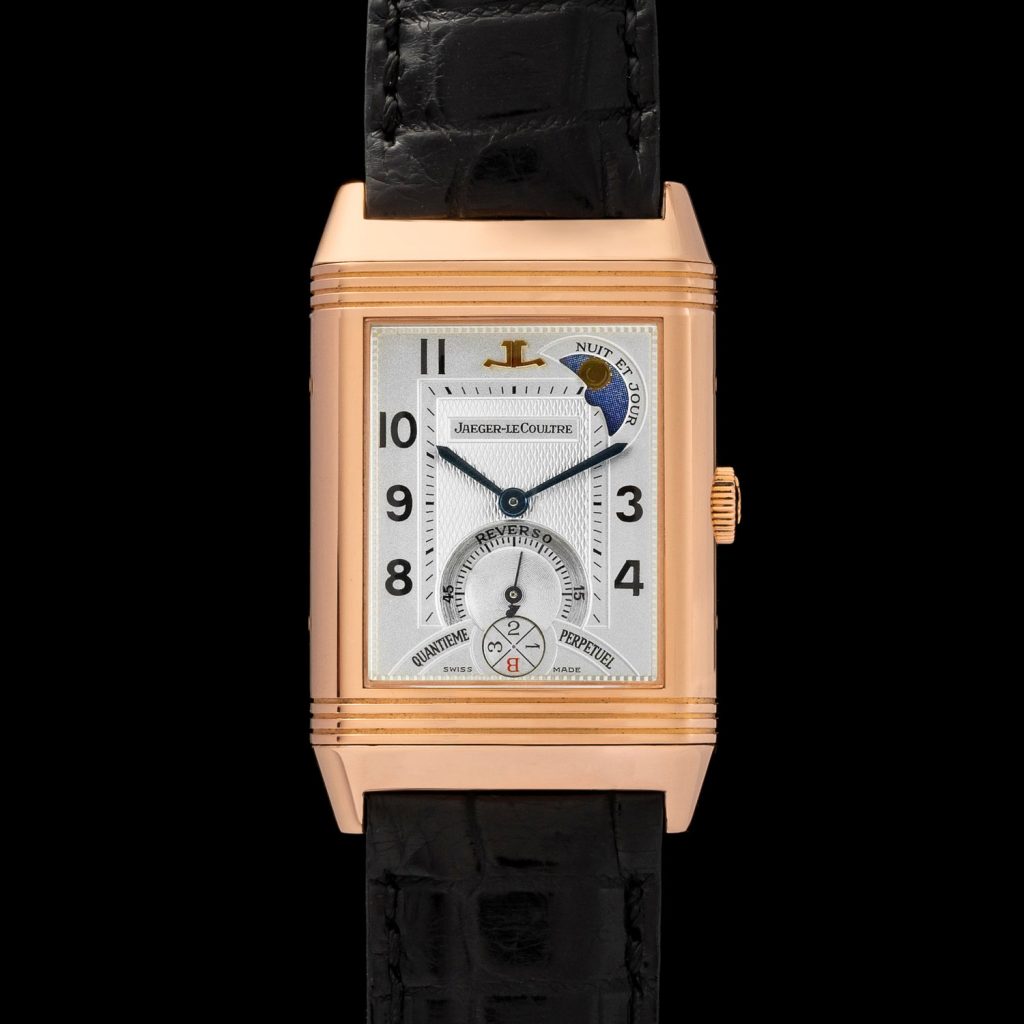
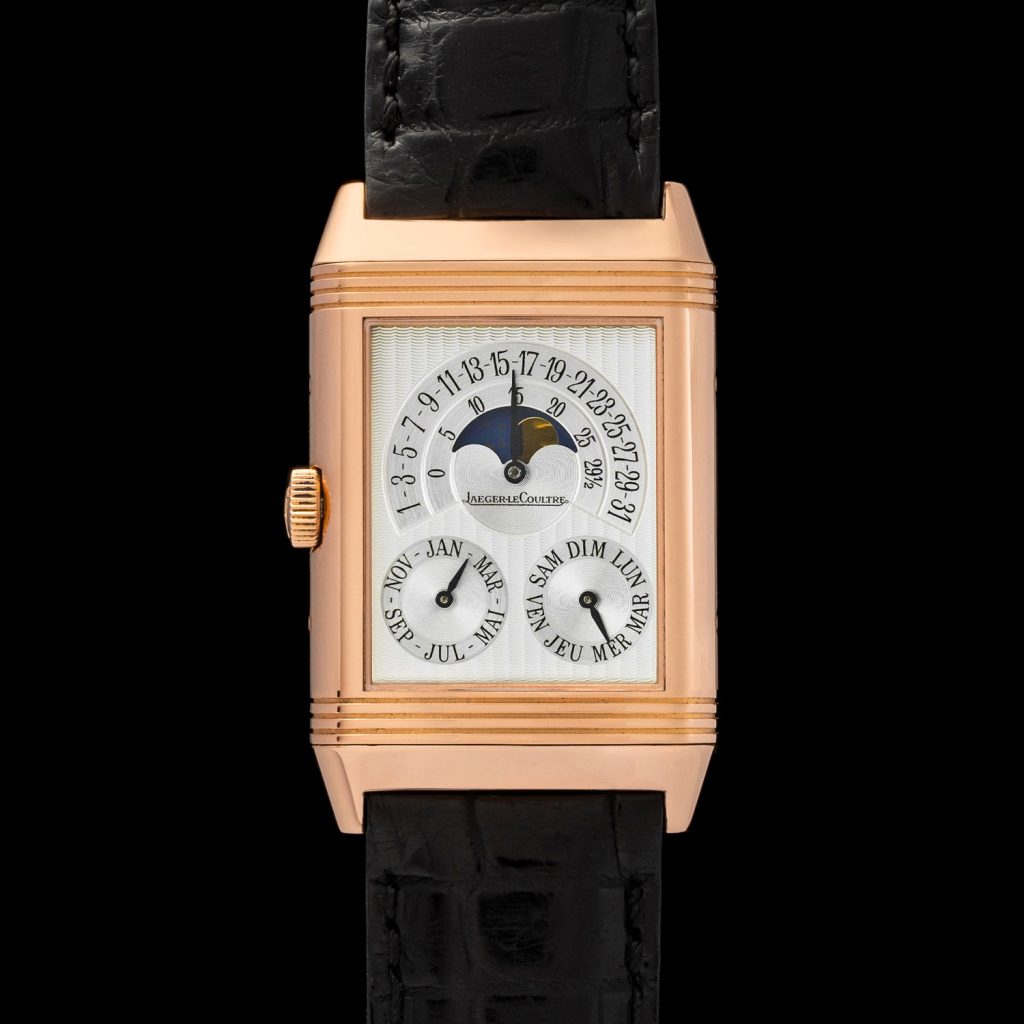
Year: 2000 Calibre: Cal. 855
Material: Pink gold
Market: International
The sixth and final watch of the anniversary series, released for the millennium.
Hybris Mechanica
The maison’s programme for its most extreme mechanics, and the hardest things anyone has fitted into a rectangle: three and four working faces, spherical and multi-axis tourbillons, striking movements.
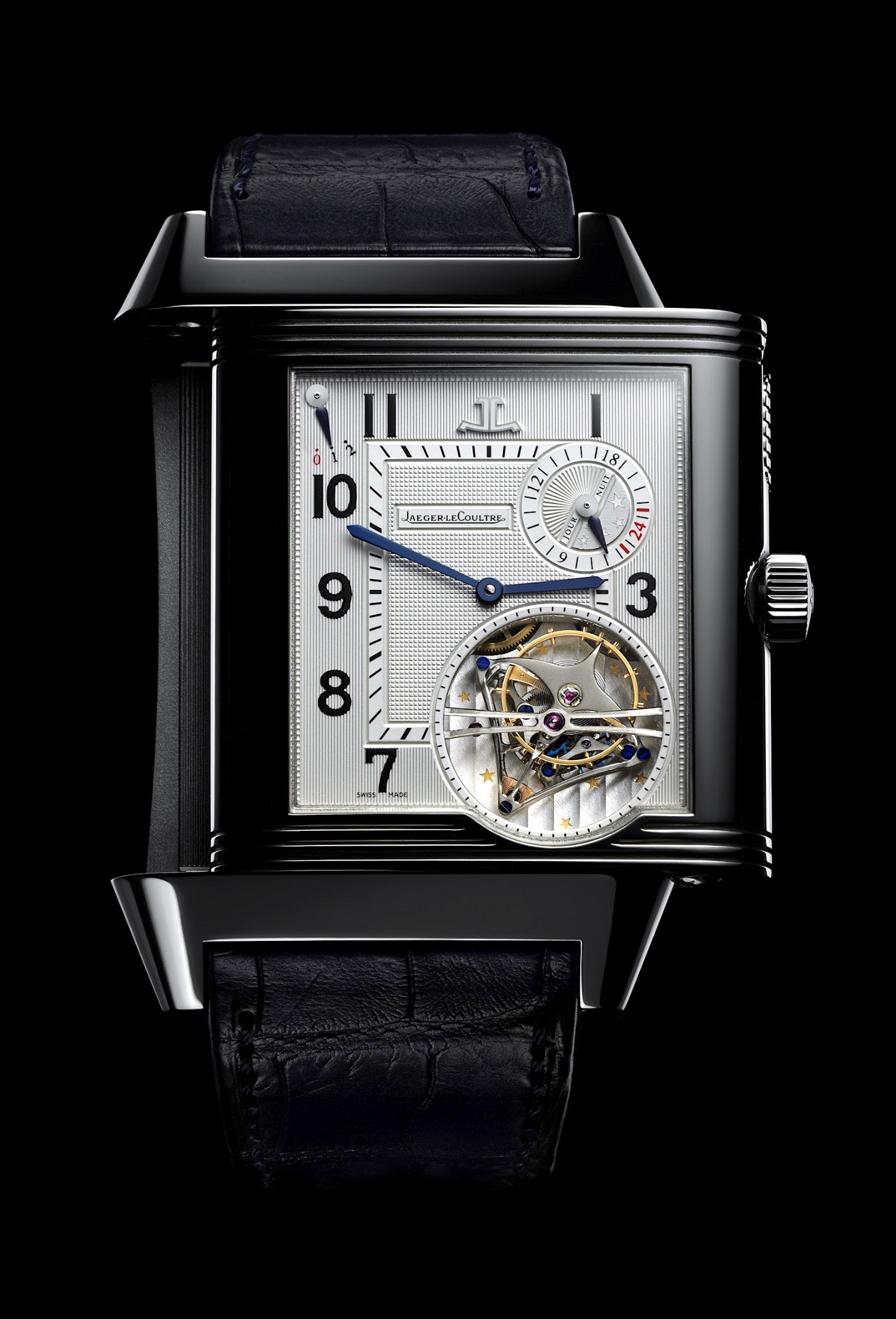
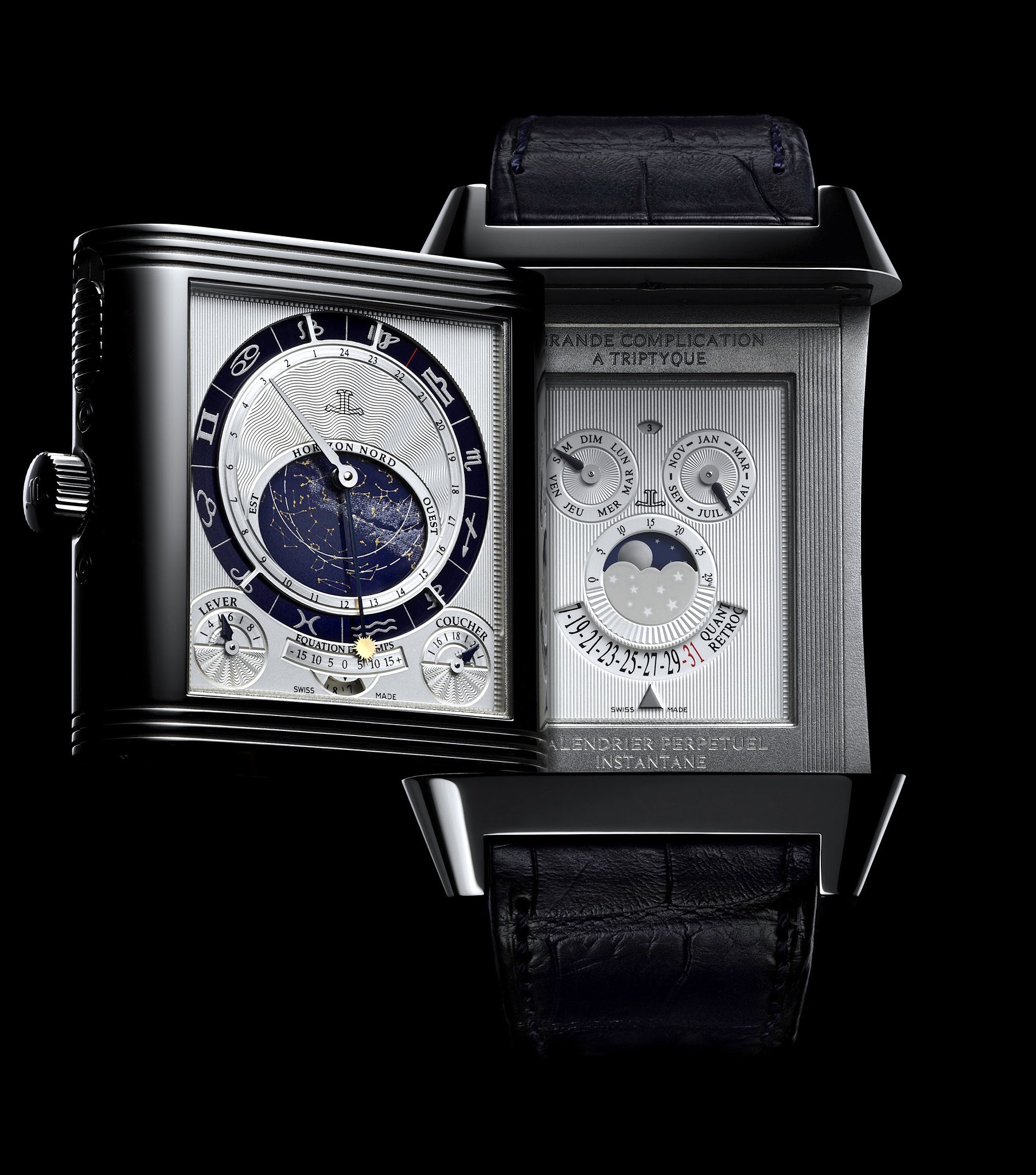
Year: 2006 Calibre: Cal. 175
Material: Platinum
Market: International
The 75th-anniversary watch: three dials from one movement, 18 functions, six patents.
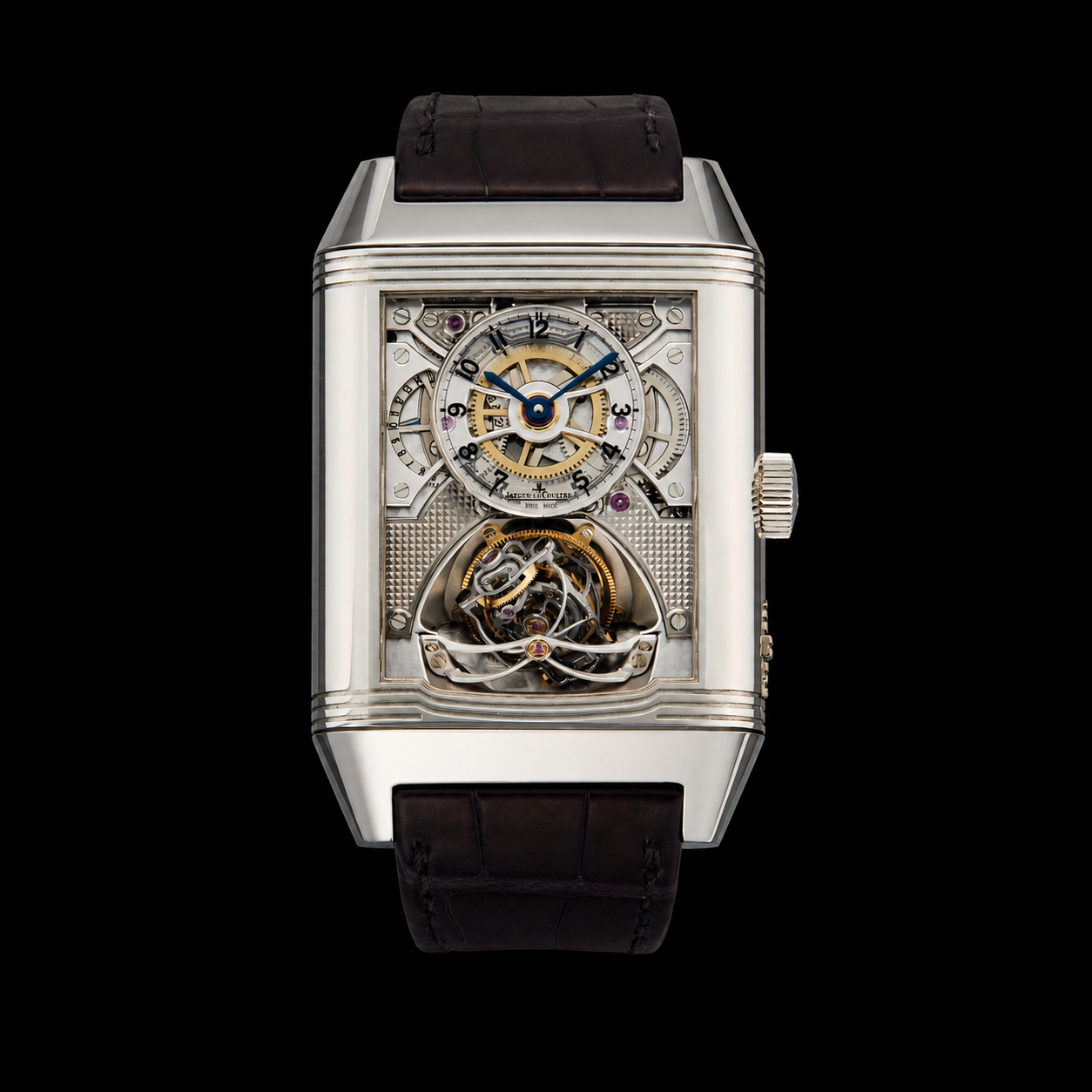
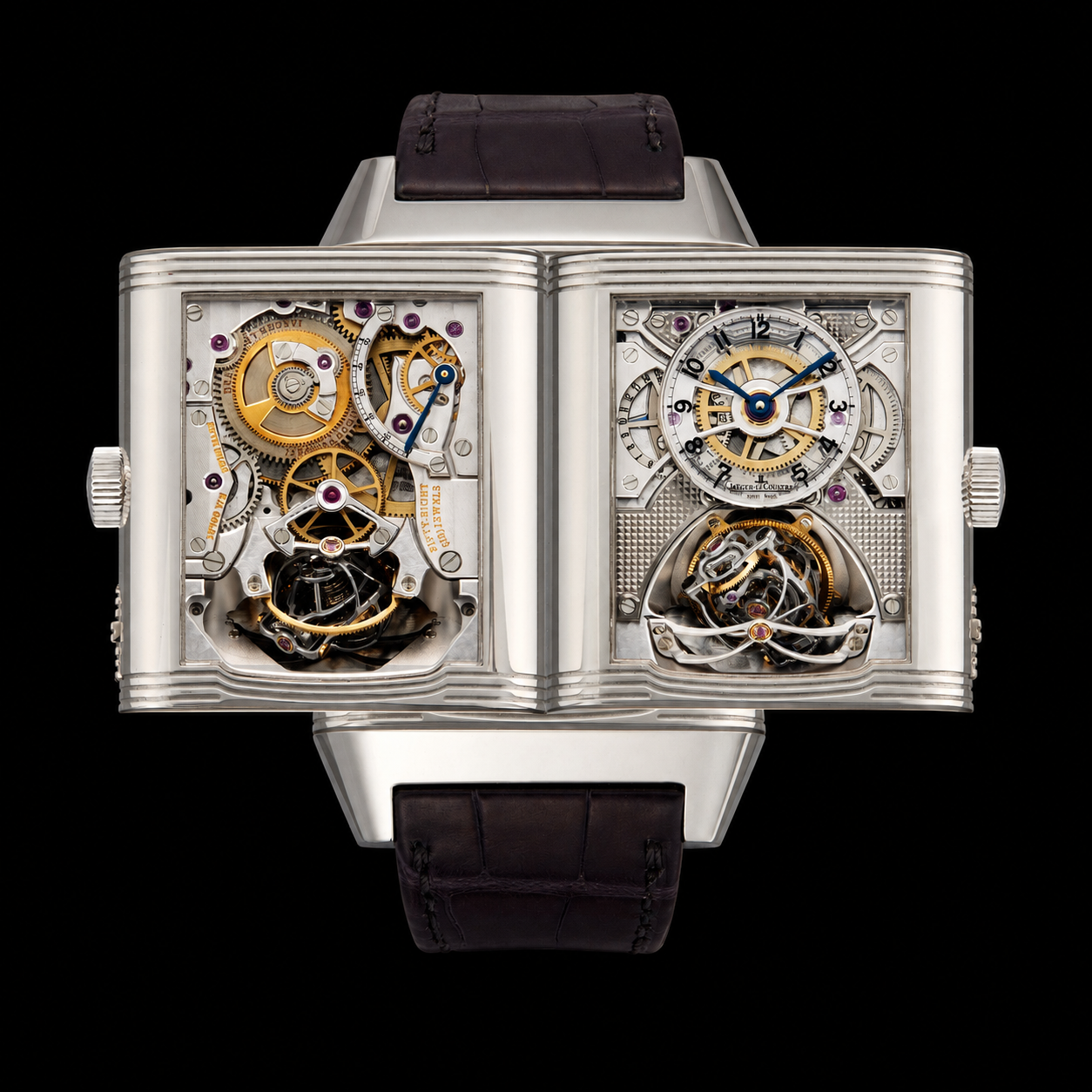
Year: 2008 Calibre: Cal. 174
Material: Platinum
Market: International
Spherical multi-axis tourbillon; first wristwatch with a cylindrical hairspring.
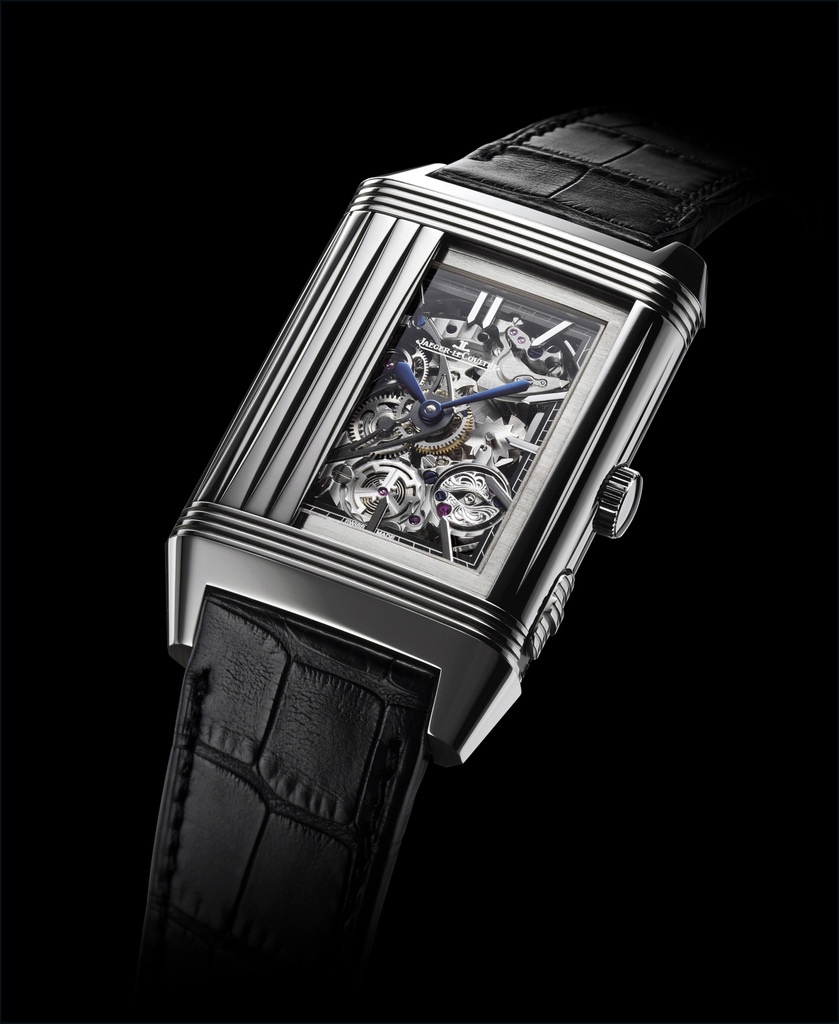
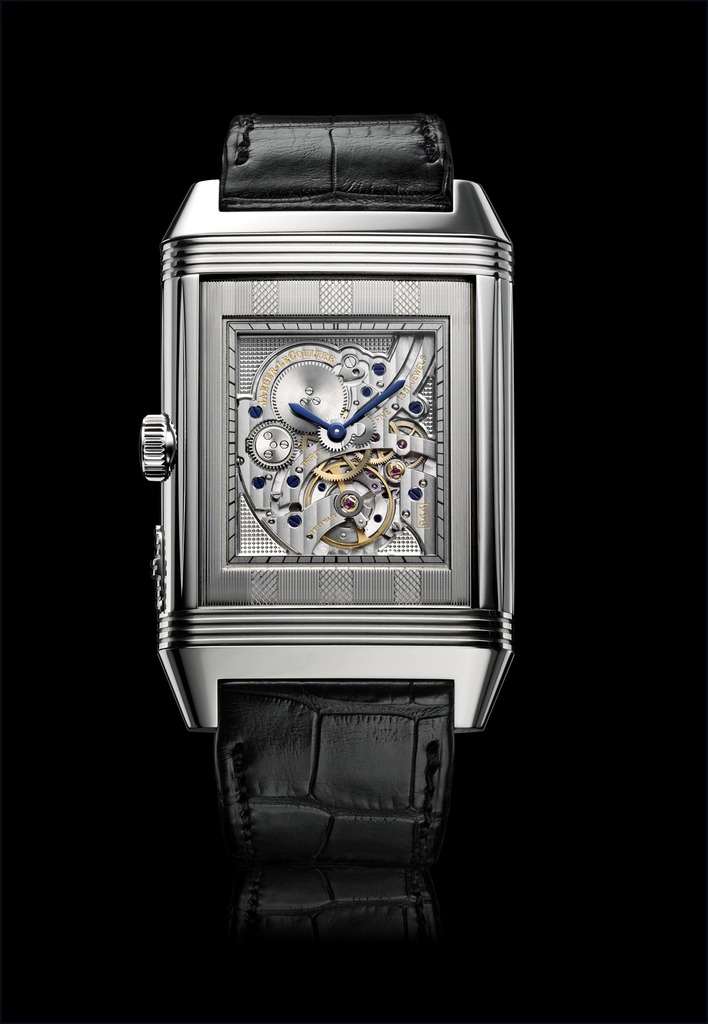
Year: 2011 Calibre: Cal. 944
Material: Gold
Market: International
A minute repeater behind a sliding curtain, with trebuchet hammers.
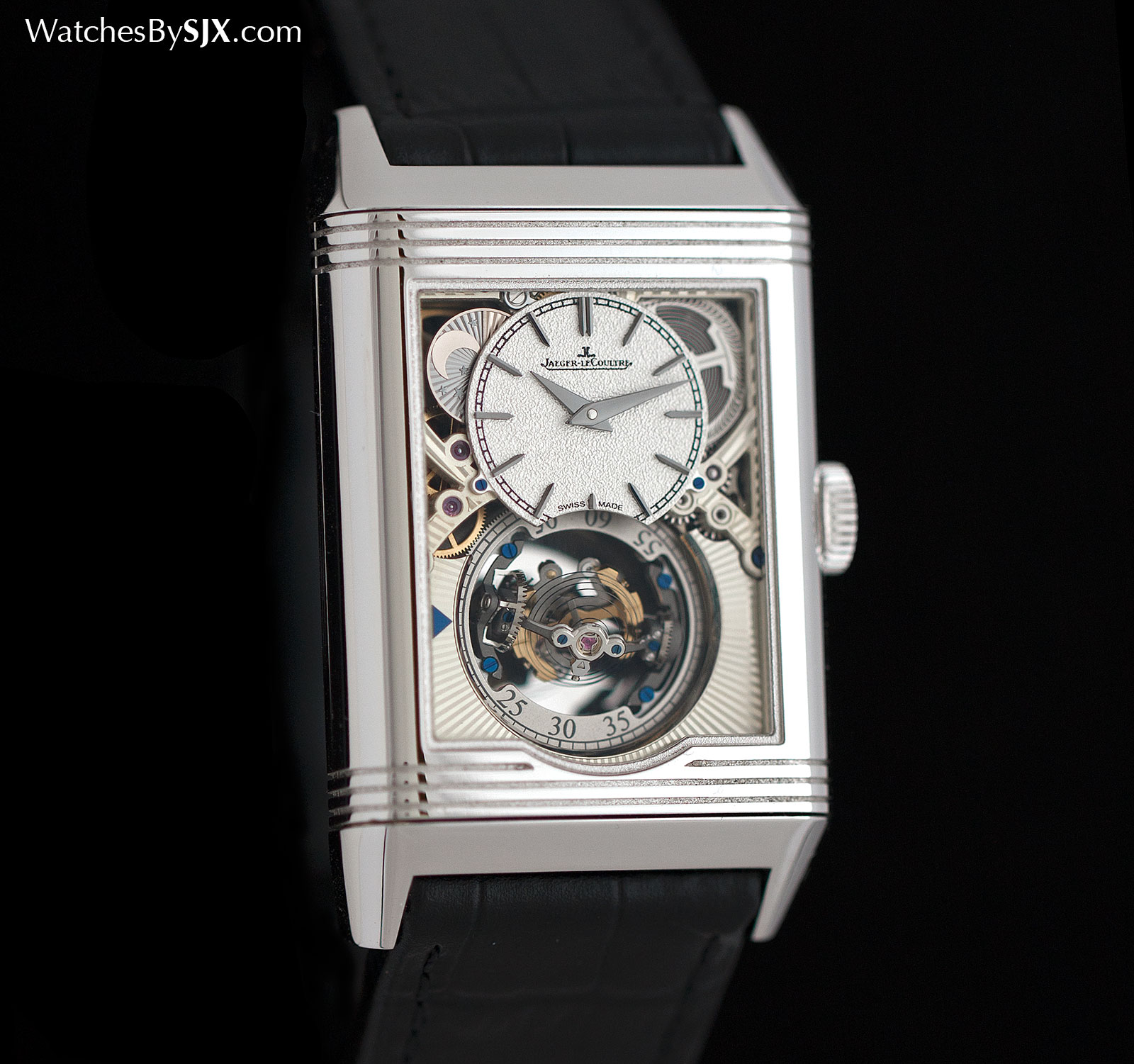
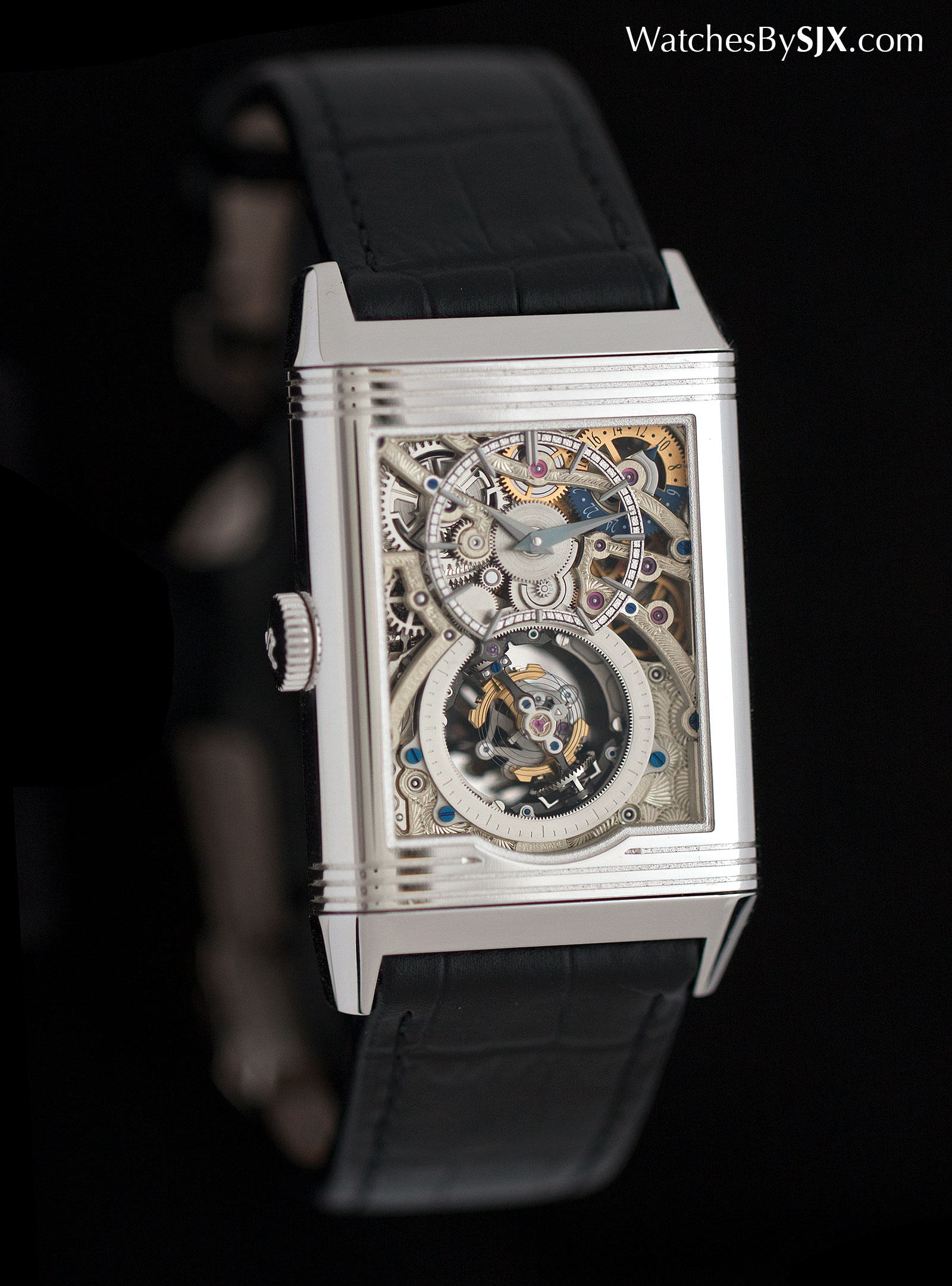
Year: 2016 Calibre: Cal. 179
Material: Platinum
Market: International
85th anniversary. Bi-axial flying tourbillon, ~30% smaller than the 2008 Gyrotourbillon 2.
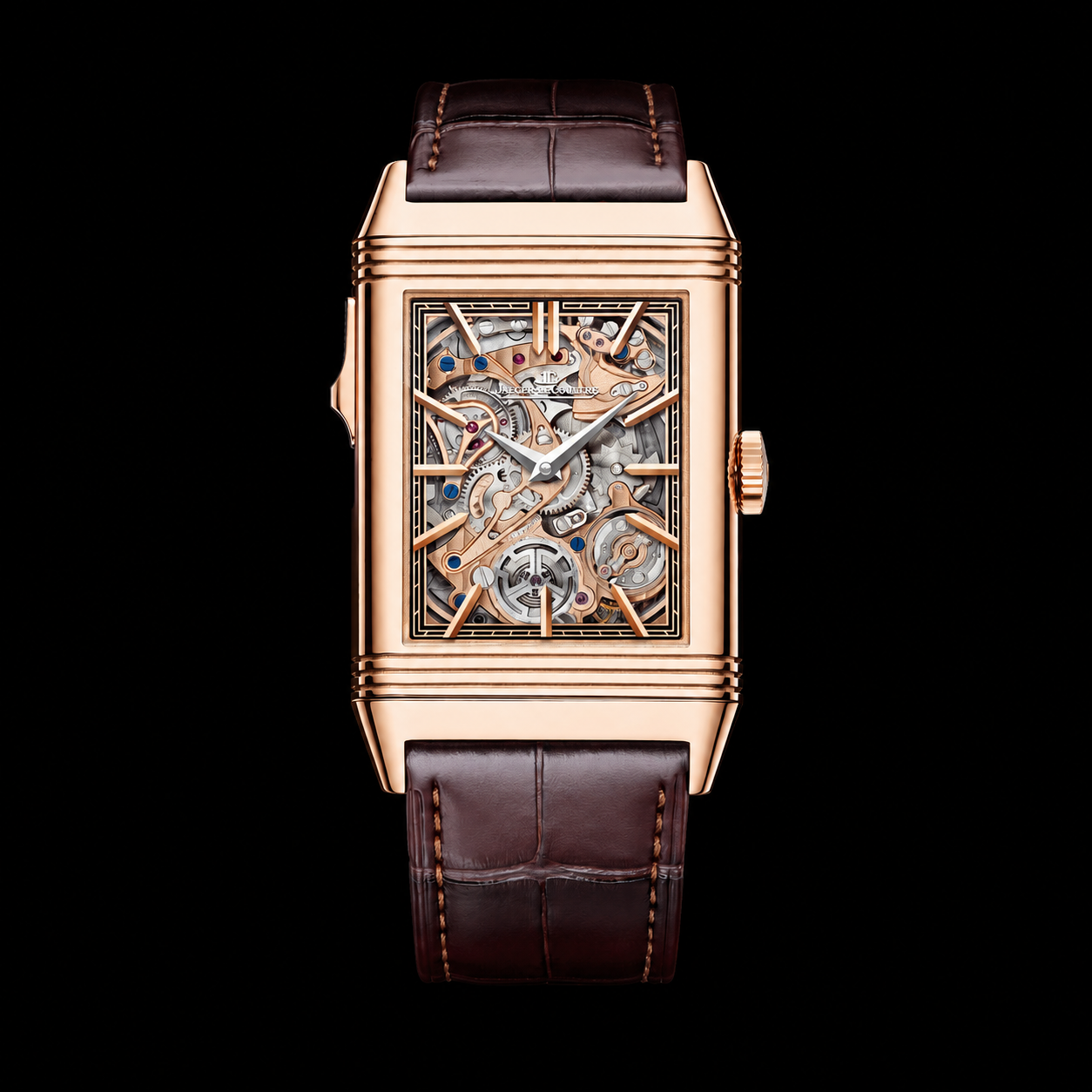
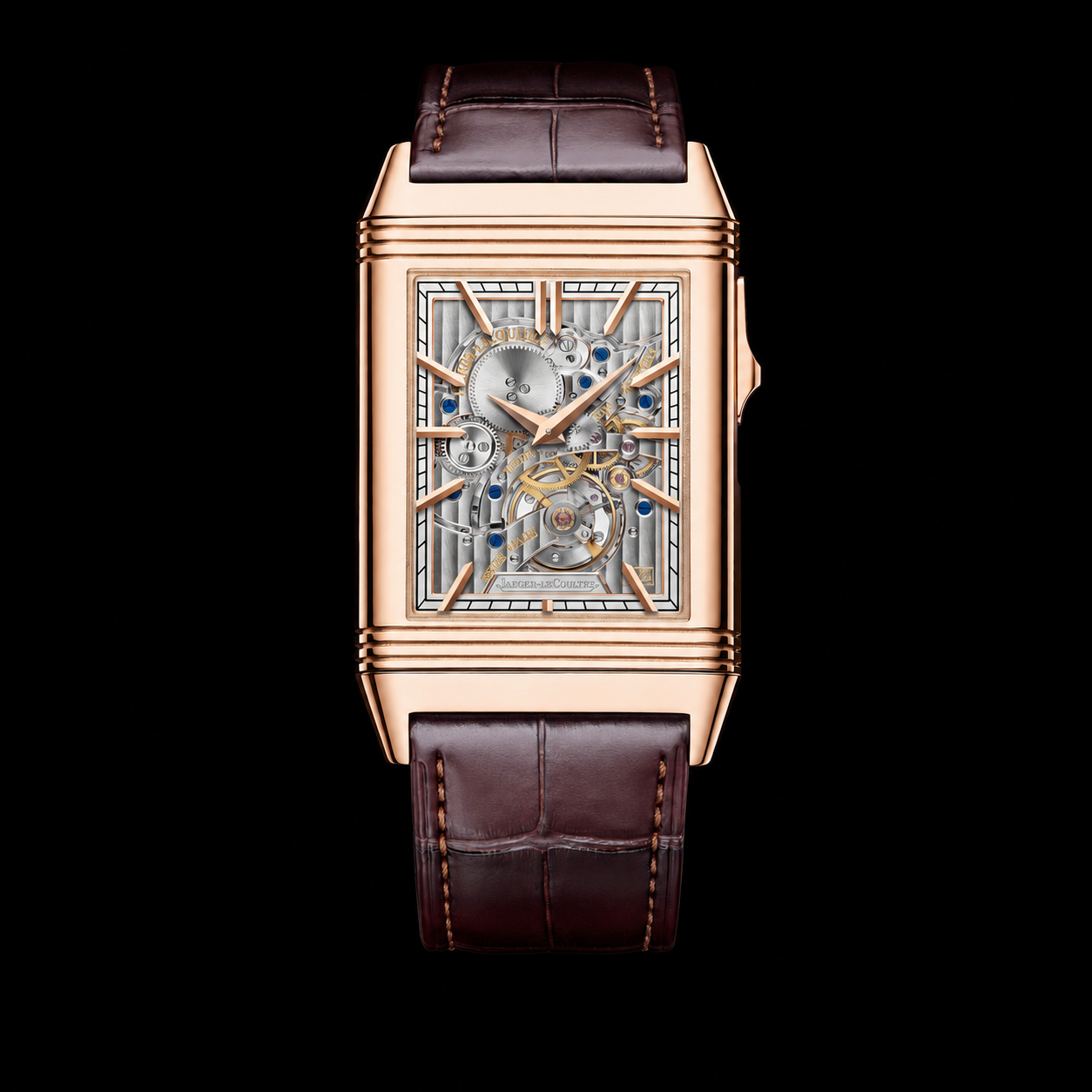
Year: 2021 Calibre: Cal. 944 (revised)
Material: 18k pink gold
Market: International
Marking 90 years of the Reverso and 150 years since Jaeger-LeCoultre’s first minute repeater in 1870. Skeletonised front and back, with patented trebuchet hammers and a new generation of gongs. 35 h power reserve.
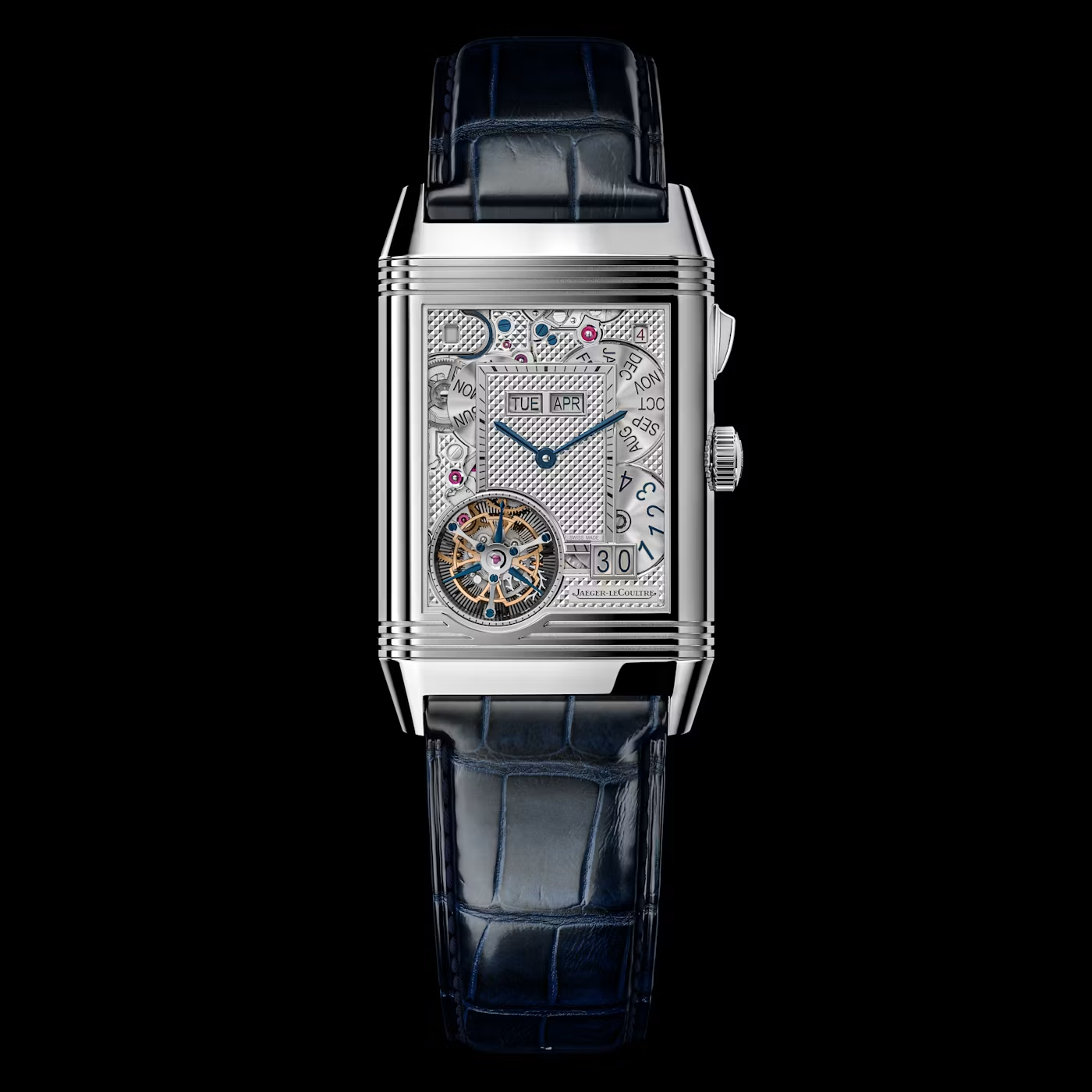
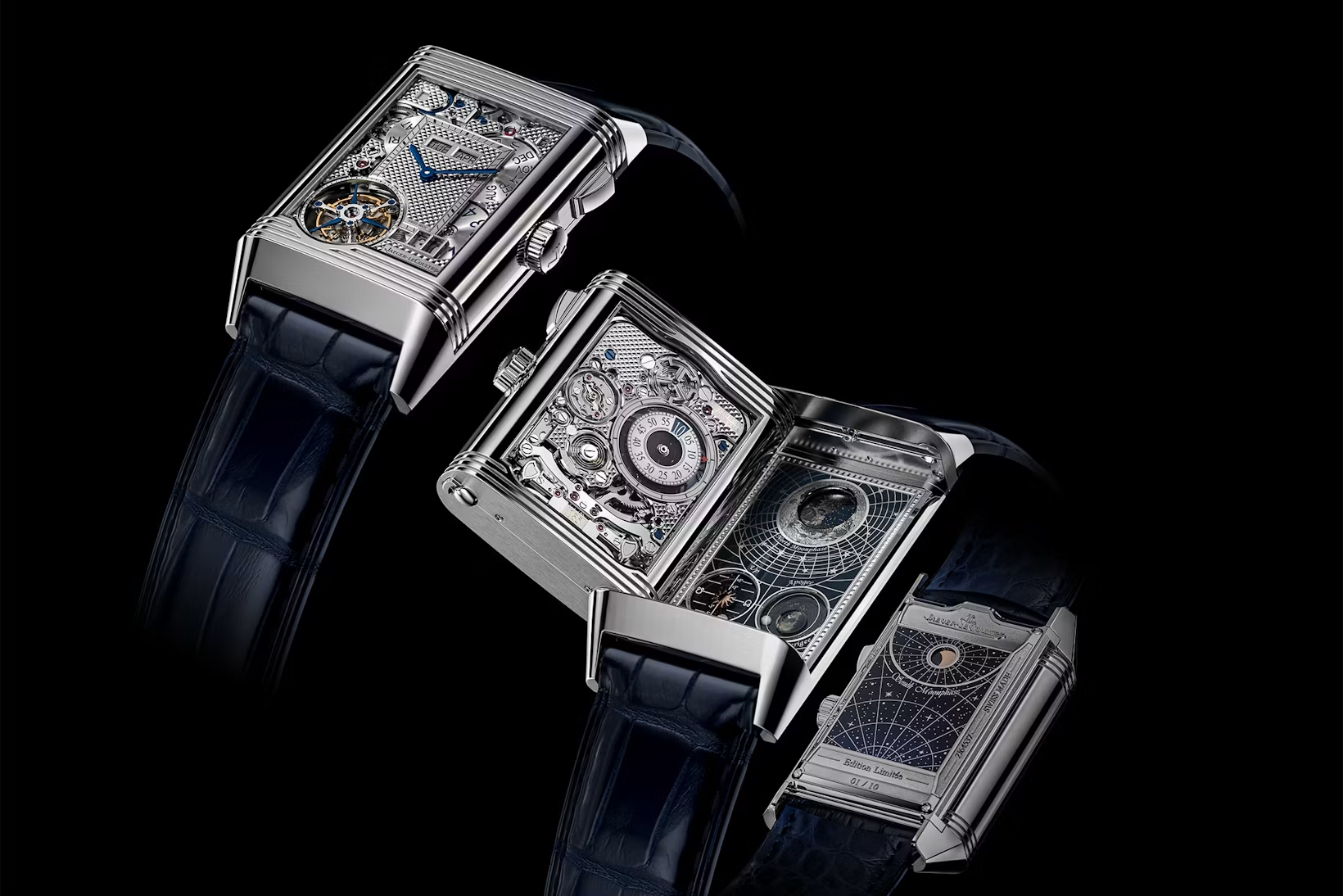
Year: 2021 Calibre: Cal. 185
Material: White gold
Market: International
90th anniversary. Four working faces, eleven complications, twelve patents.
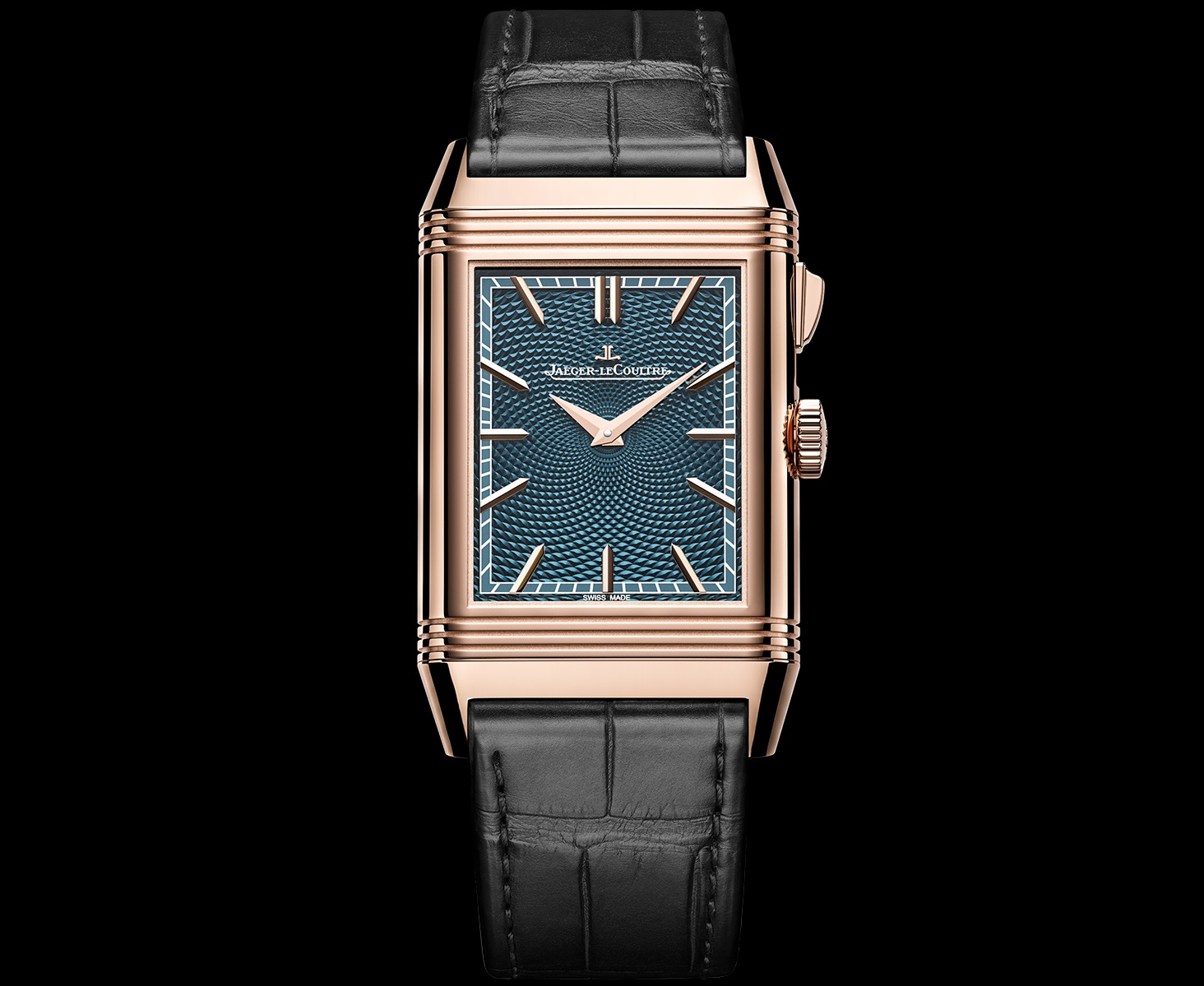
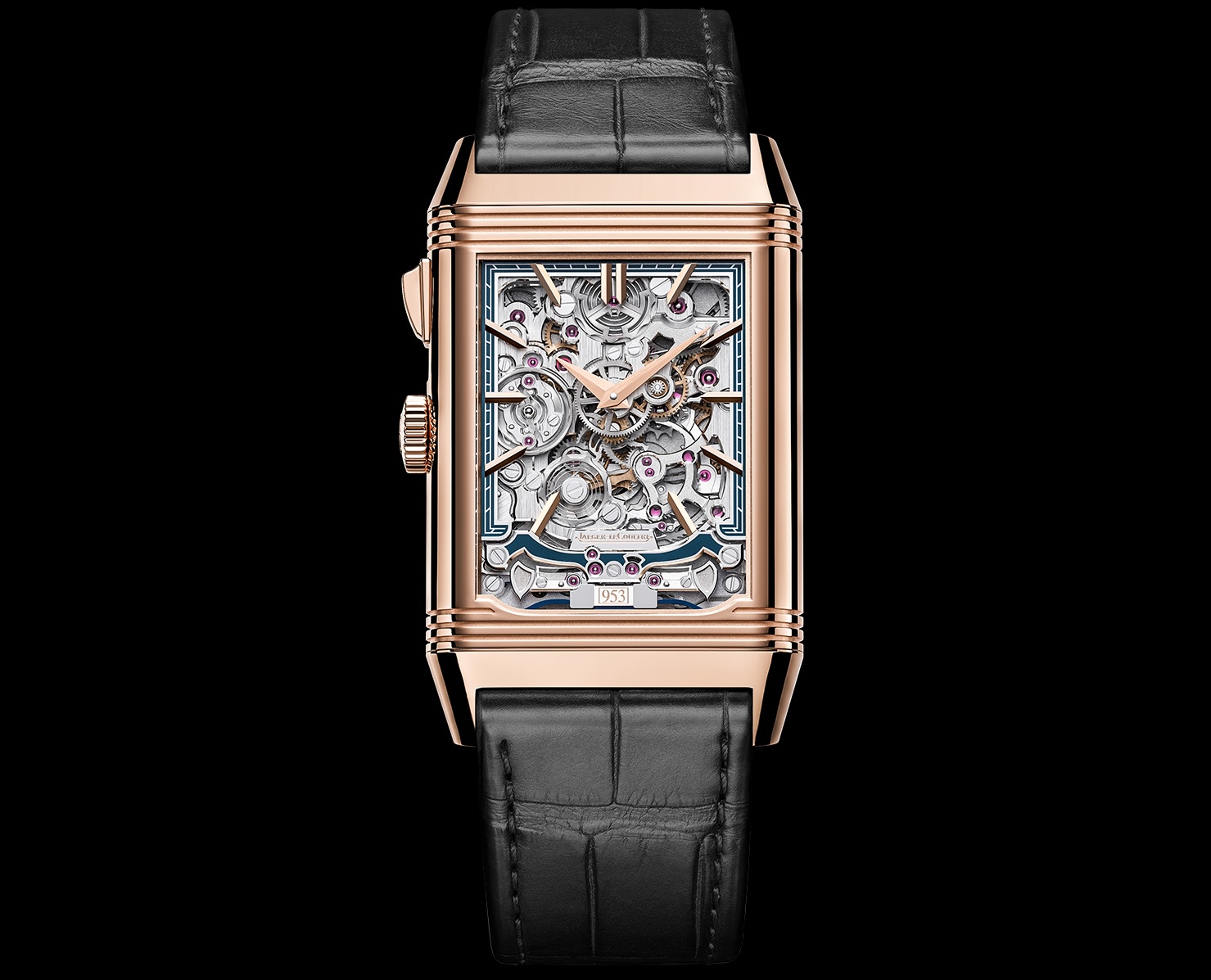
Year: 2025 Calibre: Cal. 953
Material: Pink gold
Market: International
Calibre 953 brings together seven patented chime inventions — trebuchet hammers, crystal gongs, silent-interval elimination — with a 48-hour reserve, unusually long for a repeater. A teal grand feu enamel dial up front; a fully open-worked, blue-lacquered reverse. Part of the six-watch Nonantième Collector’s Box.
Hybris Artistica
Where a grand complication is handed to the rare-crafts atelier — mechanism and decoration in the same watch, rather than one serving the other.
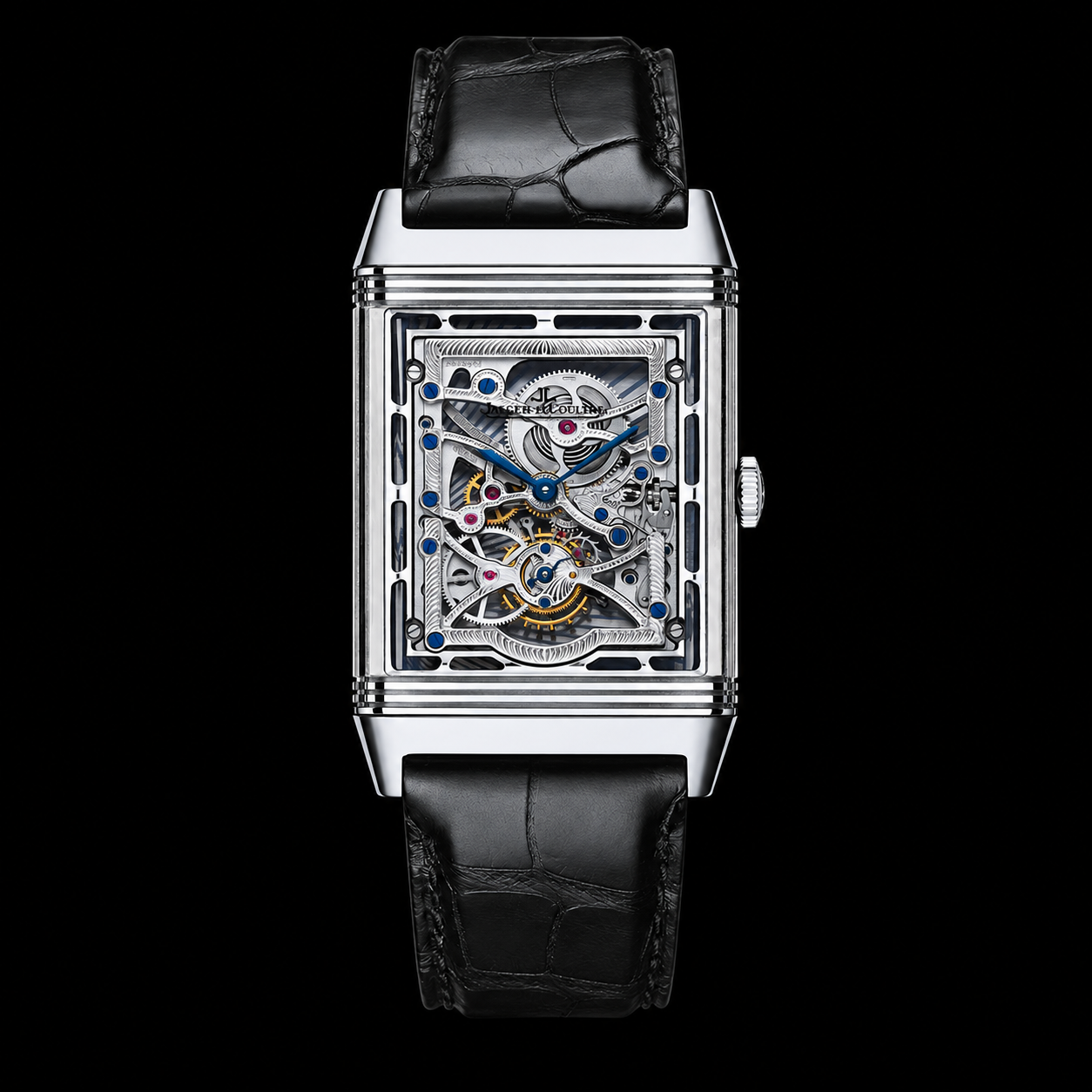
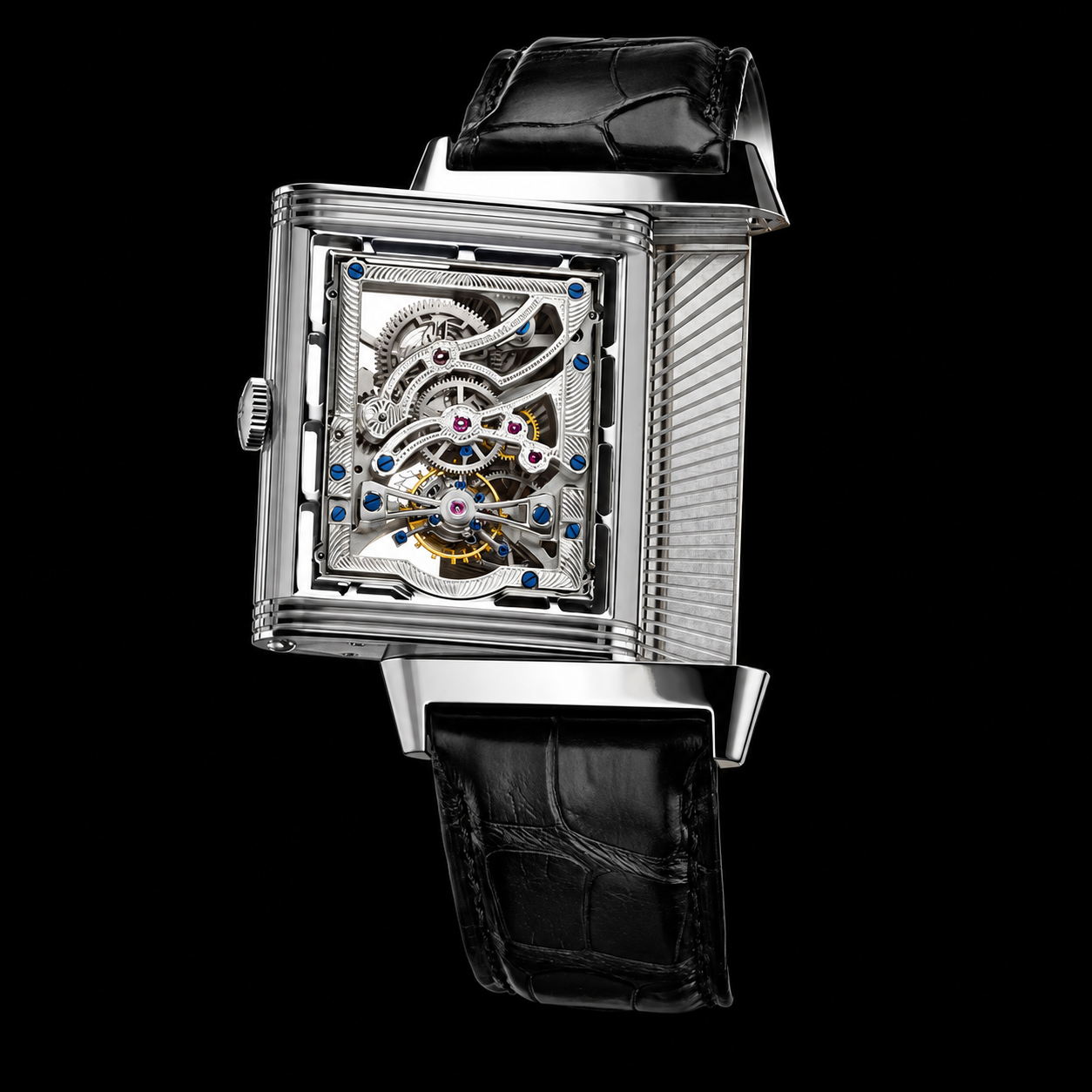
Year: 2013 Calibre: Skeletonised tourbillon
Material: —
Market: International
The reversible half of the case turned transparent rather than removed: both faces are sapphire crystal tiles, so the fully skeletonised, hand-decorated tourbillon movement is visible from either side as the case swivels — the tourbillon beating at six, the mainspring uncoiling in its barrel at twelve. The movement sits in a metal frame that appears to float inside the case. Since the Reverso’s outline isn’t round, water resistance on a sapphire-tile case of this kind is a genuine engineering problem rather than a routine spec.
Year: 2014 Calibre: —
Material: Gold, snow-set diamonds
Market: International
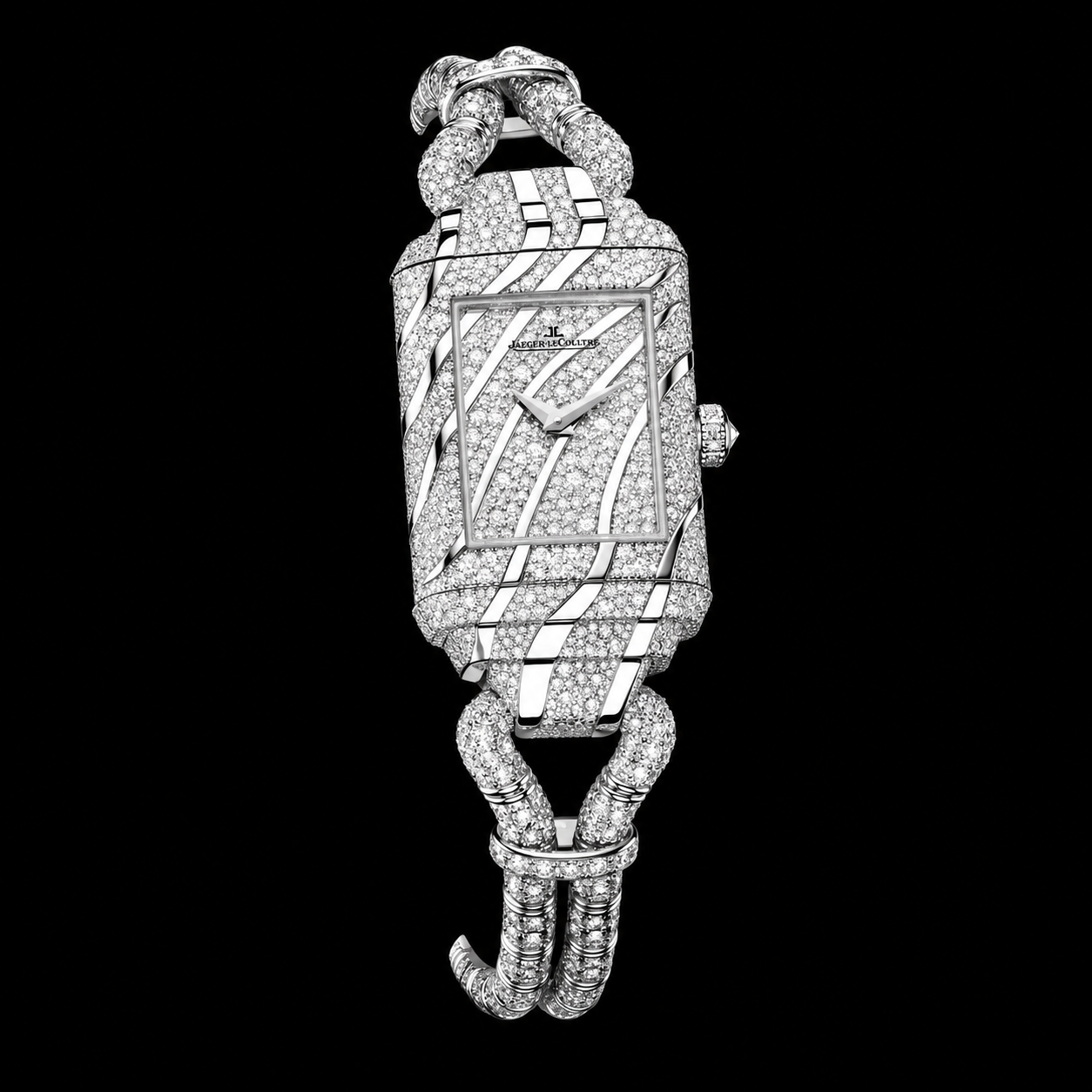
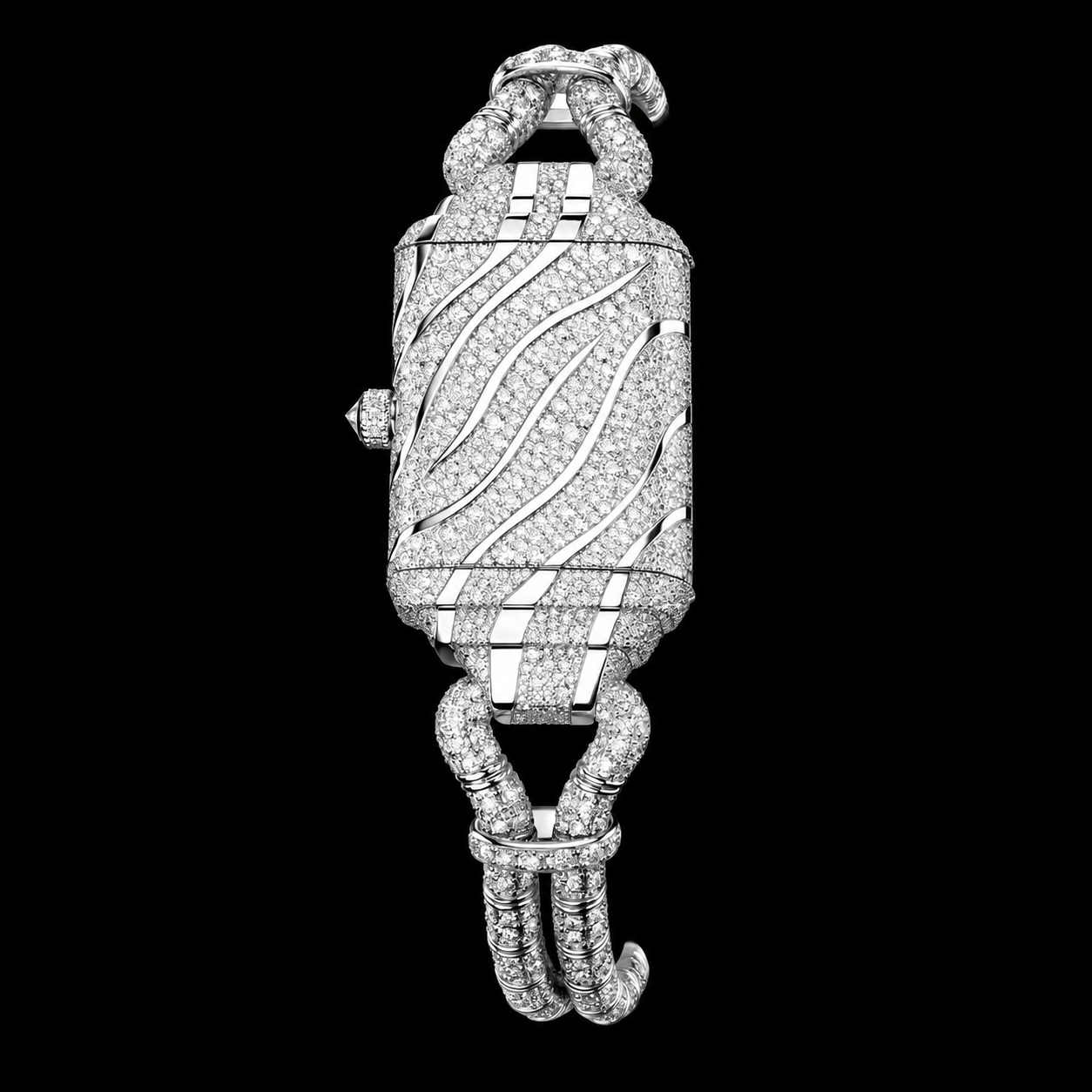
A 1930s cord-strap Reverso reinterpreted almost entirely in diamonds: hundreds of stones of varying diameter, snow-set across the dial, case, lugs and even the cord itself, pressed edge to edge with no visible claws so the surface reads as continuously smooth. Each stone is set individually and held in place only by tension against its neighbours — the setter works from personal judgement rather than a fixed plan, so the final pattern isn’t known until the last stone goes in. On the gold case the effect is meant to suggest the Neva river rippling beneath winter ice.
Year: 2023 Calibre: Cal. 179 — flying Gyrotourbillon
Material: Pink gold
Market: International
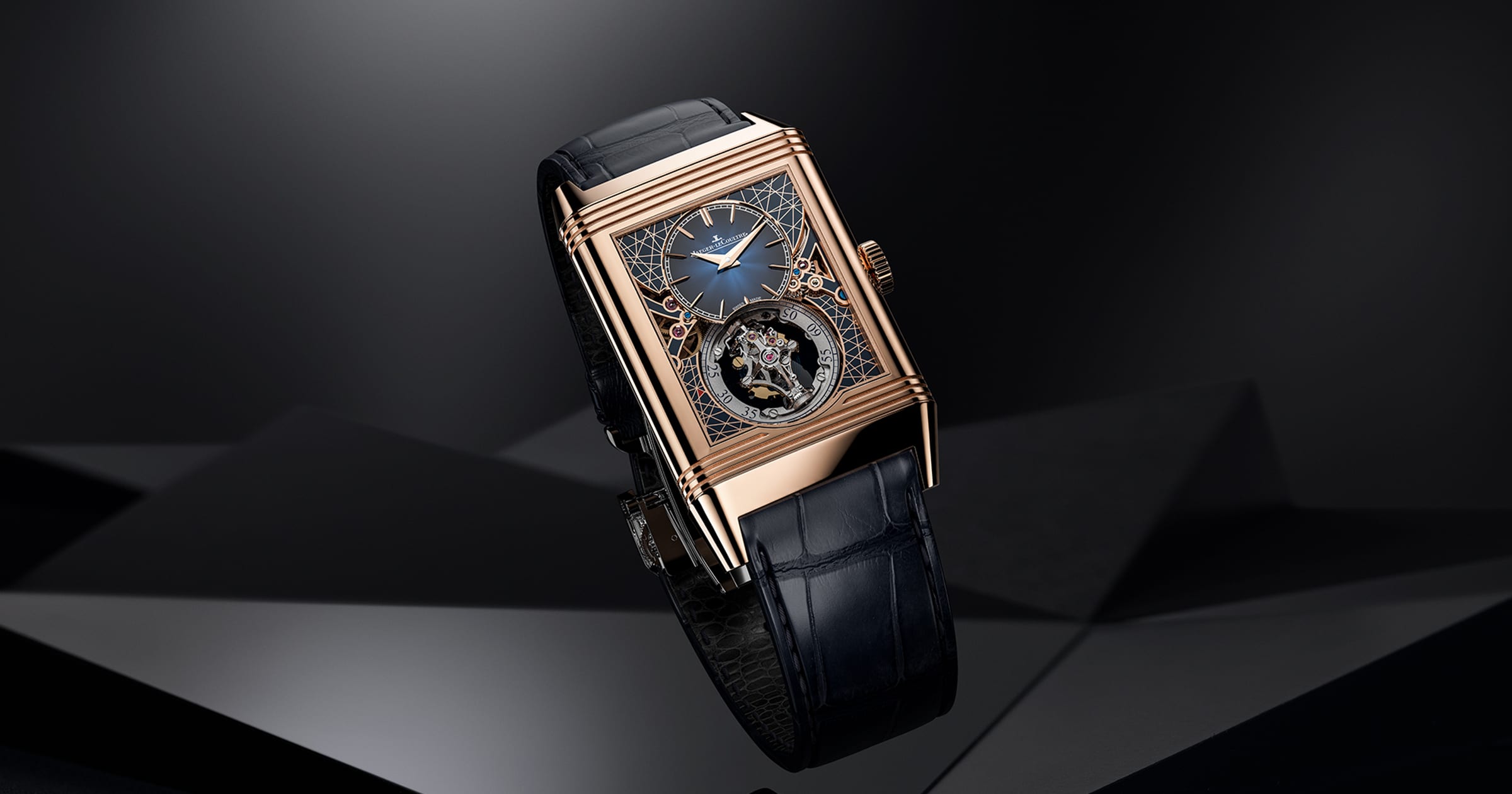
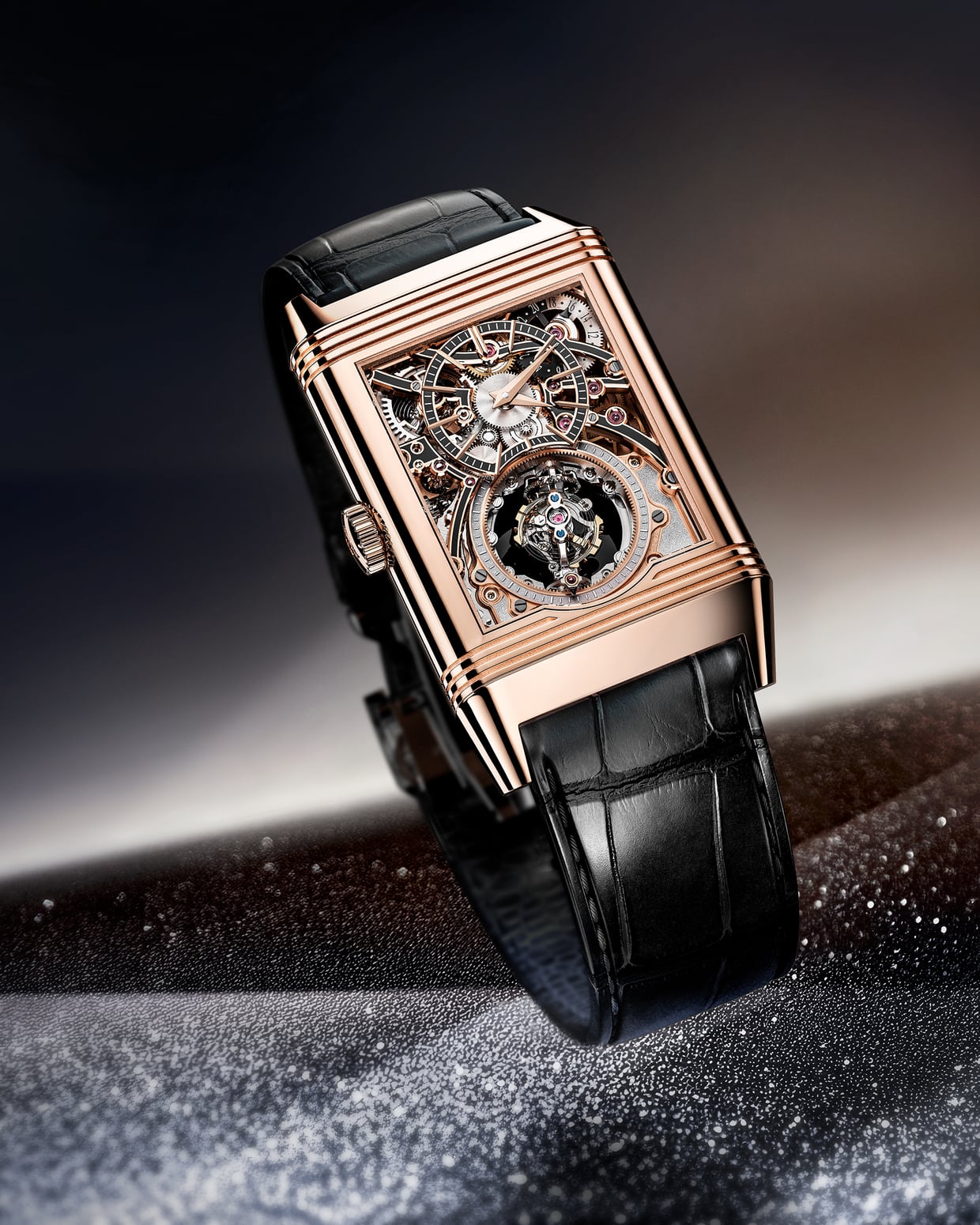
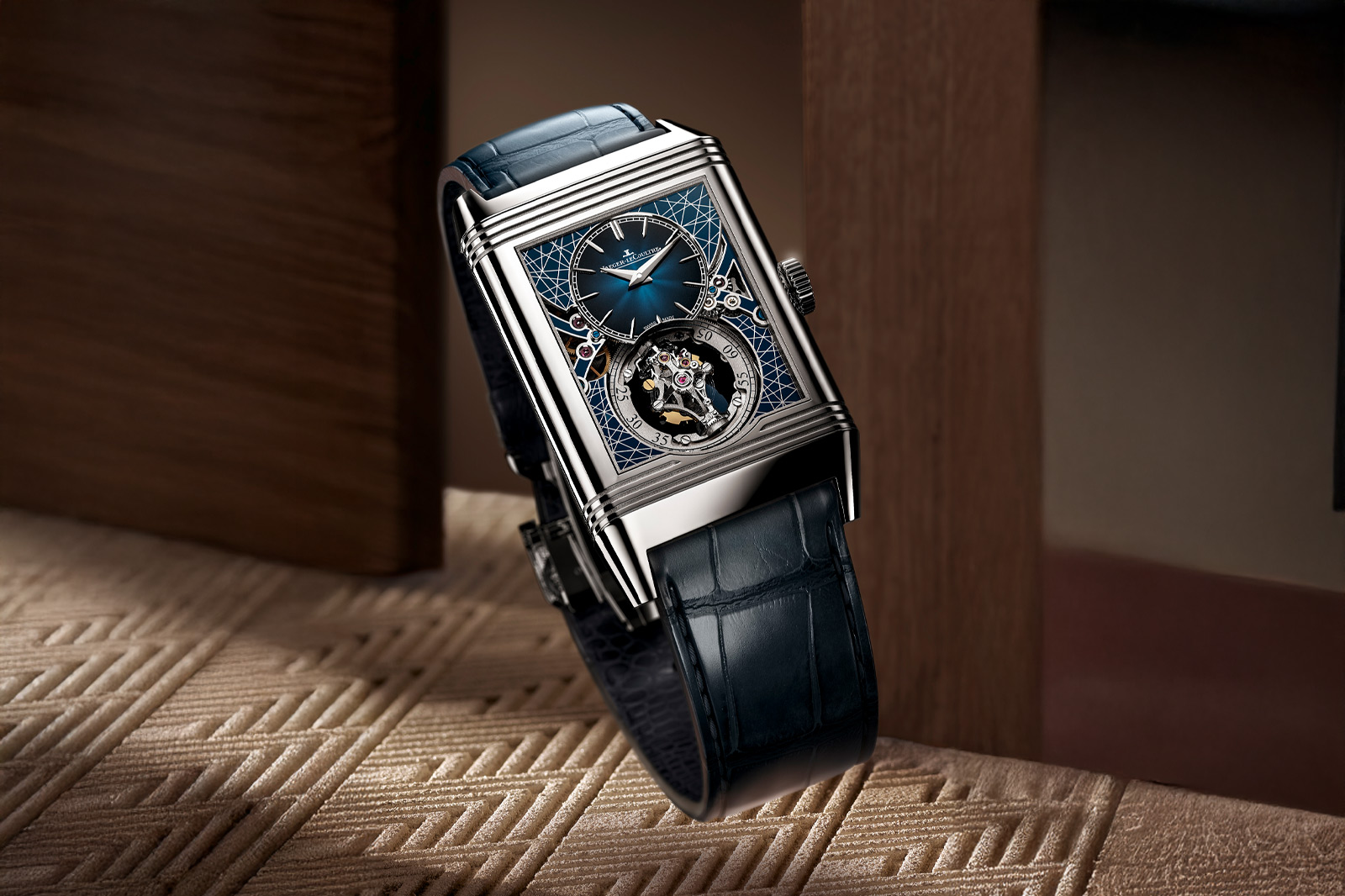
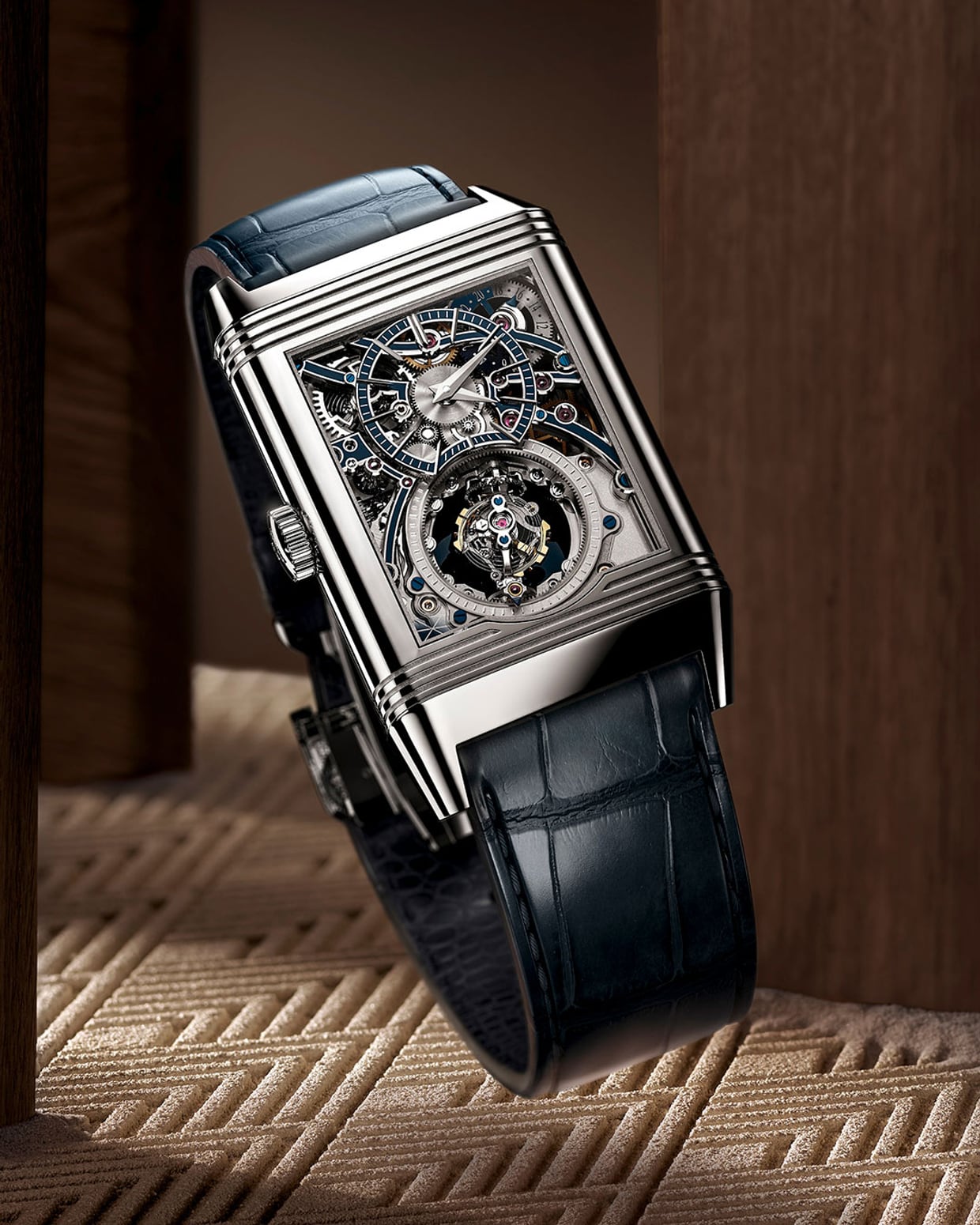
The fastest Gyrotourbillon the manufacture has built — the inner cage turns once every 16 seconds, the outer frame once a minute, 123 components floating on a ring of ball bearings between the two dials. Duoface on the reverse, showing a second time zone and 24-hour indicator. The front dial’s Art Deco lattice in gold, black and grey lacquer echoes the original 1931 case; the reverse is fully skeletonised and hand-bevelled, roughly 14 hours of finishing on the tourbillon cage alone.
Year: 2025 Calibre: Cal. 179 — flying Gyrotourbillon
Material: White gold
Market: International
The Calibre 179 Gyrotourbillon — 123 components, a full rotation every 16 seconds — reissued in white gold for 2025, with the same Duoface second time zone on the reverse.
Year: 2026 Calibre: Cal. 179 — flying Gyrotourbillon
Material: Pink gold
Market: International
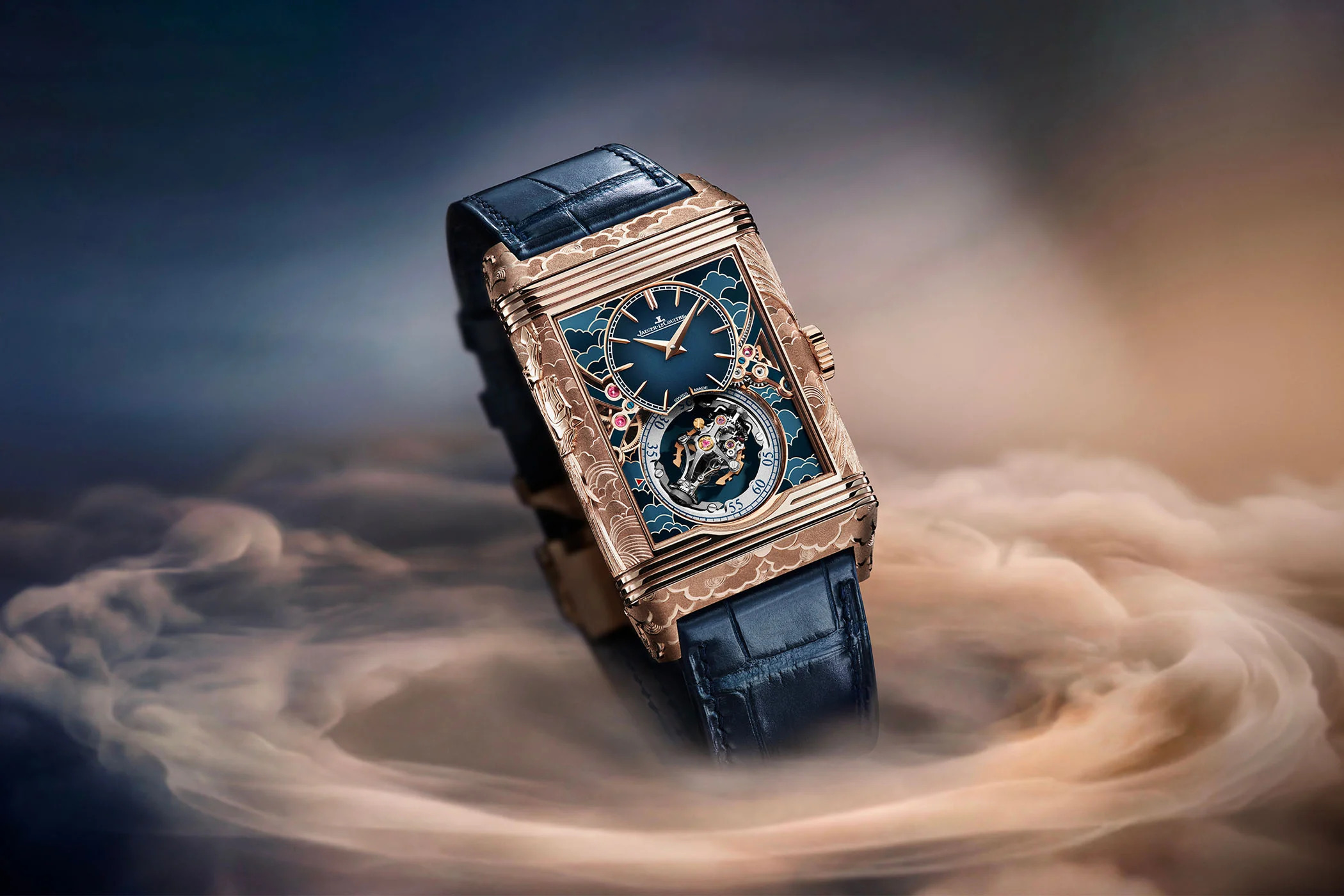
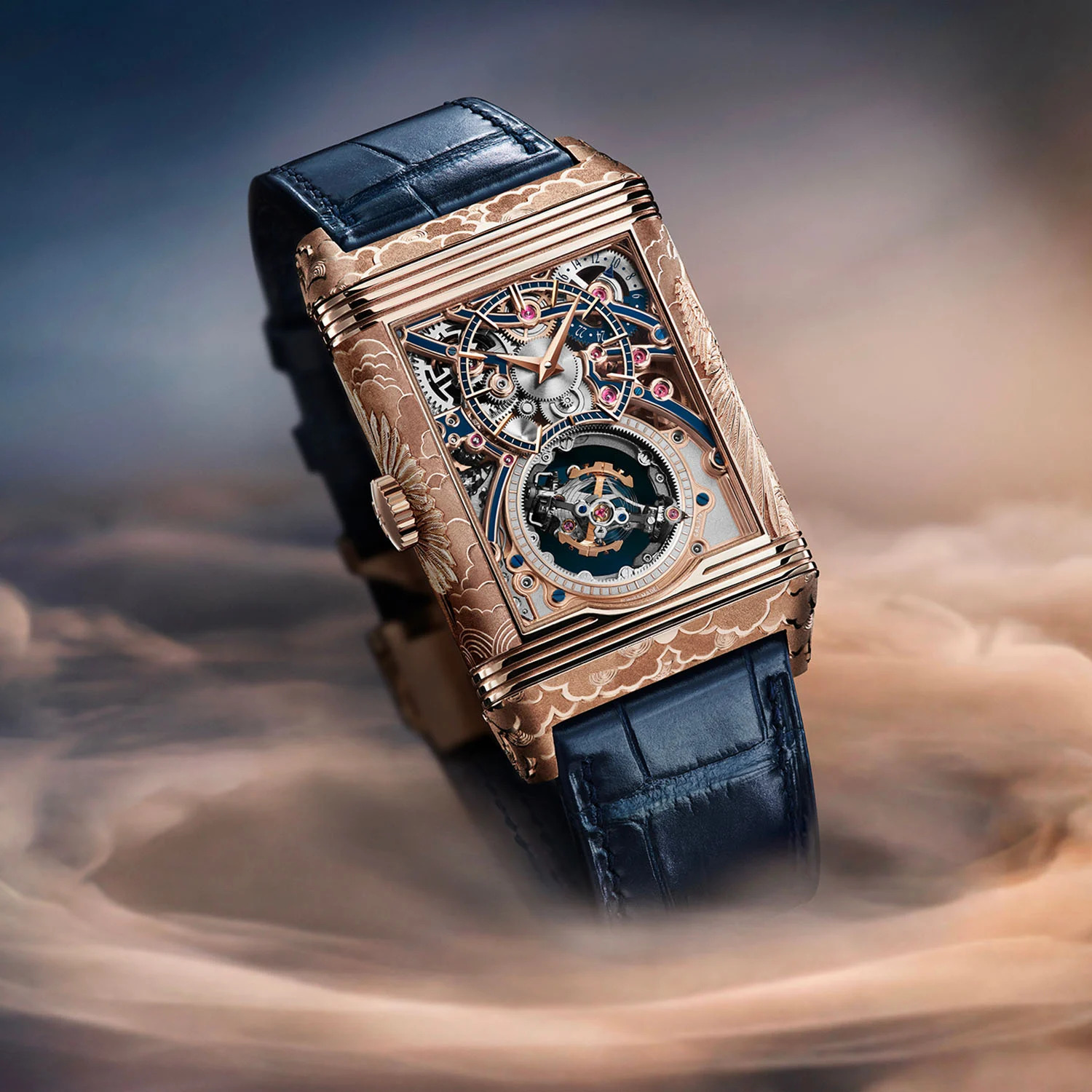
A master engraver spends 180 hours wrapping a sculptural Pegasus relief around the case, hiding the join between its sections. The front dial echoes the cloud motif in pink gold and hand-filled blue lacquer, framing the open-worked Calibre 179 Gyrotourbillon.
Reverso à Éclipses
A miniature shutter over the case-back, opened by a wheel beside the crown, concealing a painted enamel beneath. The only Reverso whose decoration has to be unveiled twice.
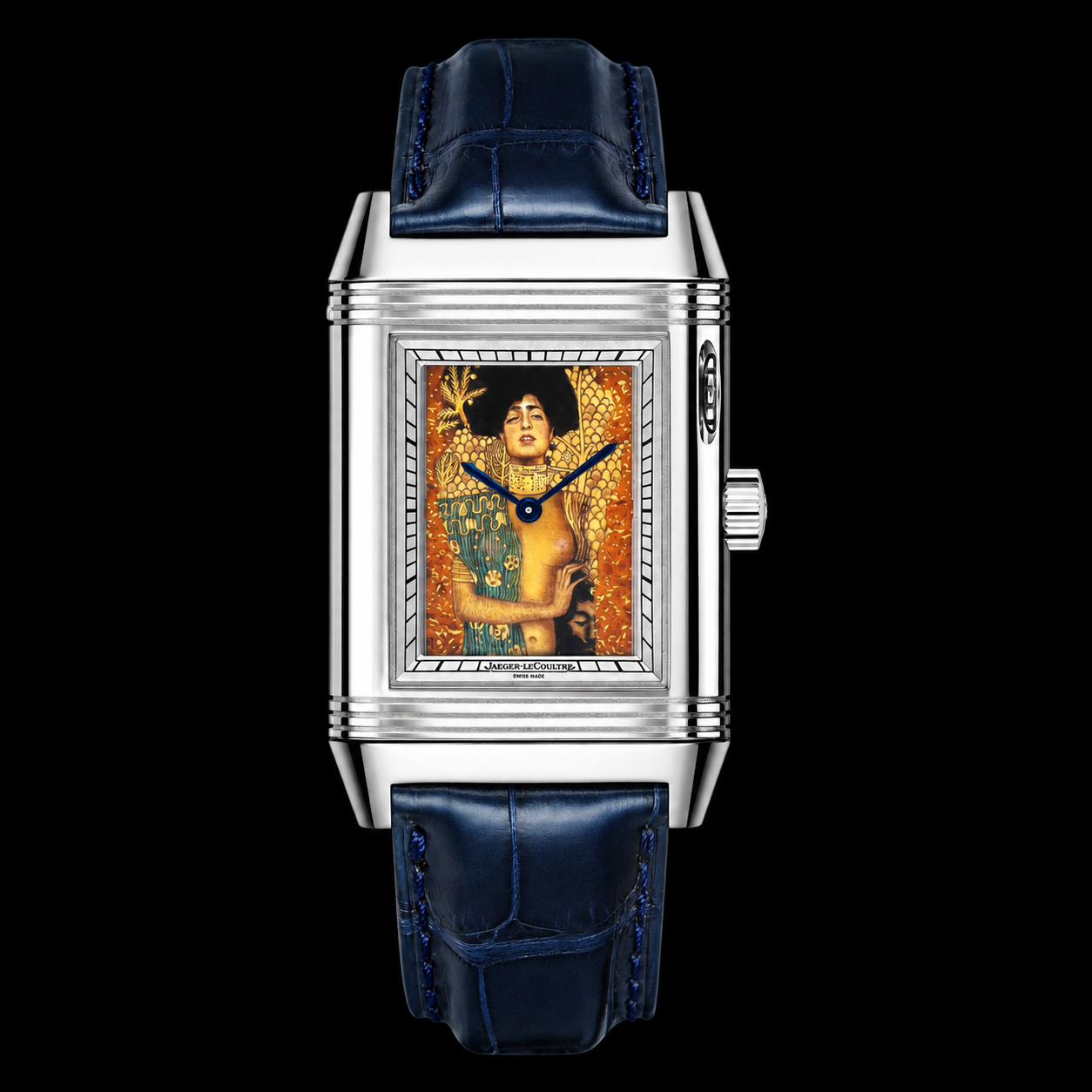
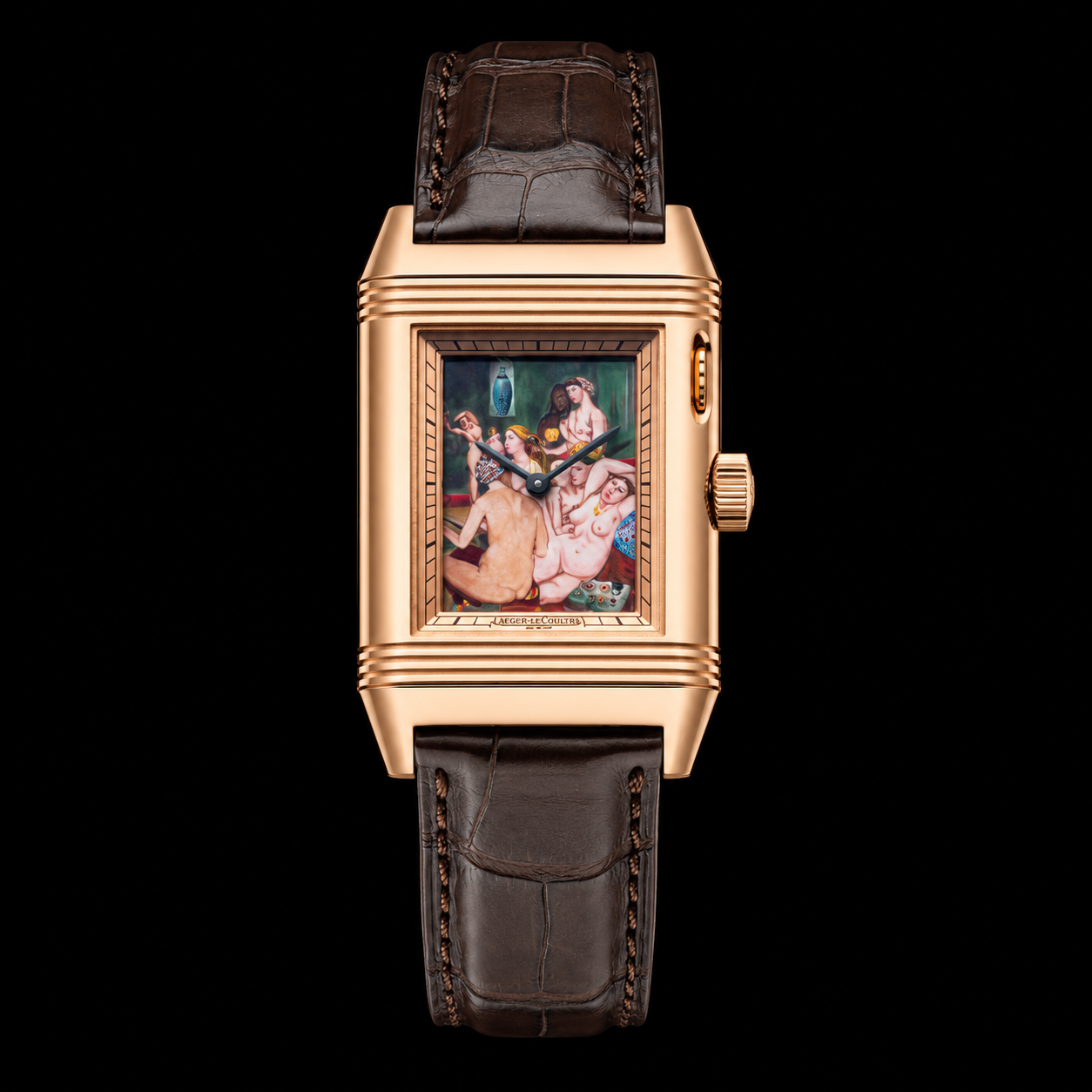
Year: 2006– Calibre: Cal. 849
Material: Platinum or pink gold
Market: International
Ingres, Klimt, Renoir, Botticelli and more, each reproduced in enamel behind a sliding shutter on the dial rather than the case-back — the largest theme within the Éclipses range. Full set catalogued on its own page.
See the full set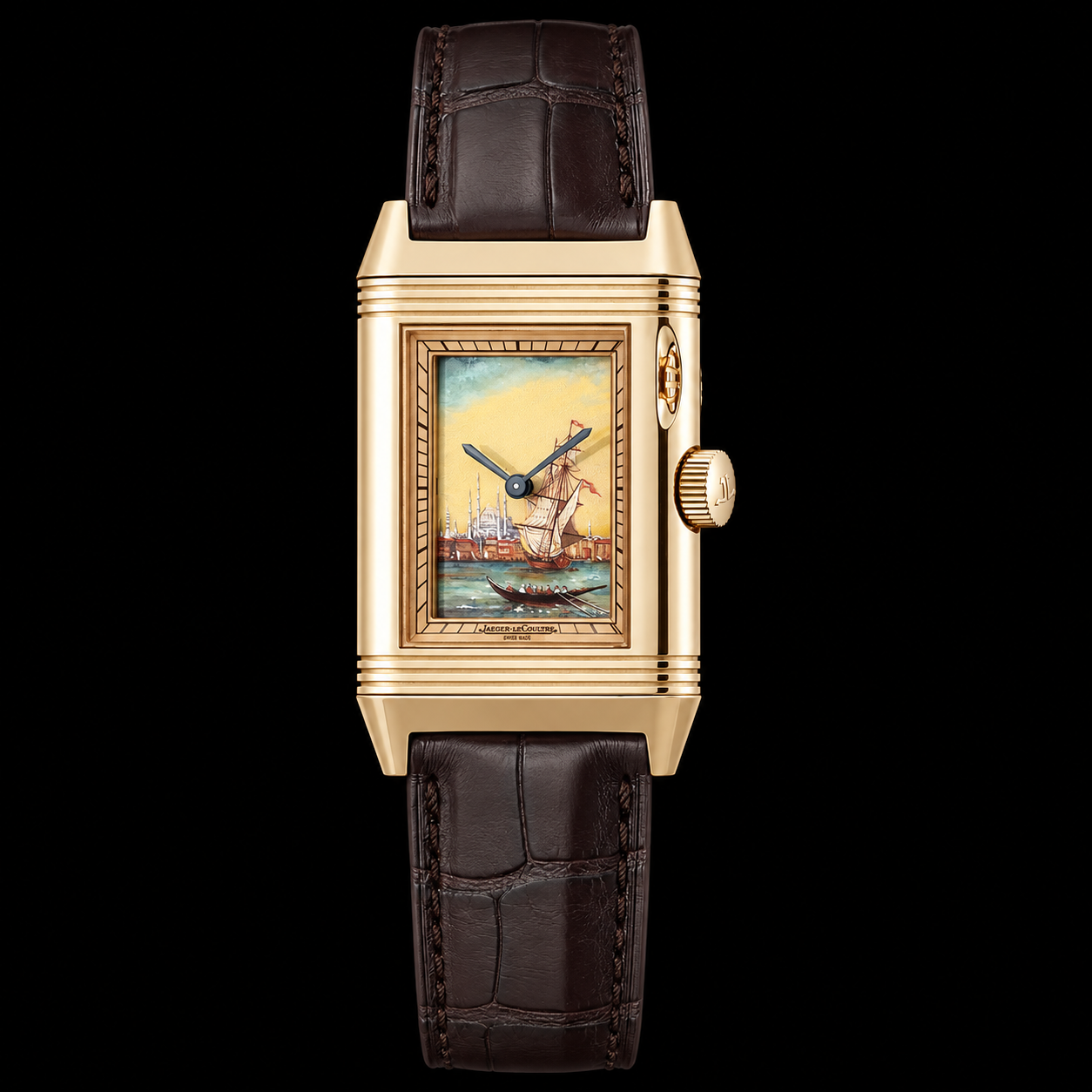
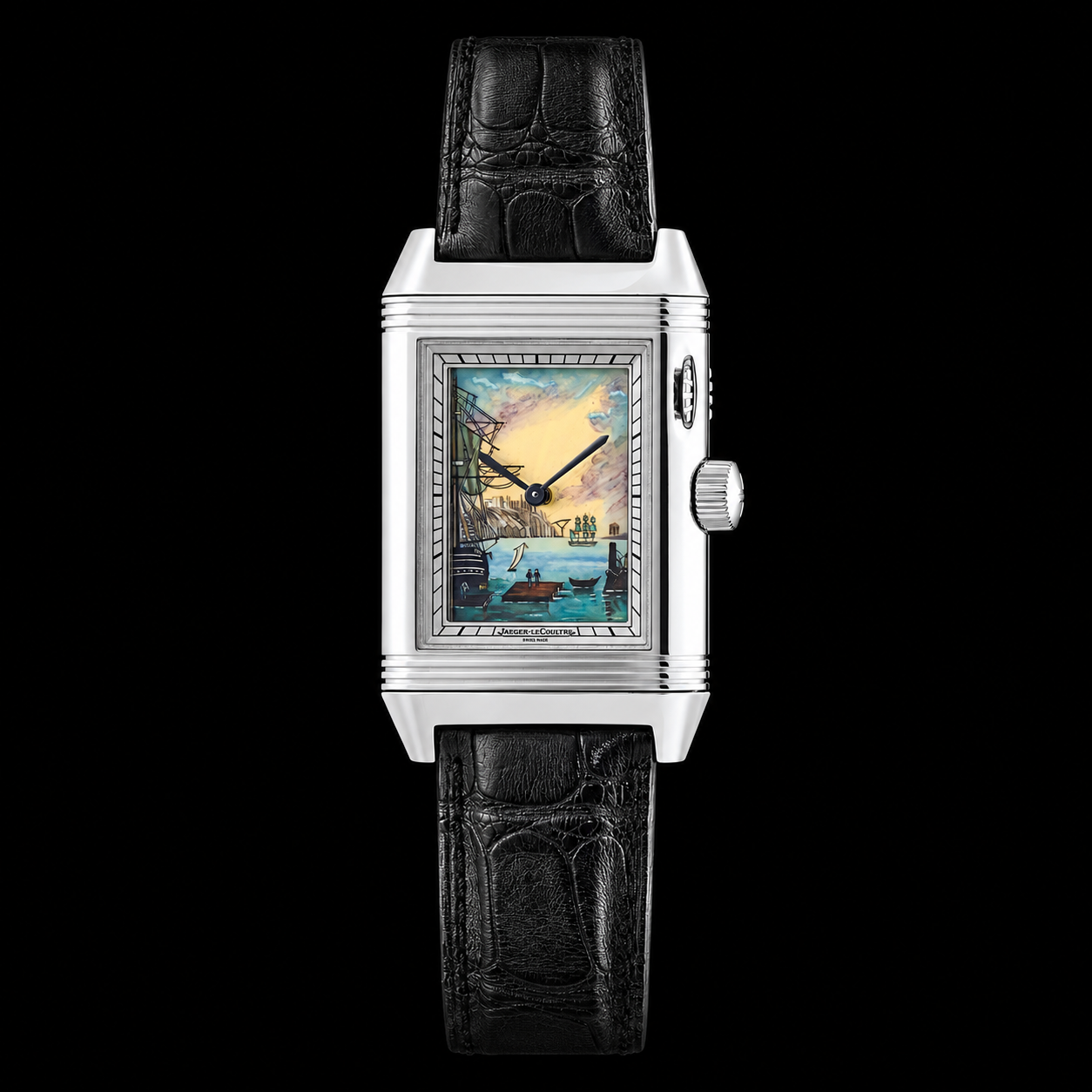
Year: 2006– Calibre: Cal. 849
Material: Platinum or pink gold
Market: International
Named cities and landmarks — New York, Singapore, Constantinople, the Great Wall, the Silk Road, La Rochelle — hidden behind the same Éclipses shutter mechanism. Full set catalogued on its own page.
See the full set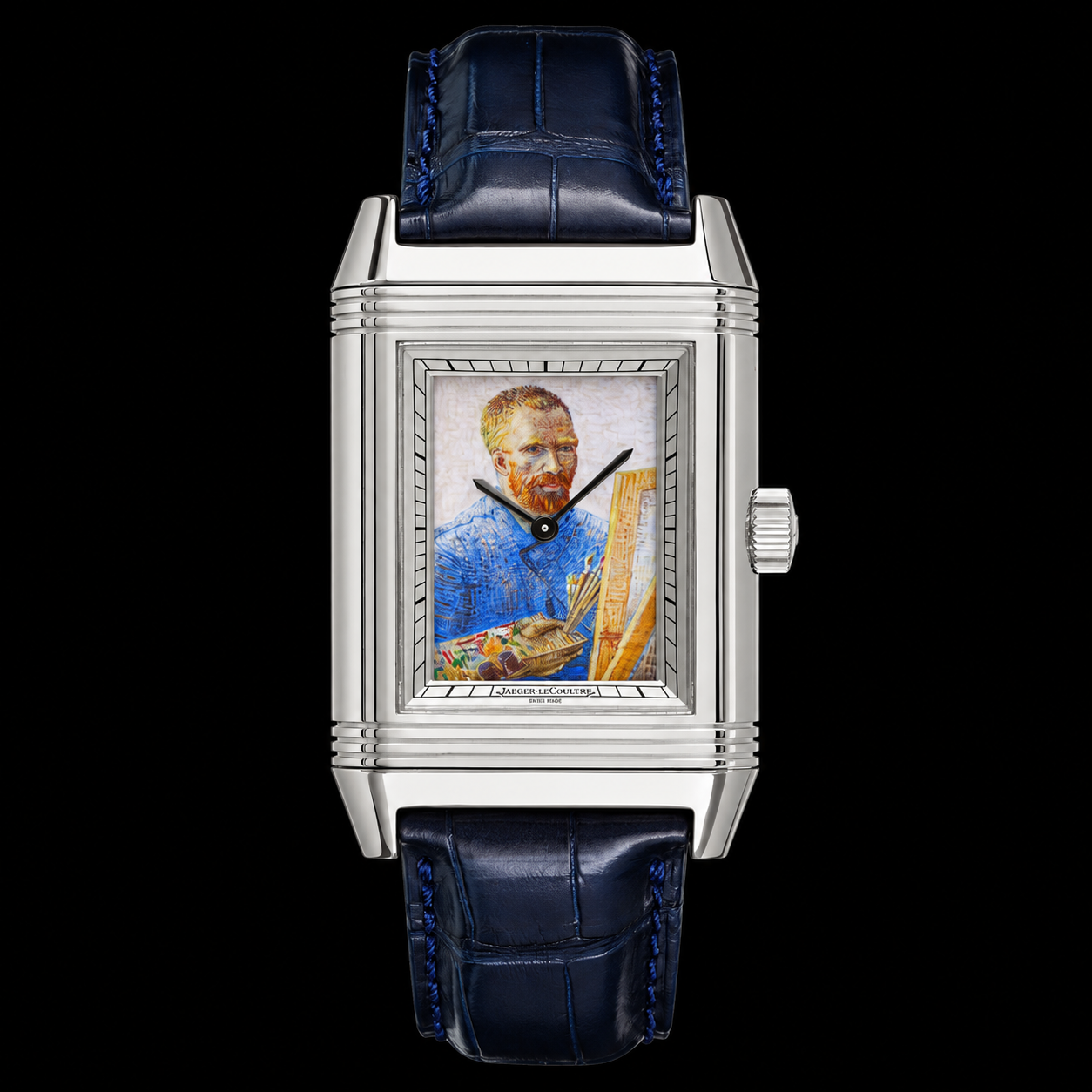
Year: 2006– Calibre: Cal. 849
Material: Pink or rose gold
Market: International
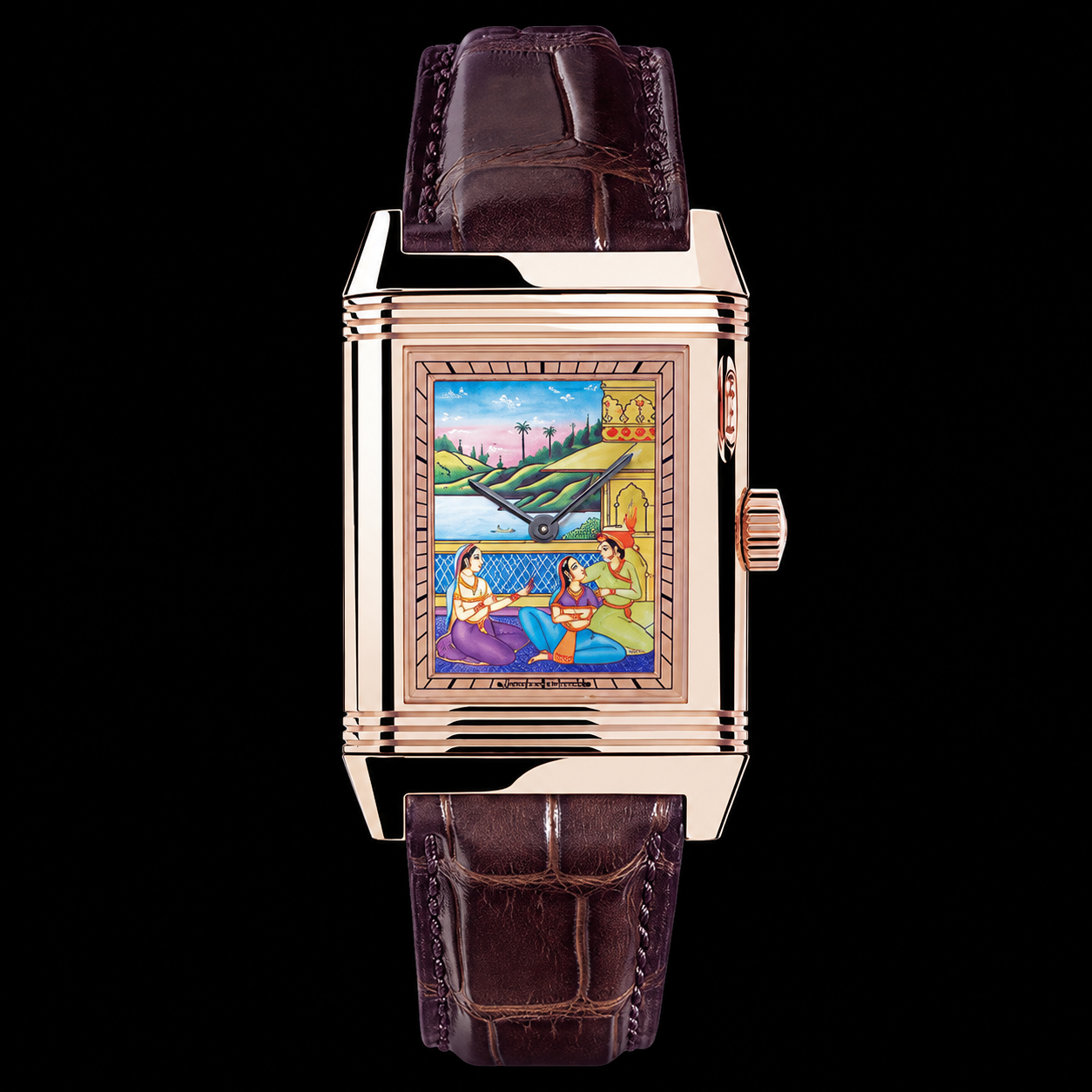
Named-artist single subjects and one-off commissions — Malevich, Van Gogh, a Mughal miniature theme, and Zep’s unique Titeuf piece — plus the Chinese Zodiac design. Full set catalogued on its own page.
See the full setMétiers Rares
The case-back as a canvas — grand feu enamel, miniature painting, guillochage, paillonnage. Each set below is catalogued piece by piece on the Stories page.
Year: 1996 Calibre: Cal. 822
Material: 18k yellow gold
Market: International
Enamelled on both dial and case-back — by the enameller Miklos Merczel’s own account, this may be where his entire Reverso enamel practice began. Full set catalogued on its own page.
See the full set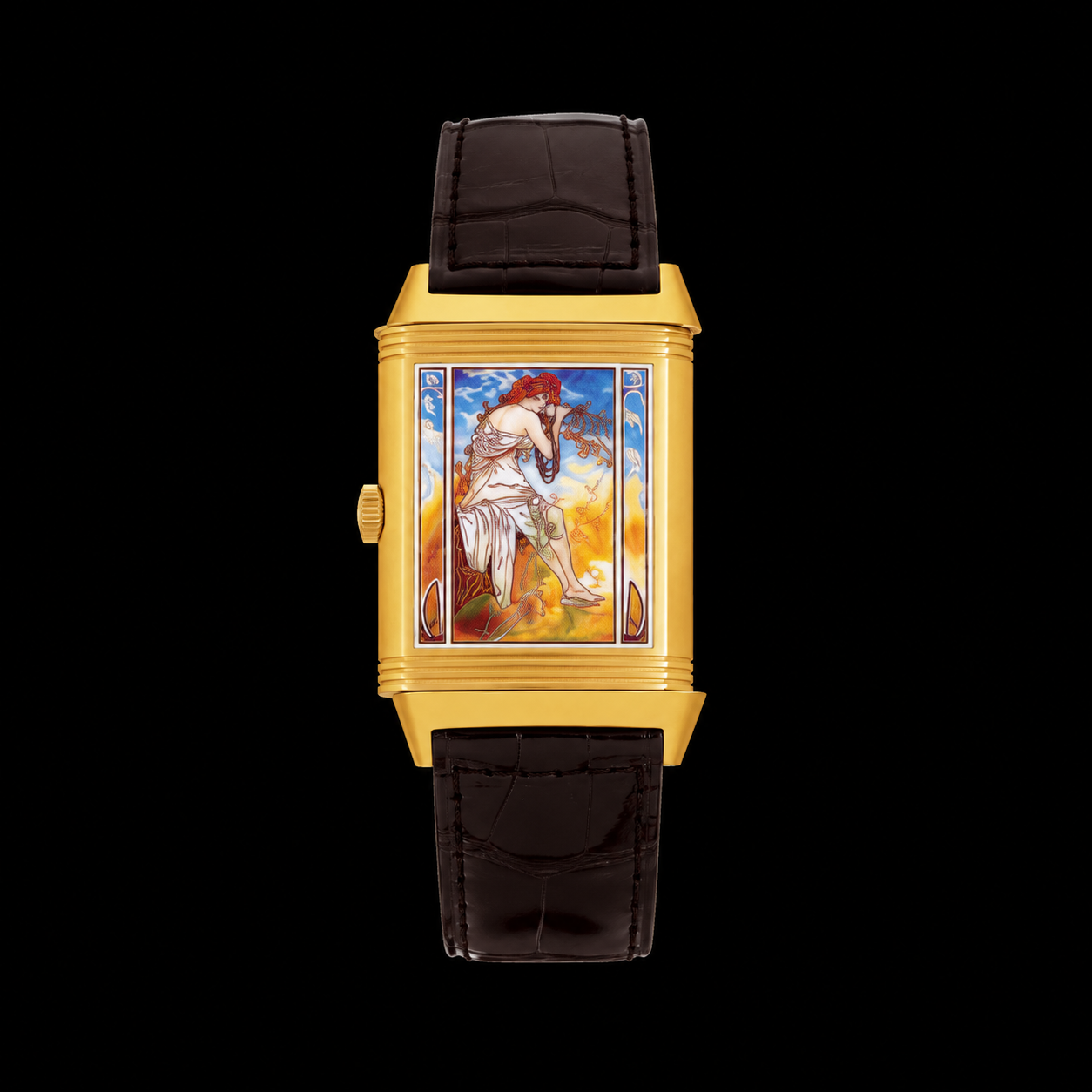
Year: 1996 Calibre: Cal. 822
Material: 18k yellow gold
Market: International
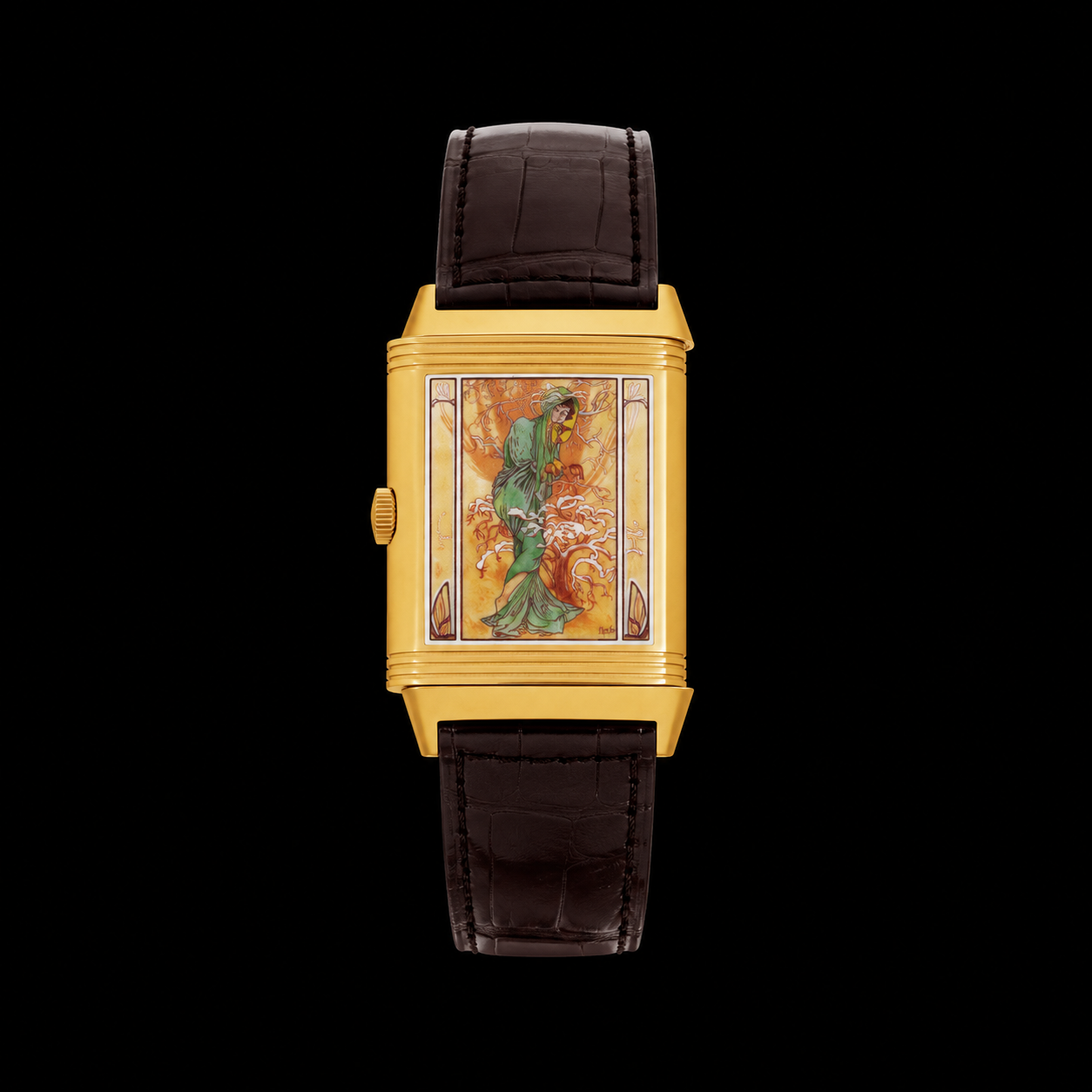
Jaeger-LeCoultre’s first enamelled Reverso, and the only Reversos ever built with a genuinely enamelled dial. Full set catalogued on its own page.
See the full set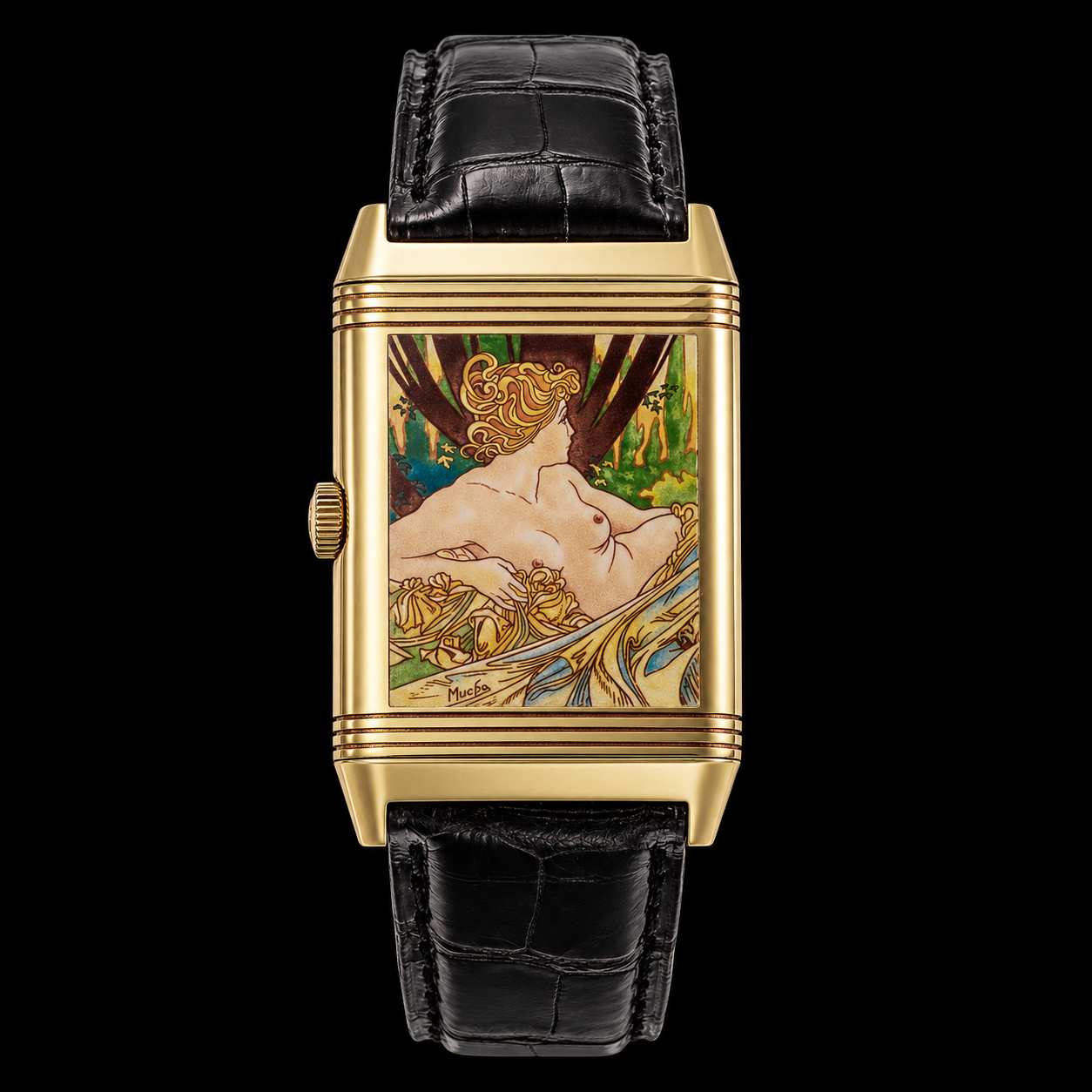
Year: 1999 Calibre: Cal. 822
Material: 18k yellow gold
Market: International
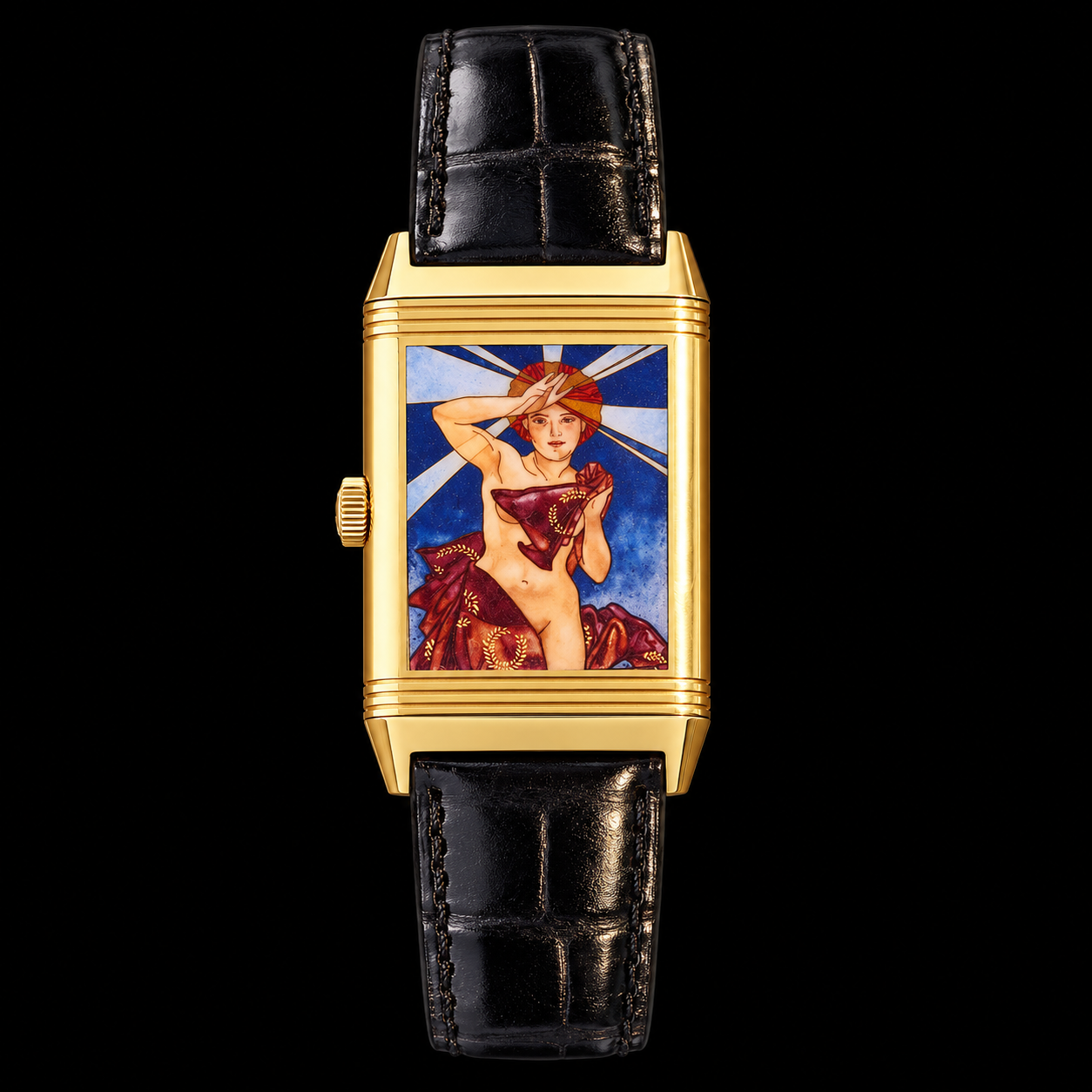
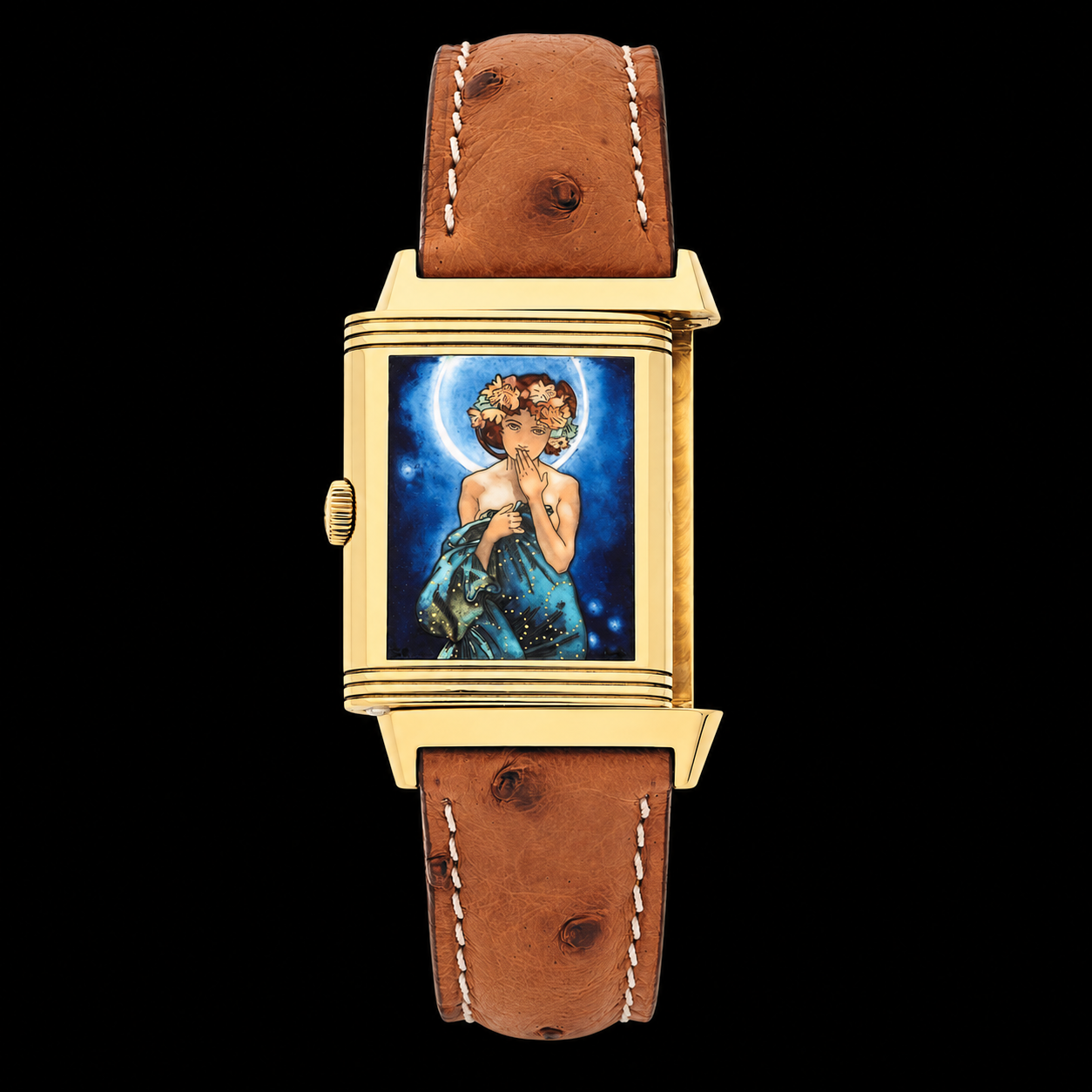
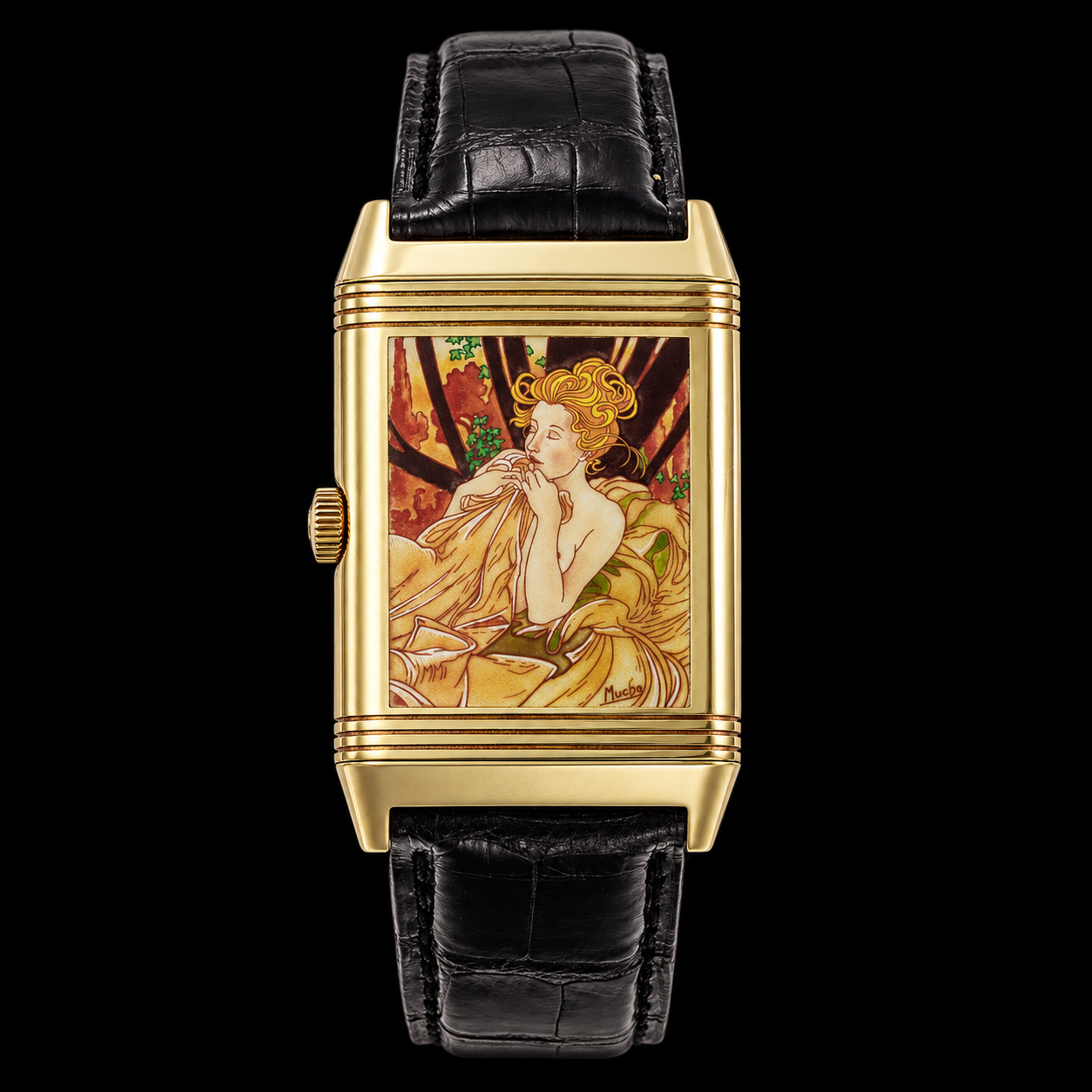
Dawn and dusk, from Mucha’s 1899 panels of the same name, sold together rather than separately. Full set catalogued on its own page.
See the full set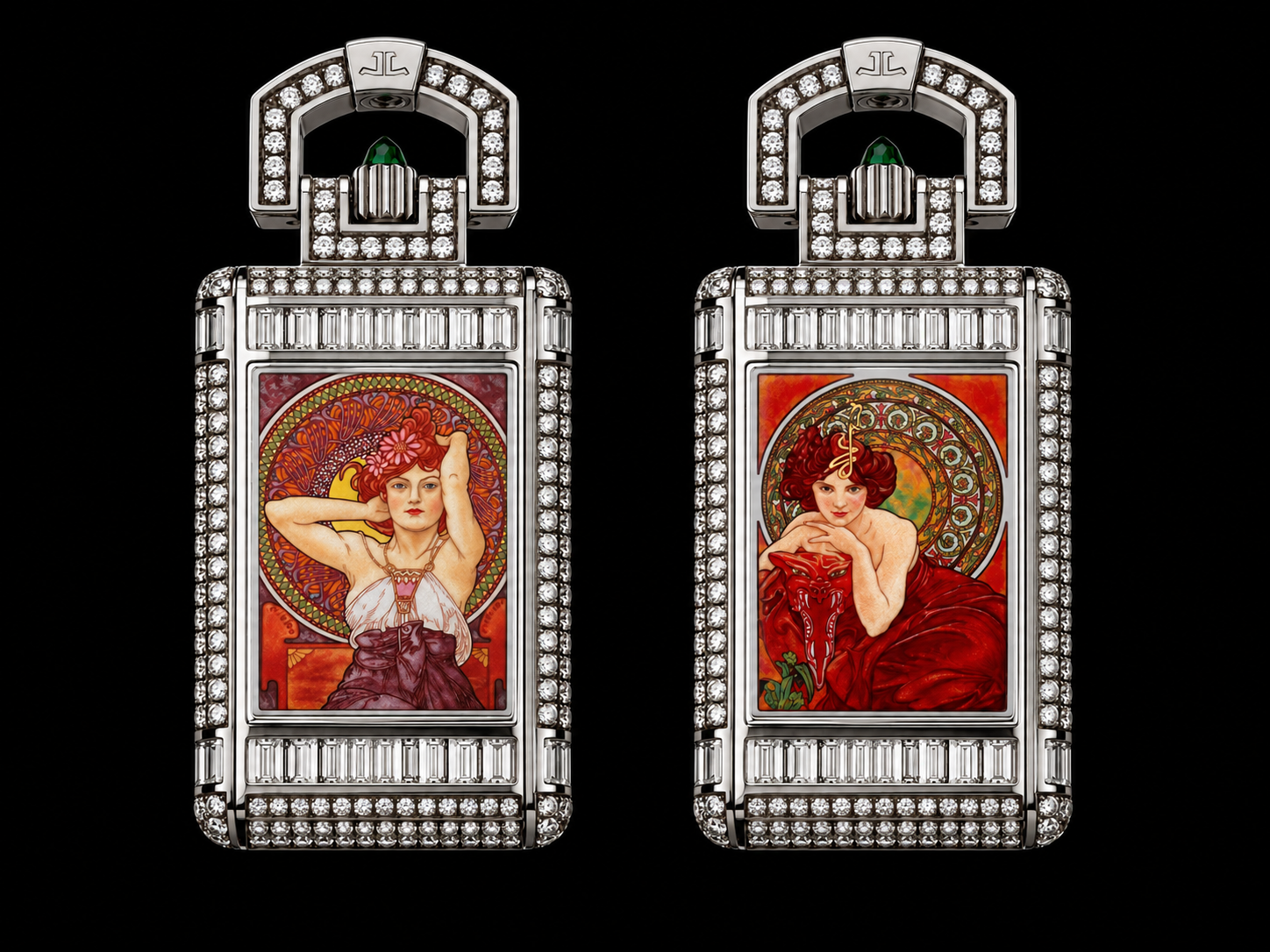
Year: 1999–2000 Calibre: Cal. 822 / 823
Material: 18k white or yellow gold, gem-set
Market: International
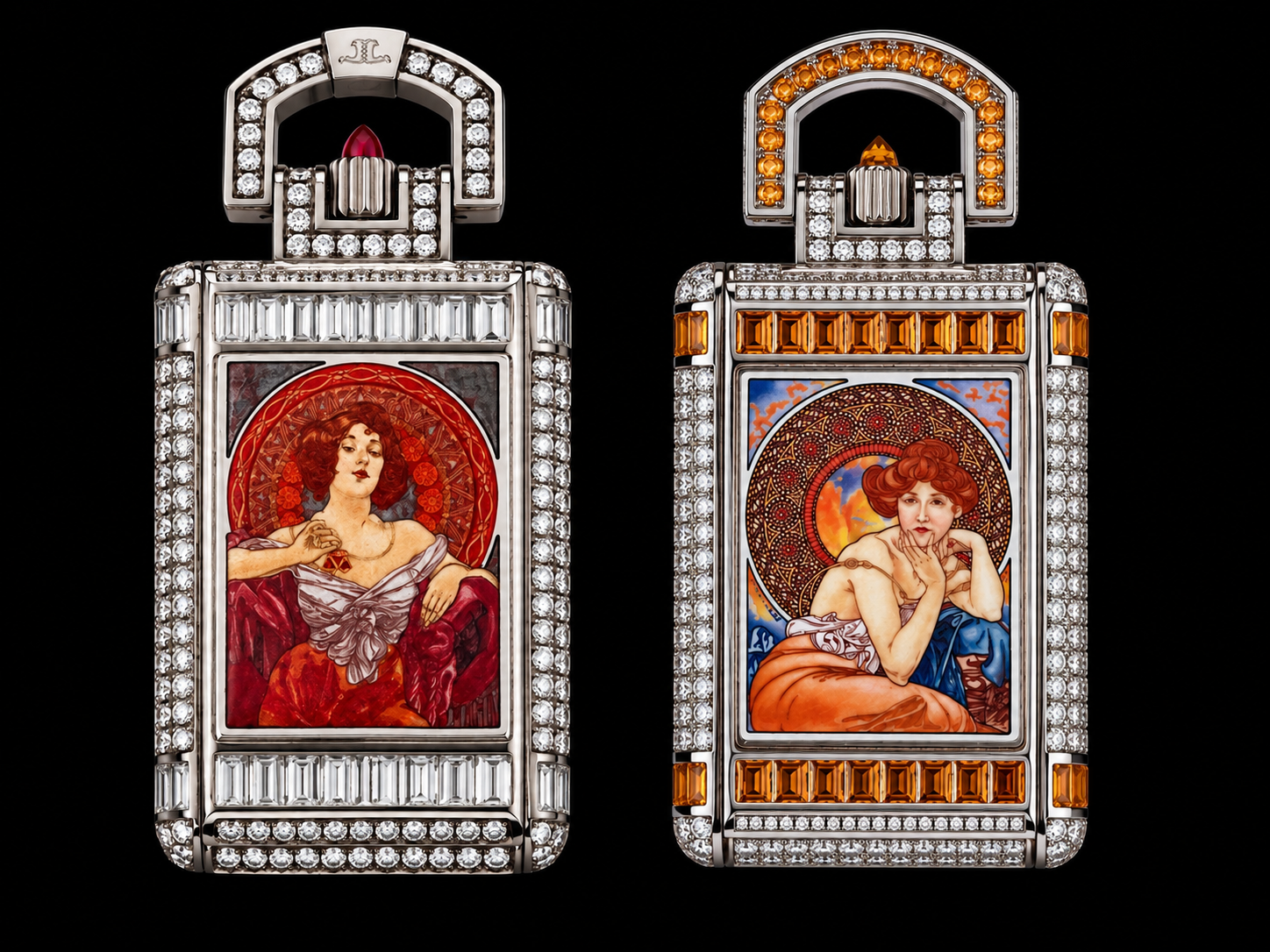
Not a wristwatch — a full pocket watch, jewelled cradle and all. Topaz, Amethyst, Ruby, Emerald: Mucha’s four Precious Stones panels, all four made in enamel. Full set catalogued on its own page.
See the full set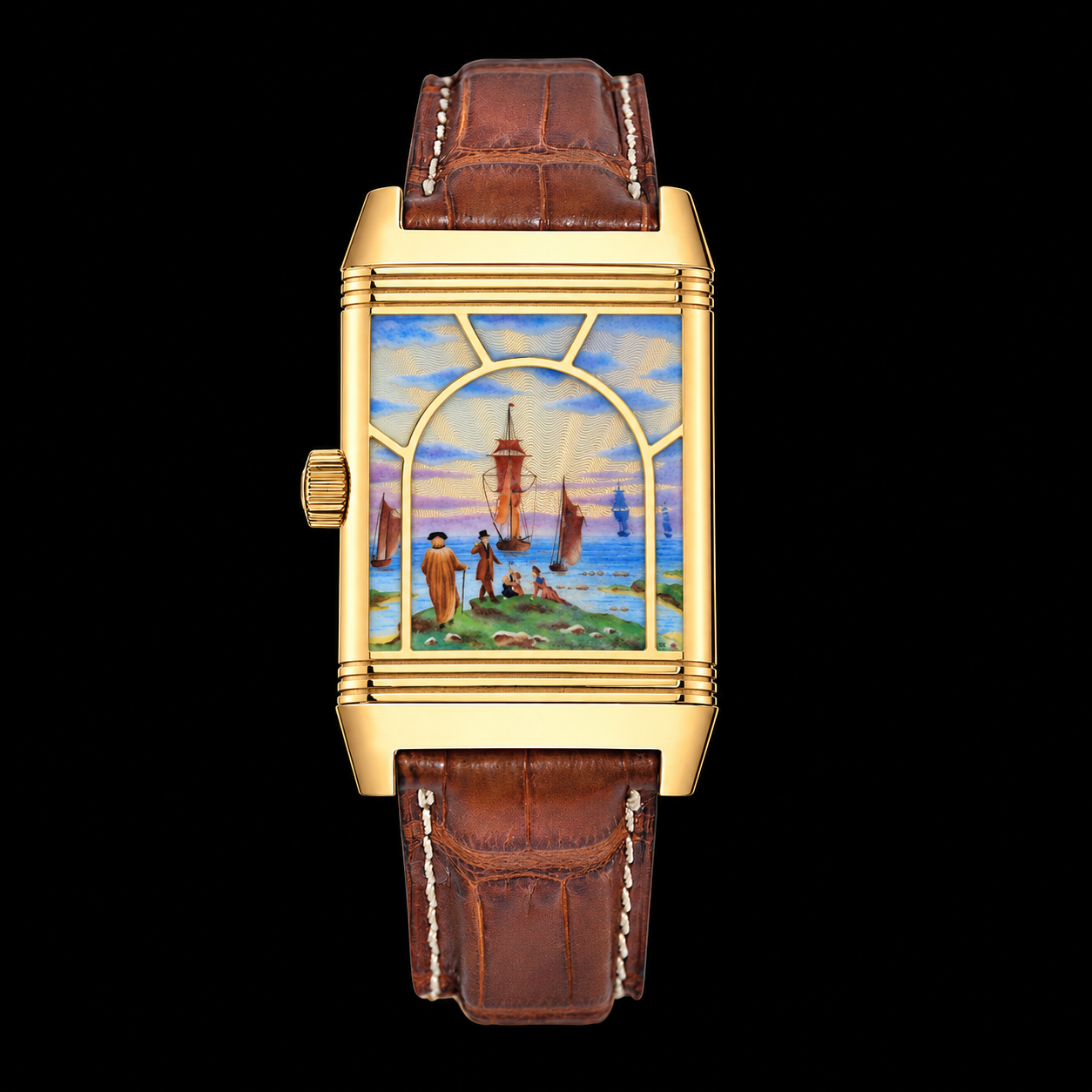
Year: 2002 Calibre: Cal. 875 · 8-day reserve
Material: 18k yellow gold
Market: International
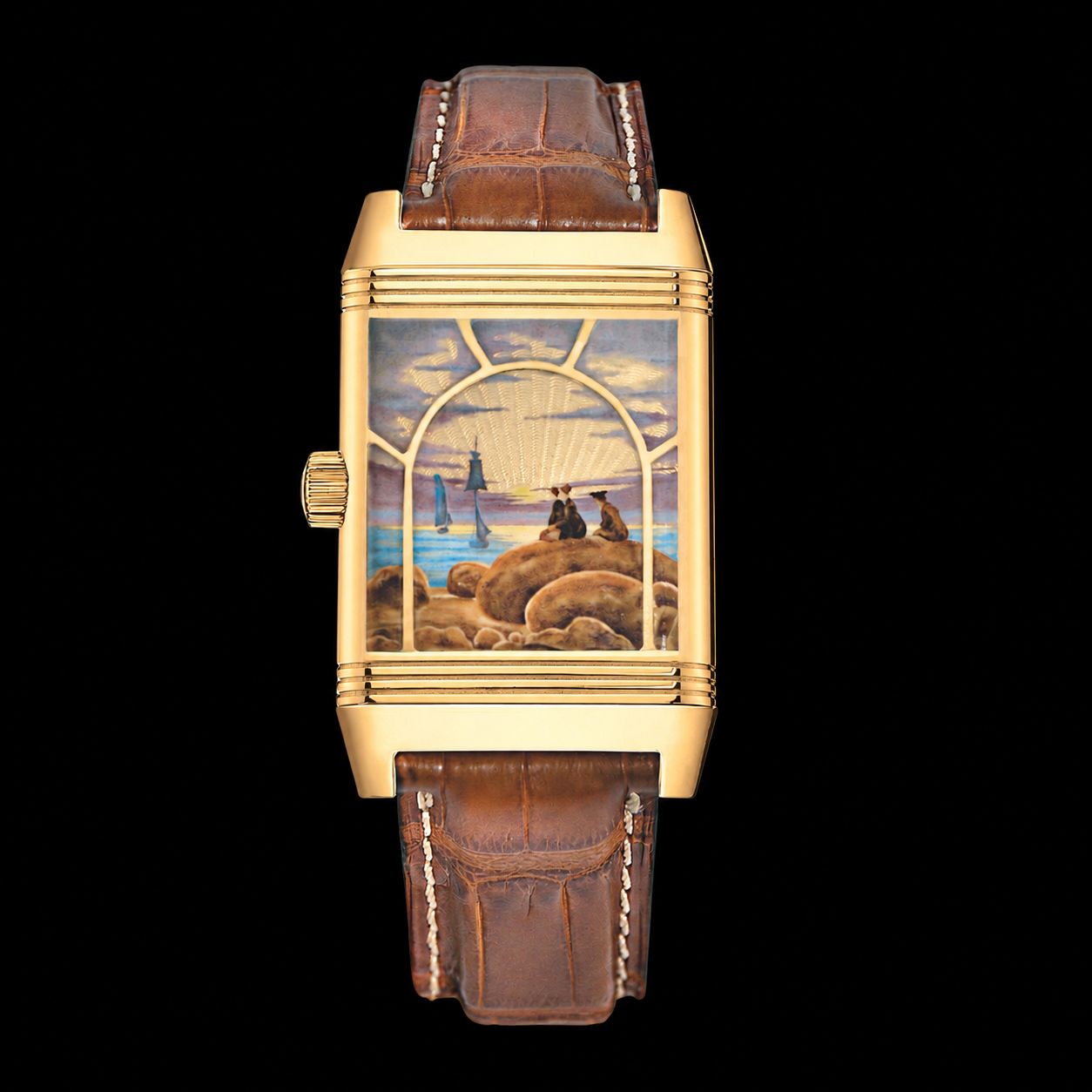
Two Romantic seascapes on an 8-day grande complication base — the first Reverso enamel set built on an opaline-over-guilloché finish. Full set catalogued on its own page.
See the full set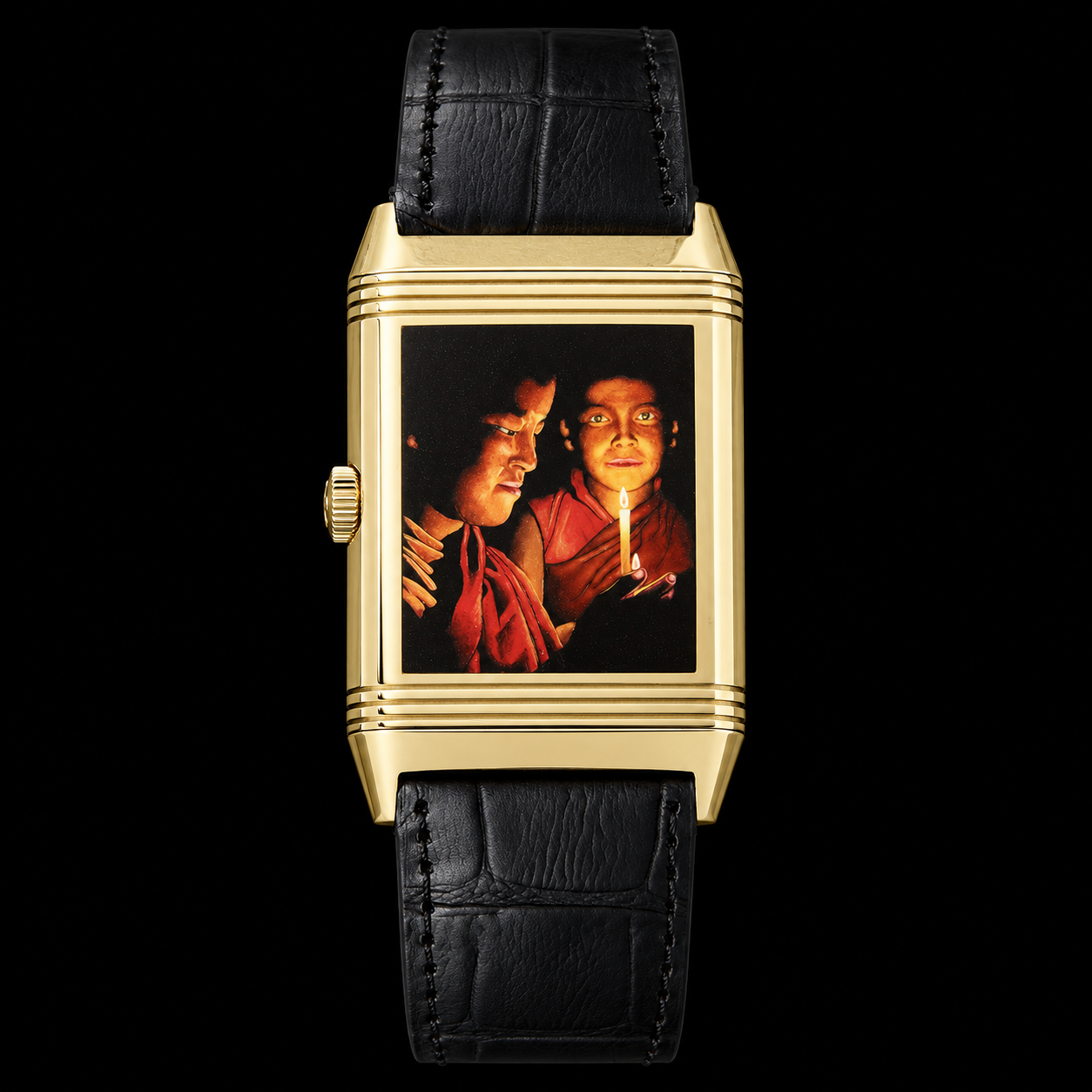
Year: 2010 Calibre: —
Material: Yellow gold
Market: International
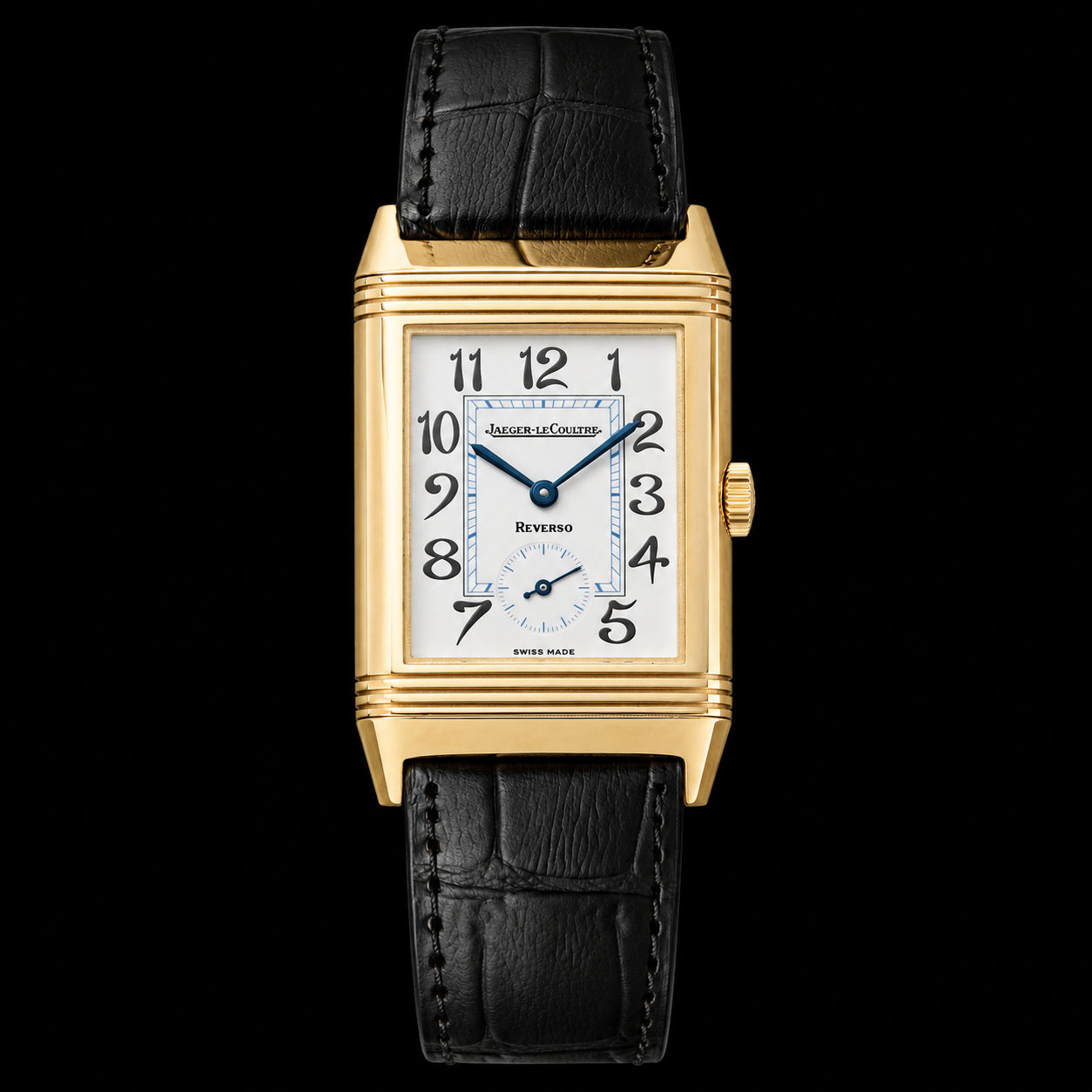
An enamel miniature titled “The Path of Truth,” limited to eight pieces — little else about it is documented beyond the subject and edition size.
Year: 2018 Calibre: Cal. 822A/2
Material: White gold (Summer) · yellow gold (Spring, Autumn)
Market: International
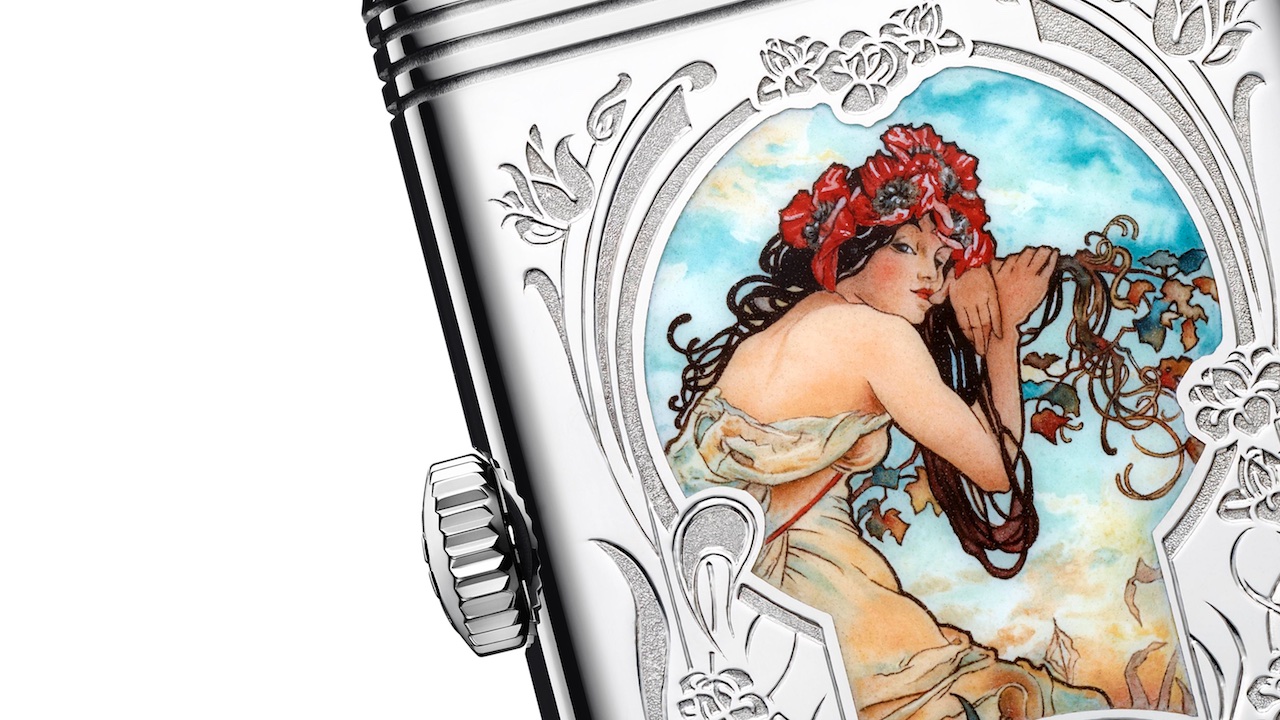
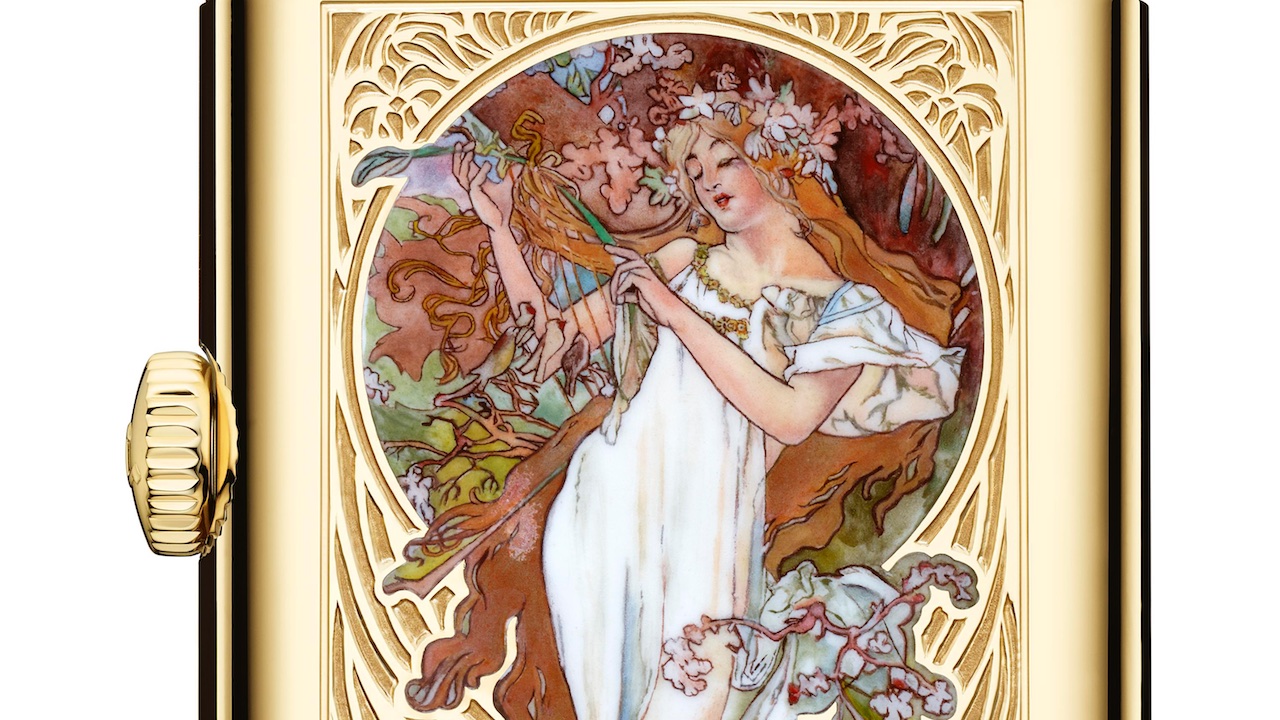
Summer, Spring, and Autumn from Mucha’s "The Seasons" (1896) — Winter is the one panel left out, following a full four-piece set JLC made of the same theme back in 1996. Full set catalogued on its own page.
See the full set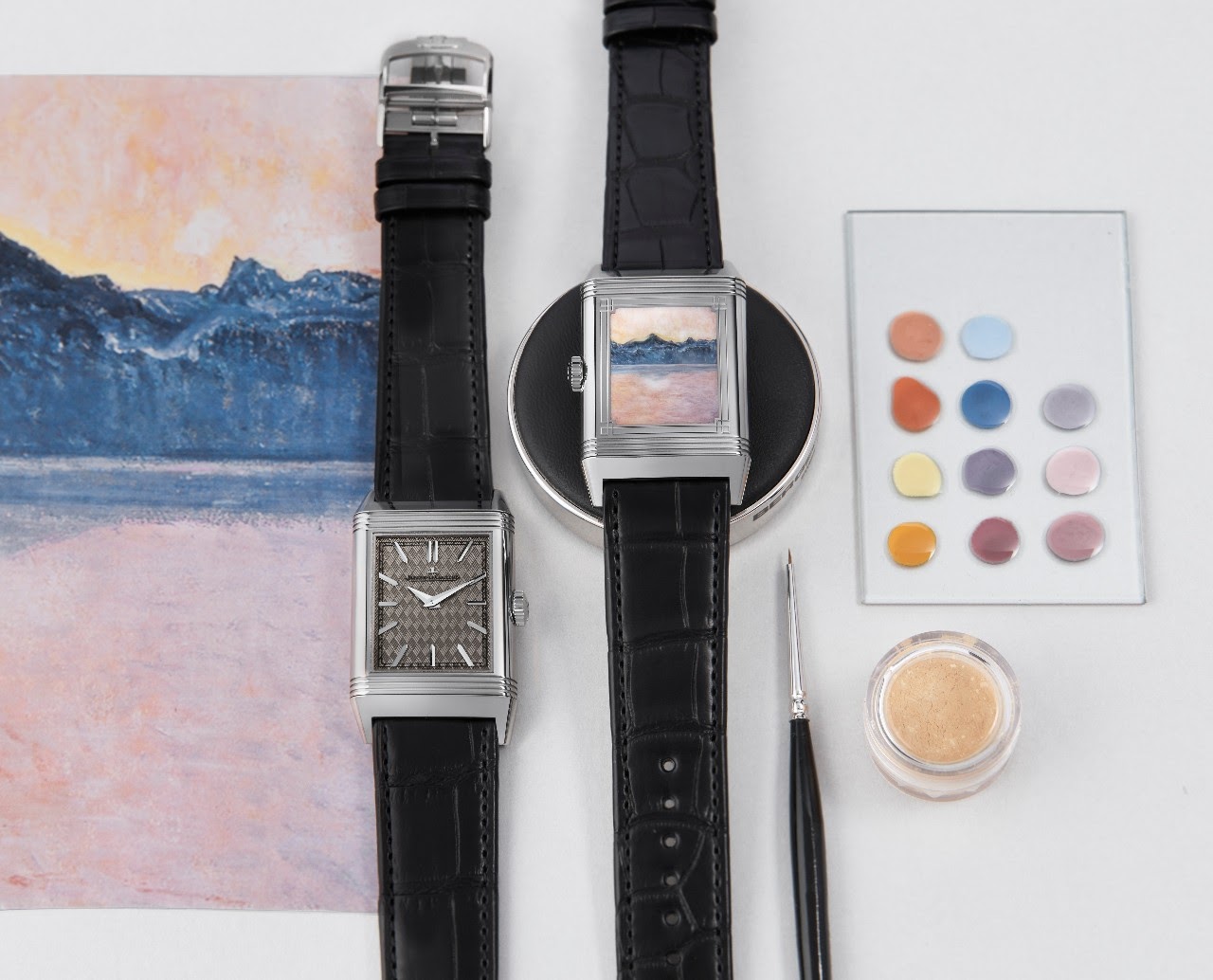
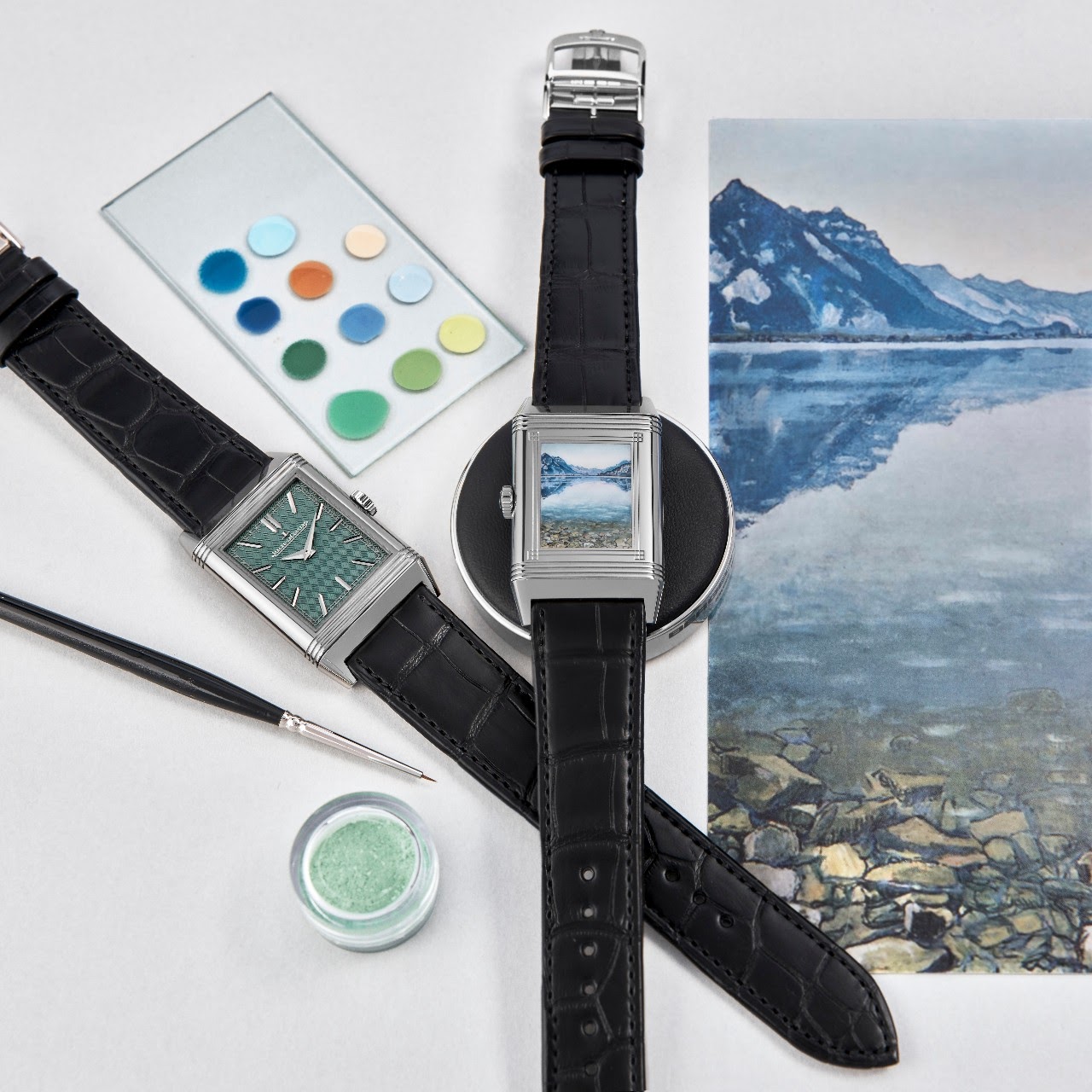
Year: 2018 Calibre: Cal. 822
Material: White gold
Market: International
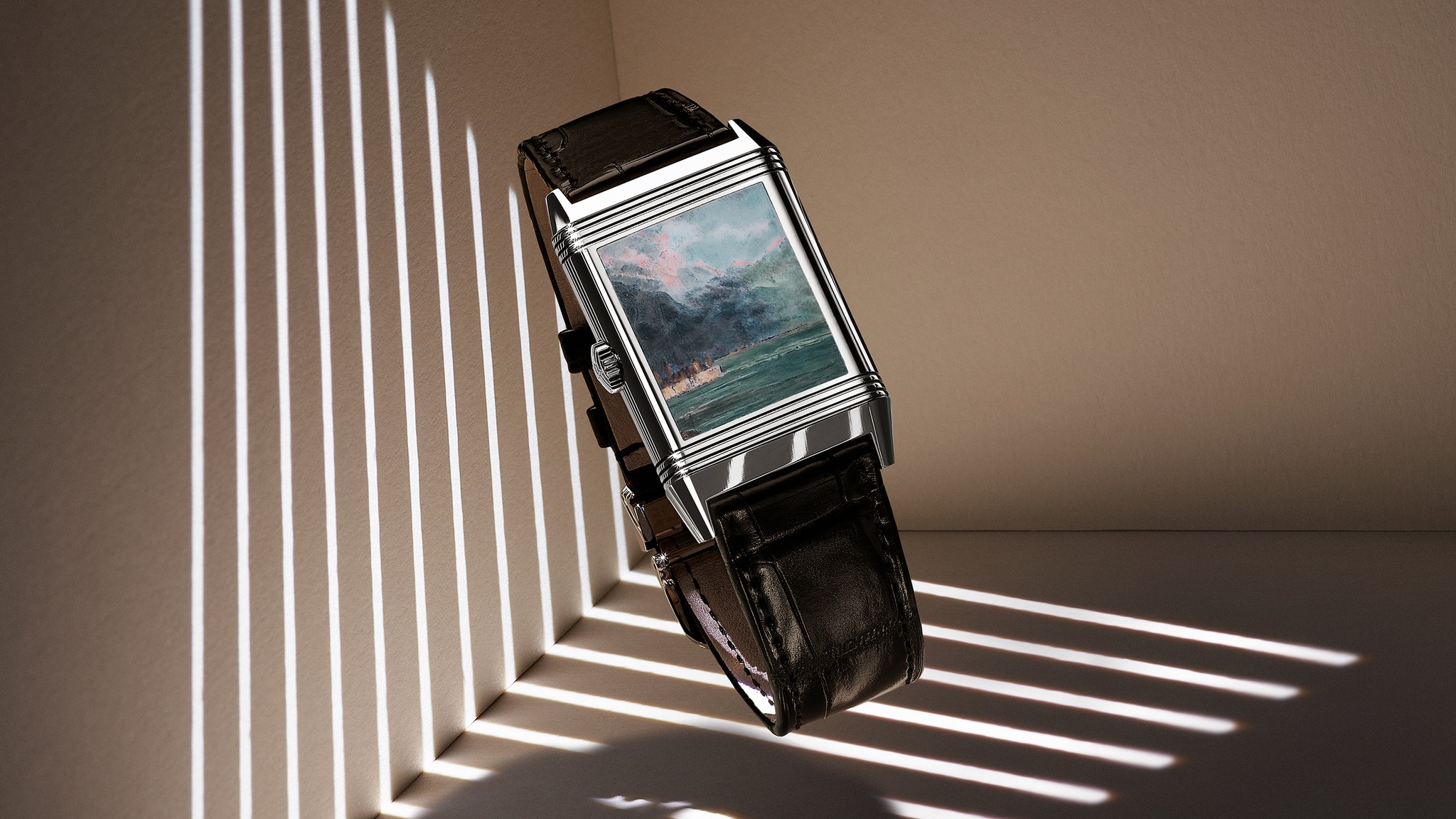
Three Swiss lake landscapes marking the centenary of the painter’s death, each dial hand-guillochéd and engraved before enamelling. Full set catalogued on its own page.
See the full set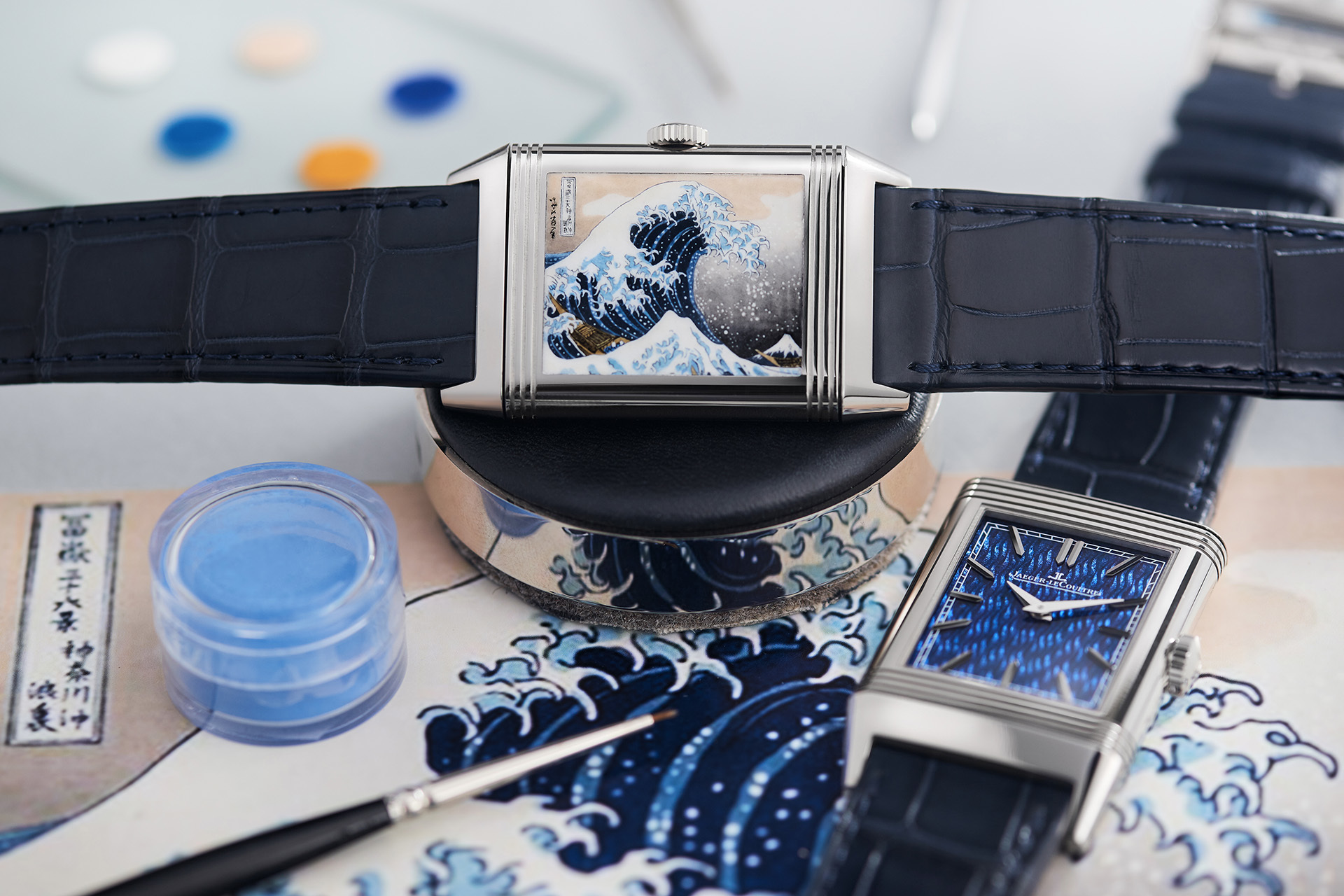
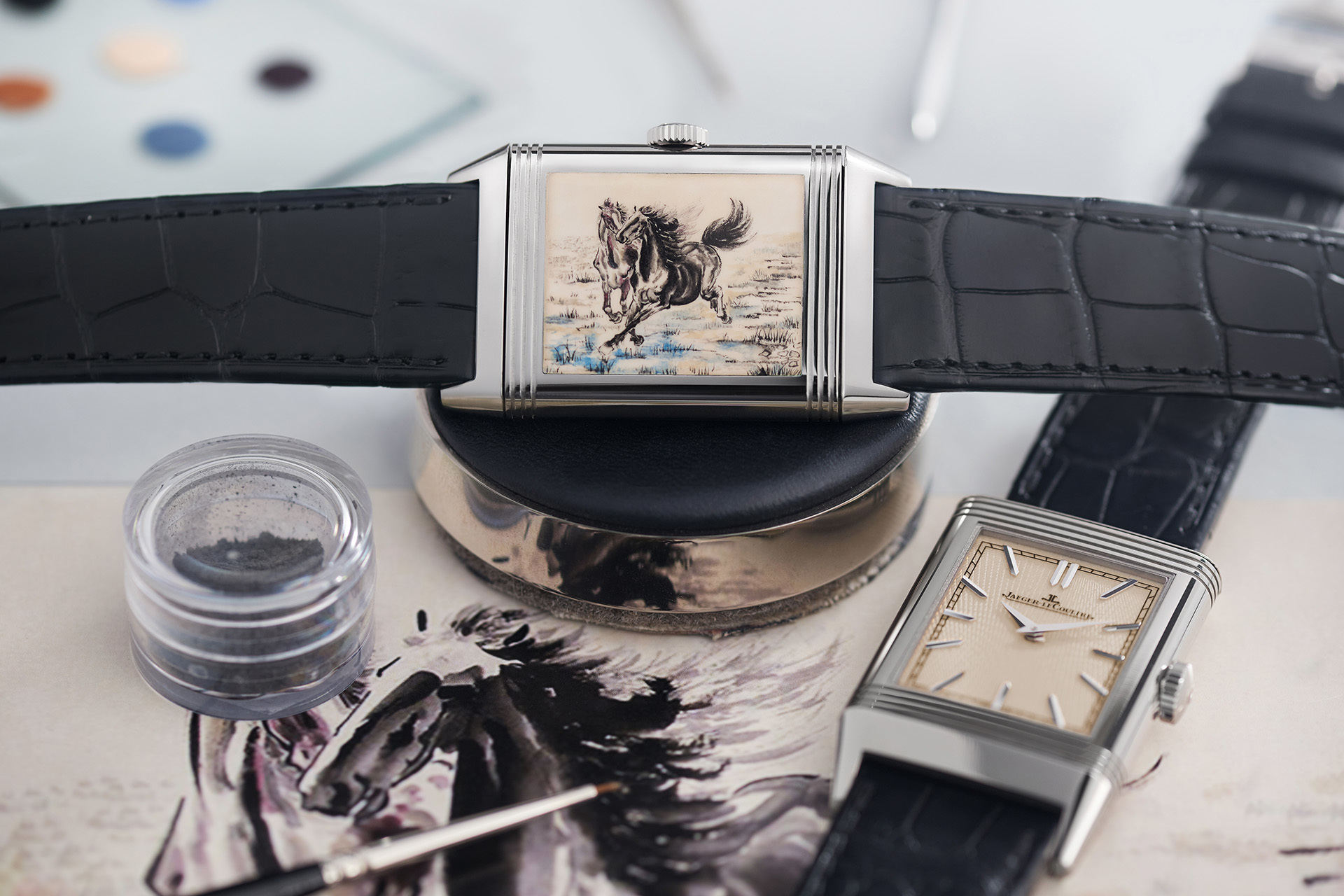
Year: 2018 Calibre: Cal. 822
Material: White gold
Market: International
The original trio: Seurat’s pointillism, Xu Beihong’s ink wash, Hokusai’s woodblock printing, each attempted in enamel miniature for the first time. Full set catalogued on its own page.
See the full set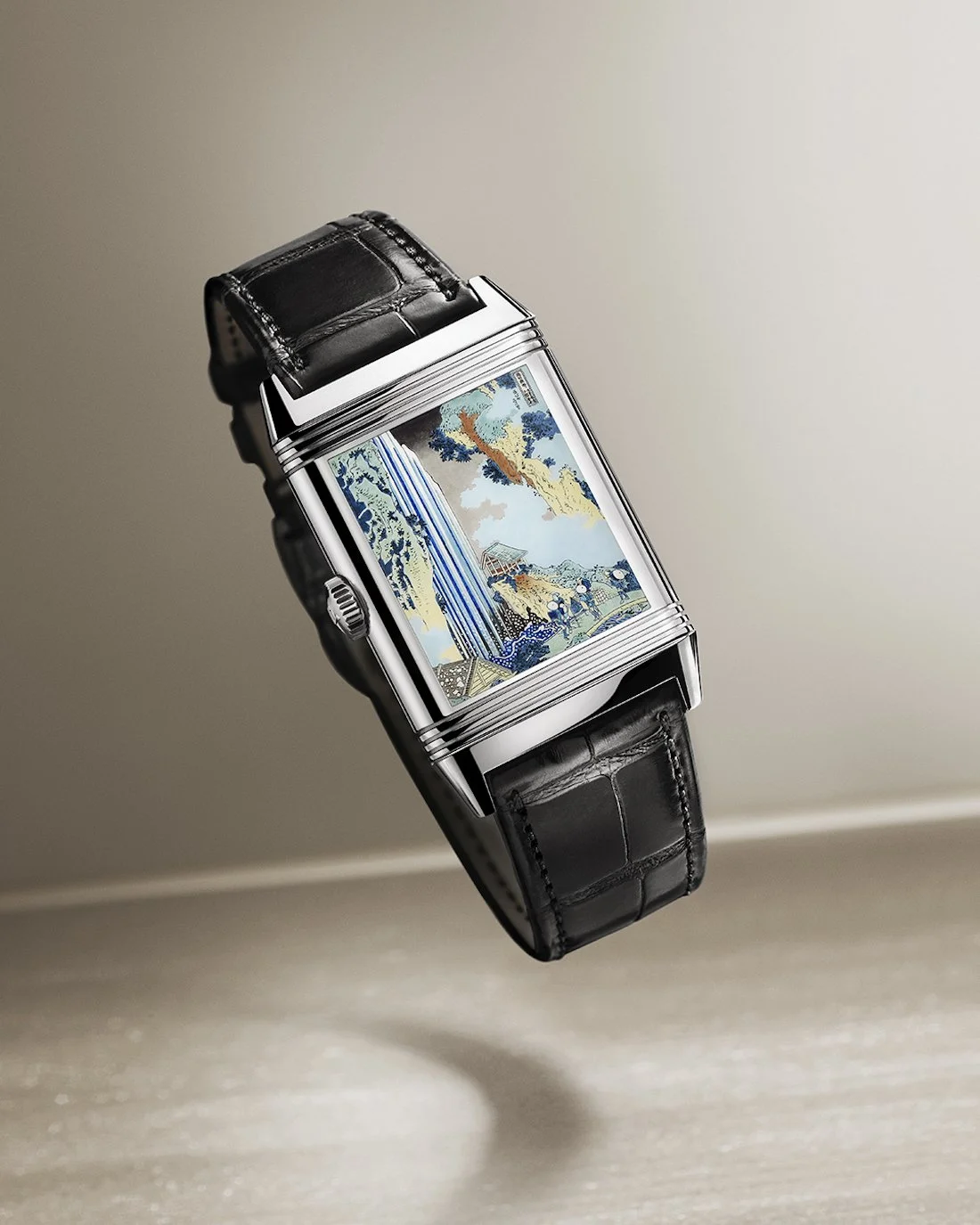
Year: 2018 – 2026 Calibre: Cal. 822
Material: White gold
Market: International
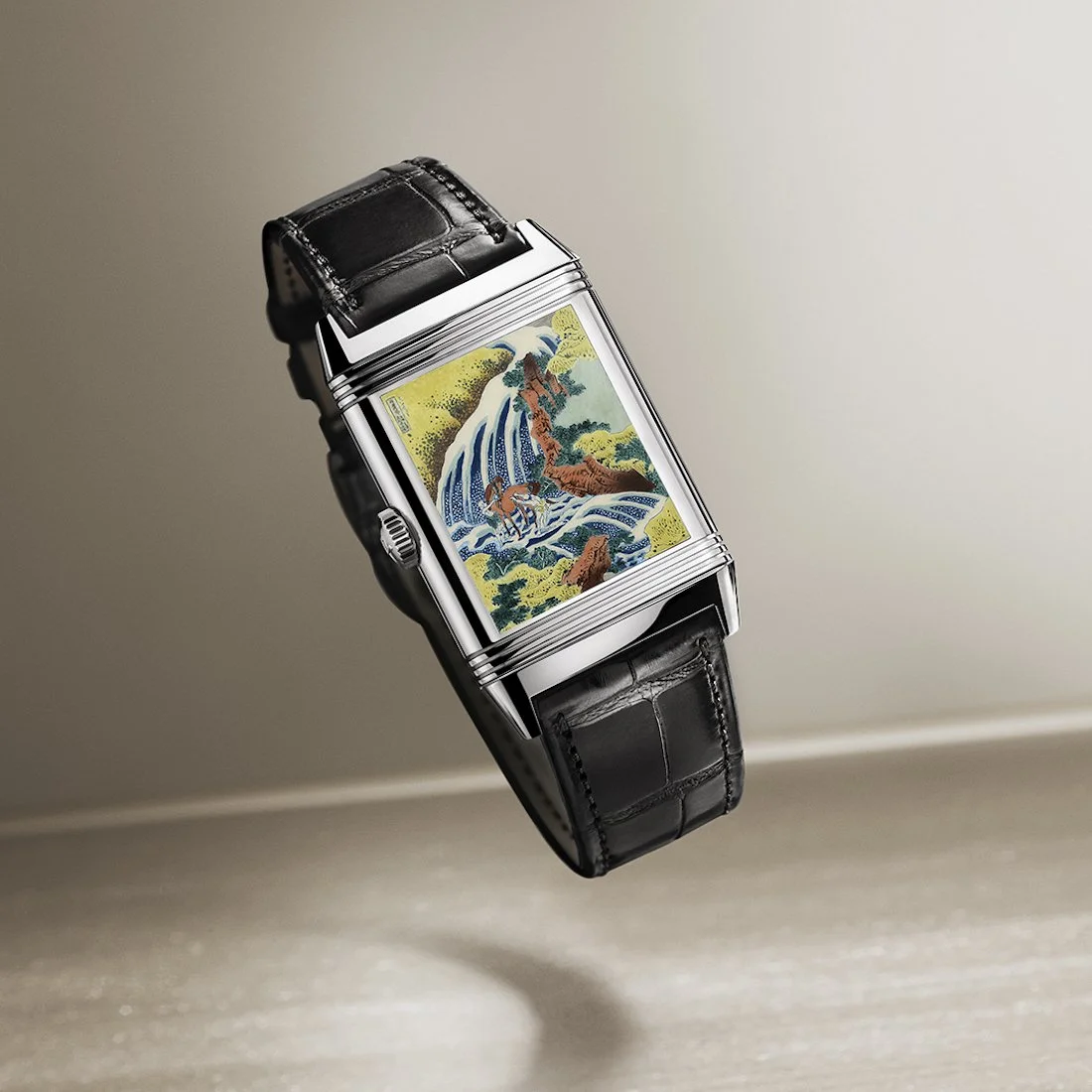
An eight-year cycle reproducing every waterfall Hokusai printed, plus The Great Wave. Around fourteen layers of fired enamel per case-back, roughly 100 hours apiece. Full set catalogued on the Stories page.
See the full set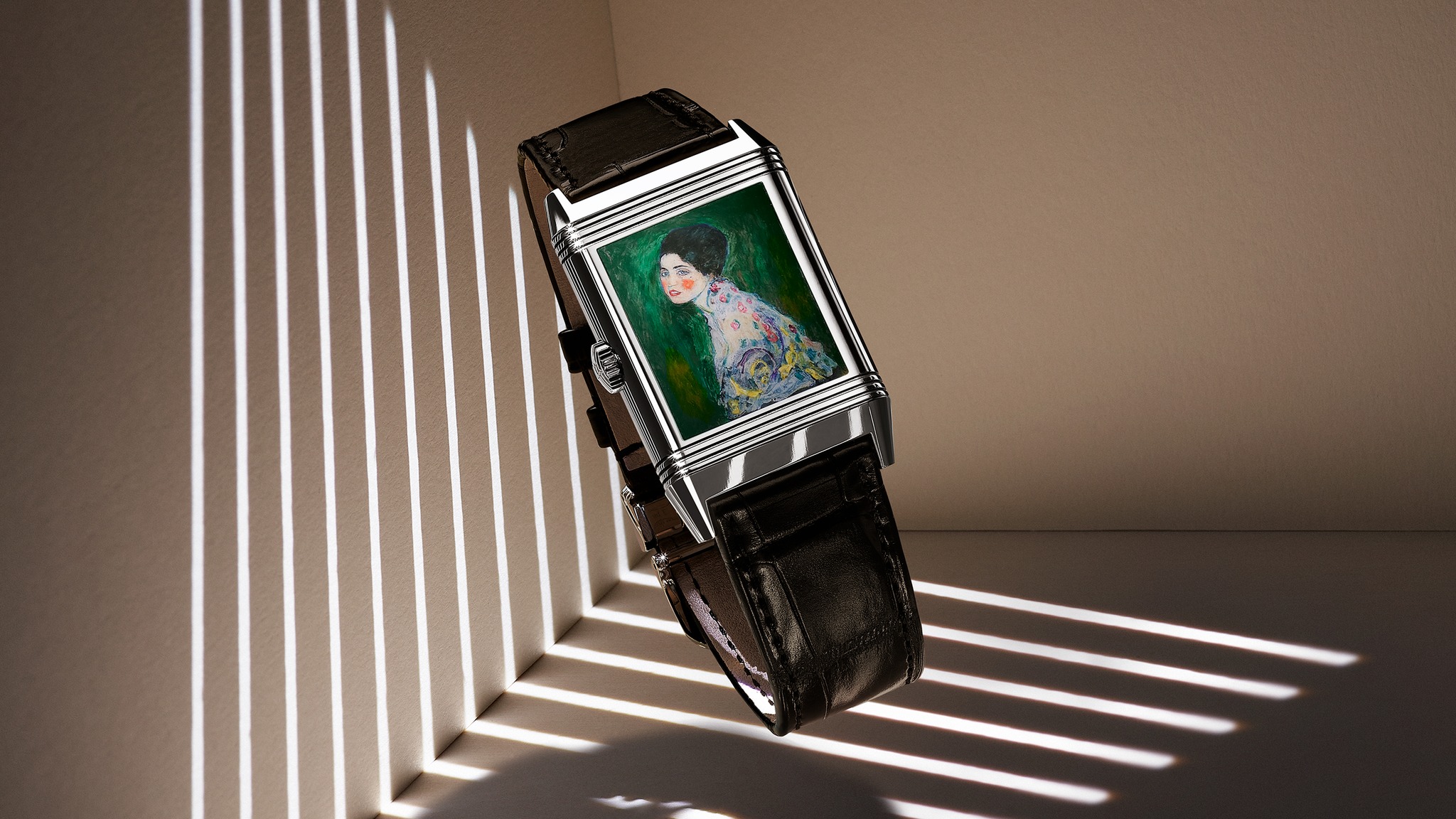
Year: 2022– Calibre: Cal. 822 / 822A/2
Material: 18k pink gold
Market: Boutique only
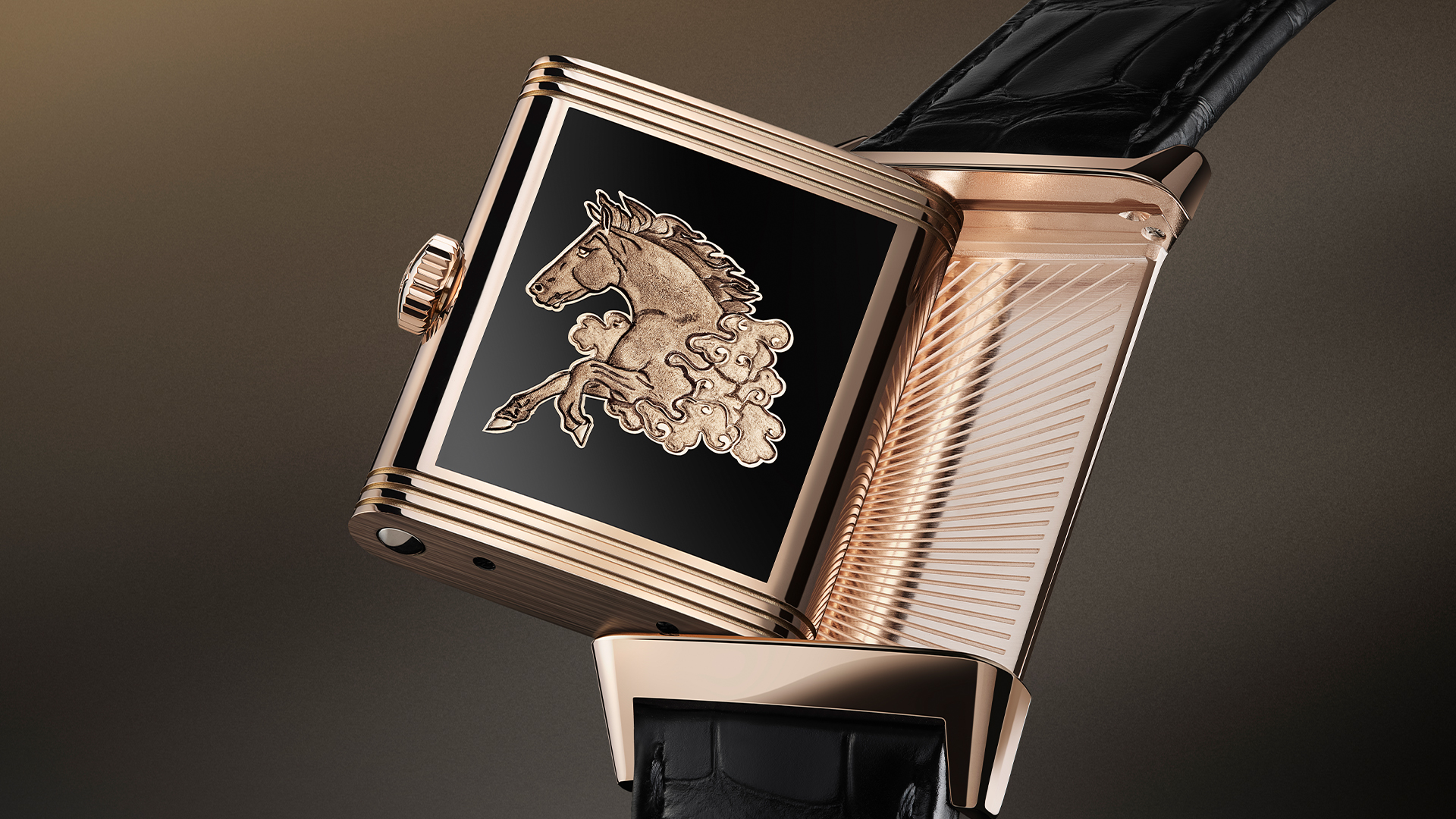
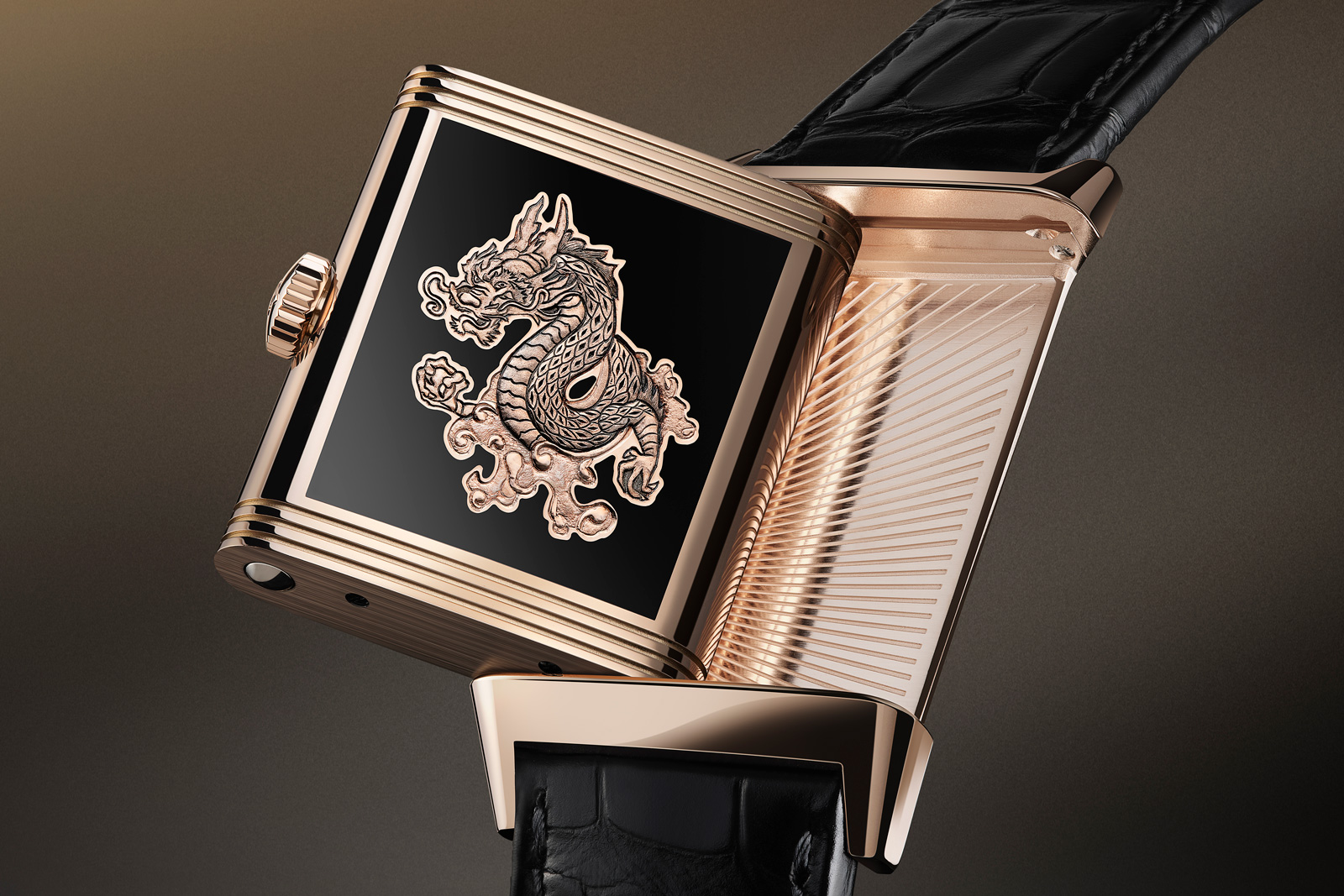
One Lunar New Year animal at a time — Tiger, Dragon, Snake, Horse so far — each modelled-engraved into a caseback that was enamelled black first. Full set catalogued on its own page.
See the full set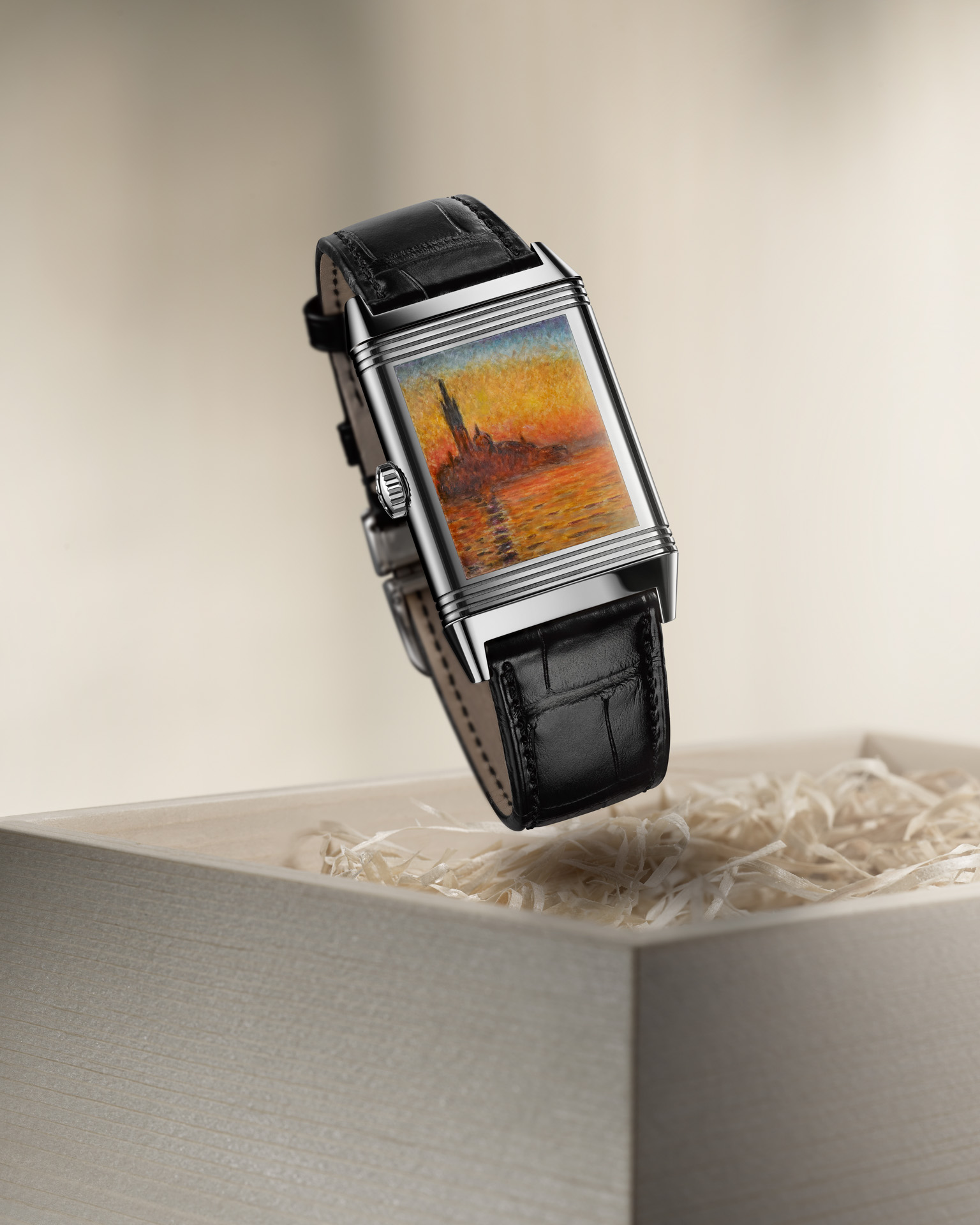
Year: 2024 Calibre: Cal. 822
Material: White gold
Market: International
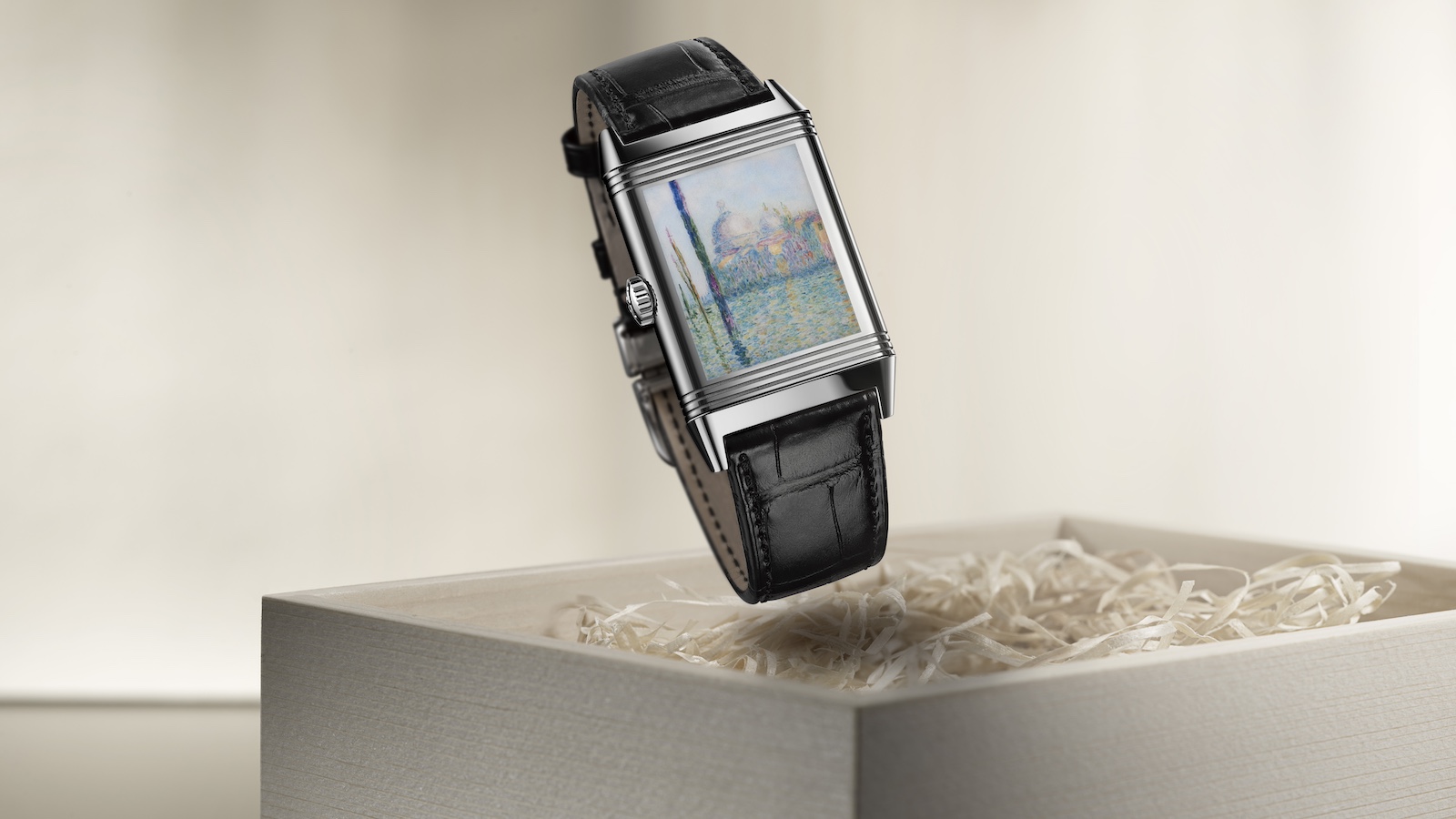
Three Monet views of Venice, made for the Homo Faber biennial — canvases over 65 × 92 cm reduced to a case-back.
See the full set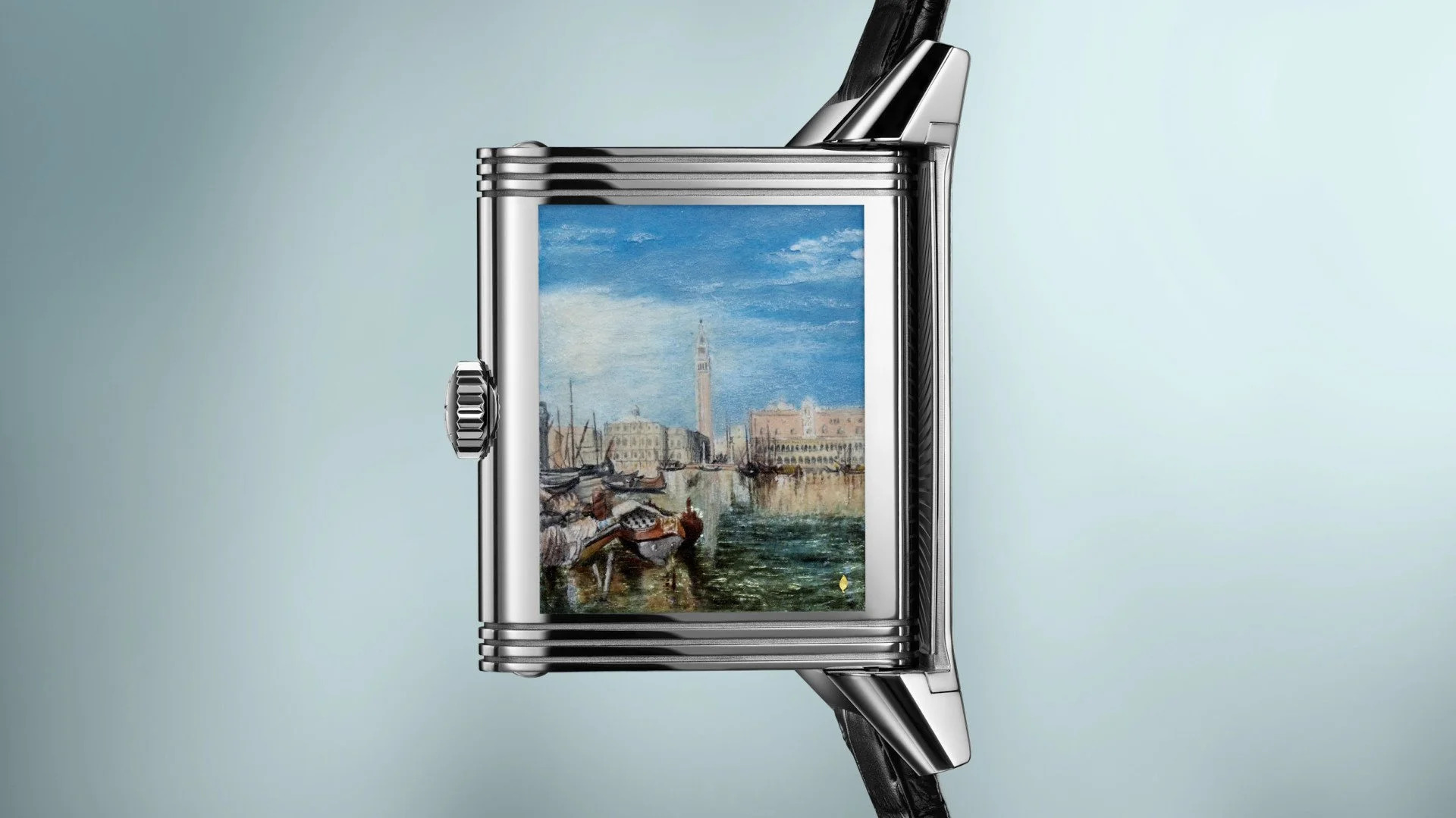
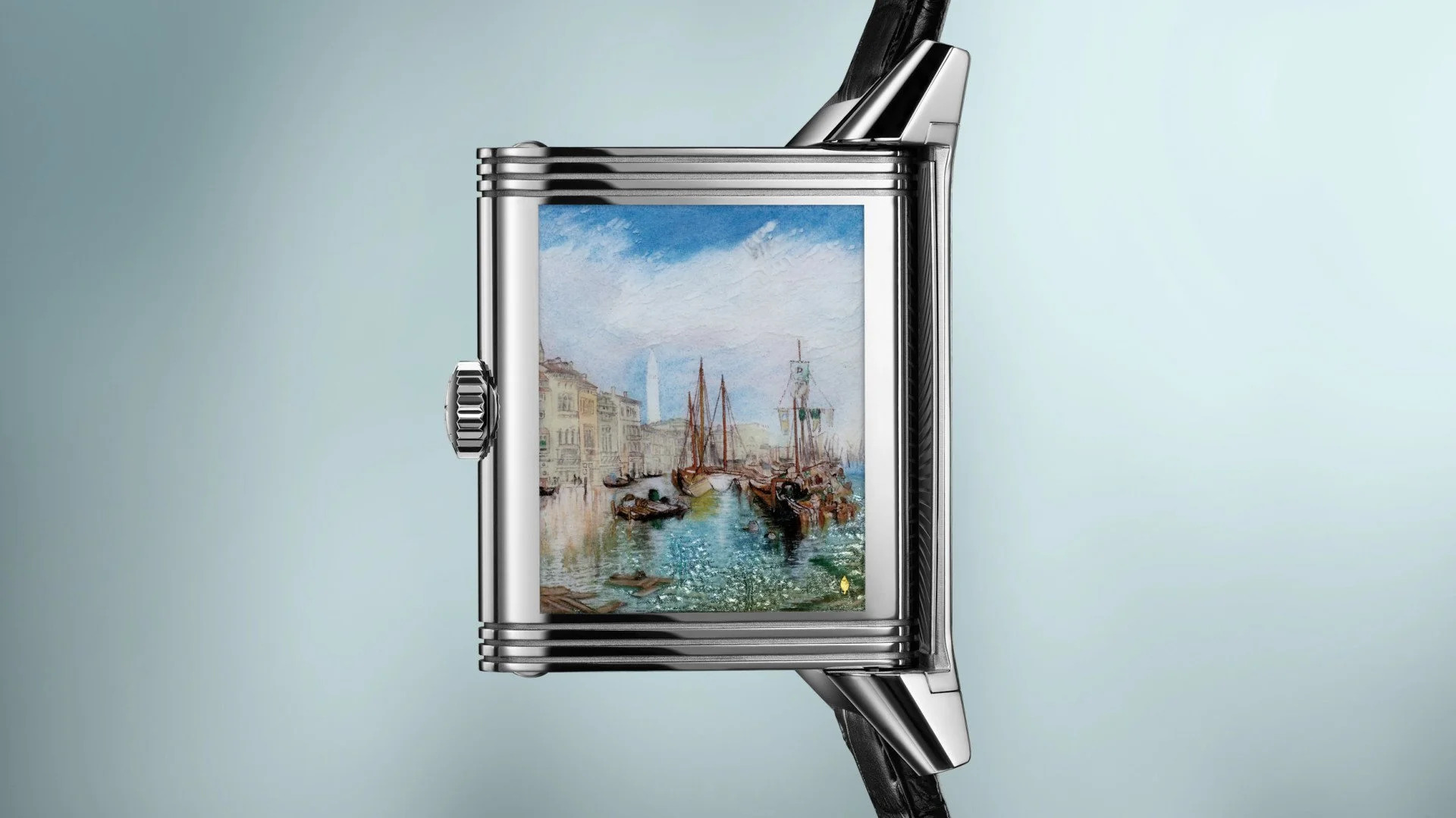
Year: 2025 Calibre: Cal. 822
Material: White gold
Market: International
Venice again, fifty years earlier and through English eyes. All four use paillonnage — silver foil laid beneath the enamel — to give the water its glint.
See the full set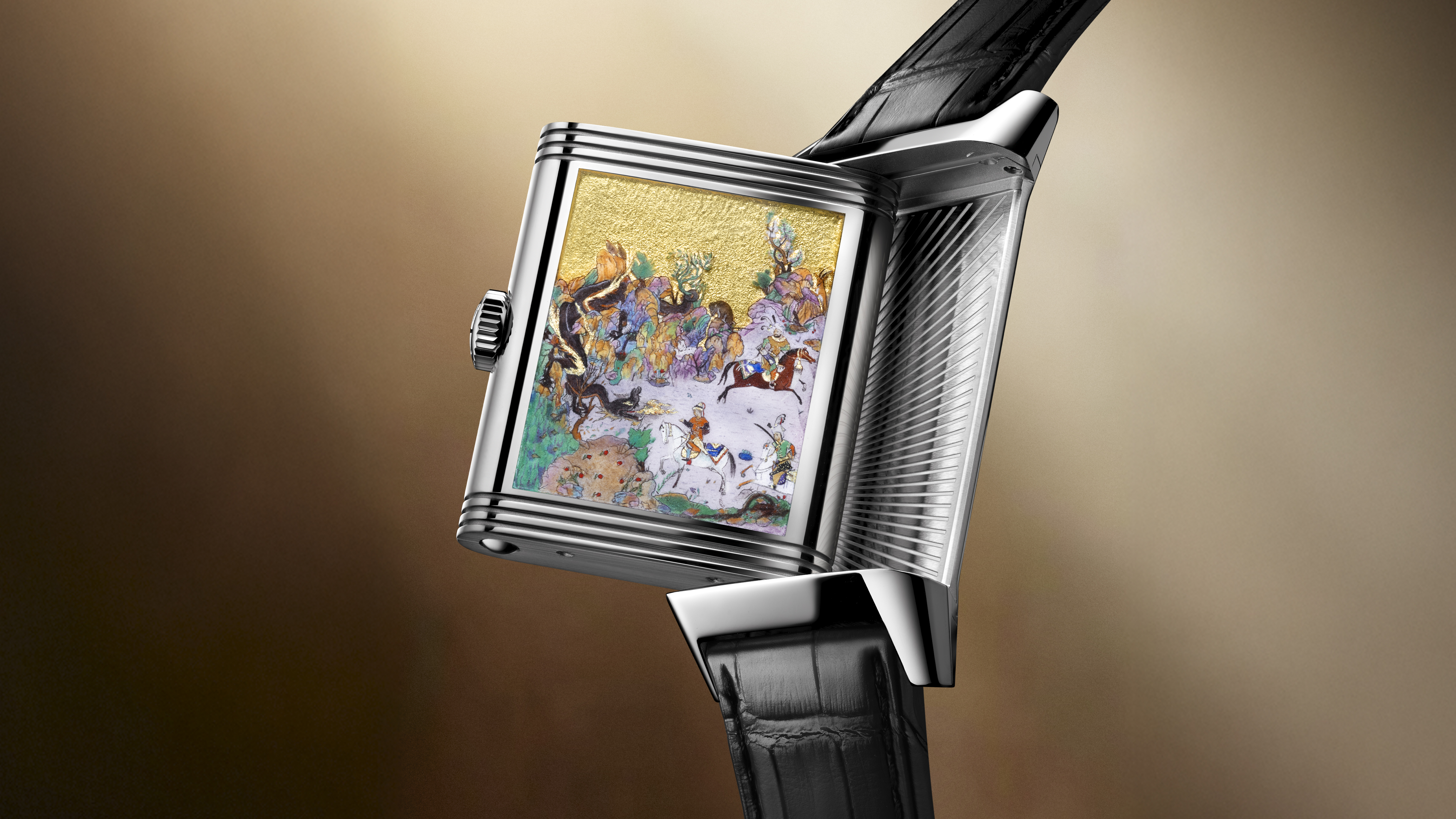
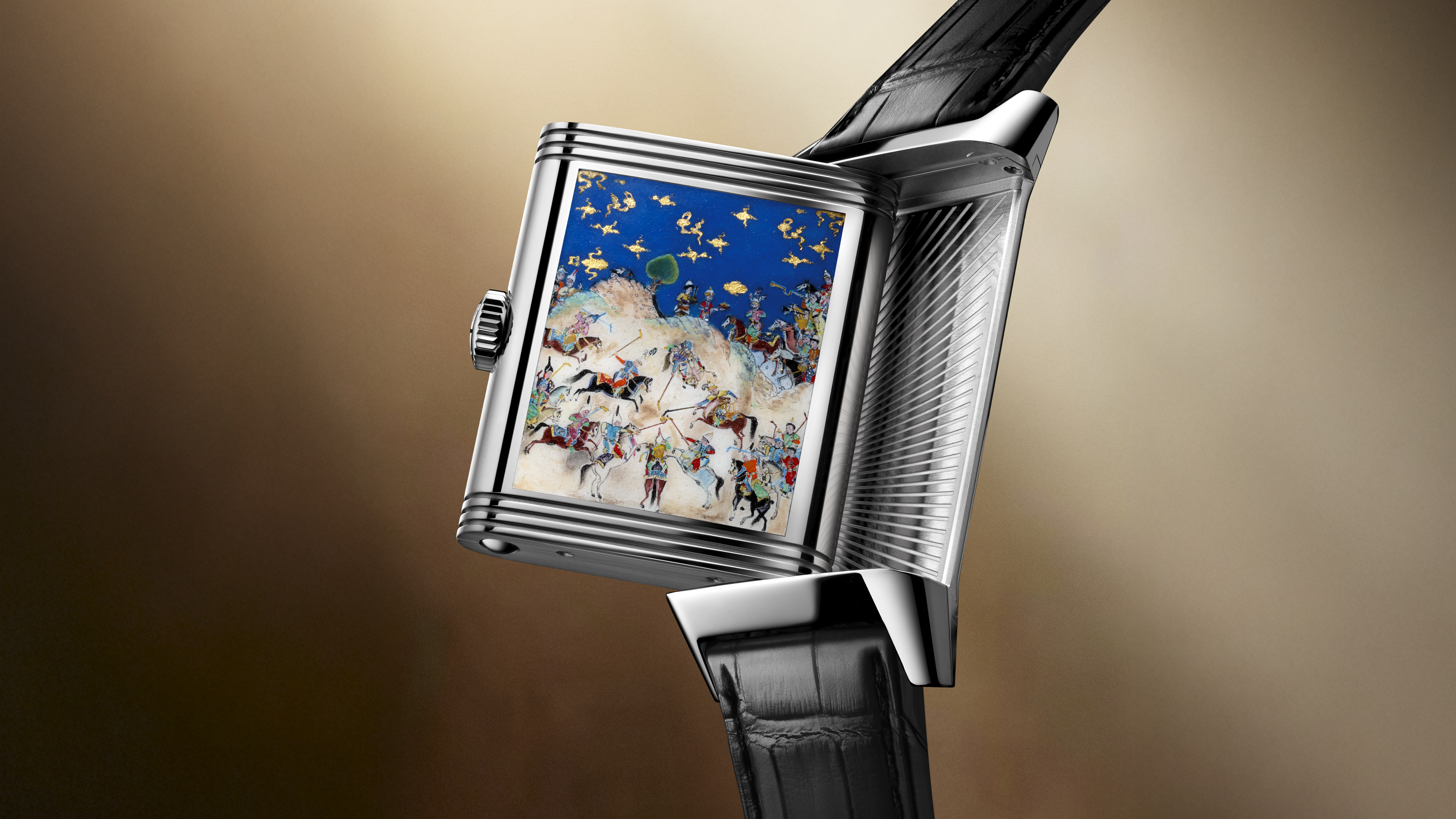
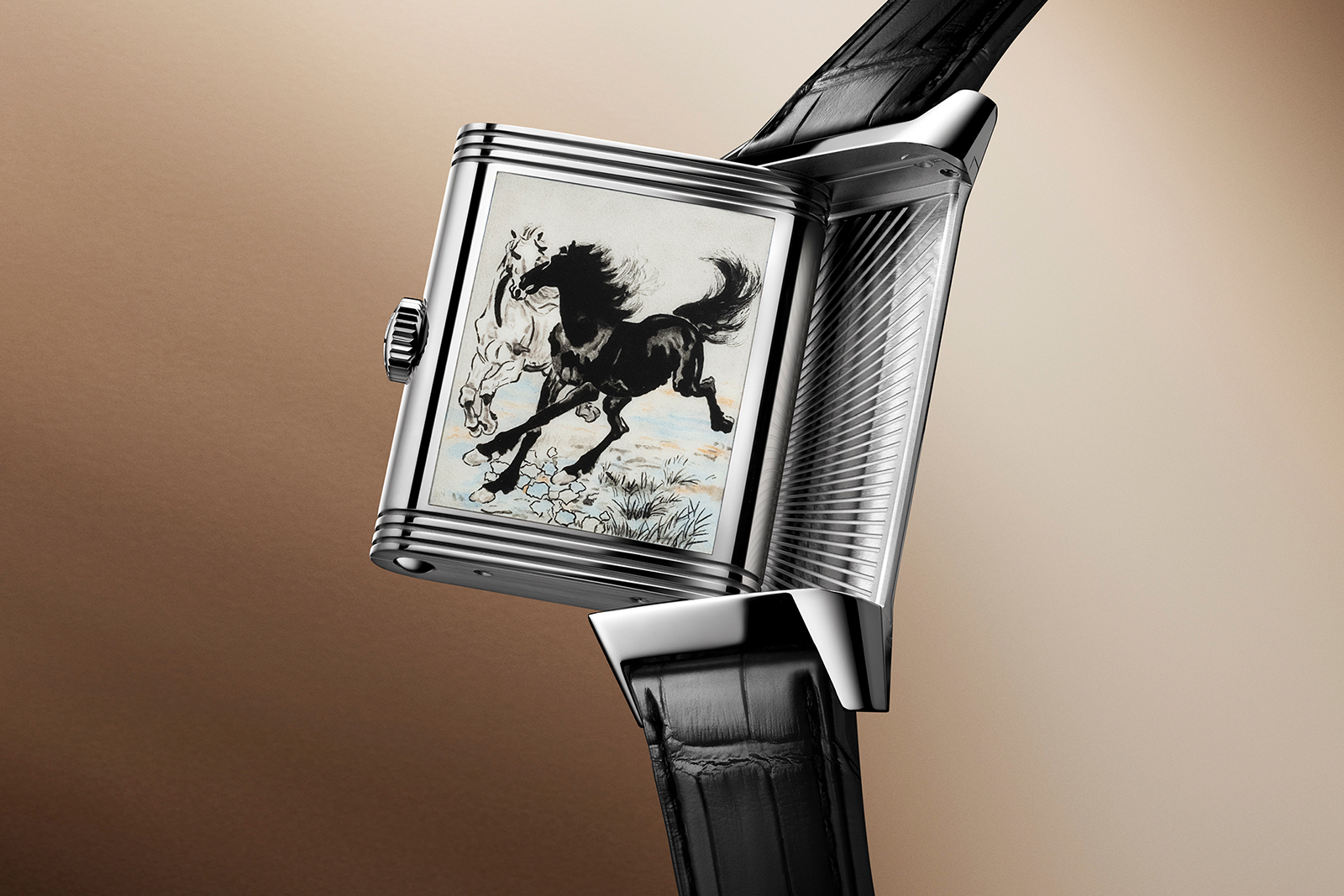
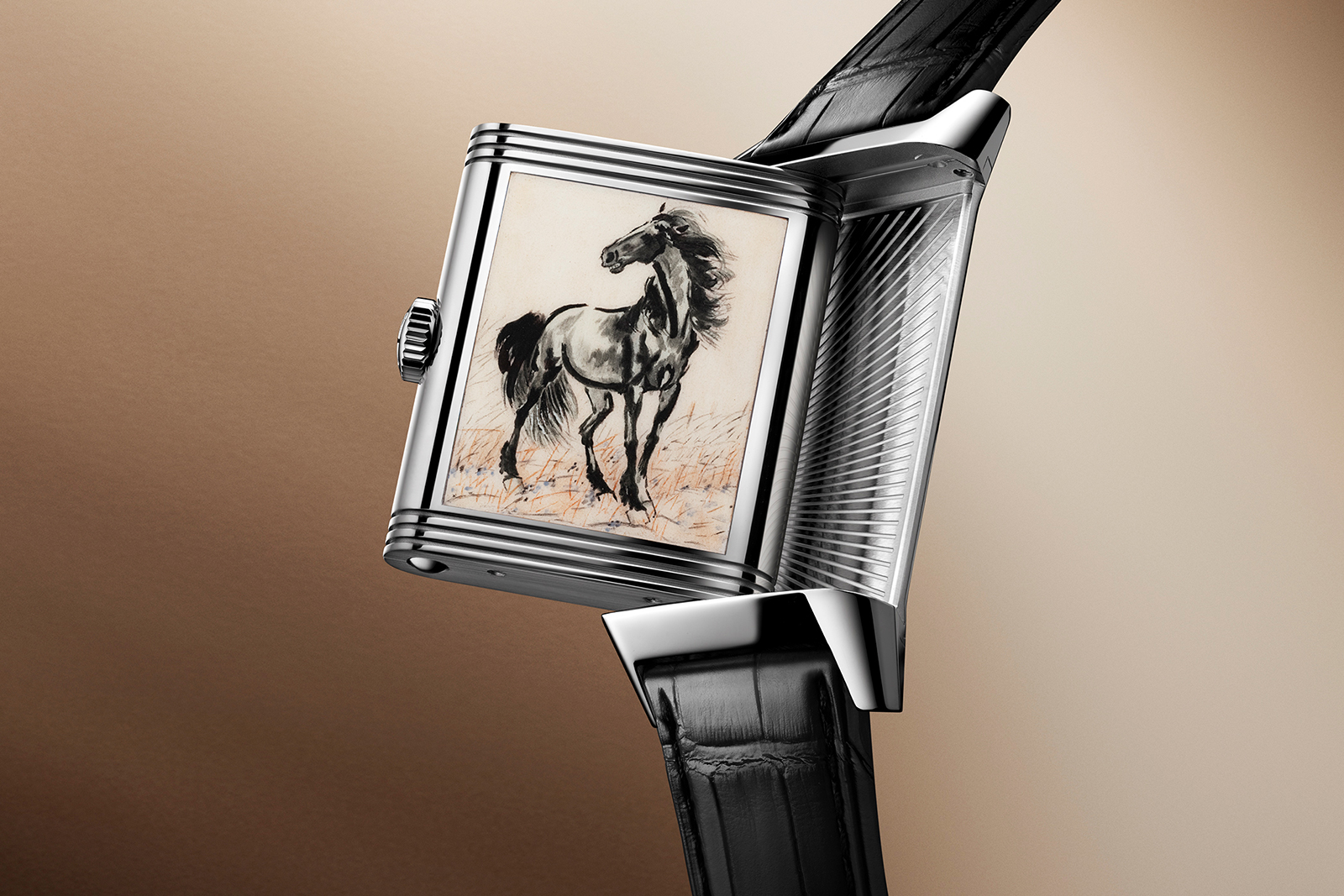
Year: 2025 Calibre: Cal. 822
Material: White gold
Market: International
Three ink horses by Xu Beihong, each shrunk from over a square metre of paper to a case-back roughly 80 hours in the making.
See the full setReverso Joaillerie
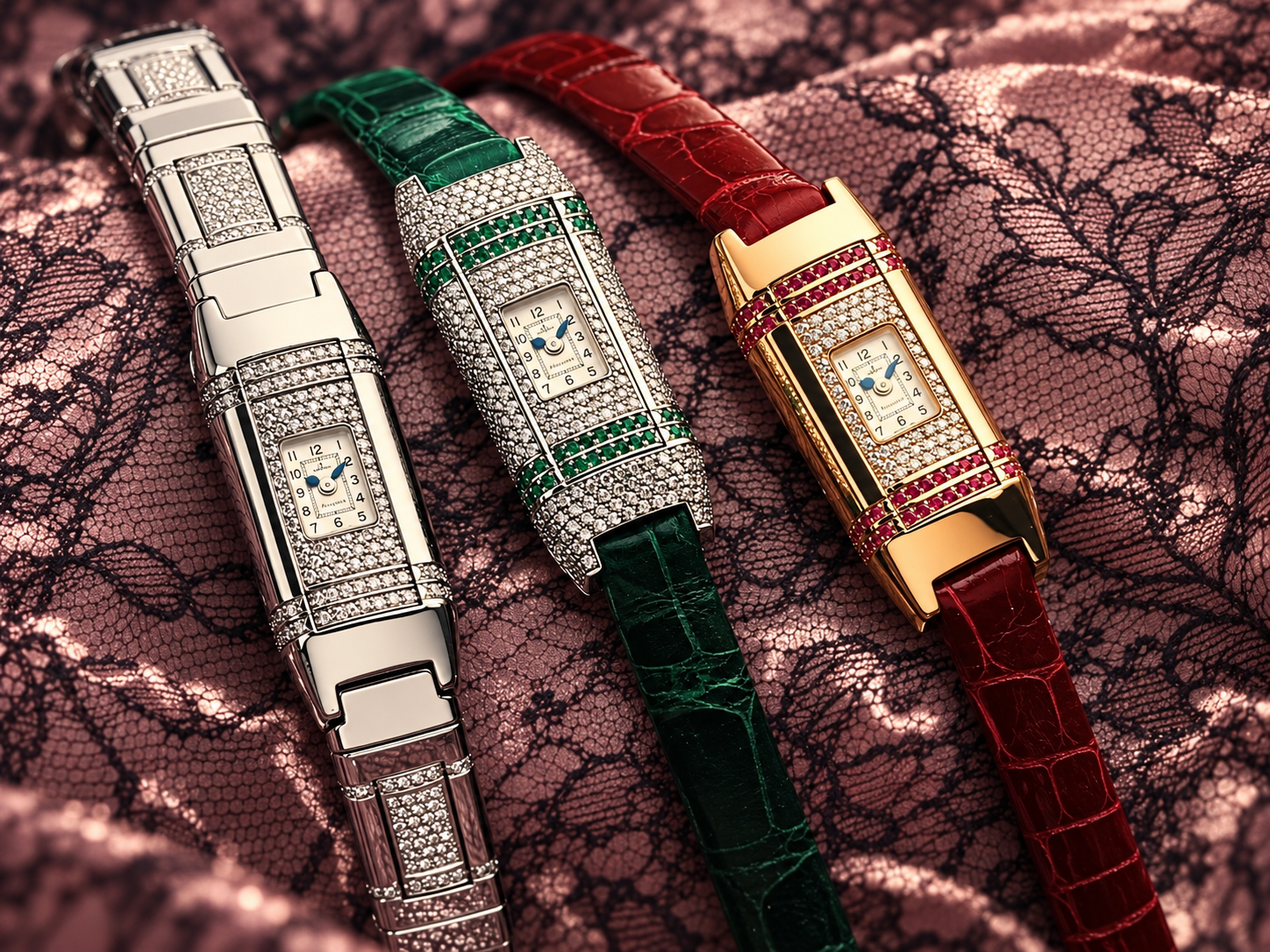
Diamond-set cases, jewelled cords, and the Reverso worn as something other than a wristwatch.
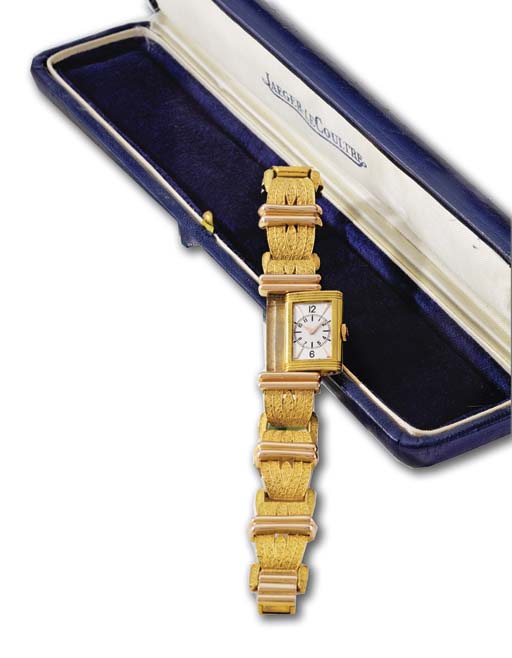
Year: 1935 Calibre: —
Material: Tri-colour gold (yellow, pink, white)
Market: International
An unusually early Reverso built with an integrated bracelet rather than a strap, its case and links combining yellow, pink, and white gold — a tri-colour treatment more commonly associated with later 20th-century jewellery watches than with a design only four years removed from its 1931 patent. Movement No. 61603, case No. 31935, dated by its numbering to 1935 itself.
Year: 1990s–2023 Calibre: Cal. 846
Material: Gold, gem-set
Market: International
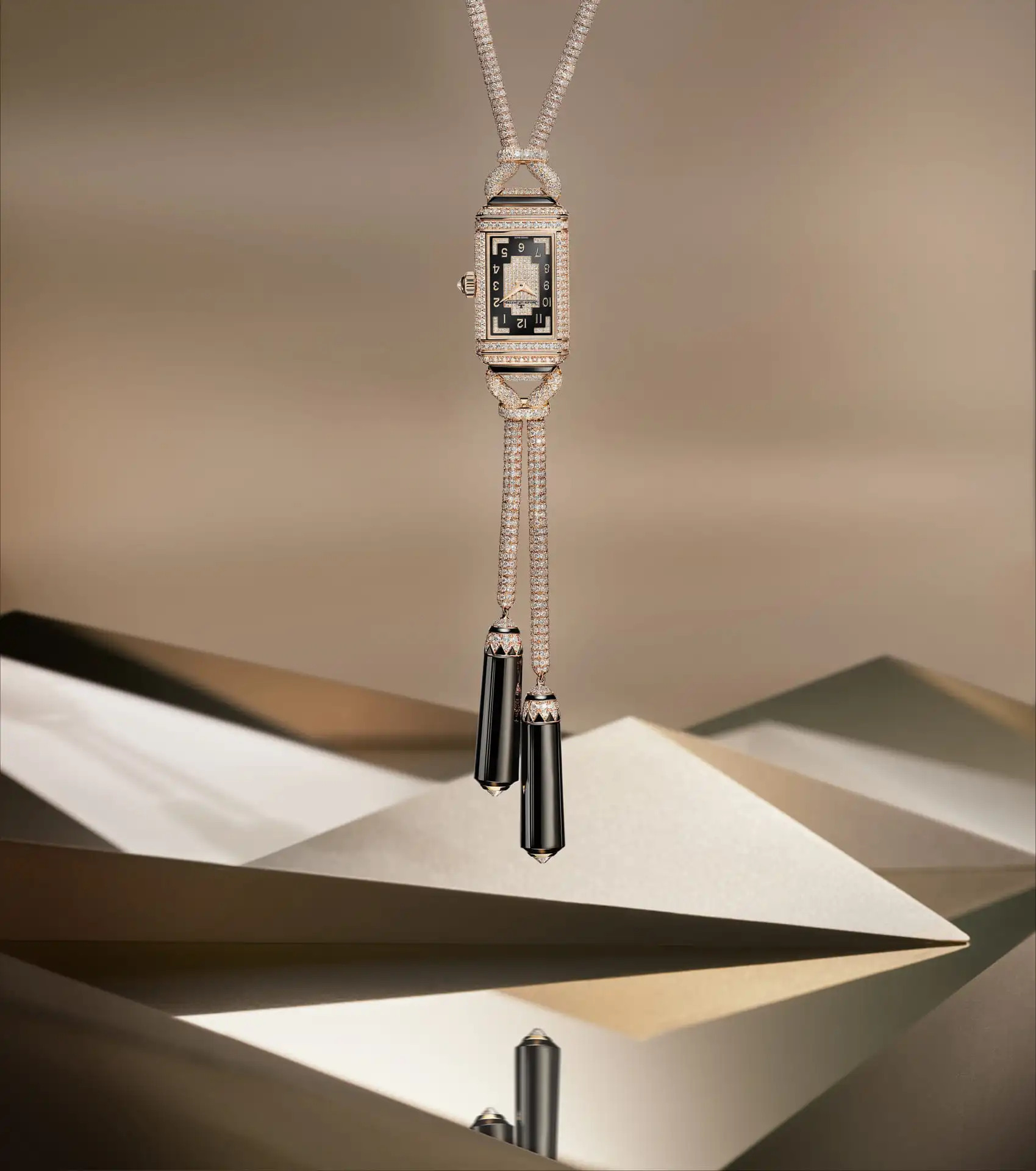
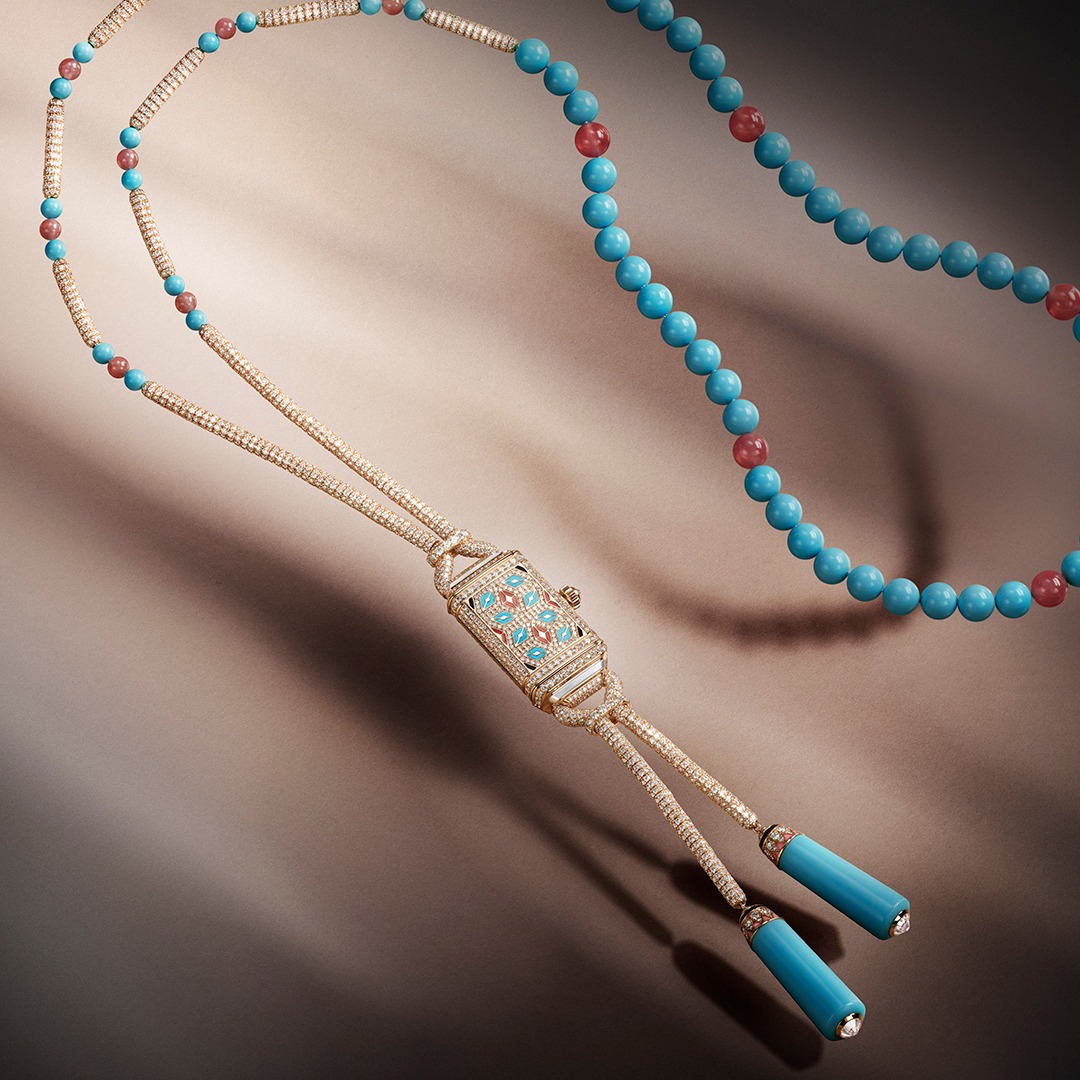
Two distinct eras of the Reverso worn as a pendant: a 1990s cross-mounted “Reverso Pendentif” on a navy cord, and a 2023 Watches & Wonders High Jewellery bolo-cord version in several colourways. Full set catalogued on its own page.
See the full set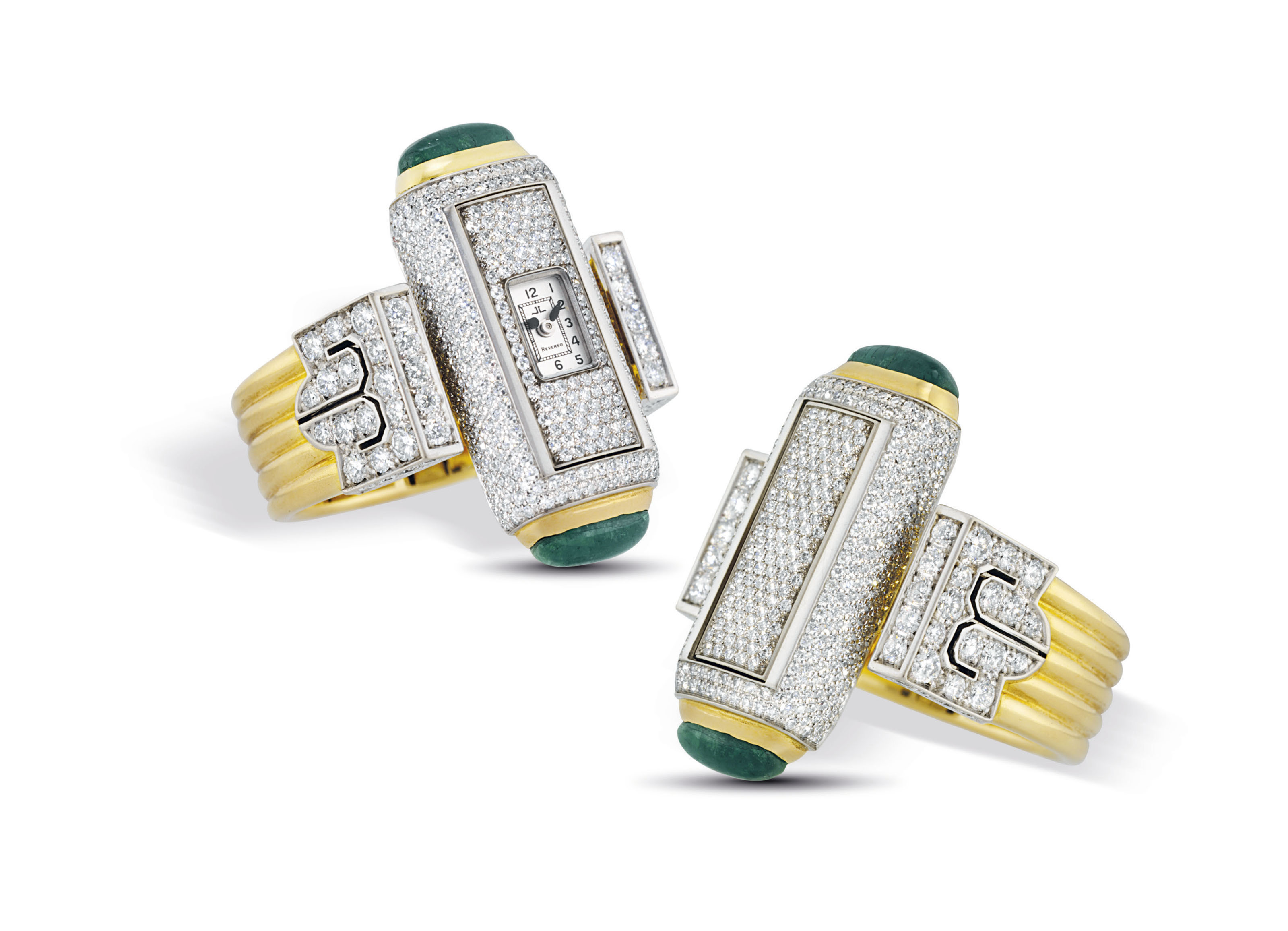
Year: 1998 Calibre: Keyless lever
Material: Gold, diamond and emerald-set
Market: International
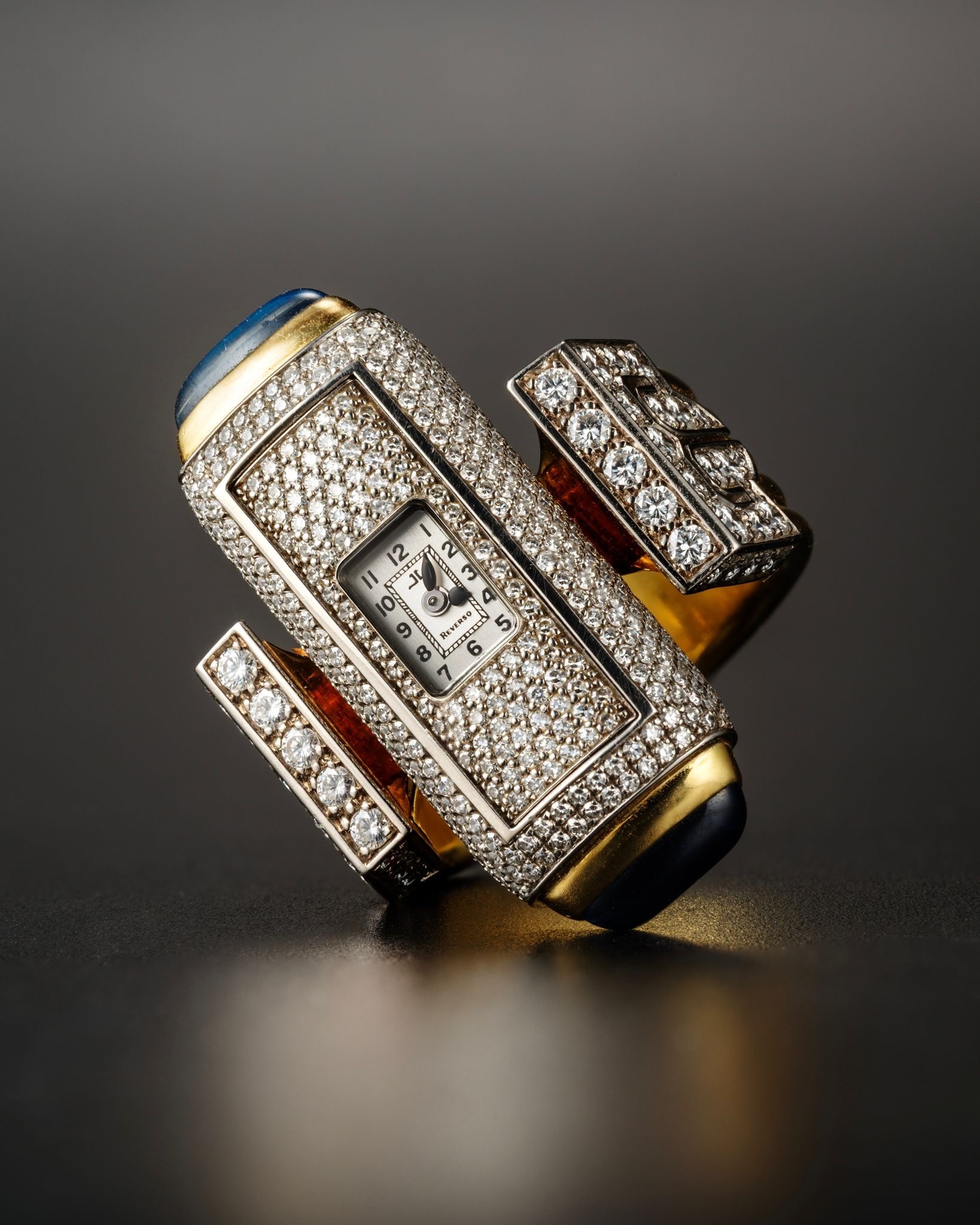
The Reverso concept as a ring rather than a wristwatch, sharing its reference with one of the calibre 101 pieces in the Les Folies bracelet family — catalogued in full as a Pièce Unique elsewhere in this archive, since it isn’t part of any numbered edition.
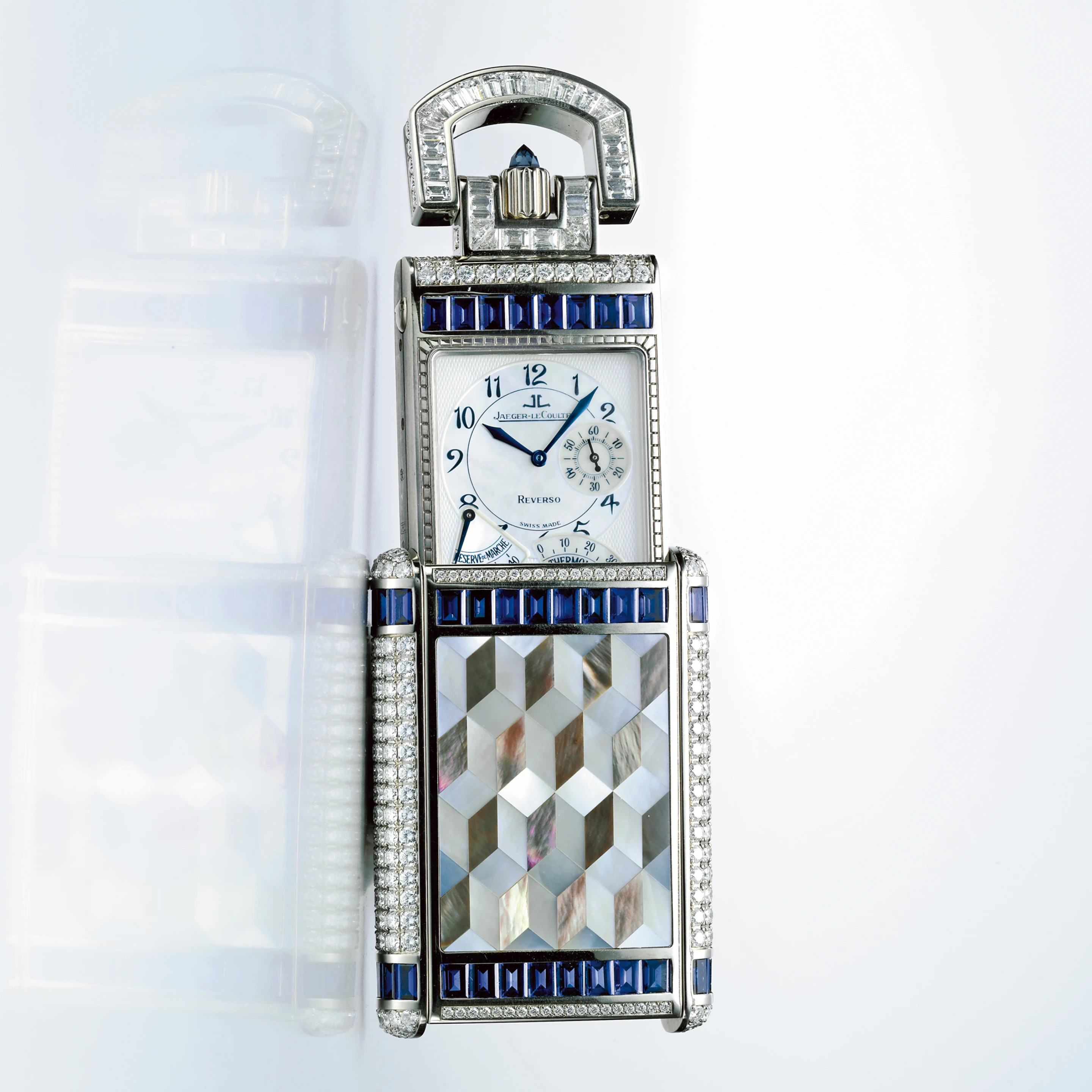
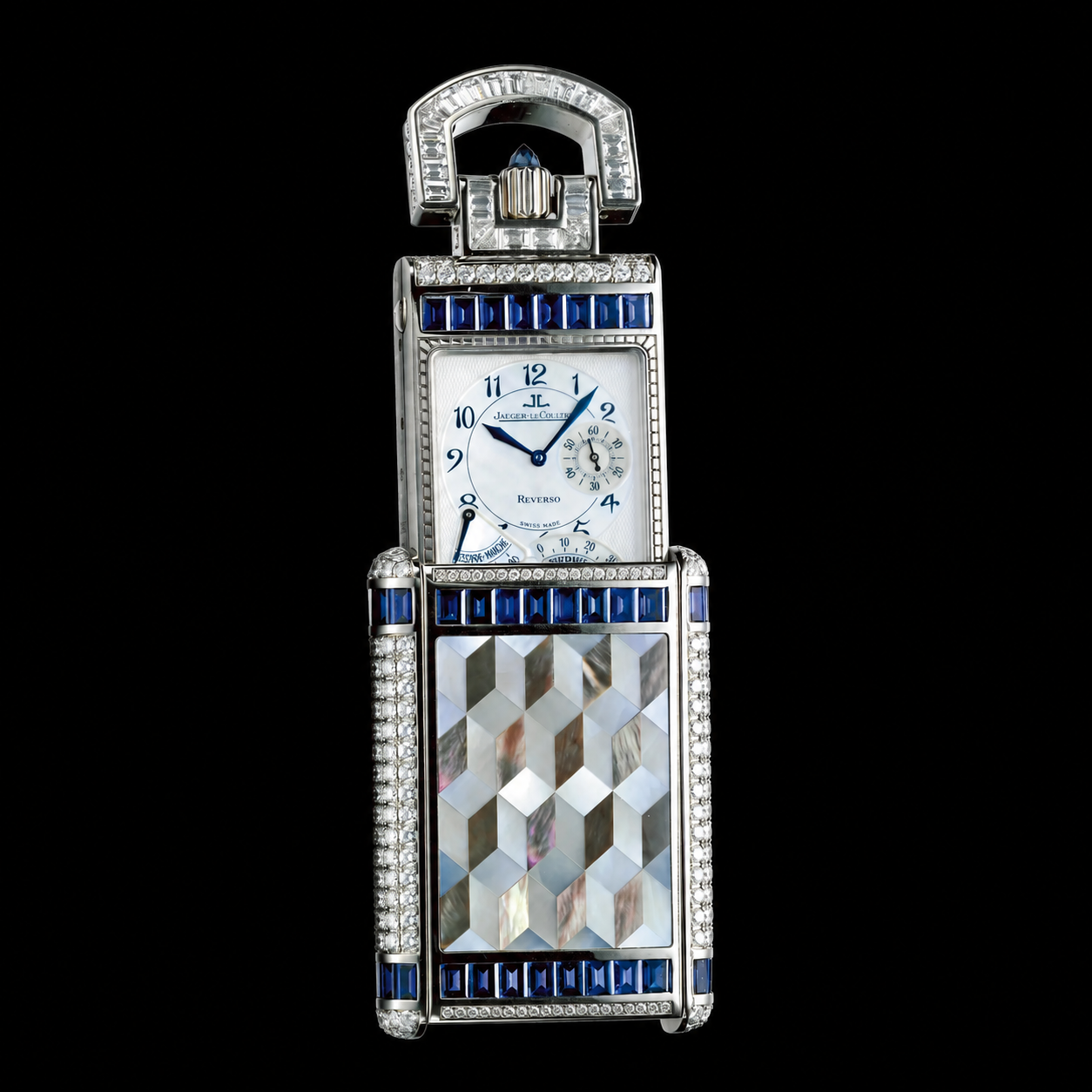
Year: 2004 Calibre: —
Material: 18k white gold, diamond and sapphire-set
Market: International
A jewelled Reverso combining a mother-of-pearl dial with power reserve and thermometer indications — an unusually complicated dial layout for a gem-set piece. Neither a name nor an edition size has surfaced for this specific example; catalogued here on the strength of Sotheby’s own 2008 lot description alone.
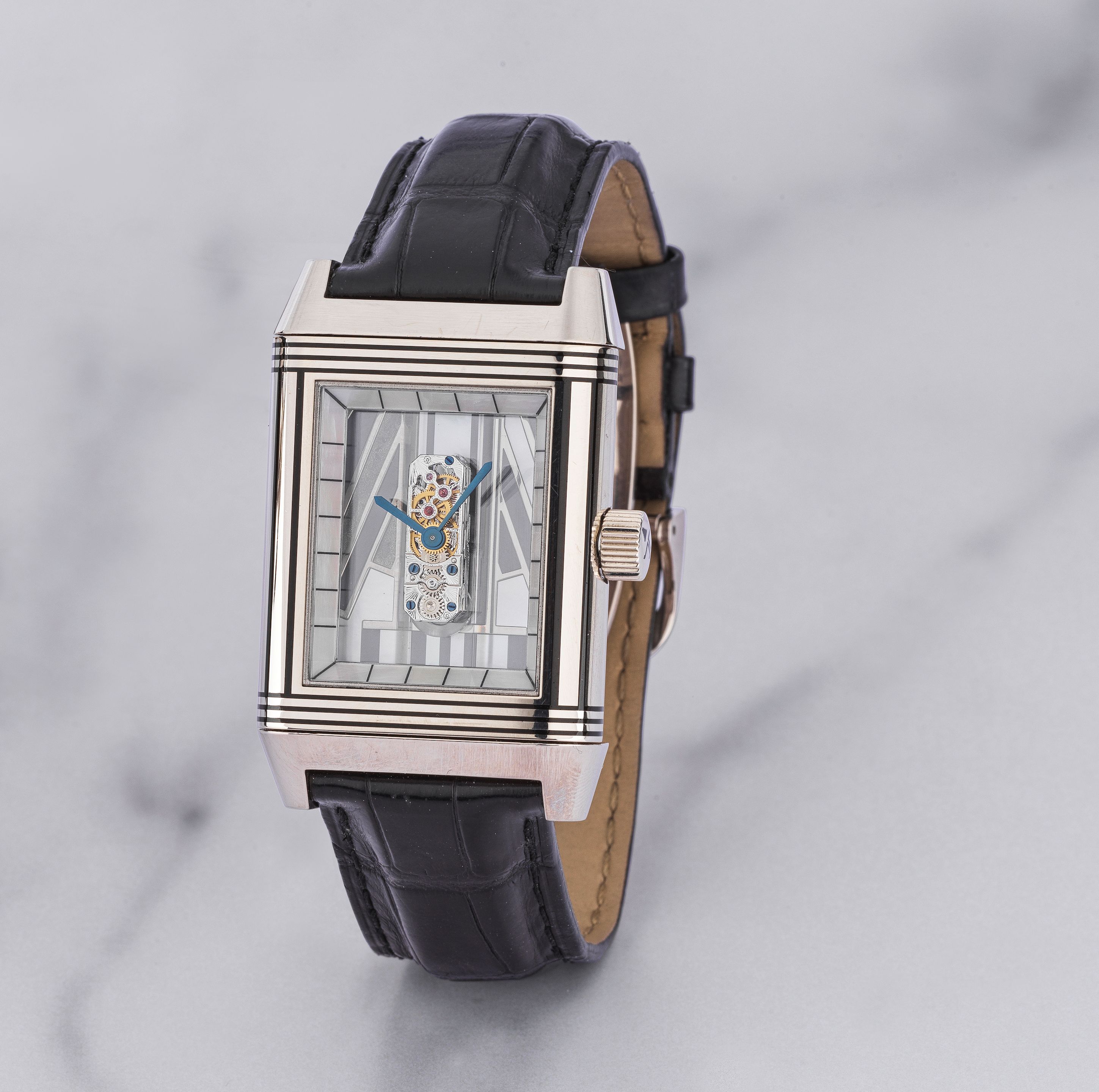
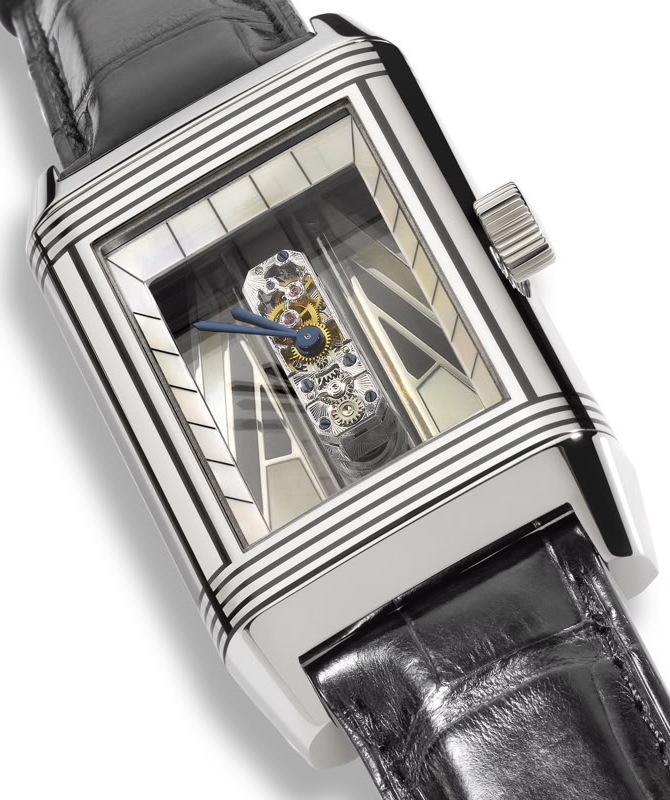
Year: 2011 Calibre: Cal. 101
Material: White gold
Market: International
A third distinct reference built around the tiny calibre 101 — alongside the Reverso Joaillerie (280.3.70) and Grande Reverso 101 (3006430) elsewhere in this section — here on a straight-line movement in an Art Déco case, limited to just five pieces.
Year: 2013–2021 Calibre: Cal. 844
Material: Gold, pavé diamonds
Market: International
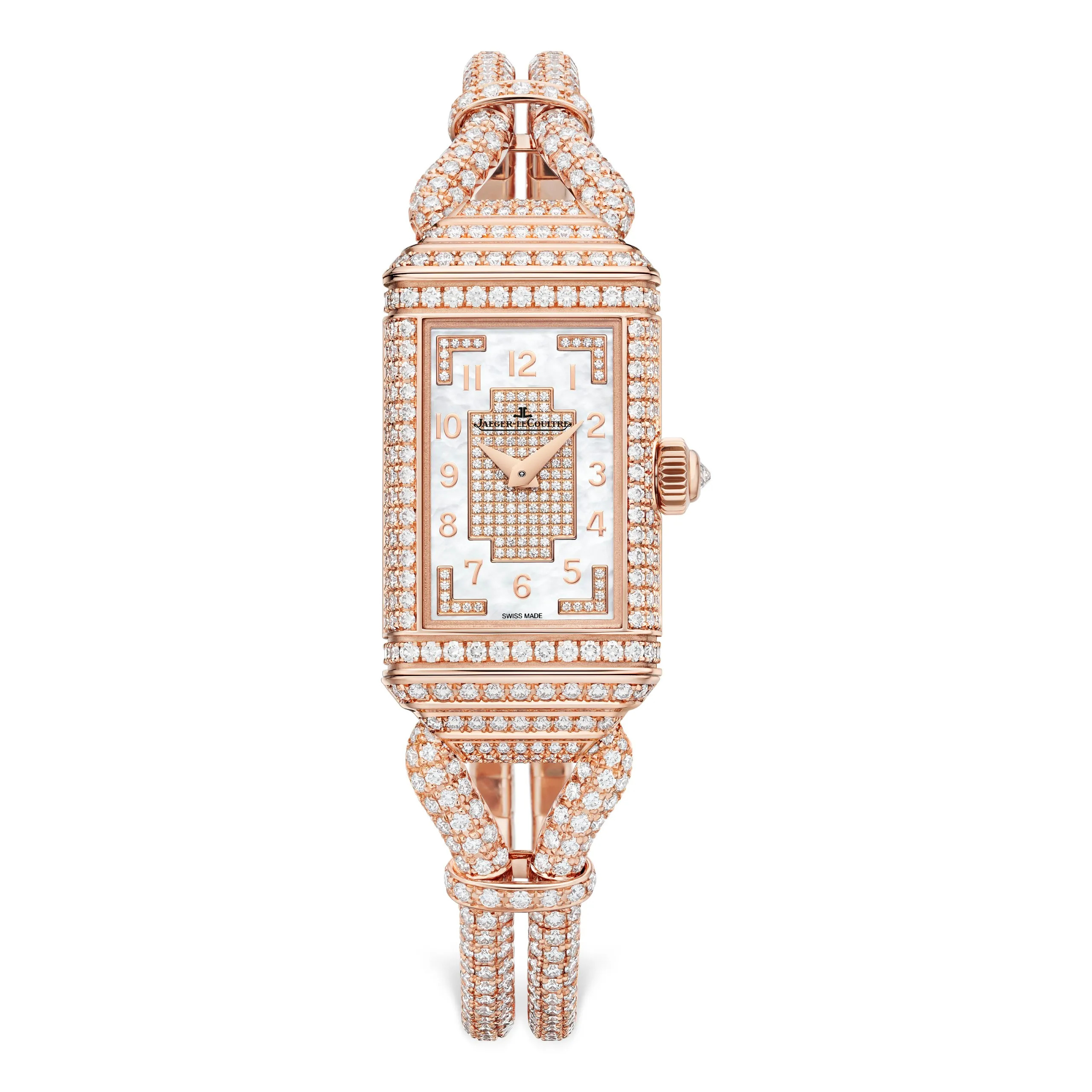
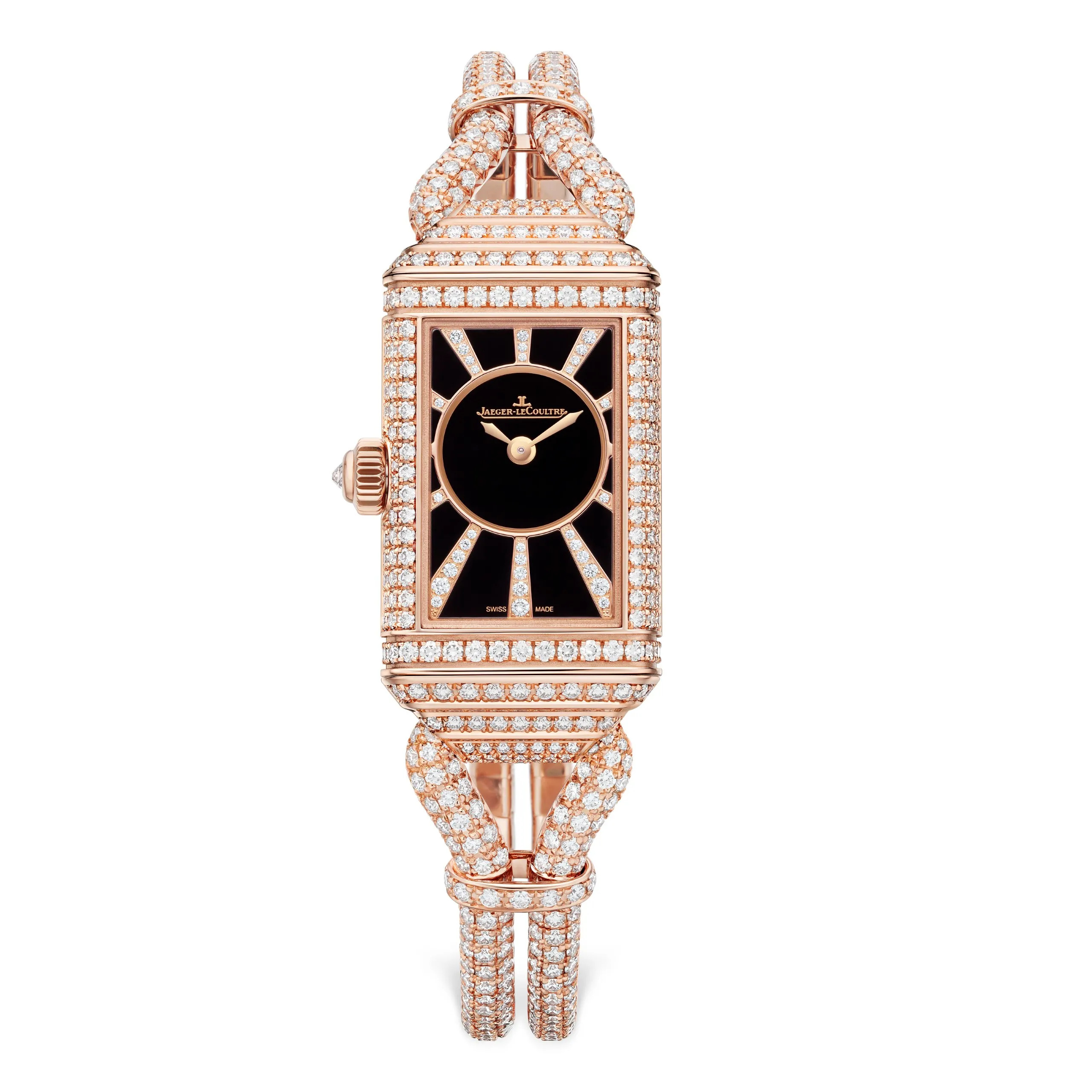
The 1930s silk cord reimagined in gold and pavé diamonds — a 2021 Duetto case with mother-of-pearl and onyx dials, and an earlier 2013 diamond rope-bracelet piece with lapis lazuli and pavé dials. Full set catalogued on its own page.
See the full set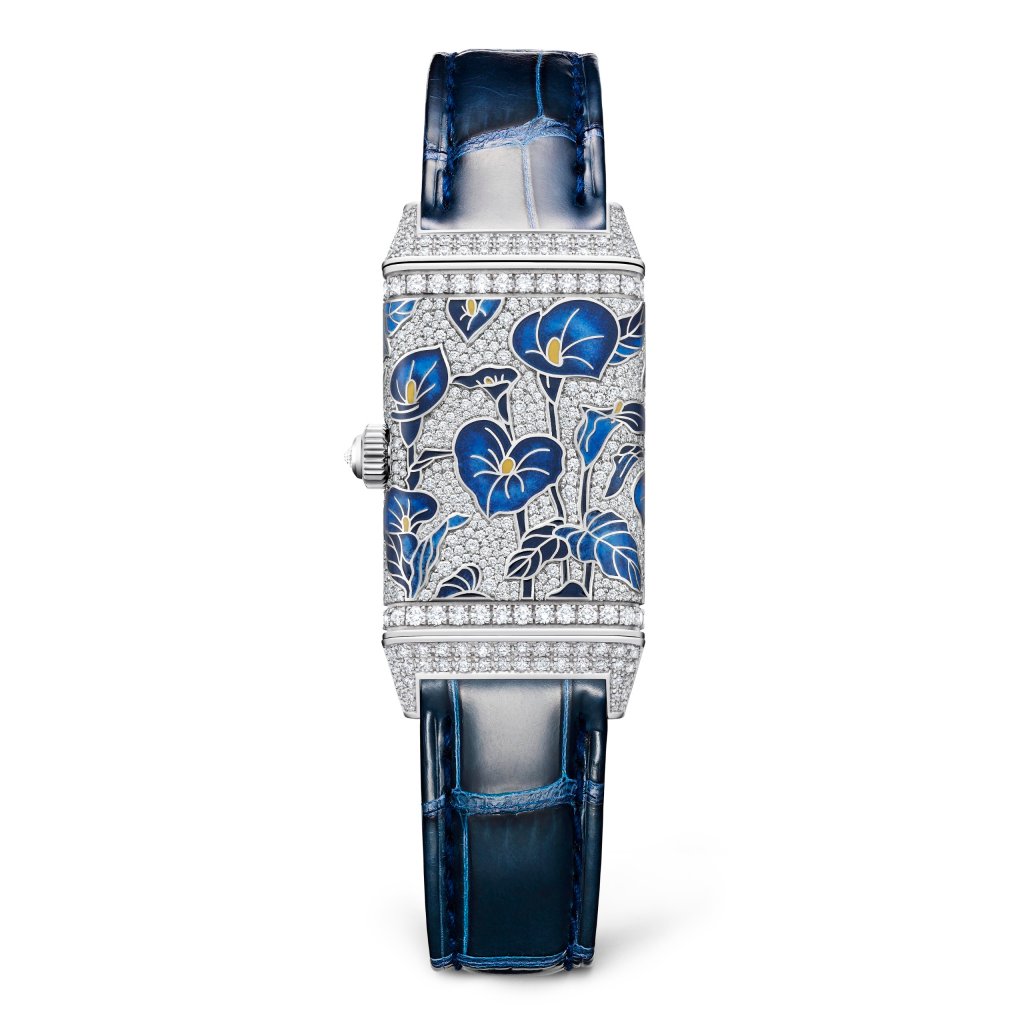
Year: 2021 – 2024 Calibre: Reverso One
Material: White or pink gold
Market: International
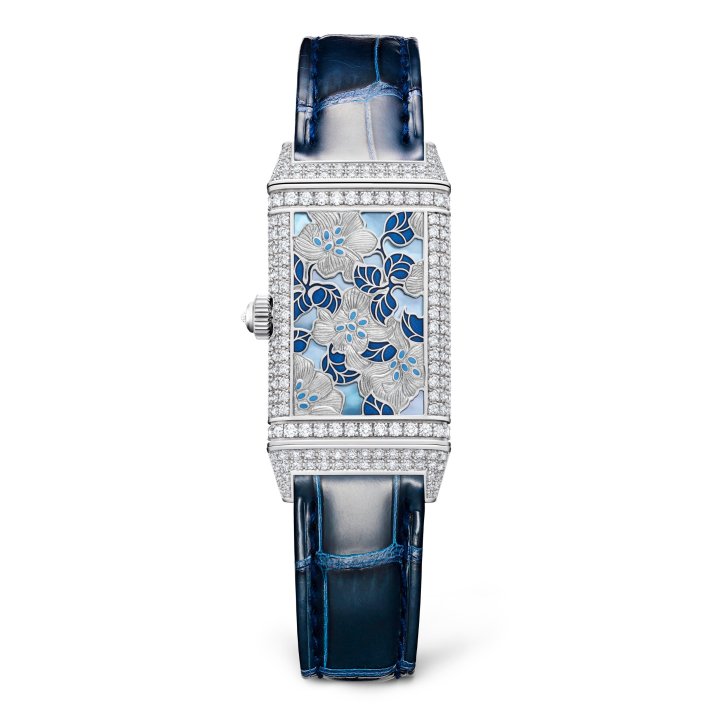
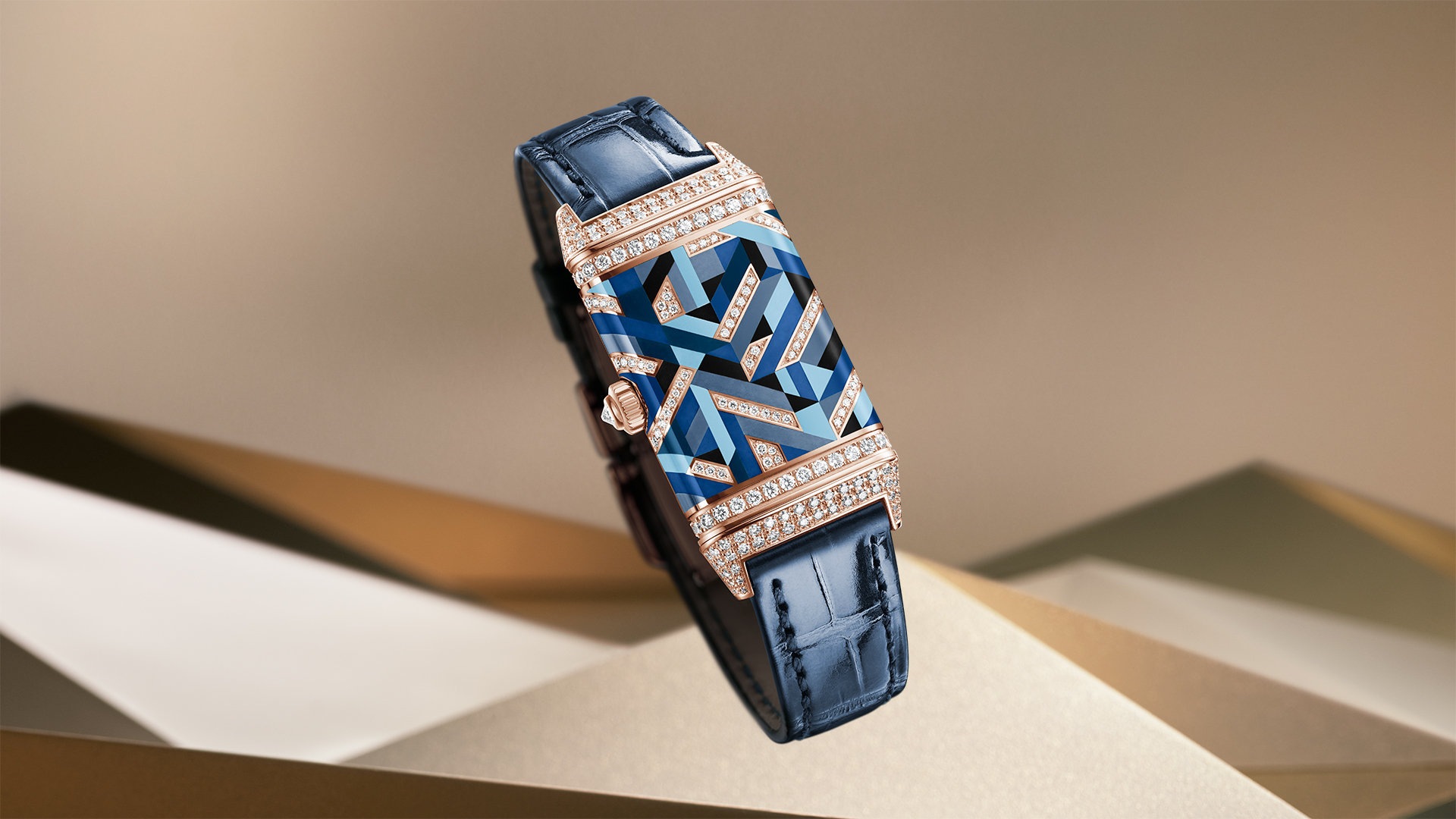
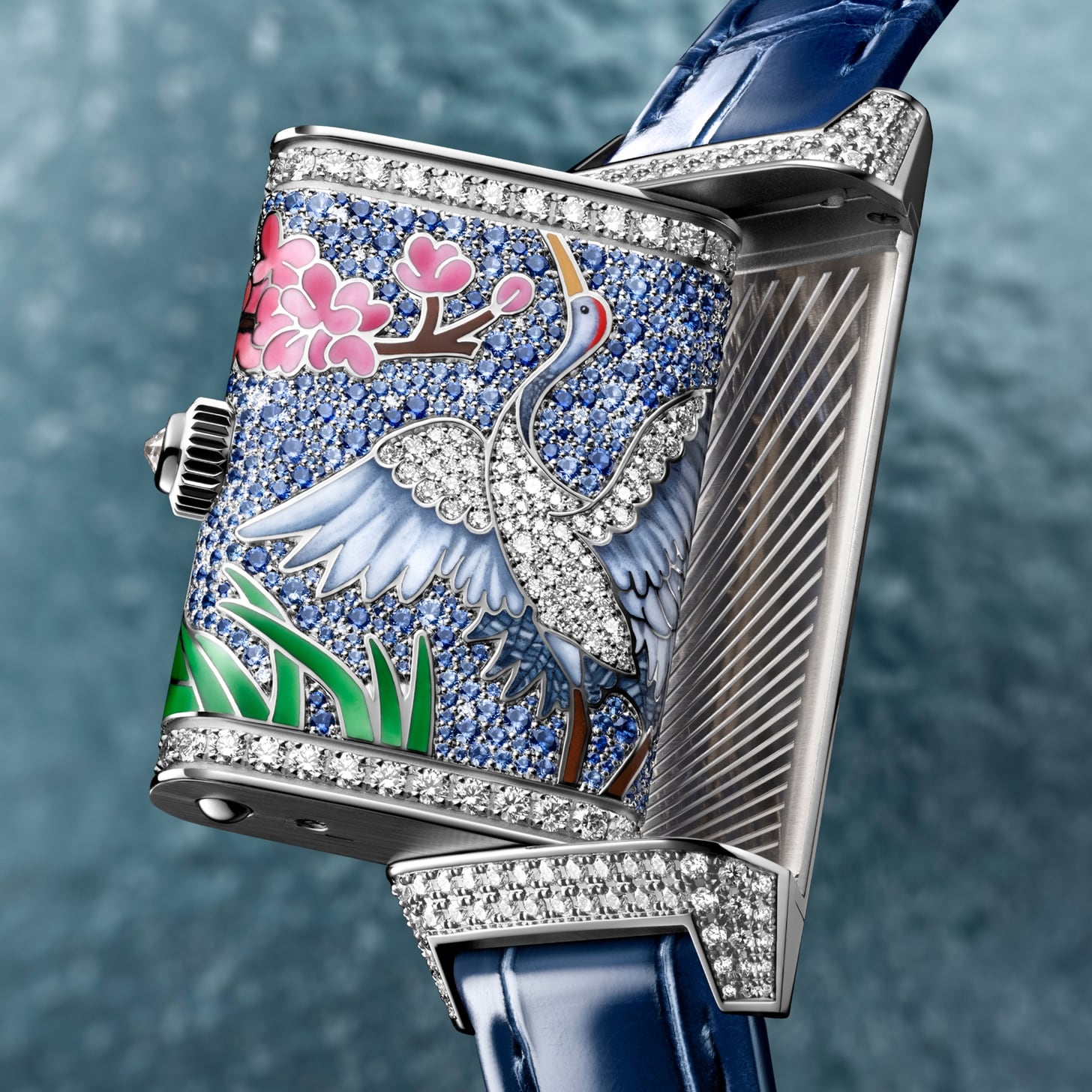
Floral case-backs combining three rare crafts at once — enamelling, hand engraving and gem-setting — rather than showcasing one.
See the full set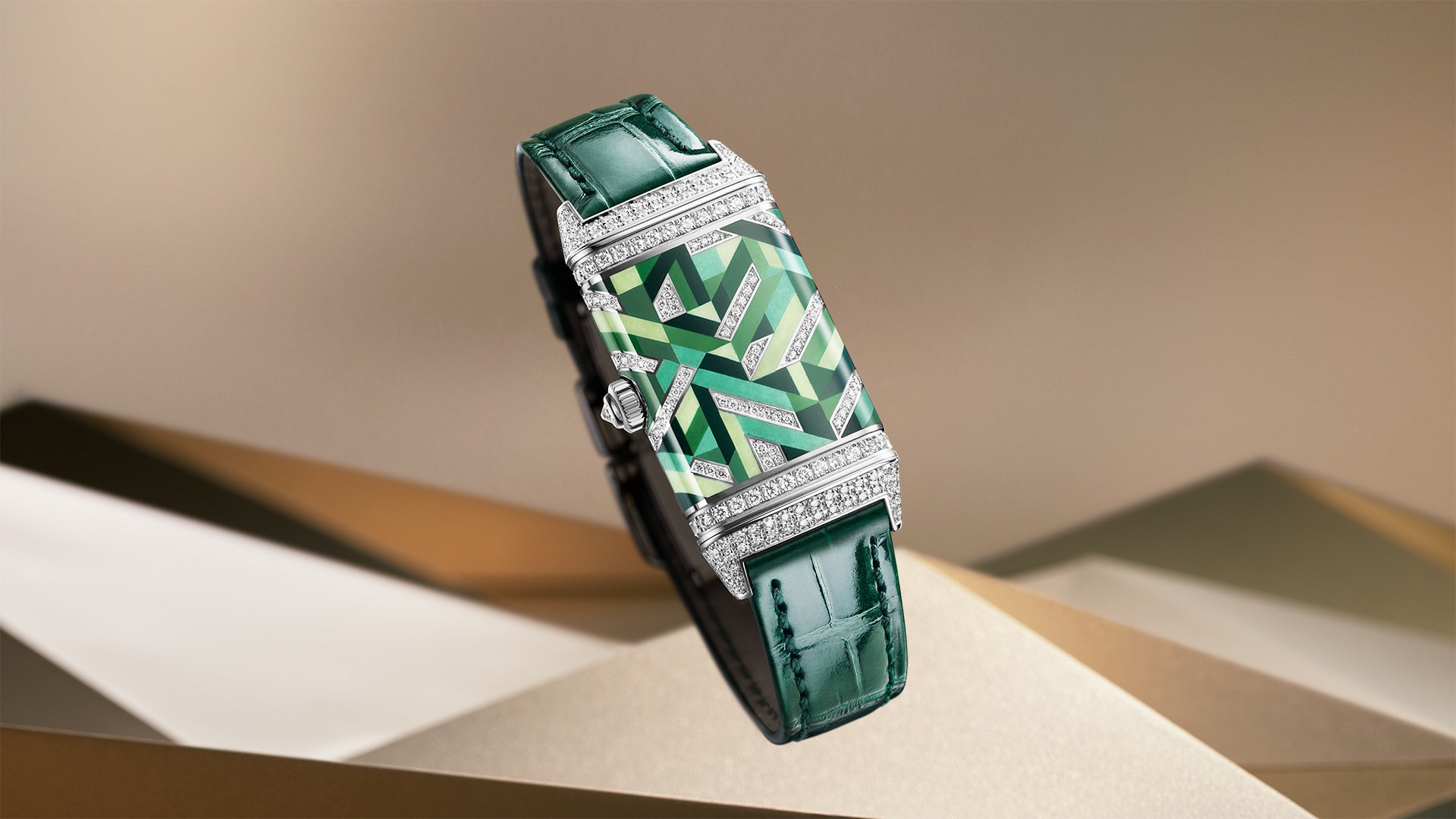
Year: 2026 Calibre: Cal. 846
Material: Pink or white gold, mother-of-pearl
Market: International
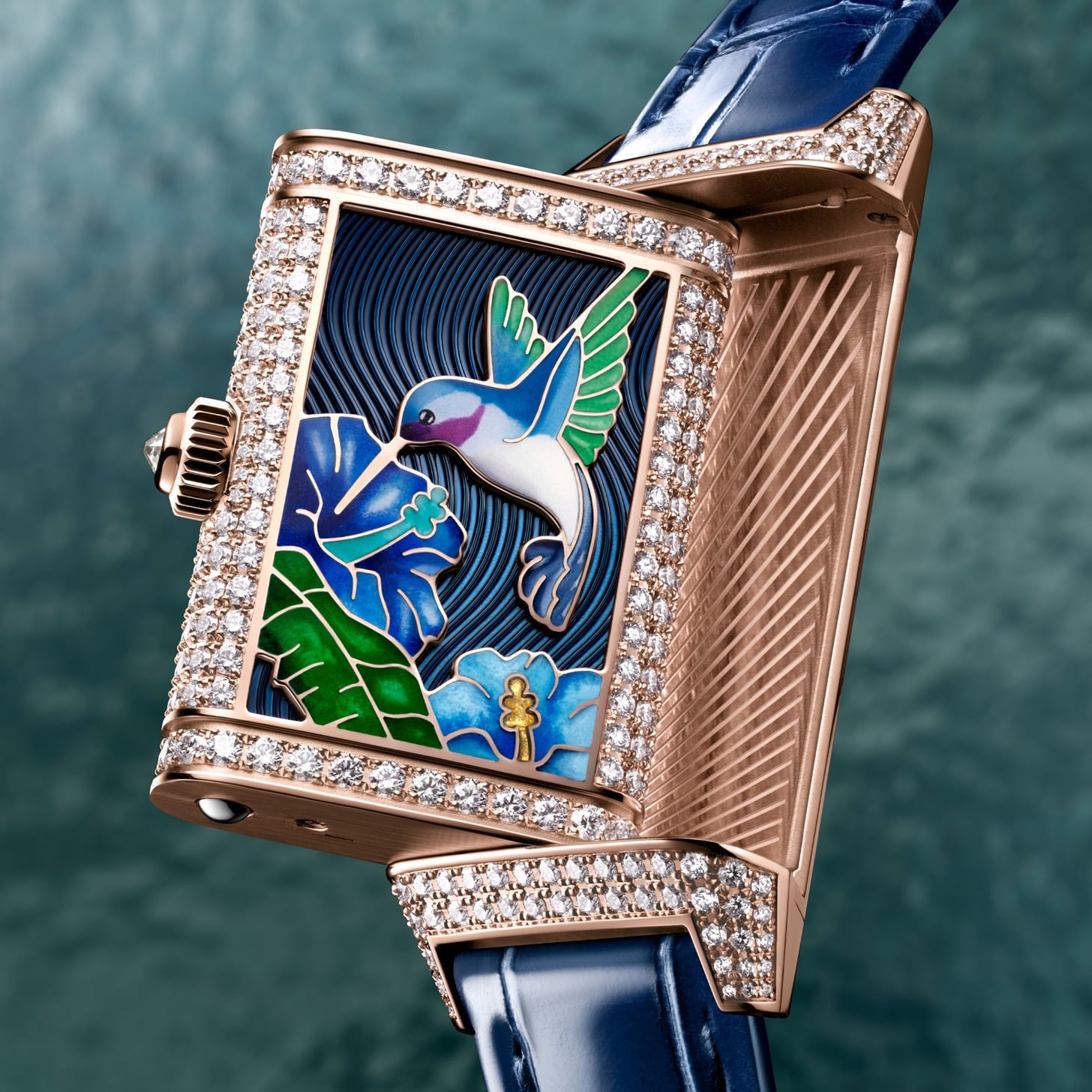
The opening capsule of a nature series — hummingbirds over hibiscus, combining enamel, paillonnage, gem-setting and lacquer.
See the full set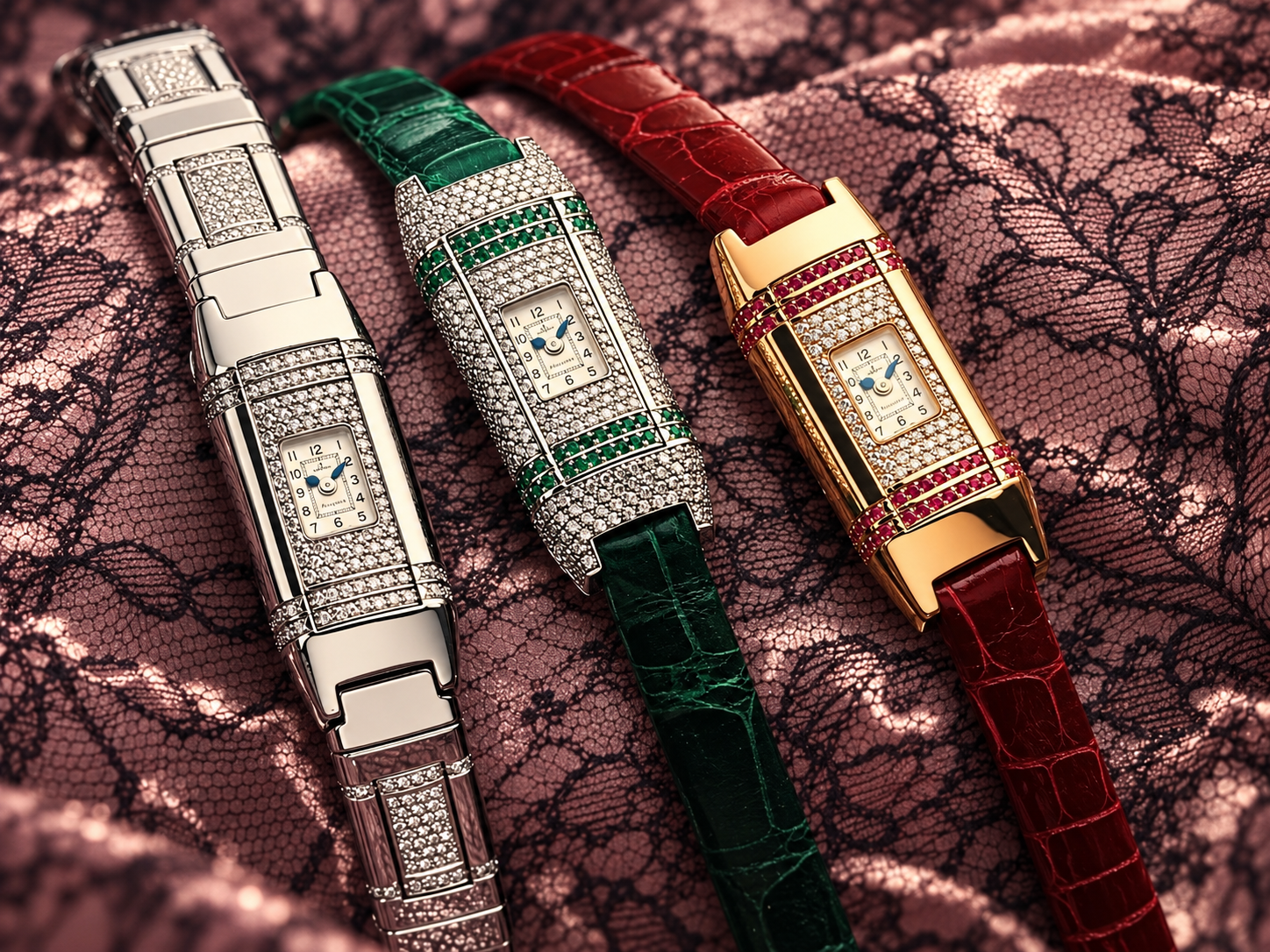
Year: c.1990–early 2000s Calibre: Cal. 101
Material: Yellow, pink, or white gold, gem-set
Market: International
The Reverso built around the Guinness World Record calibre 101, where the bracelet’s own gem-set links rotate along with the case — ten confirmed references across yellow, pink and white gold, with diamonds, rubies, emeralds, and one full multi-gem “rainbow” bracelet. Full set catalogued on its own page.
See the full set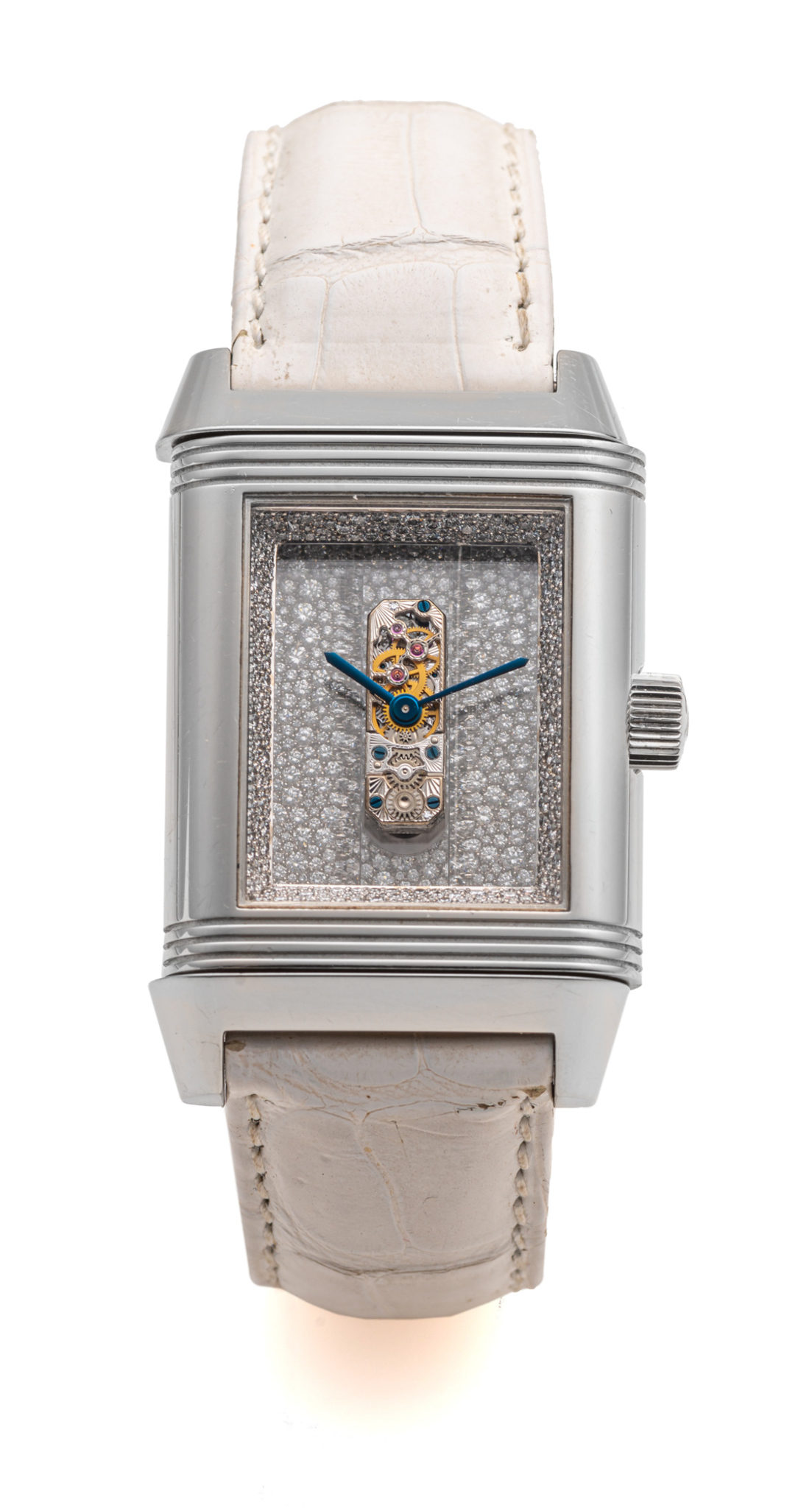
Year: c.2005 Calibre: Cal. 101
Material: Platinum, diamond-set skeleton
Market: International
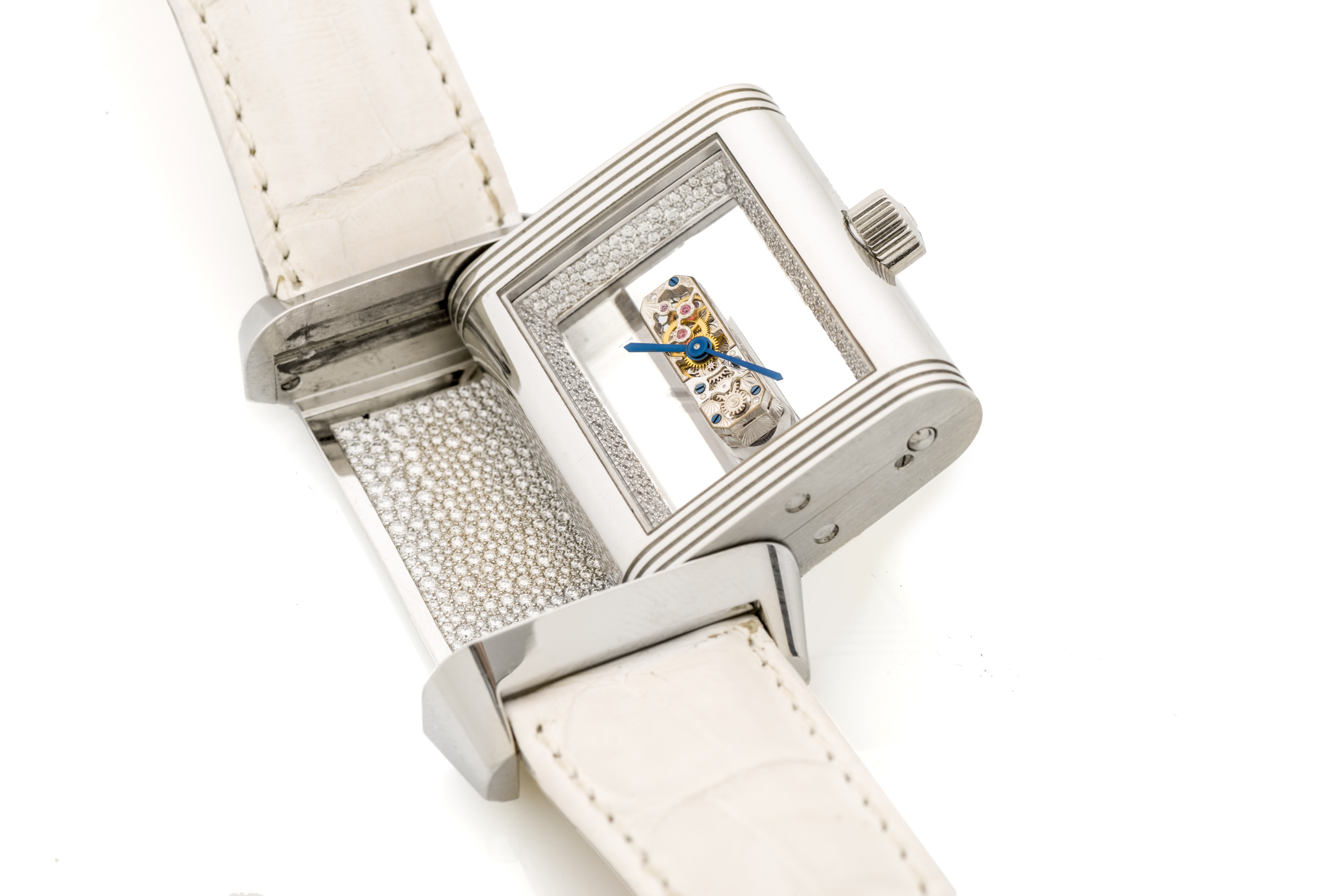
A larger platinum expression of the calibre 101 — 29 x 46 mm rather than the 11 x 27.5 mm case used across the Les Folies bracelet family catalogued on its own page — with a fully skeletonised, diamond-set dial visible through a sapphire back, showing off the movement rather than hiding it.
Anniversary & Milestone Editions
Production models marking a birthday — the Reverso’s own, or the manufacture’s.
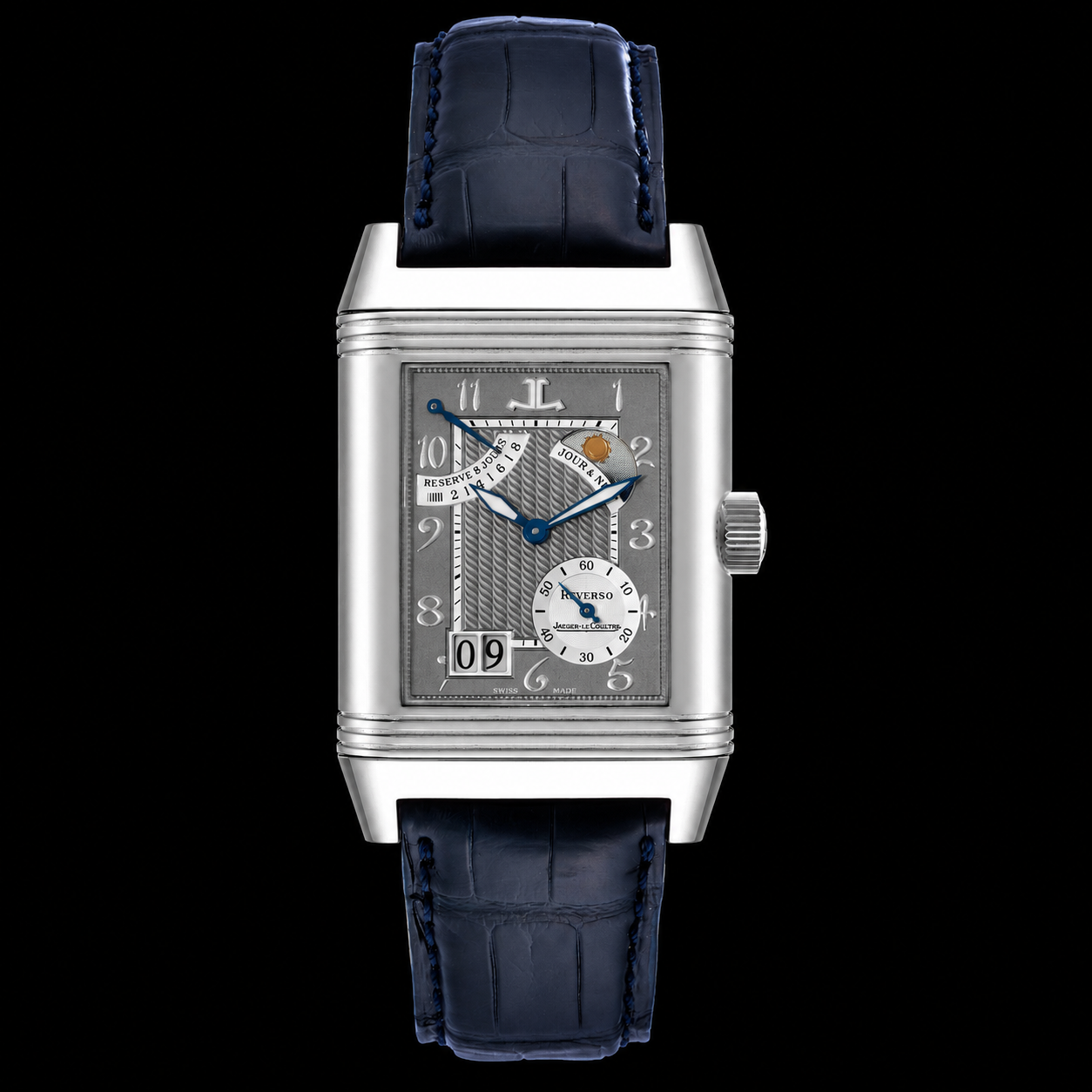
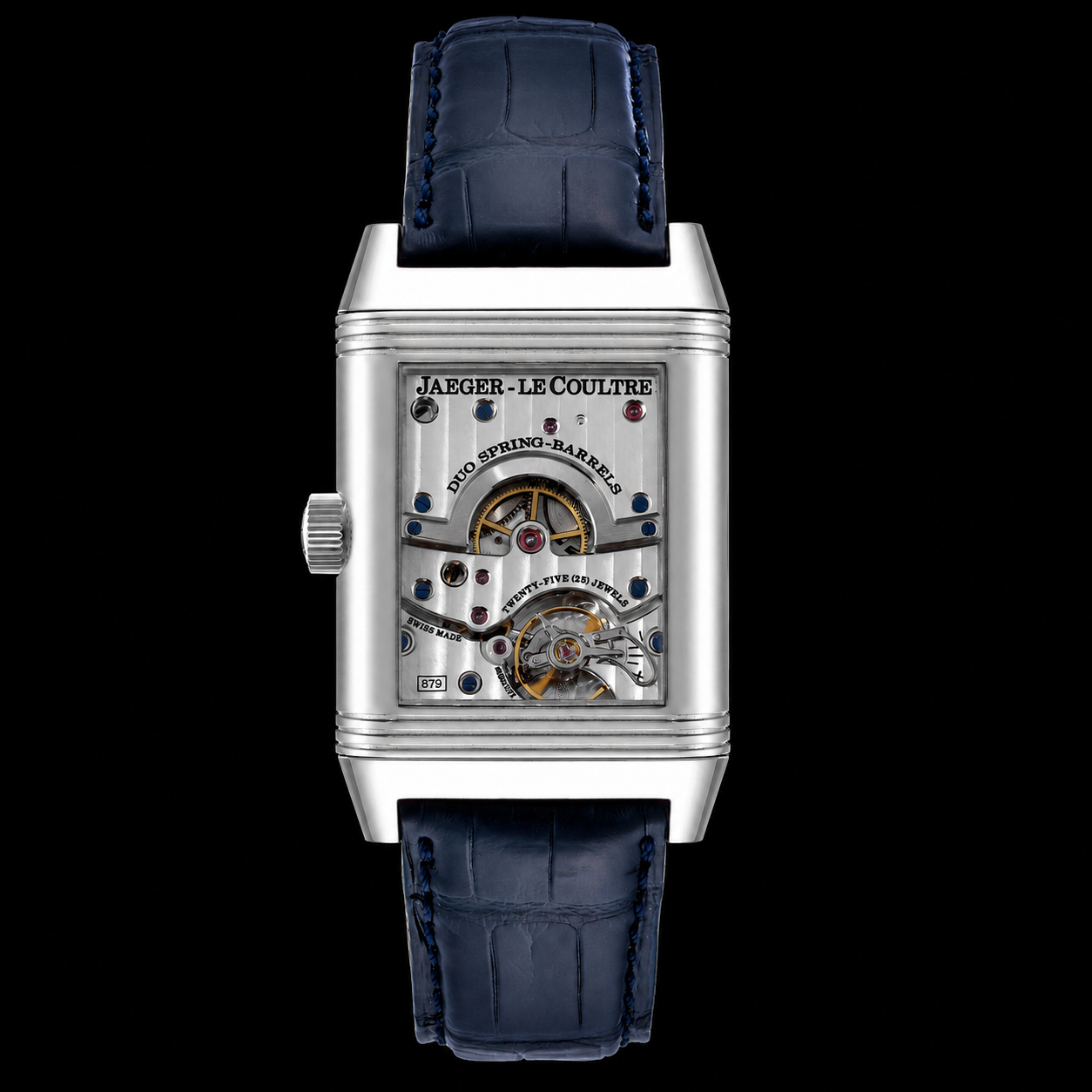
Year: 2001 Calibre: Cal. 879
Material: Platinum
Market: International
Eight-day double barrel and the patented large date that opened the Grande Reverso chapter.
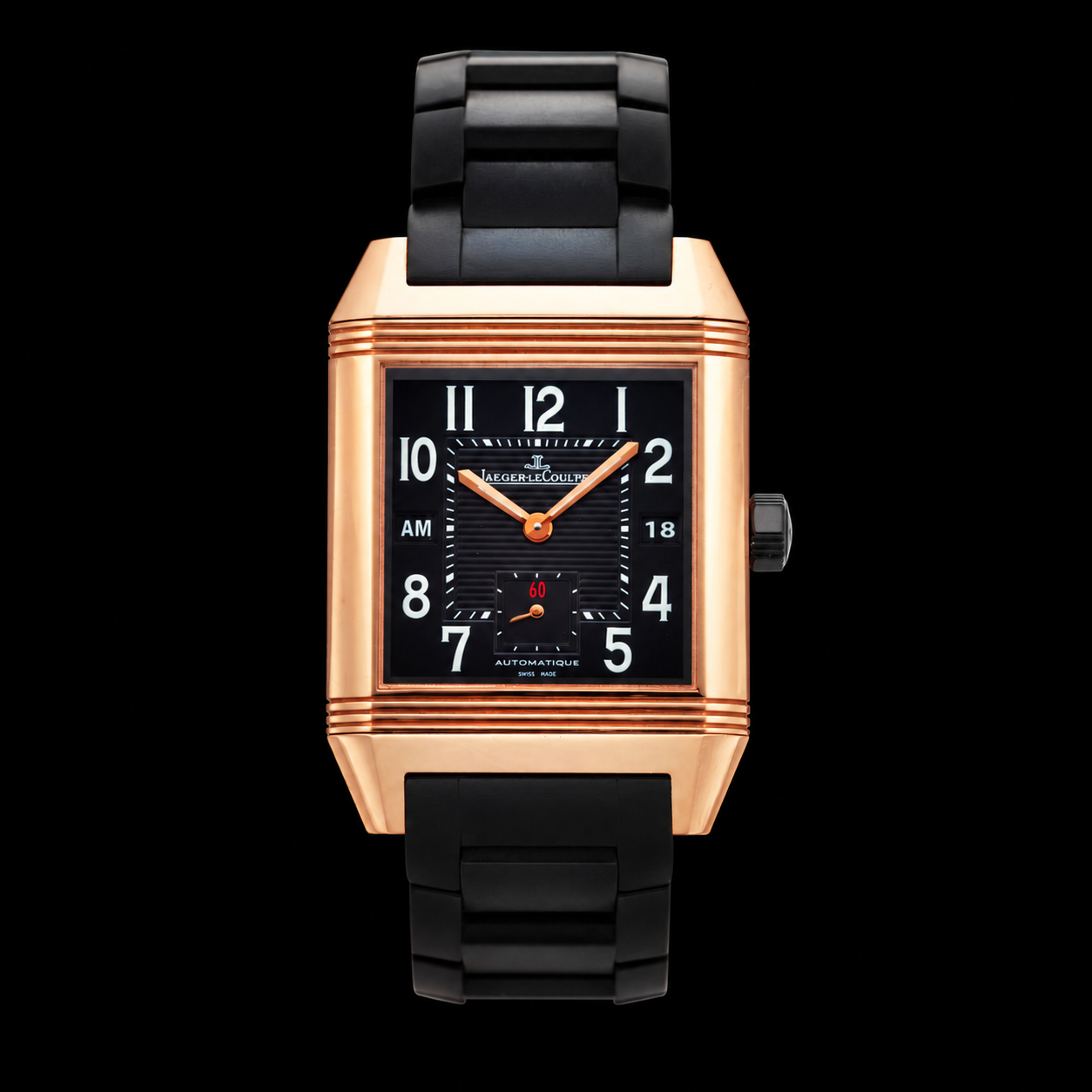
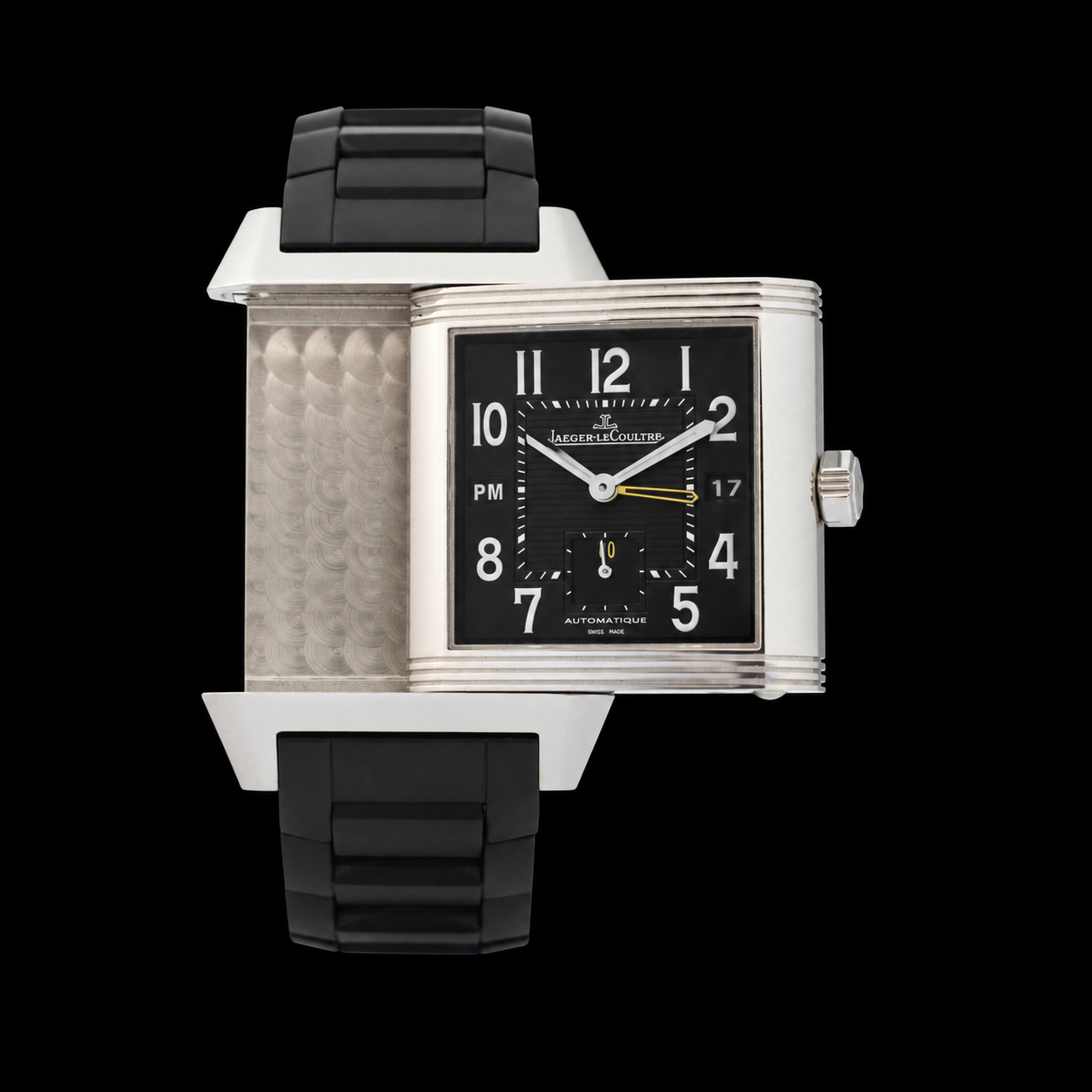
Year: 2006– Calibre: Automatic
Material: Pink gold or stainless steel
Market: International
A dual time-zone Squadra with date and day/night indication, made in both pink gold and steel — the steel version confirmed to a run of fifty pieces.
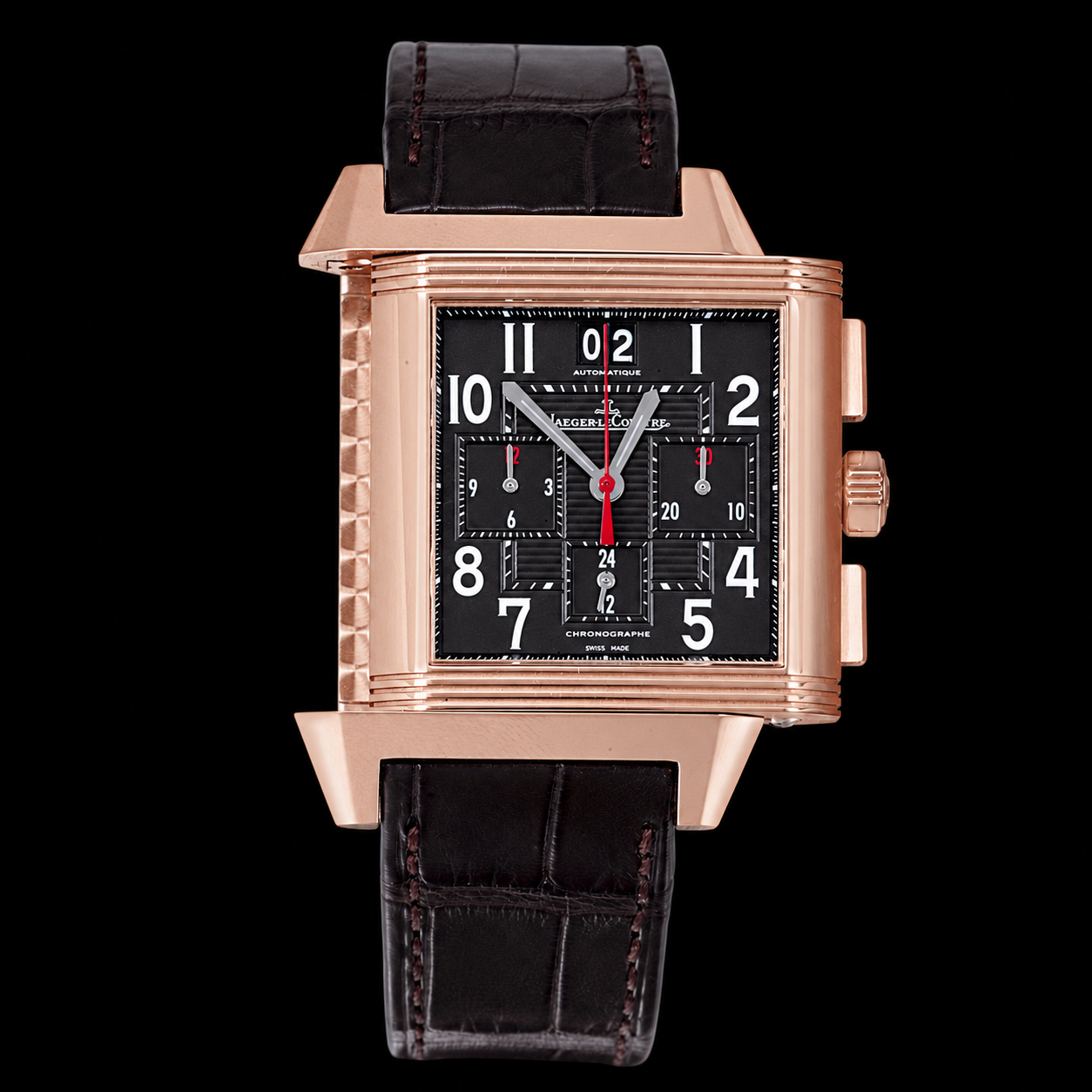
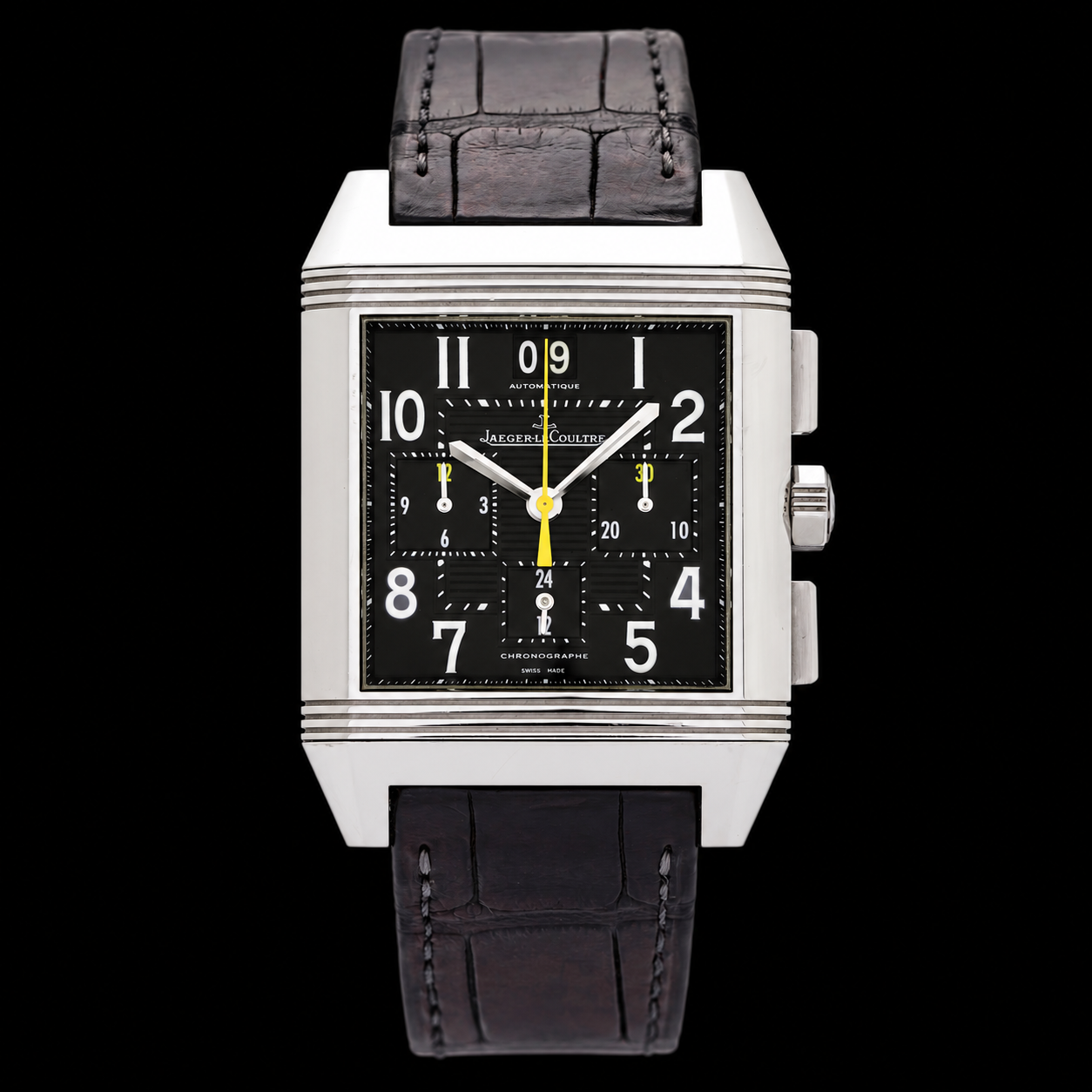
Year: 2007–2010 Calibre: Cal. 754
Material: Pink gold or stainless steel
Market: International
A large automatic dual-time chronograph on the squarer Squadra case rather than the classic Reverso silhouette, certified under JLC’s own 1000 Hours Control testing programme. 50 x 35 mm, 39 jewels. Two auction houses cite the pink gold reference with very different figures — Antiquorum records No. 14 of 30 pieces made in 2007, while Christie’s separately records No. 378 of a 500-piece run made in 2008 — which may mean two distinct production batches under one reference, or a transcription error at one house; we haven’t been able to resolve which. The steel version, ref. 230.8.45, runs to 100 pieces.
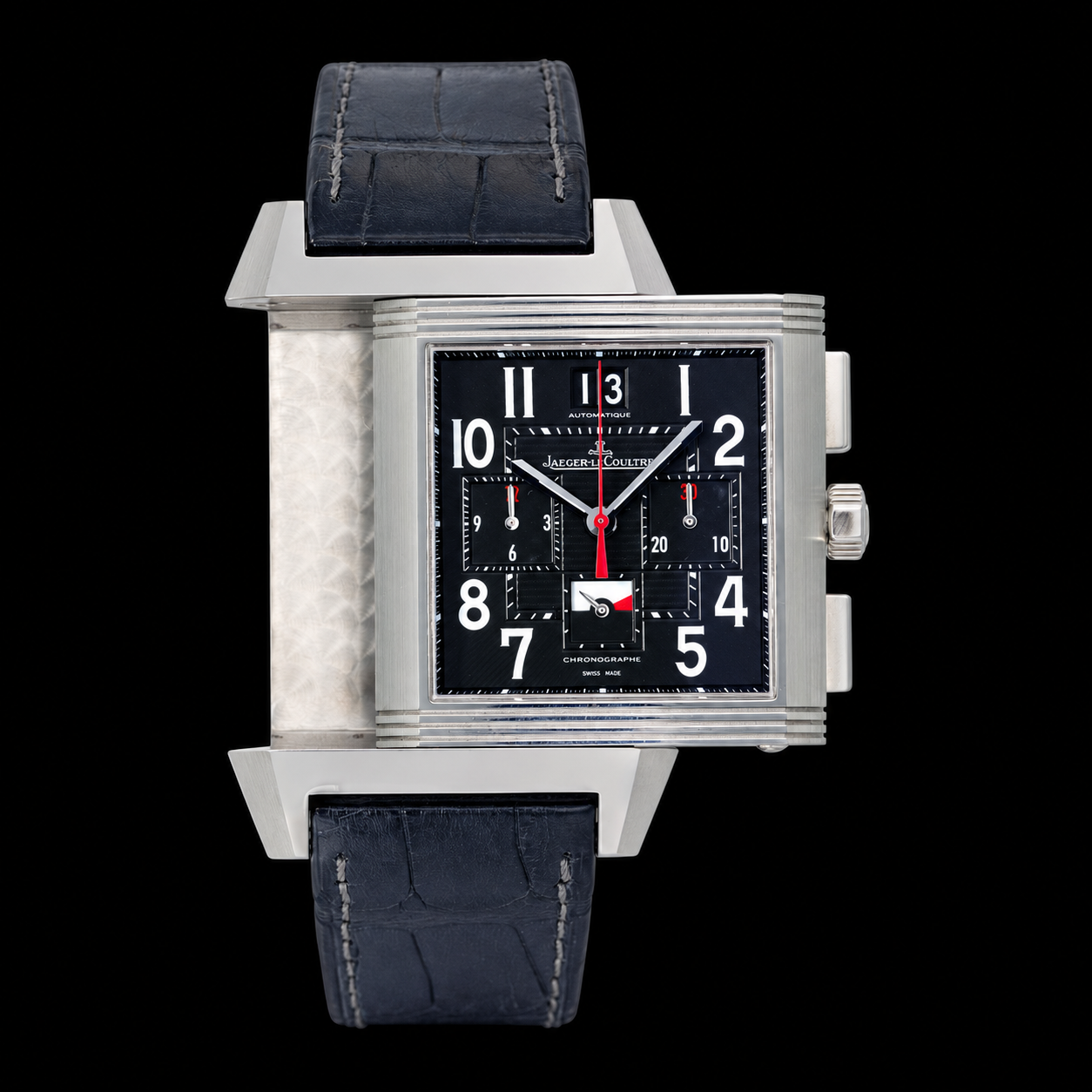
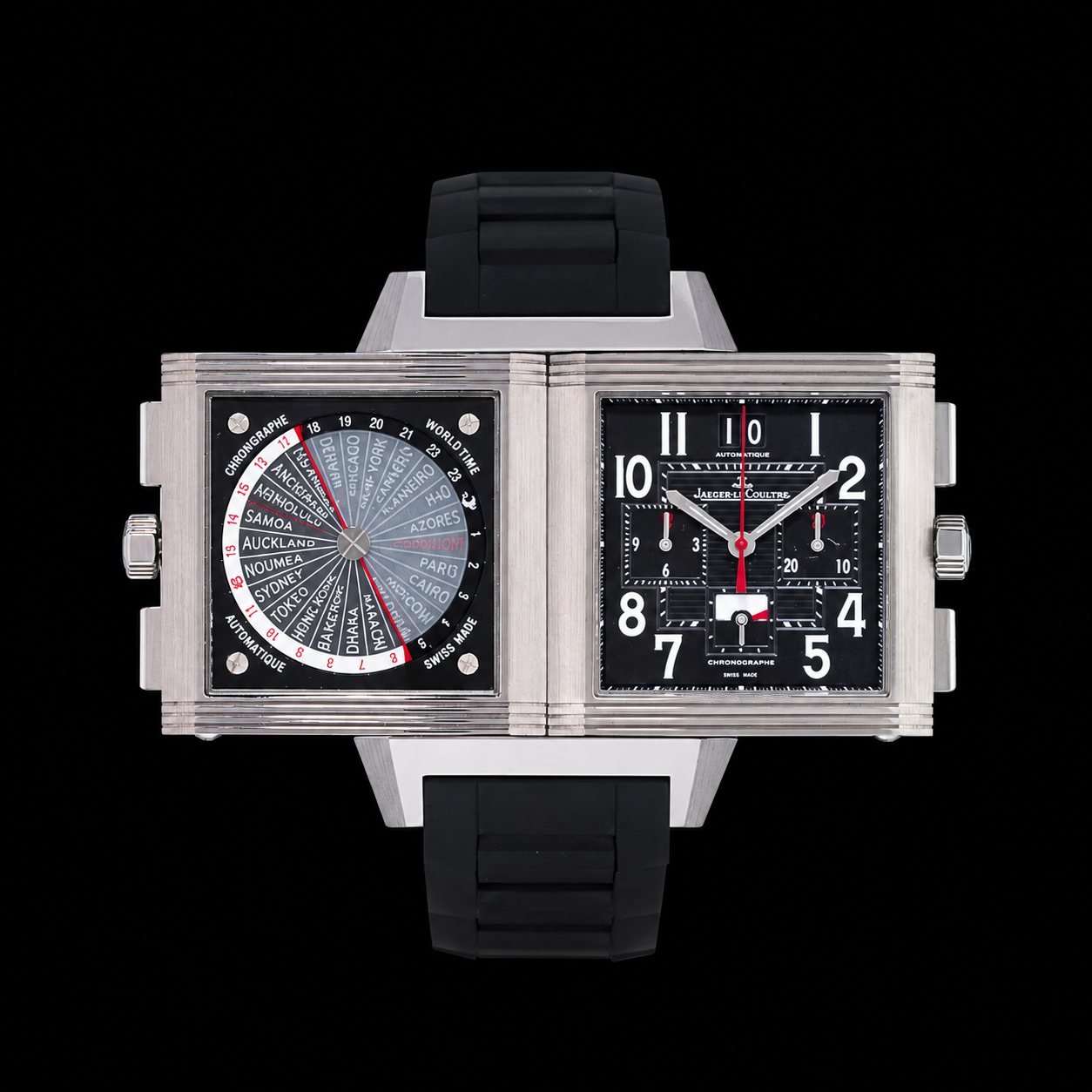
Year: 2008 Calibre: Automatic
Material: Titanium
Market: International
A double-dialled world time automatic chronograph with date and day/night indication, on titanium rather than the more usual precious metal or steel.
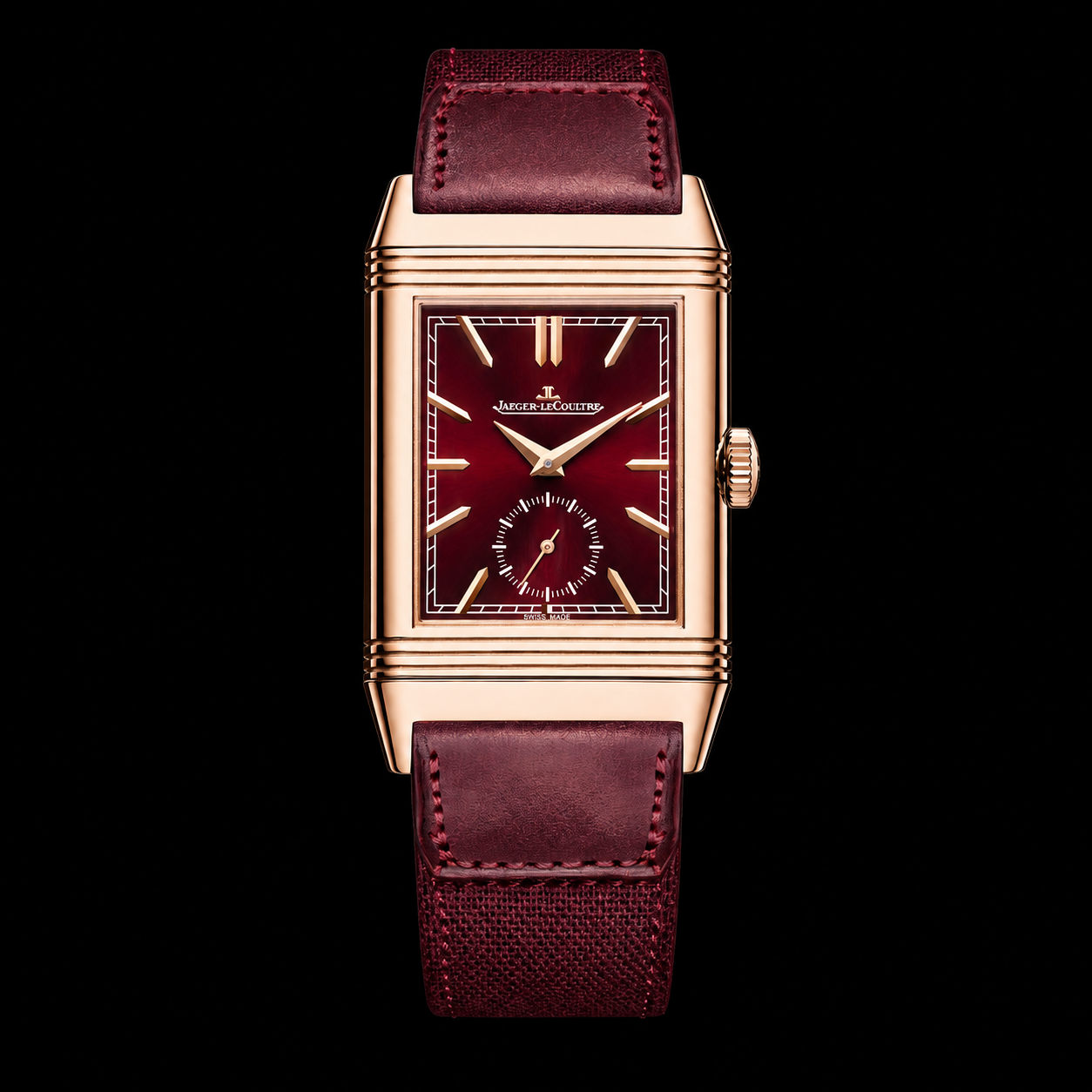
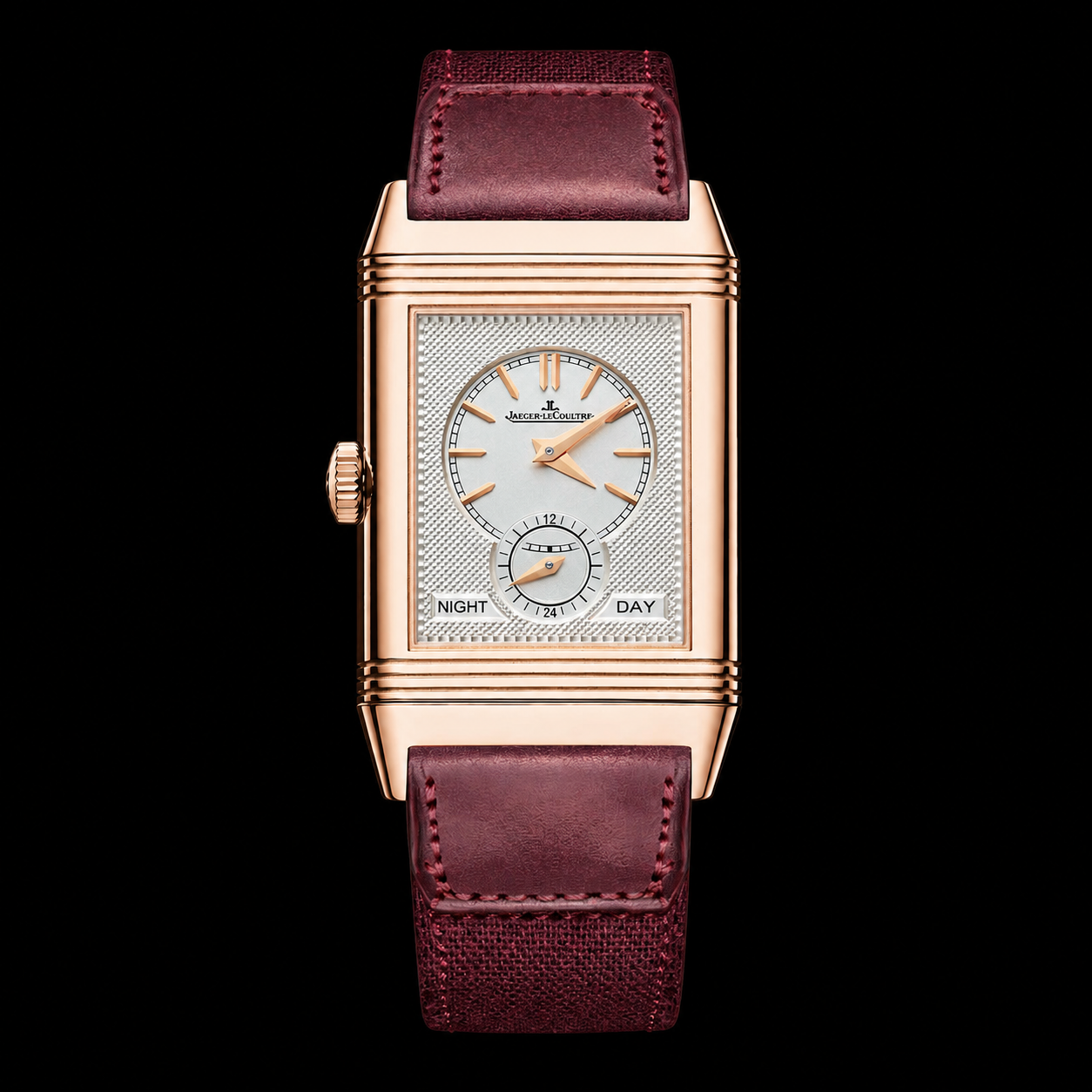
Year: 2016 / 2021 Calibre: Cal. 854A/2
Material: Pink gold
Market: International
Straps by the Argentine polo bootmaker Casa Fagliano. Reissued for the 90th anniversary.
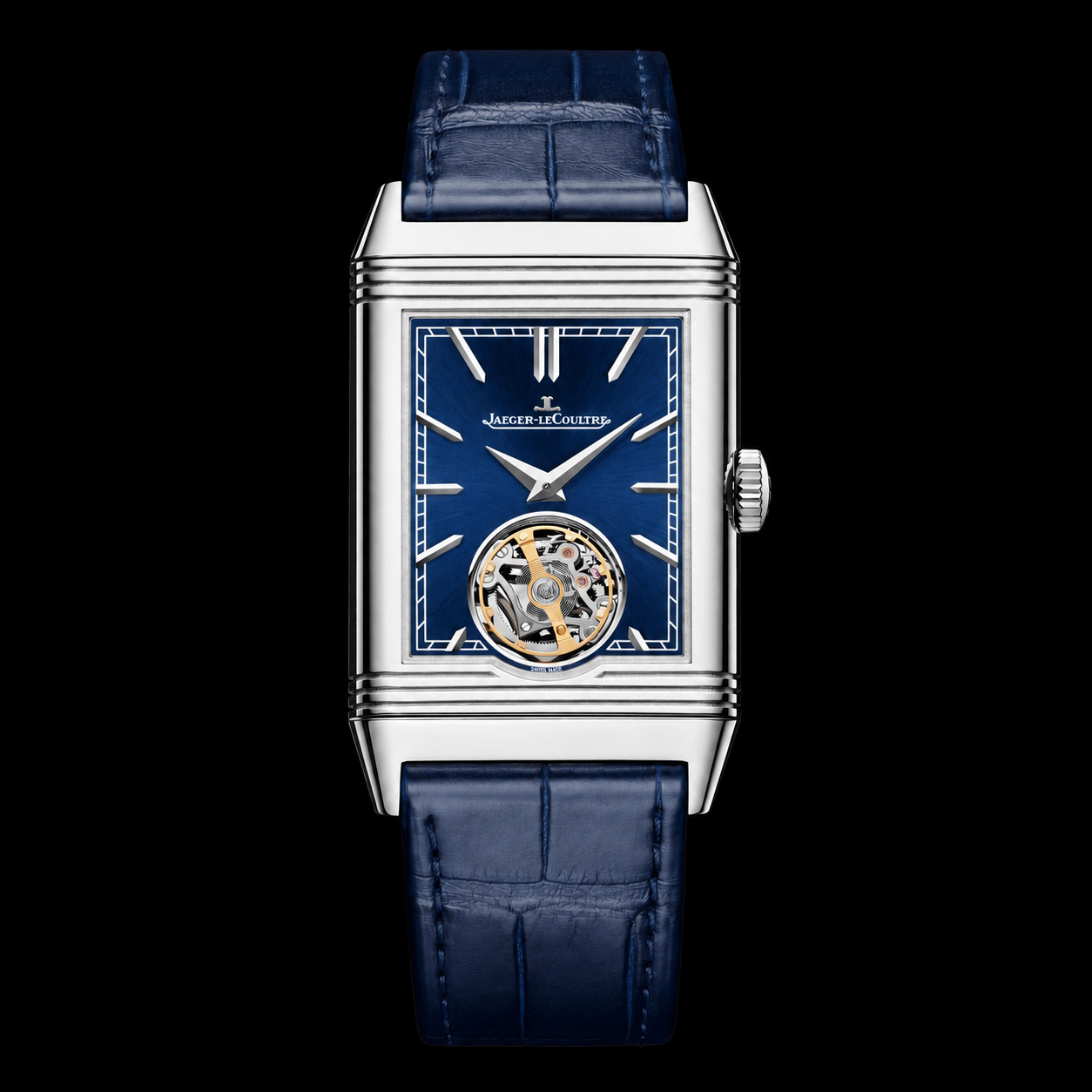
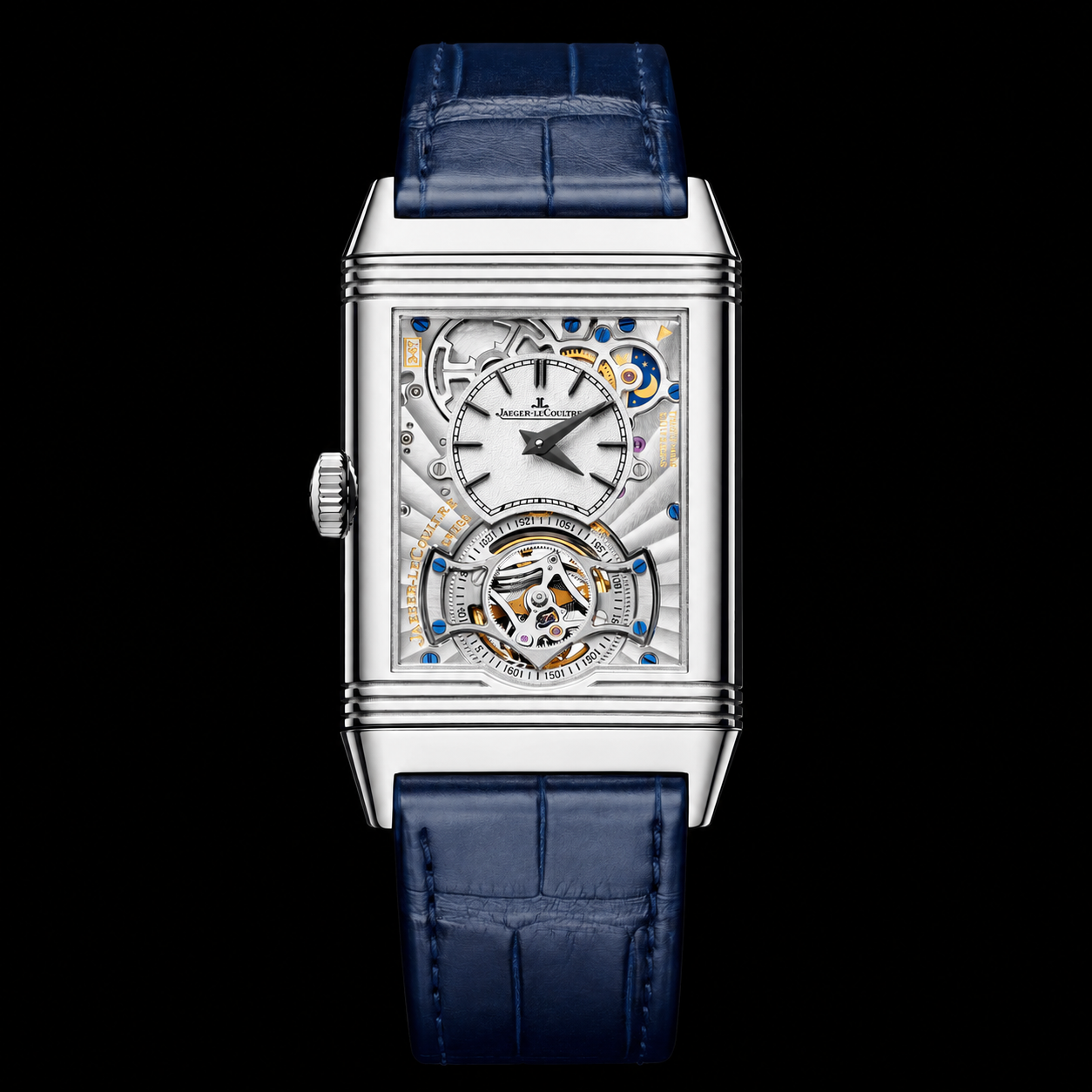
Year: 2018 Calibre: Cal. 847, flying tourbillon
Material: Platinum
Market: International
For the manufacture’s own 185th anniversary.
Year: 2021 Calibre: Cal. 826
Material: Pink gold
Market: International
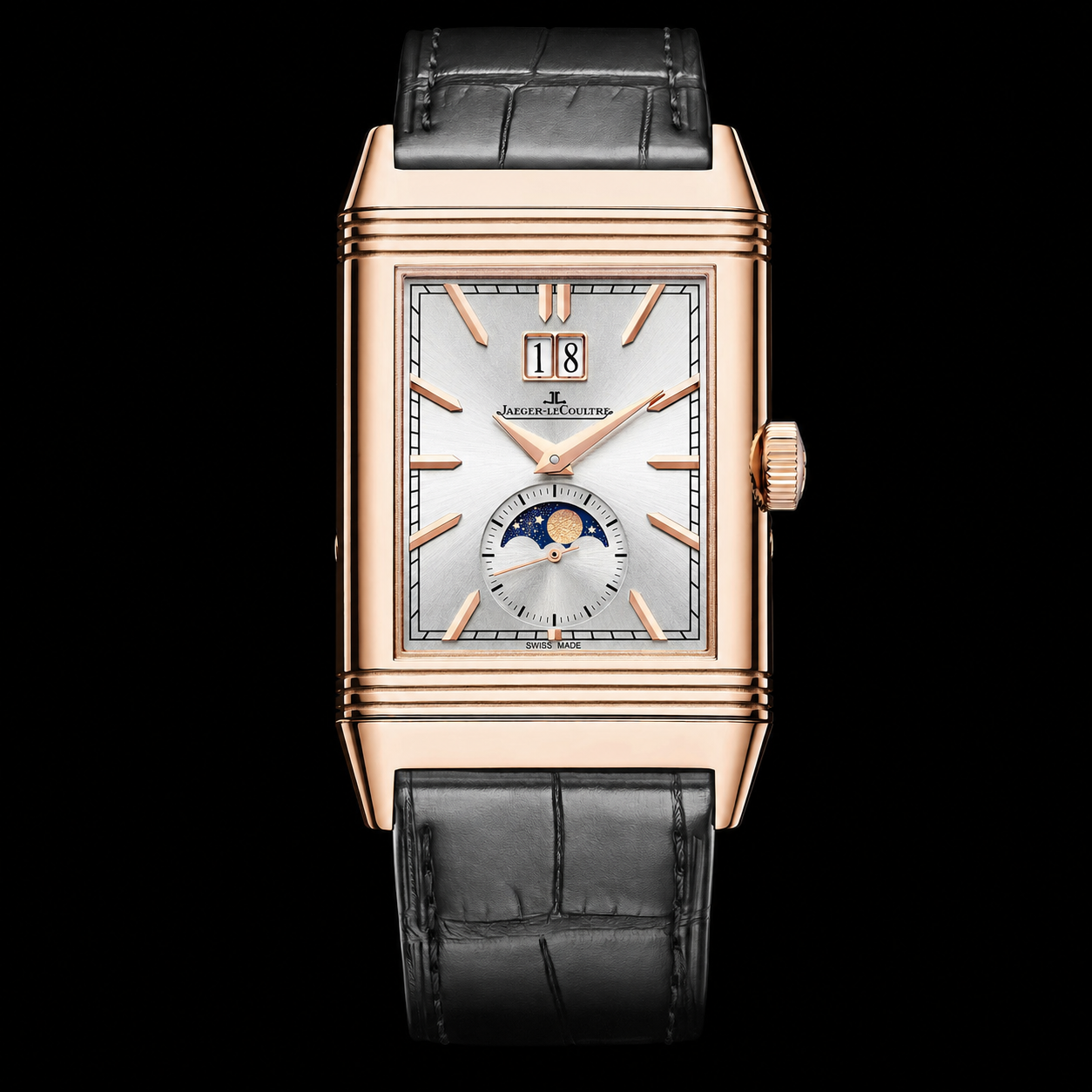
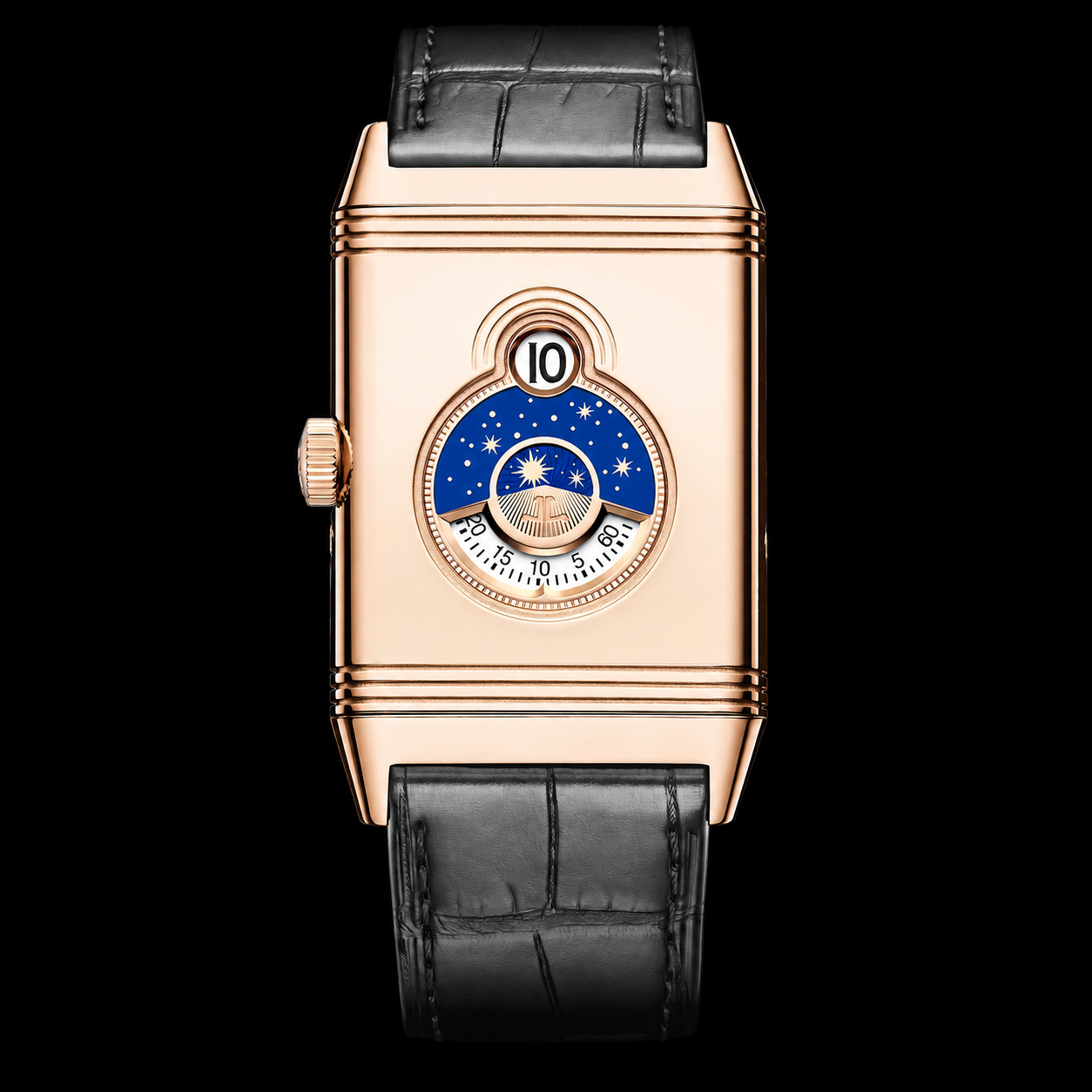
Ninetieth, in Swiss-French — continuing the Soixantième/Septantième naming. Moon phase and date on the front; on the back, a complication never before put on a Reverso: a semi-jumping digital hour beside a rotating minute disc and a day/night indicator, over a hand-engraved star field in deep blue lacquer.
Year: 2024 Calibre: Cal. 860
Material: Solid 18k pink gold — case, dial, bridges, indexes, buckle
Market: International
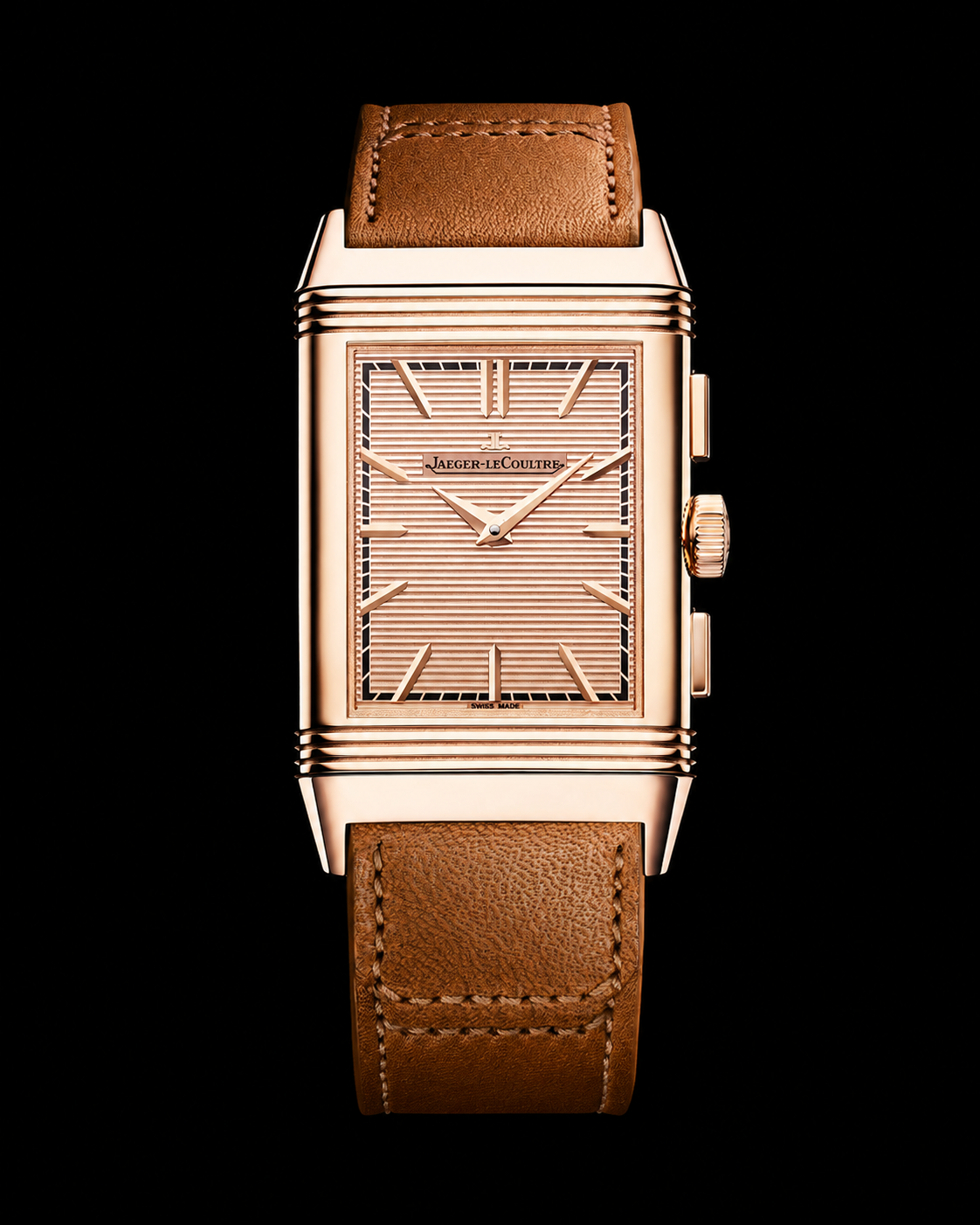
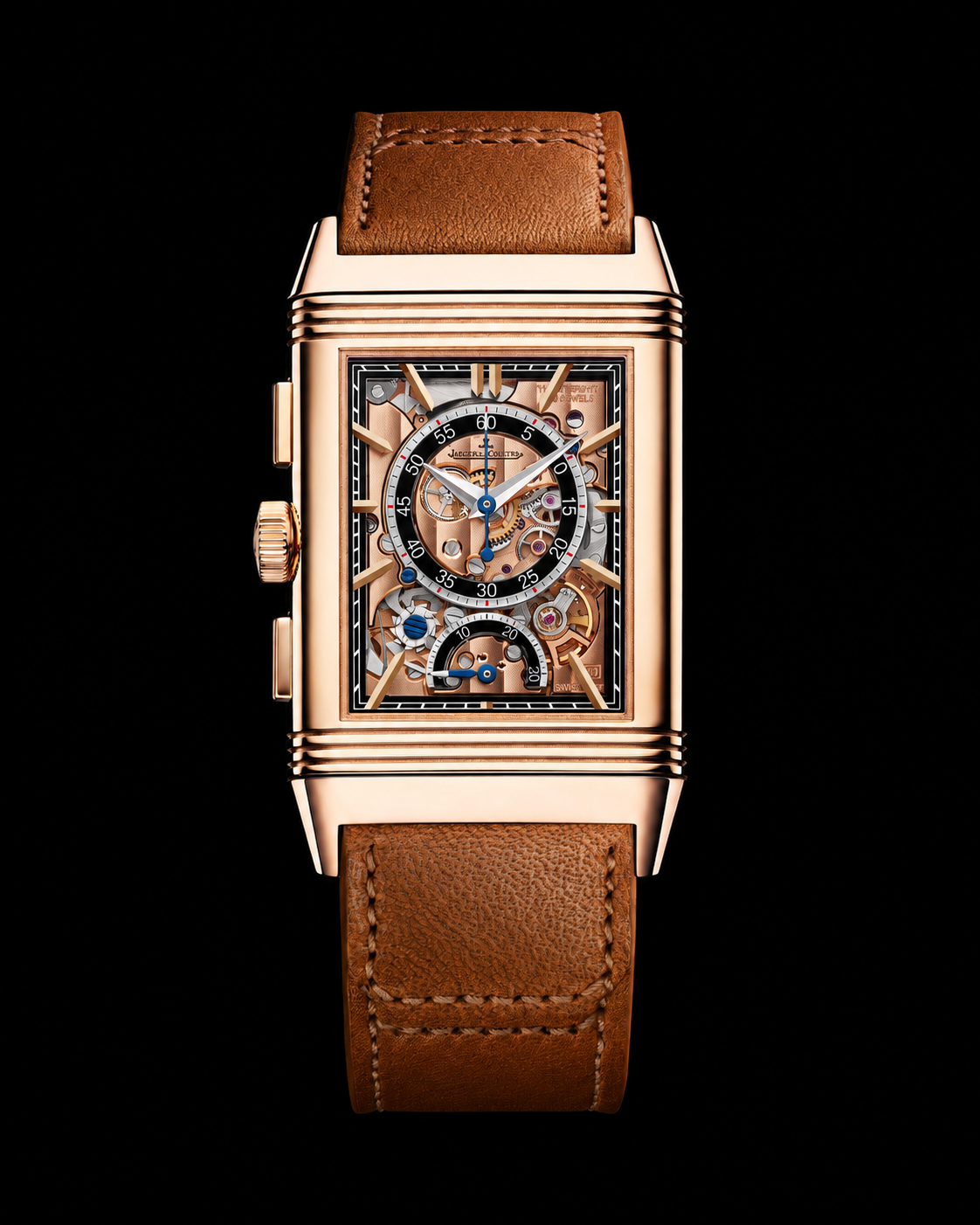
The first limited edition in the Tribute Chronograph range. Solid gold dial laser-engraved with Art Deco lines; gold bridges echo the 1996 original. Integrated manual chronograph with retrograde 30-minute counter, 52 h reserve.
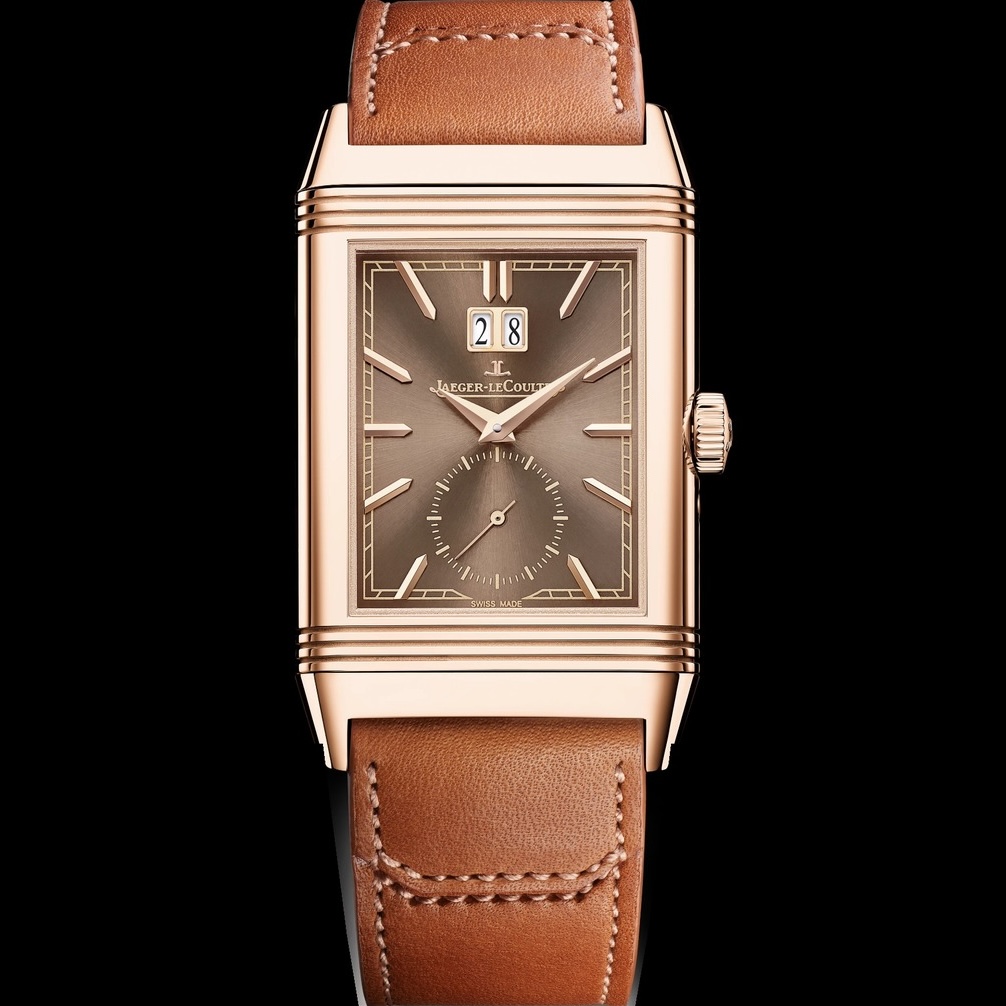
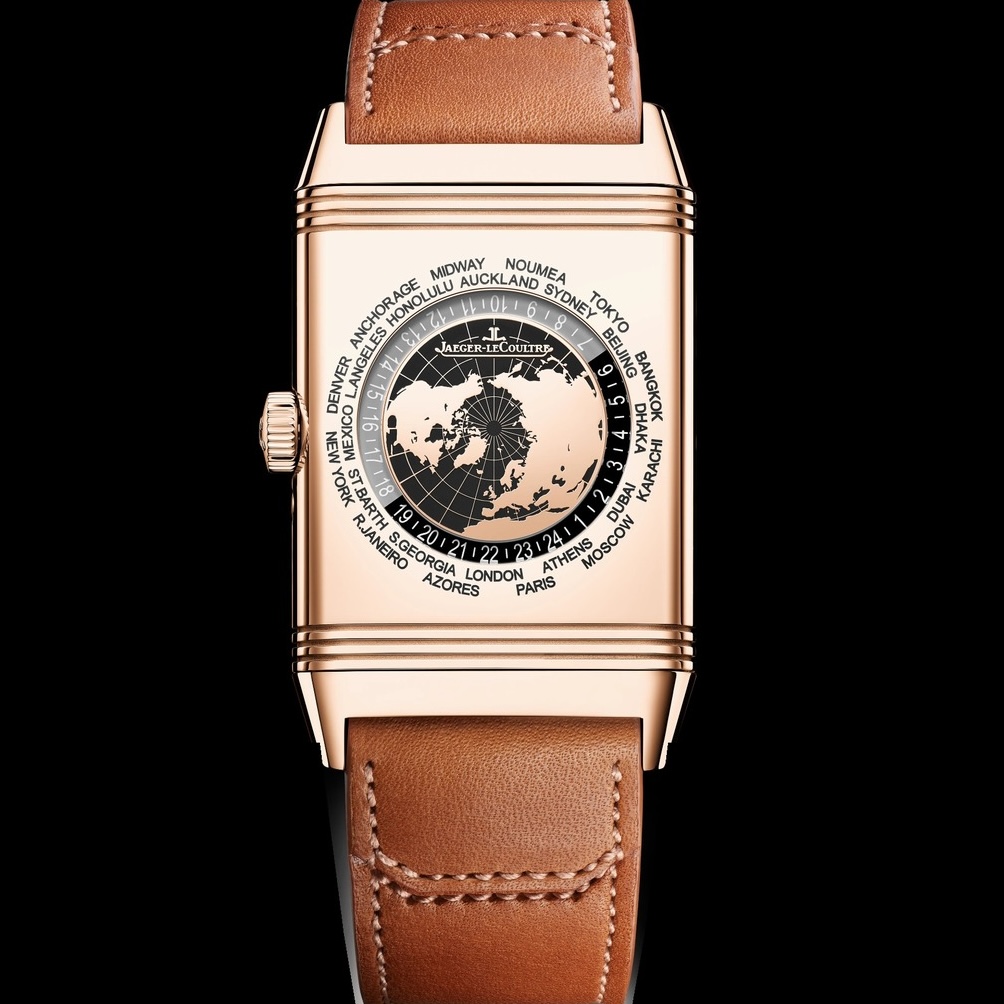
Year: 2025 Calibre: Cal. 834
Material: Pink gold
Market: International
World time returns to the Reverso. The steel version joined the standing catalogue; gold was capped at 150.
Commemorative & Partnership Editions
A club, a city, a boutique opening, an artist, a television series. What qualifies here is that the back was given a meaning.
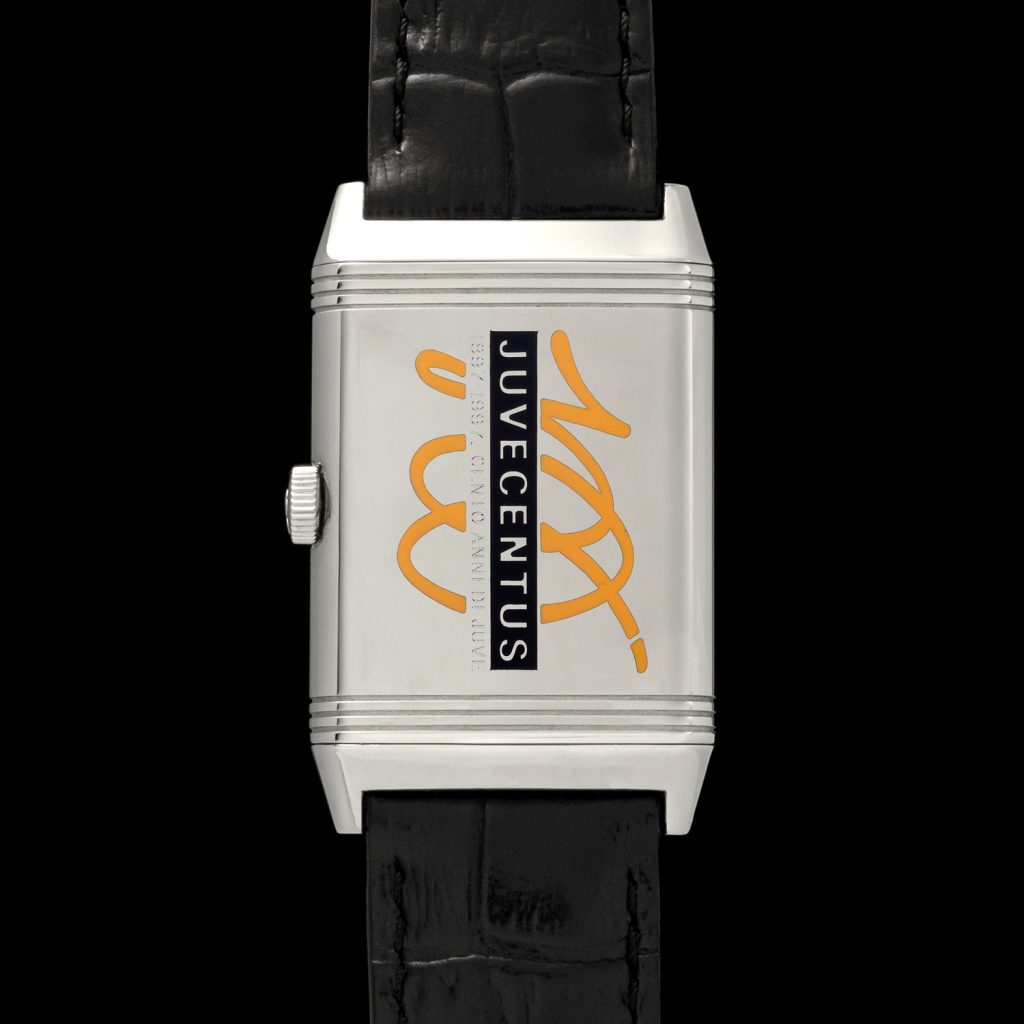
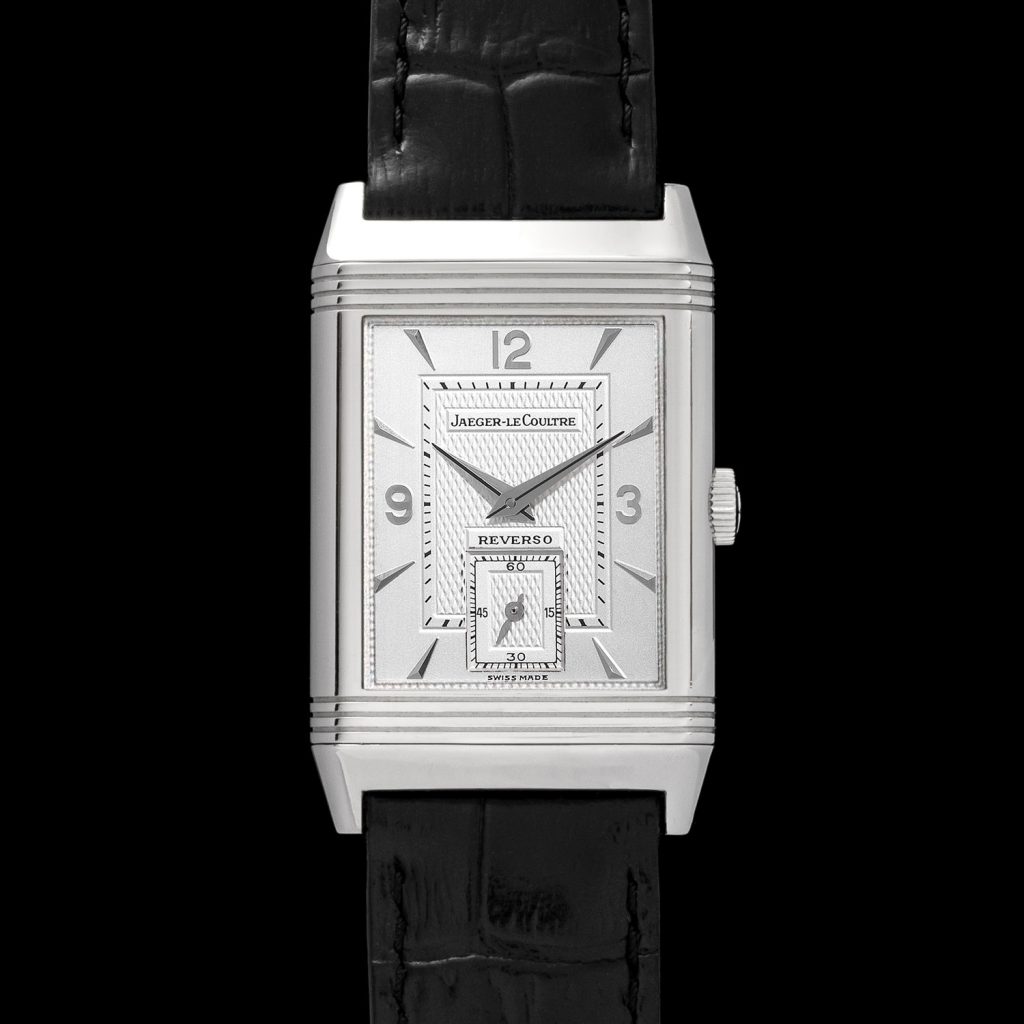
Year: — Calibre: Cal. 822
Material: White gold
Market: Italy
For the centenary of Juventus F.C. Reference discrepancy: sources give both 270.3.62 and 275.3.62.
Year: — Calibre: Cal. 822
Material: Pink gold
Market: Italy
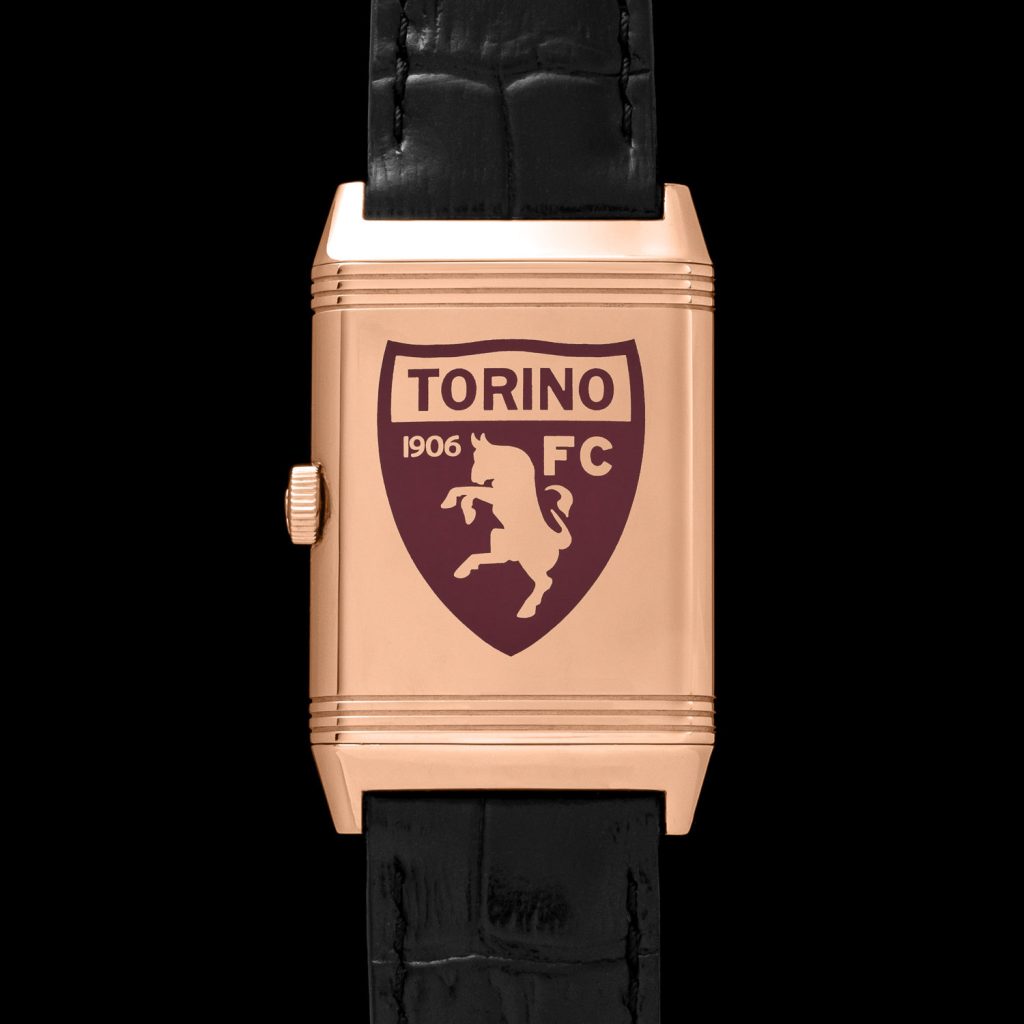
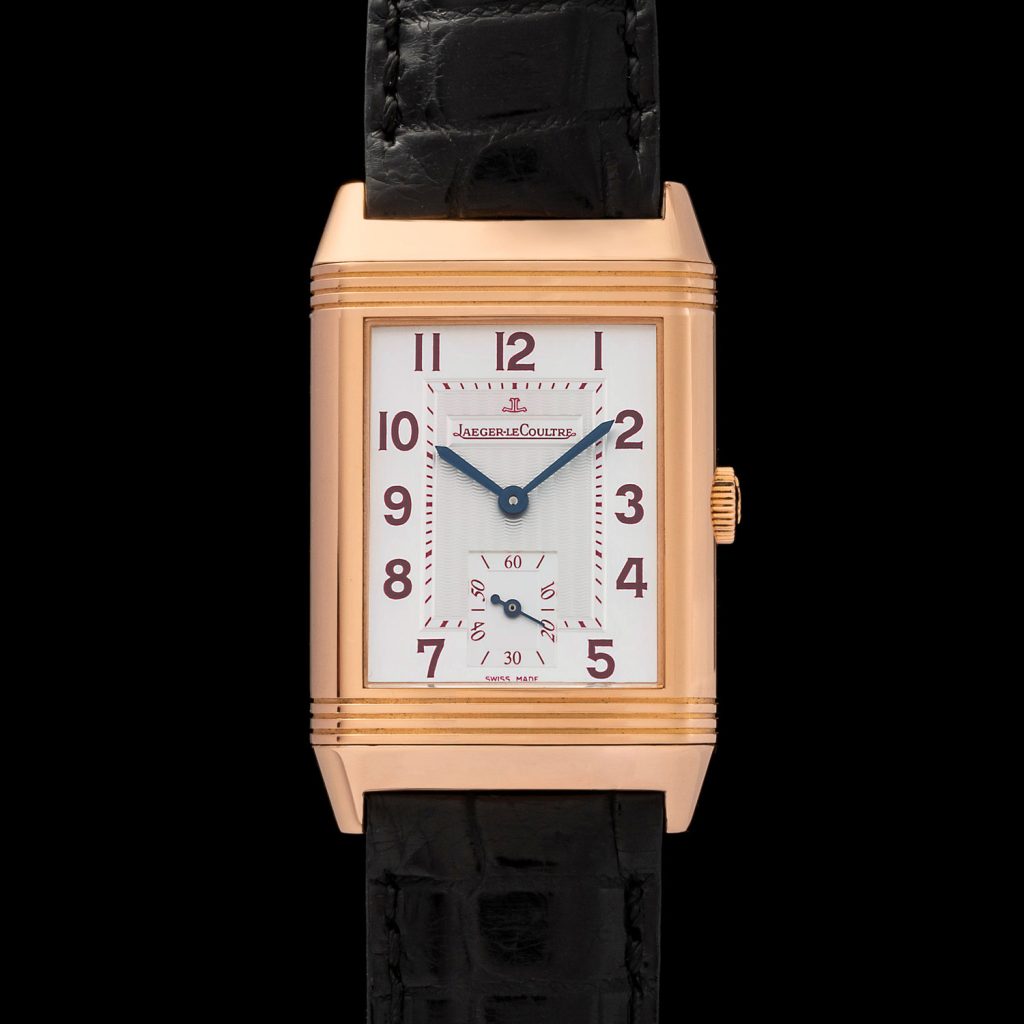
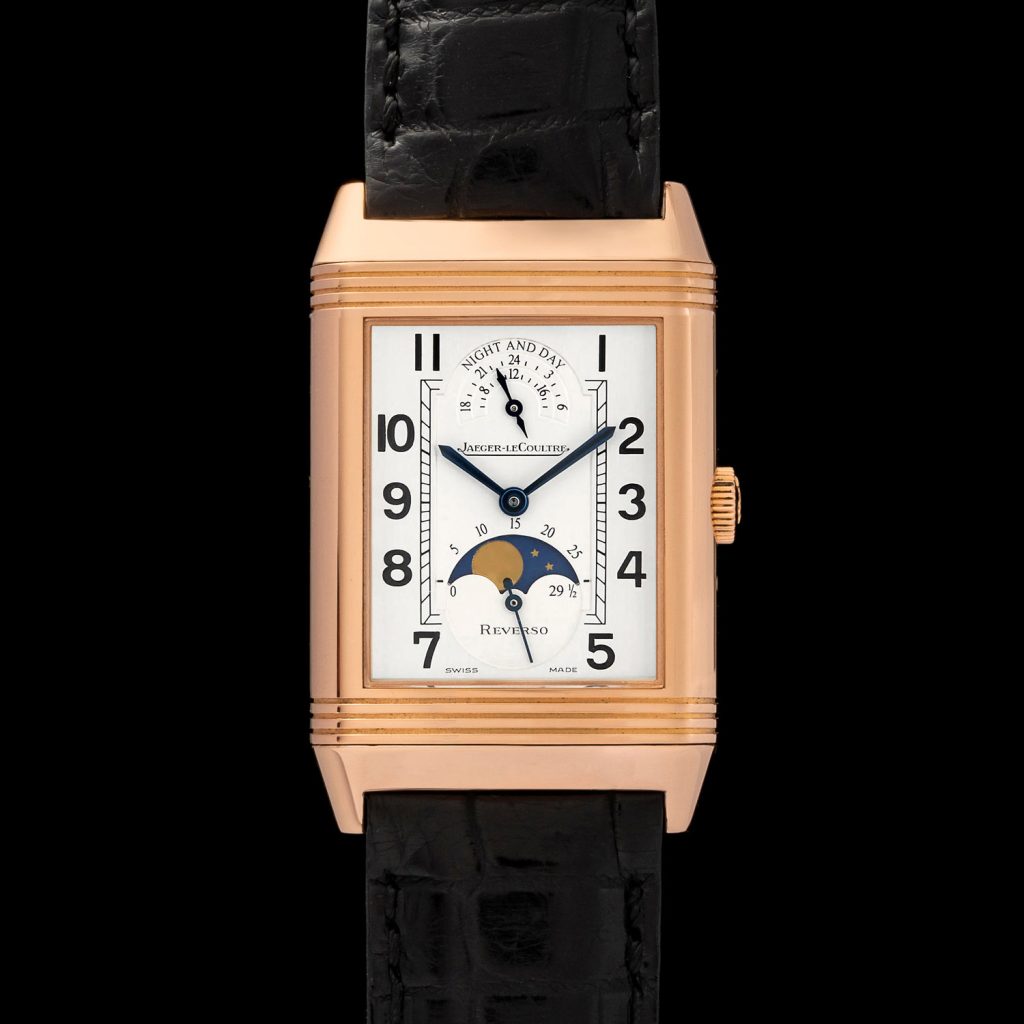
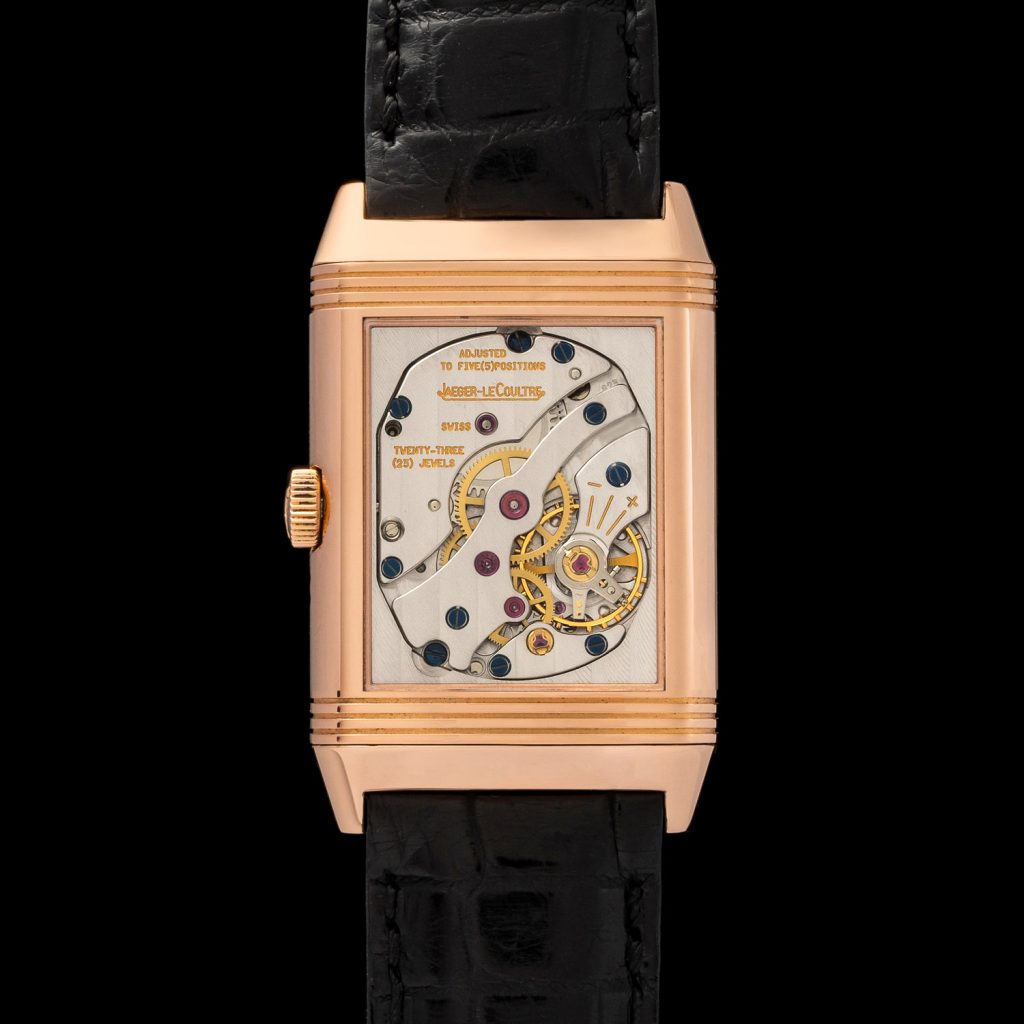
The other Turin club, and far rarer than the Juventus edition — 25 against 100.
Year: — Calibre: Cal. 822
Material: Pink gold
Market: Germany
For the 125th anniversary of the German retailer Wempe.
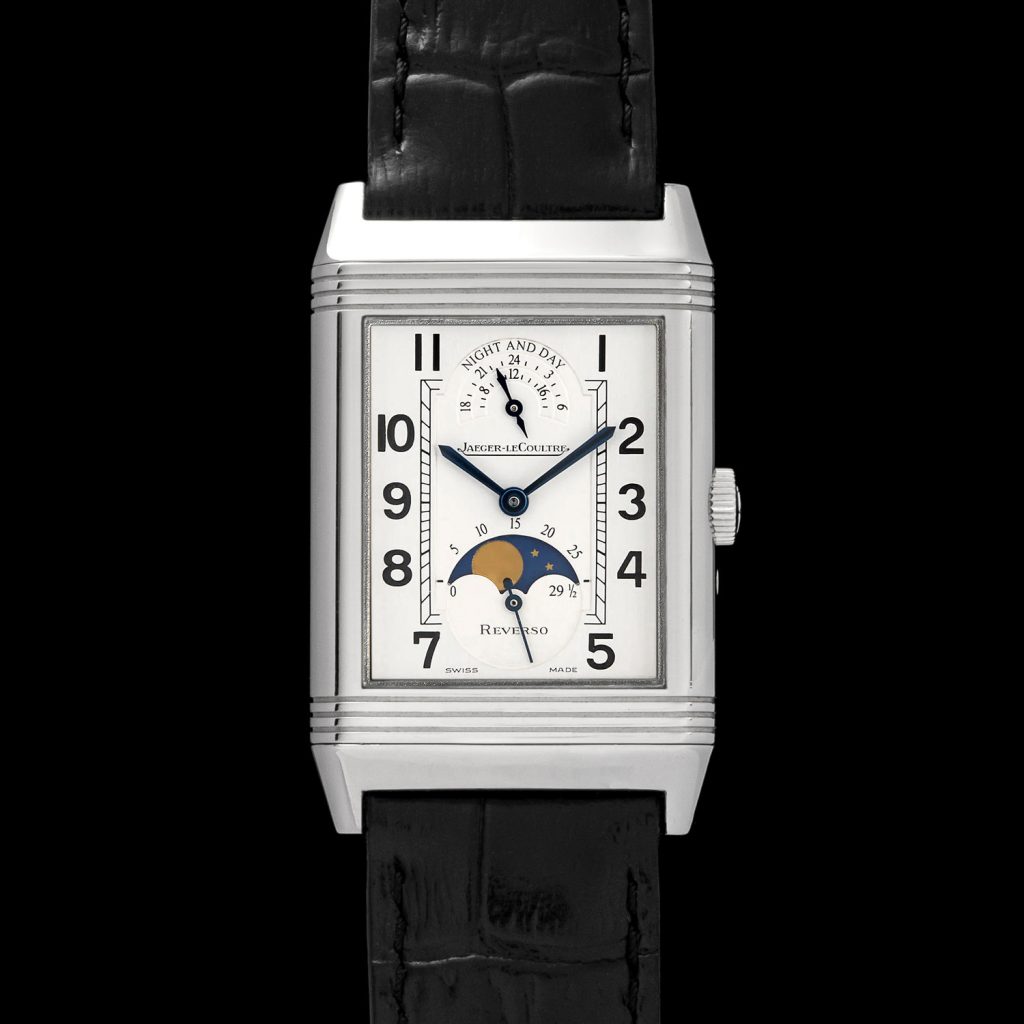
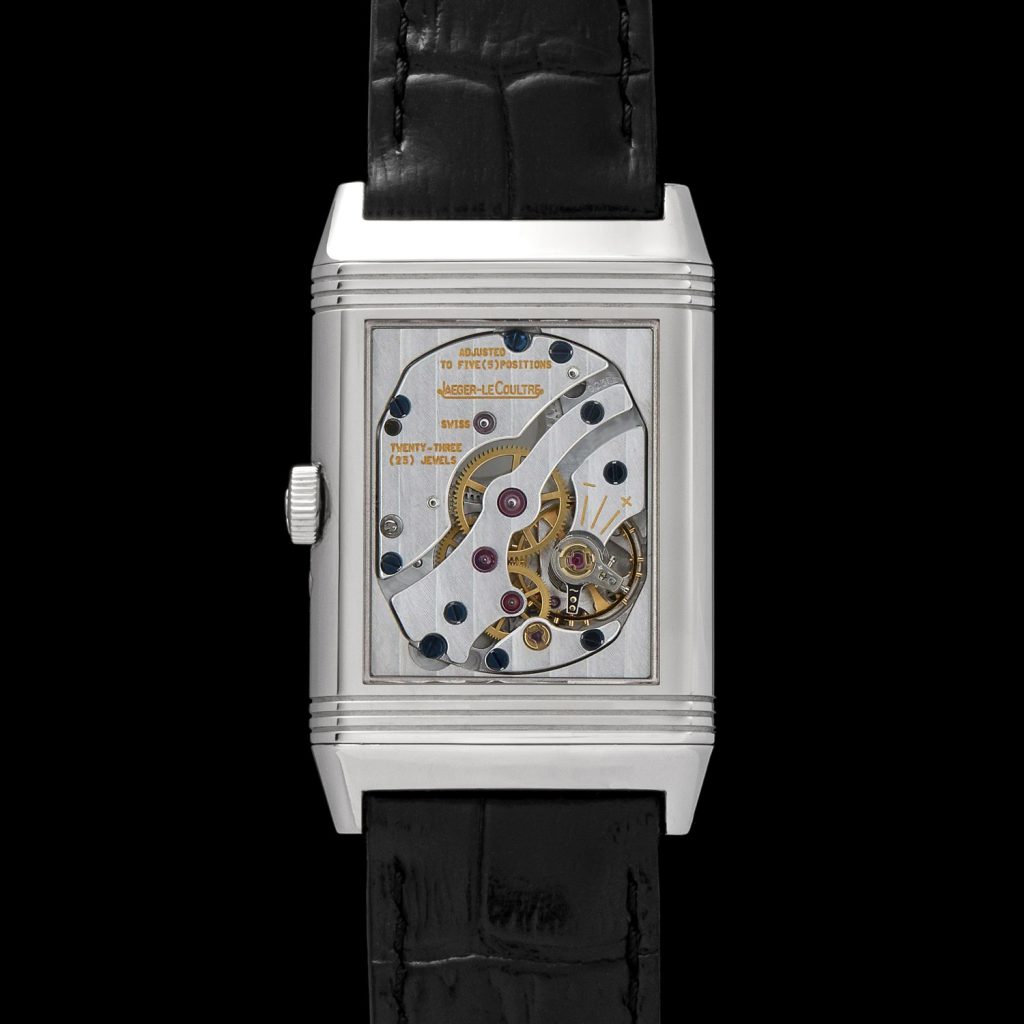
Year: — Calibre: Cal. 822
Material: Stainless steel
Market: Germany
The steel companion to the pink-gold Wempe anniversary piece.
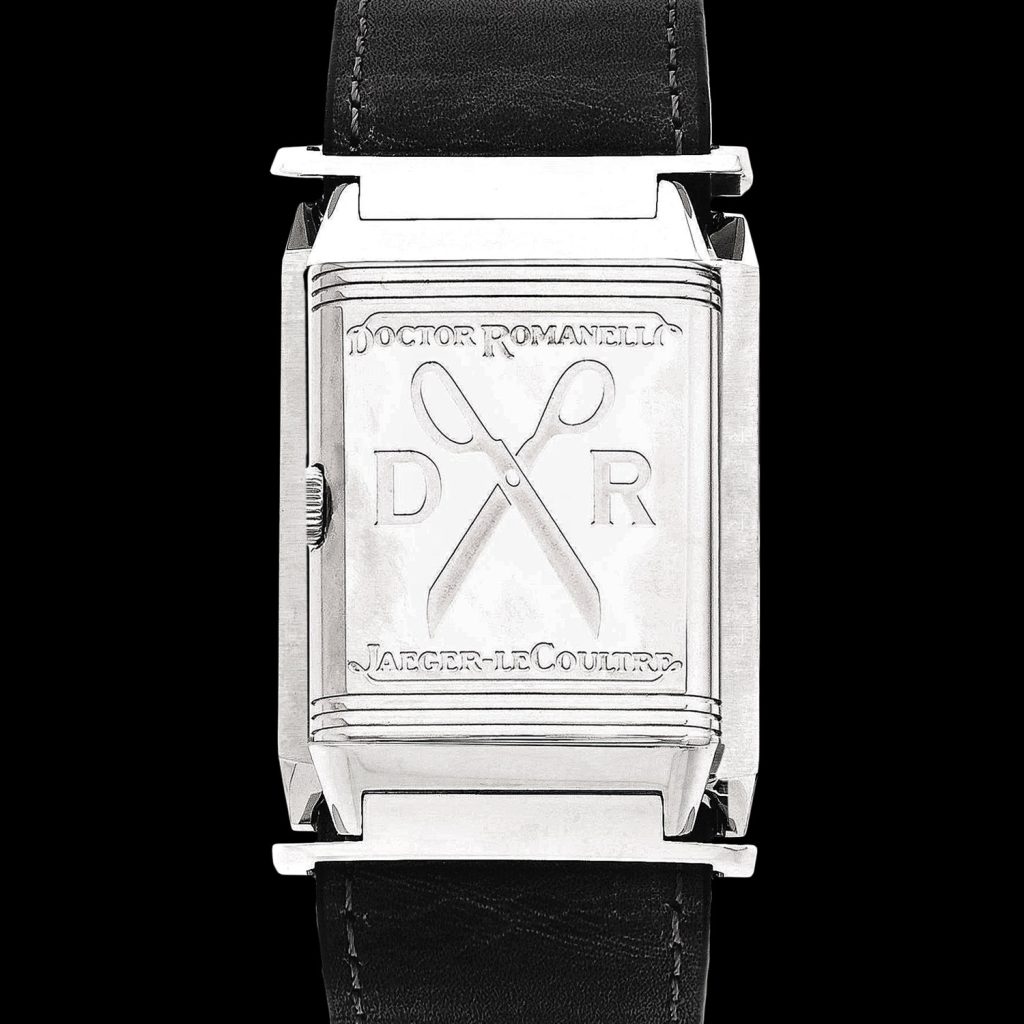
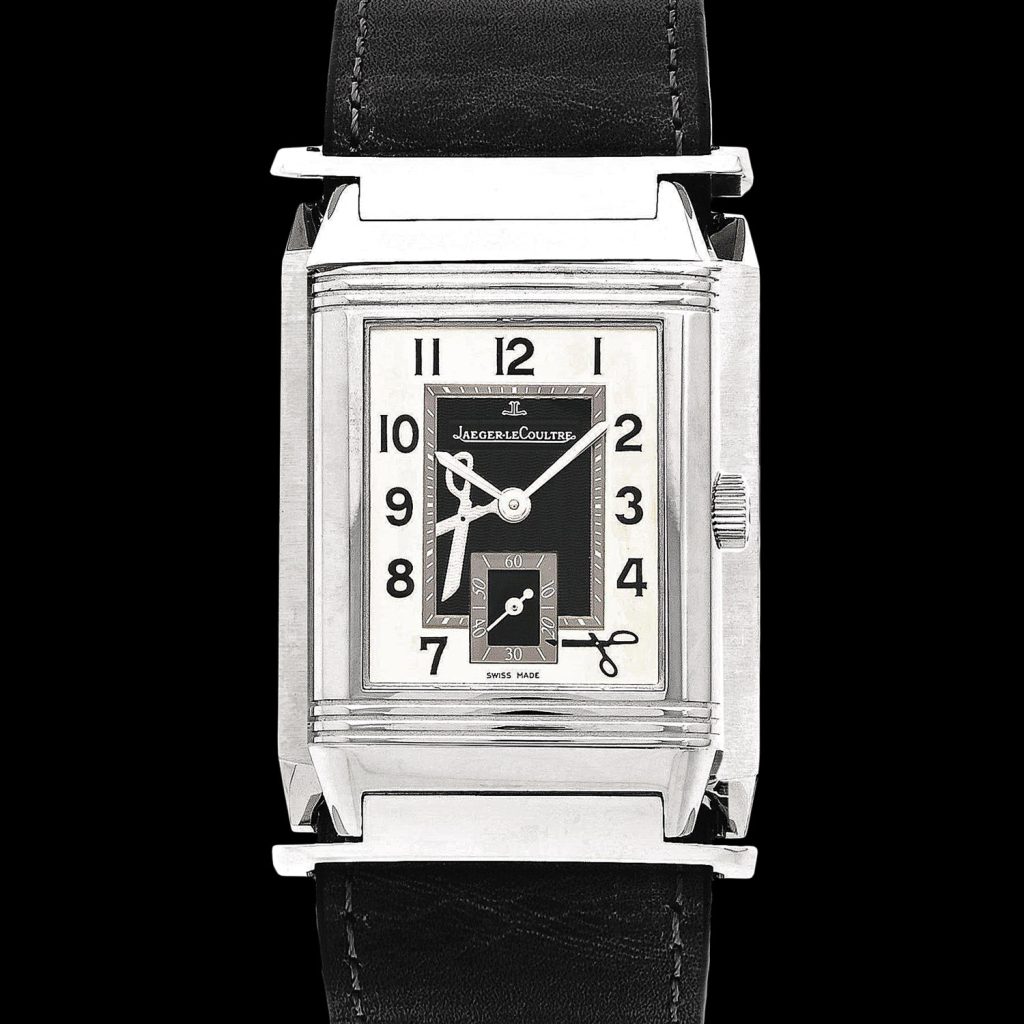
Year: — Calibre: Cal. 822
Material: Stainless steel
Market: Colette, Paris
A collaboration with designer Darren Romanelli for the Reverso’s 75th anniversary, sold through the Paris concept store Colette.
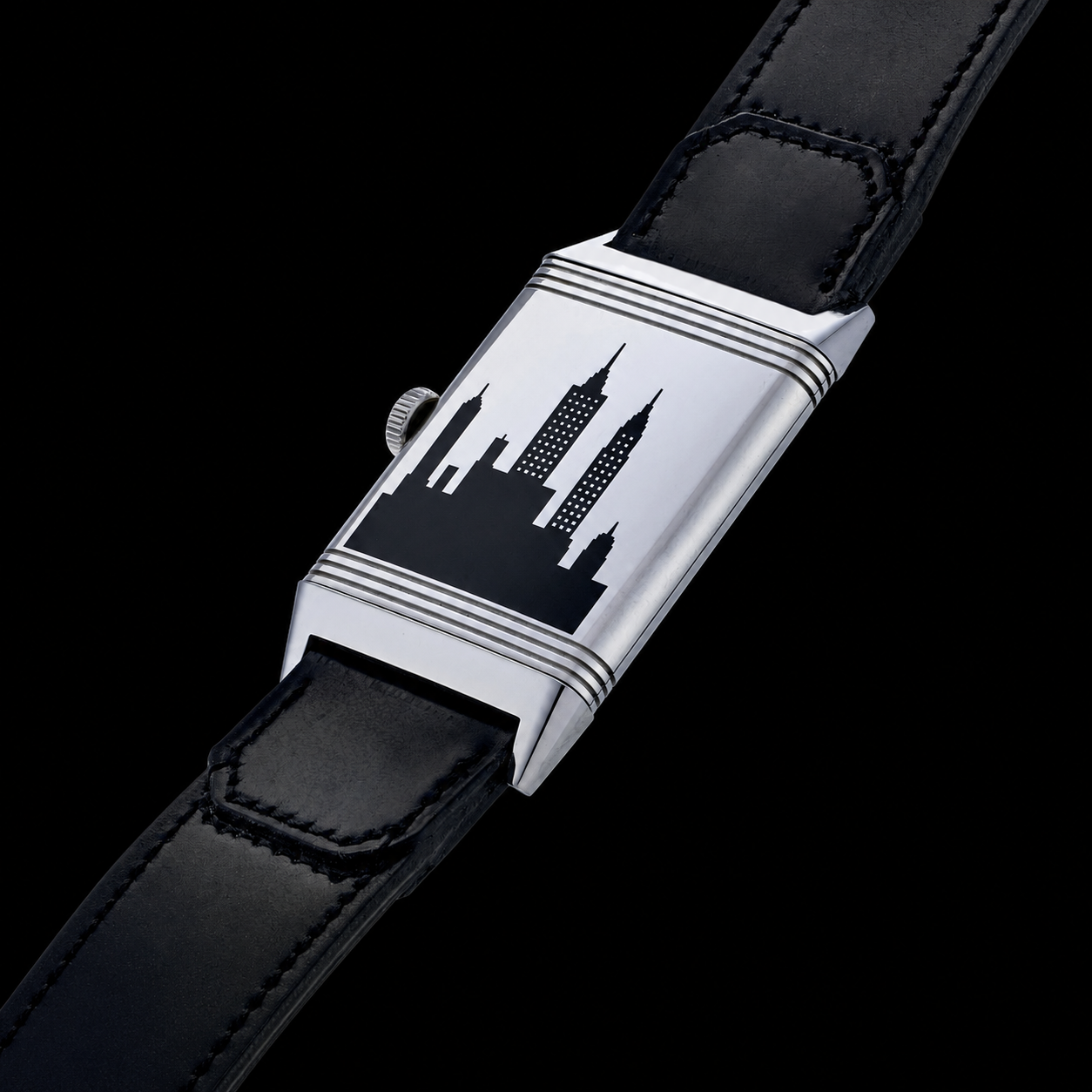
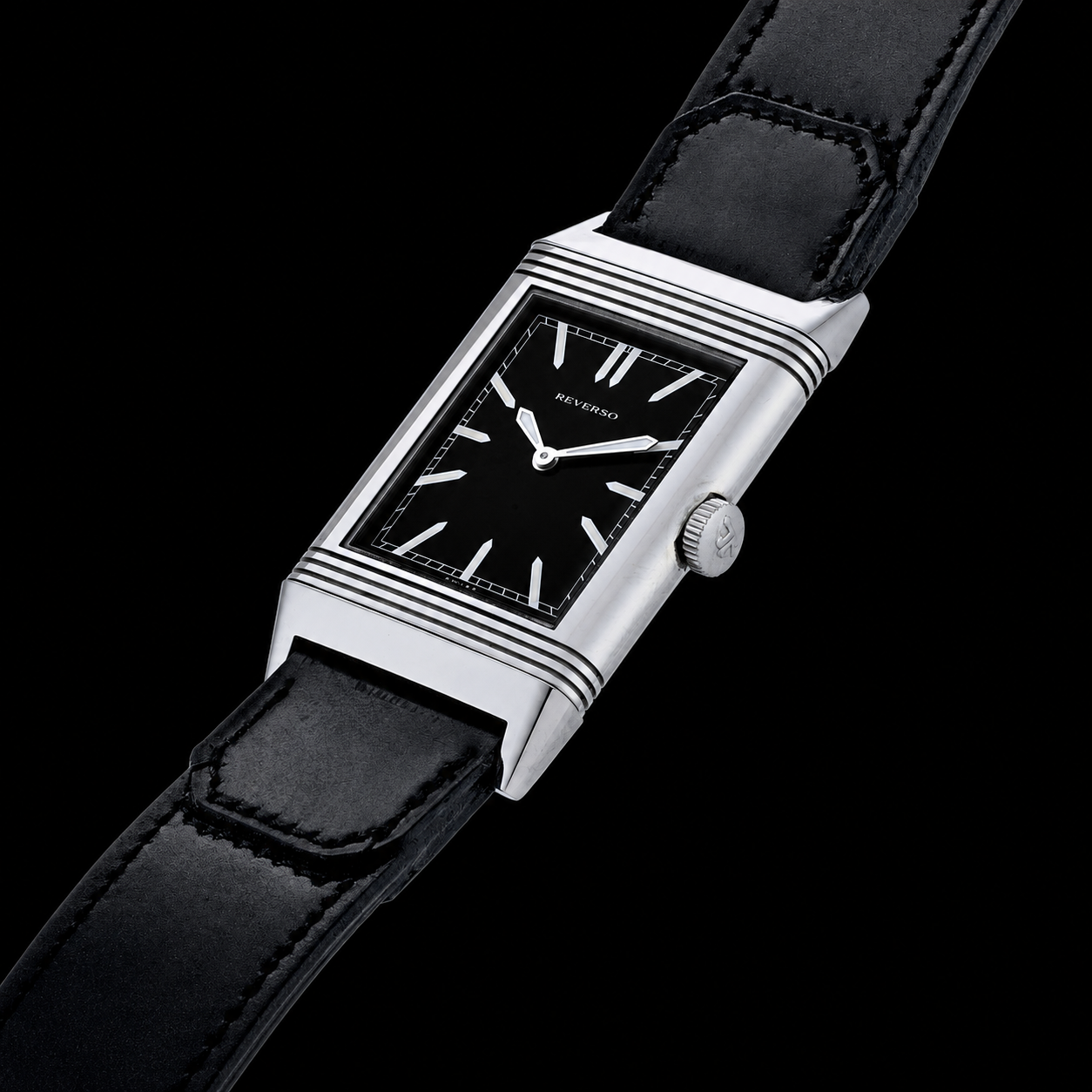
Year: — Calibre: Cal. 822
Material: Stainless steel
Market: New York
Three pieces. The engraving came from an advertisement JLC ran in The New Yorker announcing a boutique opening.
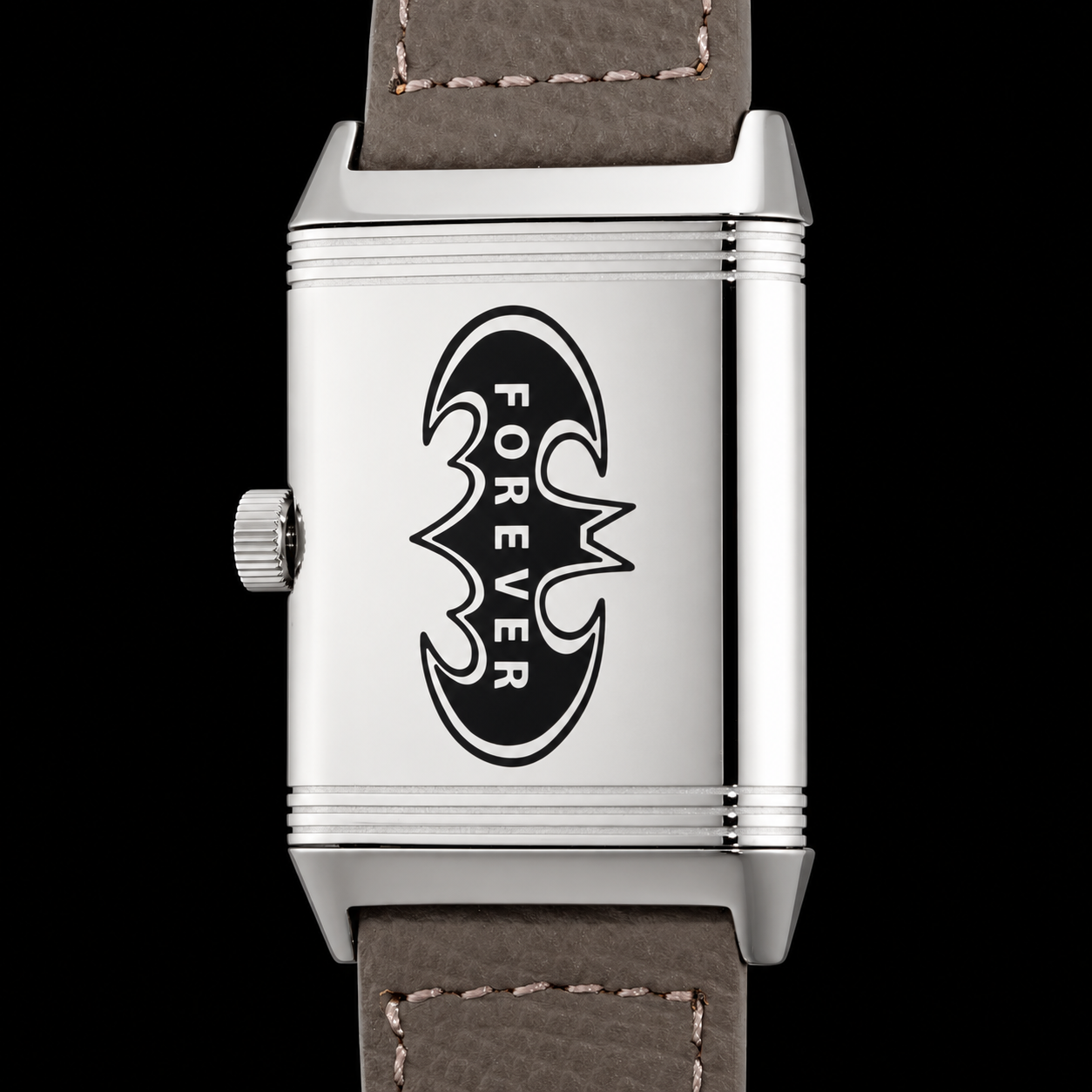
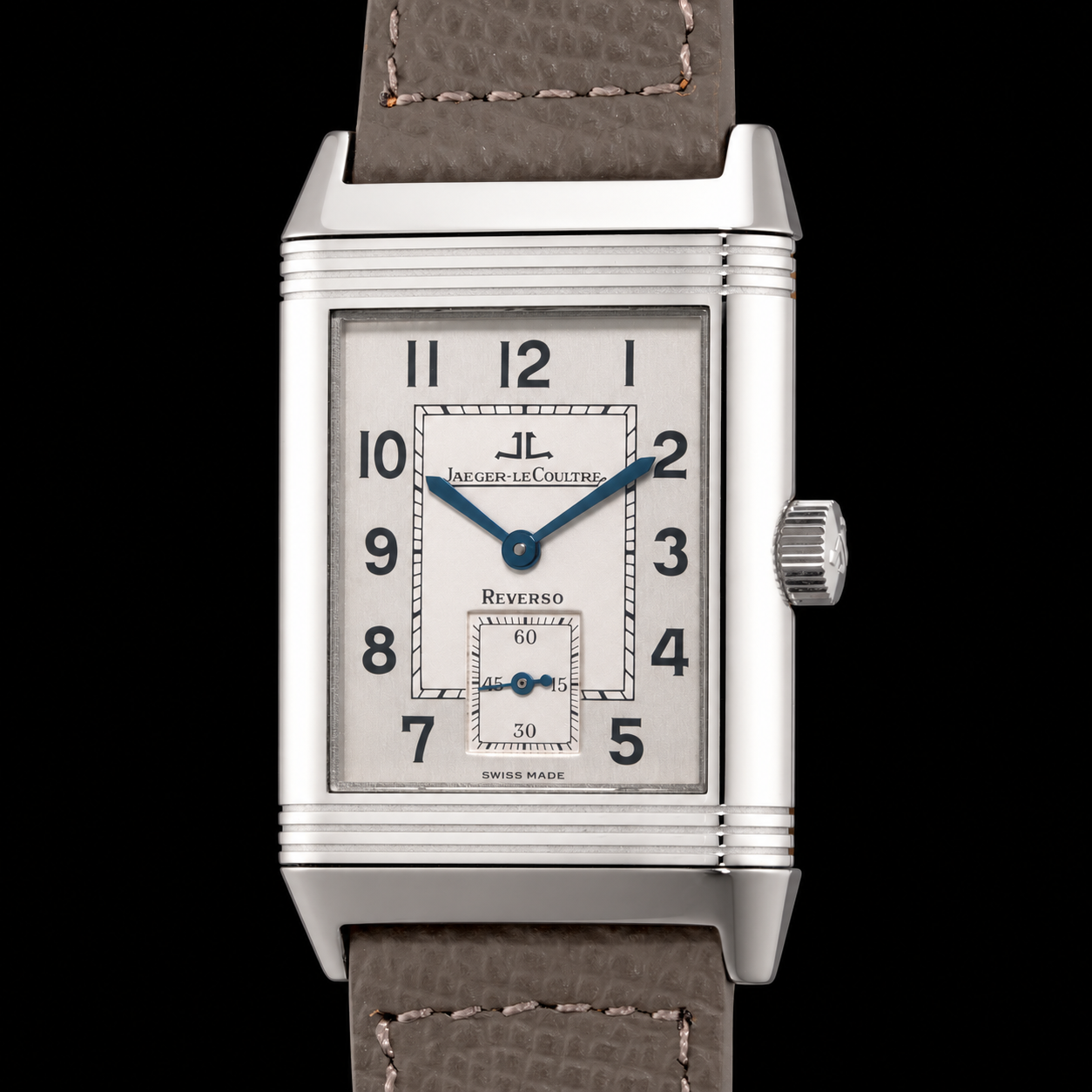
Year: 1995 Calibre: Cal. 822
Material: Stainless steel or 18k yellow gold
Market: United States
A black bat-symbol with “FOREVER” through it, made alongside the 1995 film and never sold — distributed for promotion, charity auctions, and cast/crew gifts. Most of the 35 examples have never resurfaced.
Year: 1996 Calibre: Cal. 846
Material: White gold
Market: Switzerland
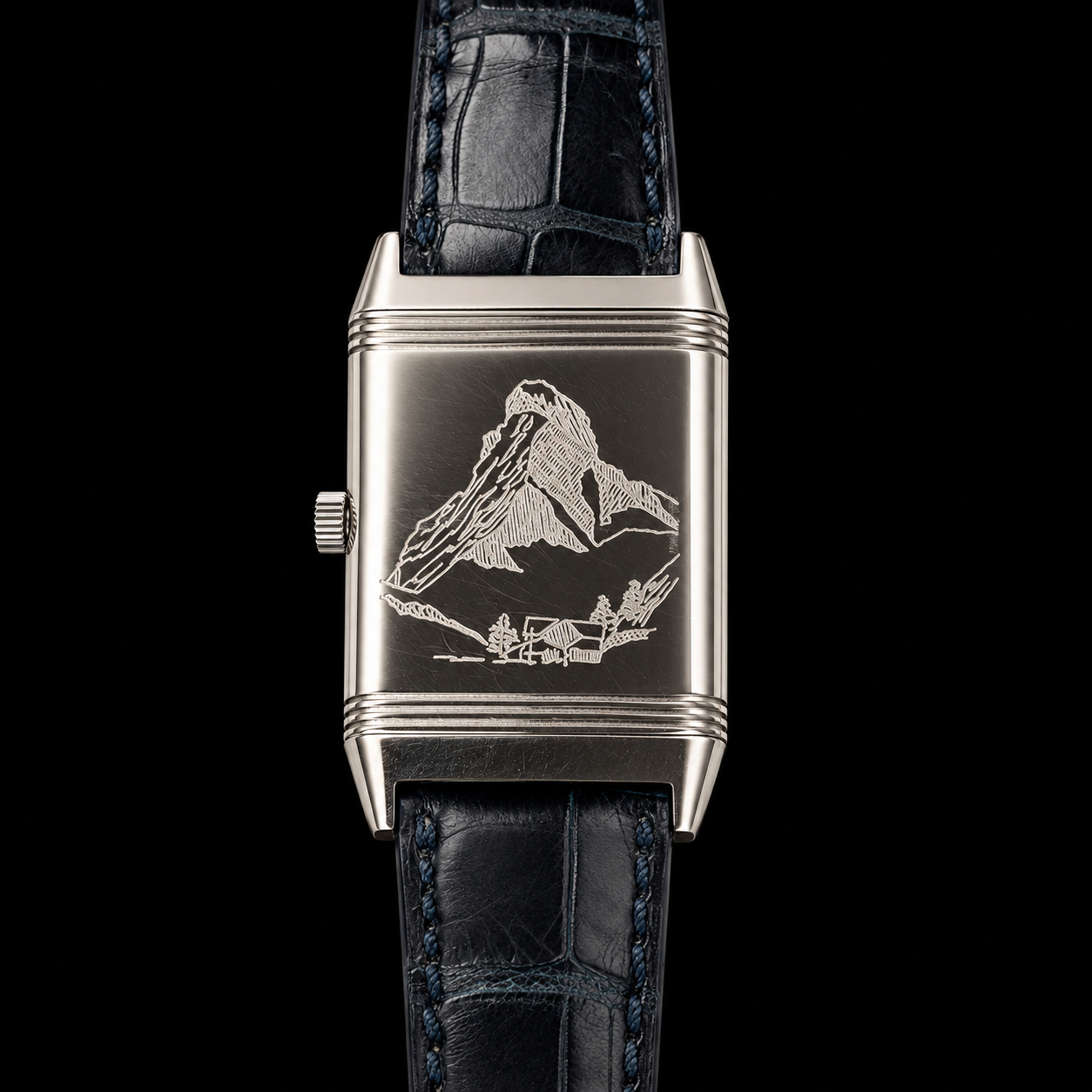
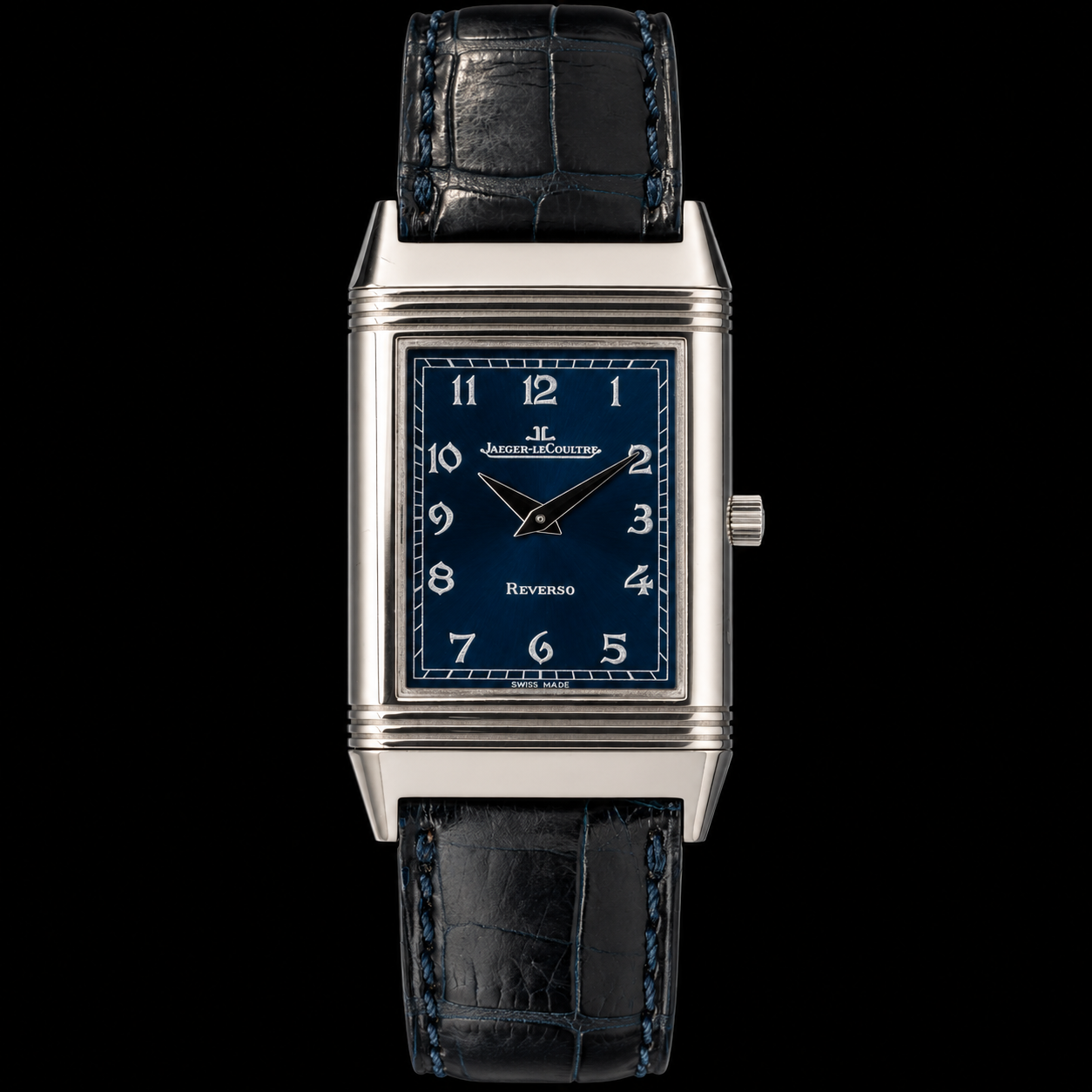
The same 1996 anniversary, engraved instead with the Matterhorn — the peak most associated with the Valais region and with Switzerland abroad.
Year: 2000–2012 Calibre: Cal. 822 / 822/2
Material: White gold, pink gold, or steel
Market: Portugal
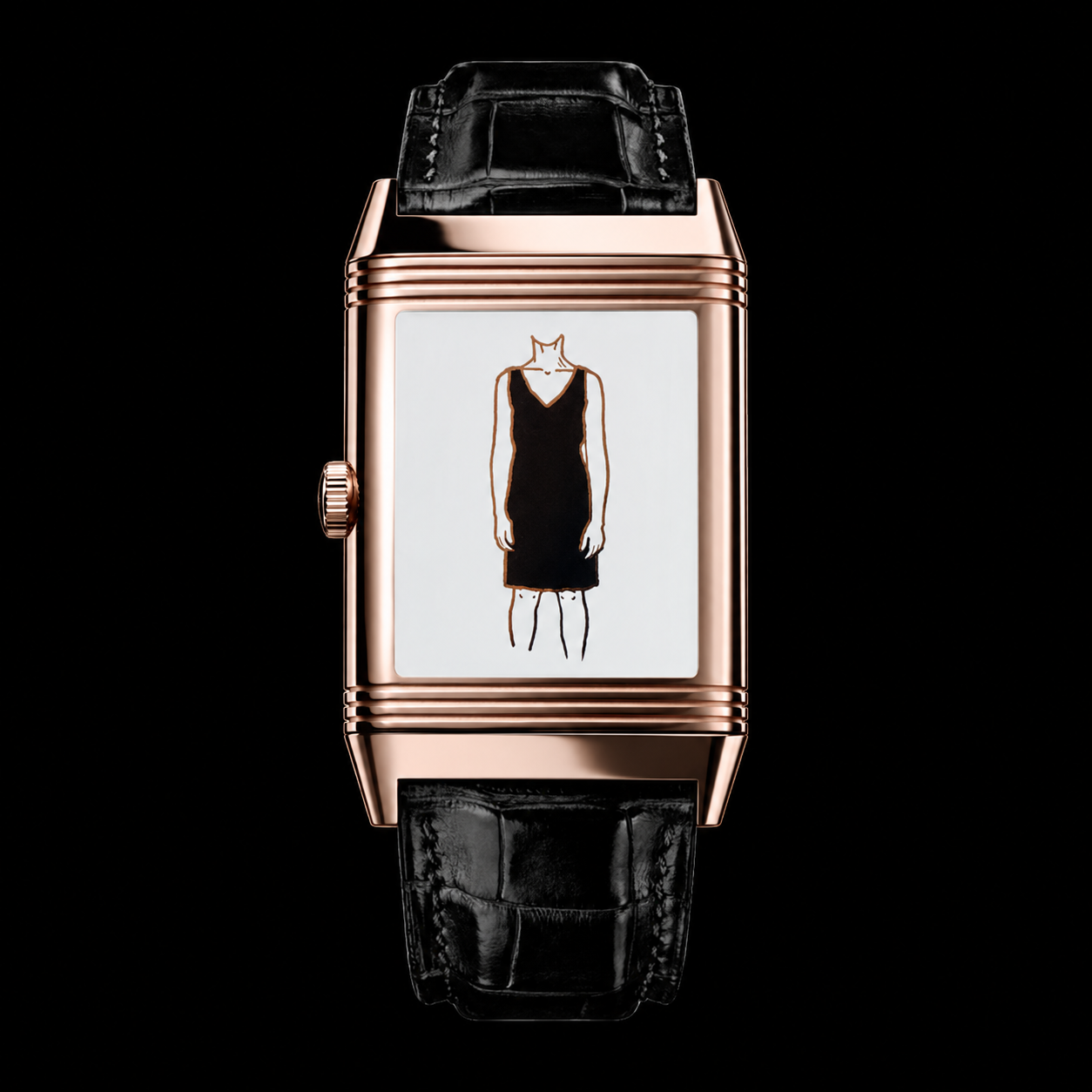
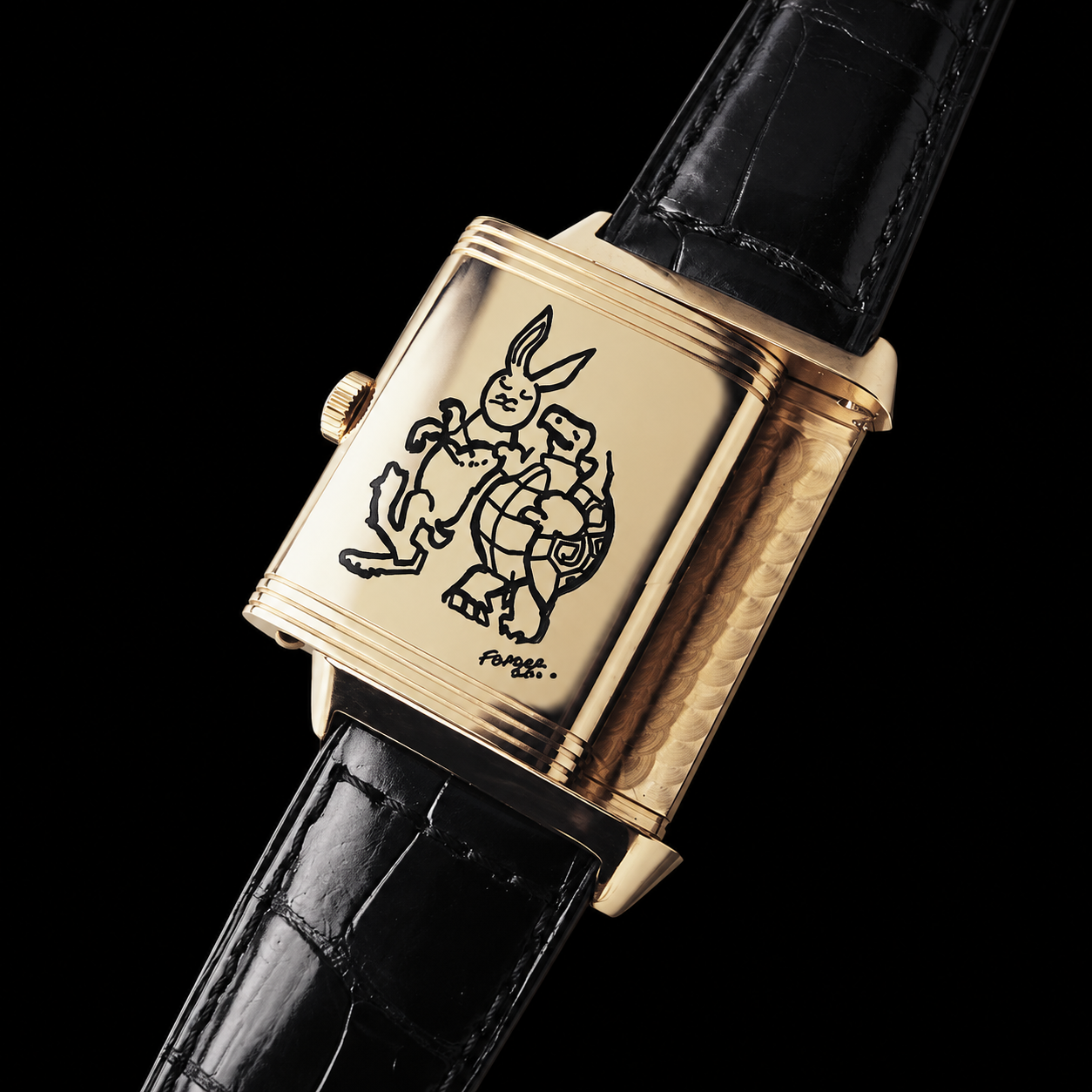
Five Portuguese artists over twelve years — Júlio Pomar, Manuel Cargaleiro, Paula Rego, José de Guimarães, Julião Sarmento — each given the Reverso case-back as a canvas. Full set catalogued on its own page.
See the full set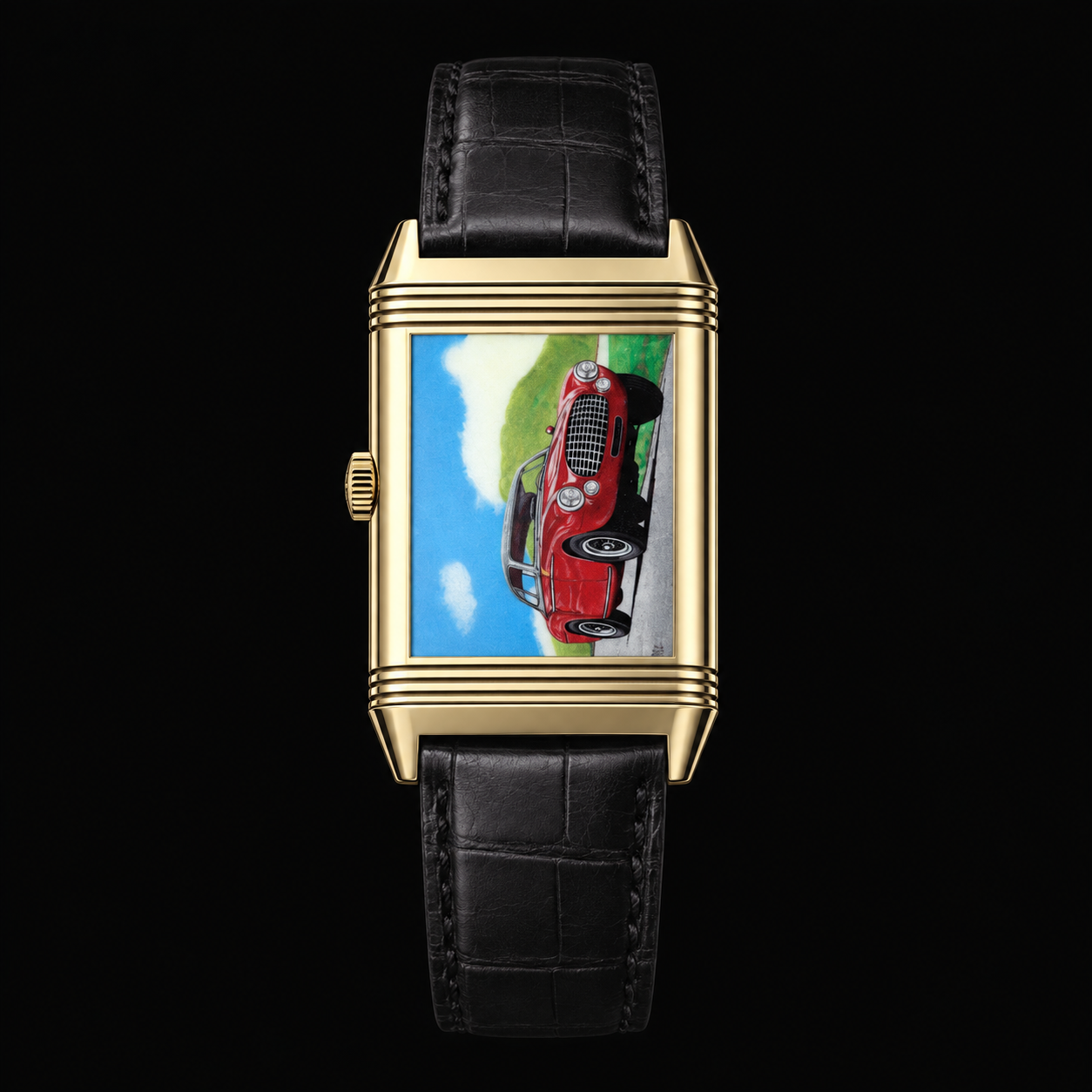
Year: 2003 Calibre: —
Material: Yellow gold
Market: Italy
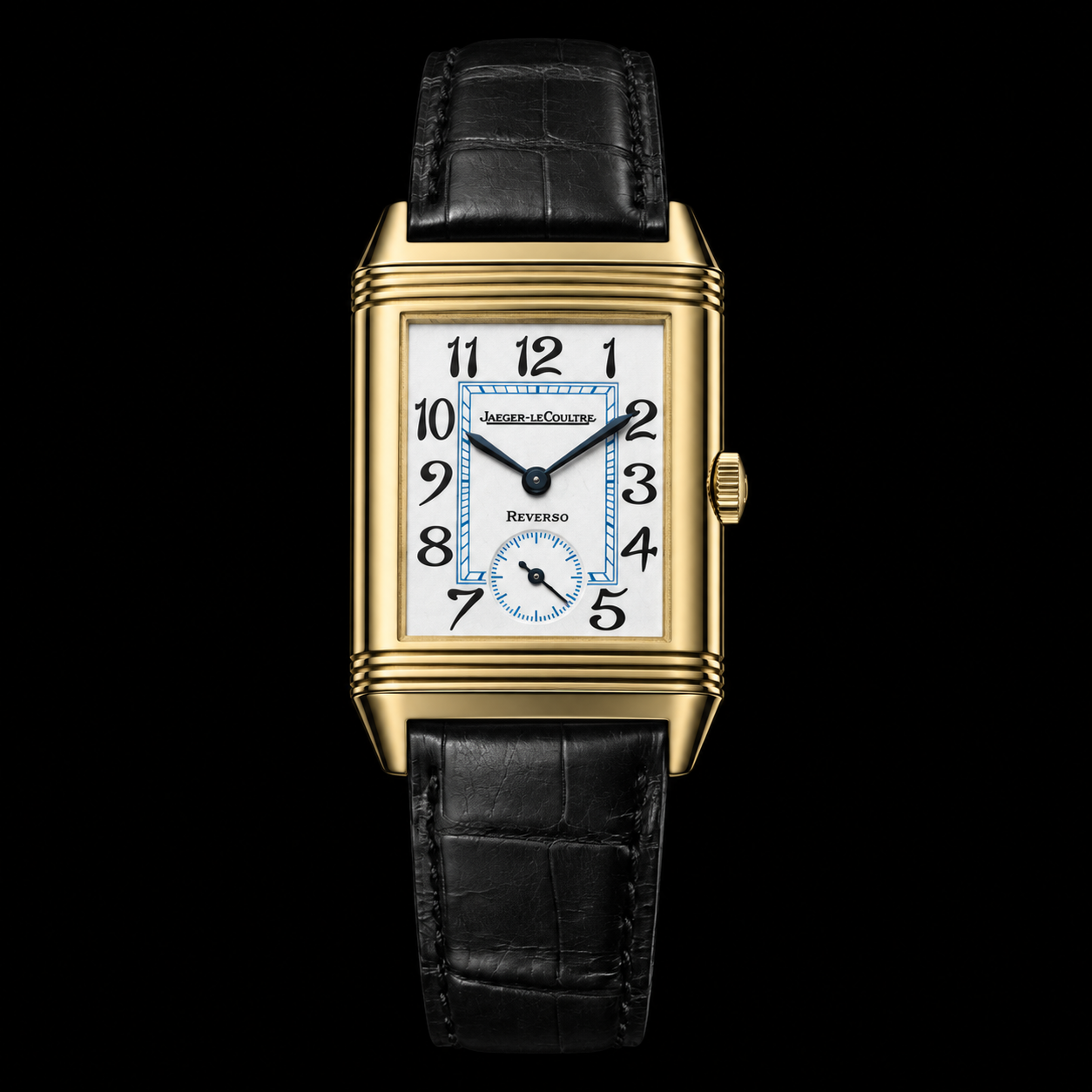
The prancing horse enamelled onto the case-back, on the same case reference used elsewhere for the Mucha enamel sets.
Year: 2005 Calibre: Automatic
Material: Stainless steel
Market: United Kingdom
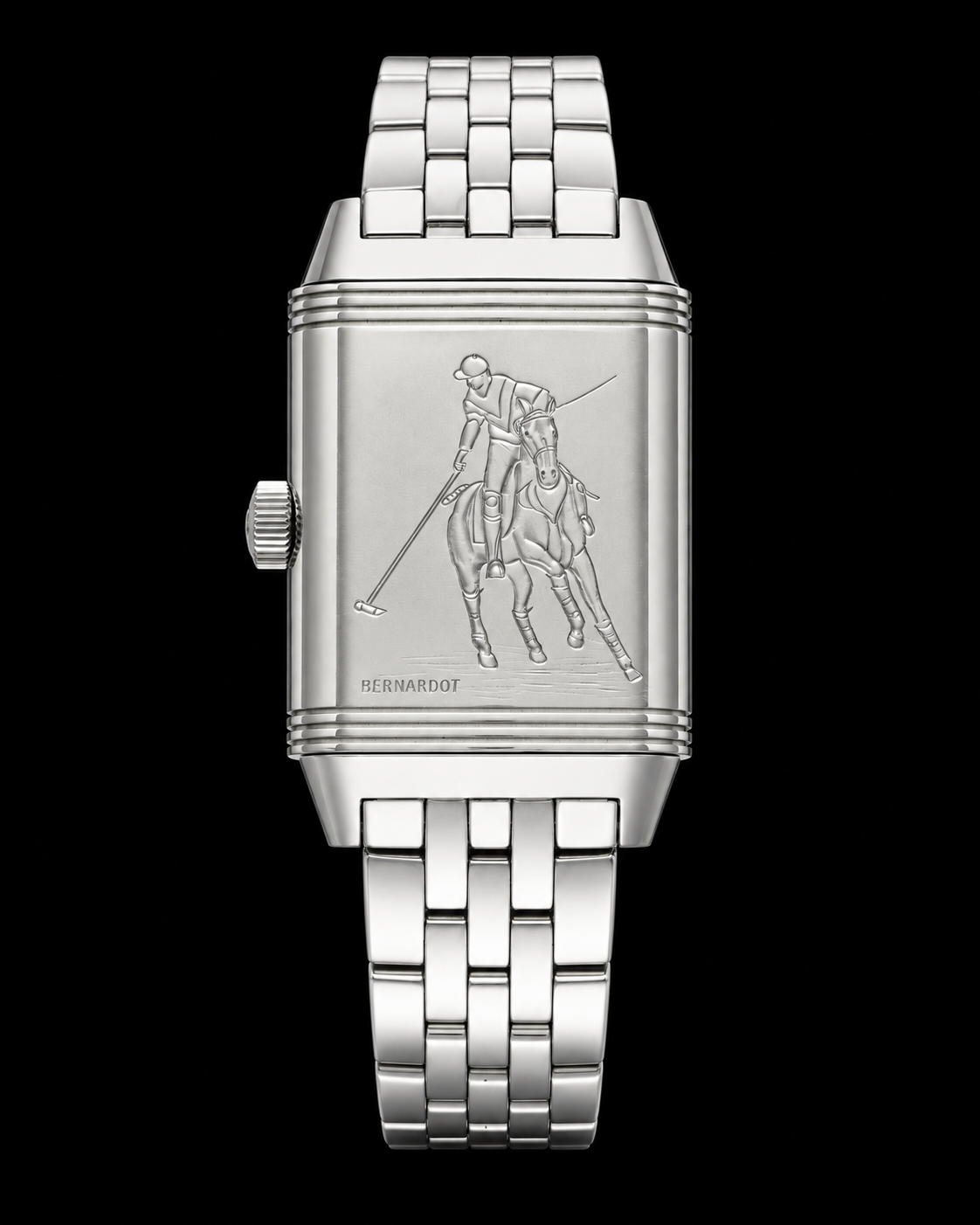
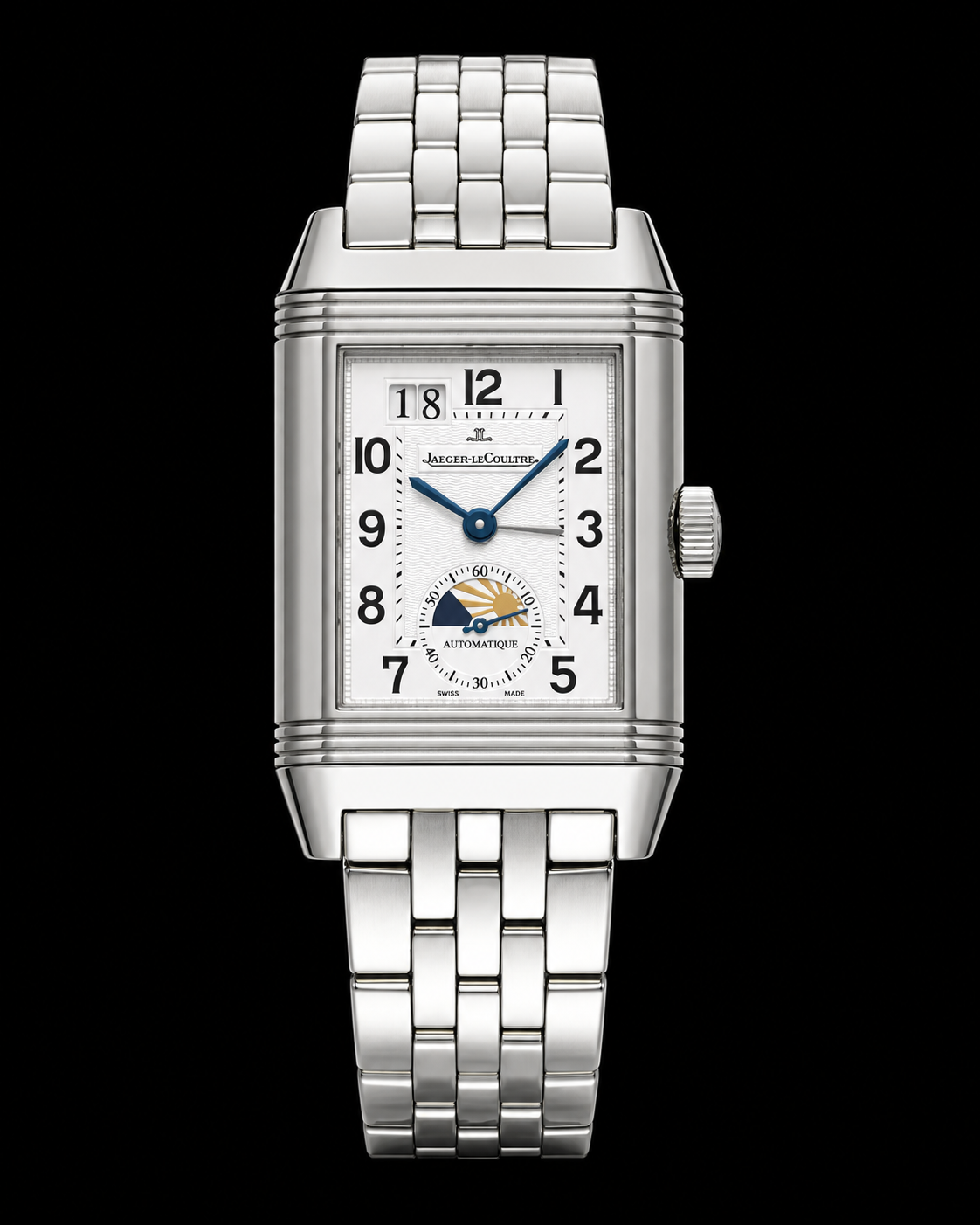
A steel automatic dual-time Reverso with date, made for the Royal Windsor Horse Show — one of the smallest runs in this archive.
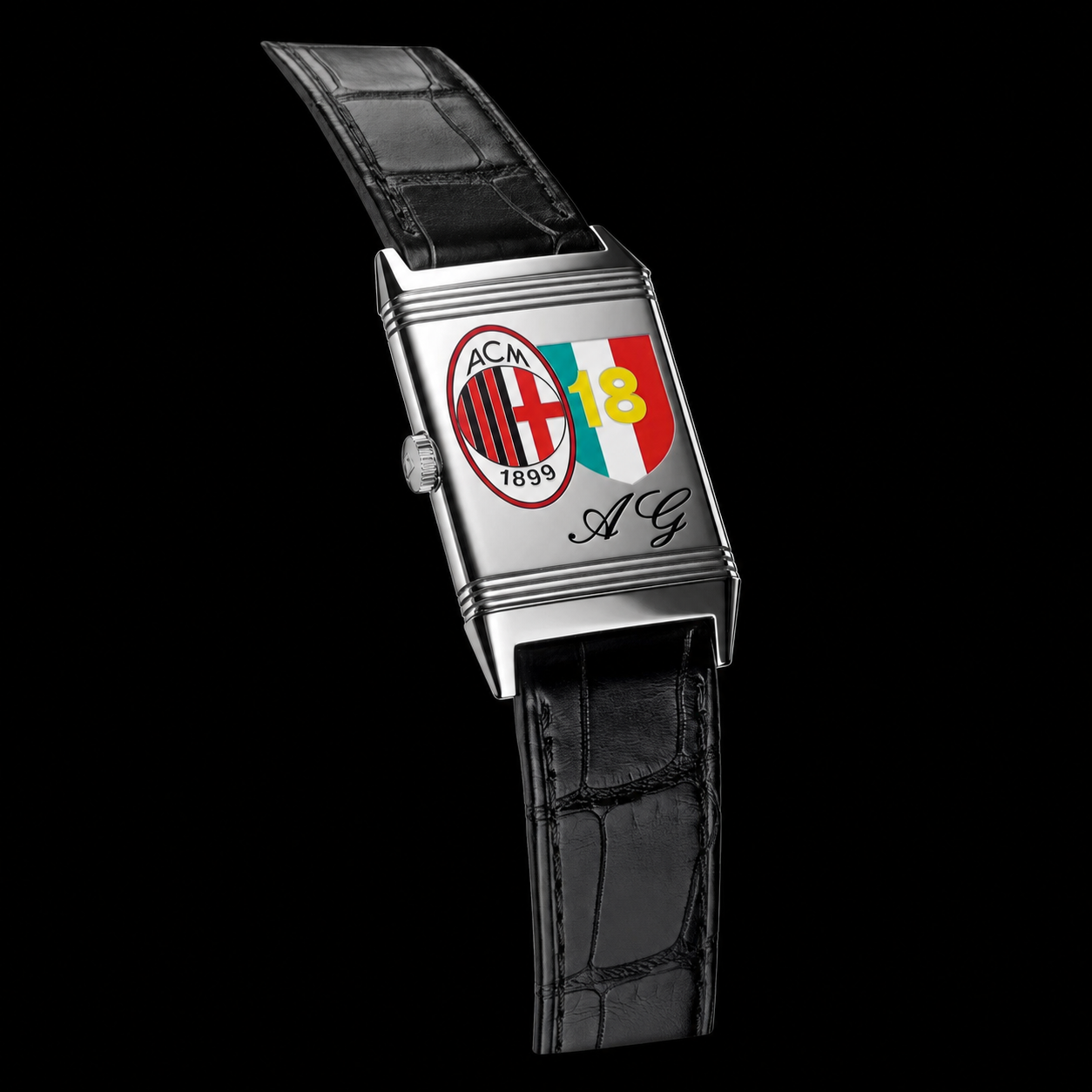
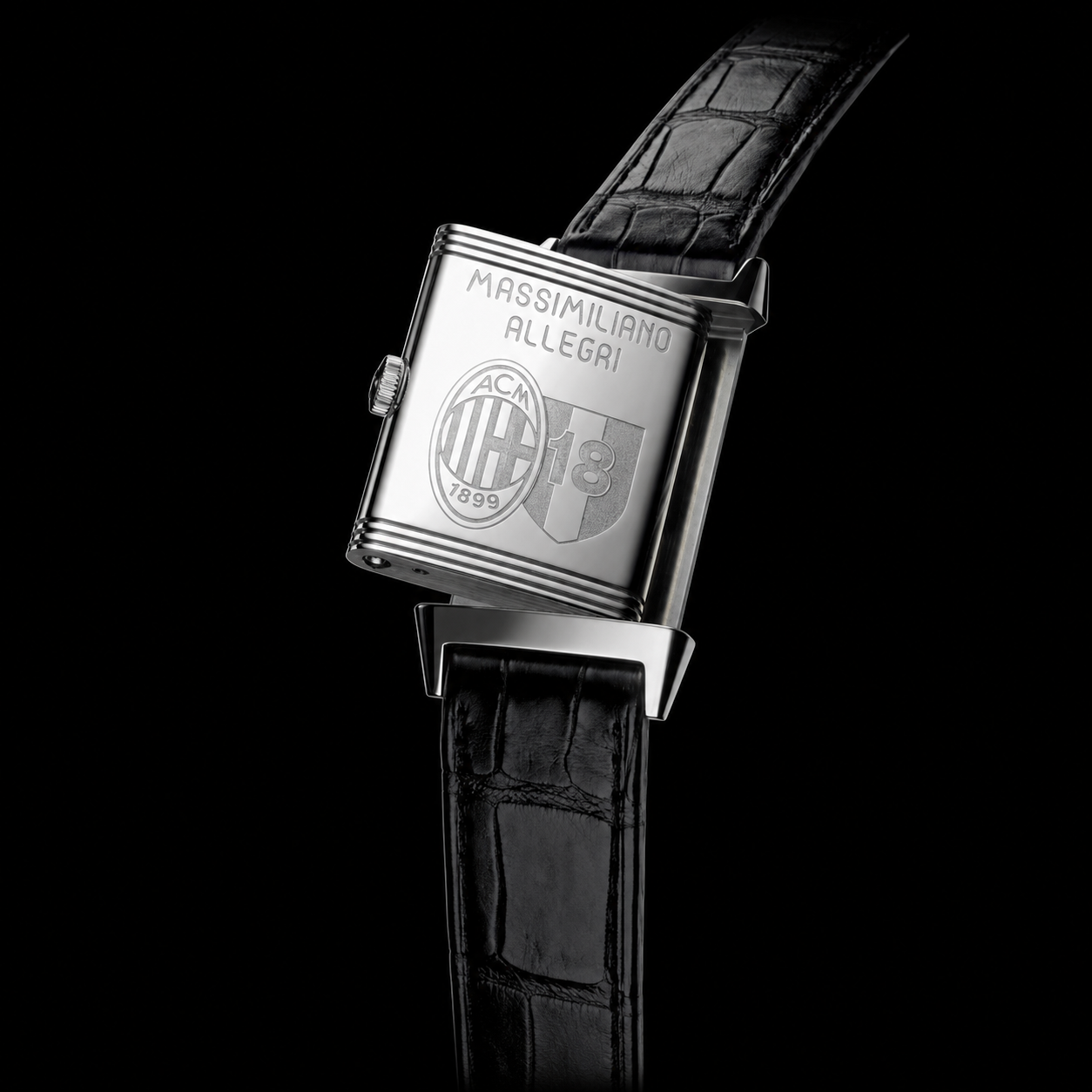
Year: 2011 Calibre: —
Material: —
Market: AC Milan
Made by the Métiers Rares craftsmen in the club’s red and black; a separately personalised piece was made for Adriano Galliani.
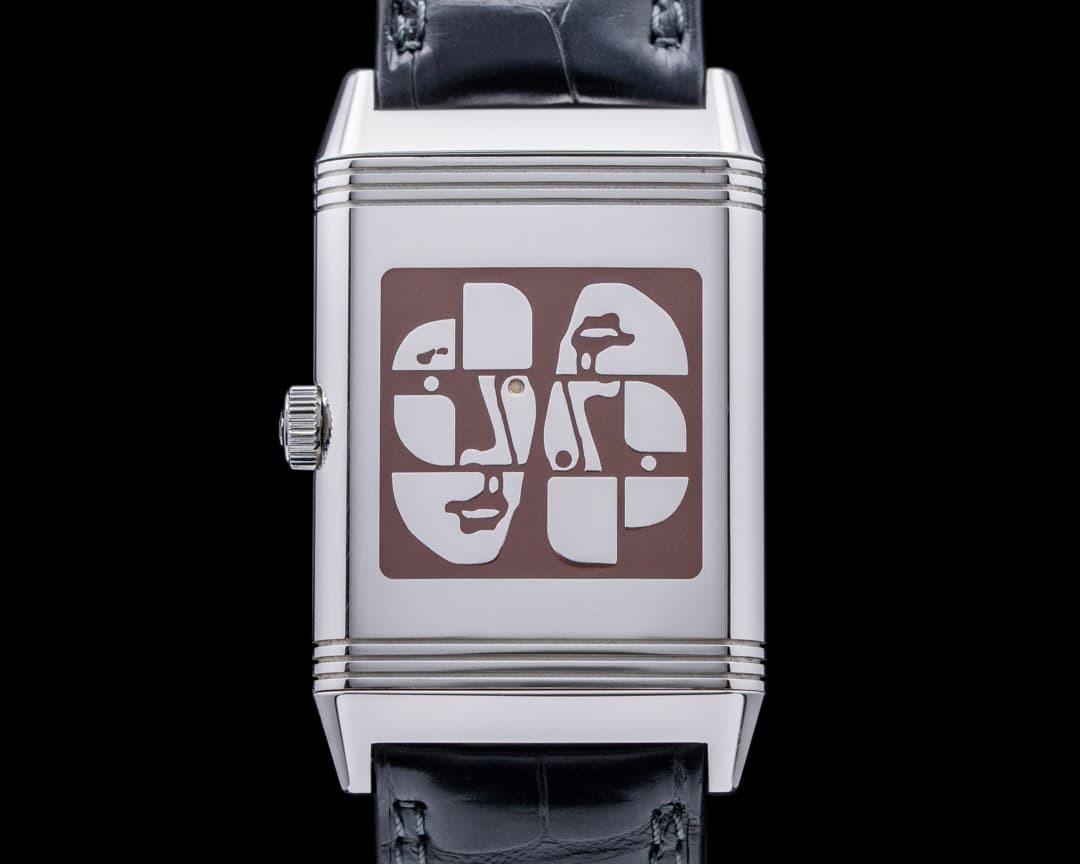
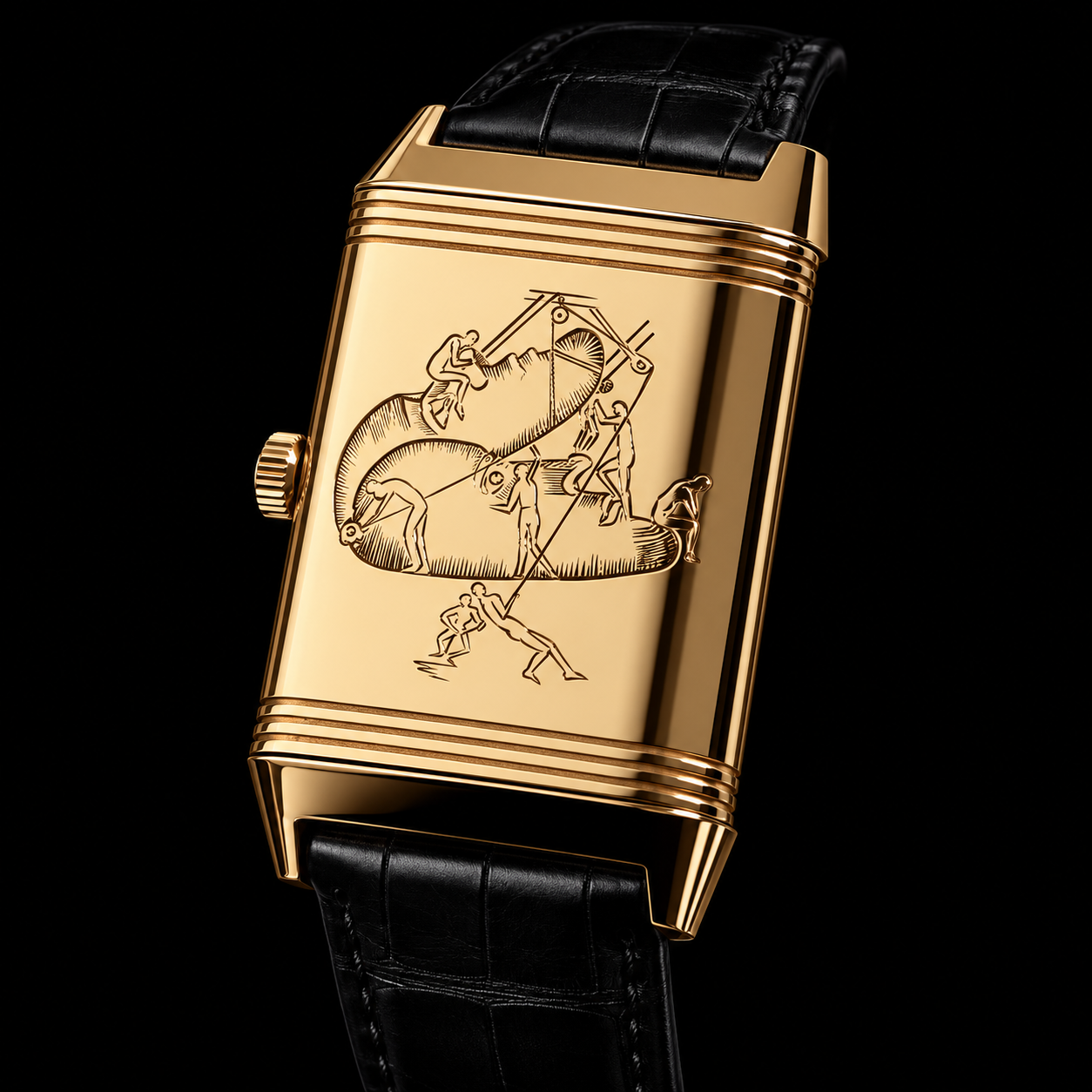
Year: 2011 Calibre: Cal. 976
Material: Stainless steel or rose gold
Market: Mexico
For the Reverso’s 80th anniversary and the Mexico City boutique opening: Mexican muralist Guillermo Ceniceros engraved “man’s duality” (steel) and “man in motion” (rose gold) onto the case-back.
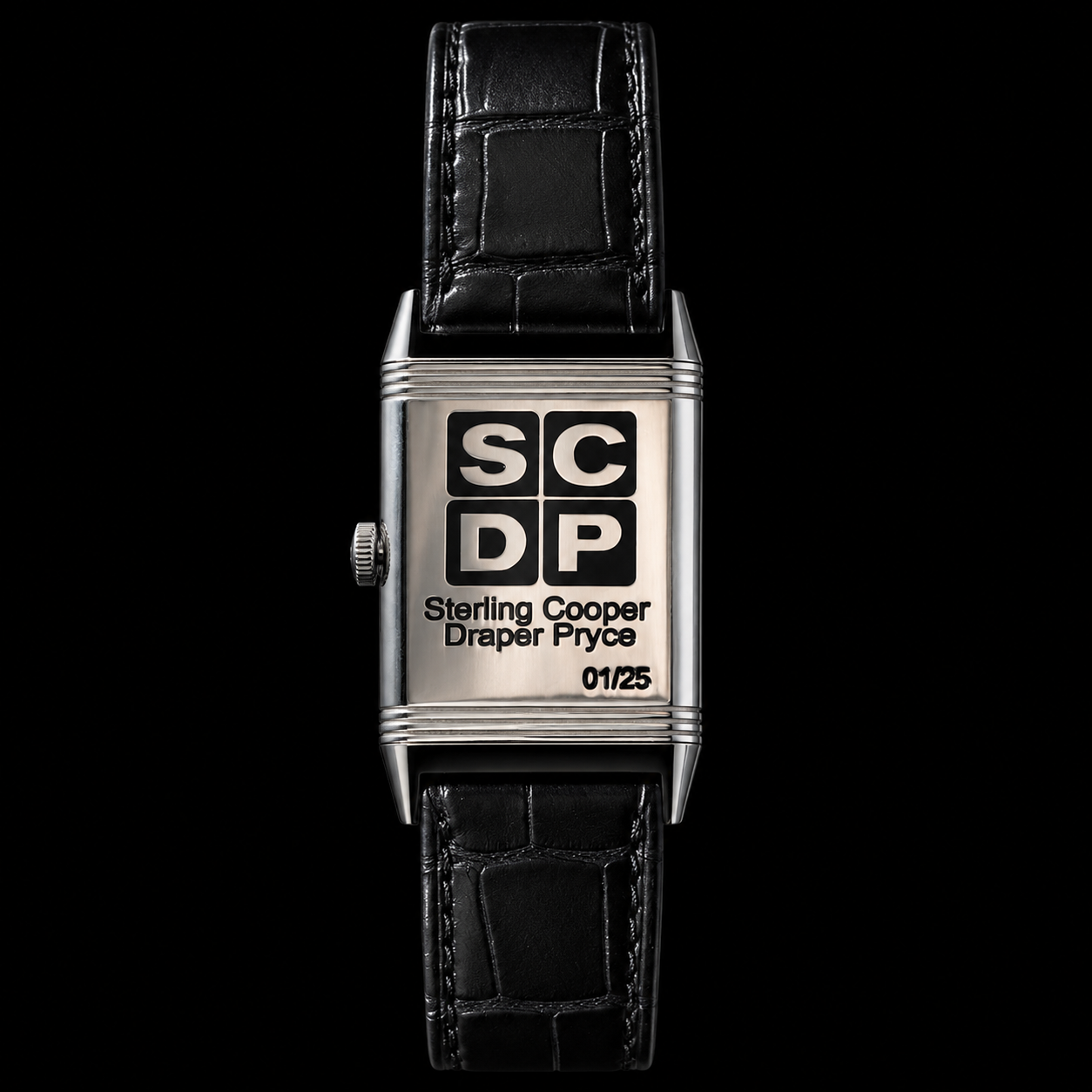
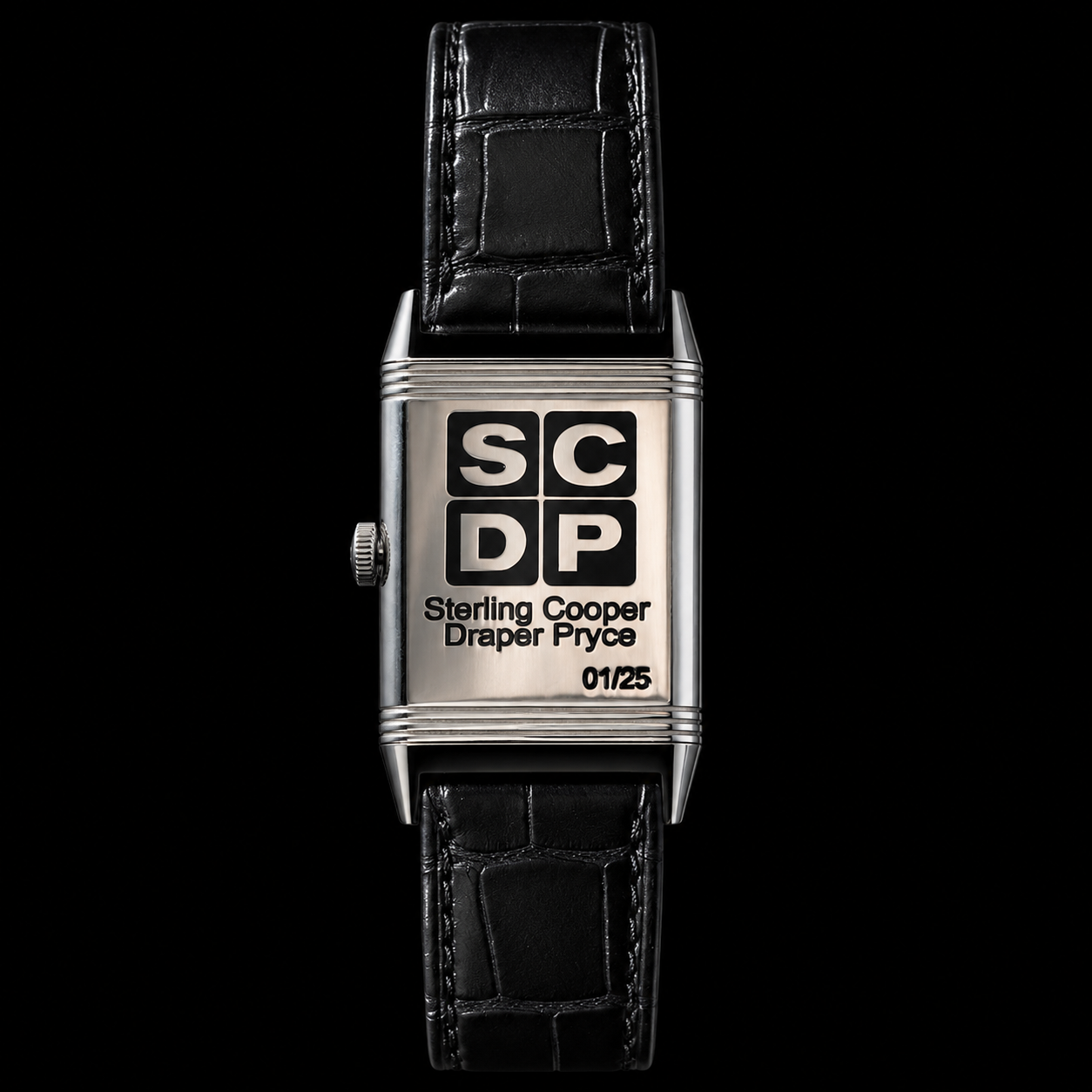
Year: 2012 Calibre: Cal. 822
Material: Stainless steel
Market: North America
Sterling Cooper Draper Pryce logo engraved on the back with the edition number. Shipped in a walnut box with a letter written in character as Roger Sterling.
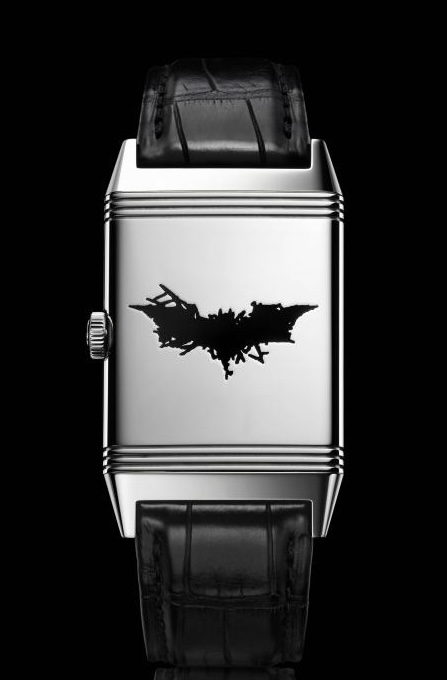
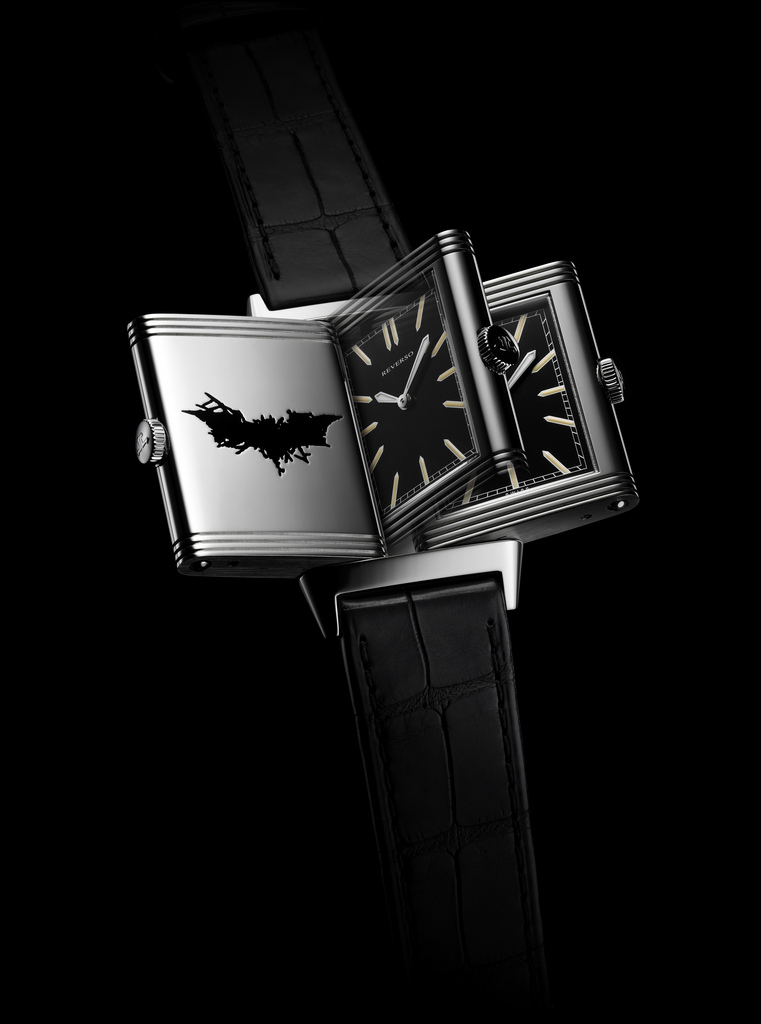
Year: 2012 Calibre: Cal. 822
Material: Stainless steel
Market: International
A black Bat-Shield engraved and lacquered on the case-back, visible only when flipped; made for Warner Bros. executives and Christopher Nolan himself. A planned wider release never happened.
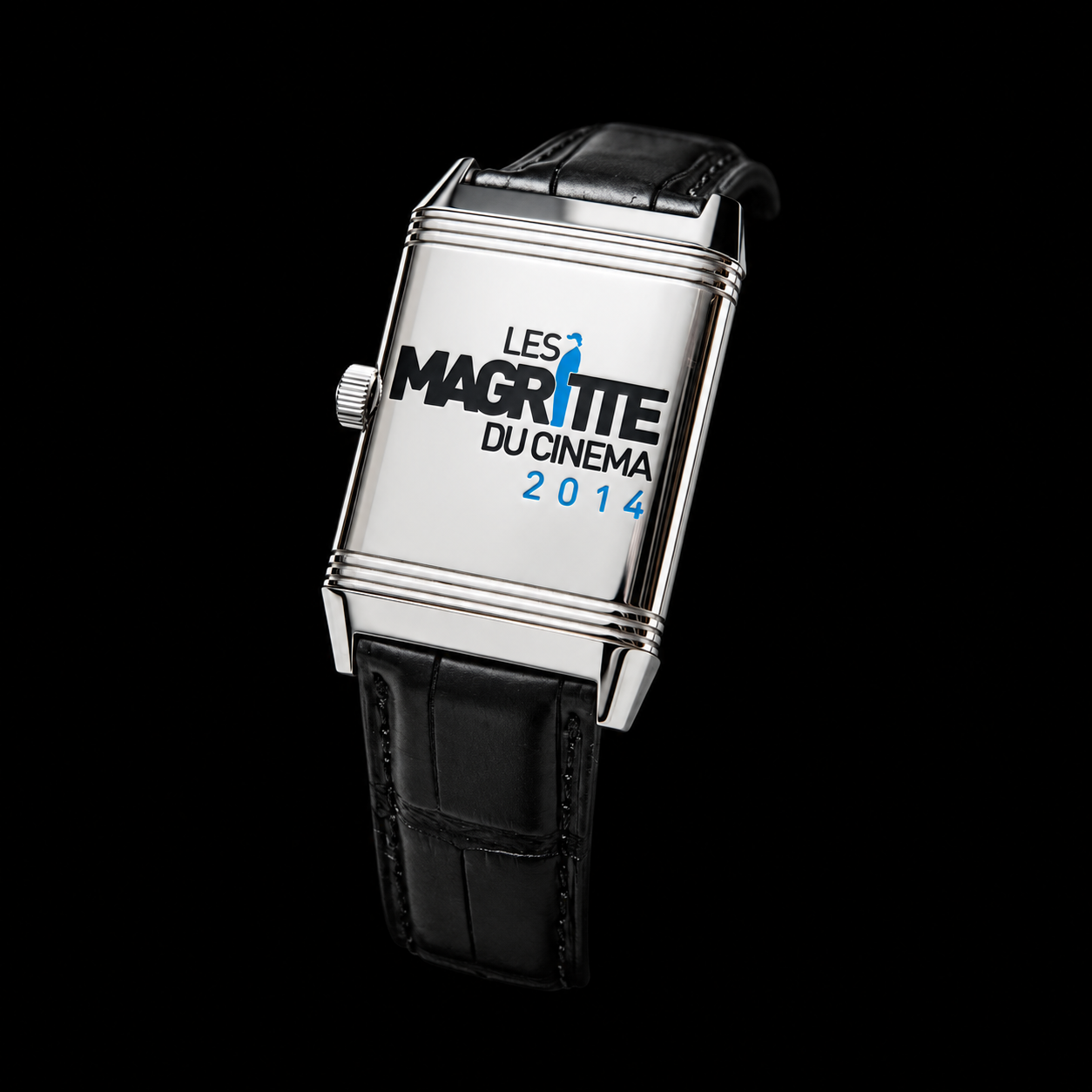
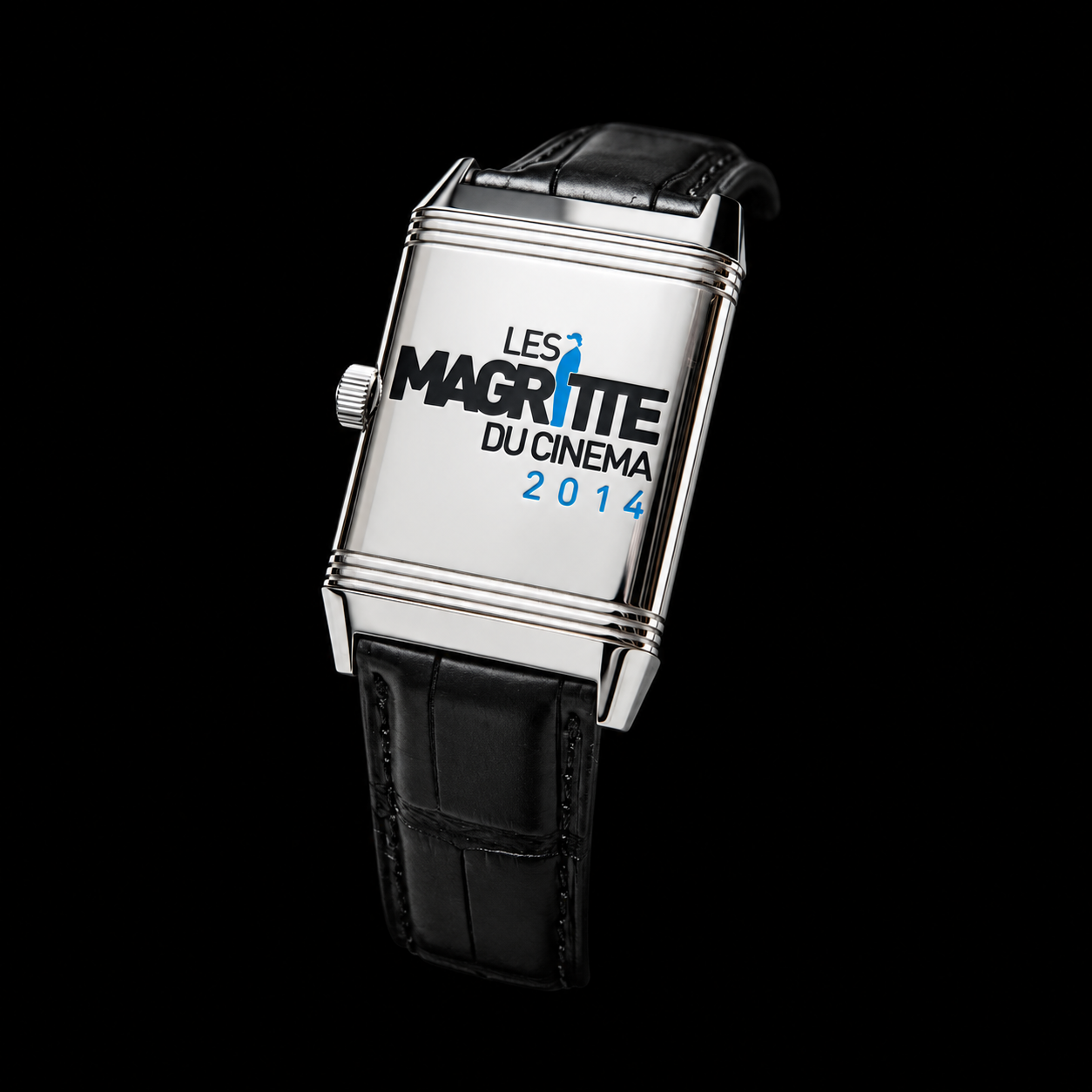
Year: 2014 Calibre: —
Material: —
Market: Belgium
Award presentation piece for Belgium’s Magritte film awards, given to Best Actor Benoît Poelvoorde and Best Actress Pauline Étienne; the honorary award went to director Emir Kusturica, who received a matching Atmos clock instead.
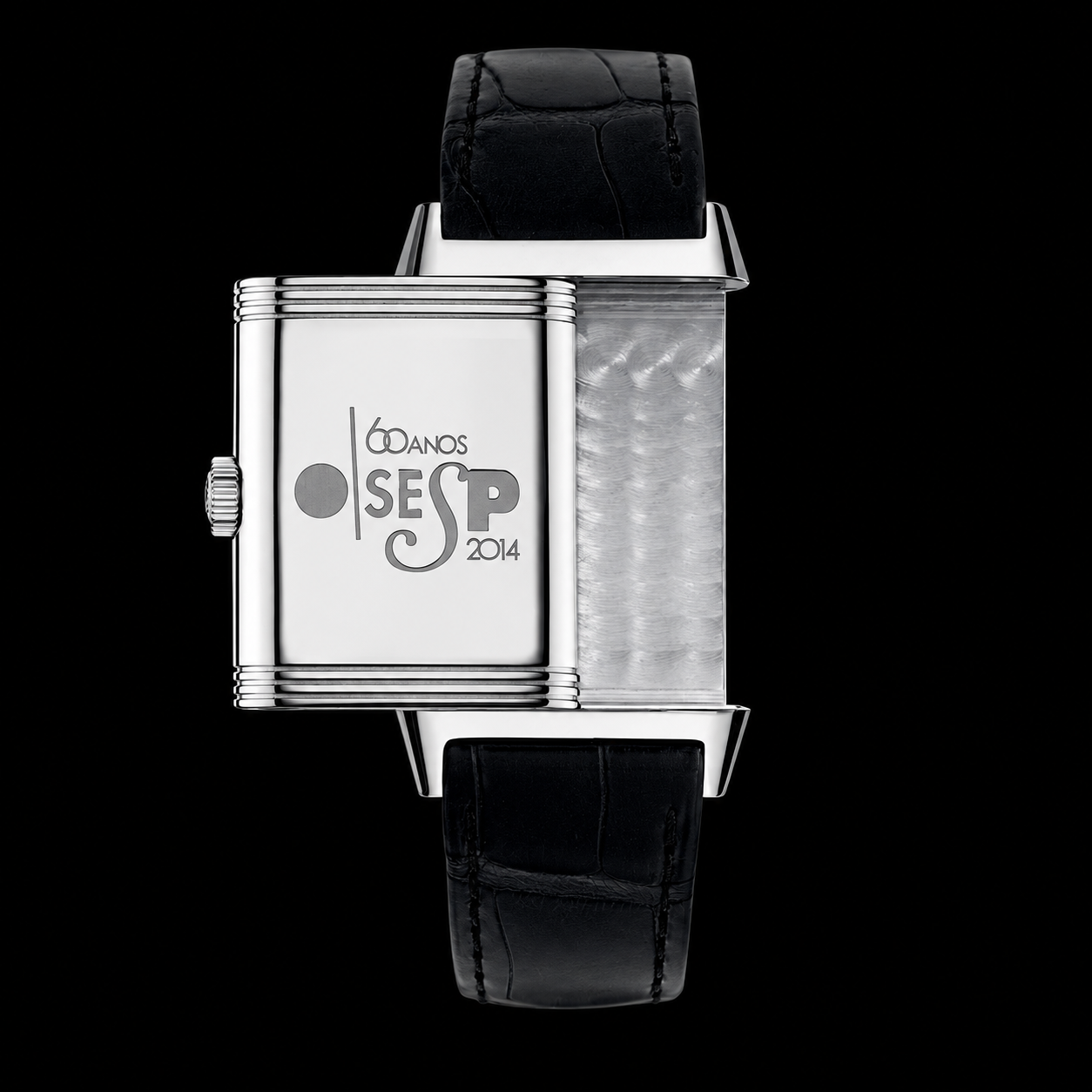
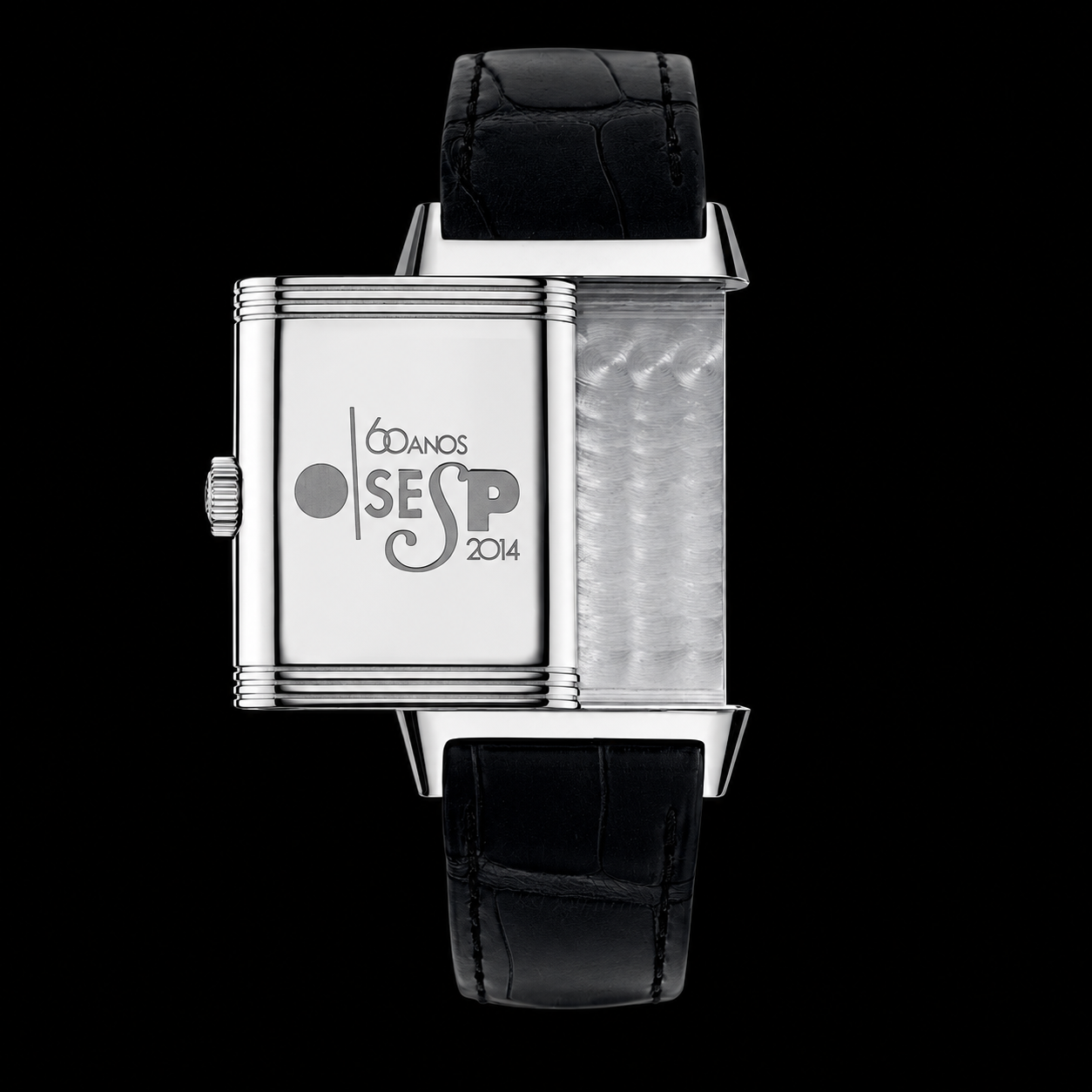
Year: 2014 Calibre: —
Material: Steel or gold
Market: Brazil
For the 60th anniversary of the São Paulo State Symphony Orchestra; sales funded roughly 70% of the orchestra’s free Sunday concerts, and Jaeger-LeCoultre separately took on the upkeep of the historic public clock at the orchestra’s home, Sala São Paulo.
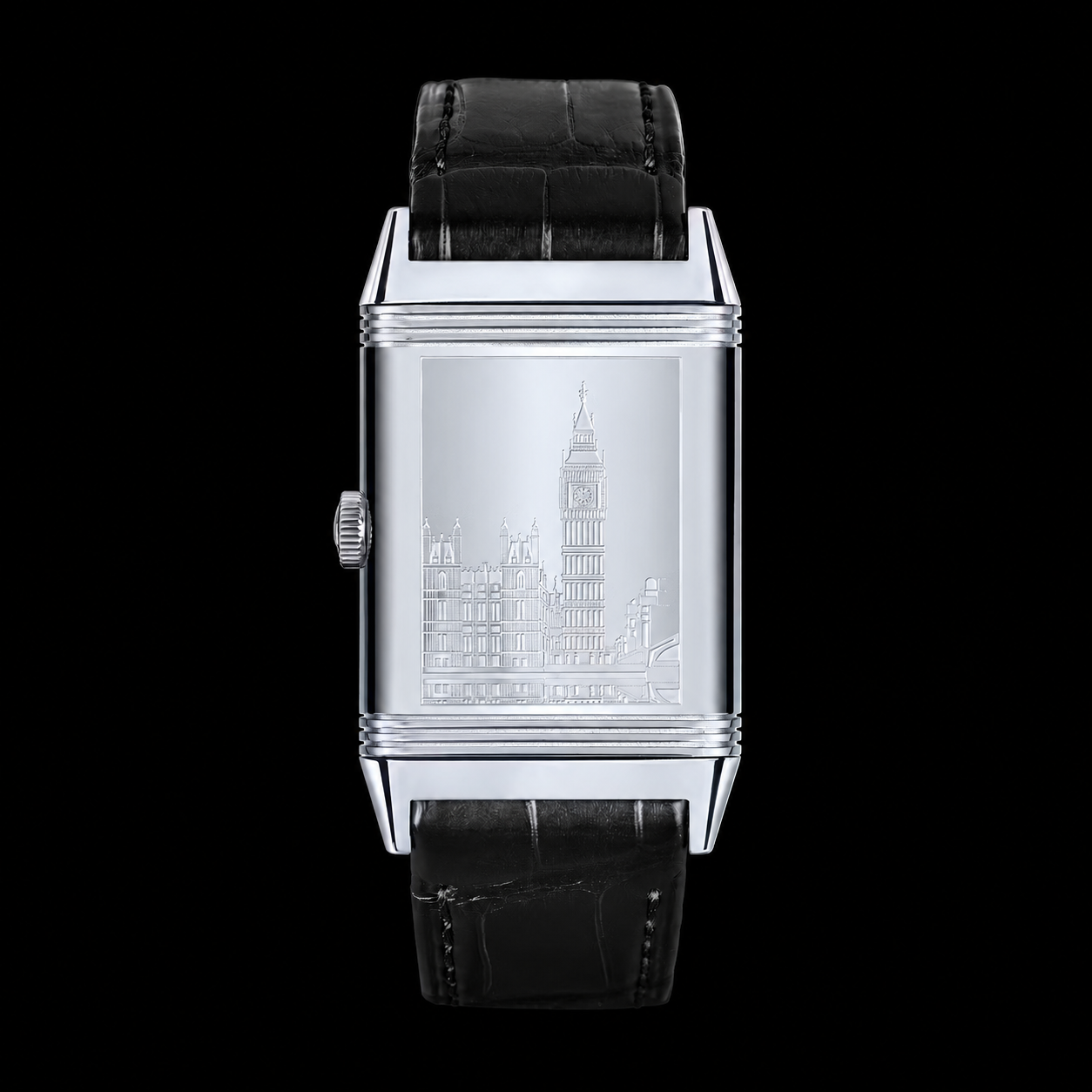
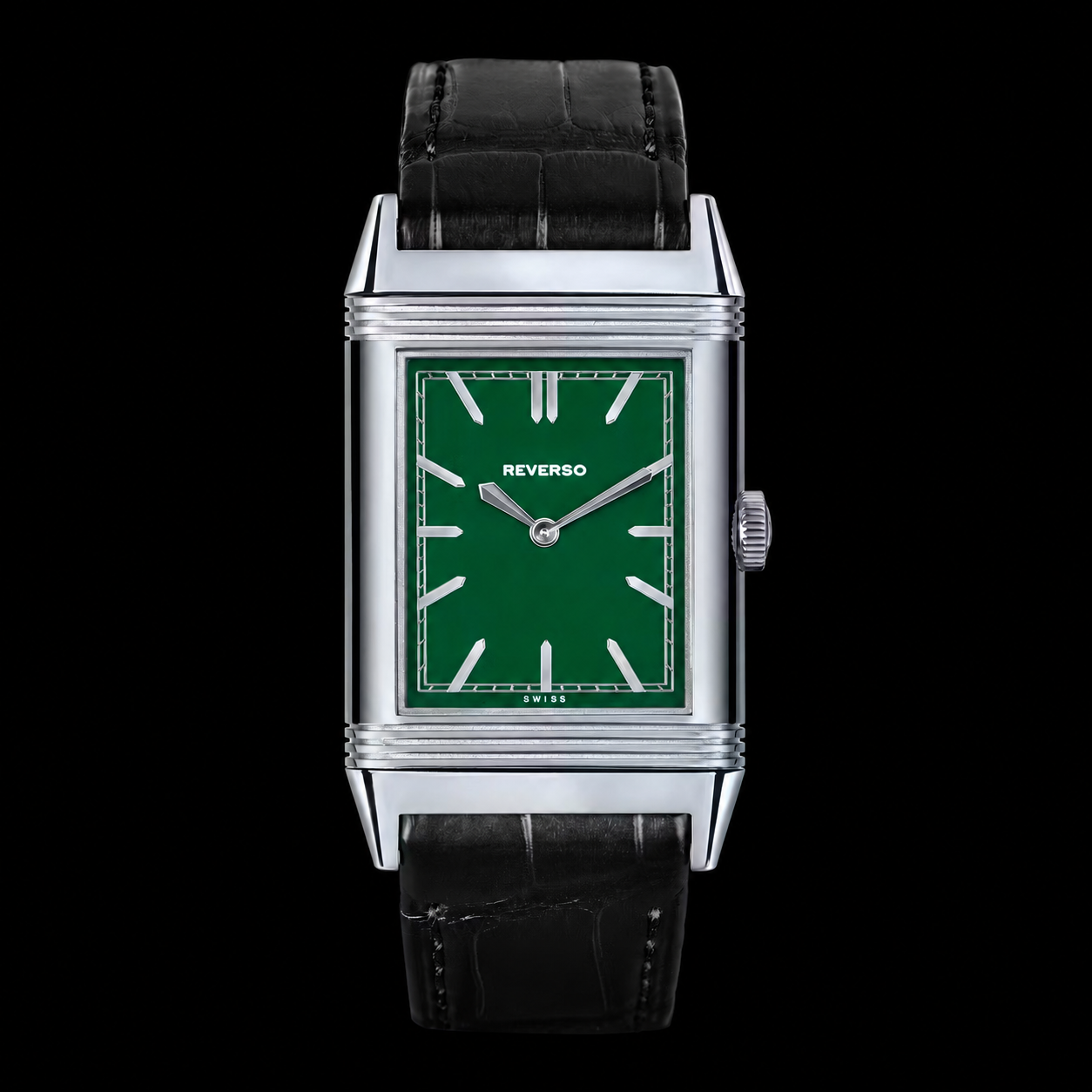
Year: 2015 Calibre: Cal. 822
Material: Stainless steel
Market: Bond Street boutique
For the opening of the Bond Street boutique, sold only there, in person.
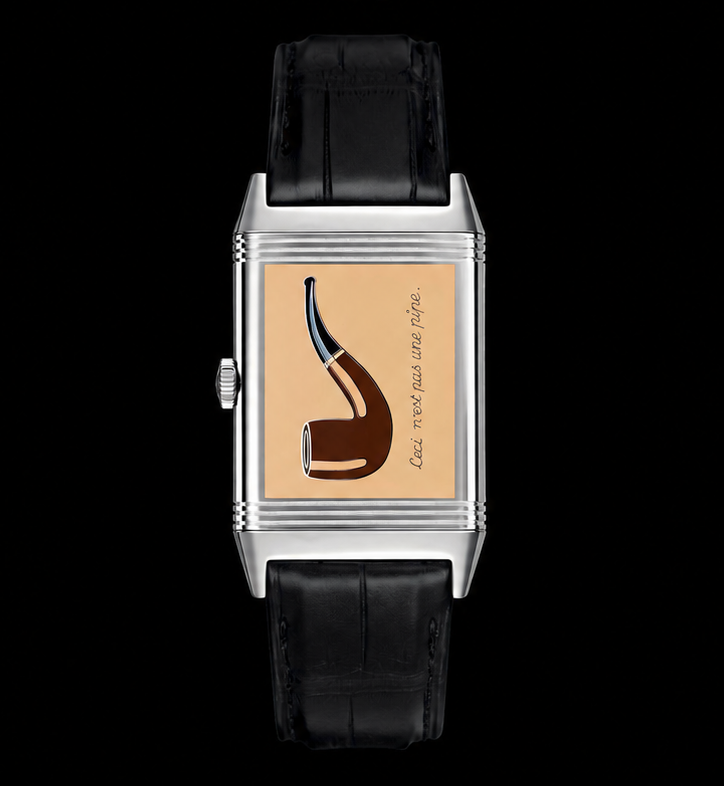
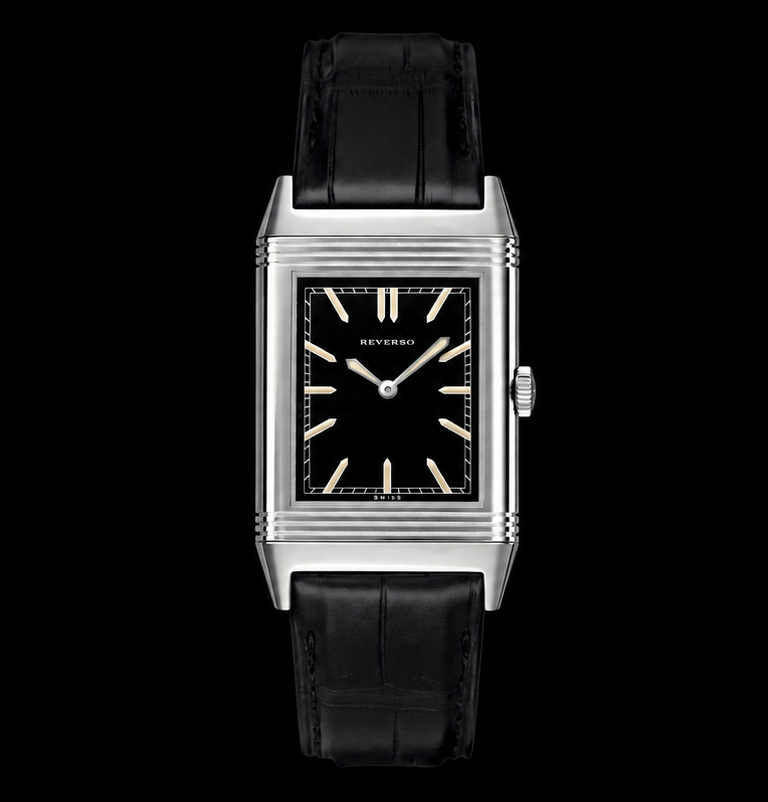
Year: 2016 Calibre: Cal. 822
Material: White gold and stainless steel
Market: Maison De Greef, Brussels
Five years in the making, and it began as a conversation in a Brussels jeweller’s shop. Charly Herscovici, president of the Magritte Foundation, was a long-standing customer of Maison De Greef — the oldest jeweller in Belgium, run by the same family since 1848 — and one day the talk with Jacques Wittmann turned to a watch Magritte himself would not have disowned. The result marks two anniversaries at once: the Reverso’s 85th in 2016, and the 50th of Magritte’s death in 2017. The case-back carries a lacquered engraving of The Treachery of Images (1929) — the pipe beneath the schoolchild’s handwriting reading “Ceci n’est pas une pipe”. Design director Janek Deleskiewicz admitted the flat, absolutely even colour was “a real challenge”. Five pieces in white gold as the Grande Reverso Ultra Thin 1931, fifteen in steel as the Tribute to 1931.
Year: 2017 Calibre: Cal. 822/2
Material: Stainless steel
Market: Maison De Greef, Brussels
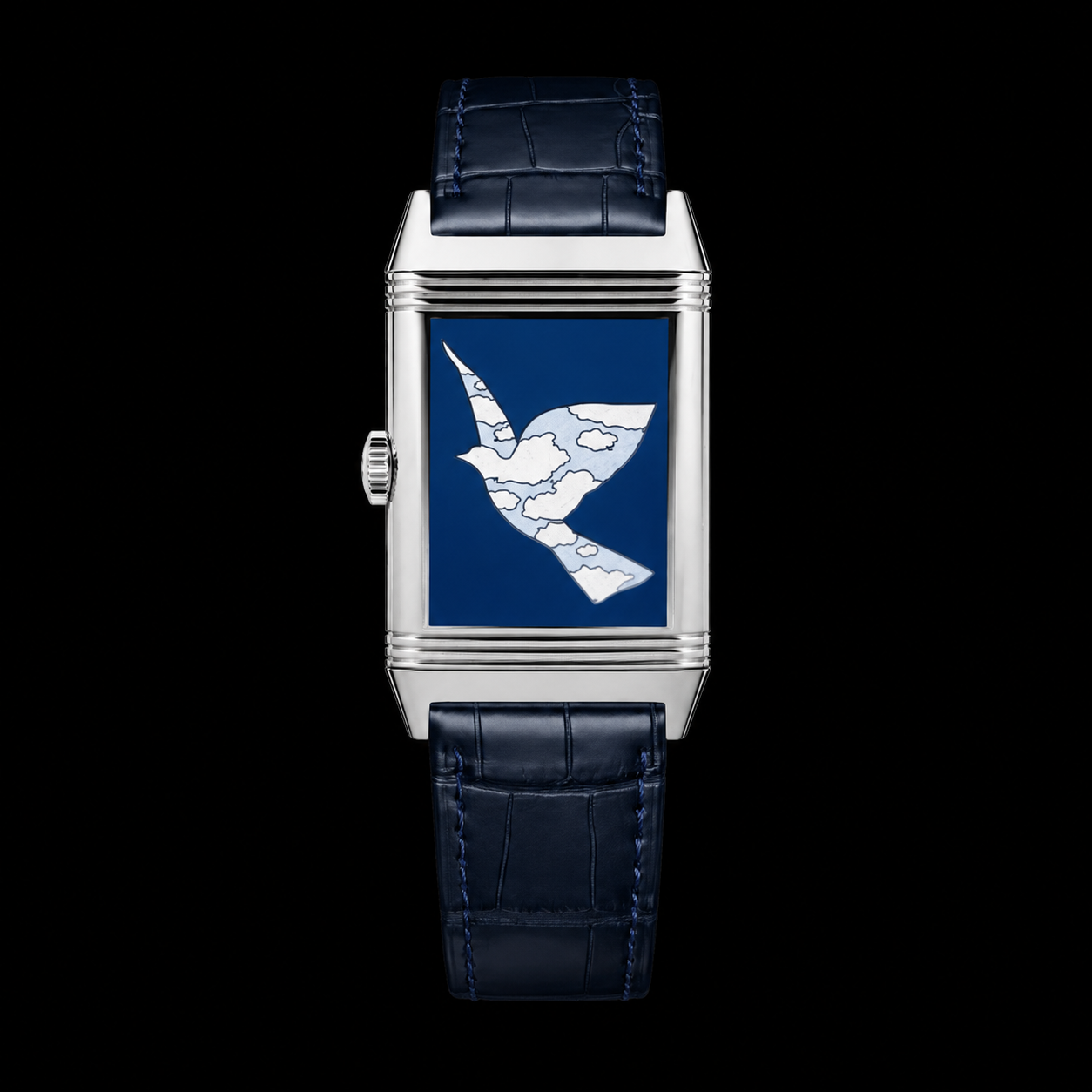
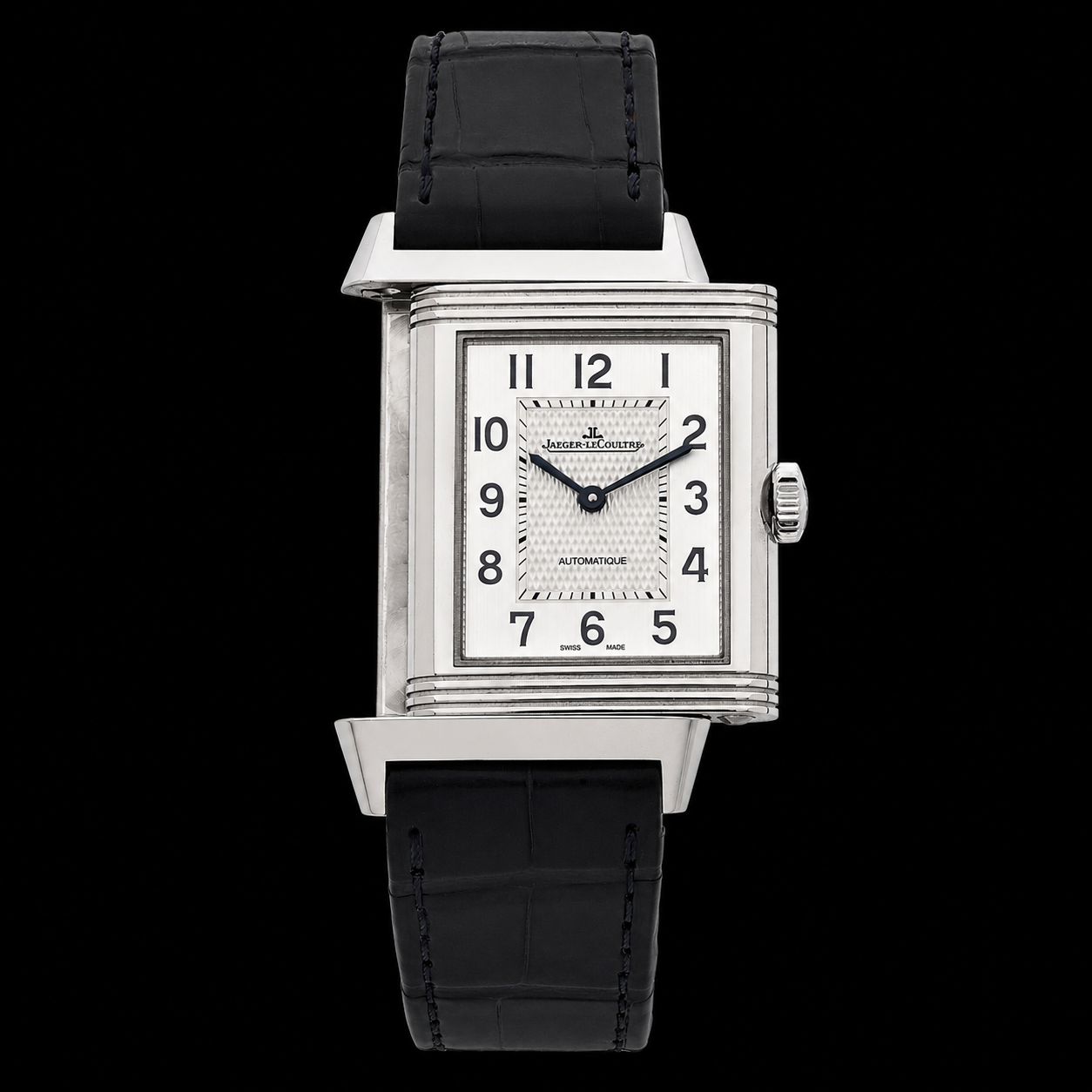
The second of a planned triptych. A Reverso Classic Large in steel whose reverse carries a miniature of Magritte’s L’Oiseau de Ciel (1966) — the silhouette of a dove filled with clouds, its blue picked up by the numerals on the dial. The edition size is the quiet joke: thirty-three pieces, for 1833, the year the manufacture was founded. A third series was promised within two years.
Year: 2017 Calibre: Cal. 822/2
Material: Stainless steel
Market: Steltman, The Hague
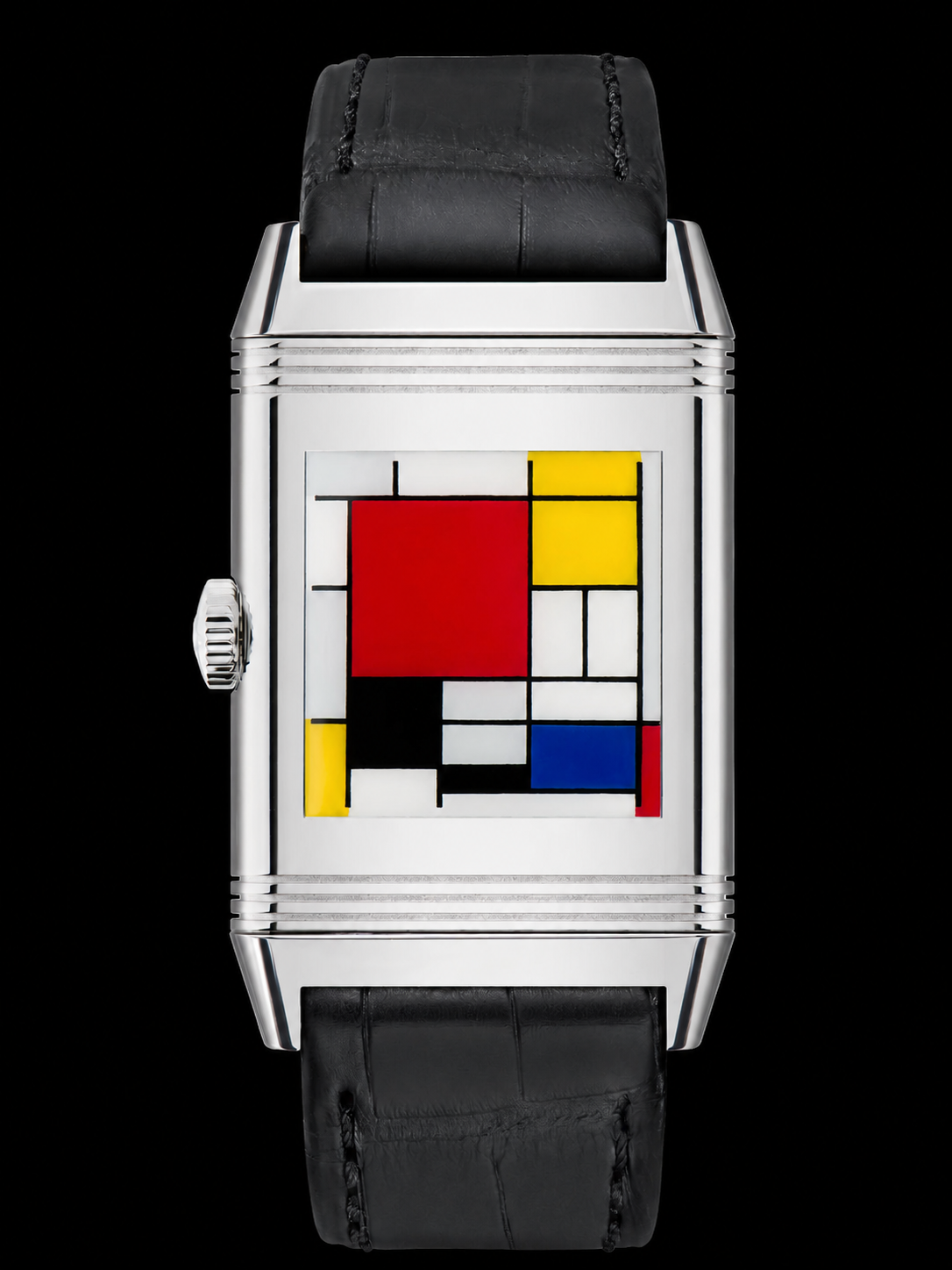
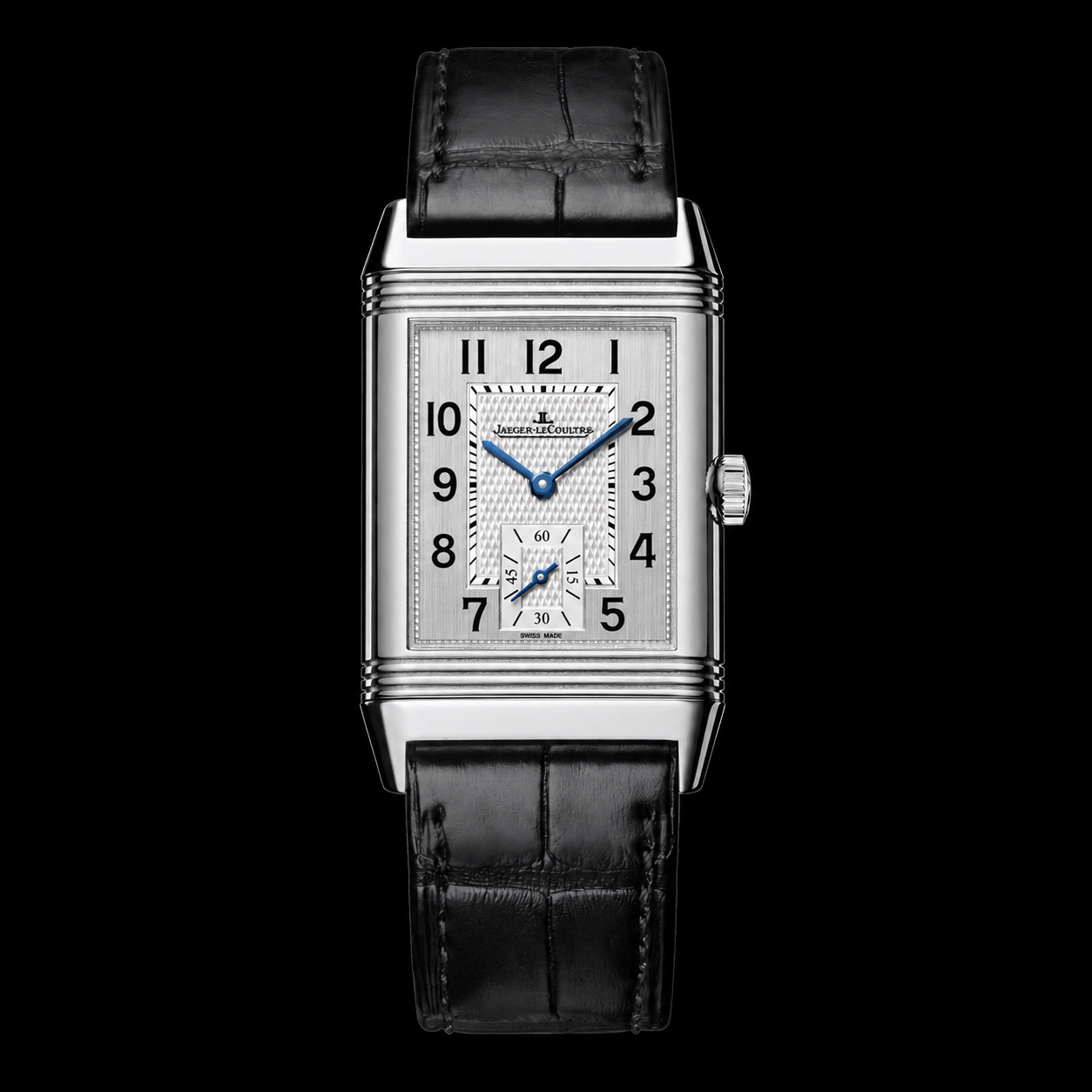
Hand-painted miniature of Mondriaan’s 1921 Composition on the reverse; the front is an entirely standard Reverso Classic Large Small Second with no mention of the edition.
Year: 2025 Calibre: —
Material: Stainless steel or pink gold
Market: YPO members
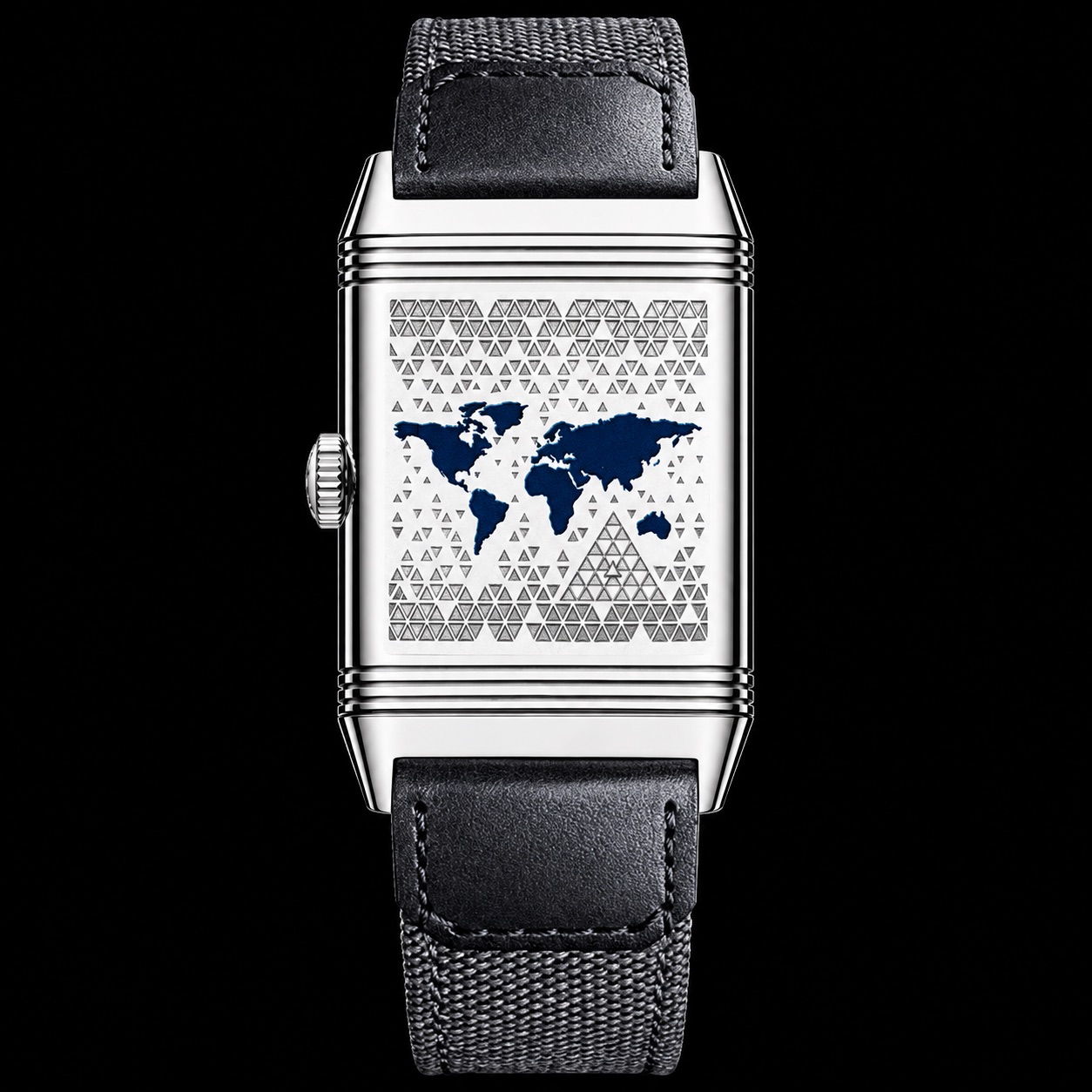
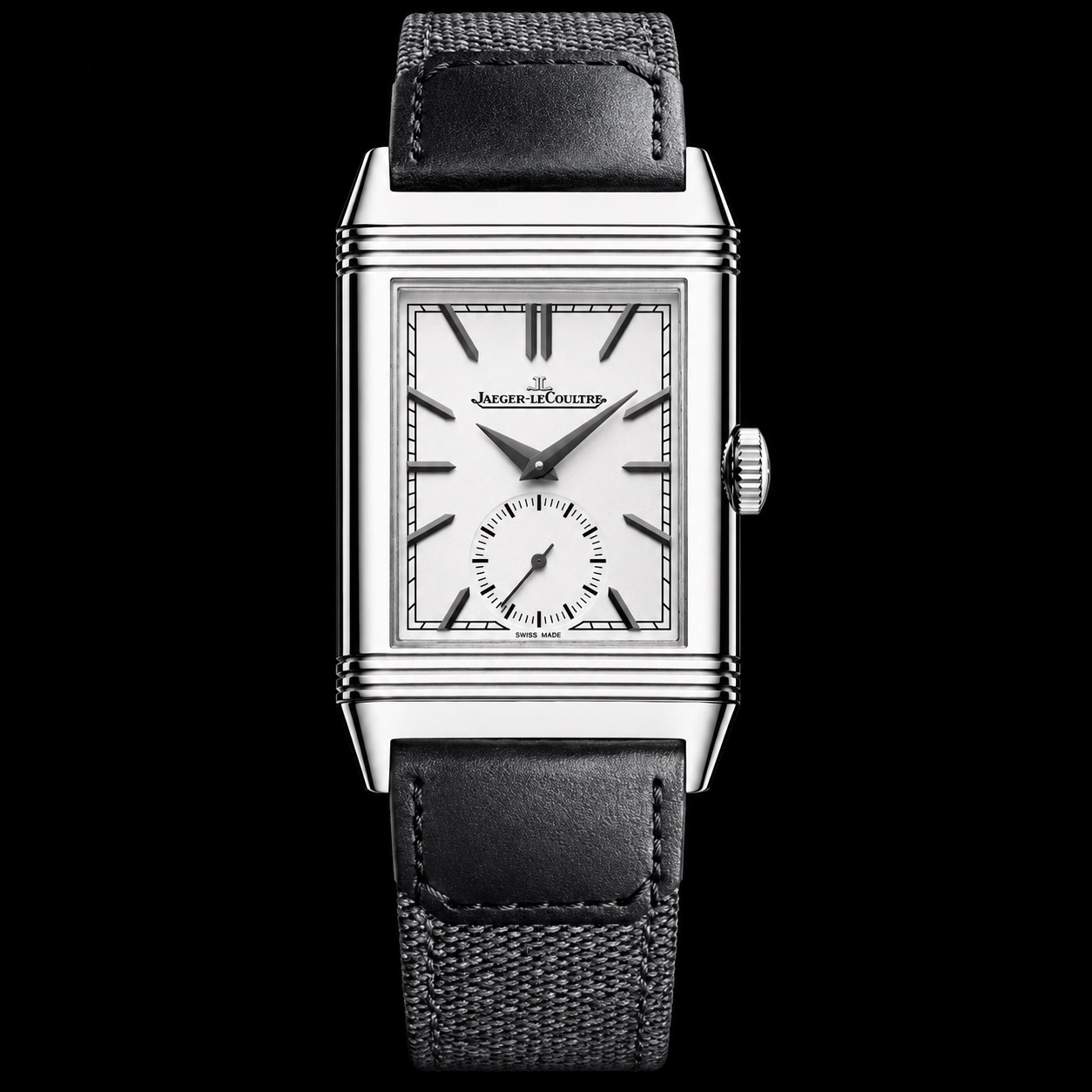
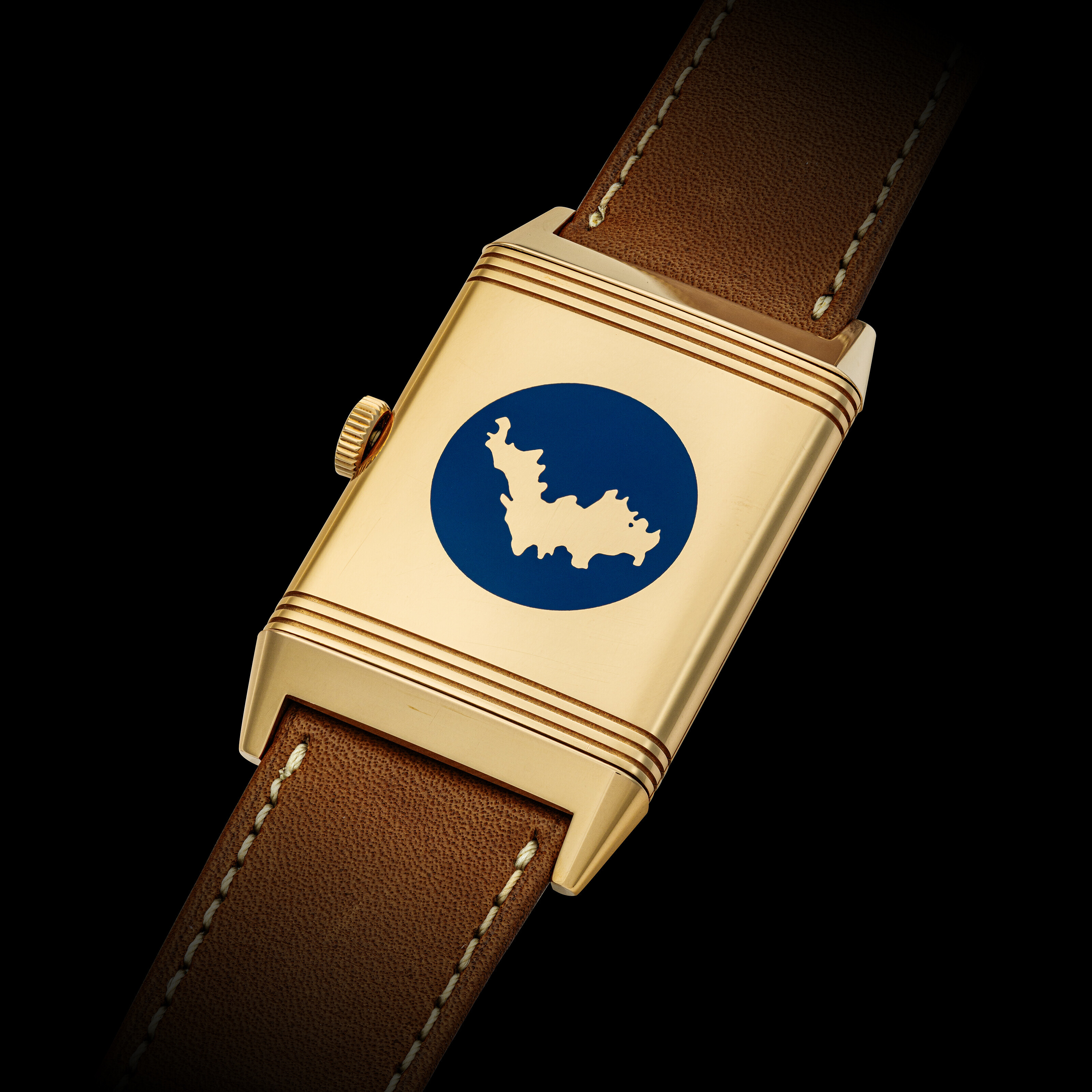
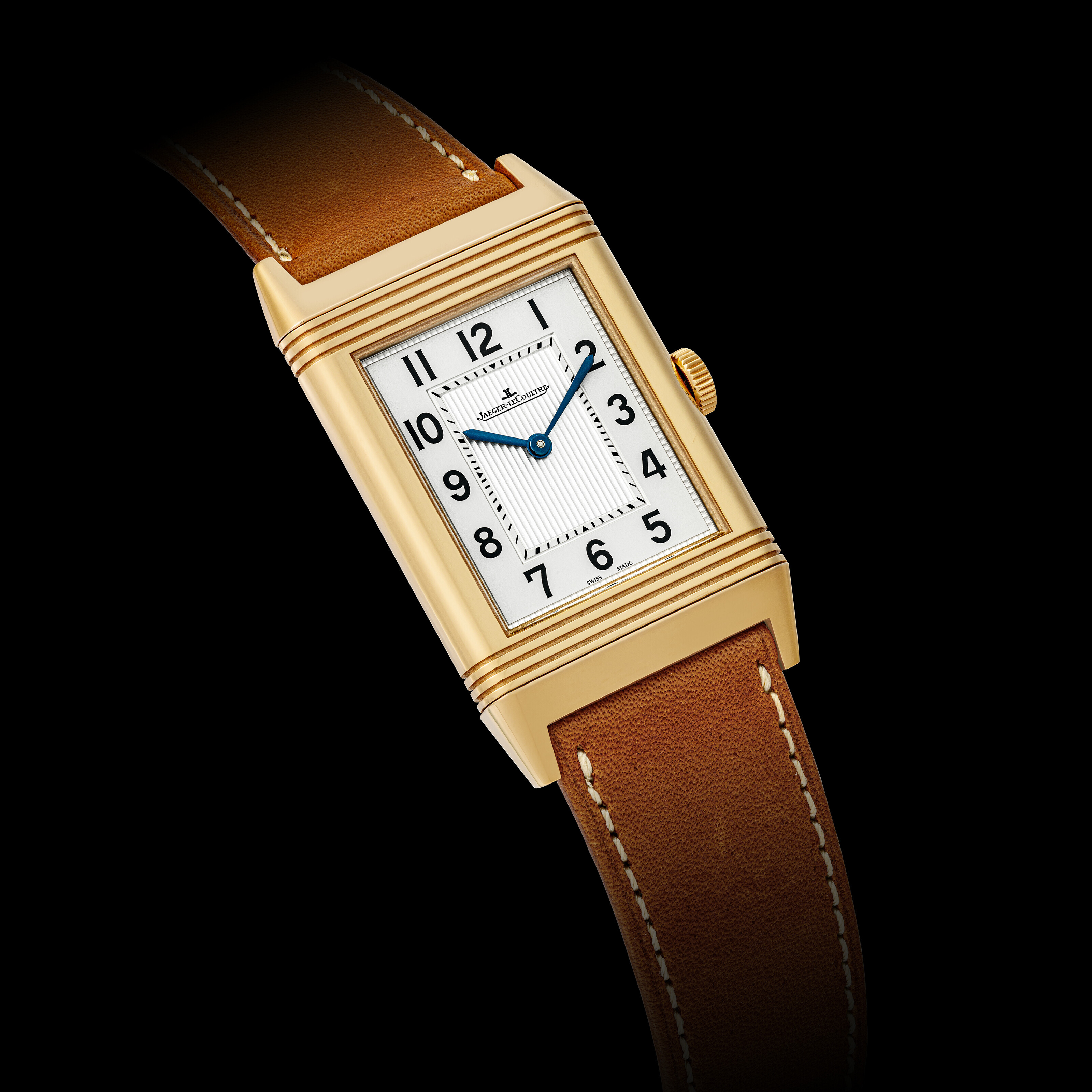
Made for YPO, the global network of chief executives, and ordered through its members, with orders closing on 1 January 2025. A Reverso Tribute with small seconds in the 45.6 × 27.4 mm case: a silver dial in steel, and a choice of silver or black dial in pink gold. The case back carries the globe, for a group that spans the world, as an enamelled world map, in blue or black, over an engraved field of triangles, the pattern of the YPO emblem. Collectors could choose between two versions of the case-back design. Thirty-eight were made in steel and twelve in pink gold; orders are thought to have been closed before the edition was filled.
Market & Retailer Editions
Made for a particular country or a particular shop — overwhelmingly for Japan, which asked for them constantly, and latterly for MR PORTER.
Year: — Calibre: Cal. 822
Material: Stainless steel
Market: Japan
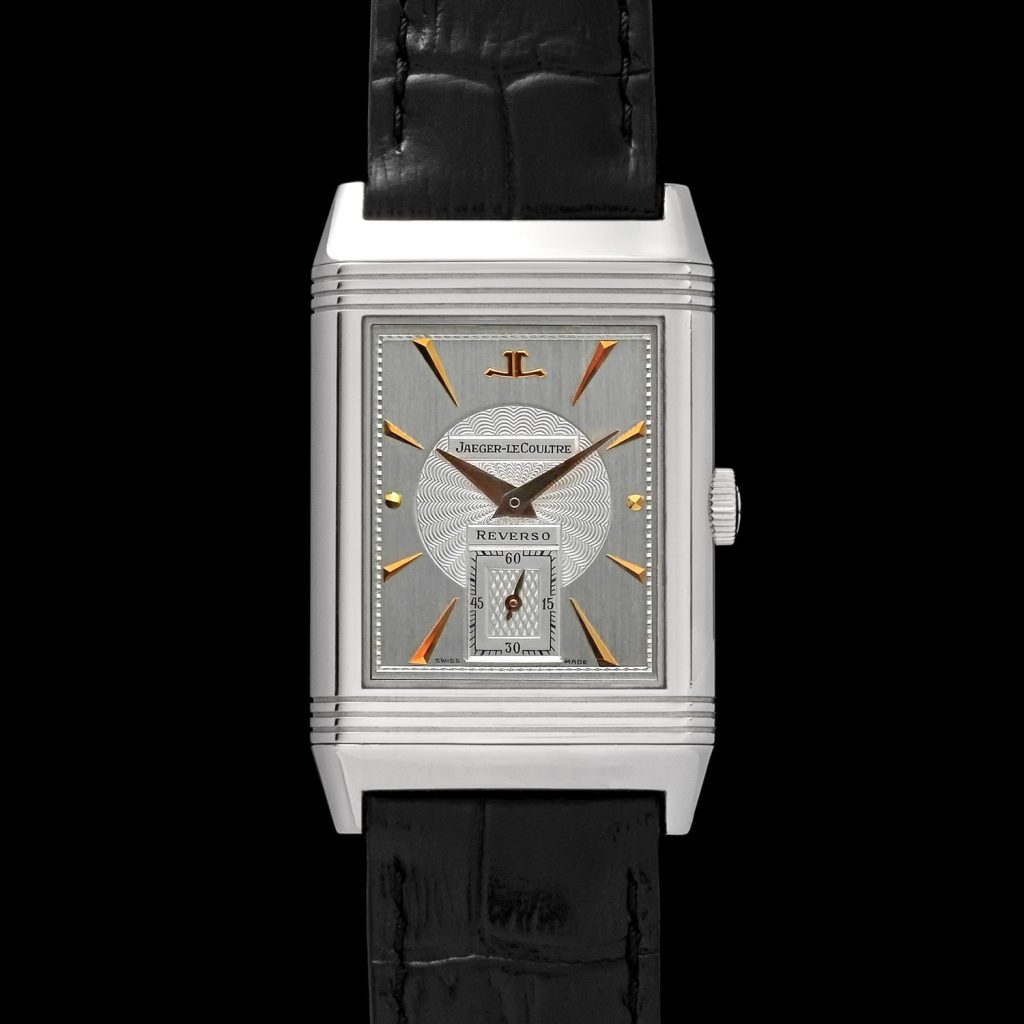
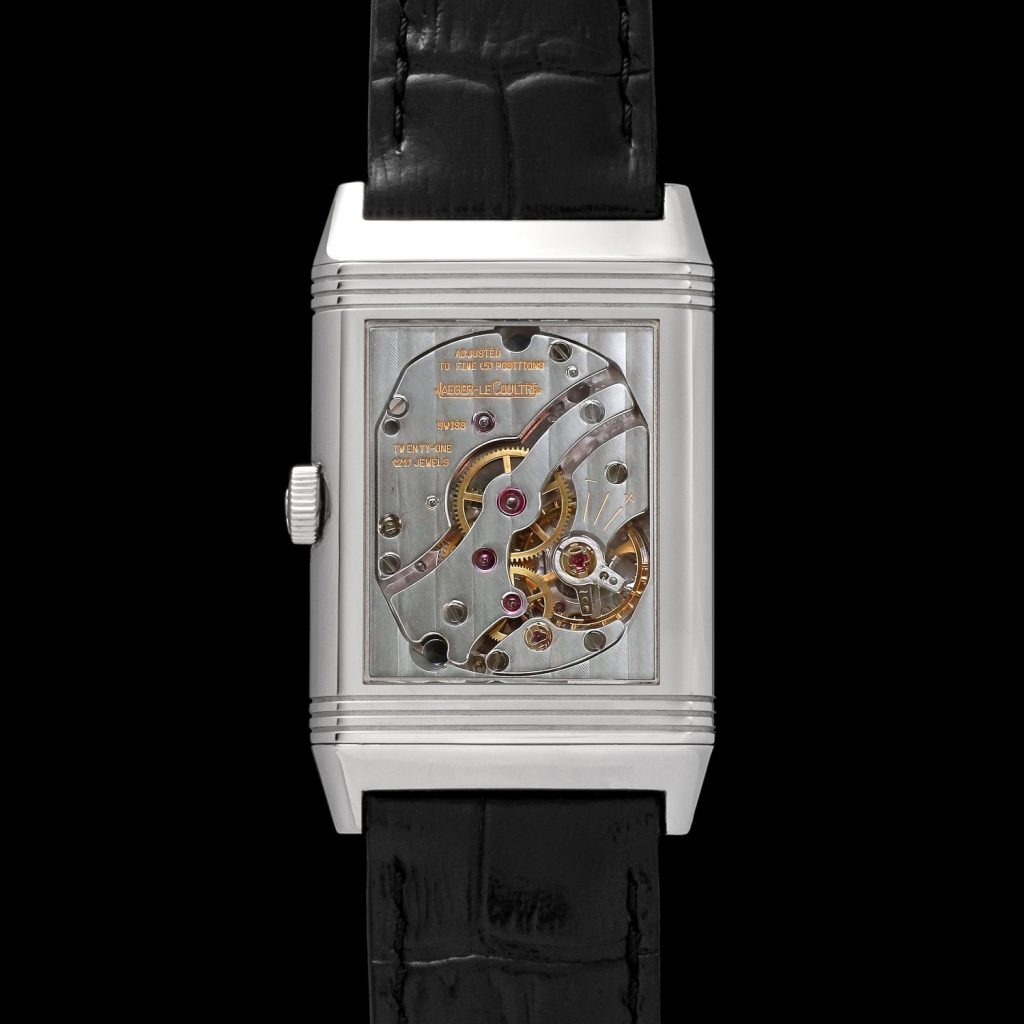
For the Japanese department store Seibu. The edition size has never been established.
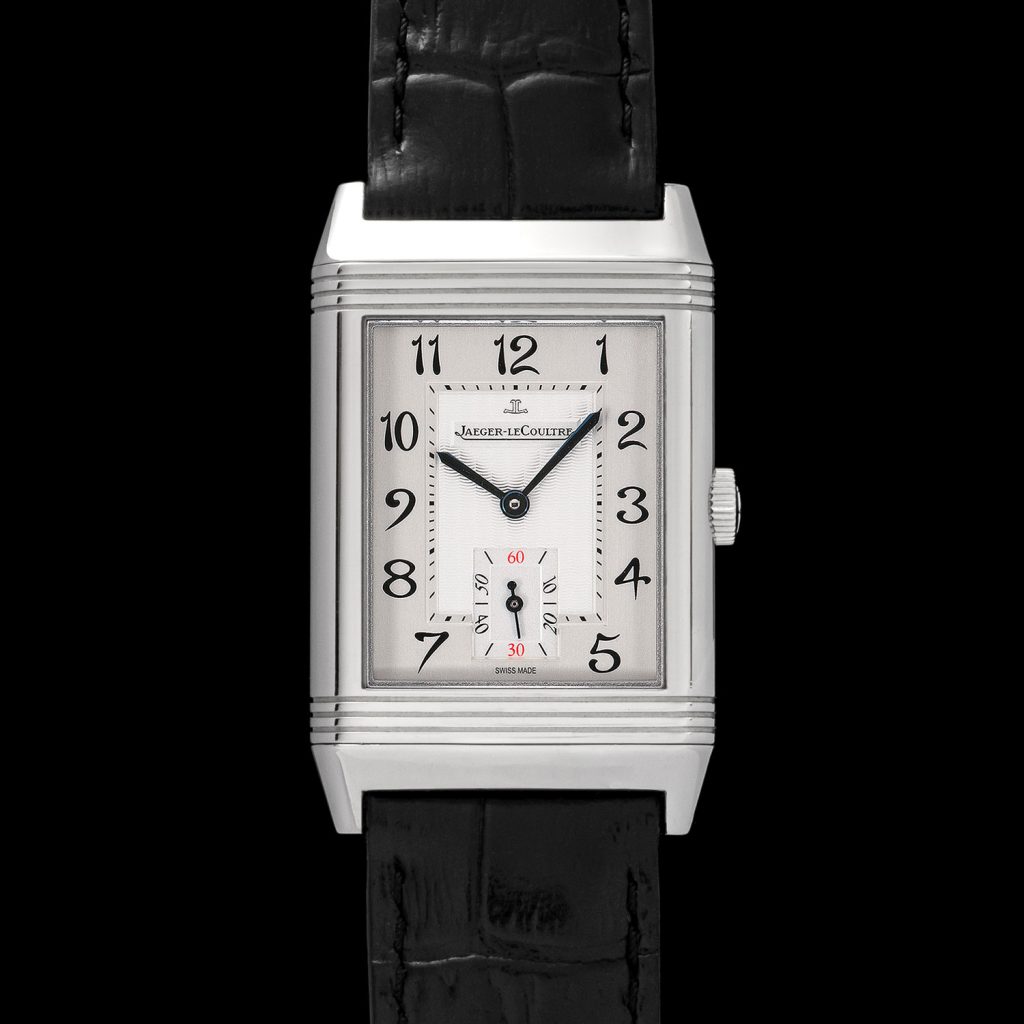
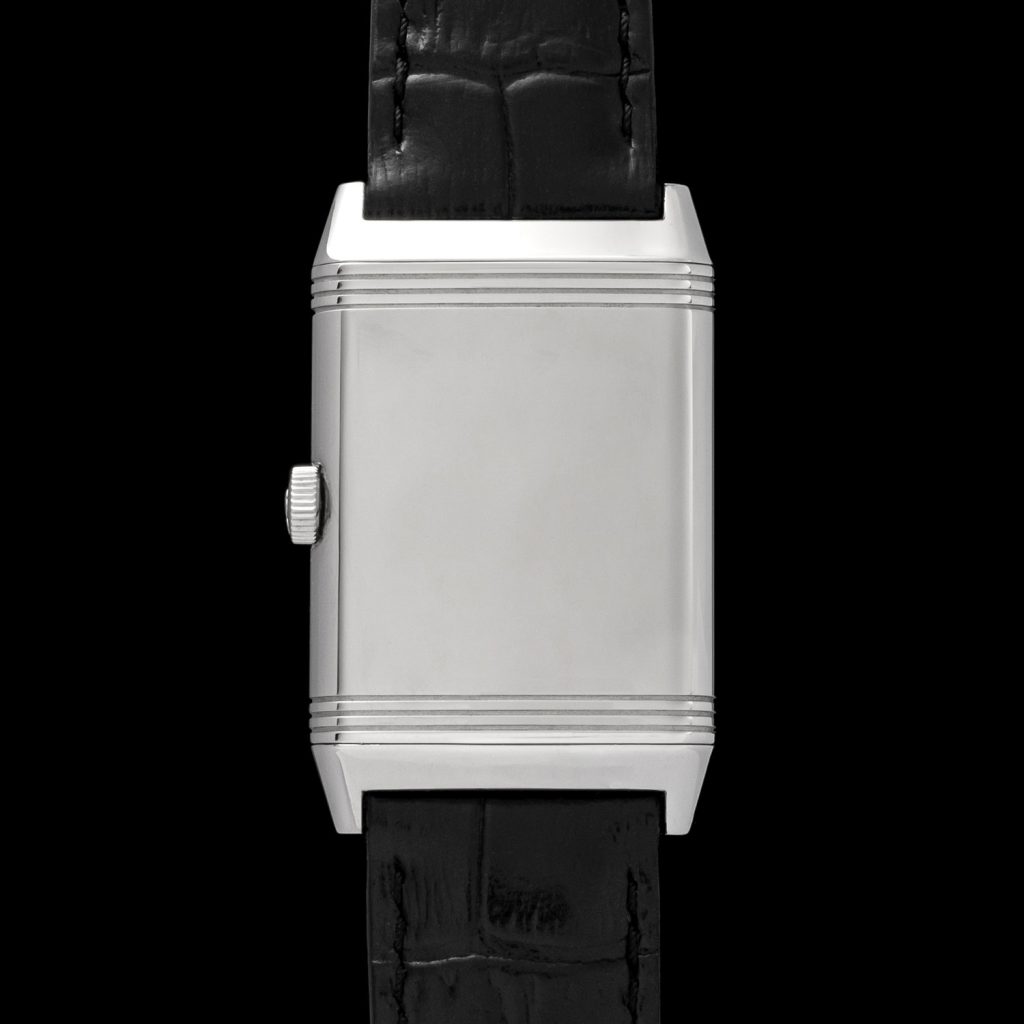
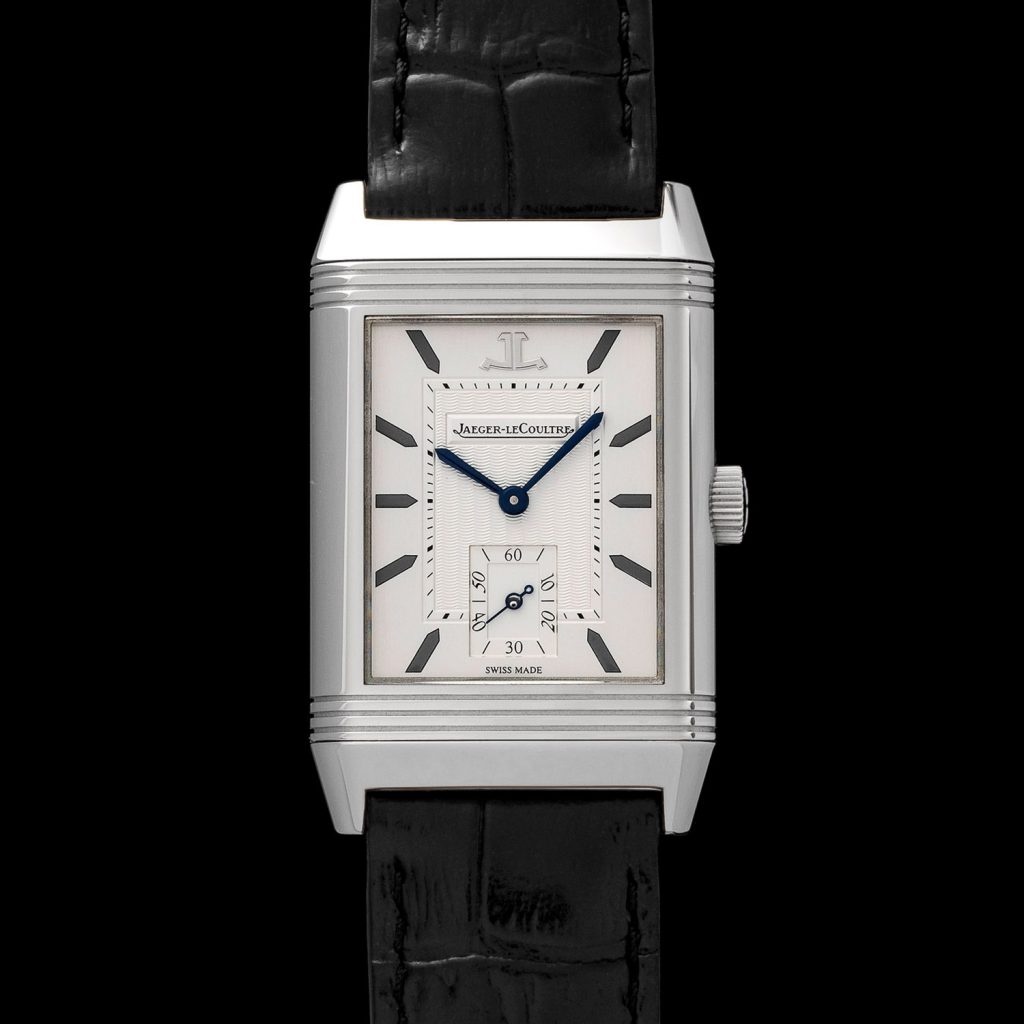
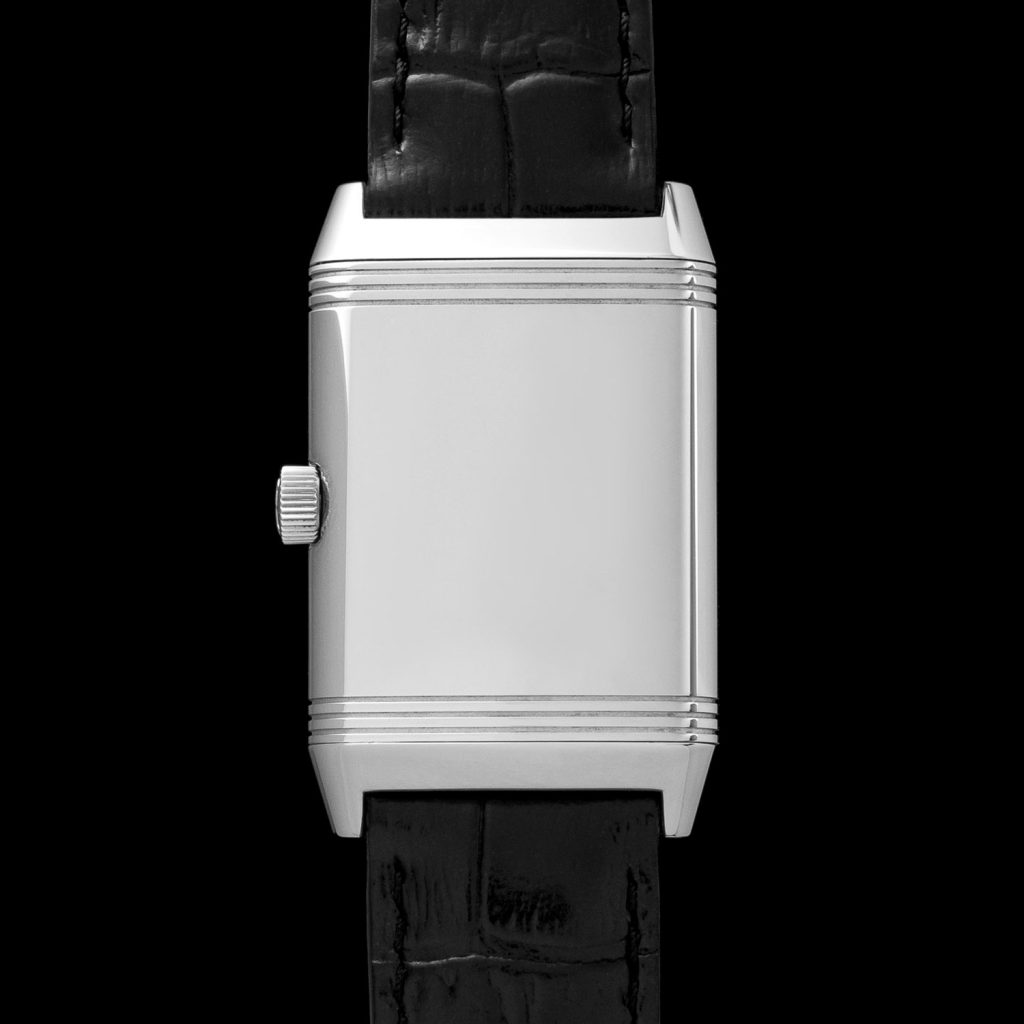
Year: — Calibre: Cal. 822
Material: Stainless steel
Market: Japan
For the Japanese retailer Anshindo.
Year: — Calibre: Cal. 822
Material: Stainless steel
Market: Japan
A market edition for Japan — evidence of how important that market was to the Reverso in this period.
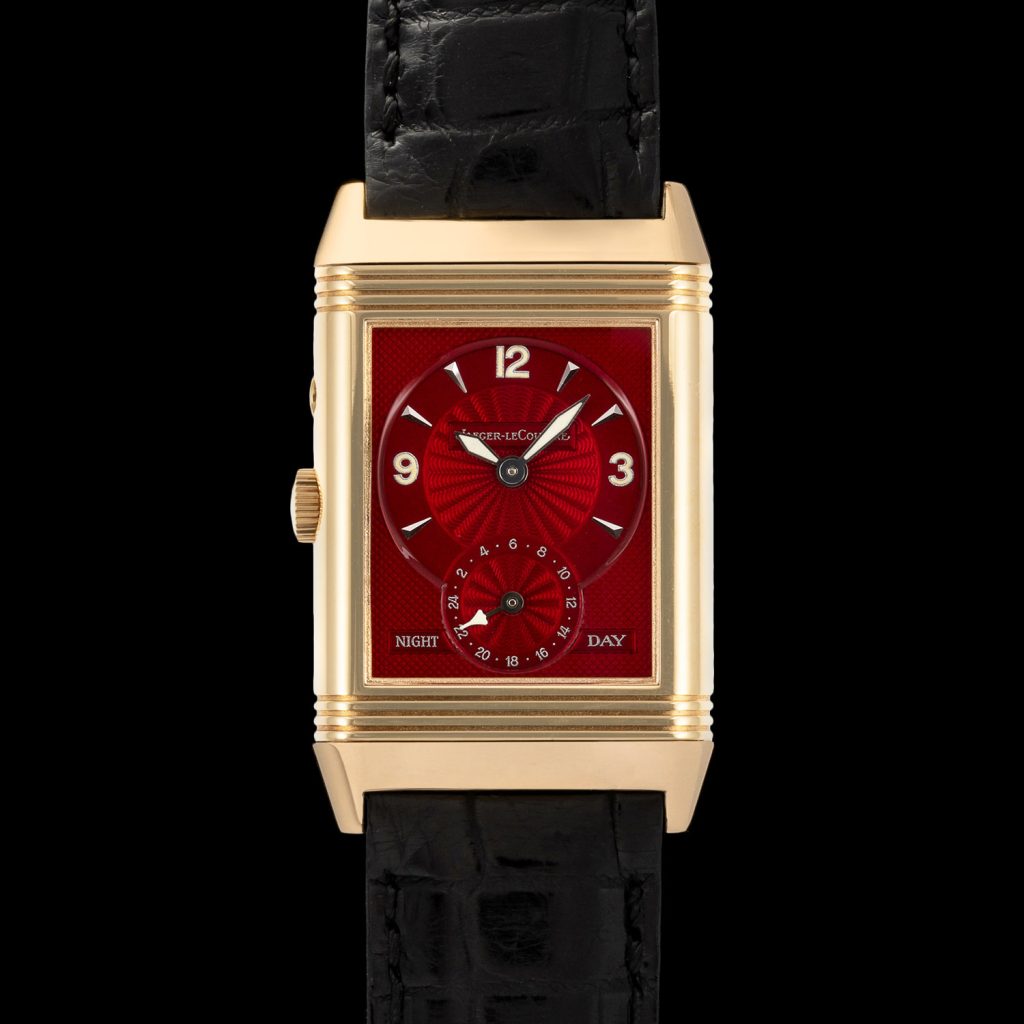
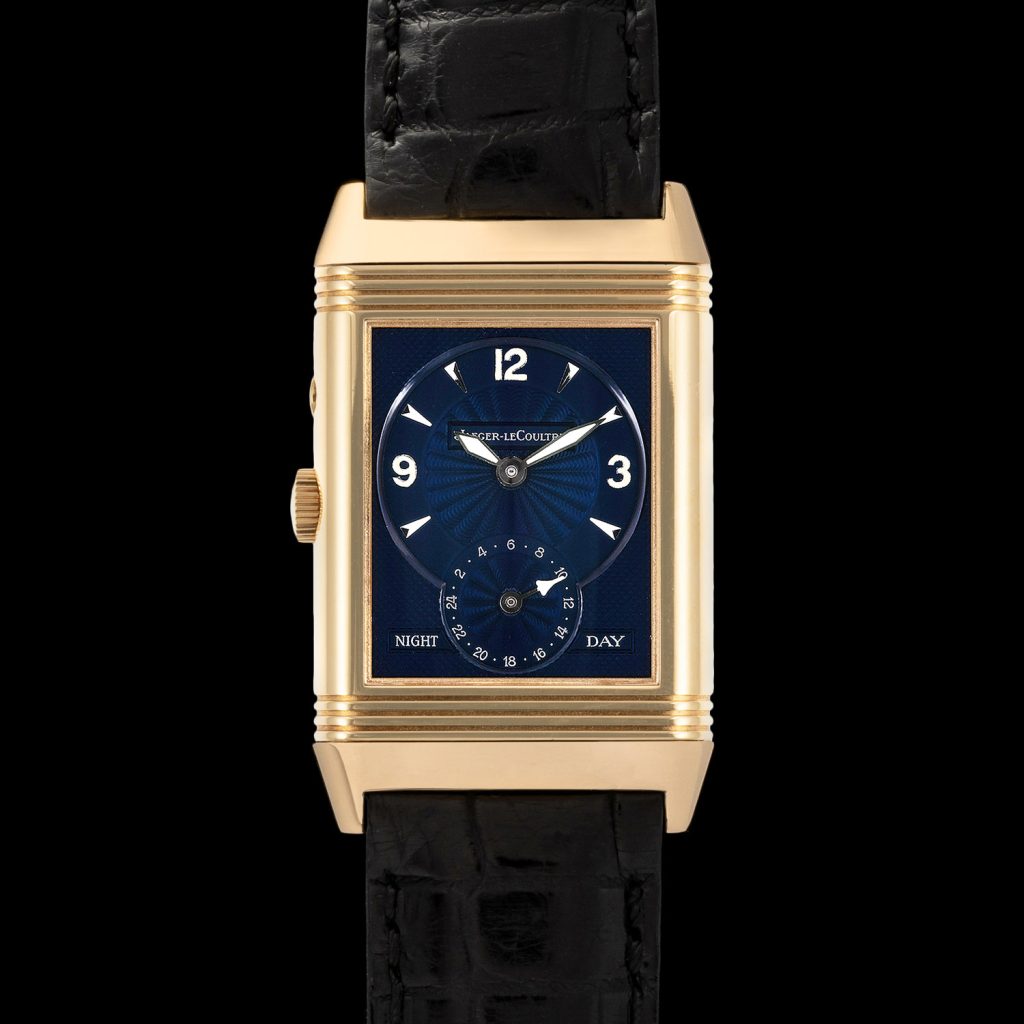
Year: — Calibre: Cal. 854
Material: Yellow gold or stainless steel
Market: Japan
Three dial colours — green, red and blue — for the Japanese market, each issued in both yellow gold (39 pieces) and steel (300 pieces): six watches in total. Full set catalogued on its own page.
See the full set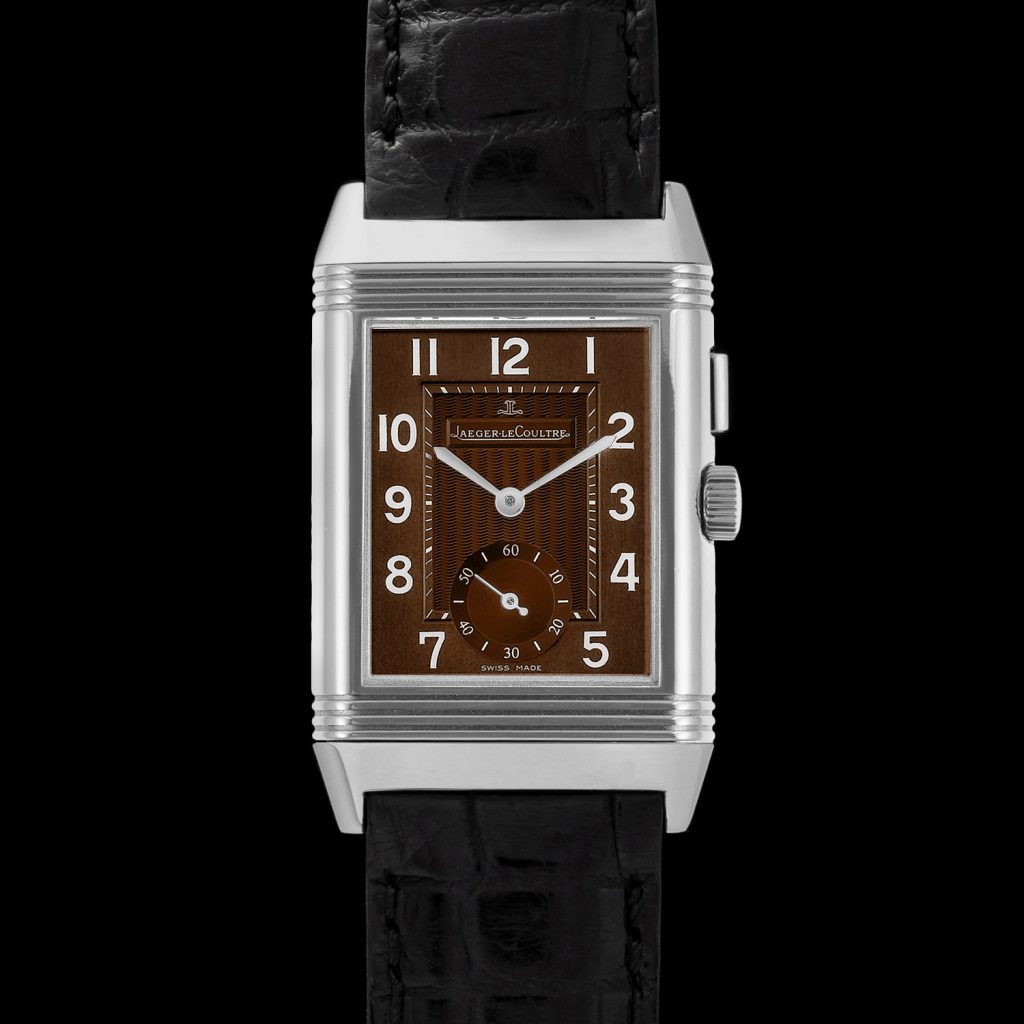
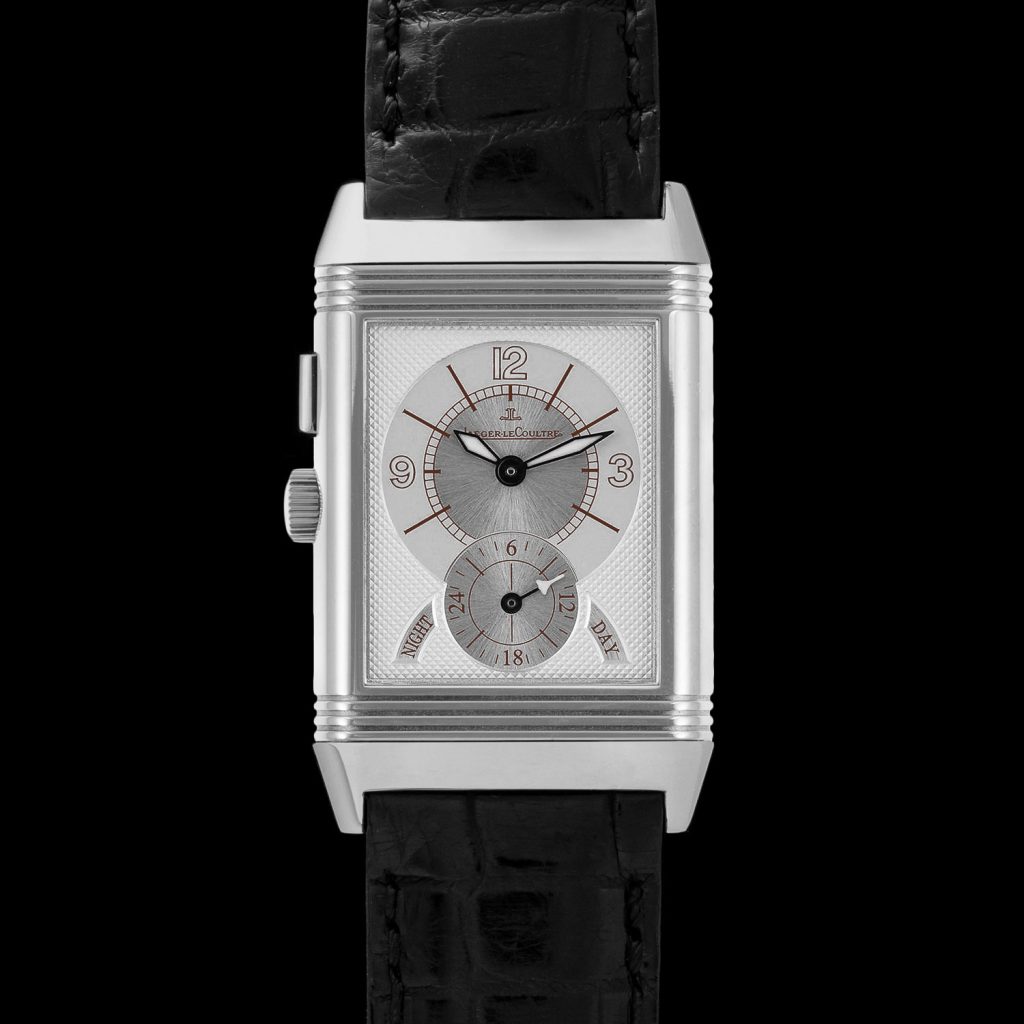
Year: — Calibre: Cal. 854
Material: Stainless steel
Market: Japan
For the Japanese retailer Hayashi, on the second-generation Duoface case — thirty pieces.
Year: — Calibre: Cal. 967B
Material: Stainless steel
Market: Brazil
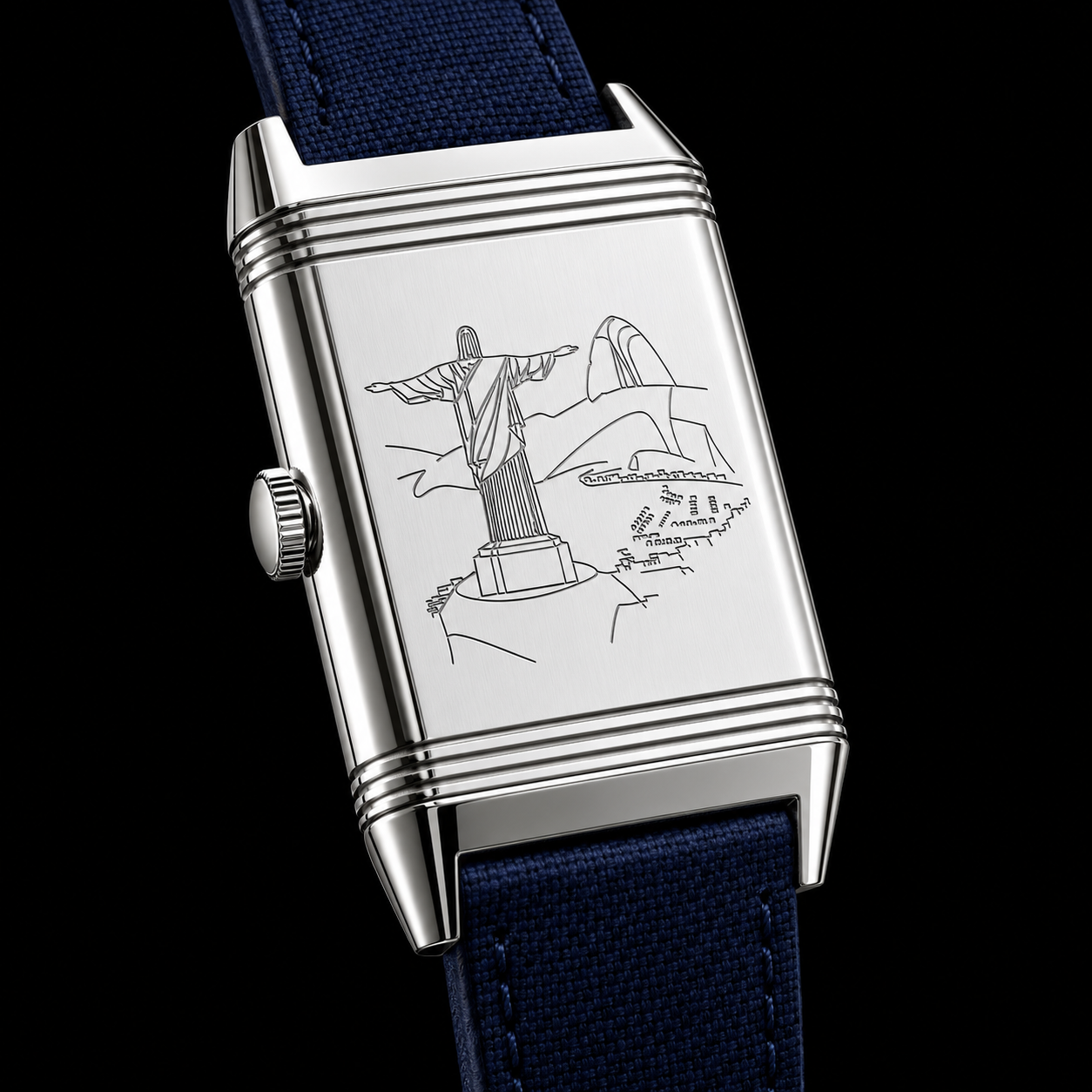
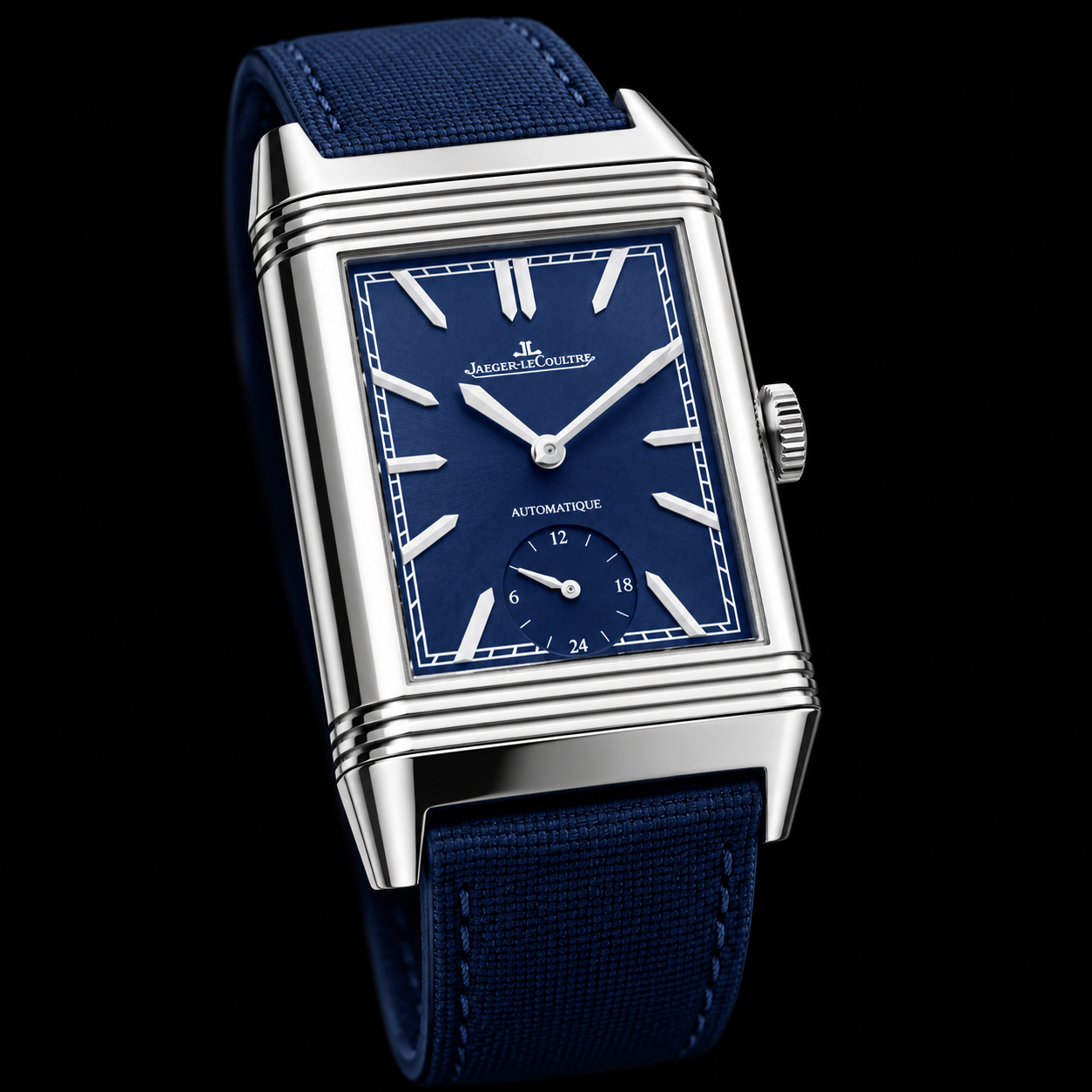
A double anniversary: 85 pieces for the 85th anniversary of both Christ the Redeemer and the Reverso itself. Blue dial, day/night indicator, statue engraved on the back.
Year: — Calibre: Cal. 967B
Material: —
Market: Thailand
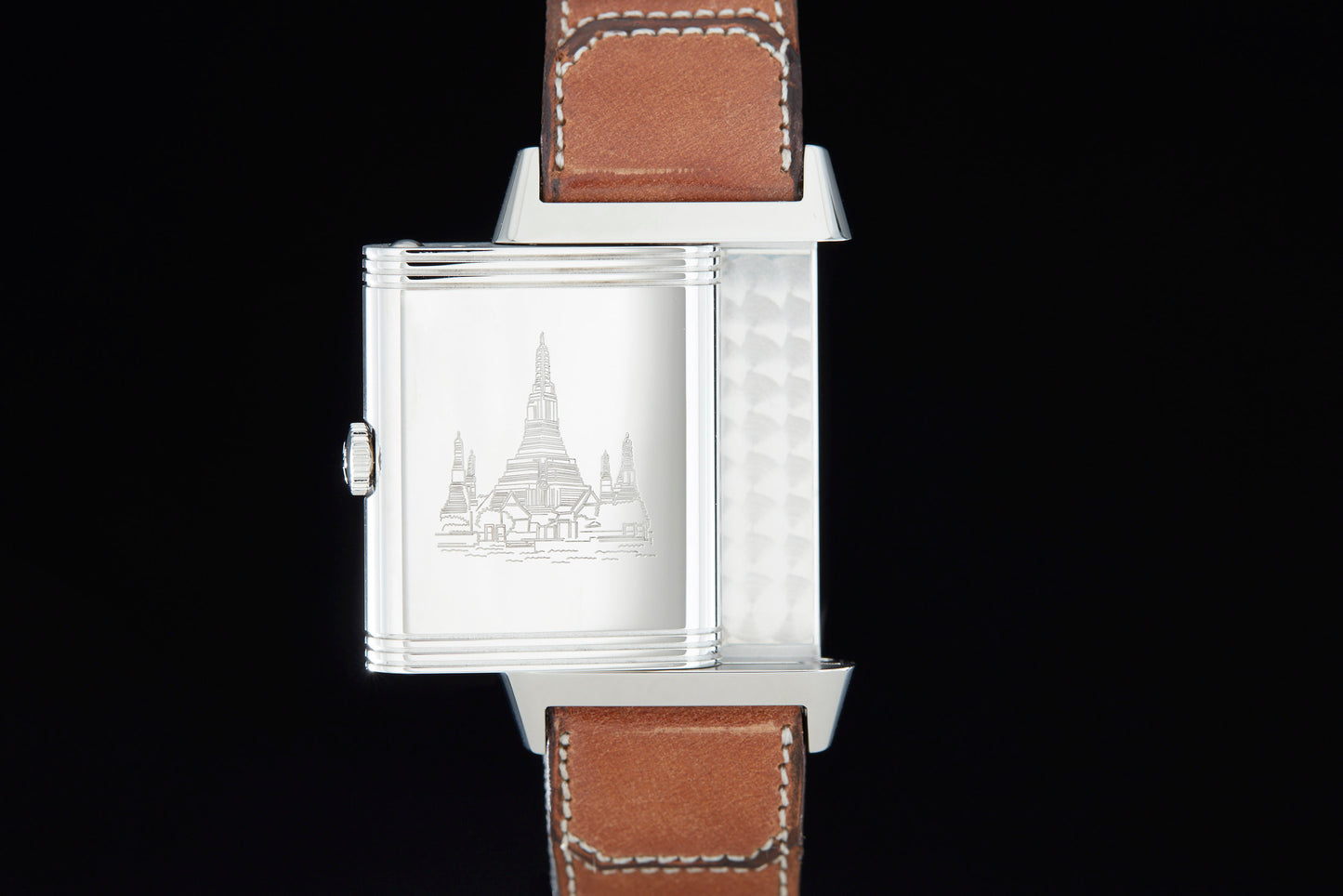
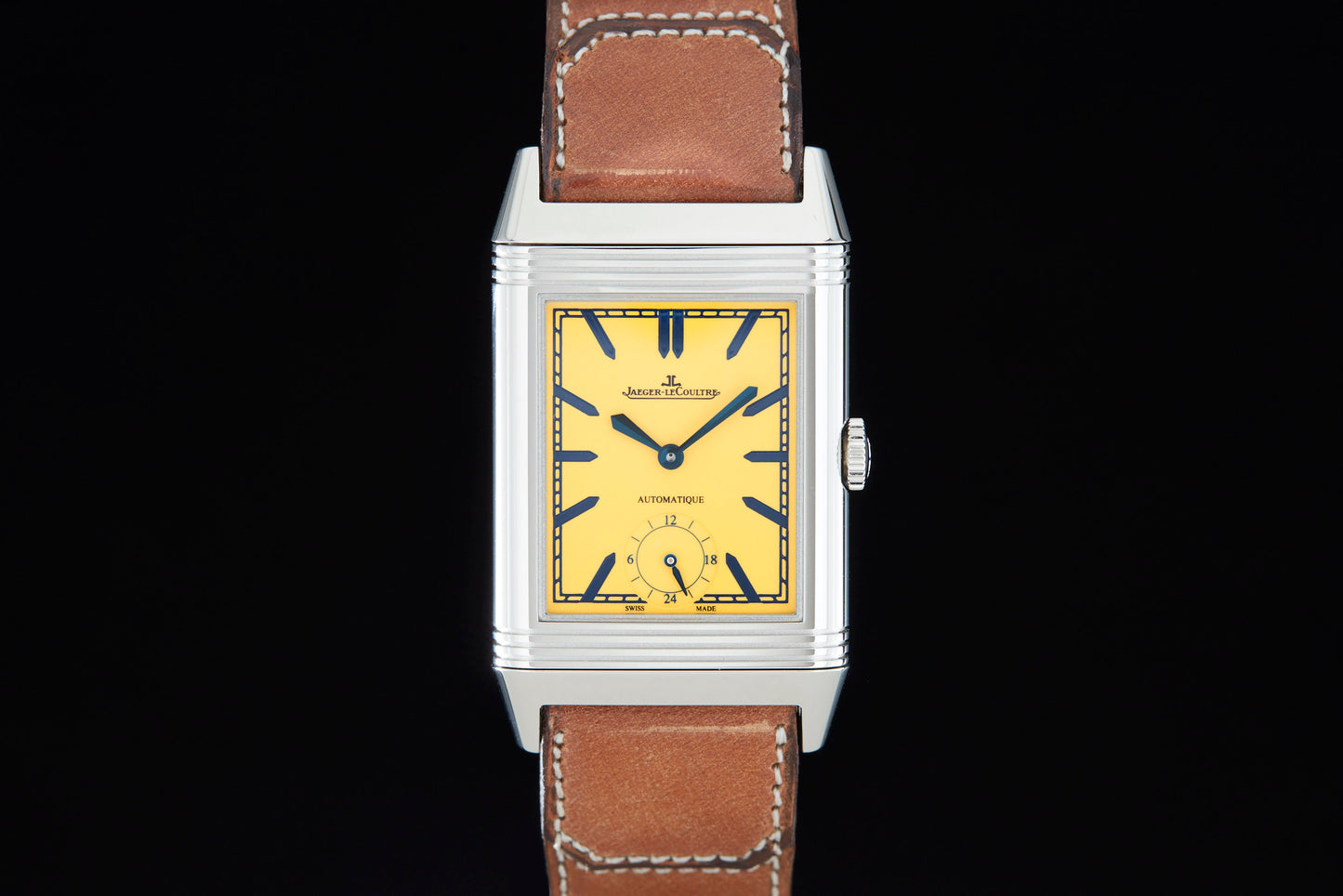
Thirty-nine pieces for the ninth king of the Chakri dynasty; a deep yellow "dawn" dial and Wat Arun (Temple of Dawn) engraved on the back.
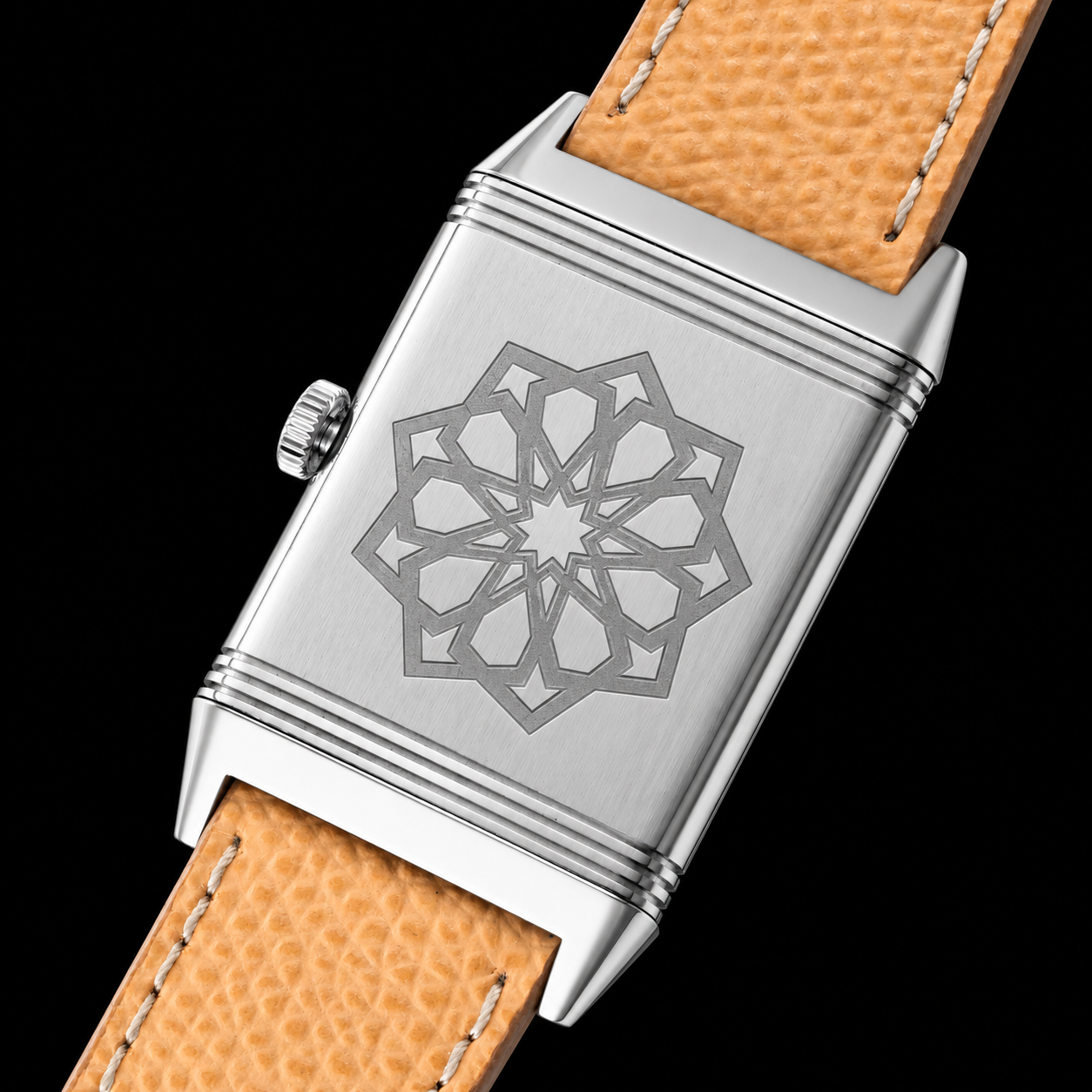
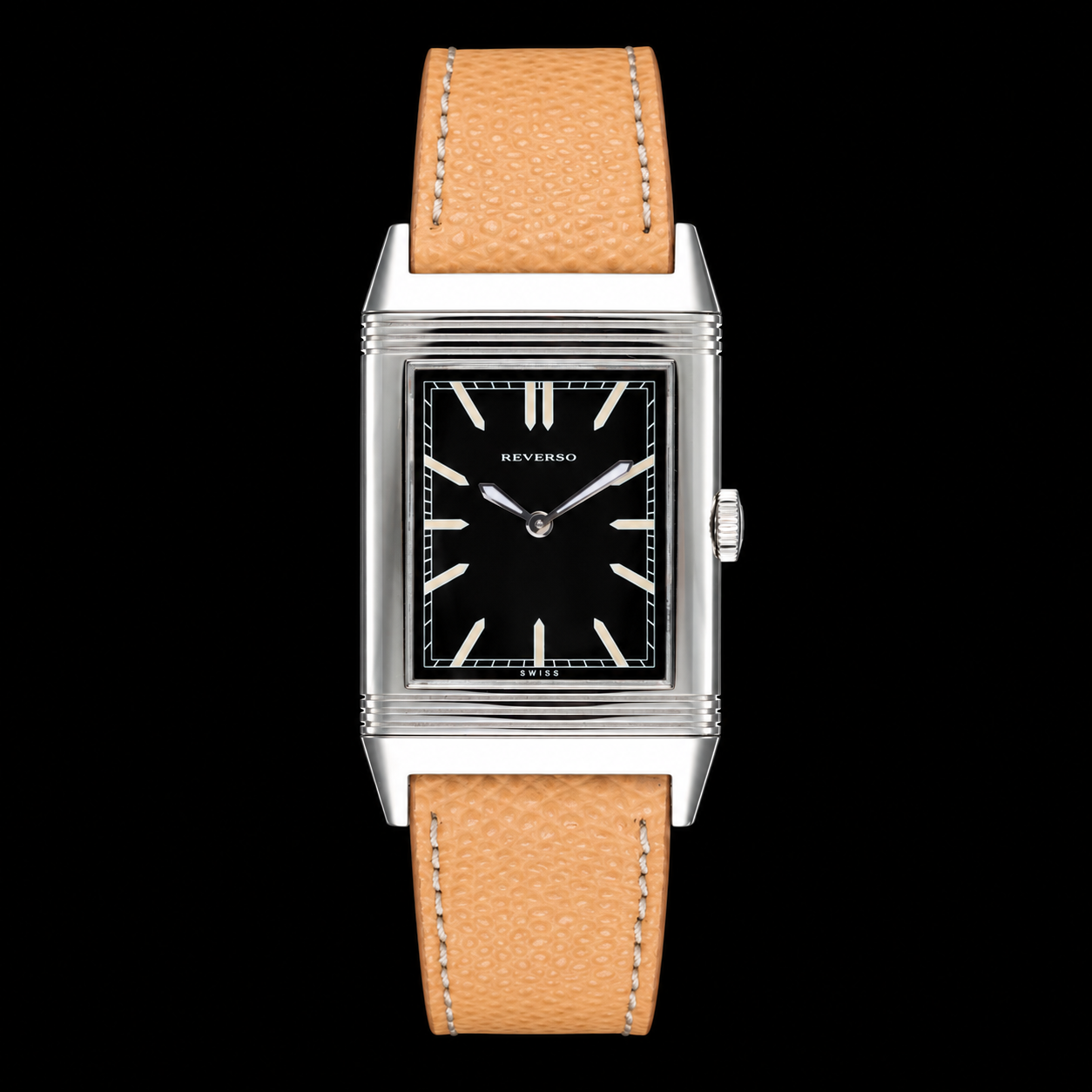
Year: — Calibre: Manual-winding
Material: Stainless steel
Market: United Arab Emirates
Made to mark Expo 2020 Dubai — one of relatively few Reverso editions tied to a World’s Fair.
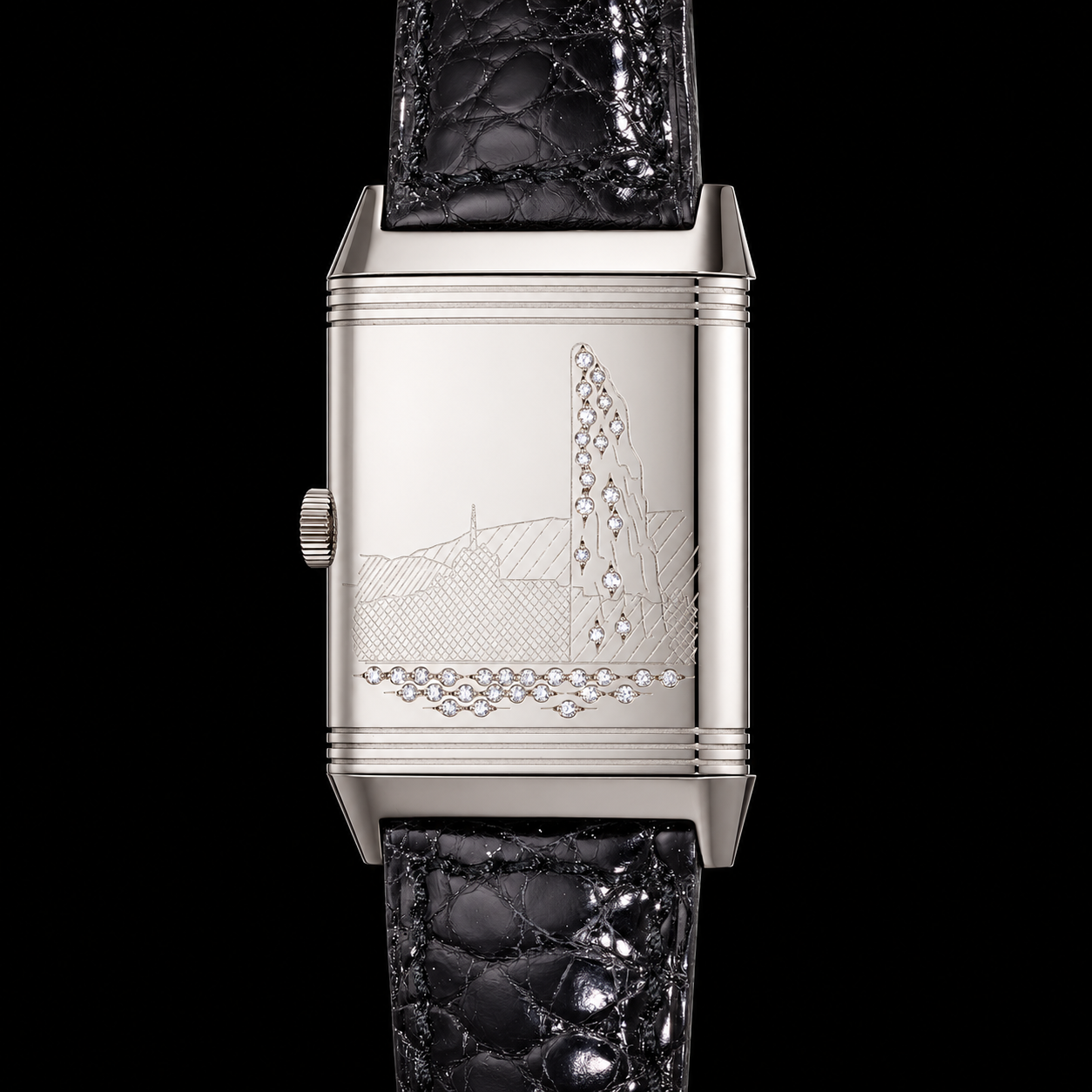
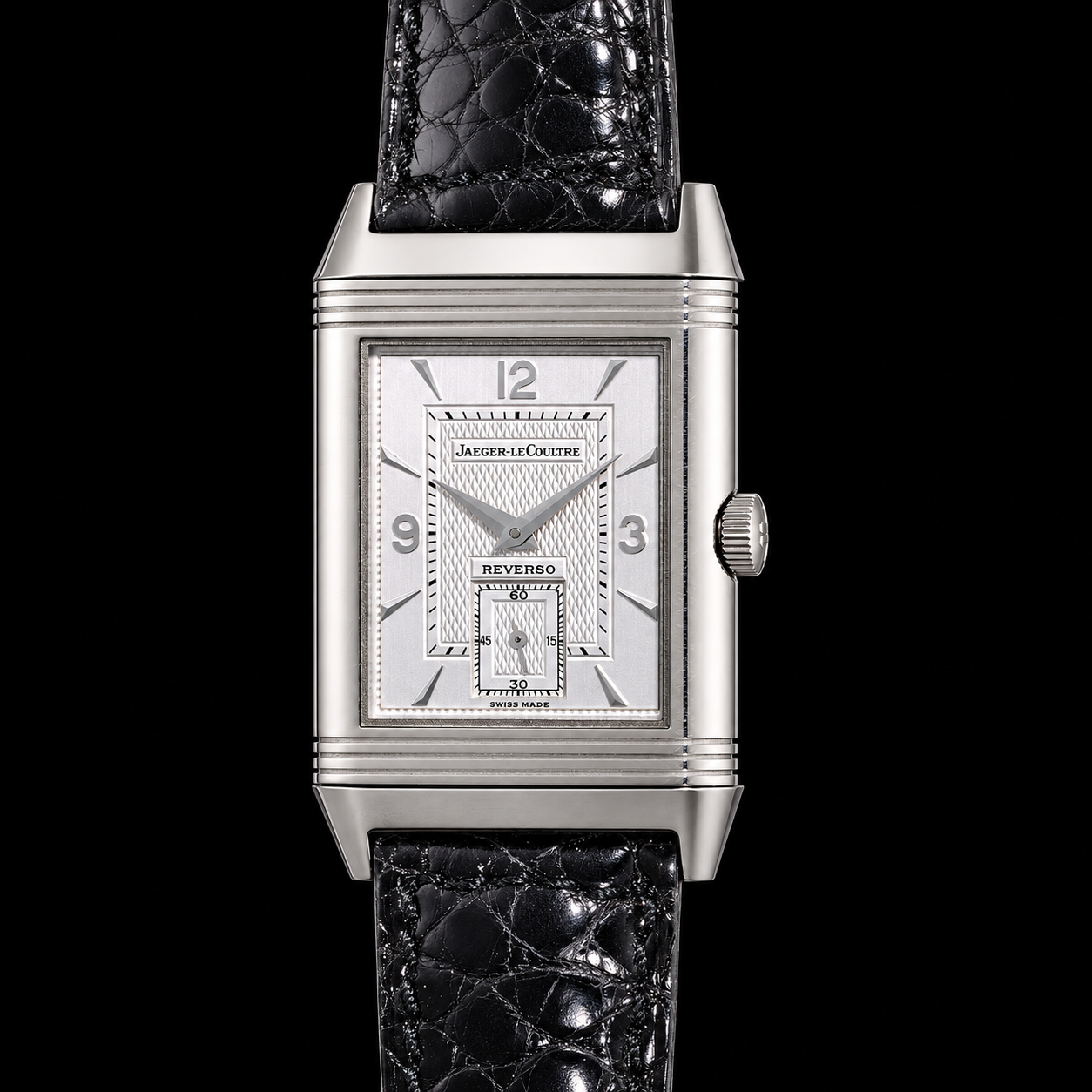
Year: 1995 Calibre: —
Material: Yellow or white gold
Market: Switzerland
Small seconds and guilloché dial on the front; the reverse is engraved with Geneva’s skyline — the Jet d’Eau and St. Pierre Cathedral — set with 40 diamonds.
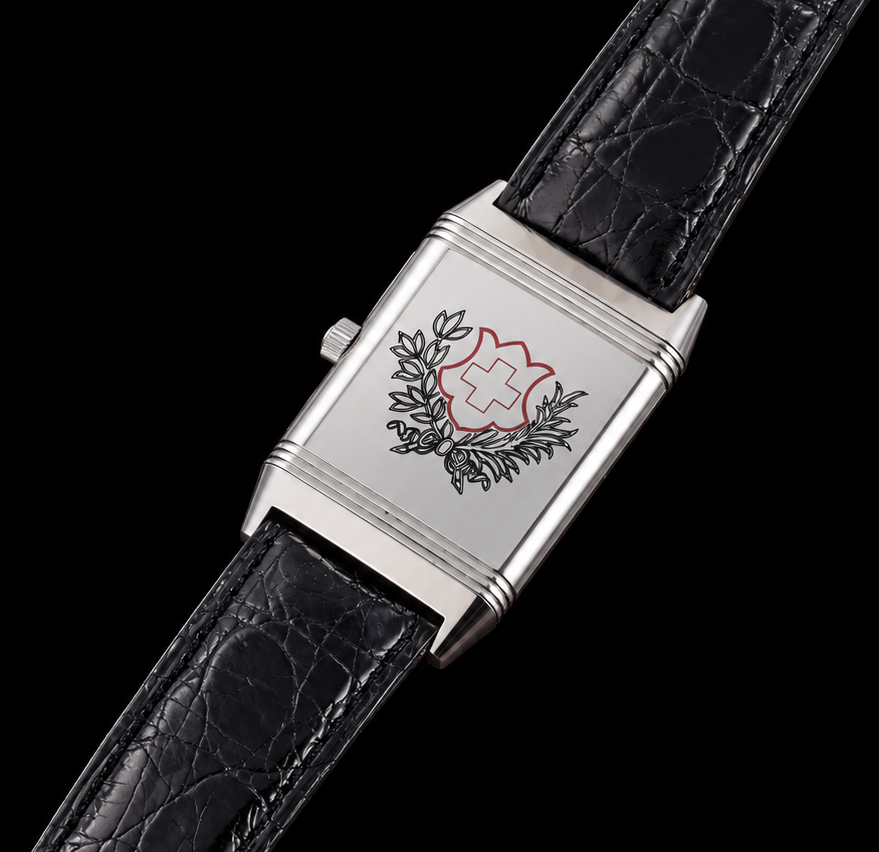
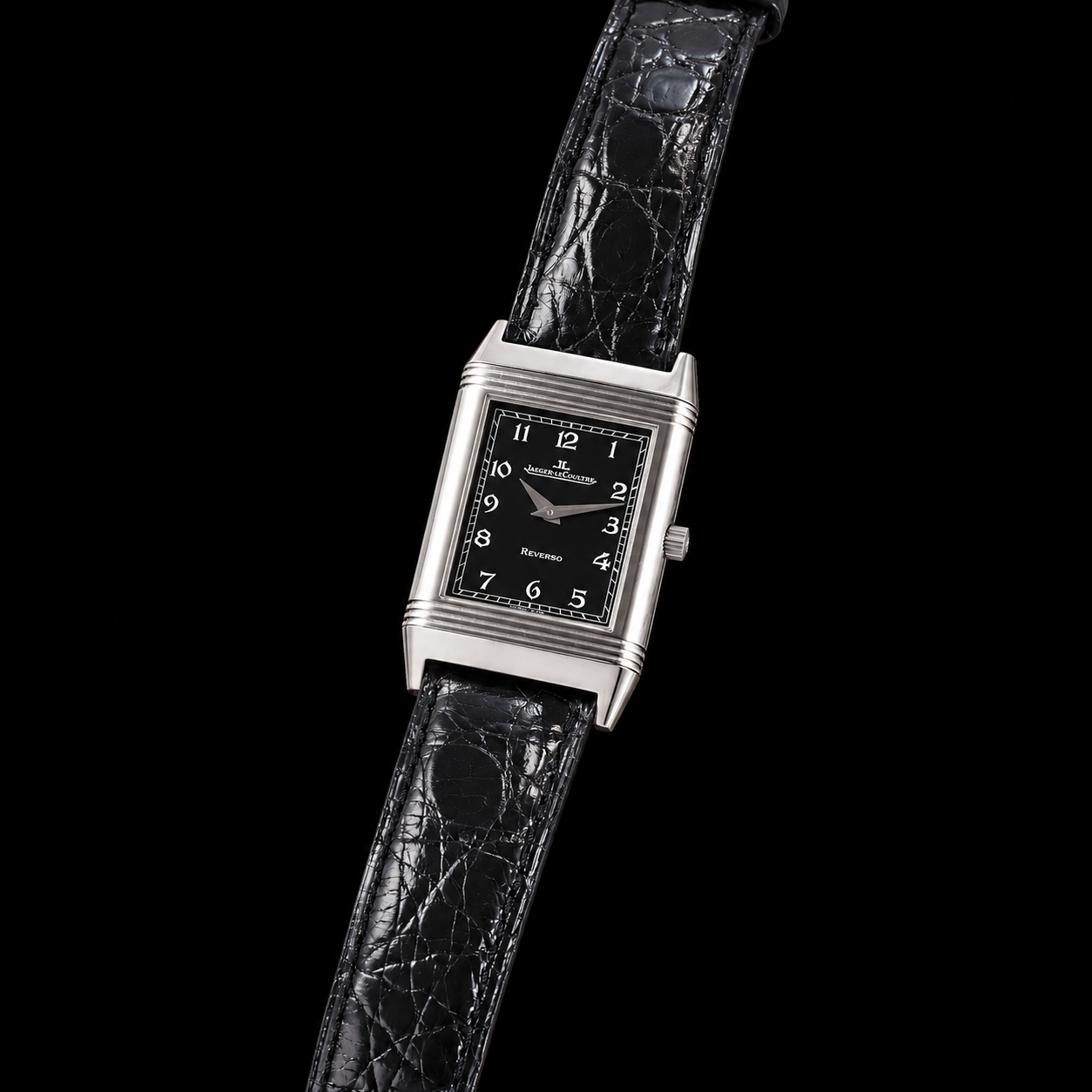
Year: 1997 Calibre: Cal. 846
Material: 18k white gold
Market: Switzerland
For the 150th anniversary of the Swiss Confederation. Per Jaeger-LeCoultre’s own certificate, dated Le Sentier, 3 March 1997: black dial, painted silver Roman numerals, dauphine hands, and a case-back “decorated with a special engraving, which commemorates the 150 years of the Swiss Confederation” — the Swiss flag.
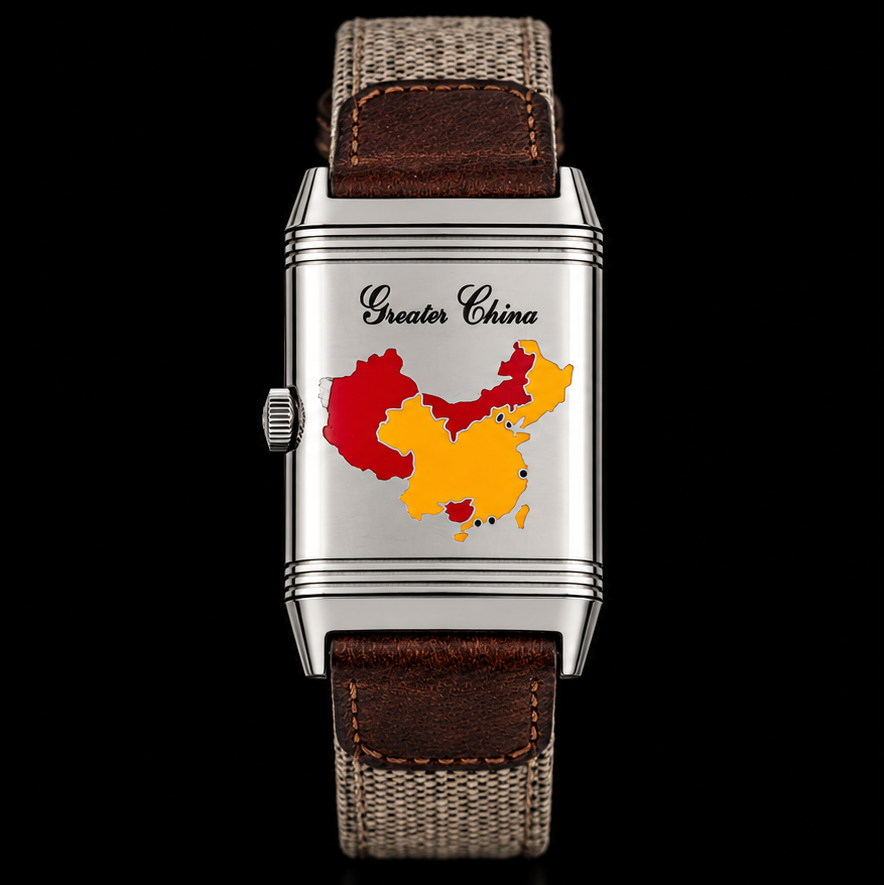
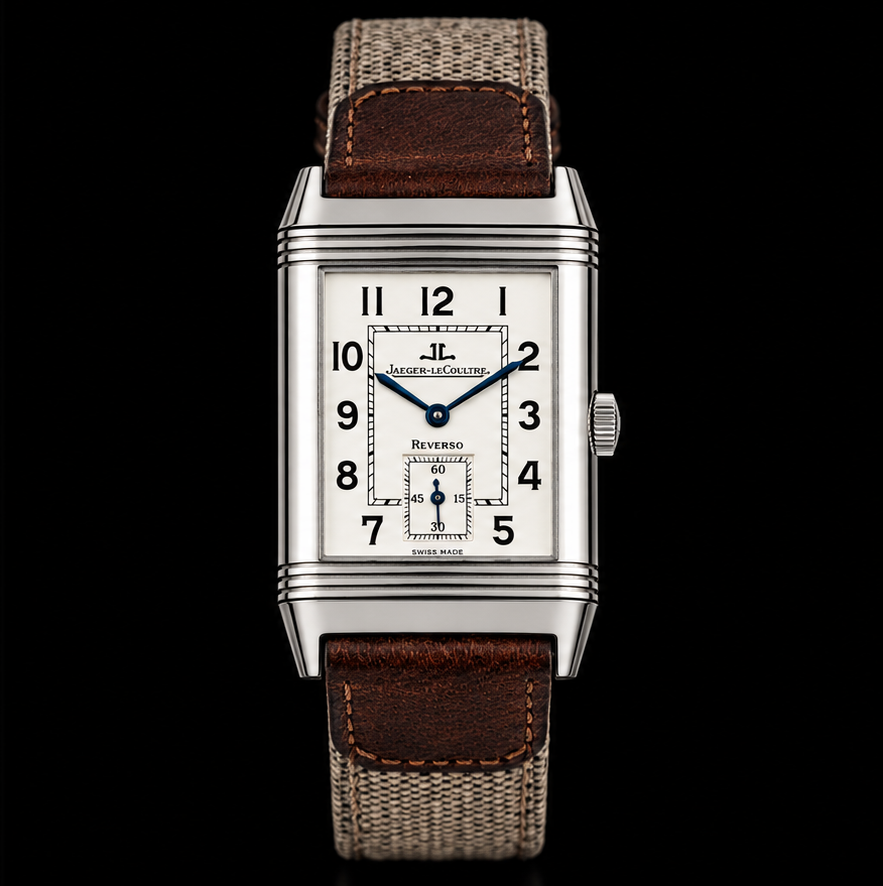
Year: 1997 Calibre: Cal. 822
Material: Stainless steel
Market: Hong Kong / China
For the 1997 Hong Kong handover: a tri-colour enamelled map of Greater China on the case-back, with dual English/Chinese certificates.
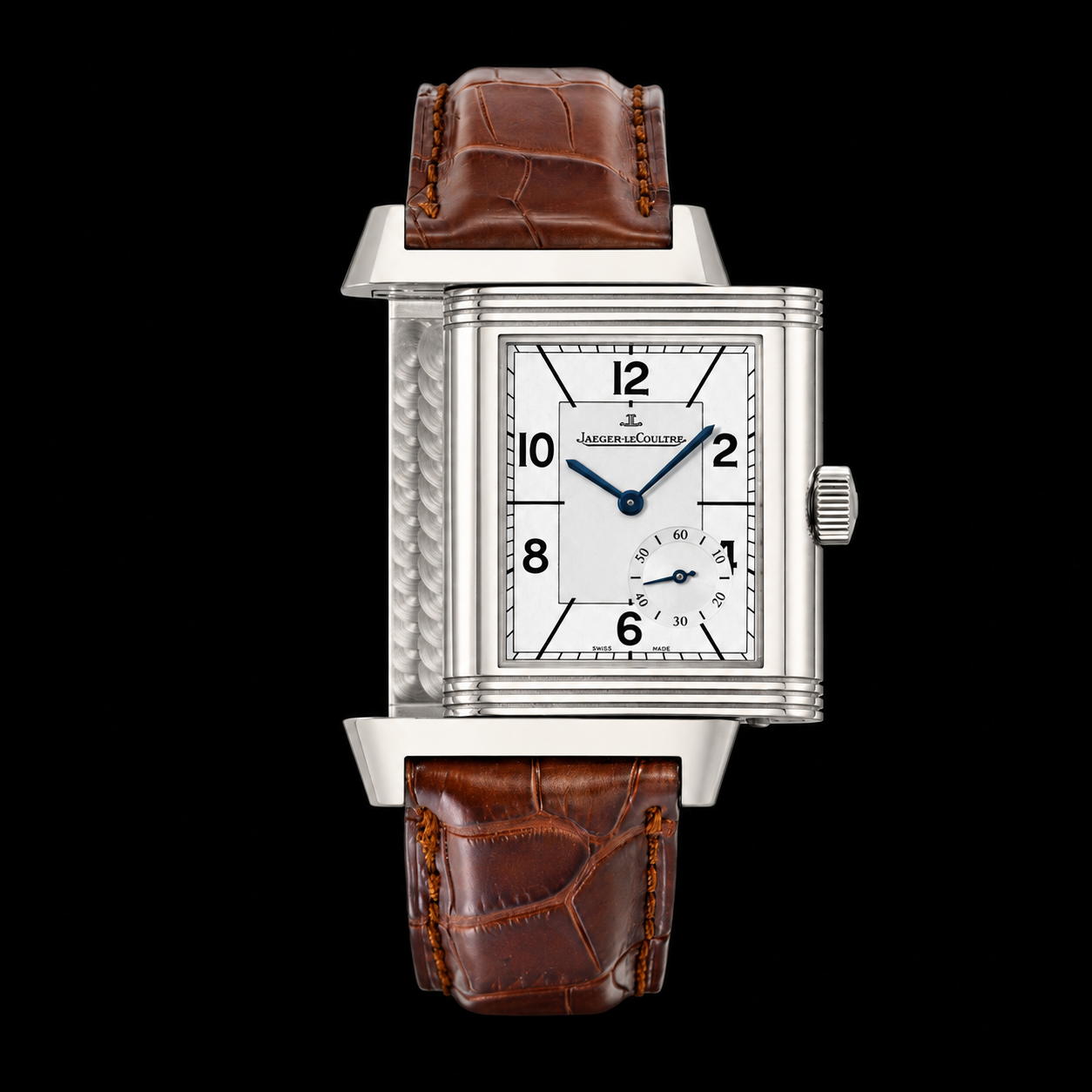
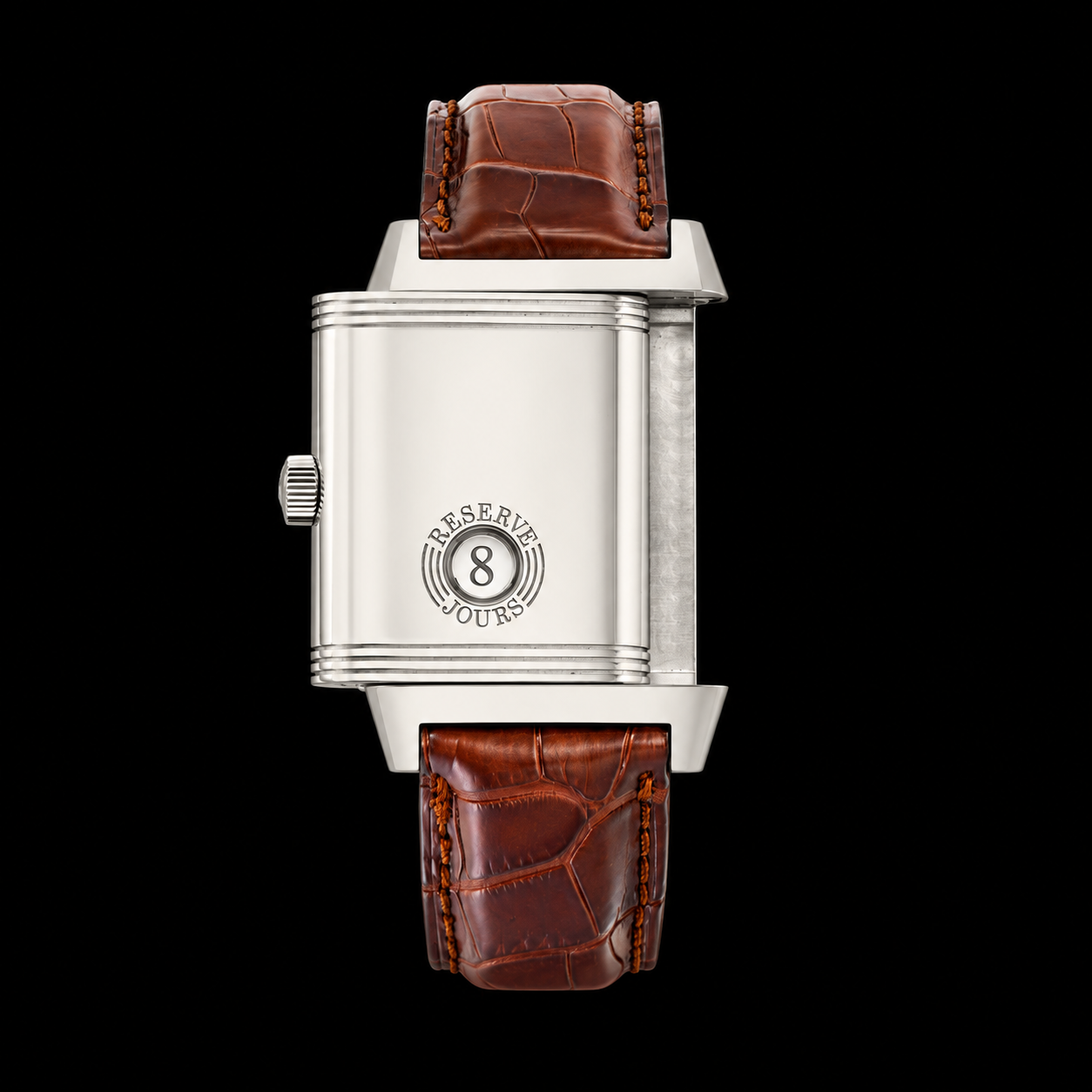
Year: 2006 Calibre: 8-day power reserve
Material: Stainless steel
Market: Singapore
For Sincere, the Singapore watch retailer’s 50th anniversary, on the 8-day Grande Réserve platform rather than a simple three-hand base.
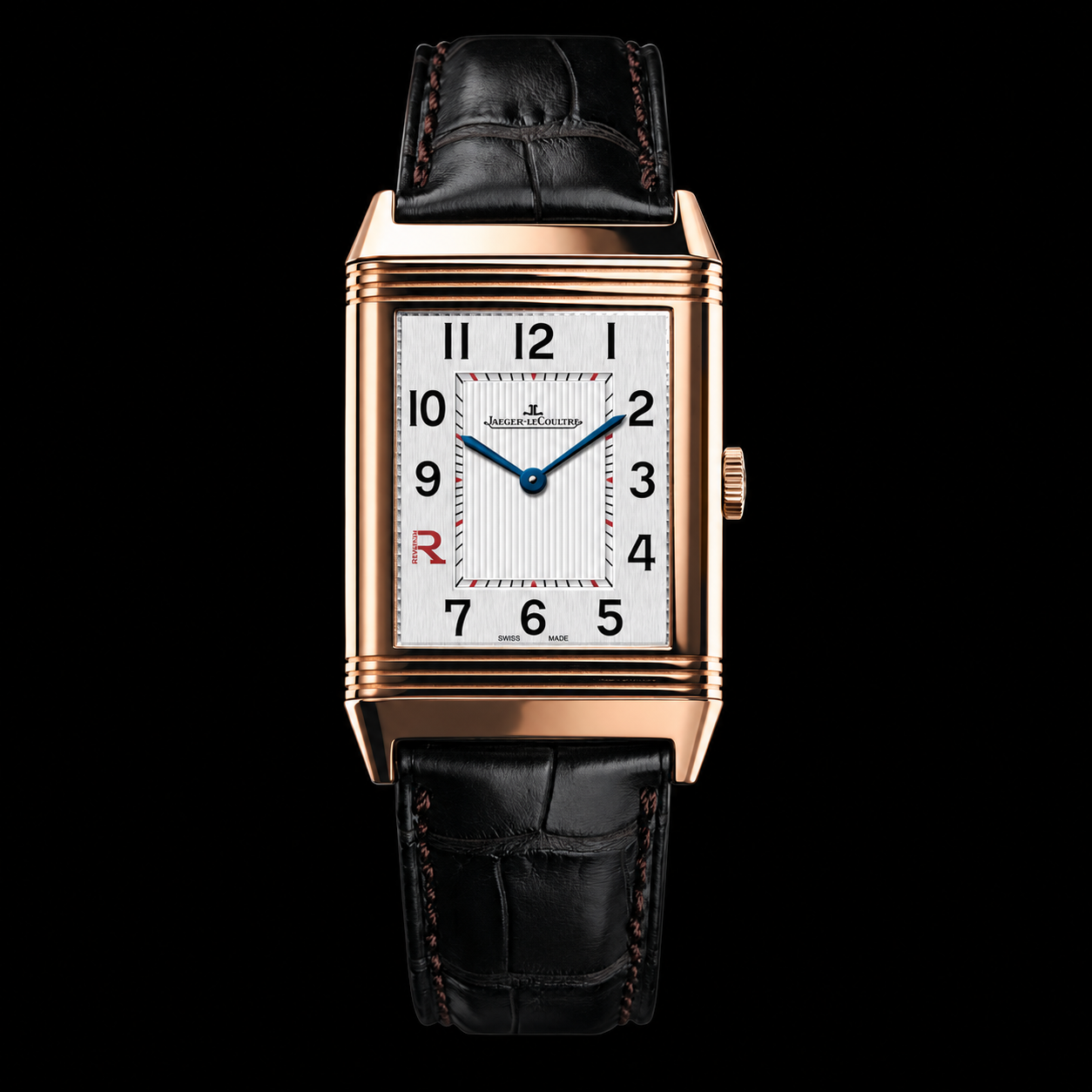
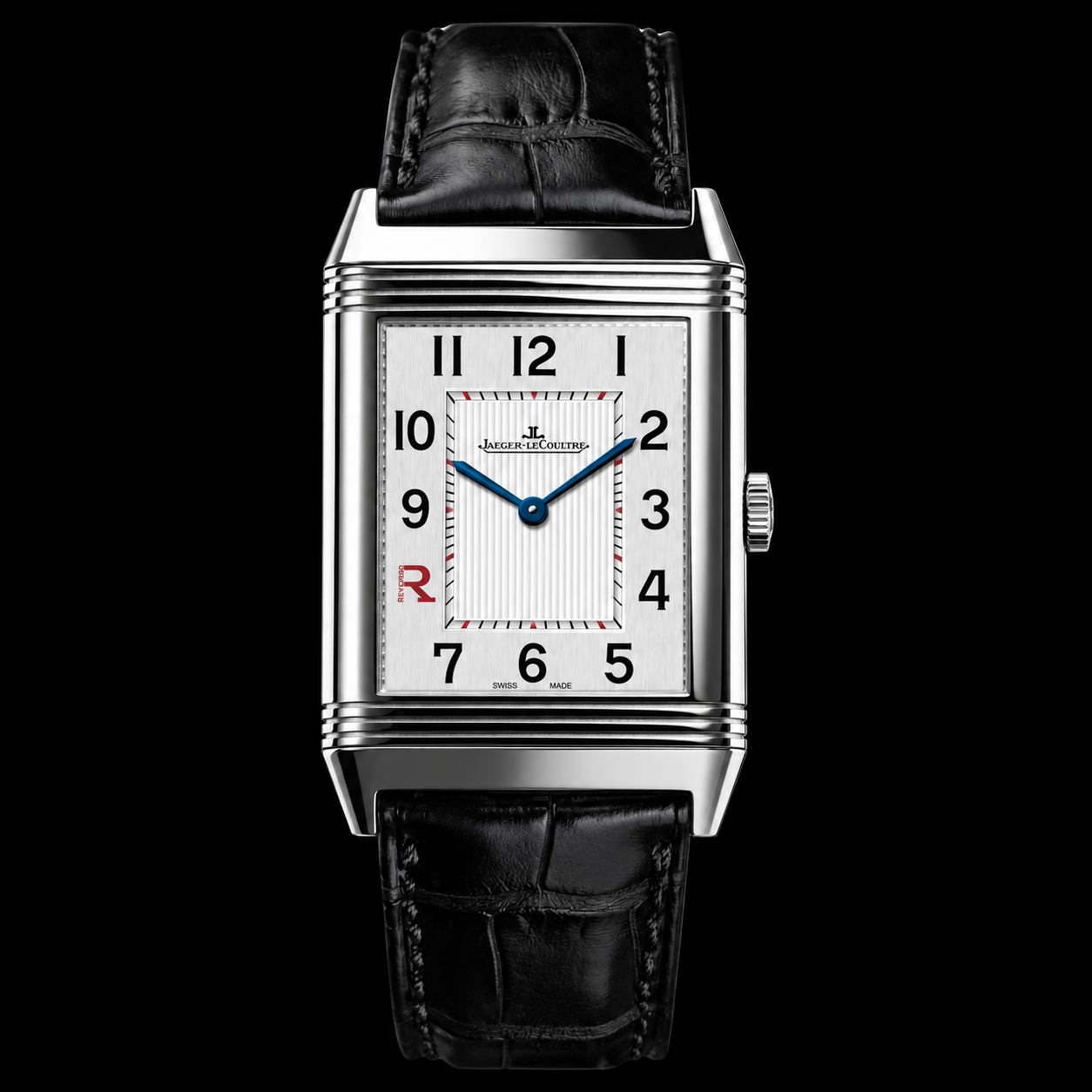
Year: 2011 Calibre: Cal. 822
Material: Stainless steel or rose gold
Market: Italy
For the 150th anniversary of Italian unification, close to the Reverso’s own 80th: the numeral ‘8’ replaced by a red ‘R’, the Roman numeral for 80. Sources disagree on the exact steel/gold split — 150/150 in one account, 150/50 in another.
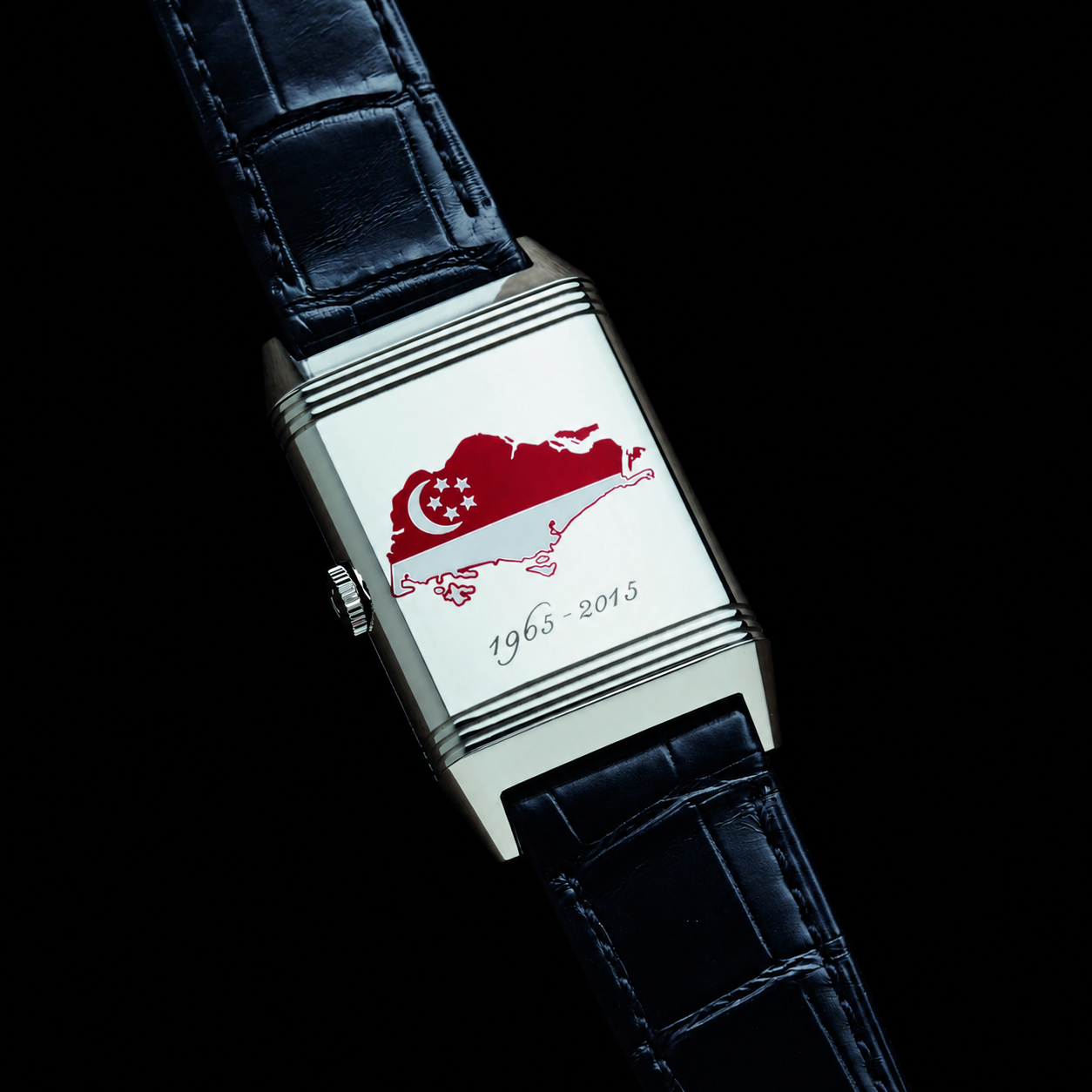
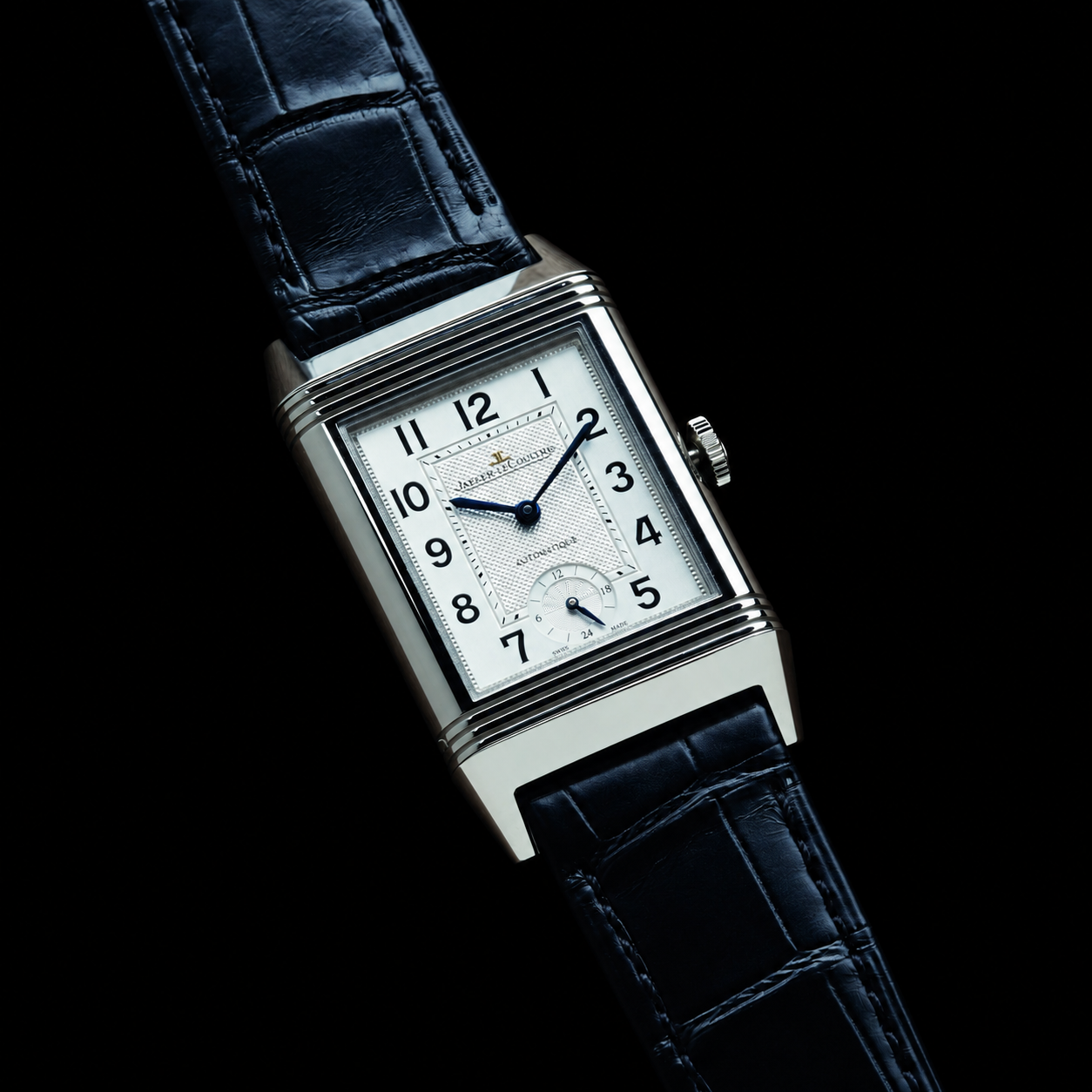
Year: 2015 Calibre: Cal. 967B
Material: Stainless steel
Market: Singapore
For 50 years of Singapore’s independence: a map of Singapore in red and white lacquer on the back, unnumbered, sold only at two Singapore boutiques.
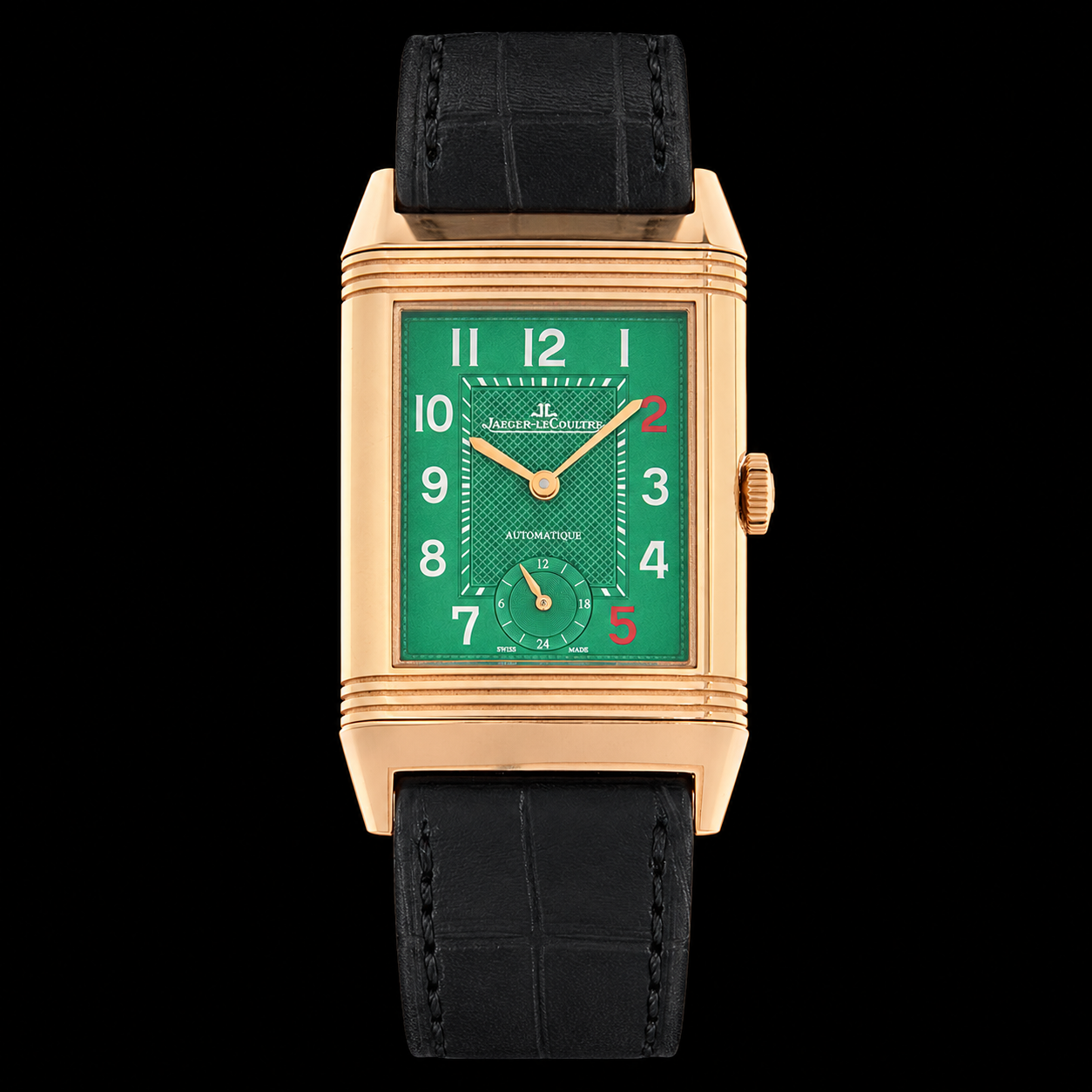
Year: 2016 Calibre: Cal. 967B
Material: Rose gold
Market: Kuwait
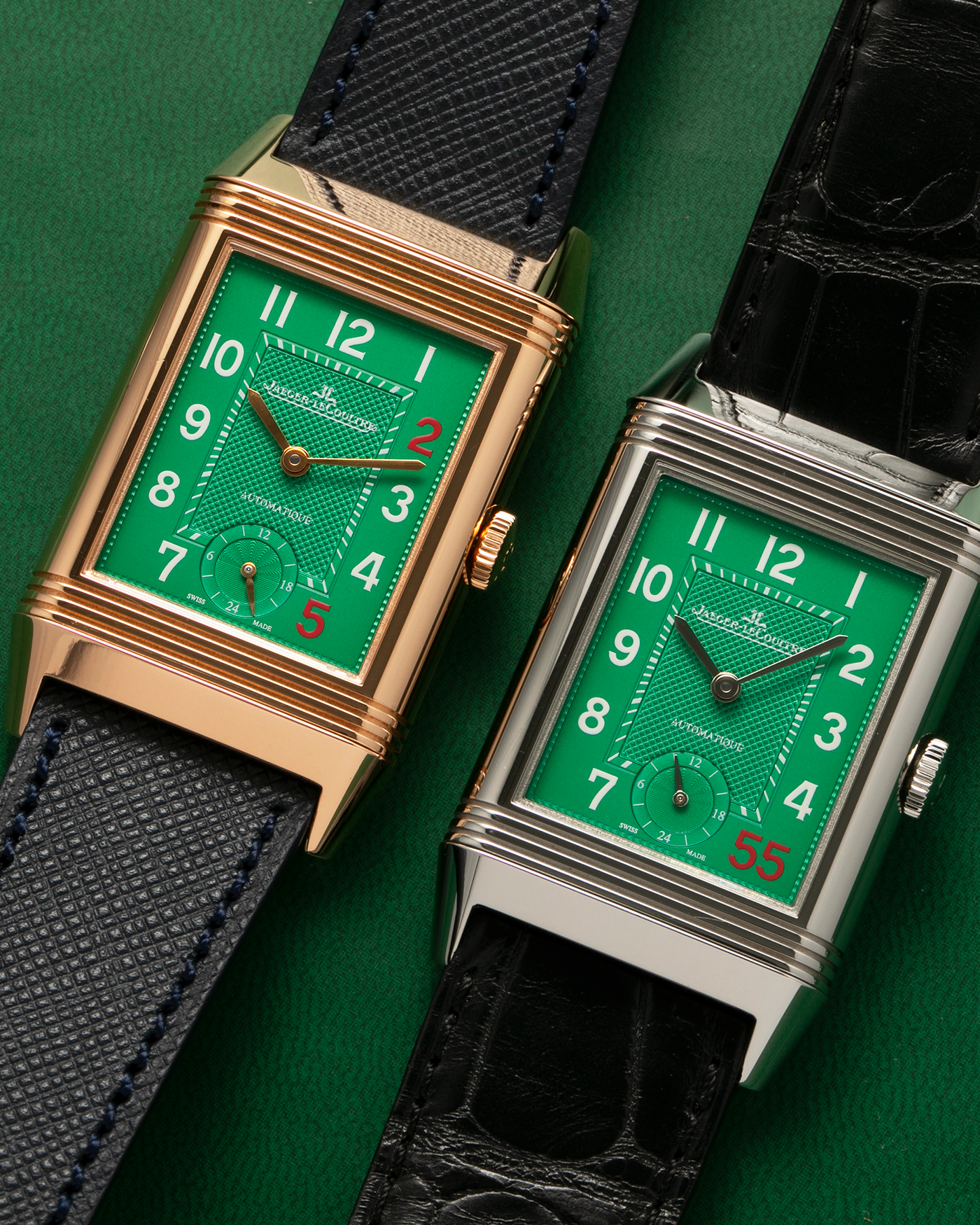
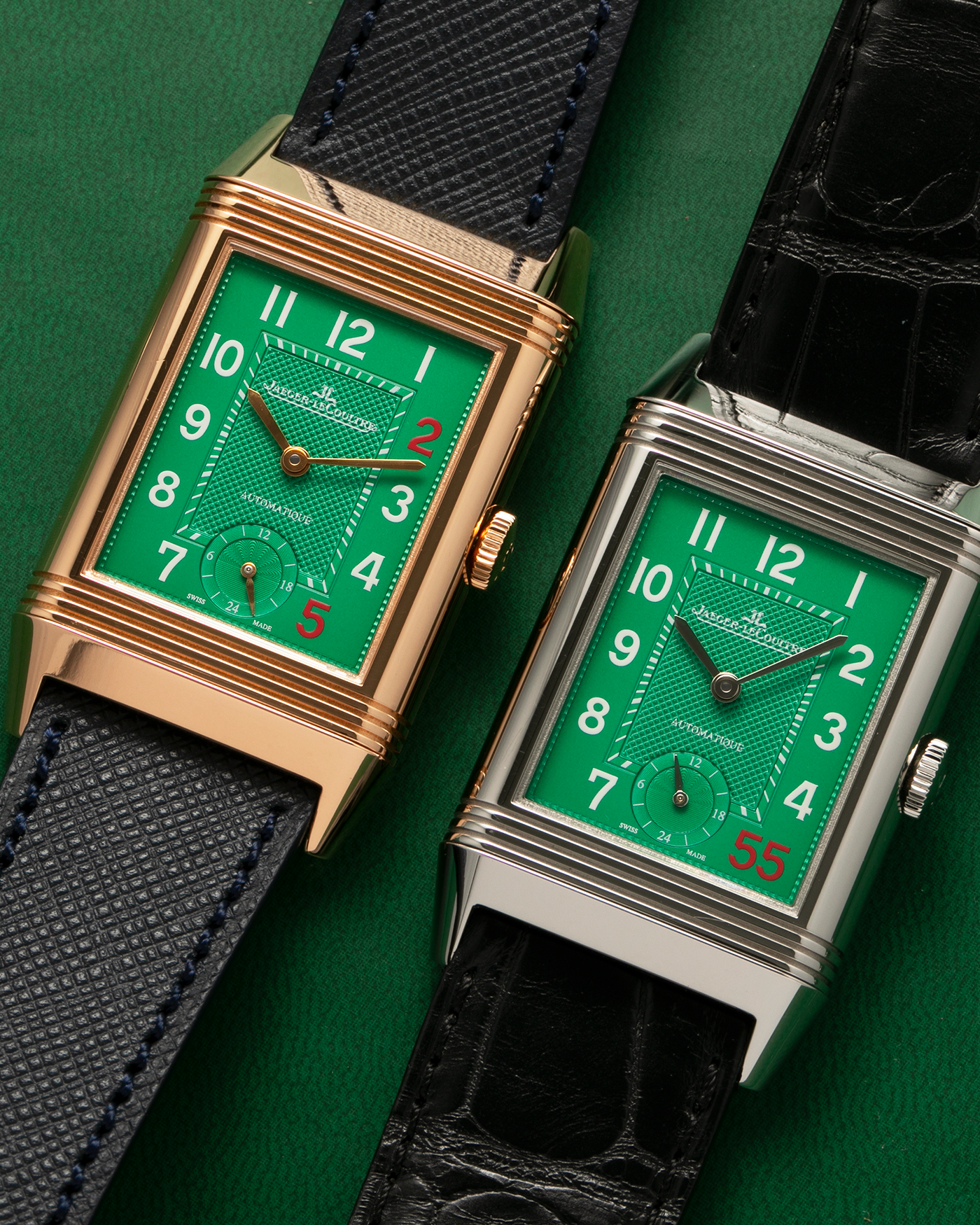
Marking the 1991 liberation of Kuwait: green dial, scarlet numerals at 2 and 5 o’clock spelling ‘25’. Paired with a steel 55th-anniversary sibling the same year.
Year: 2016 Calibre: Cal. 967B
Material: Stainless steel
Market: Kuwait
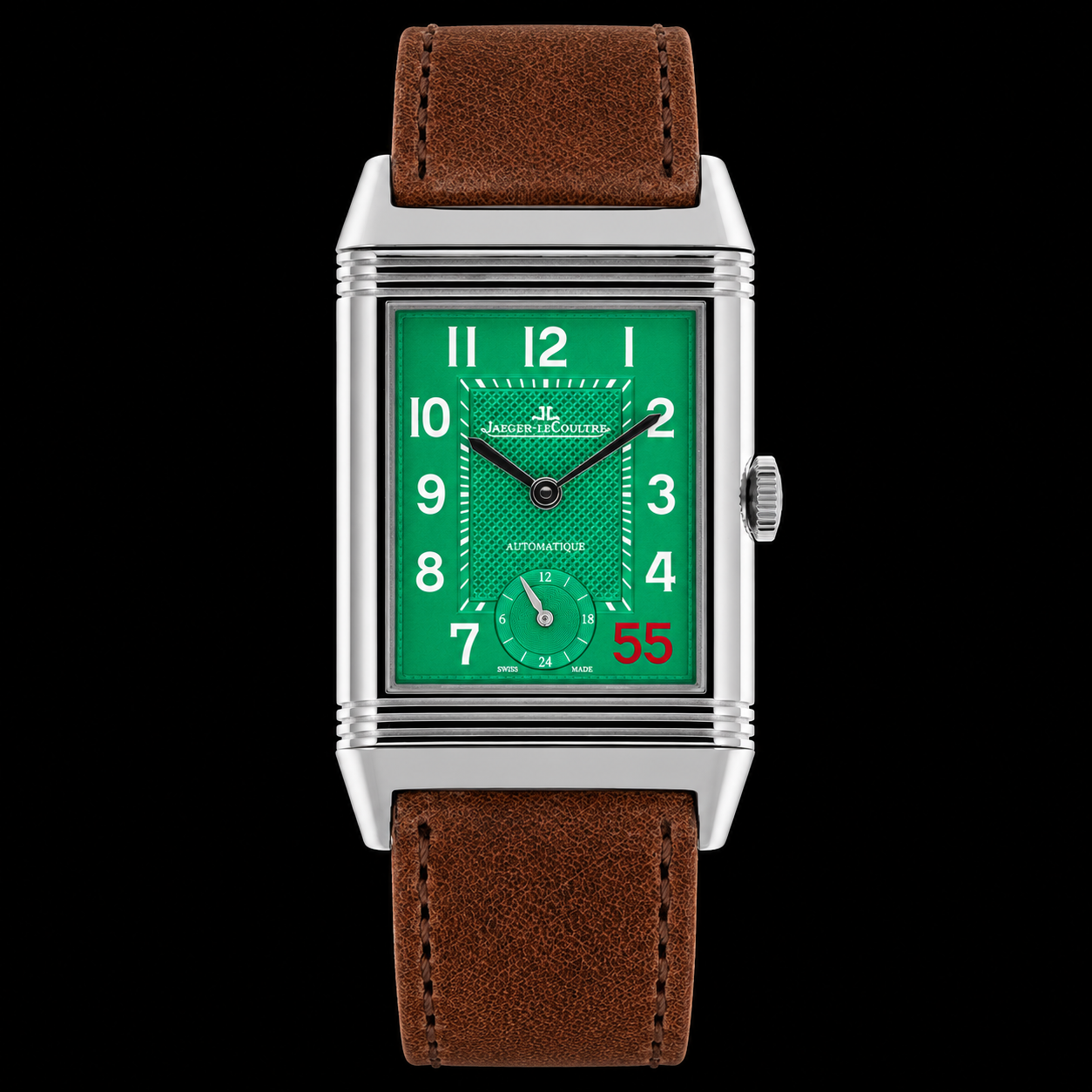
Marking 55 years since Kuwait’s independence from British protection: same green dial and flag palette, a single scarlet ‘55’ replacing the ‘5’.
Year: 2016 Calibre: Cal. 966A
Material: 18k white gold
Market: Fiji
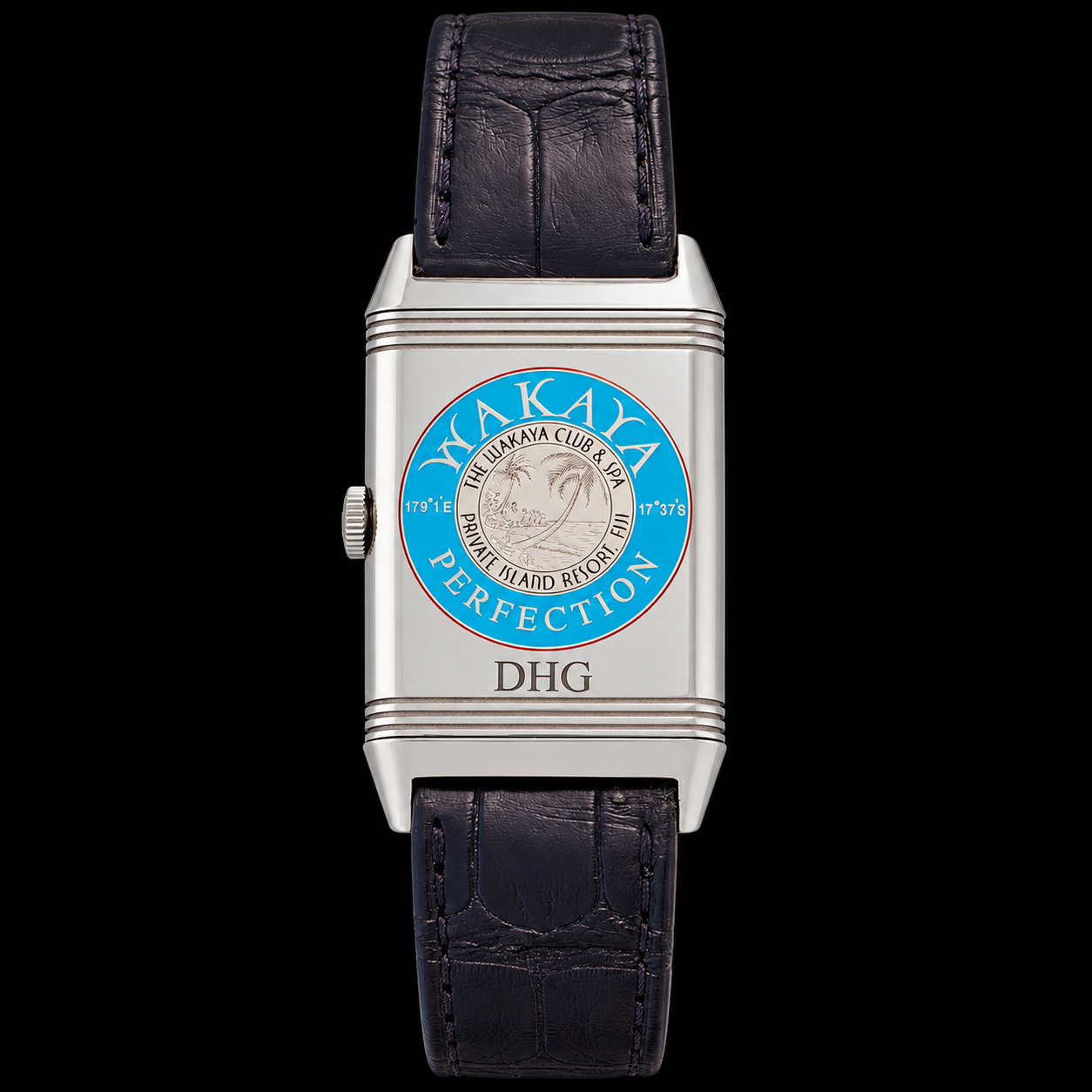
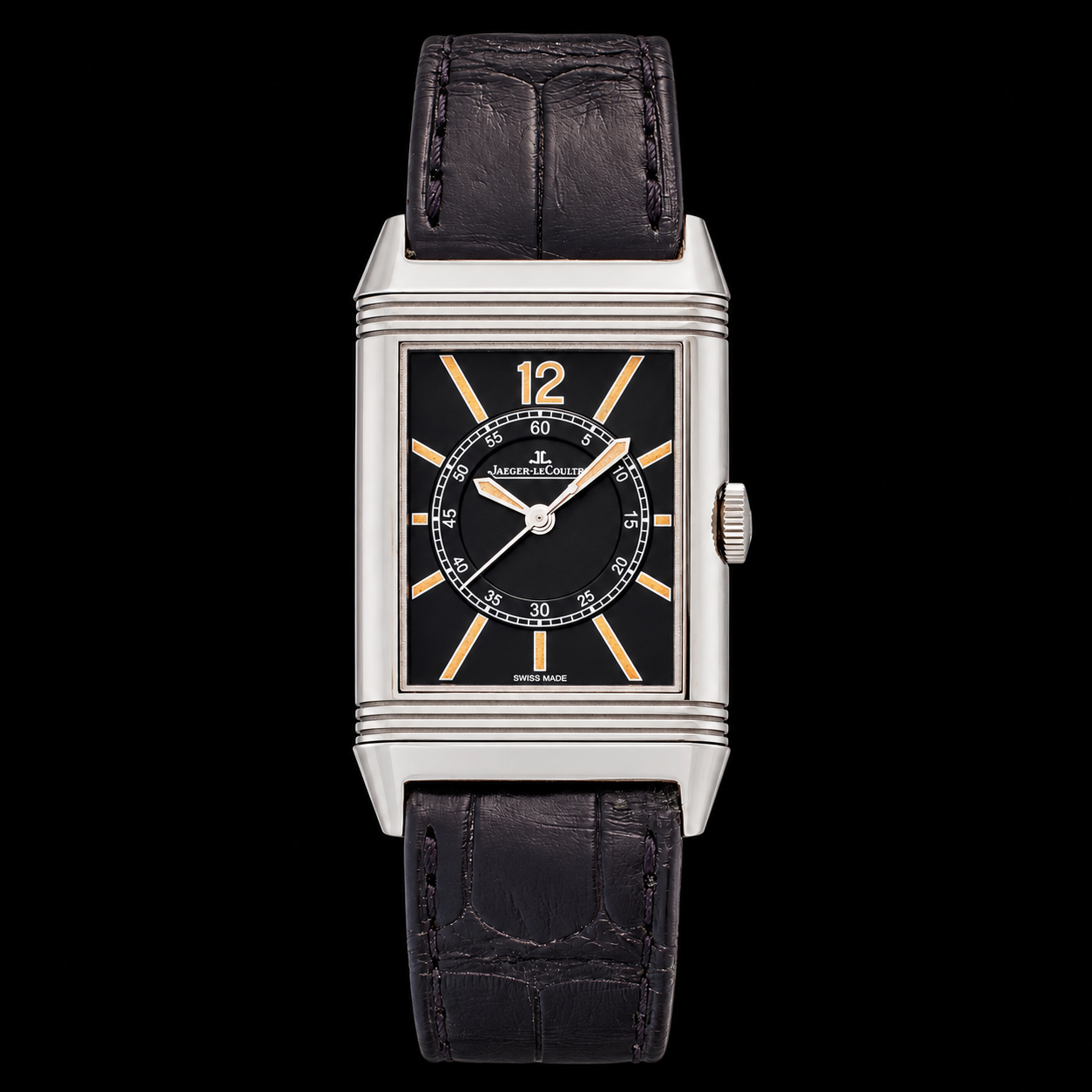
Engraved and enamelled with the logo of The Wakaya Club & Spa, Fiji, and the initials of its owner, David H. Gilmour, who also founded Fiji Water. Presented to Gilmour personally rather than sold at retail.
Year: 2016 Calibre: Cal. 822
Material: Pink gold
Market: Saint Barthélemy
A single-island commemorative in the same spirit as Wakaya and the MR PORTER city editions — fifteen pieces, one of the smallest boutique-exclusive runs documented.
Year: 2021 & 2023 Calibre: Cal. 822/2
Material: Stainless steel
Market: MR PORTER exclusive
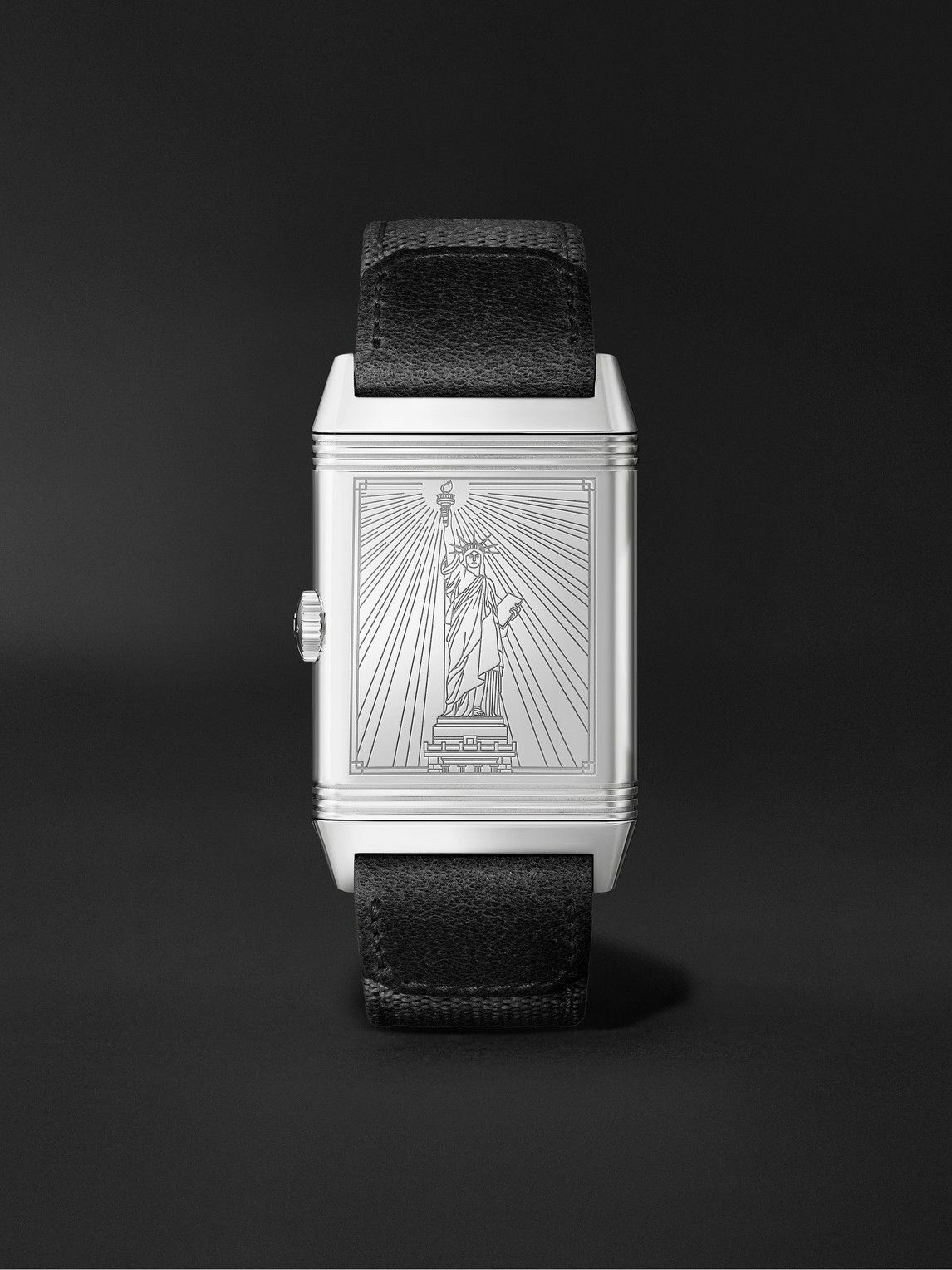
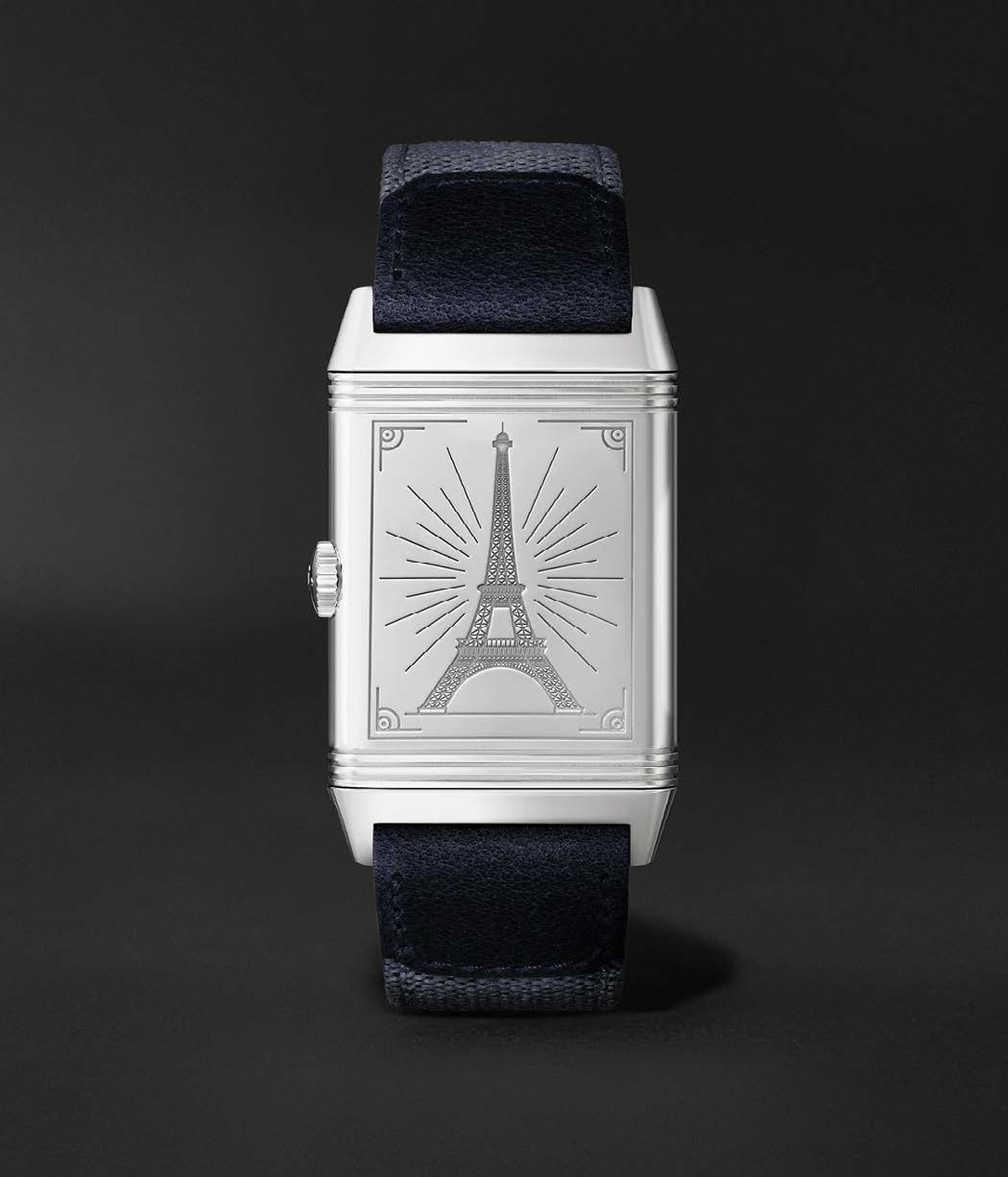
Reverso Classic Monoface Small Seconds, each hand-engraved with a landmark of its city and delivered on a Casa Fagliano strap. New York led the first wave in 2021 (London, Paris, Milan, Hong Kong); Los Angeles, Singapore and Sydney followed in 2023. Full set catalogued on its own page.
See the full setSpecial Dials & Precious Metals
Small runs distinguished by dial, finish or metal rather than by complication.
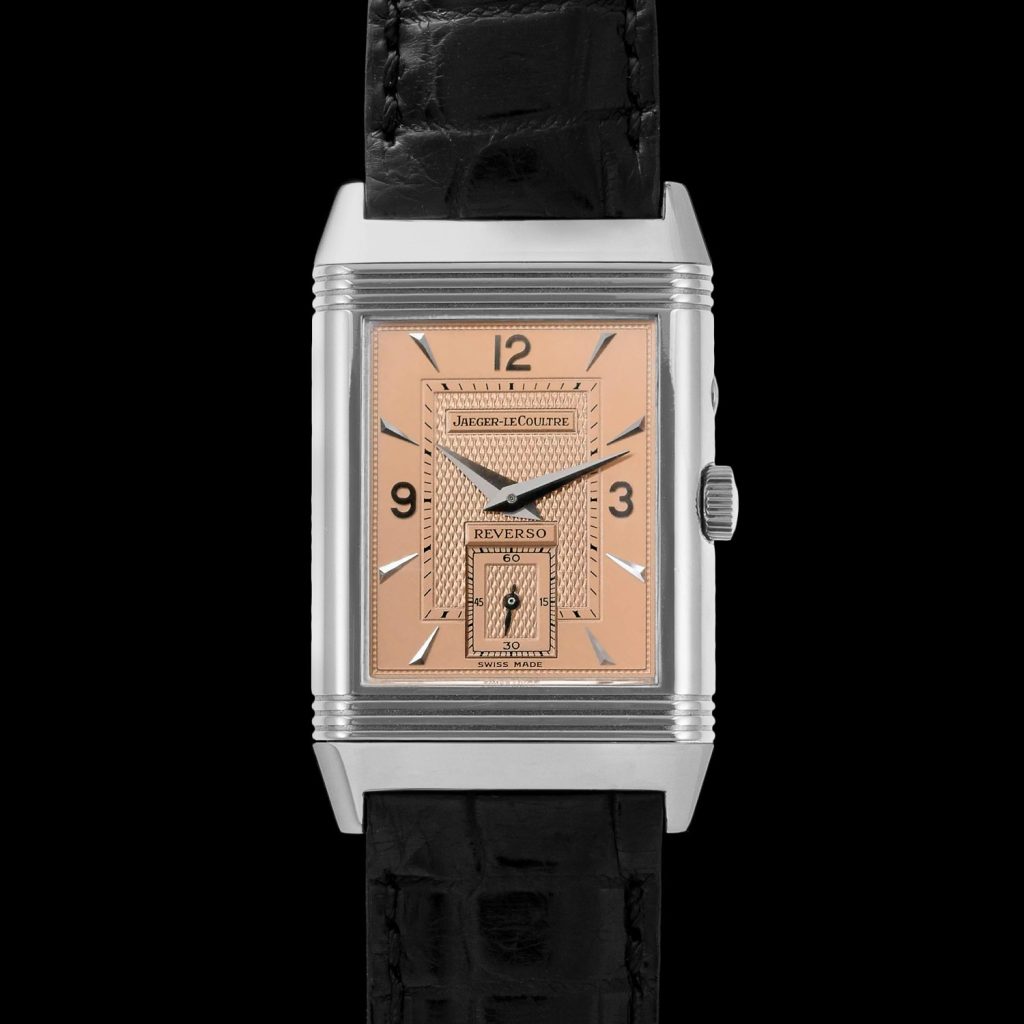
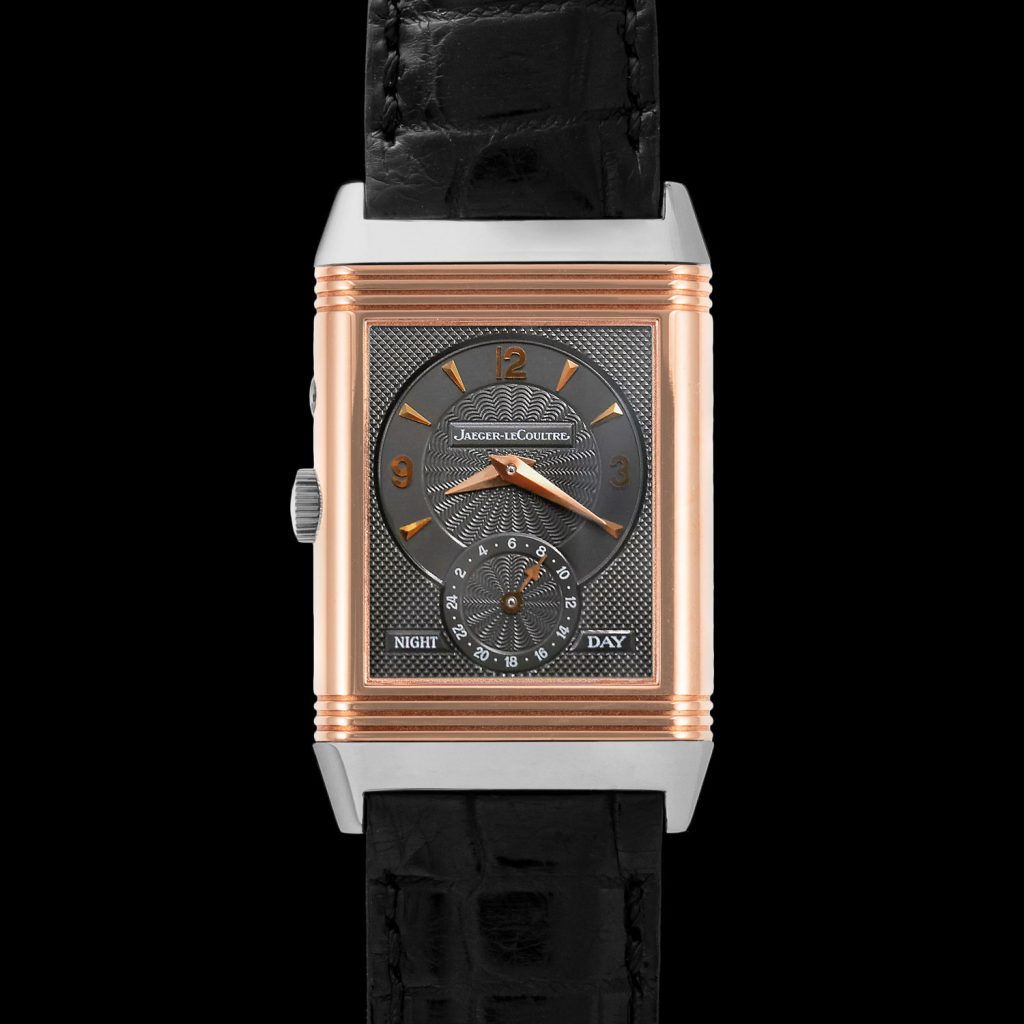
Year: — Calibre: Cal. 854
Material: White & pink gold
Market: International
Two golds in one case — white on one face, pink on the other. About as literal a use of the Duoface idea as the maison has attempted.
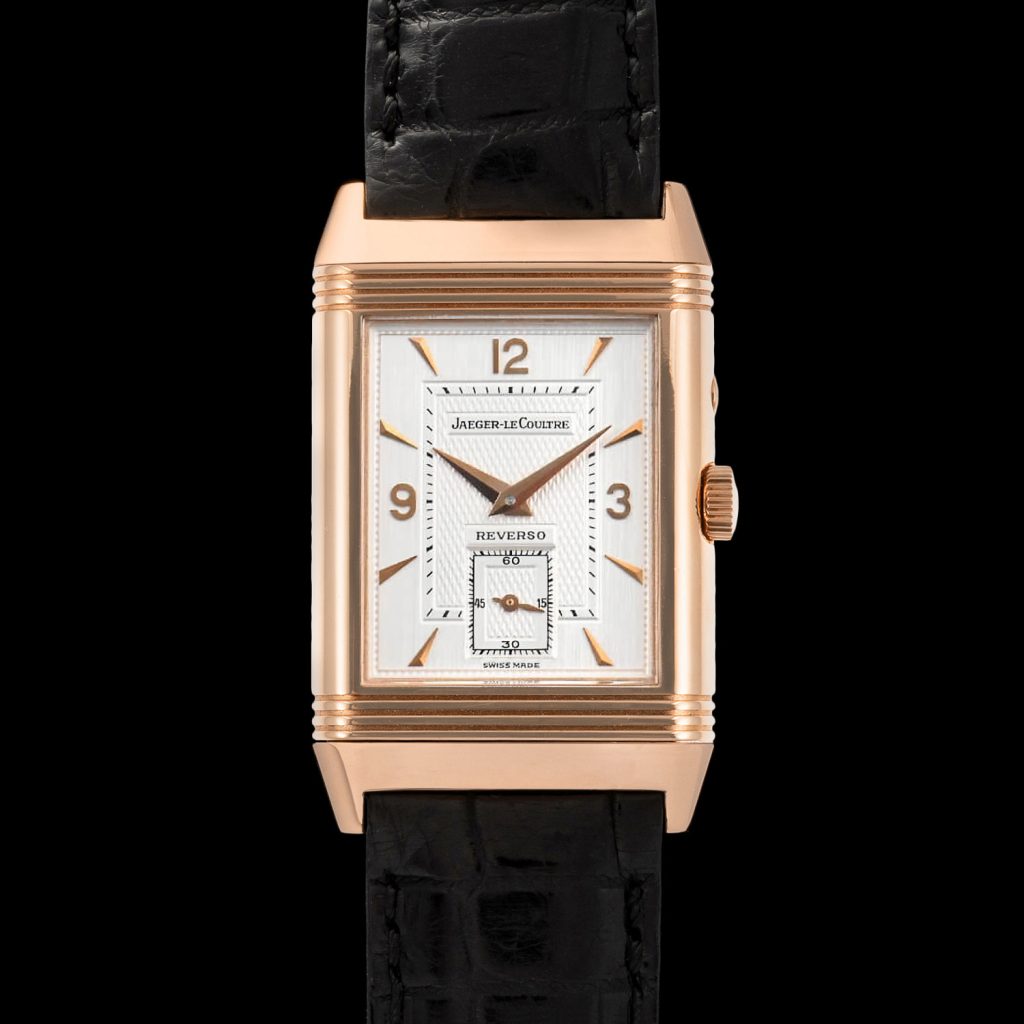
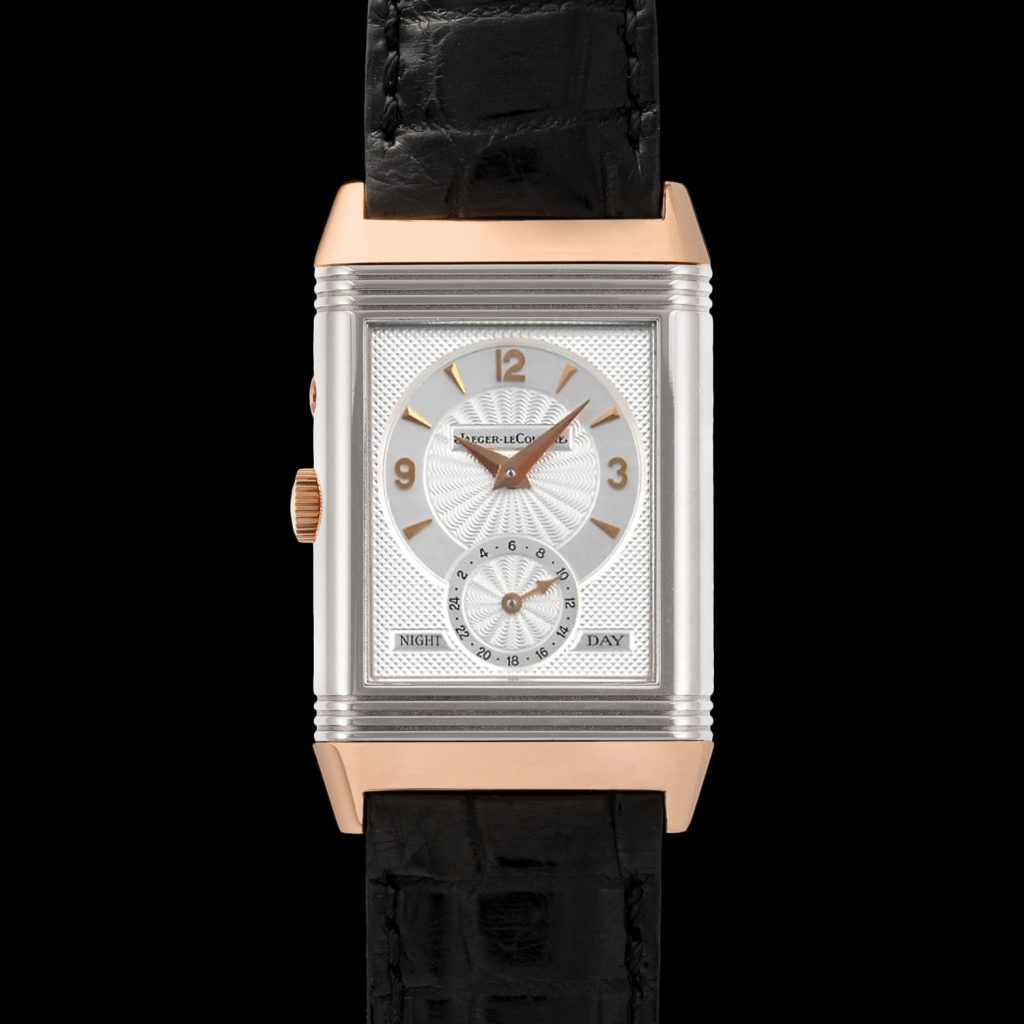
Year: — Calibre: Cal. 854
Material: Pink & white gold
Market: International
The inverse of Double Gold A, with the metals swapped.
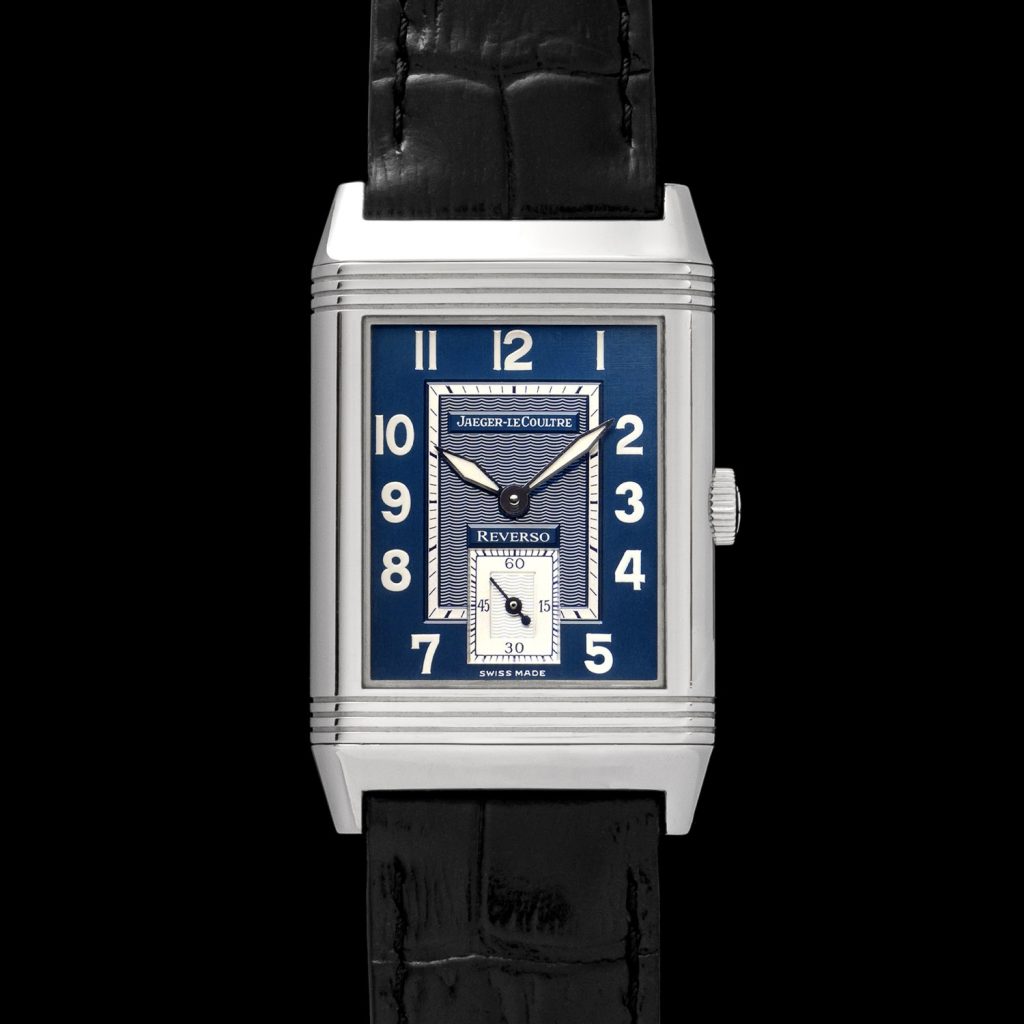
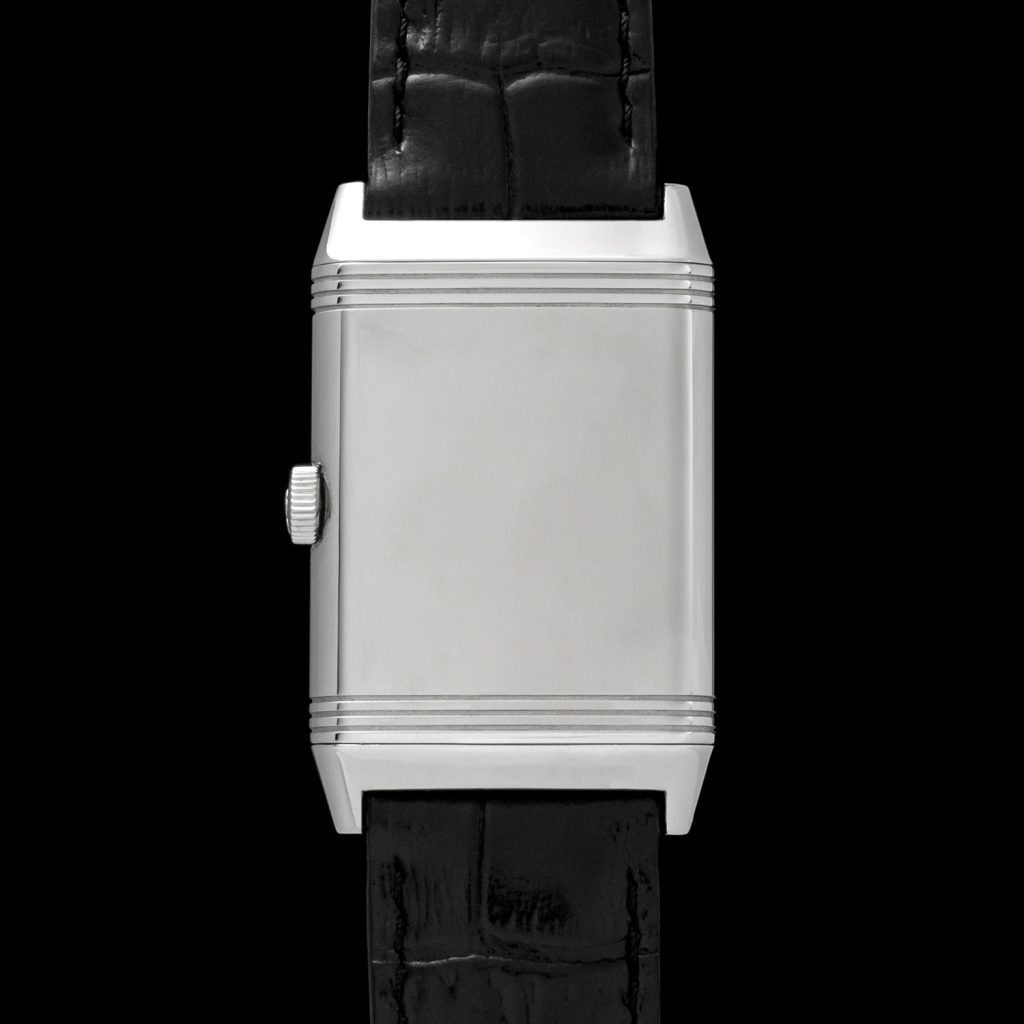
Year: — Calibre: Cal. 822
Material: Stainless steel
Market: International
The first of two Latitude dial variants.
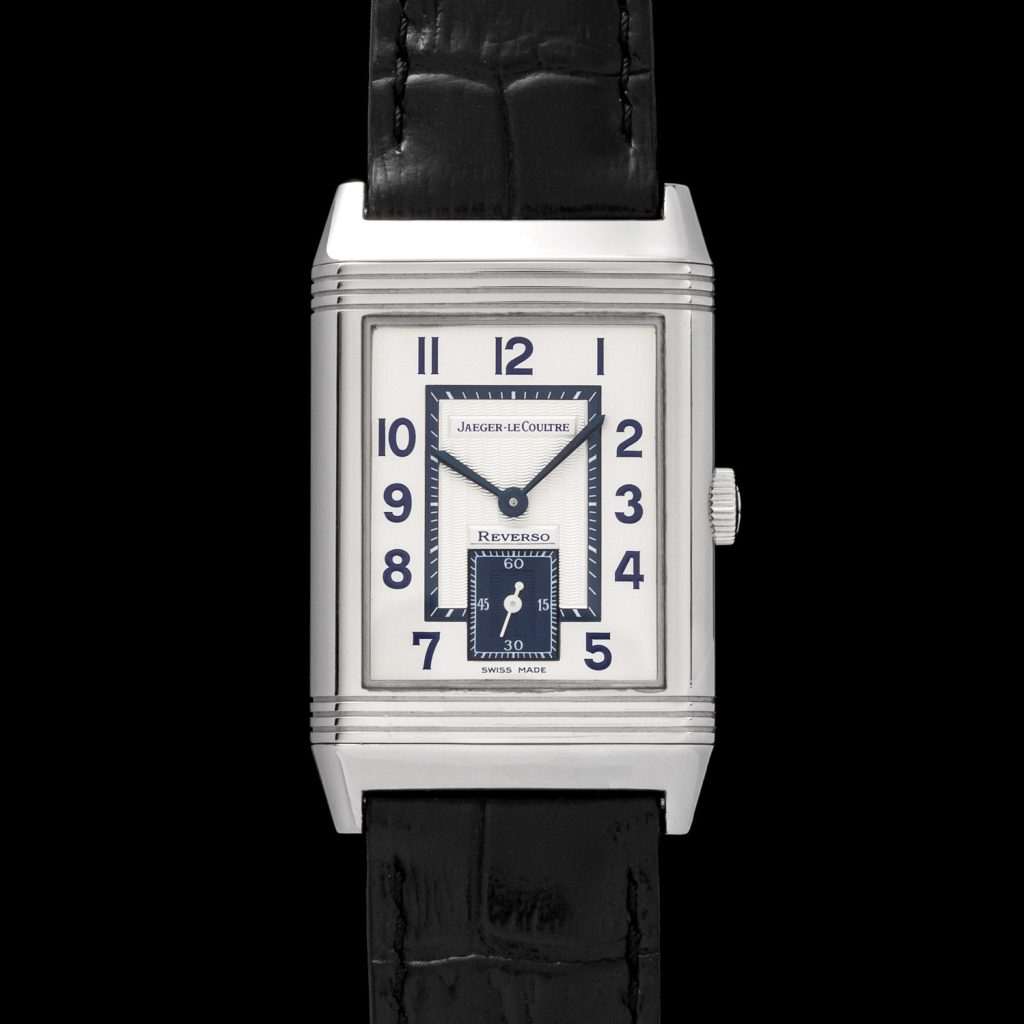
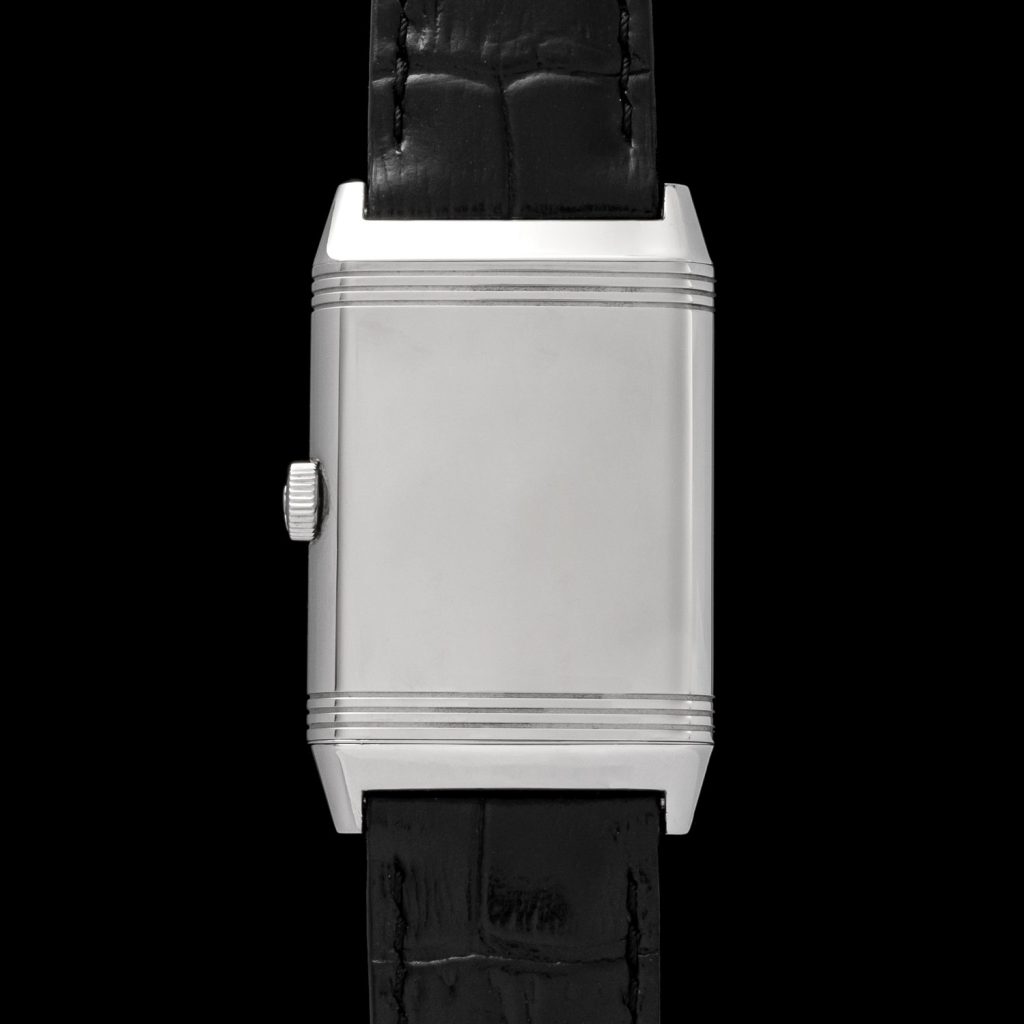
Year: — Calibre: Cal. 822
Material: Stainless steel
Market: International
The second Latitude variant, sharing its reference with the first.
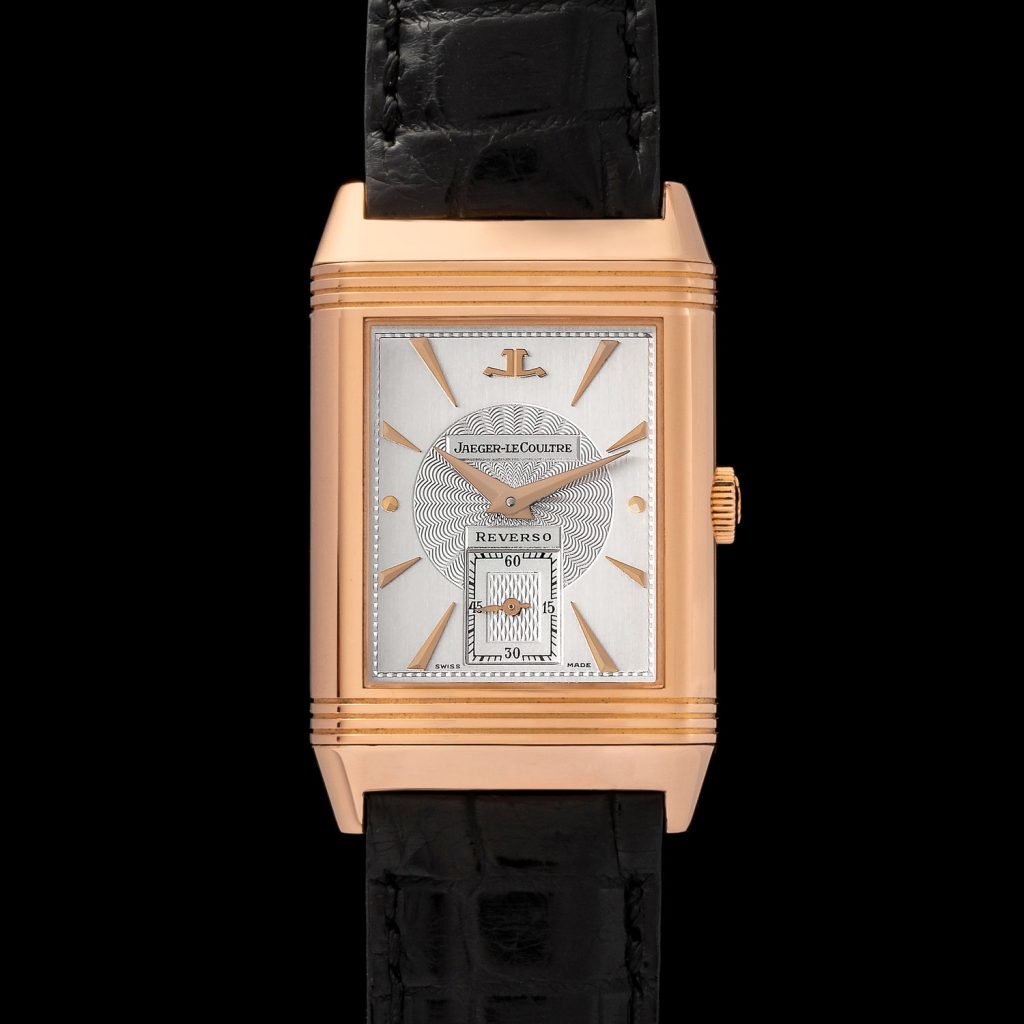
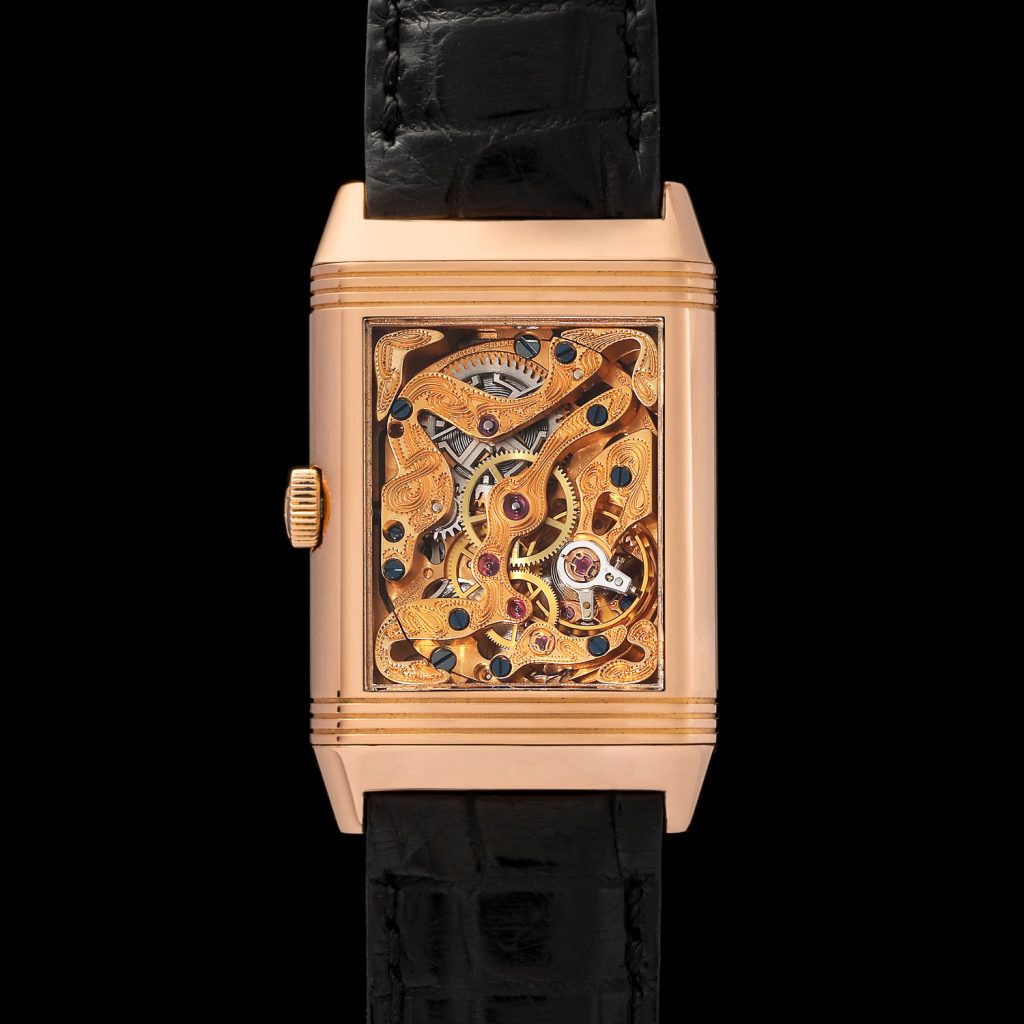
Year: 1992 Calibre: Cal. 822, skeletonised
Material: Pink gold
Market: International
A hand-engraved, skeletonised movement shown through a sapphire display back. Made in tiny numbers and easily overlooked beside the anniversary pieces of the same period.
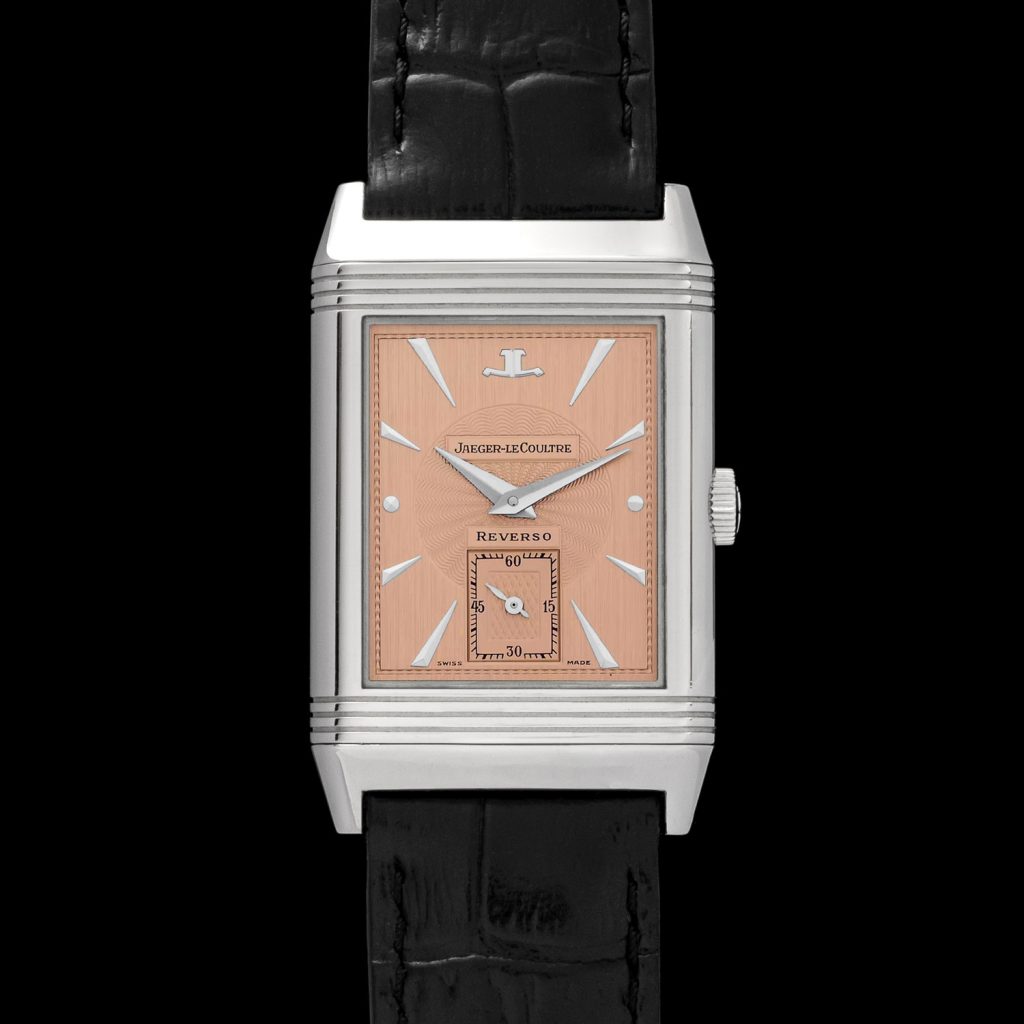
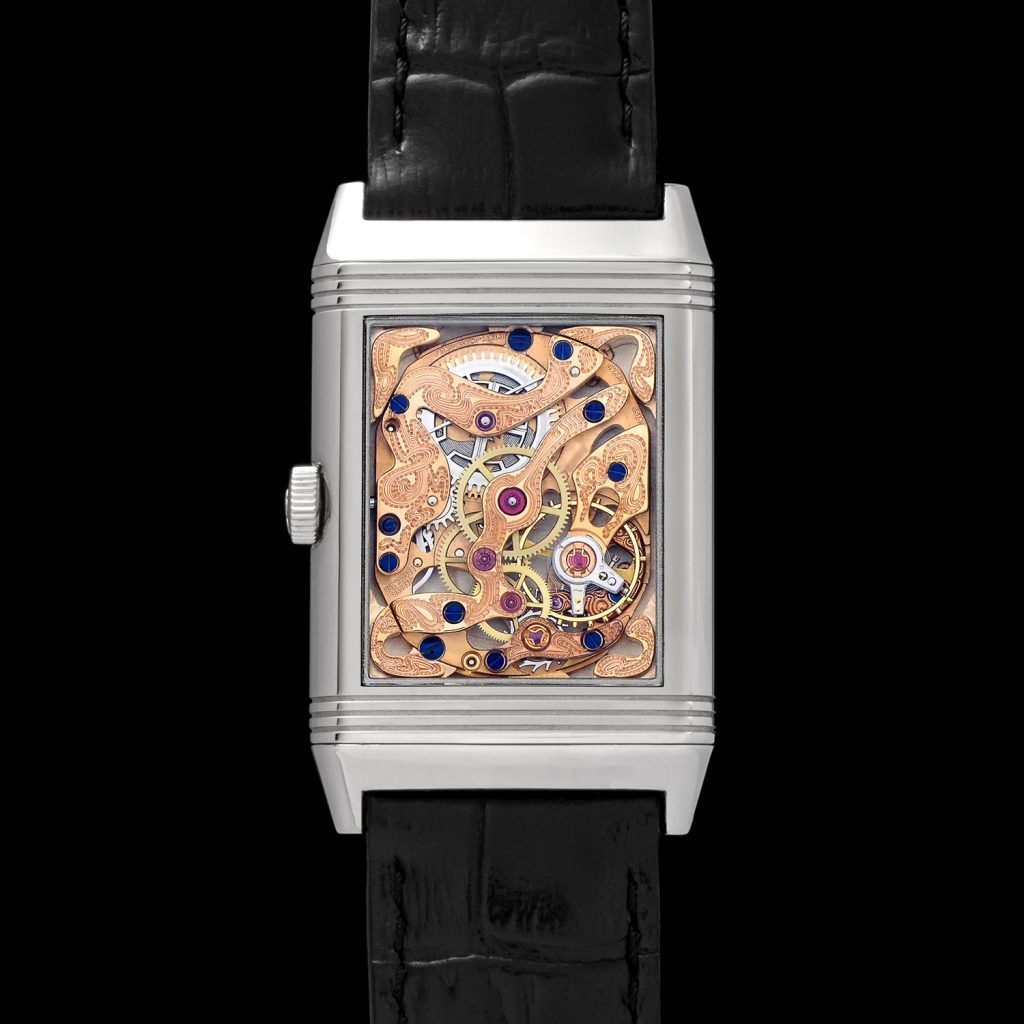
Year: 1992 Calibre: Cal. 822, skeletonised
Material: White gold
Market: International
The white gold counterpart, carrying its own reference. Same skeletonised, hand-engraved movement under a sapphire display back.
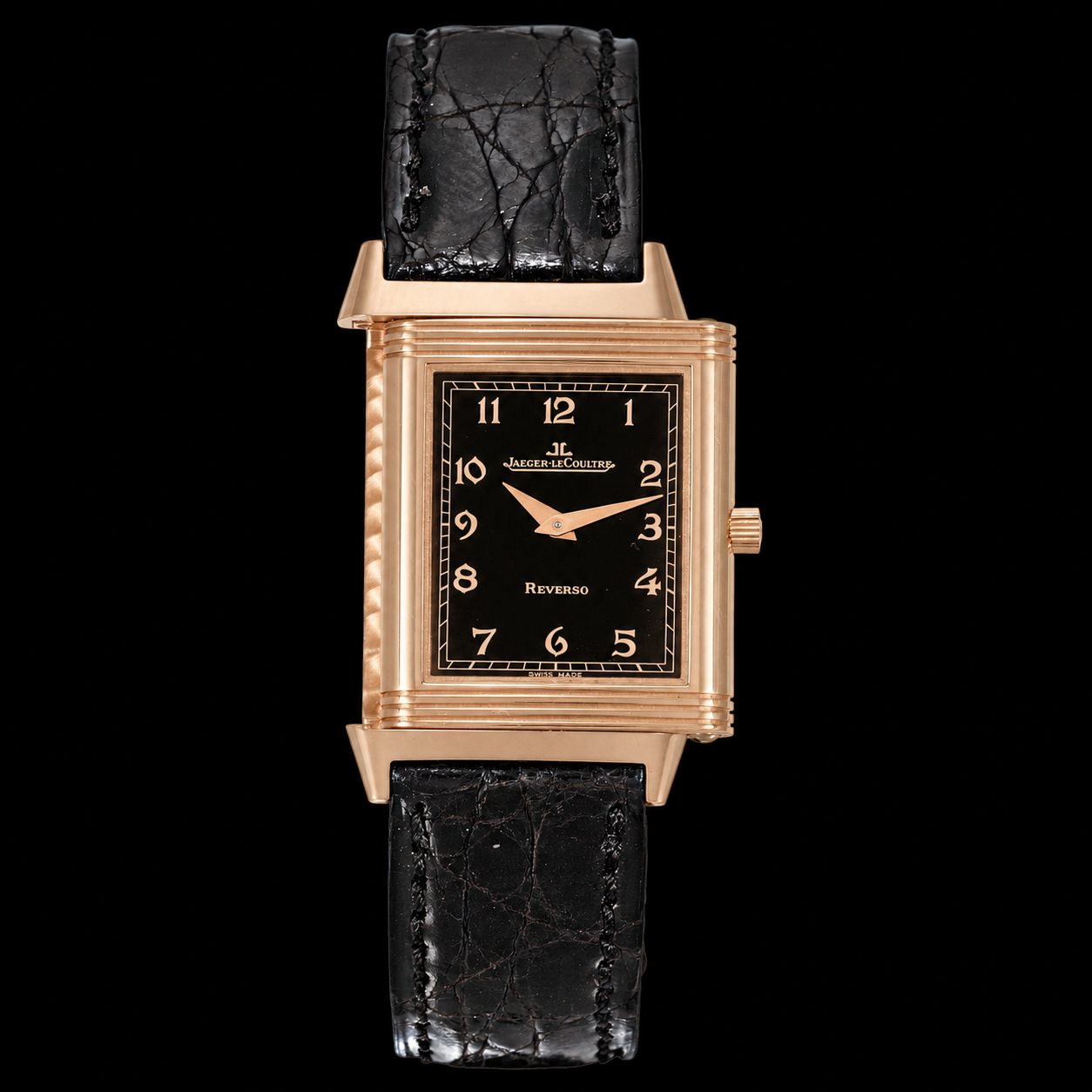
Year: 1996 Calibre: Cal. 846
Material: Pink gold
Market: International
Marking 65 years since the Reverso’s 1931 patent, run-size matched to the anniversary number.
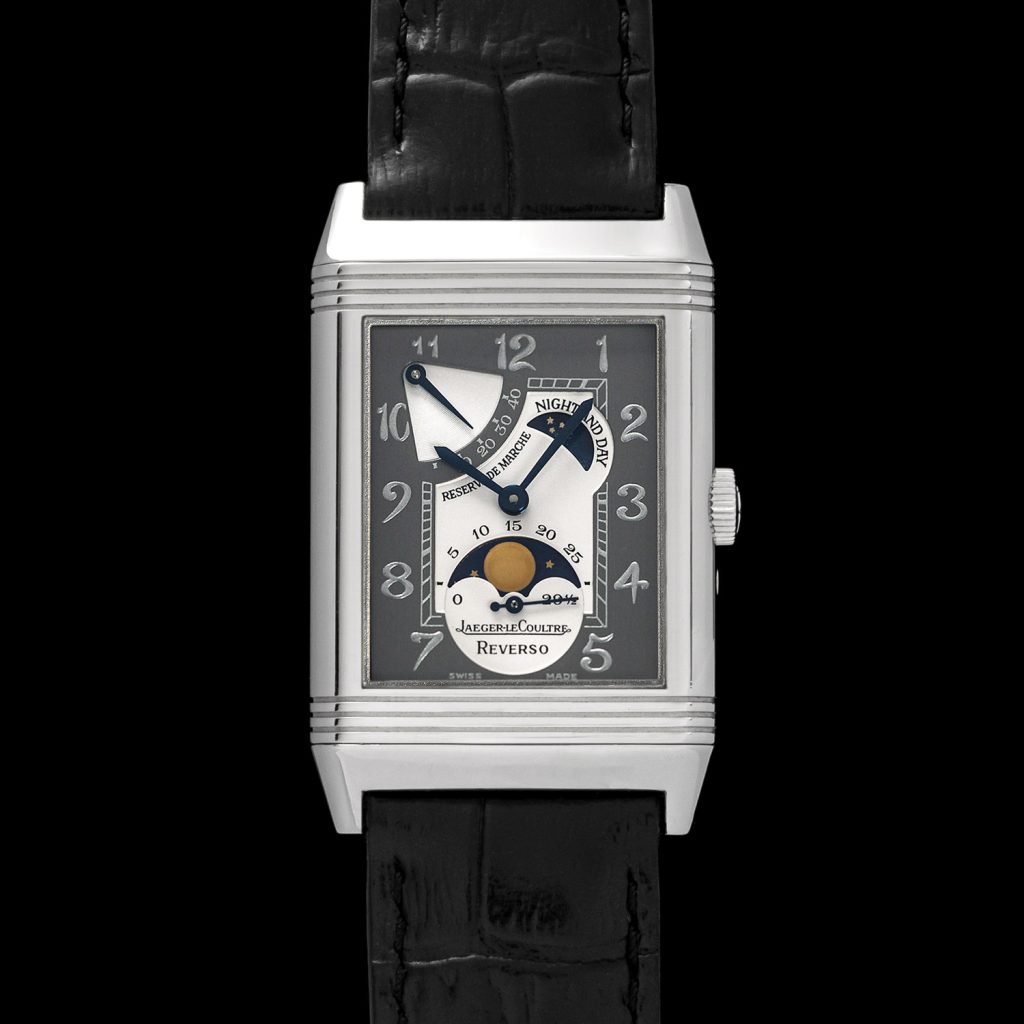
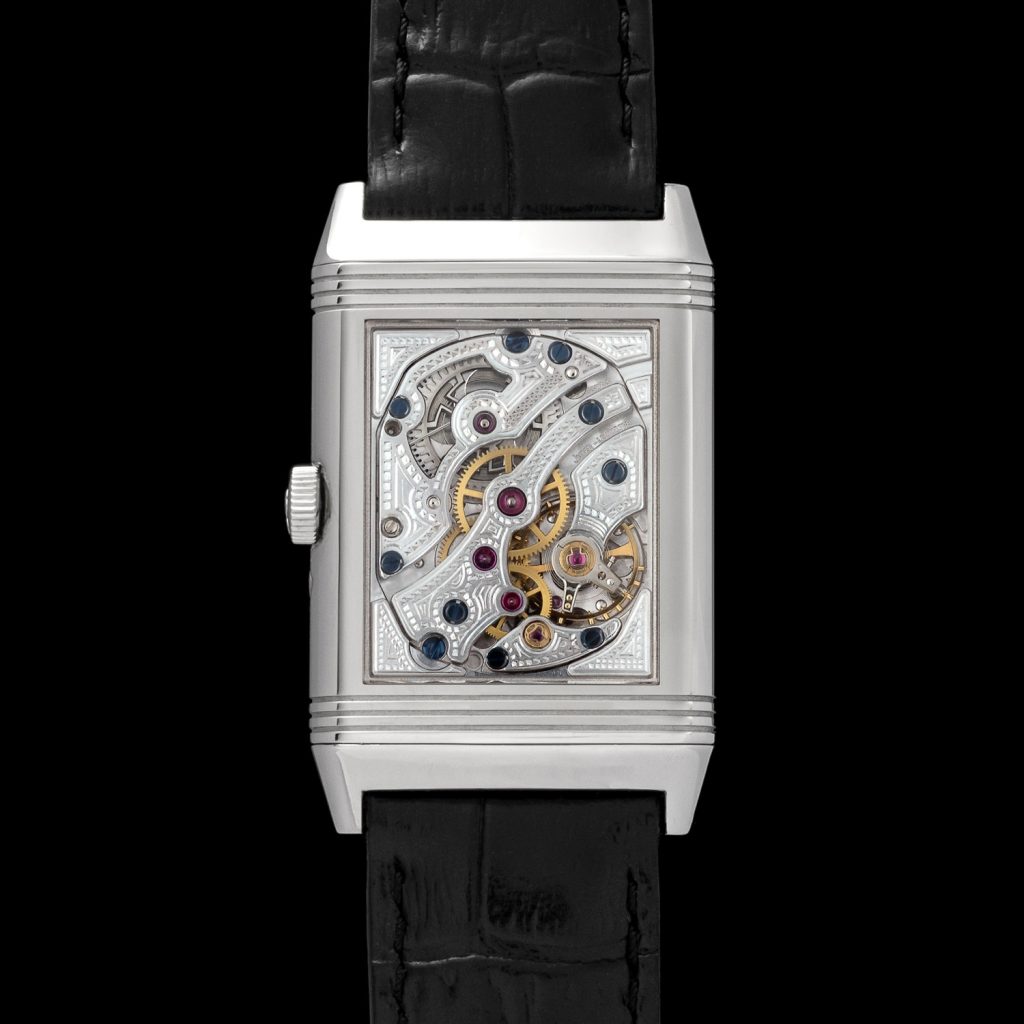
Year: 1999 Calibre: Cal. 823
Material: Platinum
Market: International
Power reserve, moon phase and night-and-day. The platinum version was capped at 125; pink and white gold were standard production.
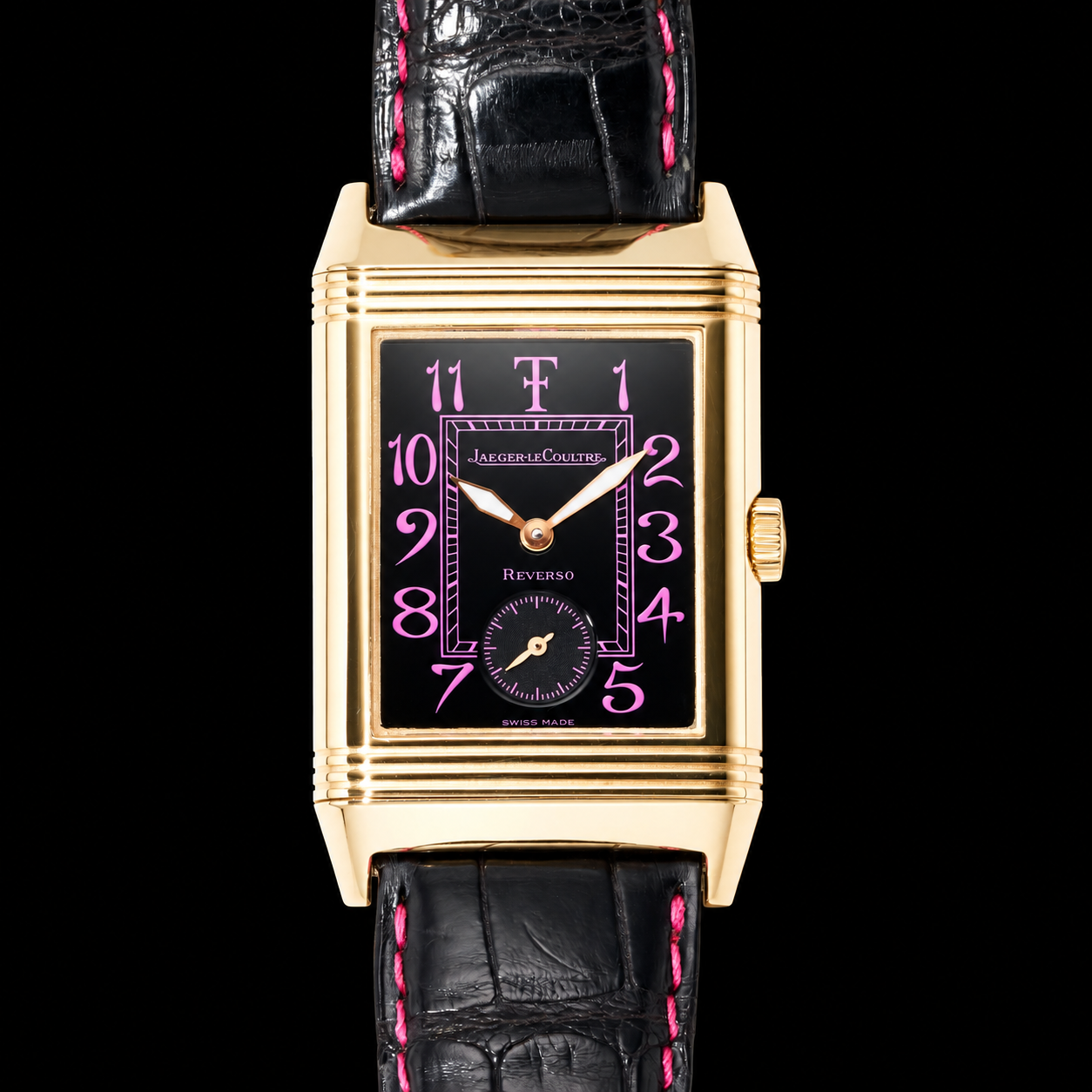
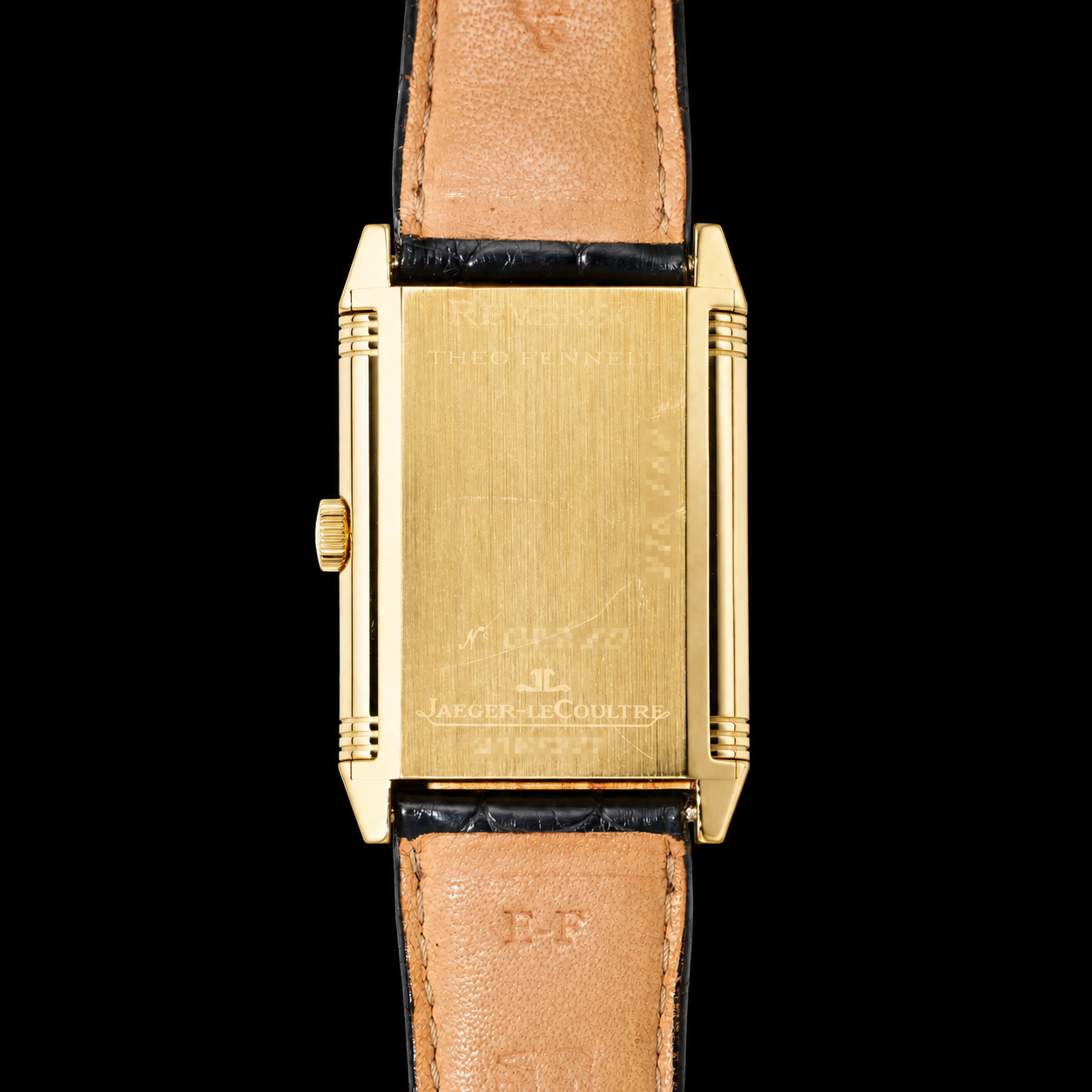
Year: 2000 Calibre: —
Material: Gold
Market: United Kingdom
A collaboration with the British jeweller, in a run of just twenty pieces.
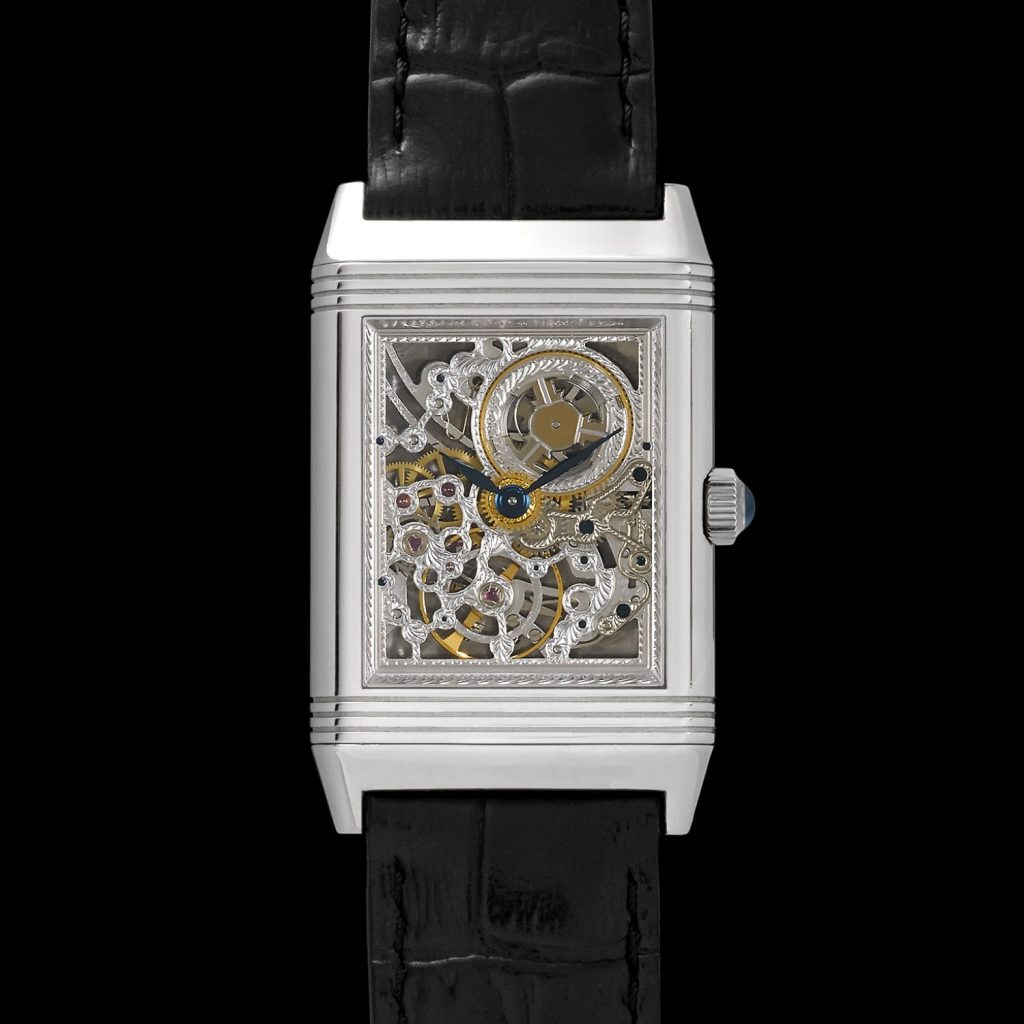
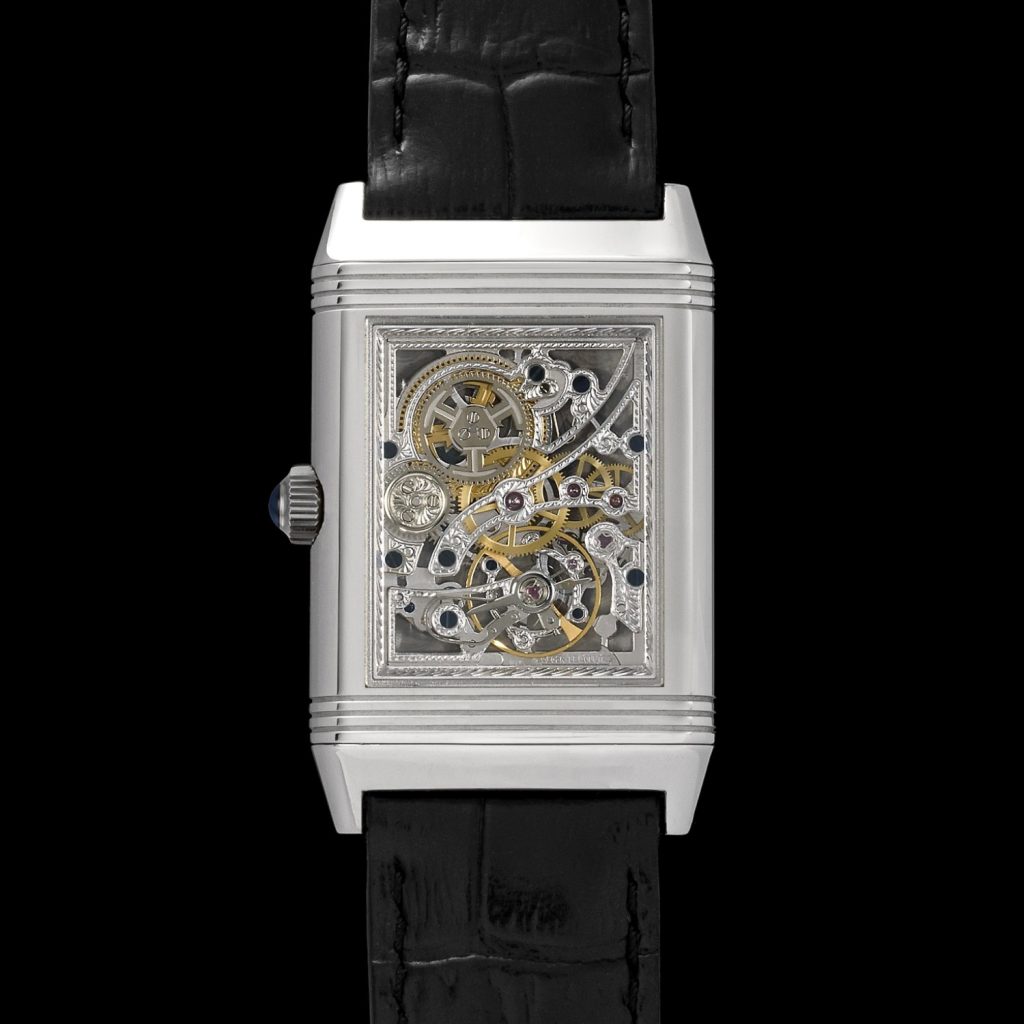
Year: 2001 Calibre: Skeletonised · cal. 849R-SQ
Material: Platinum
Market: International
Jaeger-LeCoultre’s own Collectibles listing (Hong Kong, 2026) dates it to 2001 and describes a skeletonised calibre 849R-SQ with hand-engraved bridges, not a tourbillon. Some other sources give 2002.
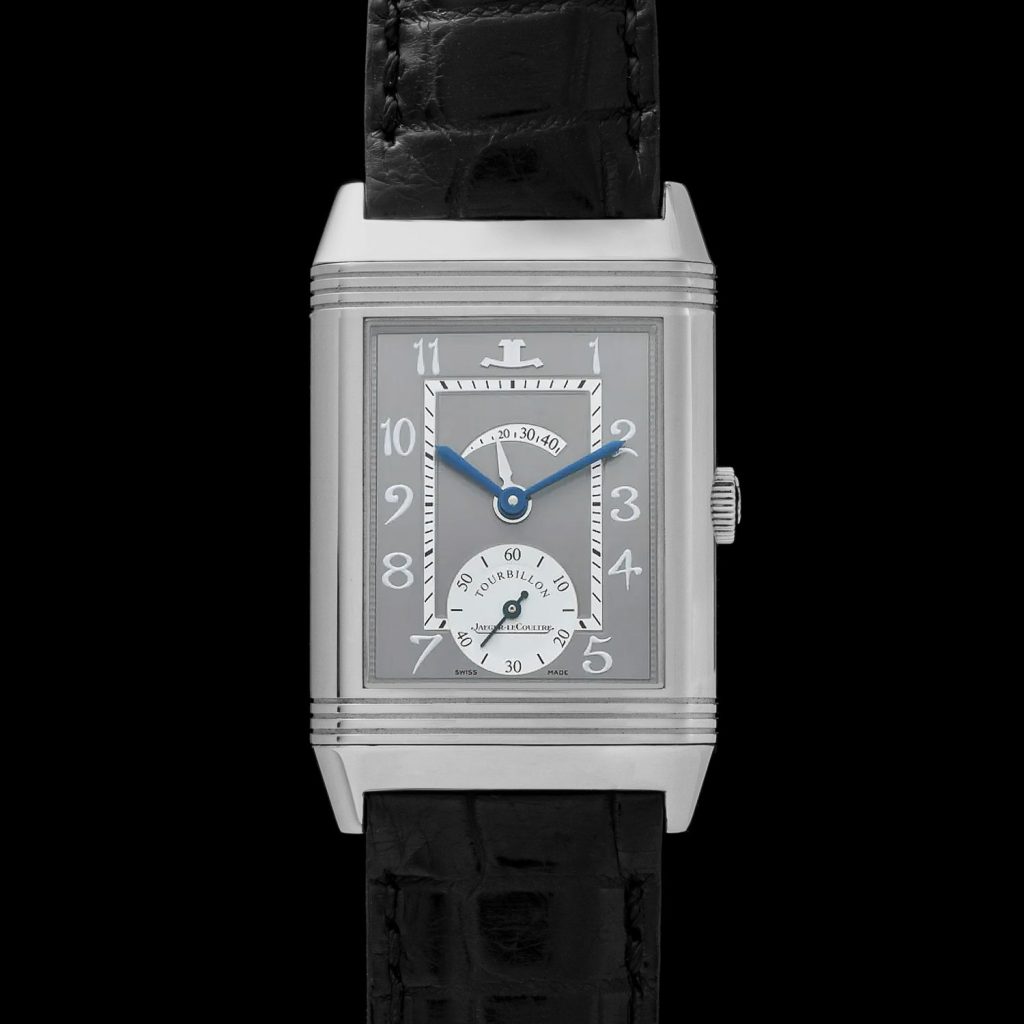
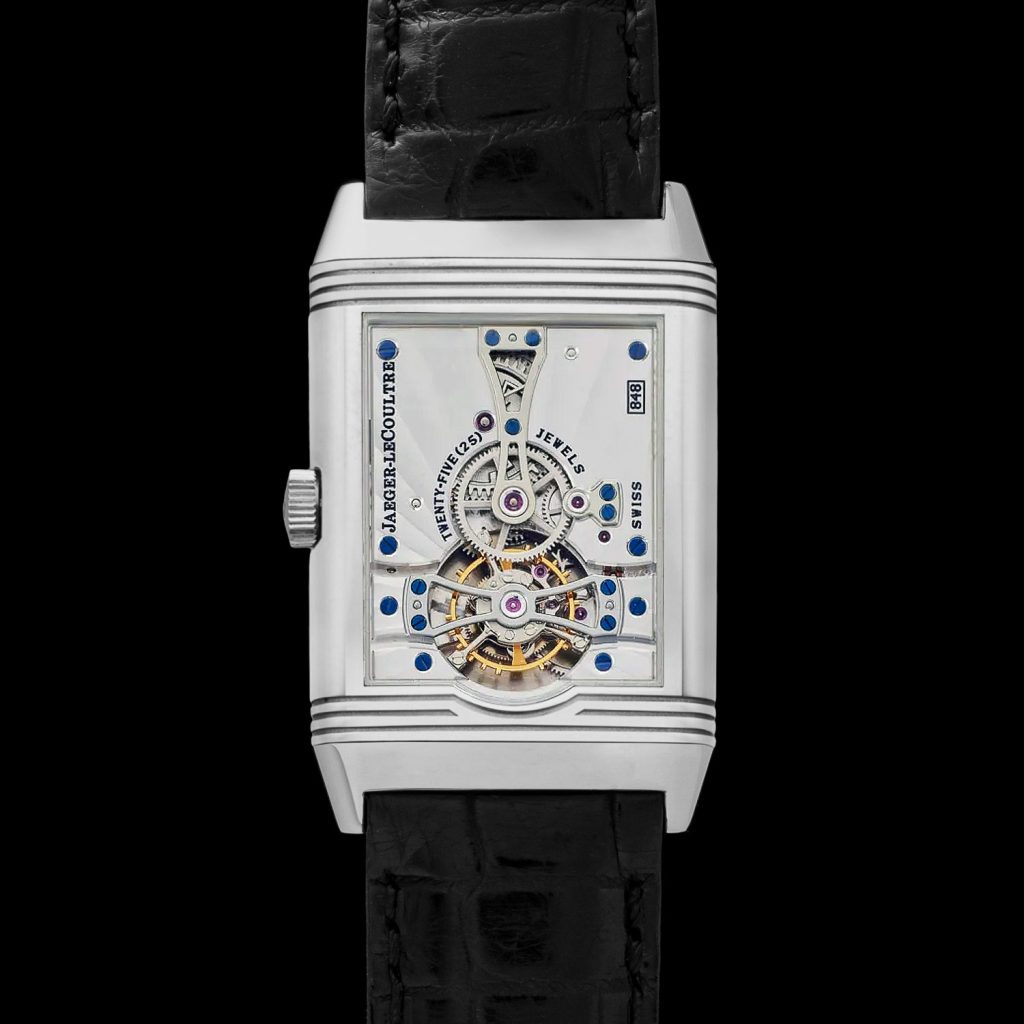
Year: 2003 Calibre: Tourbillon · cal. 848
Material: Platinum
Market: International
Jaeger-LeCoultre’s own Collectibles listing (Hong Kong, 2026) dates it to 2003, with the tourbillon calibre 848. Some other sources give 2004.
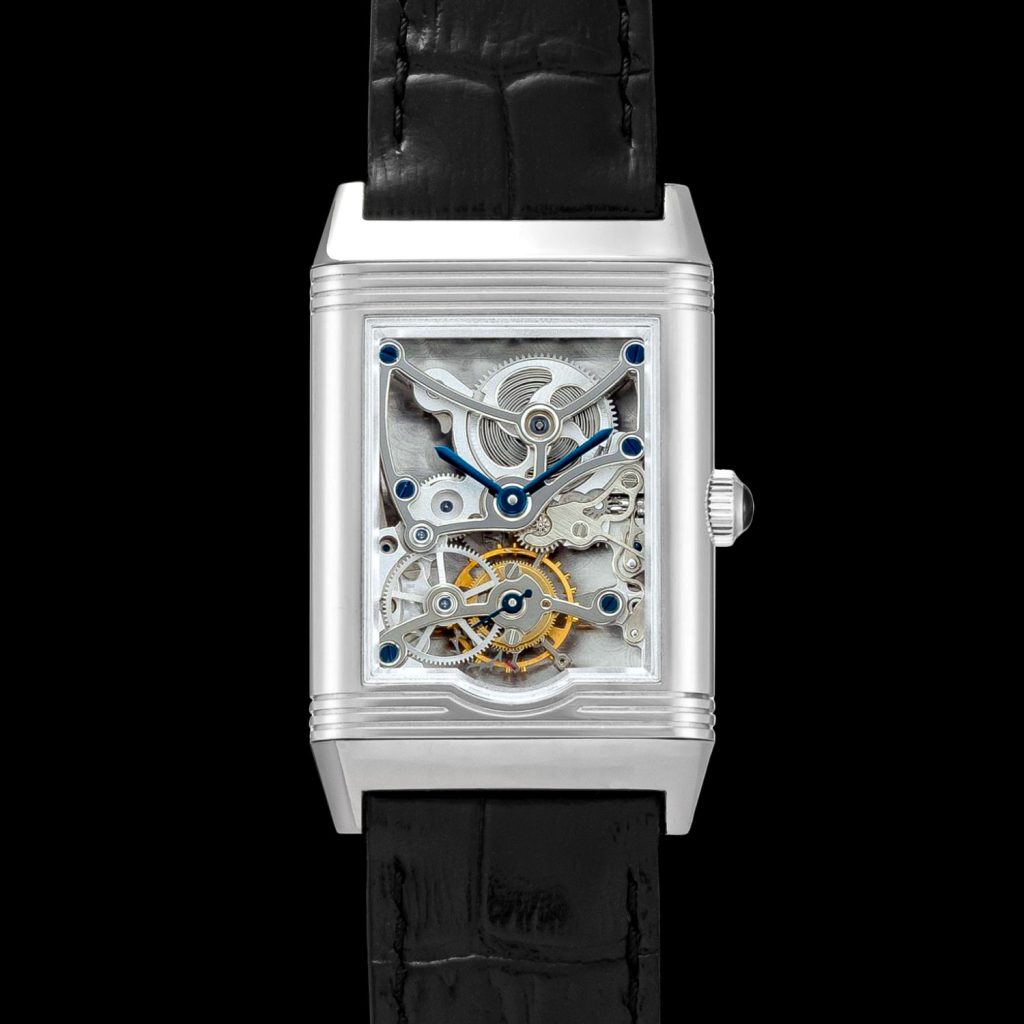
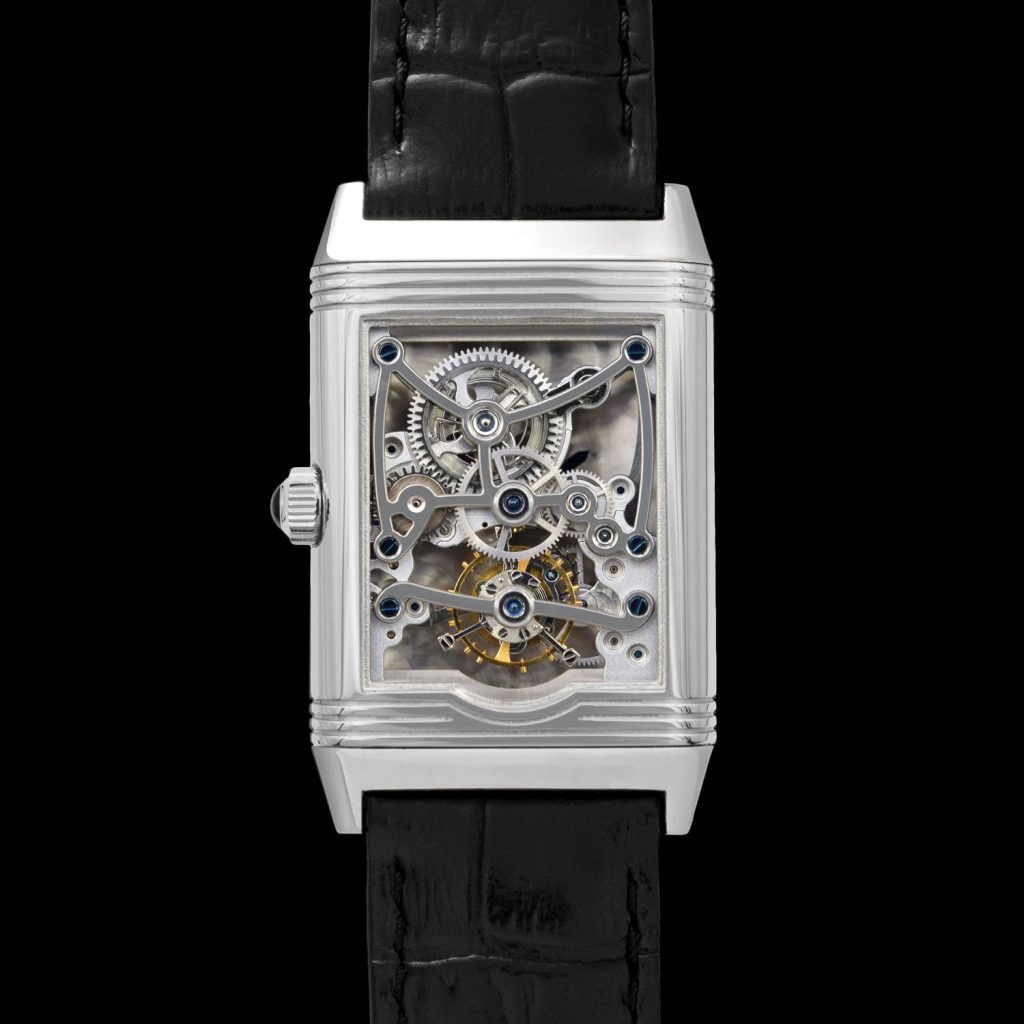
Year: 2005 Calibre: Skeletonised
Material: Platinum
Market: International
Thirty-five pieces — one of the smallest Grande Taille runs of all, sharing its reference with Number Two.
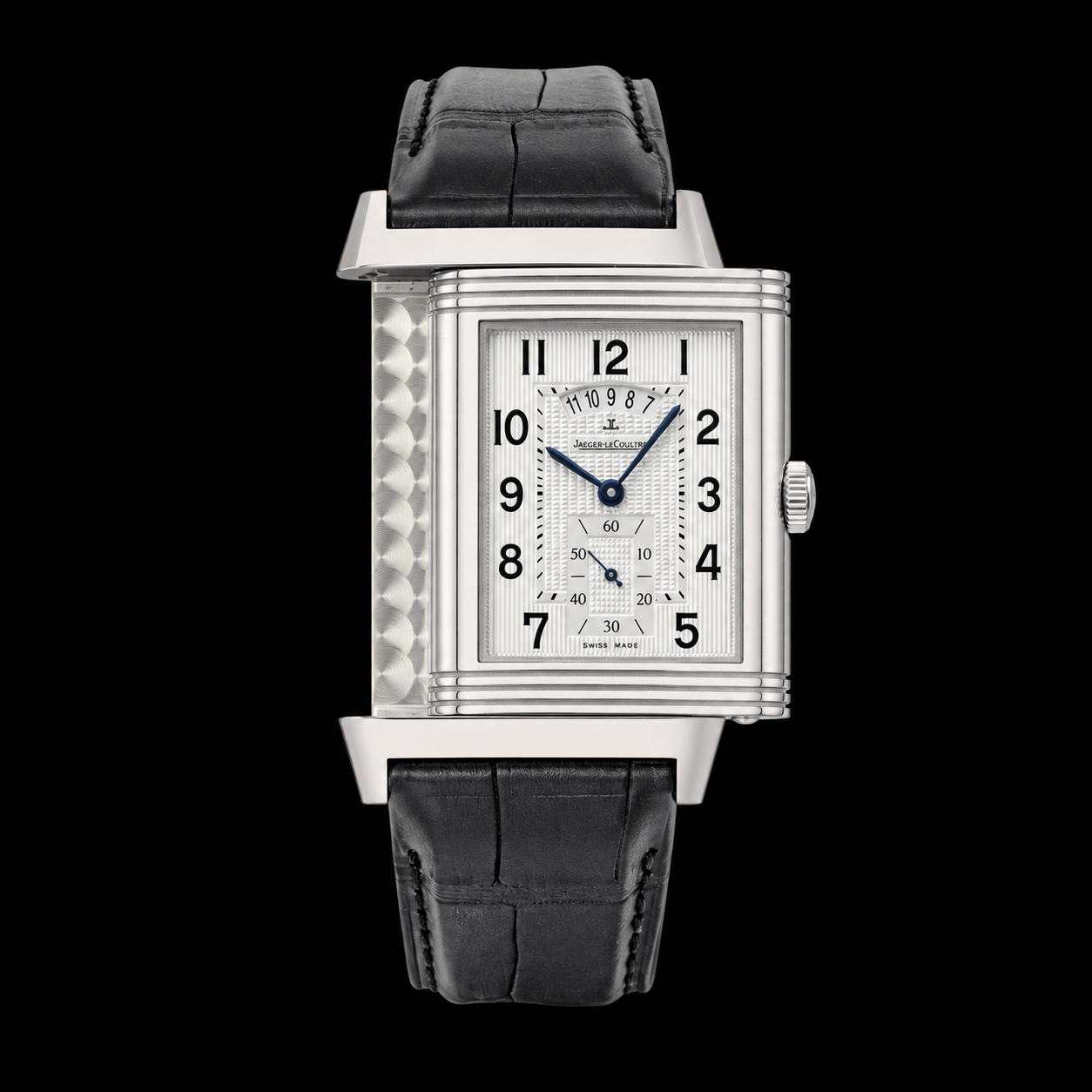
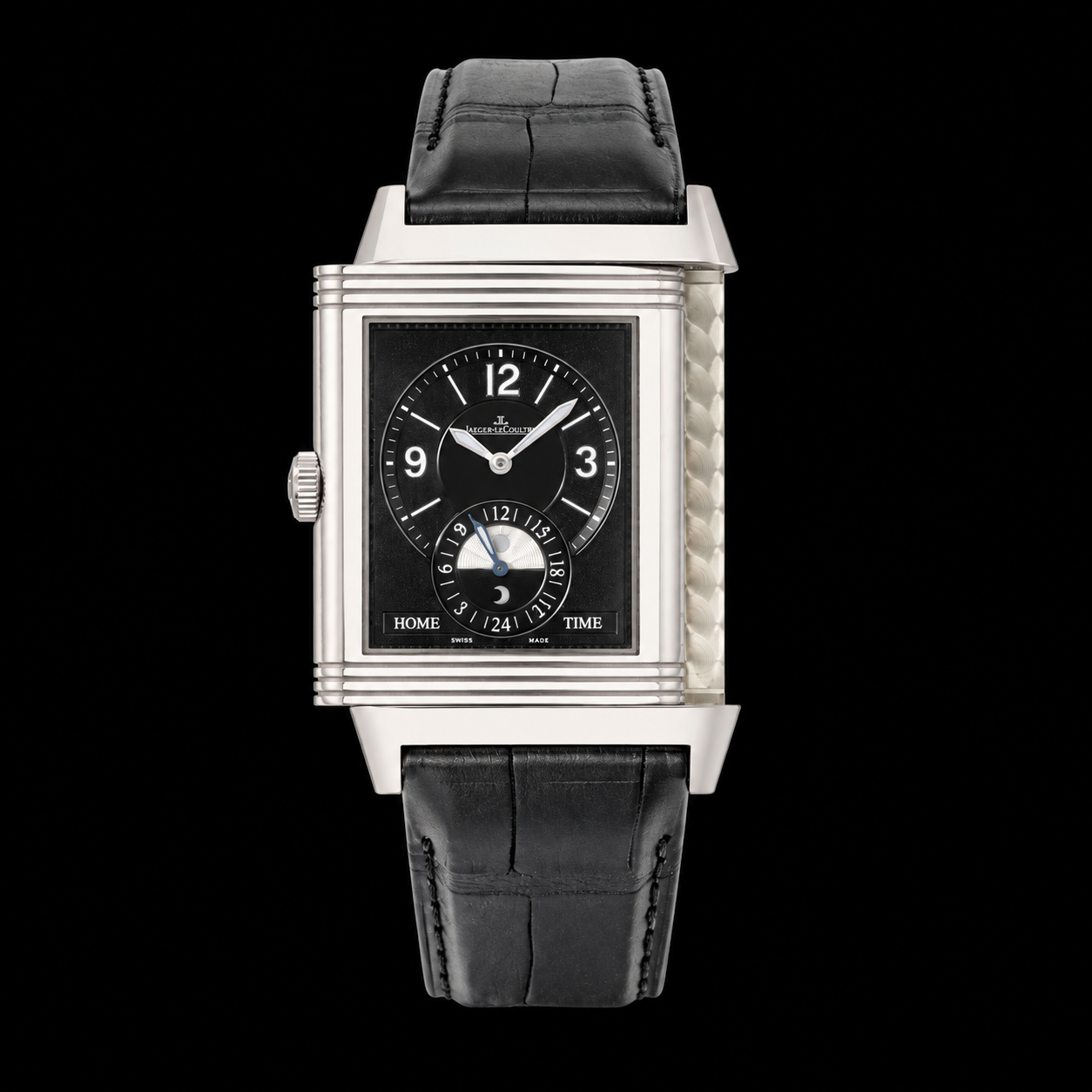
Year: 2009 Calibre: Automatic
Material: Stainless steel
Market: International
A dual time-zone automatic Reverso with date — a large production run by this archive’s standards, in a family more often seen in far smaller editions.
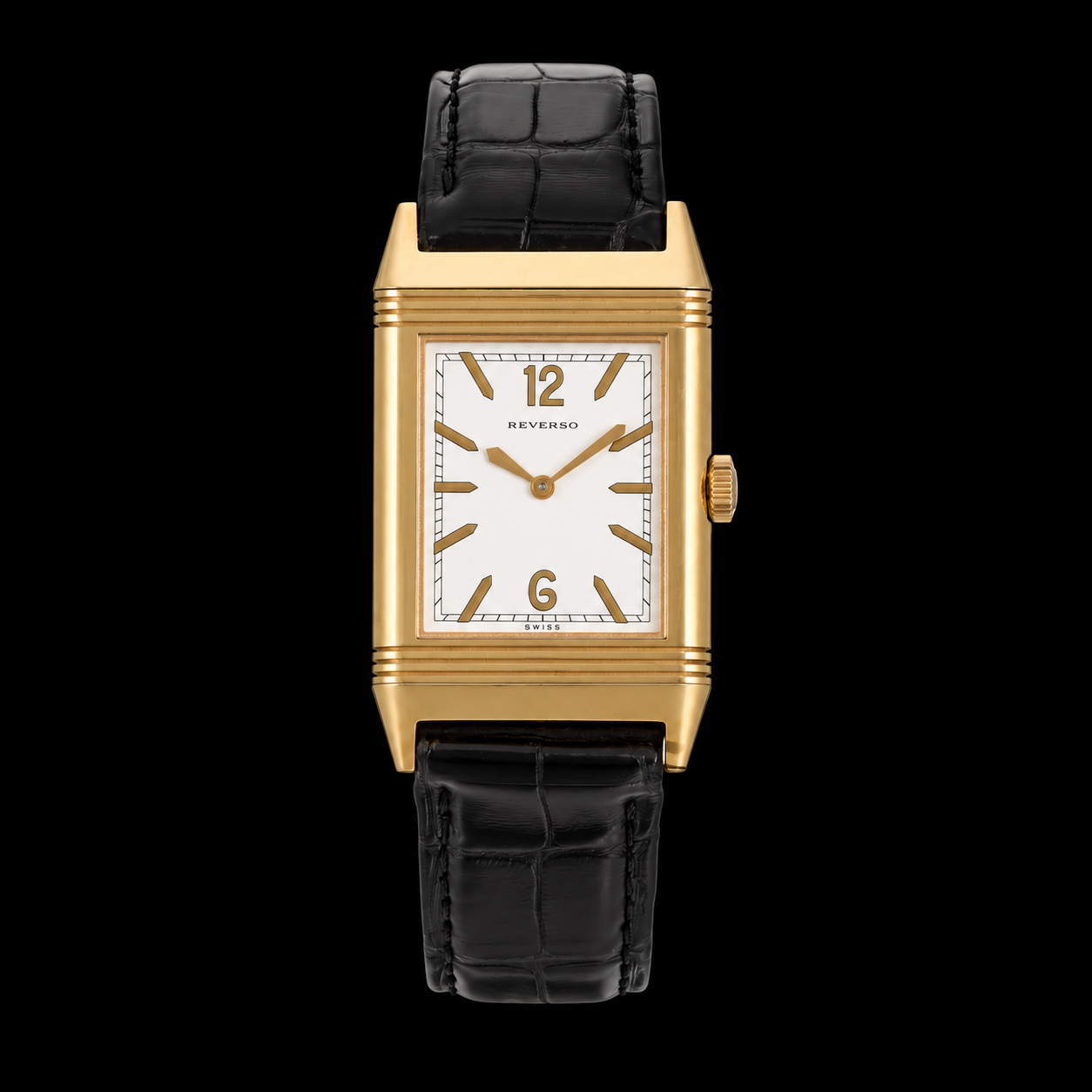
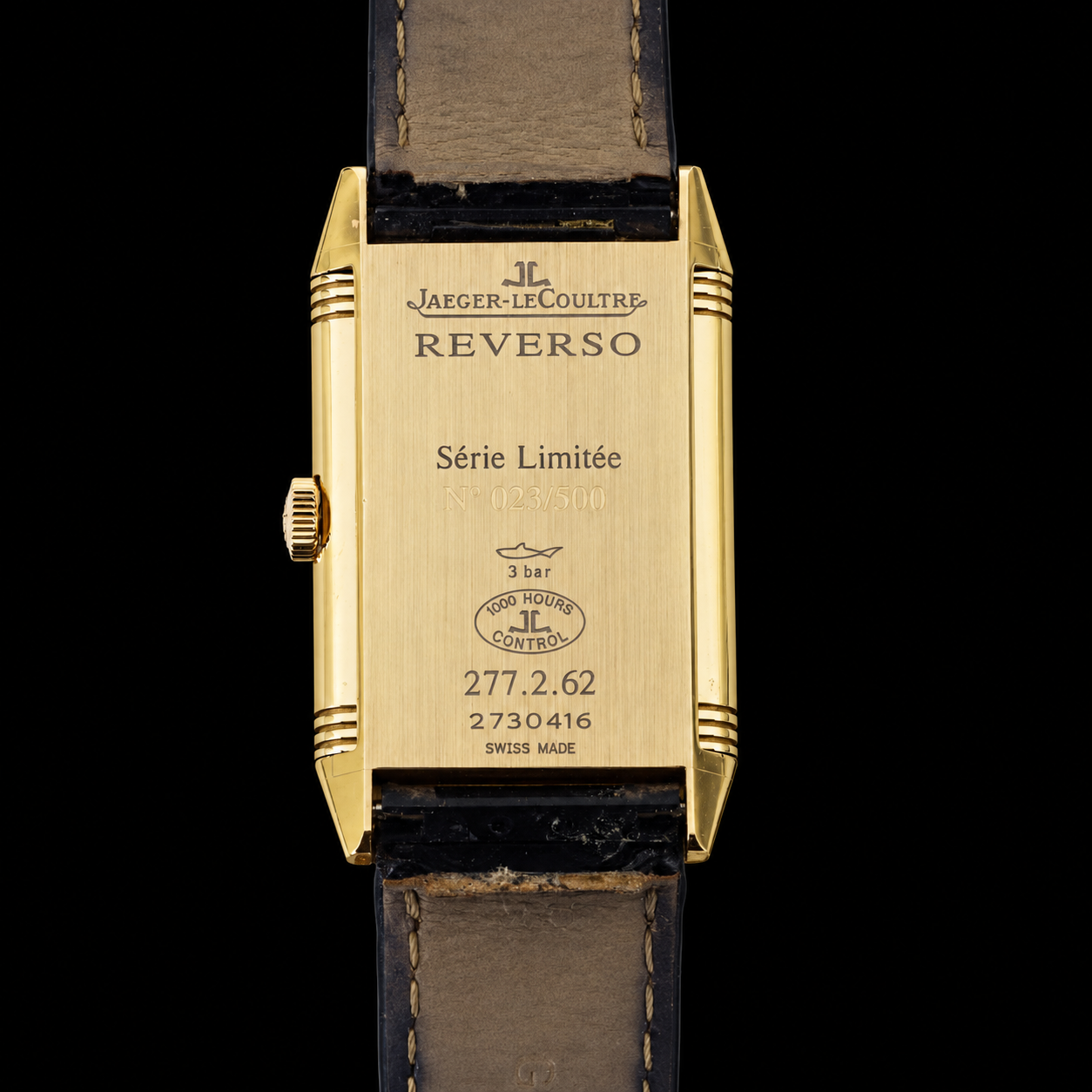
Year: 2011 Calibre: Cal. 822
Material: Rose gold
Market: International
For the Reverso’s 80th anniversary: a deliberately stripped-back dial without the JLC signature, echoing the earliest 1930s examples. Featured on the cover of a WatchTime special issue, and on Jay-Z’s wrist during his 2012 “Suit & Tie” performance at Carnegie Hall.
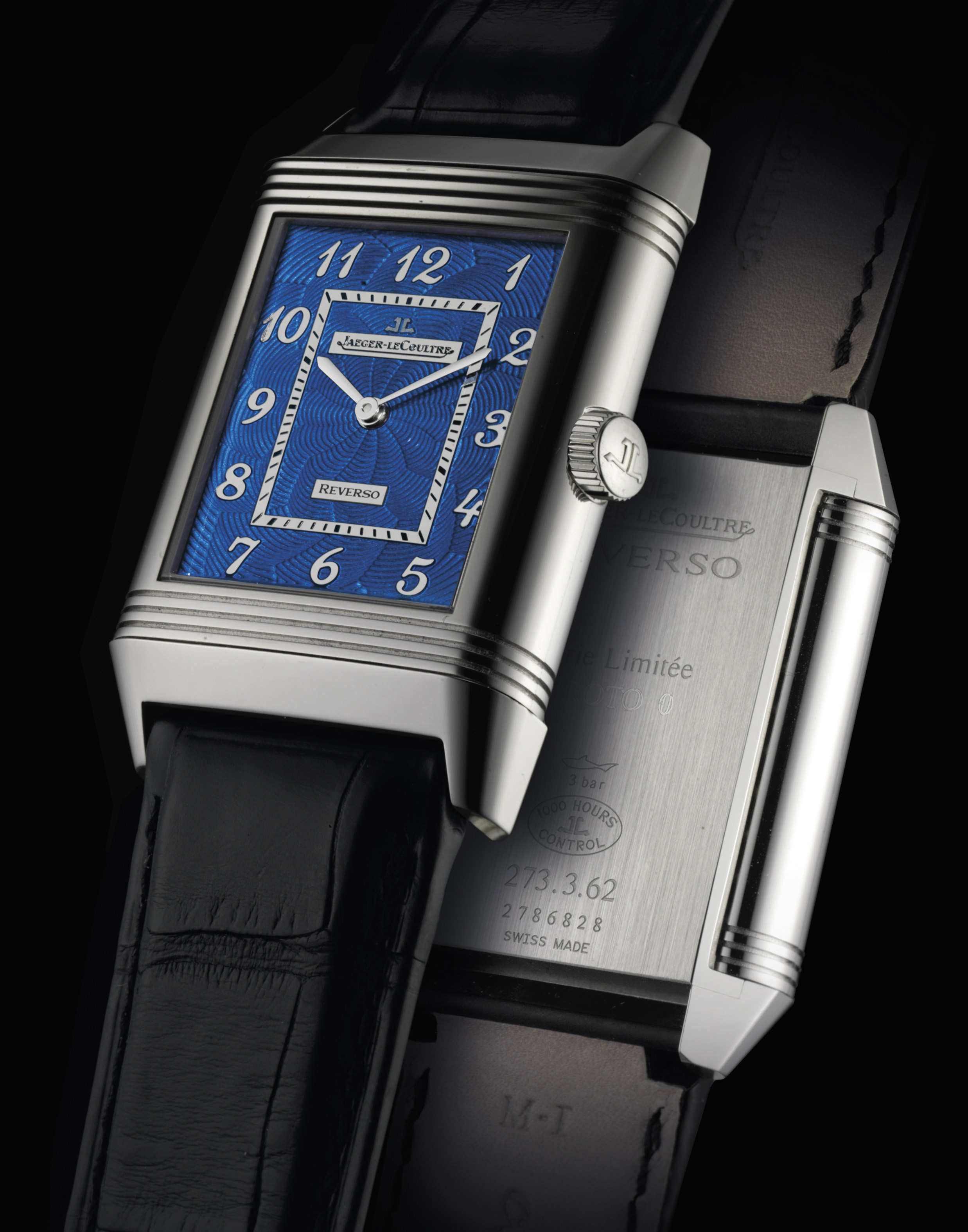
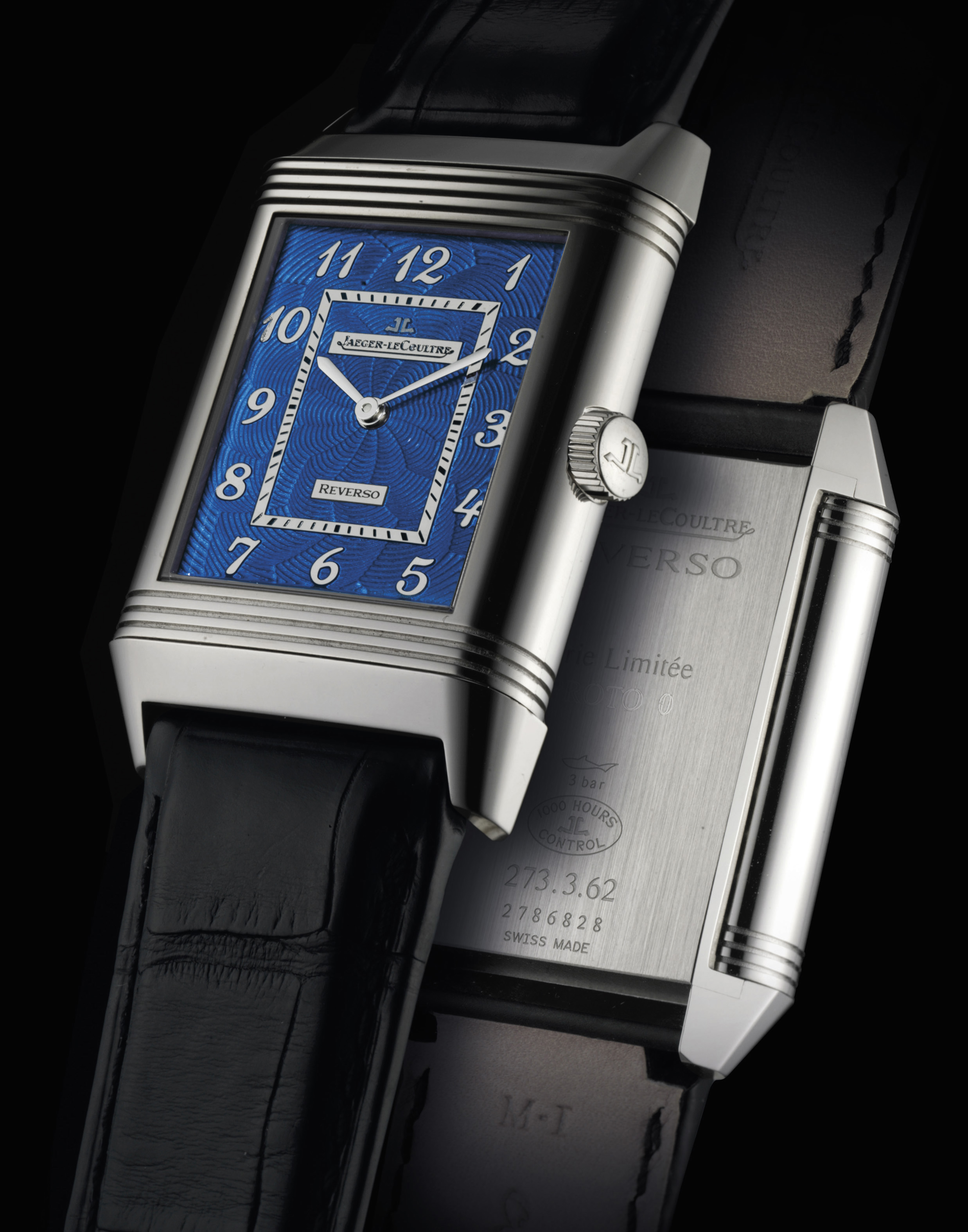
Year: 2011–2012 Calibre: —
Material: White gold
Market: Hong Kong
A genuine factory prototype, case No. 2’786’828, stamped “Proto 0” — the zeroth example built while developing what became the production blue enamel guilloché Grande Reverso “Email” on this same reference, catalogued separately above. It was sold with real purpose: in November 2011, for the Grand Opening of its 1881 Heritage boutique in Hong Kong, Jaeger-LeCoultre launched a “Proto Zero” initiative offering prototypes of select limited editions through that boutique, with 10% of each sale earmarked for the End Child Sexual Abuse Foundation (ECSAF), a Hong Kong charity founded in 1998 by actress and child psychologist Ms Siao Fong Fong. For this particular watch, sold through Christie’s, Jaeger-LeCoultre donated the entire proceeds of the sale to ECSAF, and Christie’s donated the full buyer’s premium on top — none of the standard 10% arrangement applied here; the whole hammer price and premium went to the cause. ECSAF’s work spans counselling, academic research into the causes of child sexual abuse, and education programmes and workshops raising public awareness of child protection.
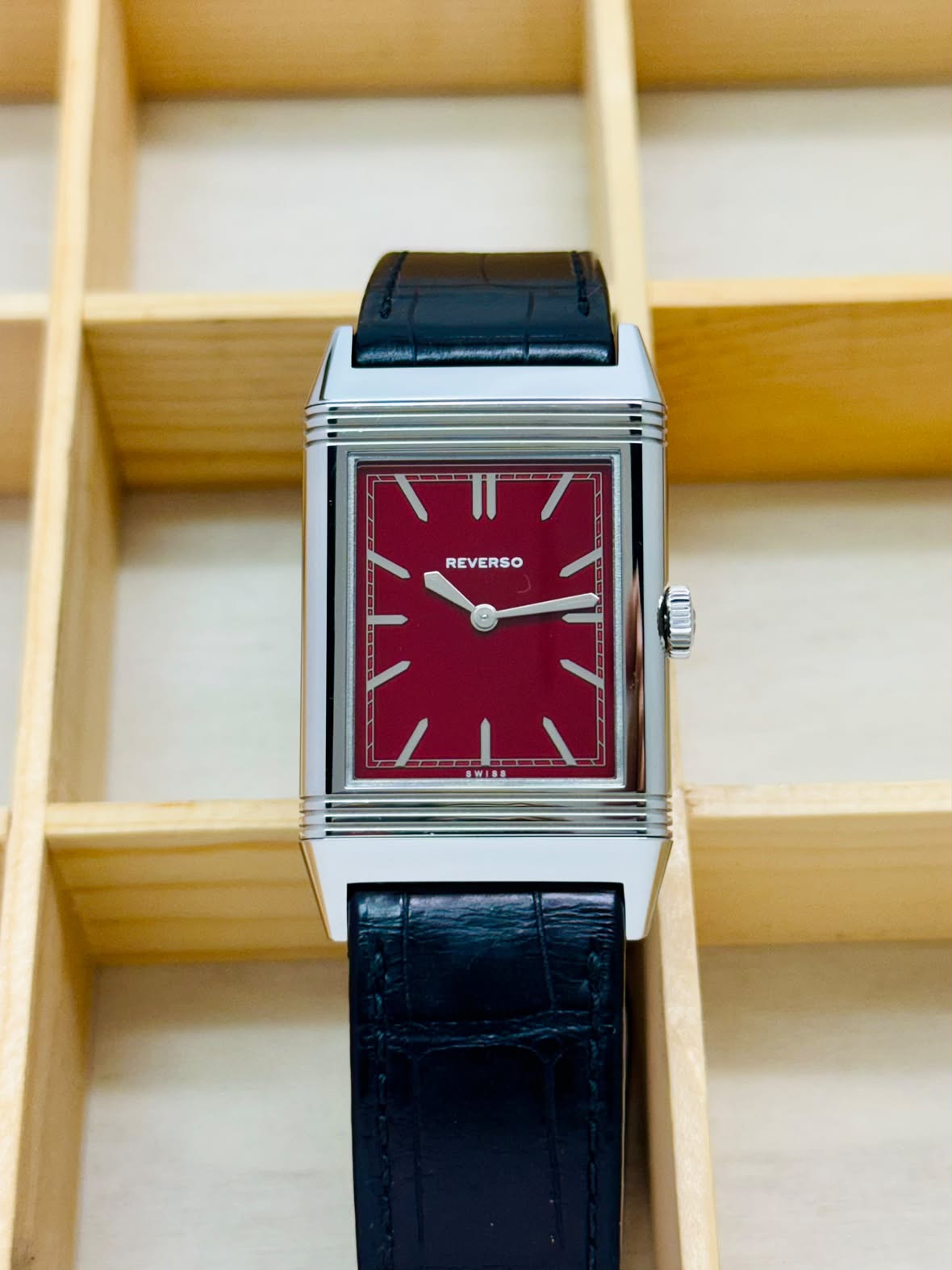
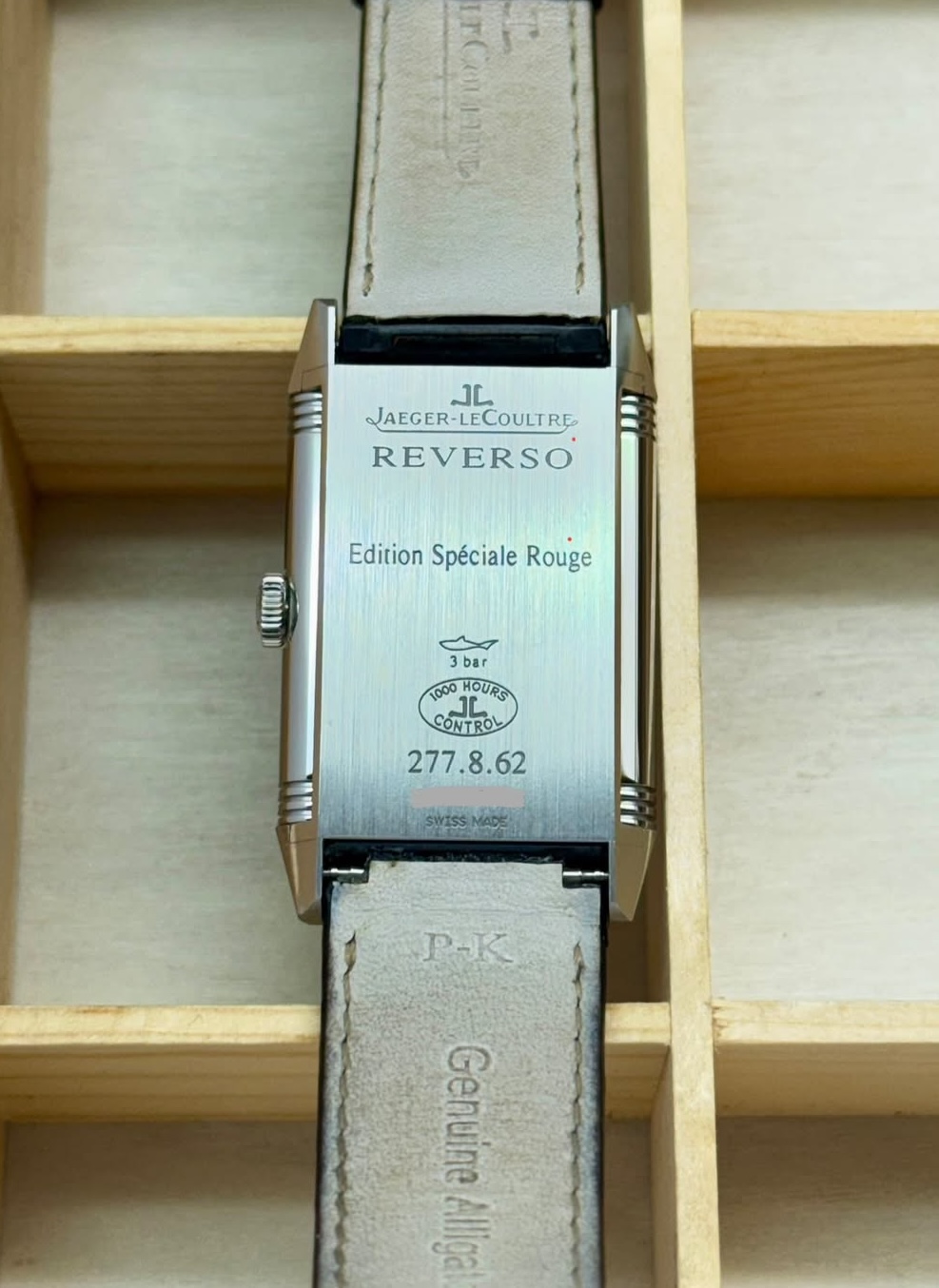
Year: 2012 Calibre: Cal. 822
Material: Stainless steel
Market: Jaeger-LeCoultre boutiques
A red dial for the Reverso’s 80th anniversary, after the red dials of the early 1930s, sold through Jaeger-LeCoultre’s own boutiques; the case back is engraved “Edition Spéciale Rouge”. Some collectors describe it as limited to 500 pieces; we have not found that confirmed, and several sources list it as not numbered.
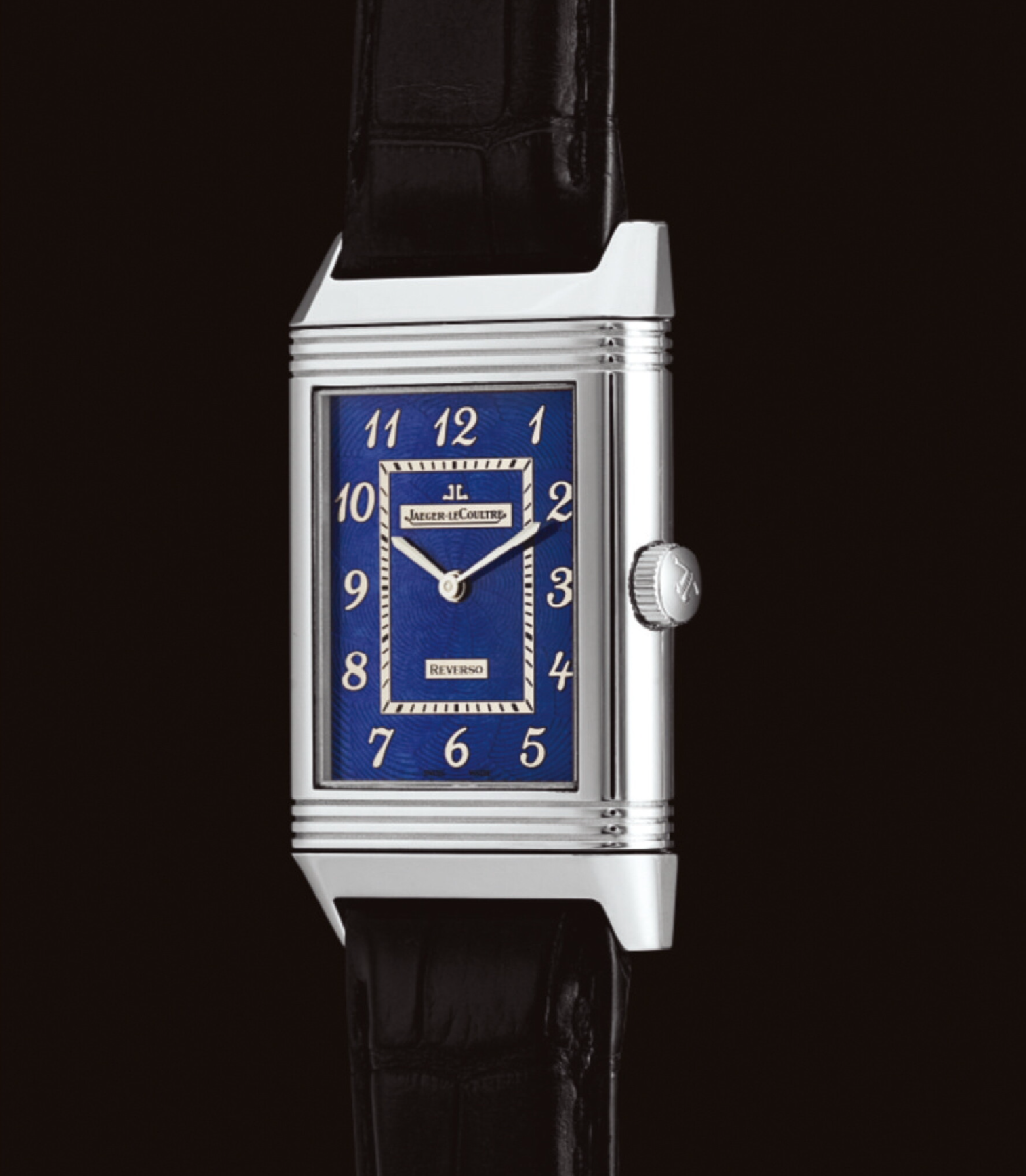
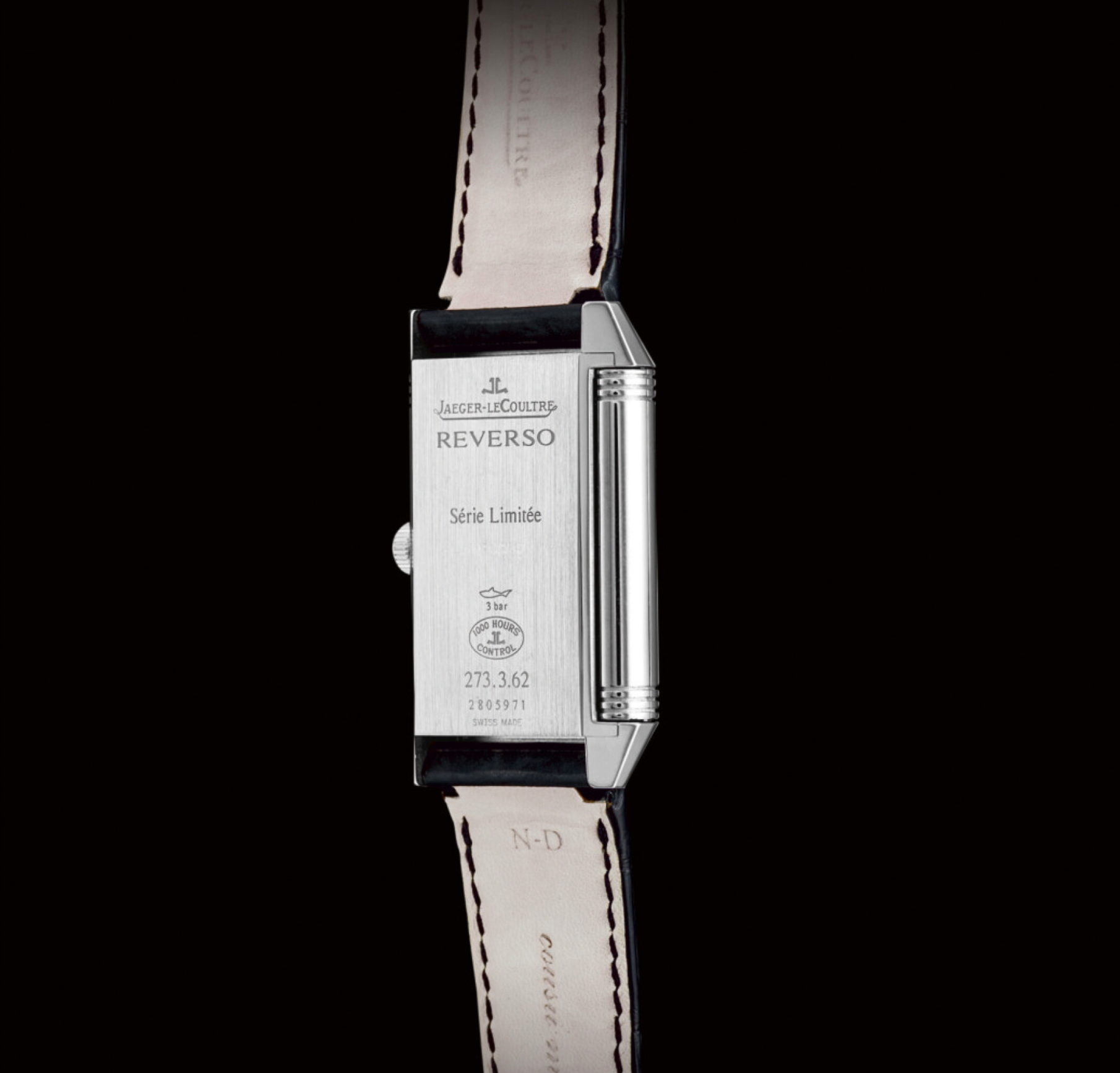
Year: 2013–2014 Calibre: Cal. 822
Material: White or pink gold
Market: International
A blue grand feu enamel dial over hand-guilloché, on the Grande Taille case — white gold limited to 50 pieces, pink gold to 200. Not tied to any particular story or theme, unlike most of the enamel pieces cross-referenced elsewhere in this archive; a straightforward showcase of the guilloché-and-enamel technique itself.
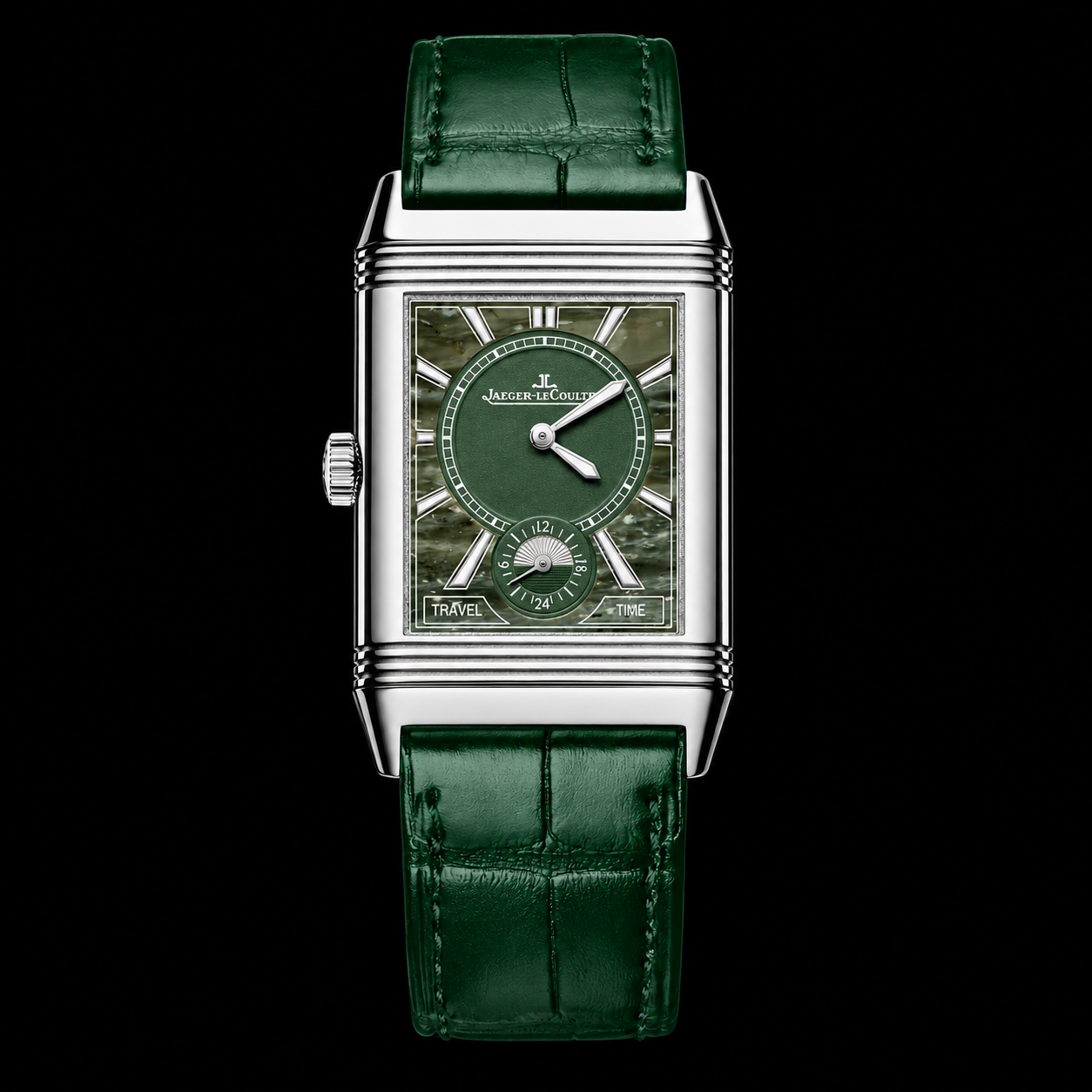
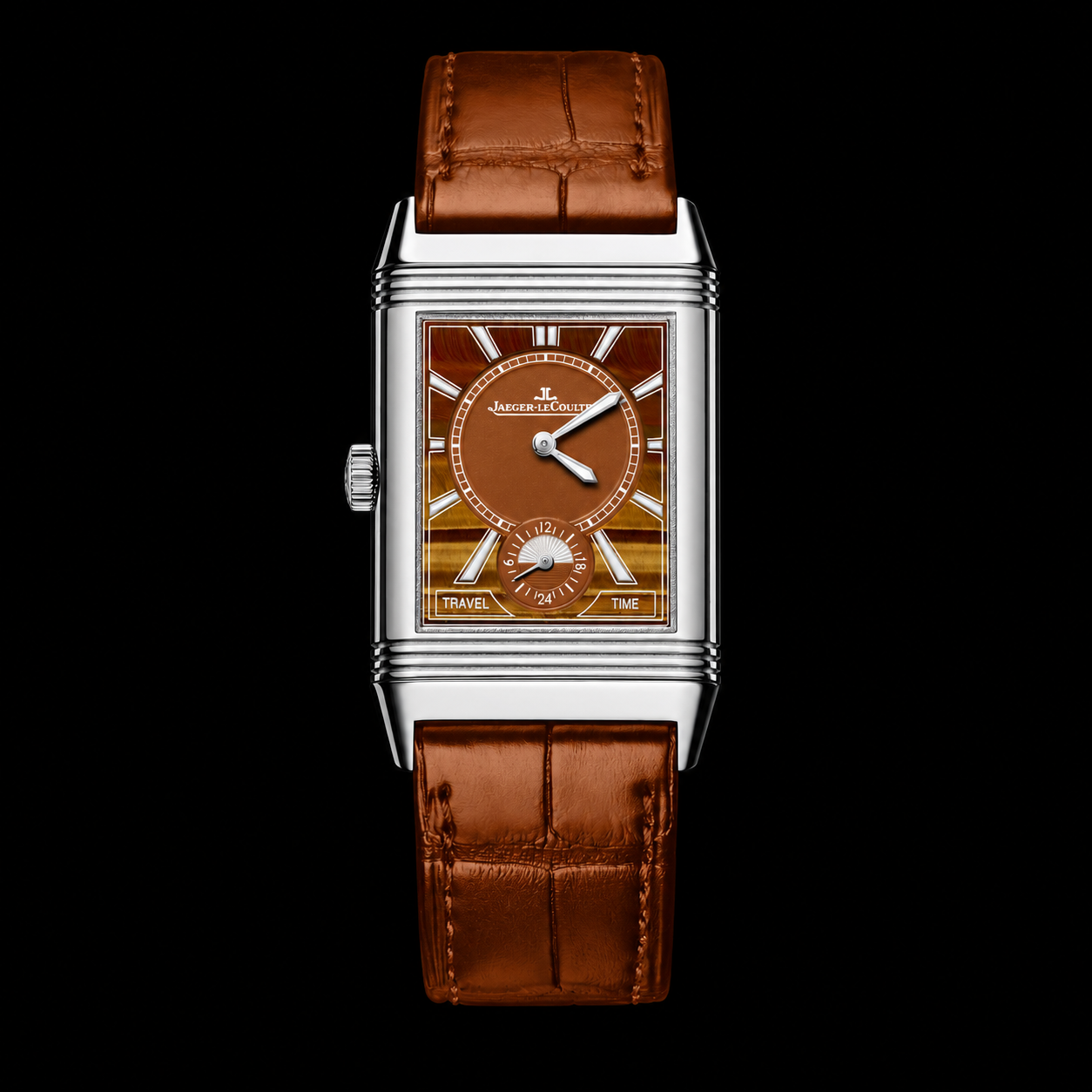
Year: 2017 Calibre: Cal. 822/2
Material: Stainless steel
Market: Boutique / app
Not a numbered edition but an ongoing customisation programme, launched 2016 for the Reverso Classic Large Duo Small Second, with a claimed 5,277 possible front/back/strap combinations — most originally aimed at women’s Reversos, some styled by Christian Louboutin. This 2017 update added men’s reverse-dial options in green marble and tiger’s eye, plus a bright blue galvanic-coated dial, ordered via boutique or a dedicated iPhone app.
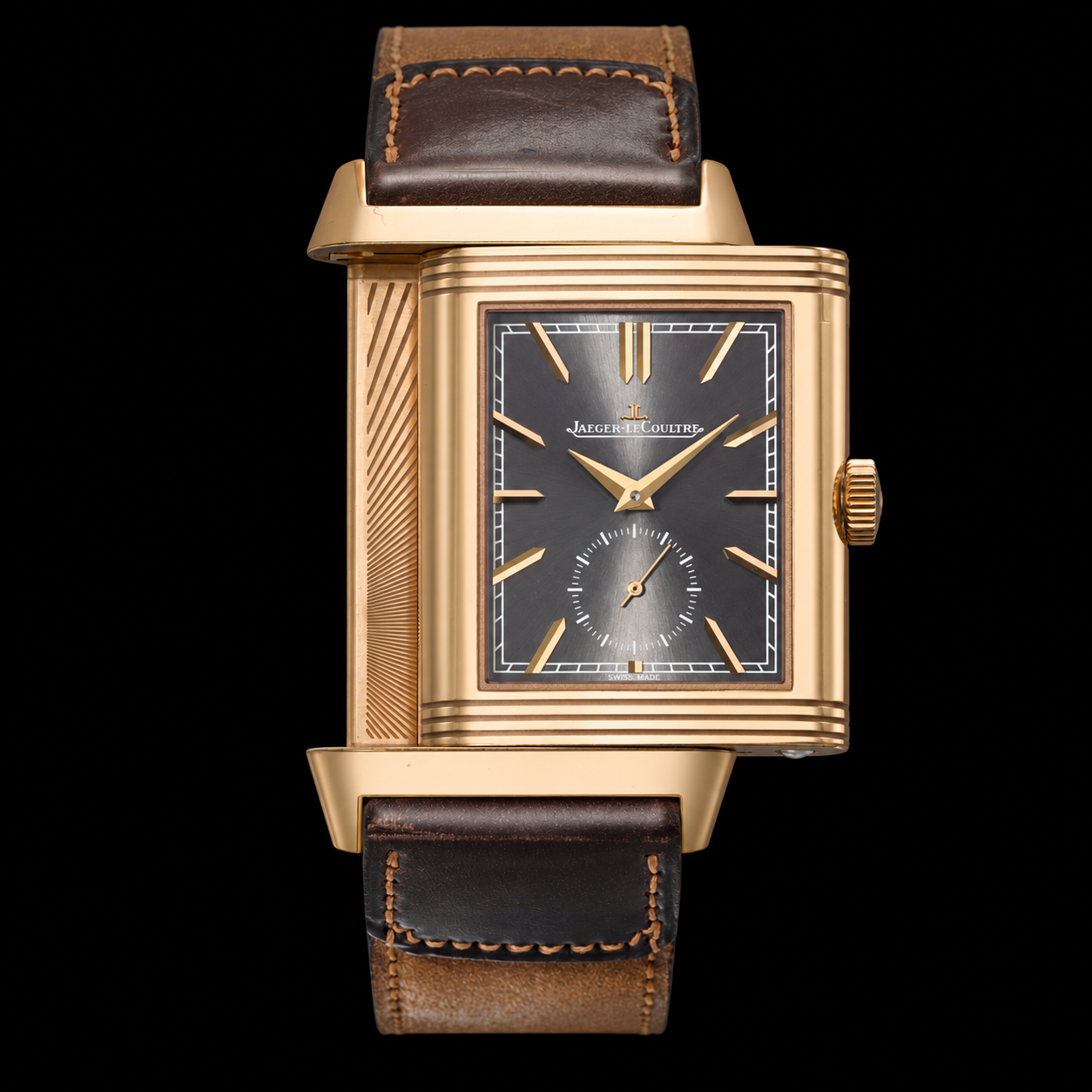
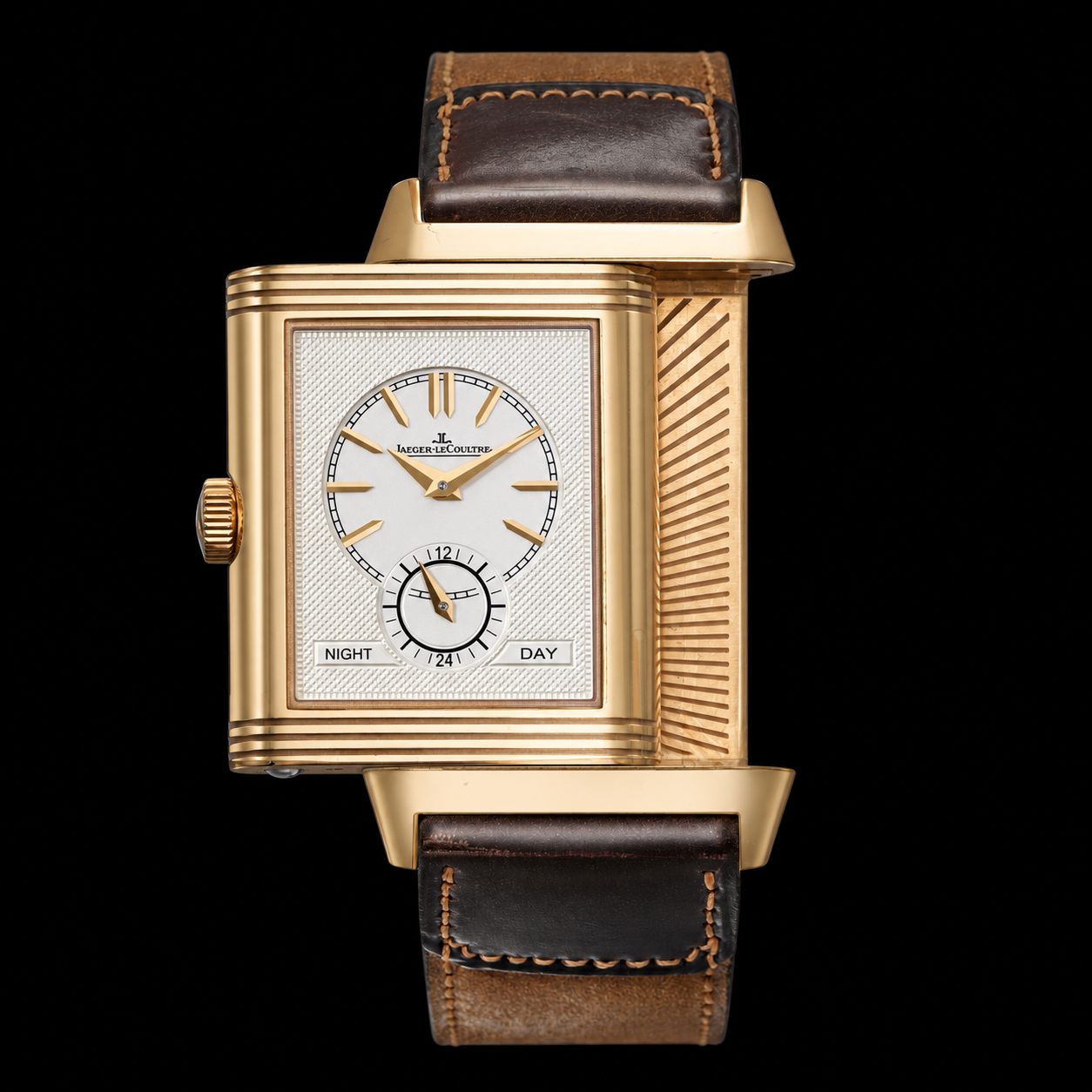
Year: 2018 Calibre: Cal. 854
Material: Pink gold
Market: International
A day/night Duoface paired with a strap from Casa Fagliano, the Argentine polo bootmaker whose straps also appear on several other Reverso partnership pieces in this archive.
References, calibres, years, piece counts and other information are compiled from different open sources and may still be inaccurate and incomplete. Help us update the information correctly so we can have documented fact.