Launched in 2006 for the Reverso’s 75th anniversary, the Reverso à Éclipses inverted the usual logic of an enamelled Reverso: instead of a miniature painted on the blank case-back, the artwork sits on the dial, hidden behind a working shutter that slides open on a wheel at 2 o’clock. The mechanism — developed by JLC’s then Artistic and Design Director Janek Deleskiewicz and engineered by Daniel Wild — is a genuine miniature complication in its own right: a chain just 1.6 cm long and 4 mm thick, built from 192 parts, driving shutters only 0.25 mm thick yet reportedly able to withstand 5 kg of pressure. Each enamel miniature behind the shutter takes roughly a month of painting, built up layer by layer and fired repeatedly at around 800°C, the same technique used elsewhere in JLC’s enamel programme. Two case references anchor most of the run: 246.6.79 in platinum, generally for the larger Famous Nudes editions (3 to 10 pieces per subject), and 246.2.79 in pink gold, used both for smaller 5-piece runs of some Famous Nudes and Voyages et Découvertes subjects and for genuine one-off commissions. The range was organised around four recurring themes — Famous Nudes, Voyages et Découvertes (“Voyages of Discovery”: named cities and landmarks including New York, Singapore, Constantinople, Venice, the Great Wall, and the Silk Road), Chinese Zodiac, and Grand Feu — plus occasional one-off personalised commissions. Collectors describe the series as having gone quiet for some years before resurfacing; as of the mid-2010s Jaeger-LeCoultre still offered the concept as a custom order even after it left the standard catalogue.
Click any piece to turn it over
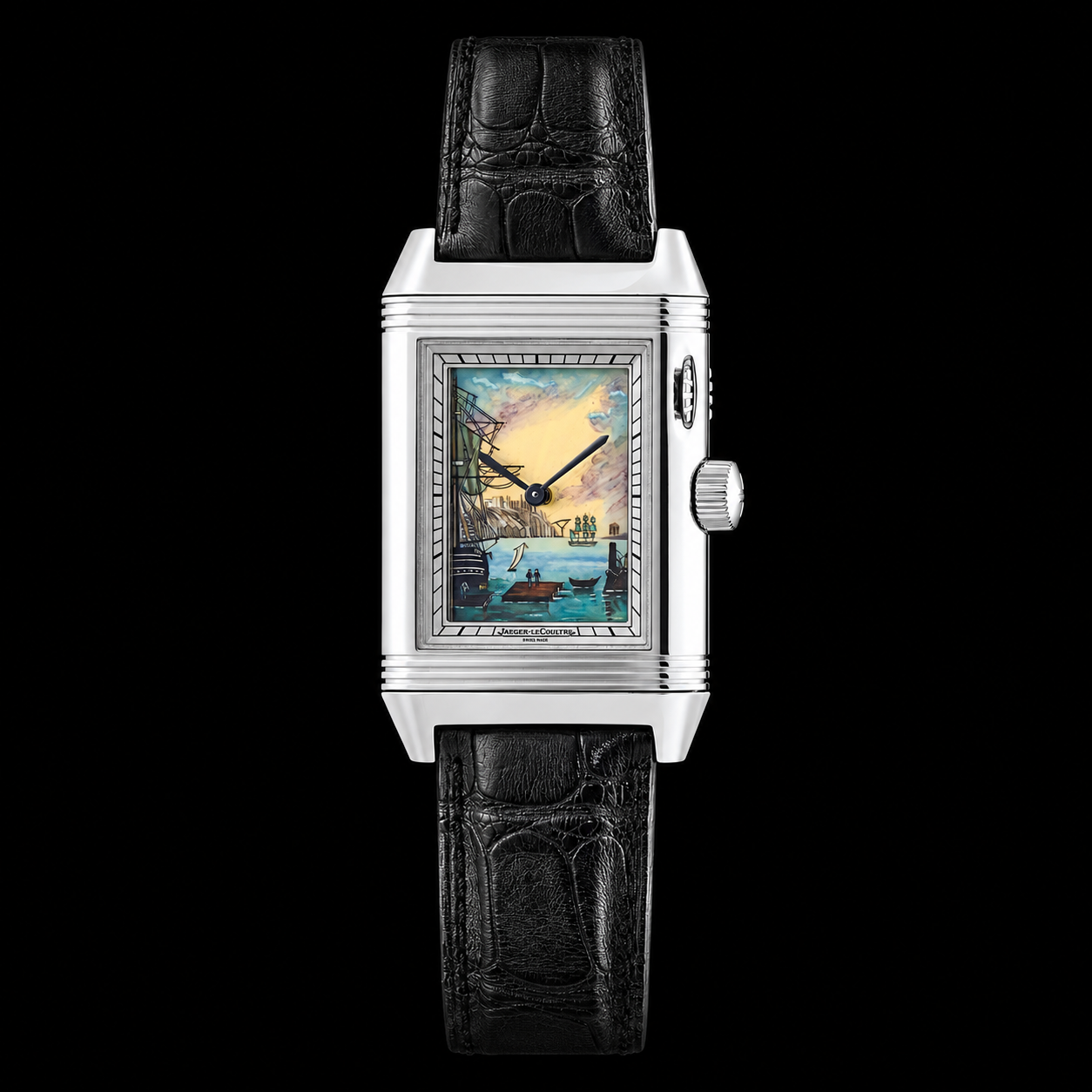
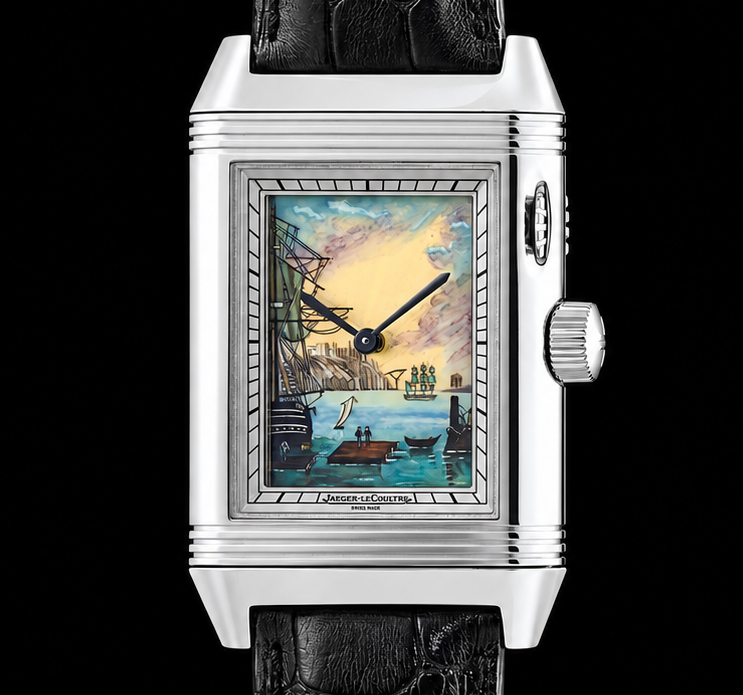
A view of New York harbour behind the shutter — one of a small set of port cities and travel views produced alongside the painting-based themes, on the same case references as the rest of the Éclipses range.
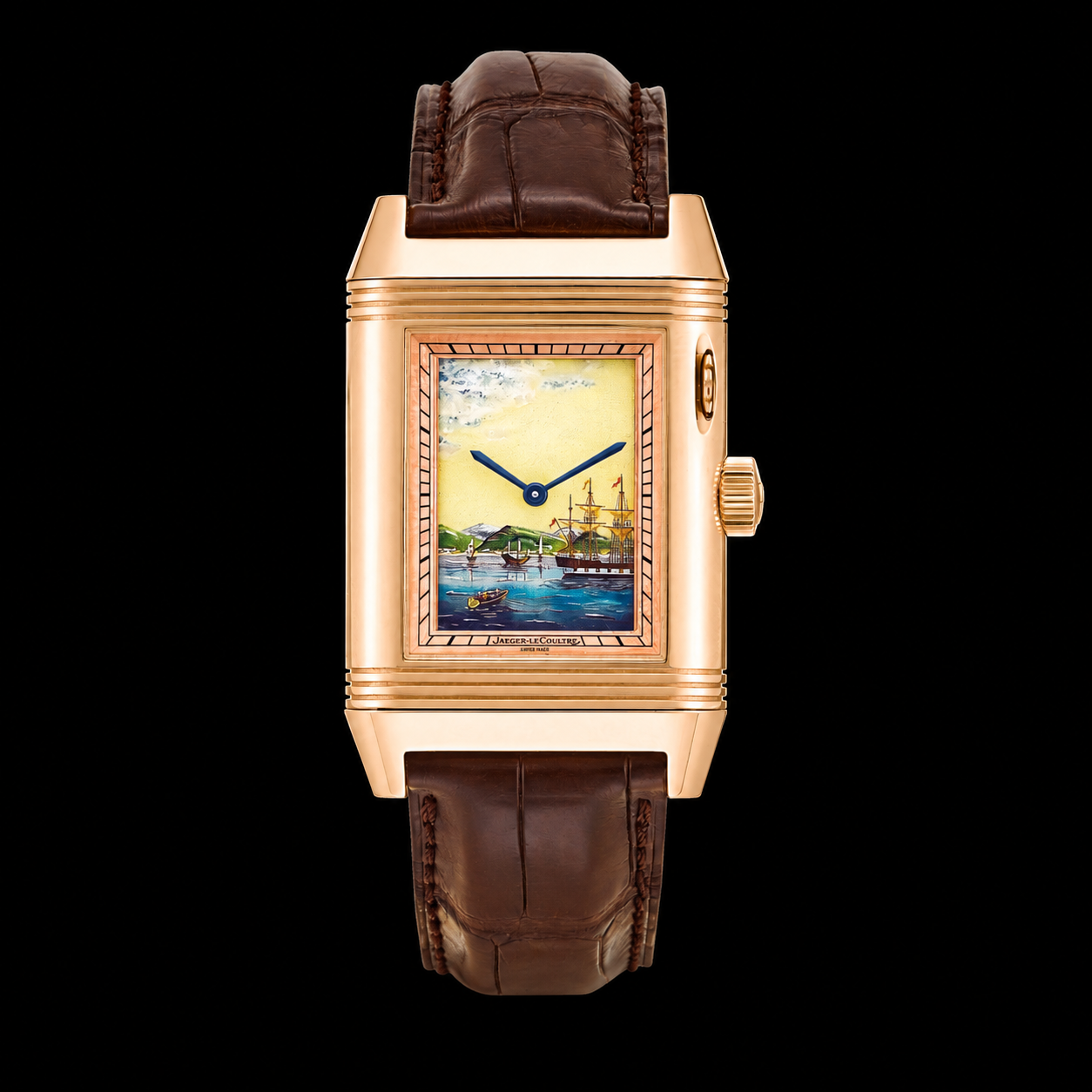
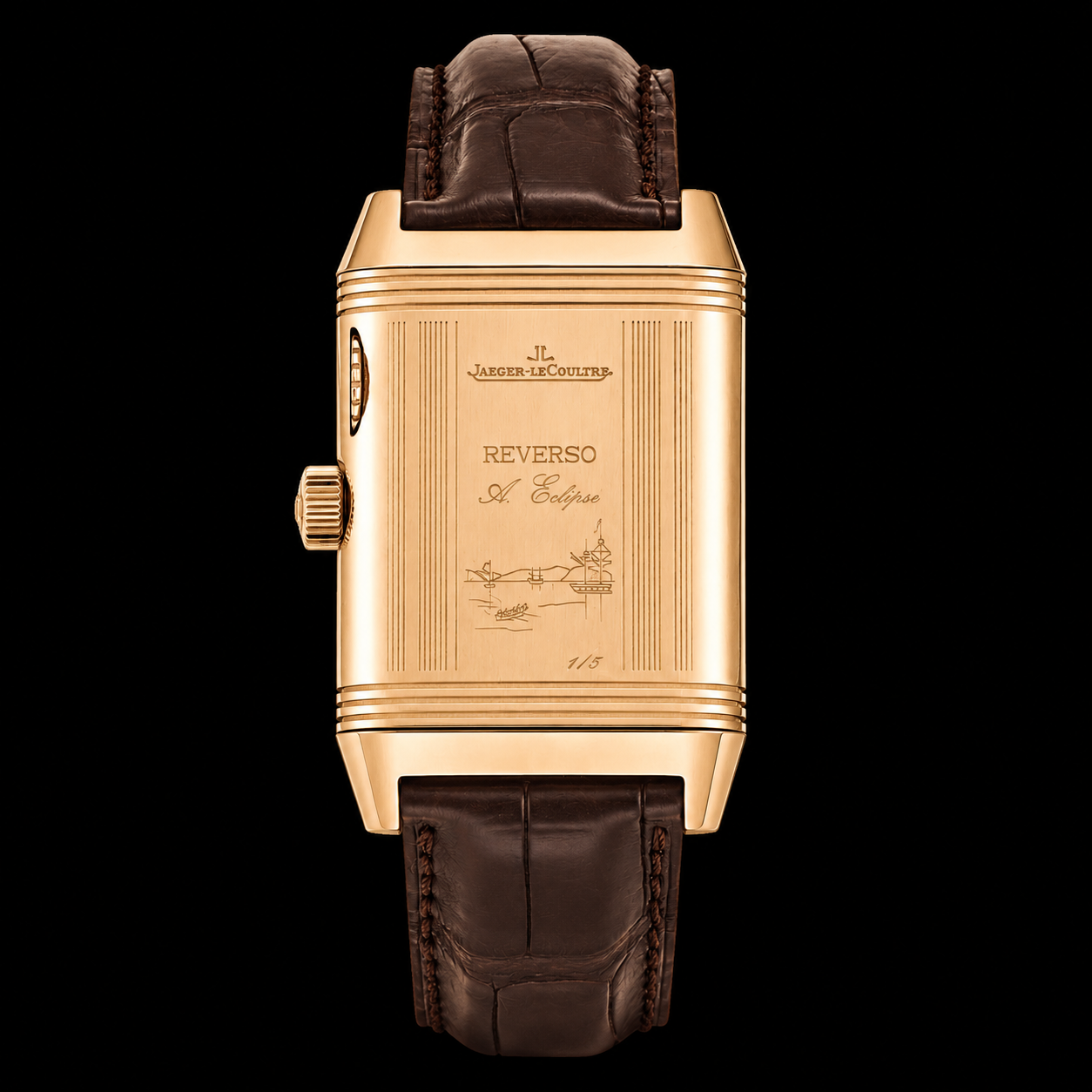
A view of Singapore’s harbour, part of the same Voyages of Discovery port-city set as Port of New York, this one in pink gold.
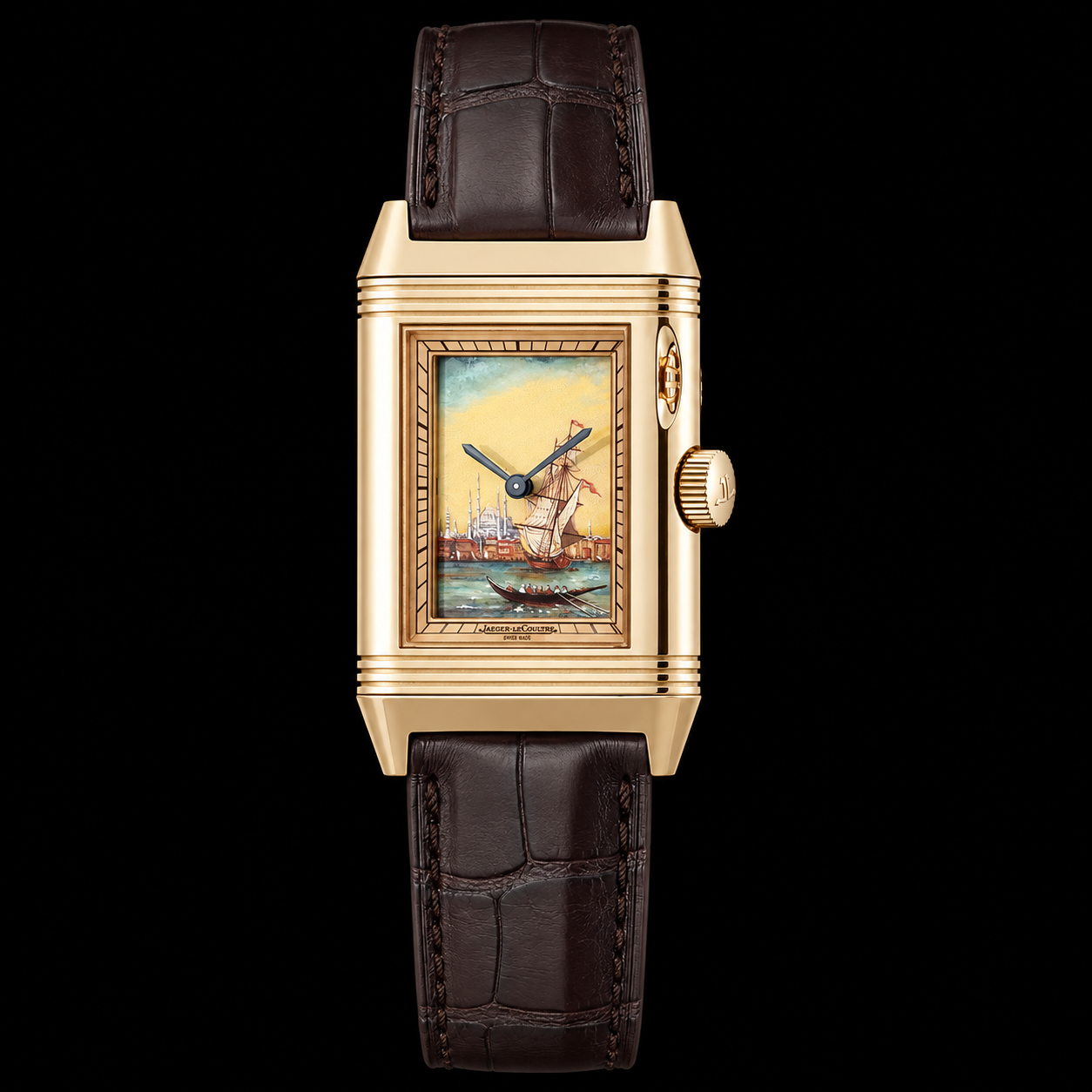
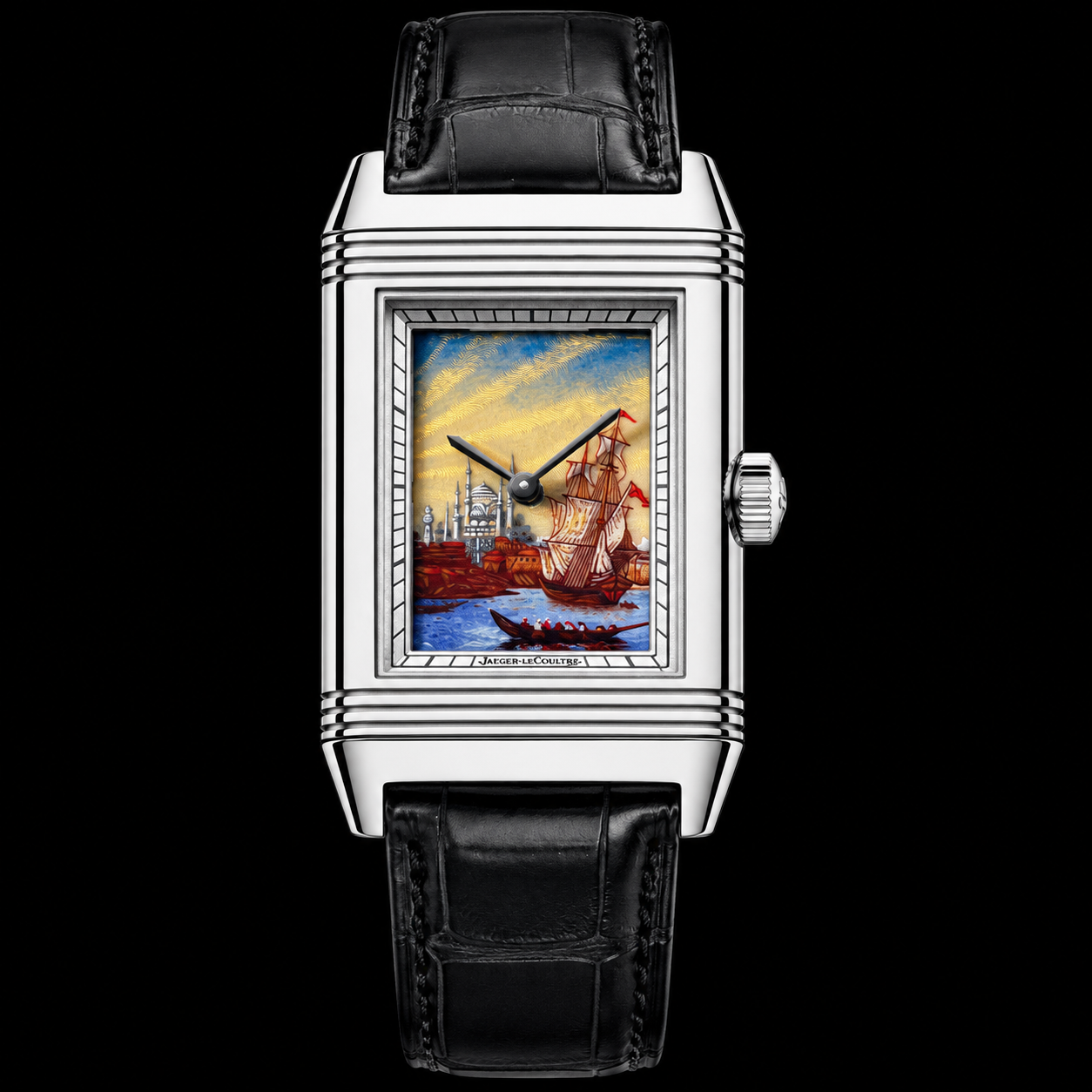
A view of Constantinople (Istanbul), part of the Voyages of Discovery set, made in both pink gold and platinum (ref. 377 64 09, 950 platinum).
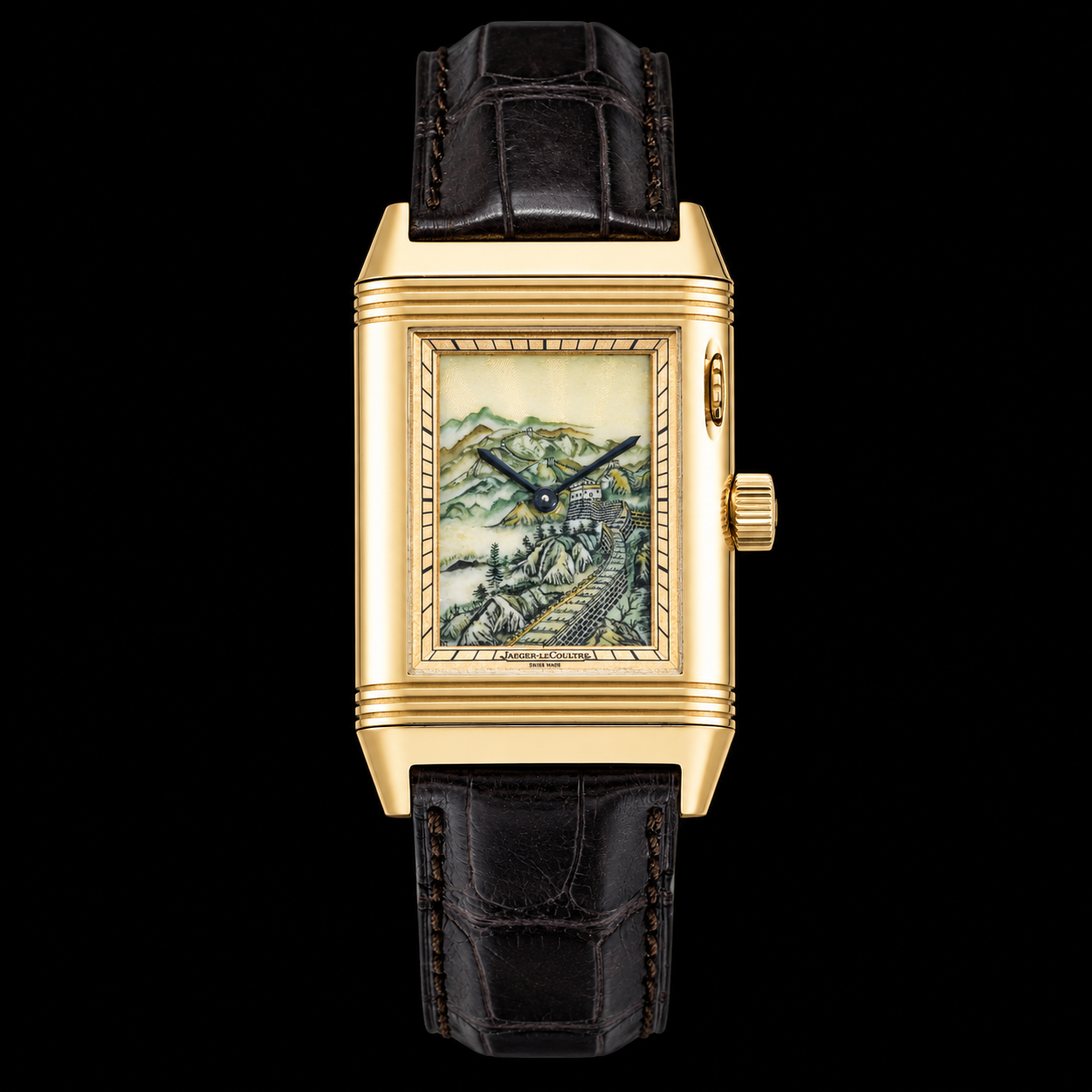
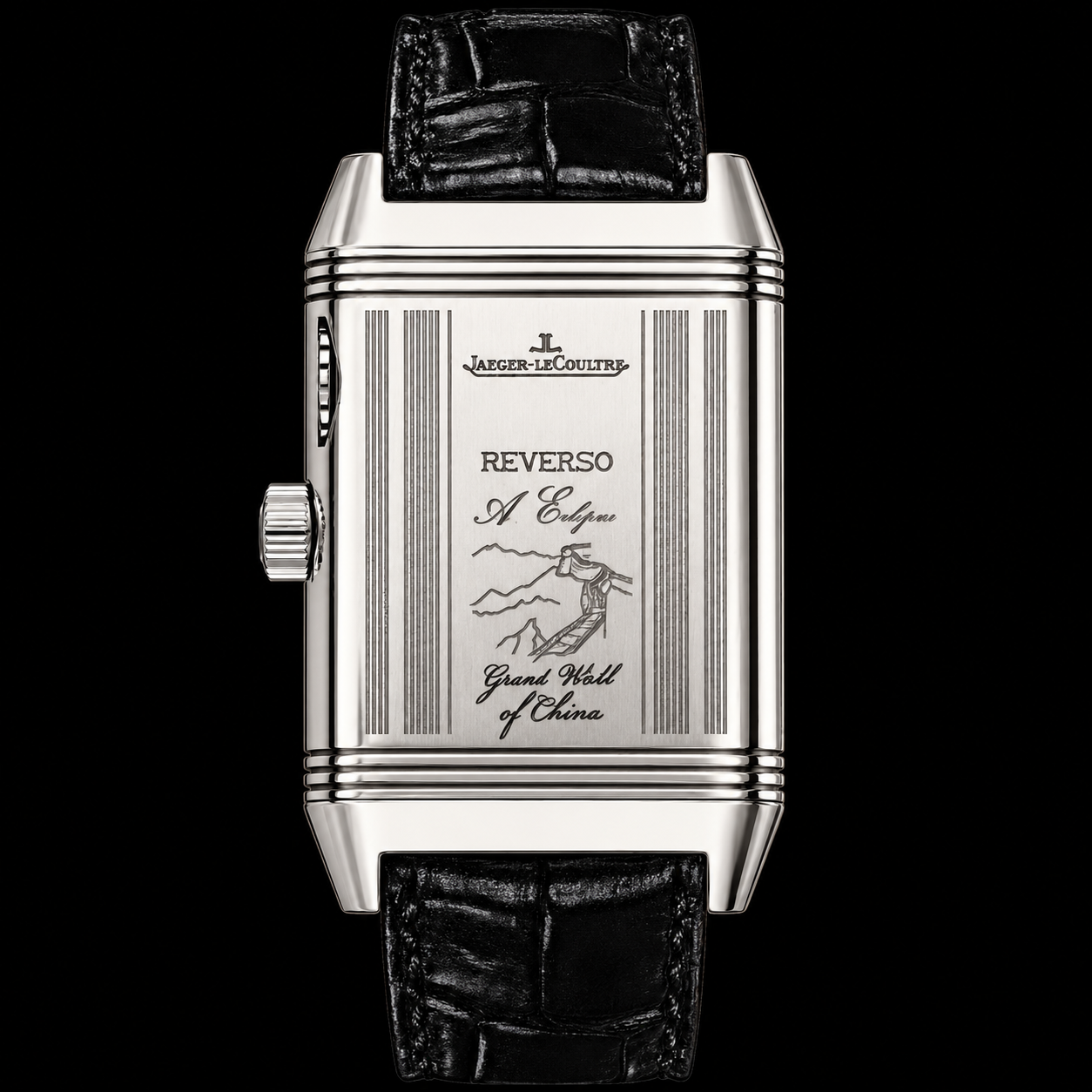
The Great Wall of China, made in both pink gold and platinum, part of a 5-piece run per metal — a landmark rather than a city view, but grouped with the same Voyages of Discovery travel theme and edition pattern as the port cities above.
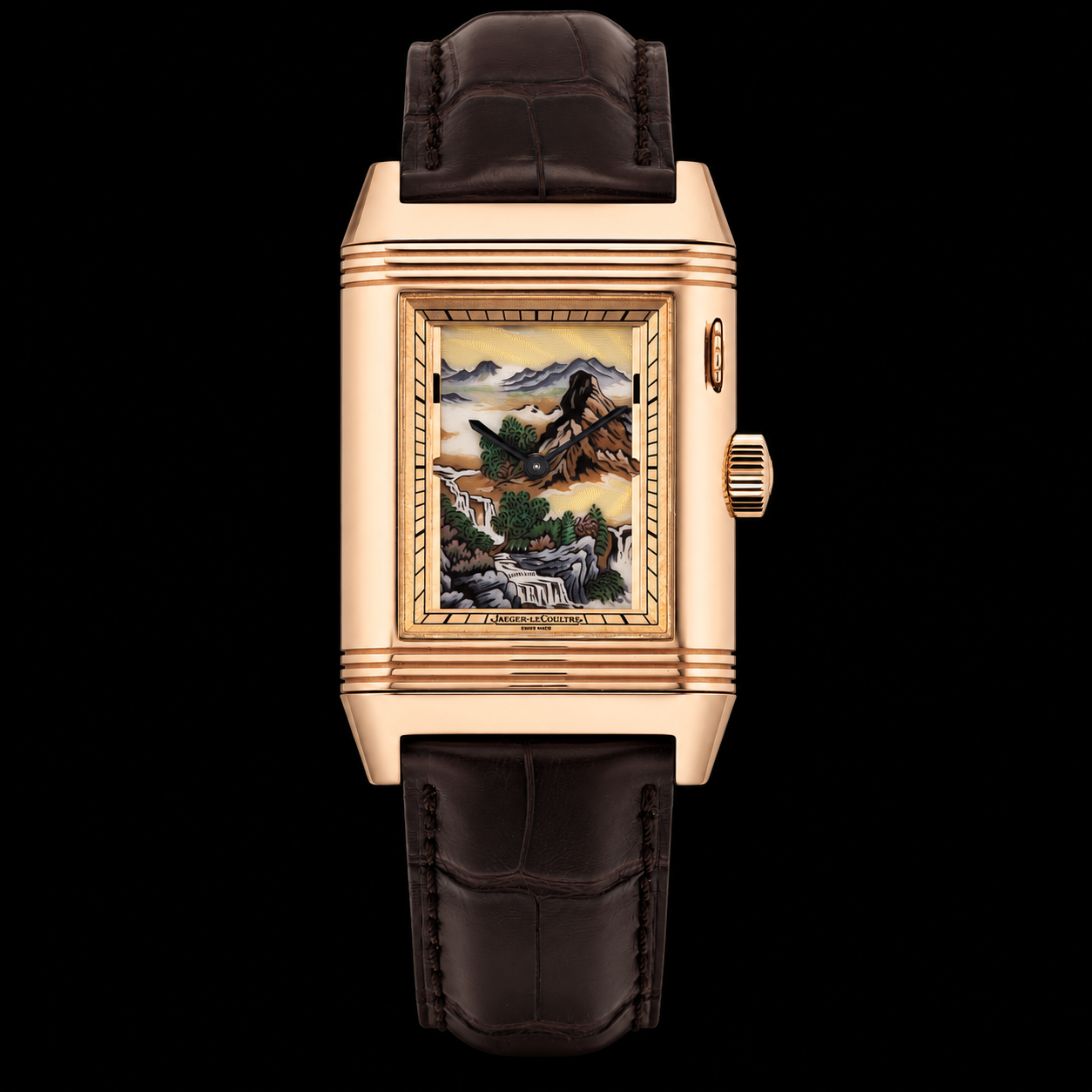
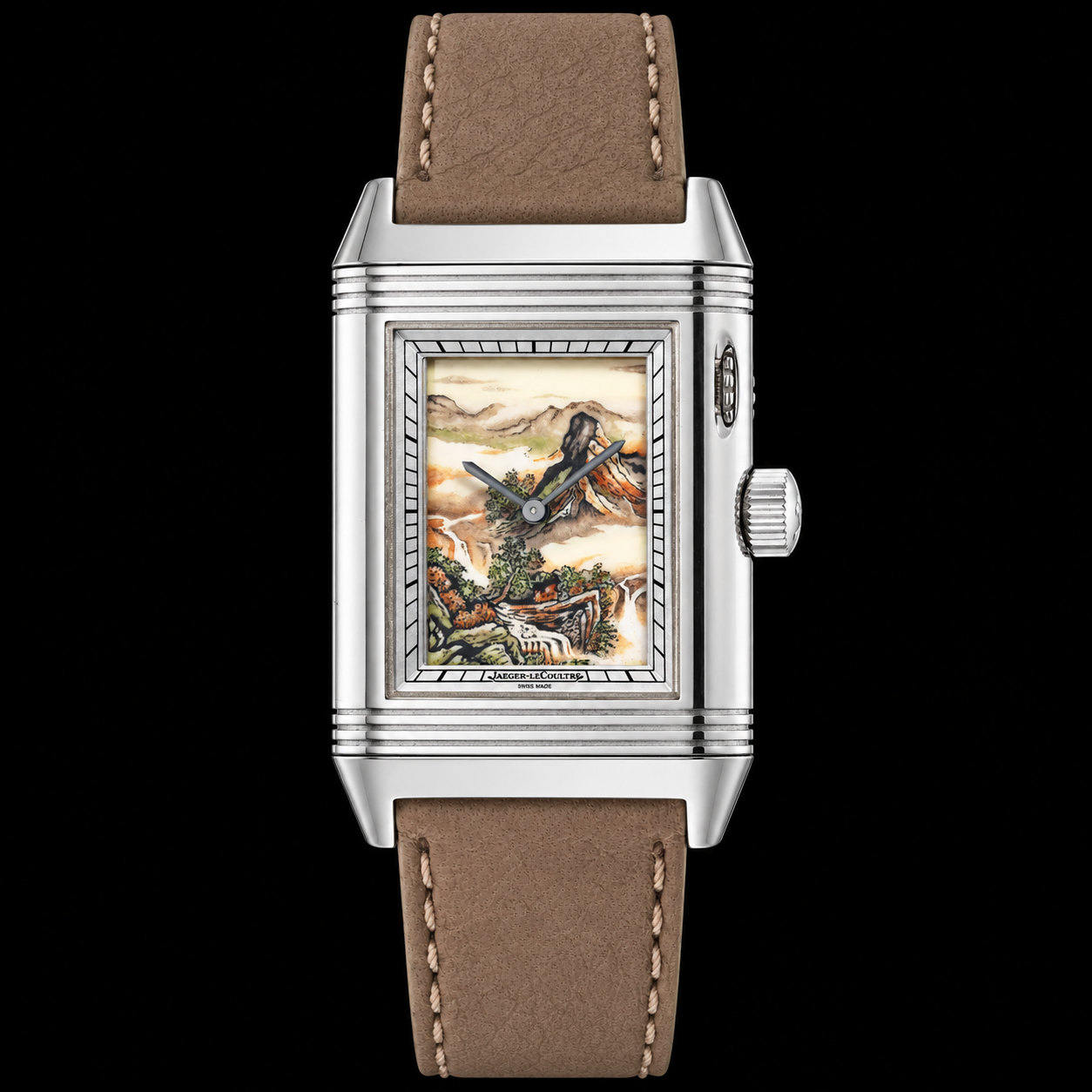
A miniature depicting the Silk Road, produced in both platinum and pink gold — confirming the theme’s official French name, “Voyages et Découvertes,” directly from an owner’s own description of the piece. The platinum version is notably heavy on the wrist given the solid case: 29 mm wide, 39.5 mm long, on a white gold Jaeger-LeCoultre double deployant clasp, calibre 849 (19 jewels). The platinum run is limited to 3 pieces — smaller than the 5-piece pink gold city views, consistent with the smaller-platinum-run pattern seen in Famous Nudes.
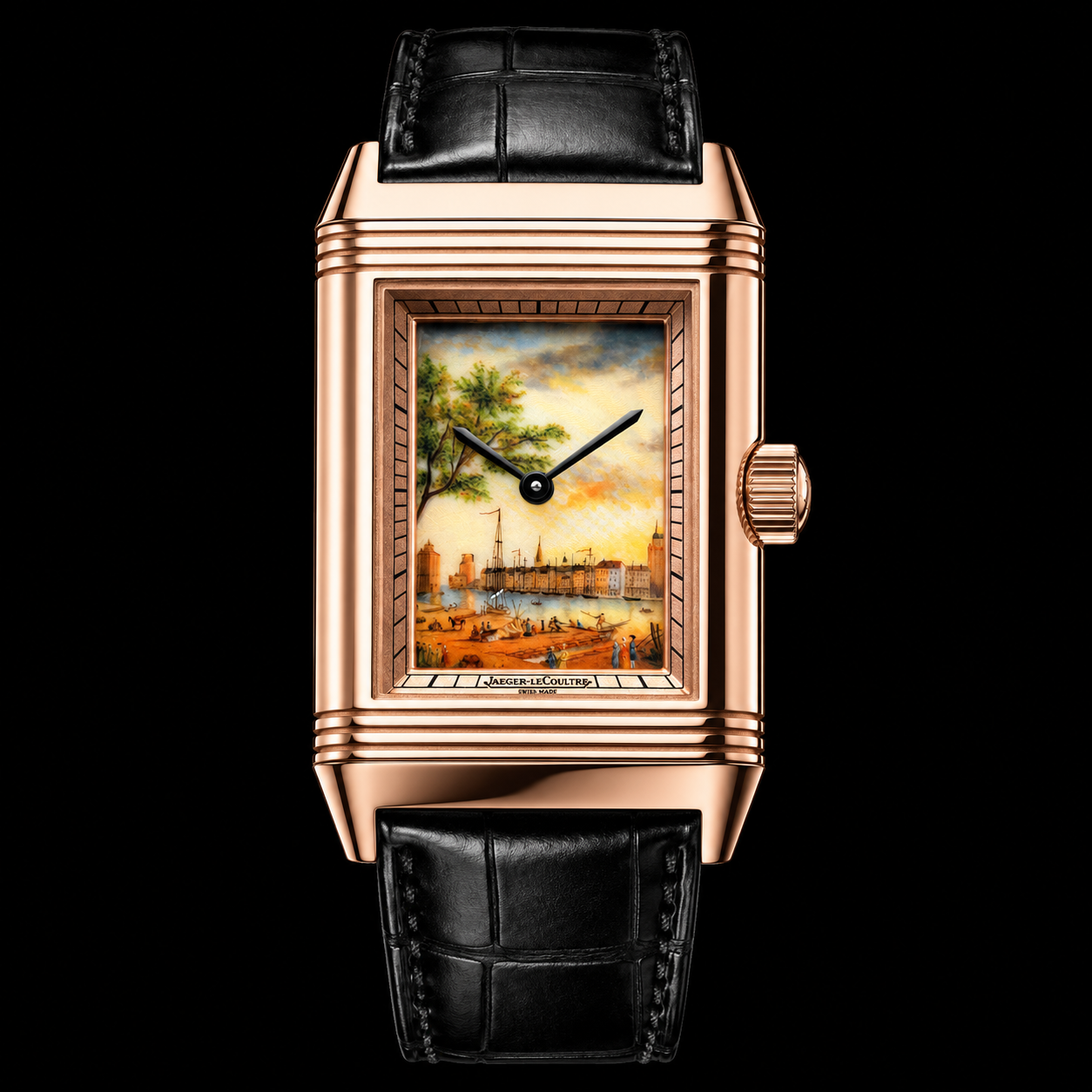
A reproduction of Vernet’s 1762 painting of the port of La Rochelle, one of the French master’s celebrated series of French port views. Per Jaeger-LeCoultre’s own catalogue description, the enameller combined traditional opaque enamel with translucent enamel over a guilloché ground specifically to light the sky — a technique distinguishing this piece from the flatter colour fields used on most other Éclipses miniatures.
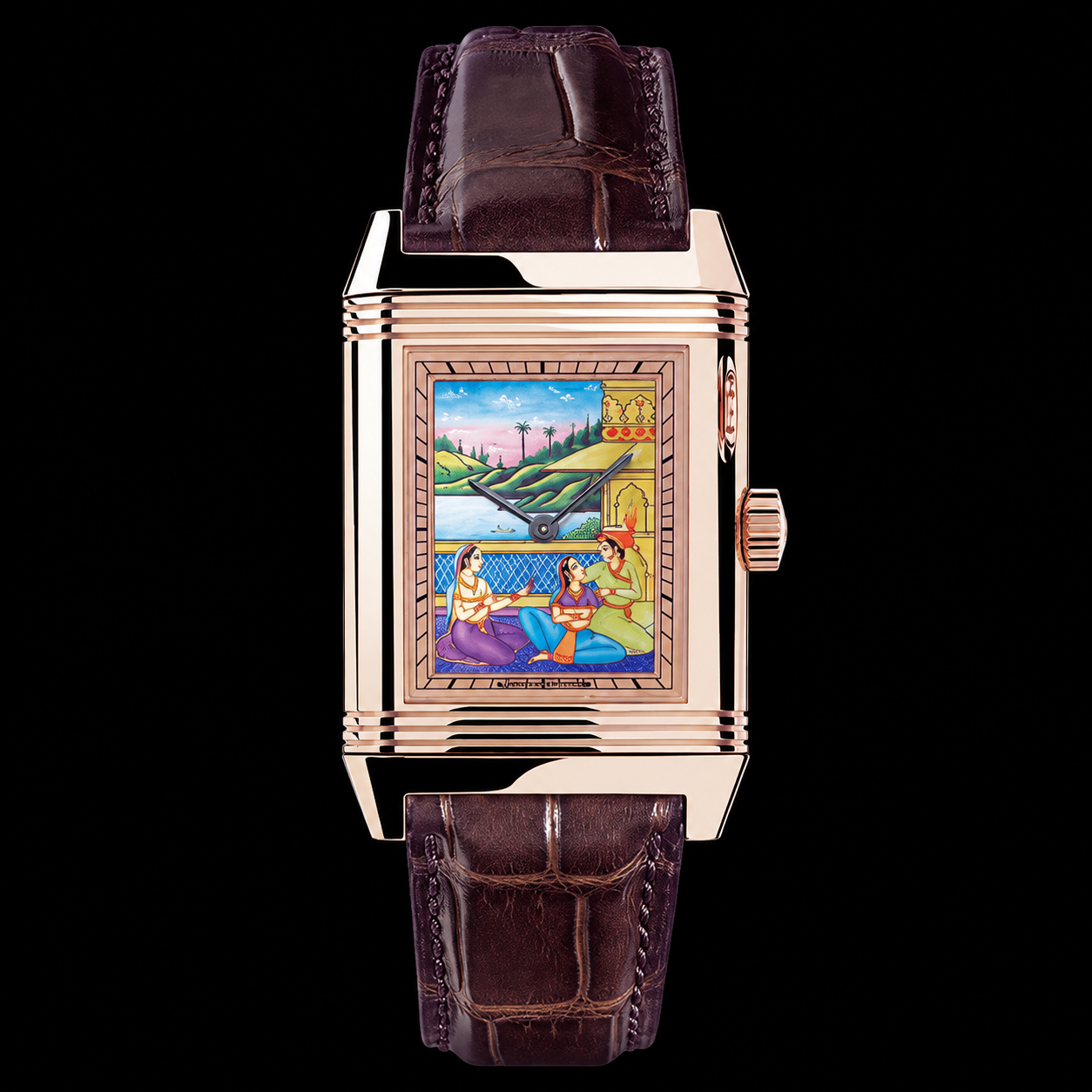
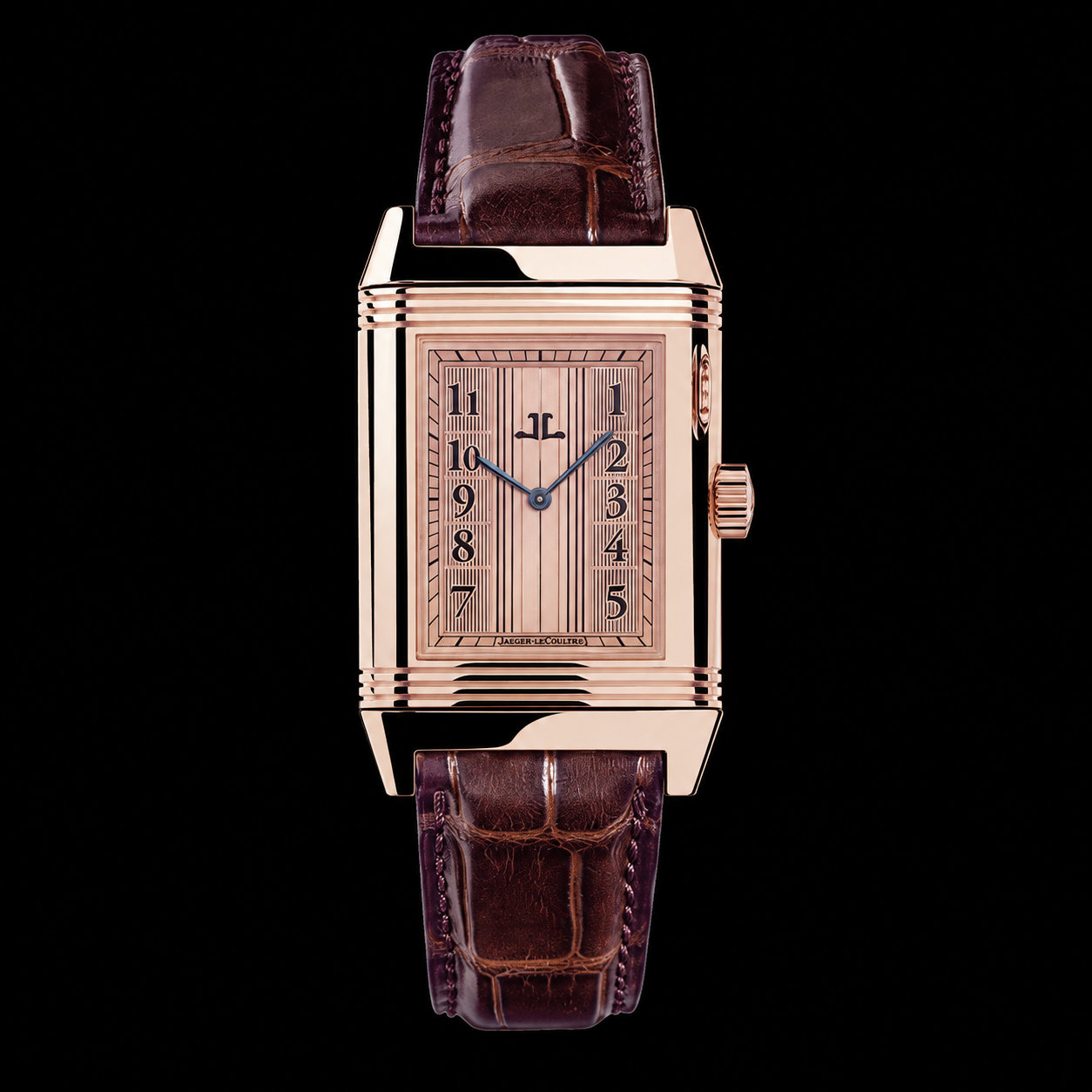
A reproduction of a classic theme from Mughal miniature painting — a couple on a terrace — rather than a Western old master, per Jaeger-LeCoultre’s own catalogue description. Little else about this piece is documented beyond the subject and case metal.
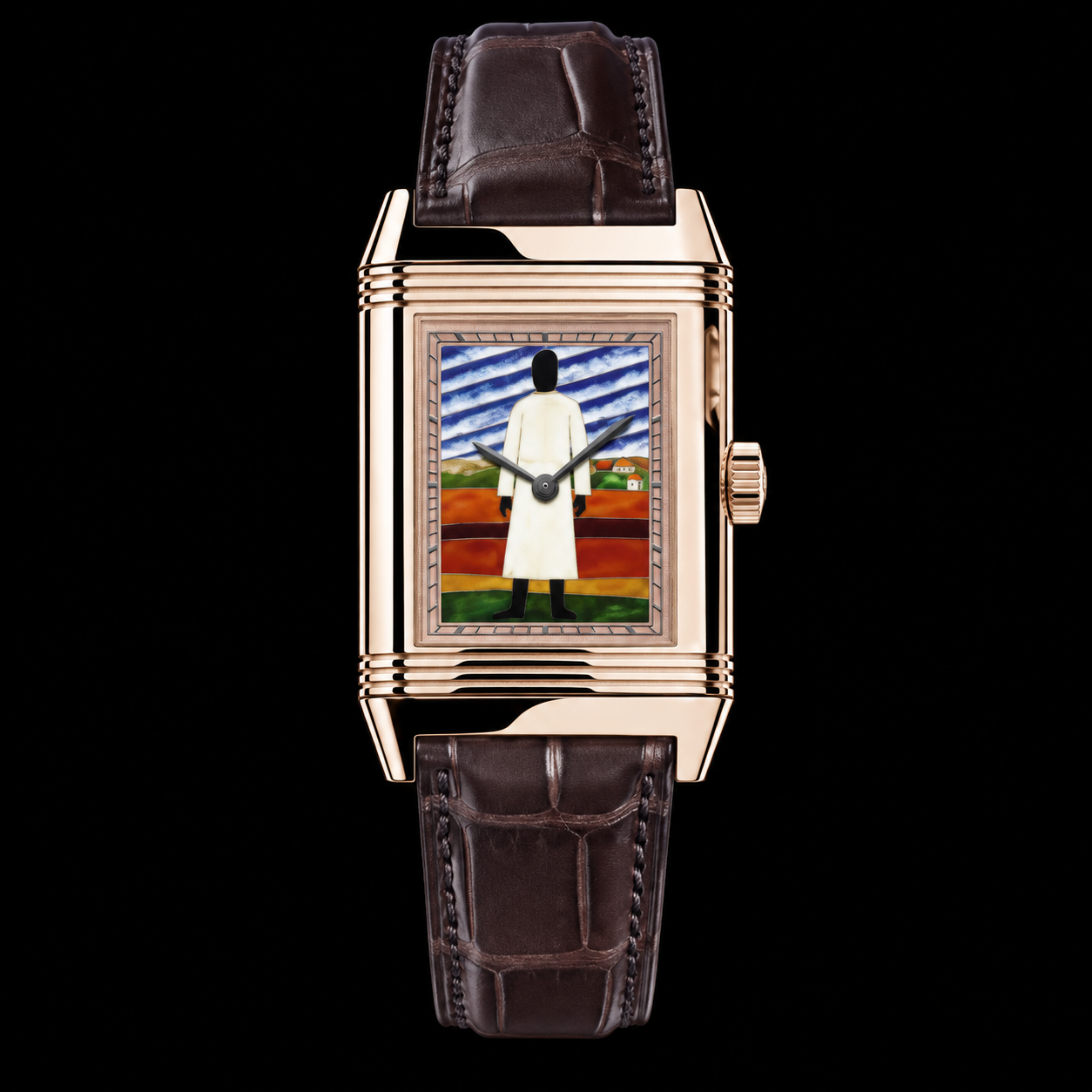
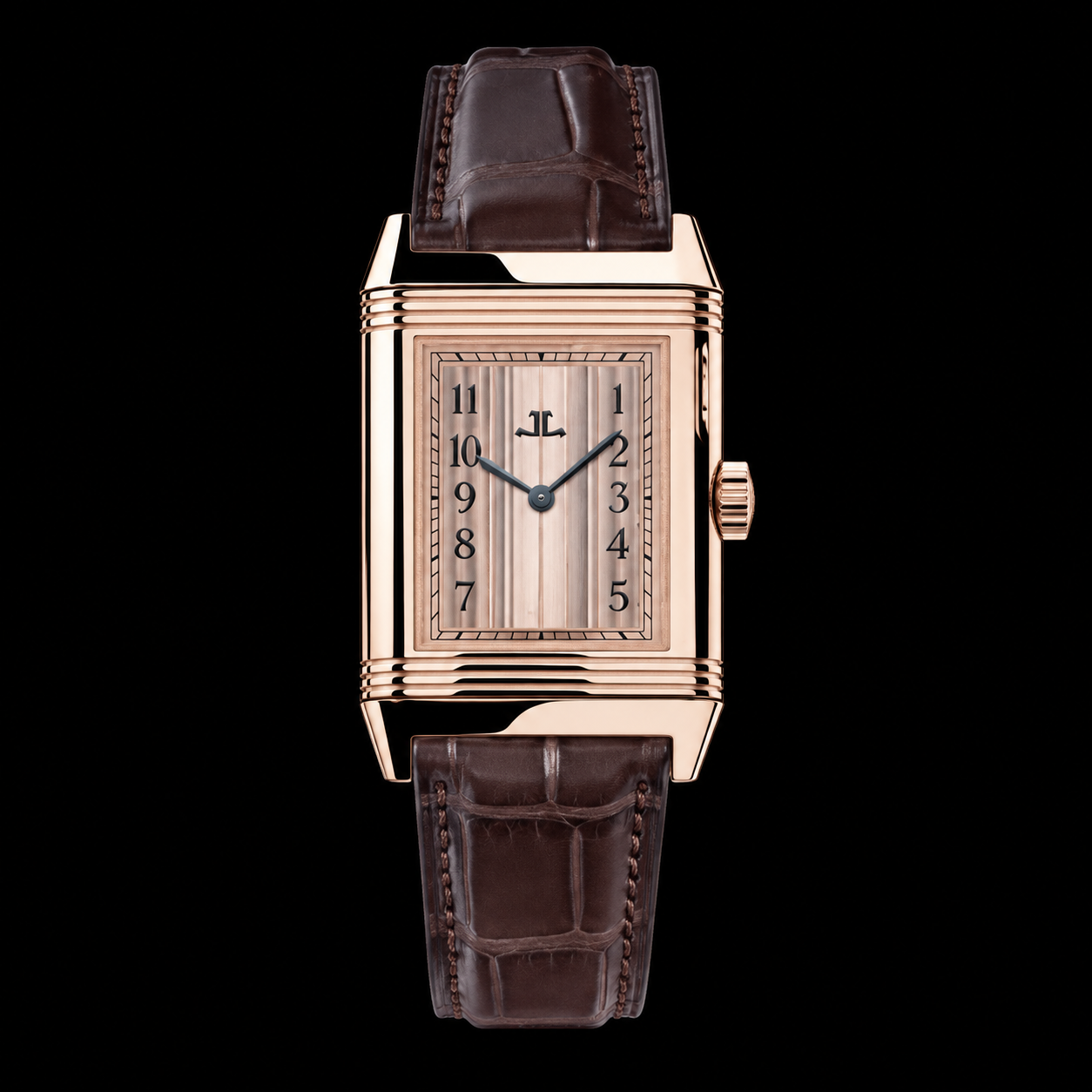
Made with the State Russian Museum of St Petersburg’s assistance, to mark both the Reverso’s 80th anniversary and the opening of Jaeger-LeCoultre’s St Petersburg boutique: a miniature of Malevich’s Peasant Woman (1931), from the final and most complex period of the Suprematist painter’s career, still held by the State Russian Museum today. Pink gold, five pieces.
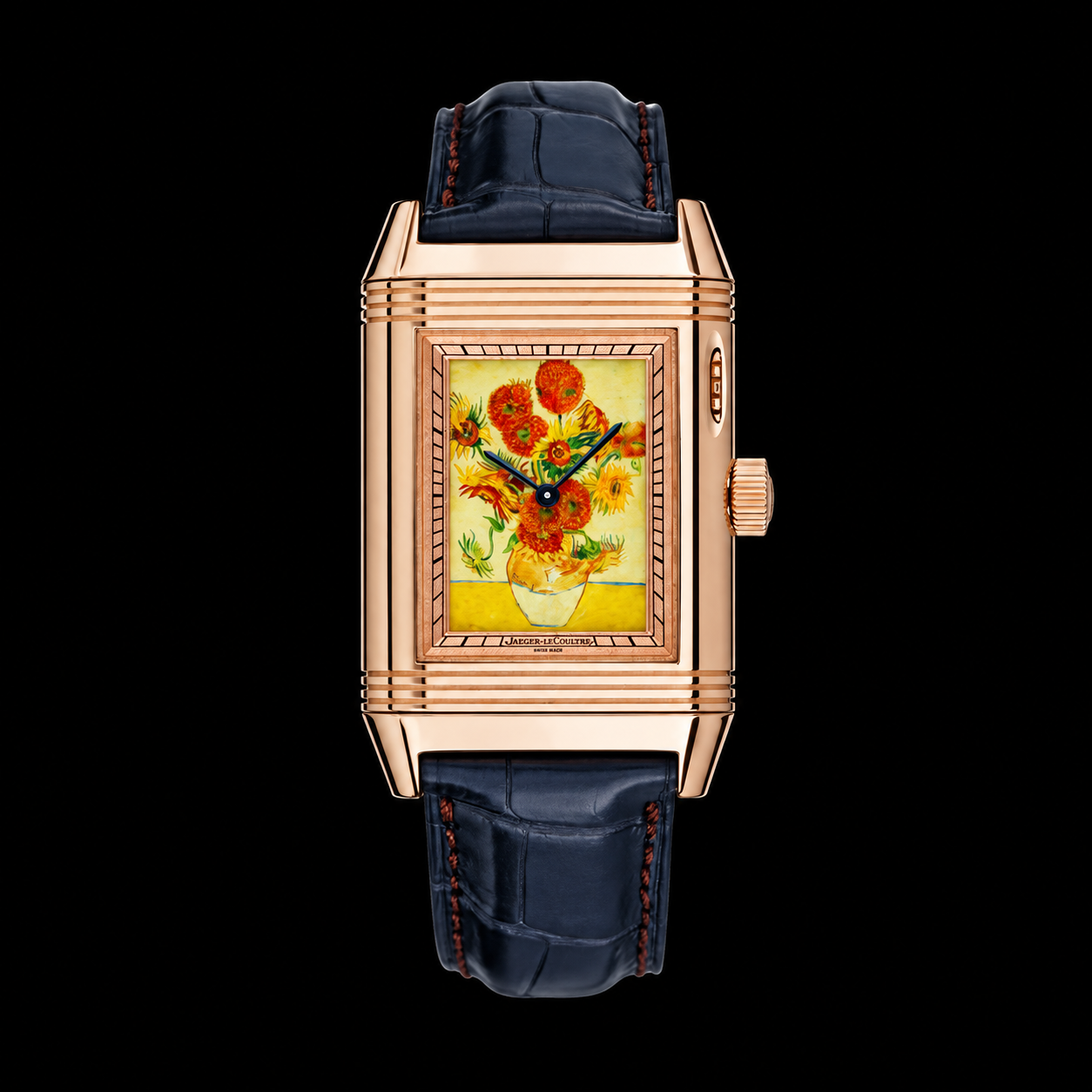
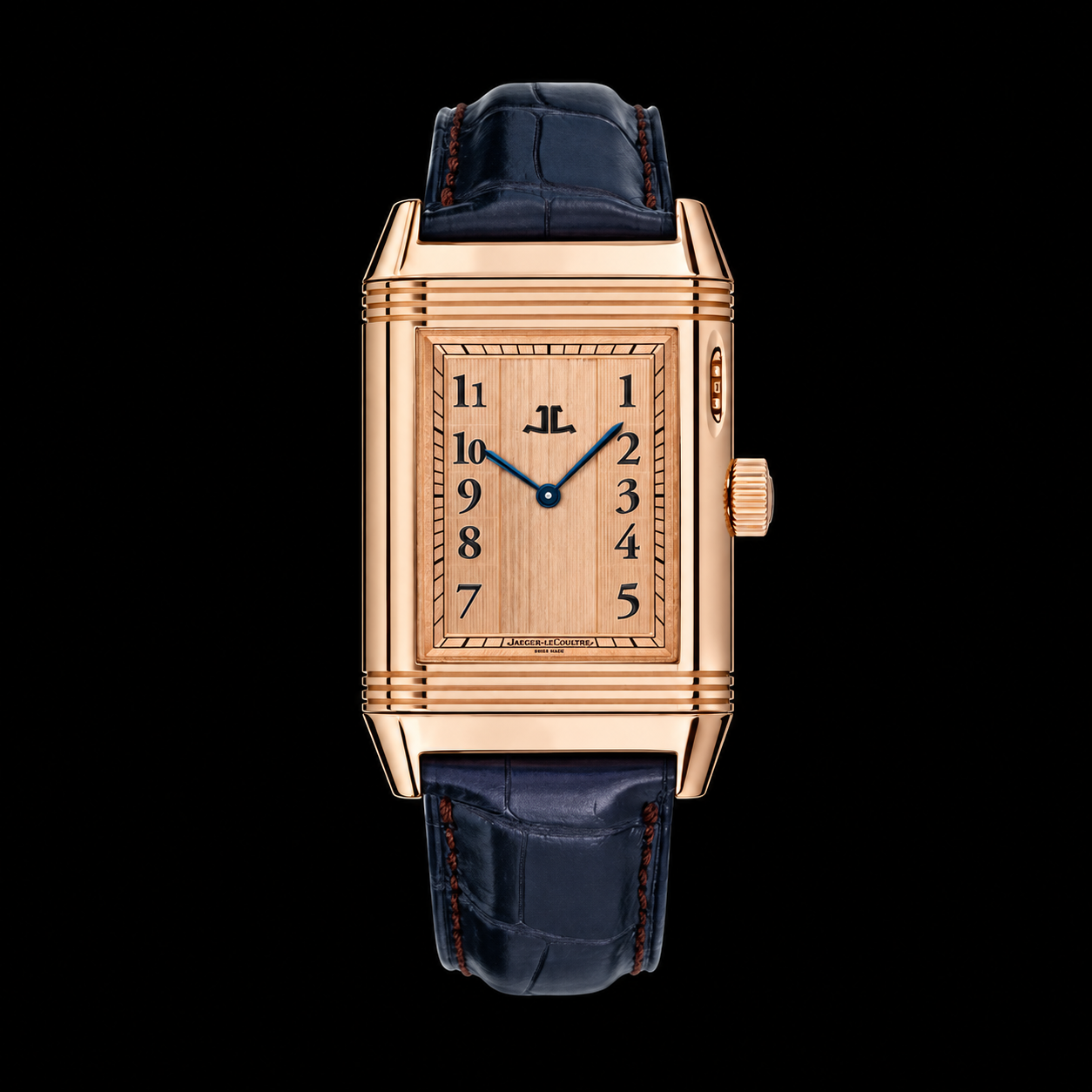
Made with Amsterdam’s Van Gogh Museum for the 125th anniversary of the artist’s death: one of Van Gogh’s 1888 Sunflowers still lifes, the series he painted to impress fellow painter Gauguin by building a powerful image from variations on a single colour. Rose gold, calibre 849 (1.85 mm thick, 35-hour reserve), five pieces; the watch itself is displayed at the Van Gogh Museum.
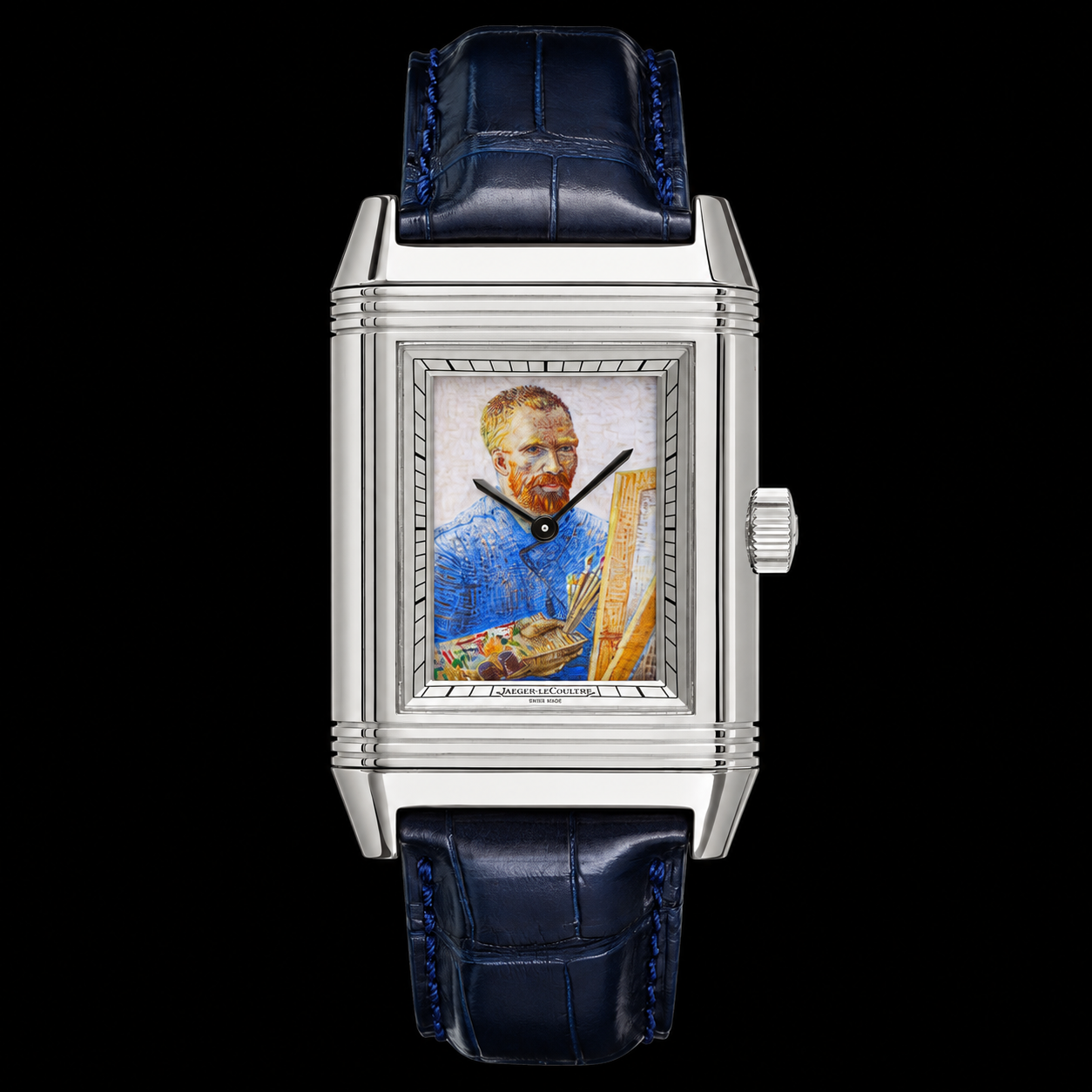
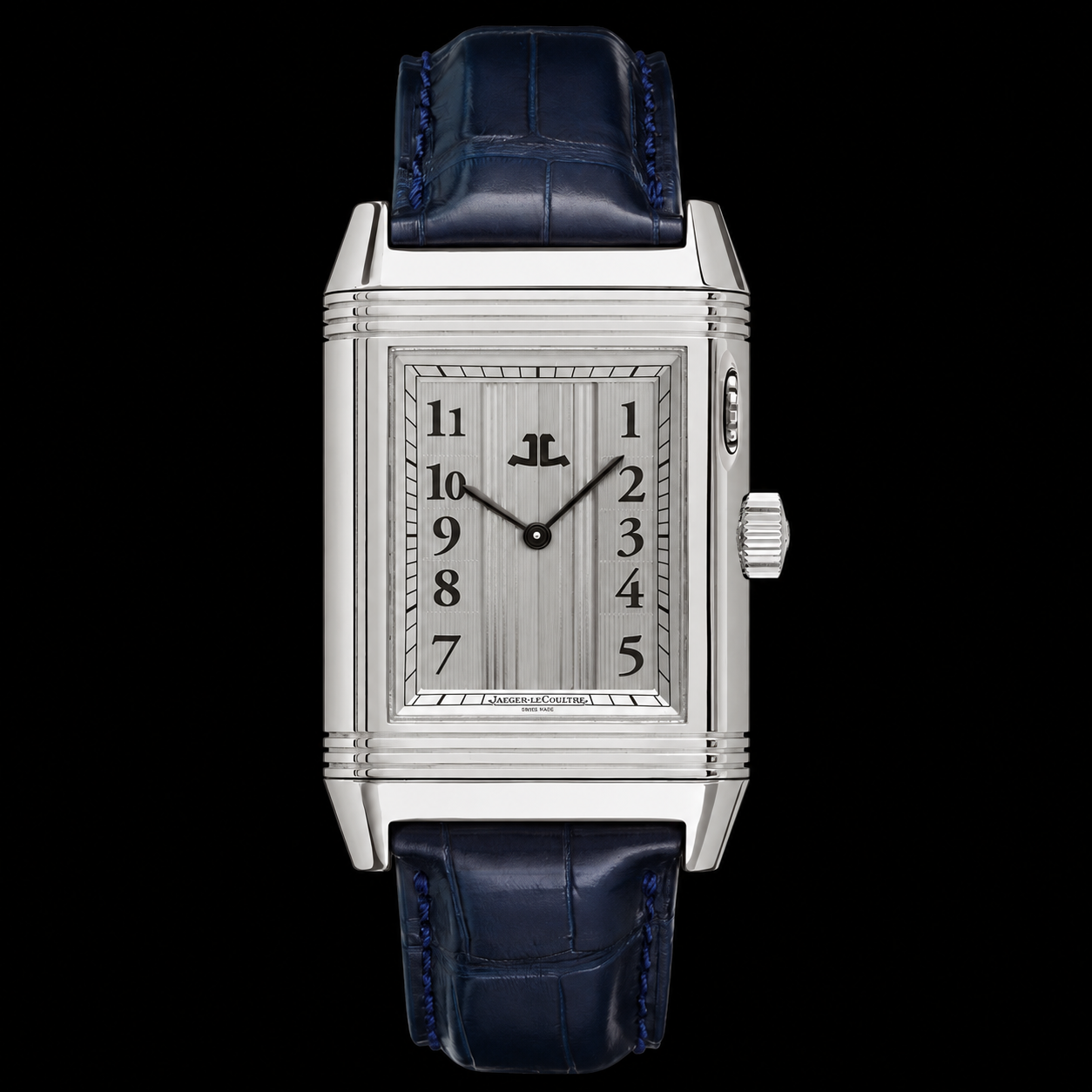
The second Van Gogh collaboration with the Van Gogh Museum, for the Reverso’s 85th anniversary: his 1887–1888 Self-Portrait as a Painter, a work Van Gogh himself described in a letter to his sister as exhausting to make — “wrinkles in forehead and around the mouth, stiffly wooden, a very red beard, quite unkempt and sad.” Platinum, calibre 849, four pieces, sold only at the Van Gogh Museum boutique in Amsterdam for roughly €101,000 excluding tax.
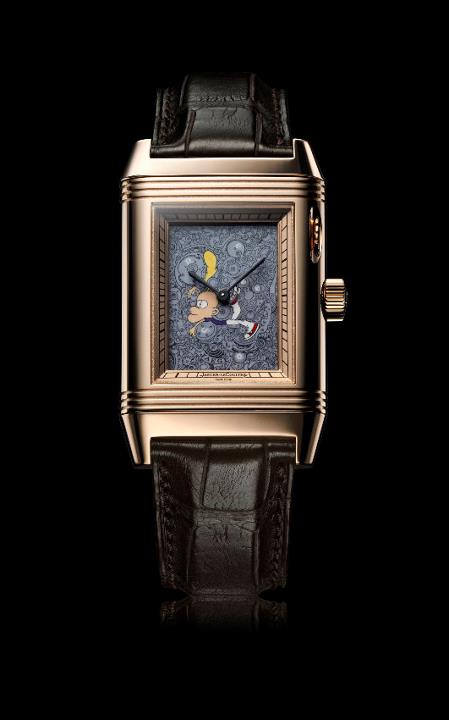
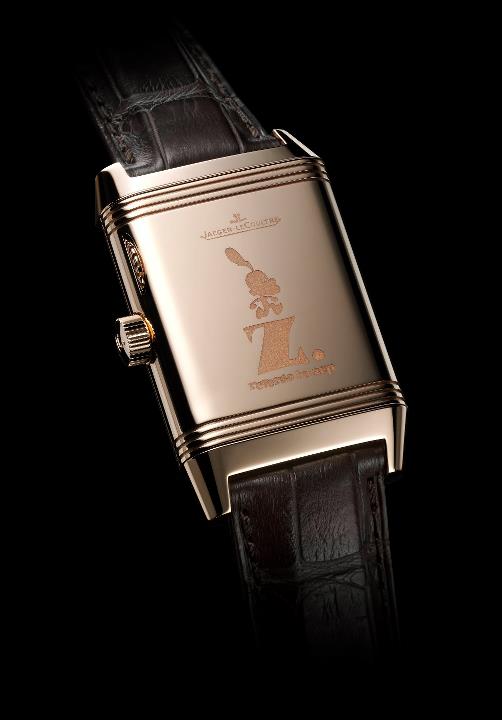
Not a themed edition but a one-off personal commission, also catalogued as a Pièce Unique elsewhere in this archive: Swiss cartoonist Philippe Chappuis — “Zep,” creator of the comic character Titeuf — was invited to the manufacture for the Reverso’s 80th anniversary and designed a dial showing Titeuf climbing inside the watch’s own gear train, a nod to Chaplin in Modern Times. More than eighty hours of enamel work. Unveiled at the Veytay Polo Club during the Jaeger-LeCoultre Polo Masters Geneva, then auctioned at Artcurial in Paris on 29 November 2011 in aid of the Association Monégasque contre les Myopathies.
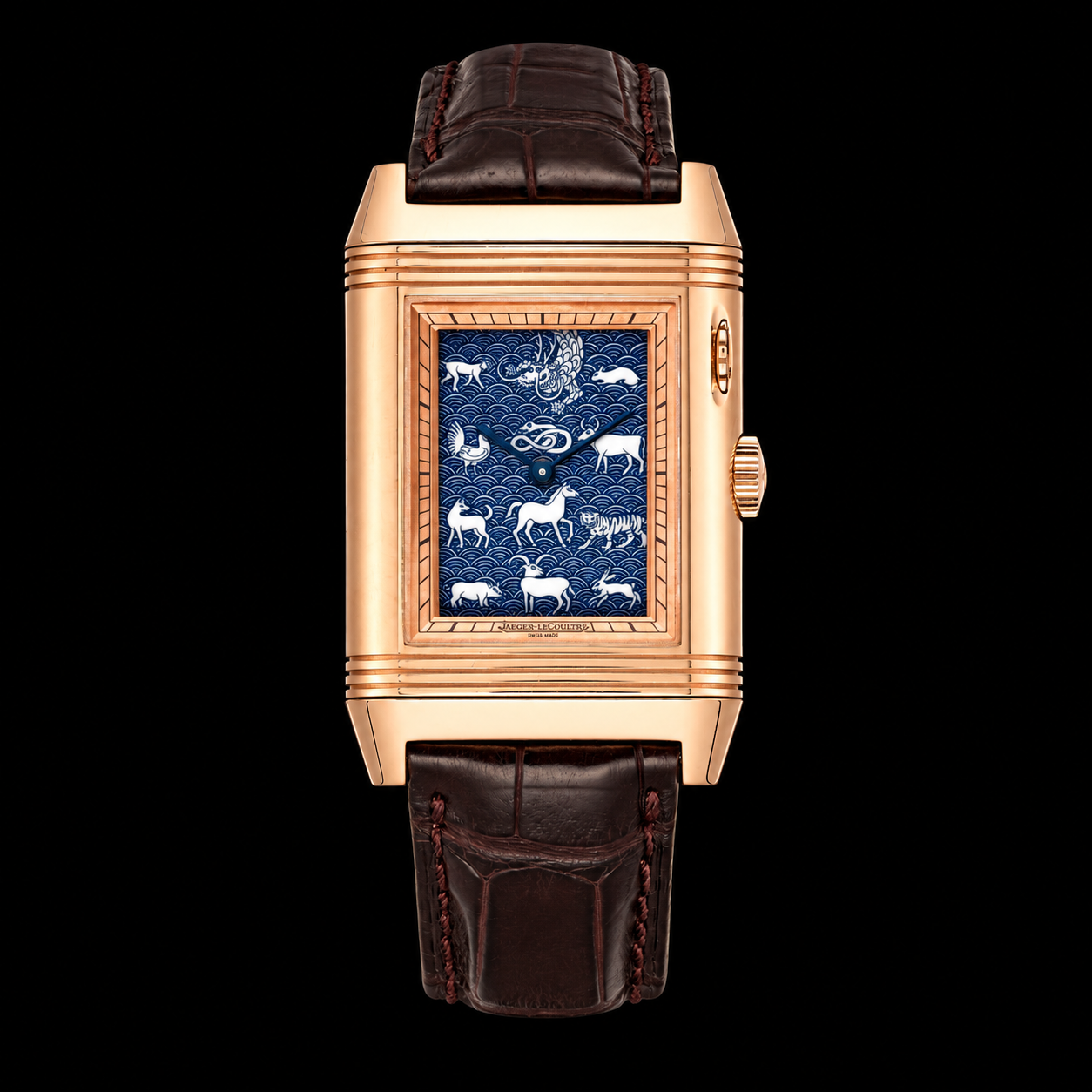
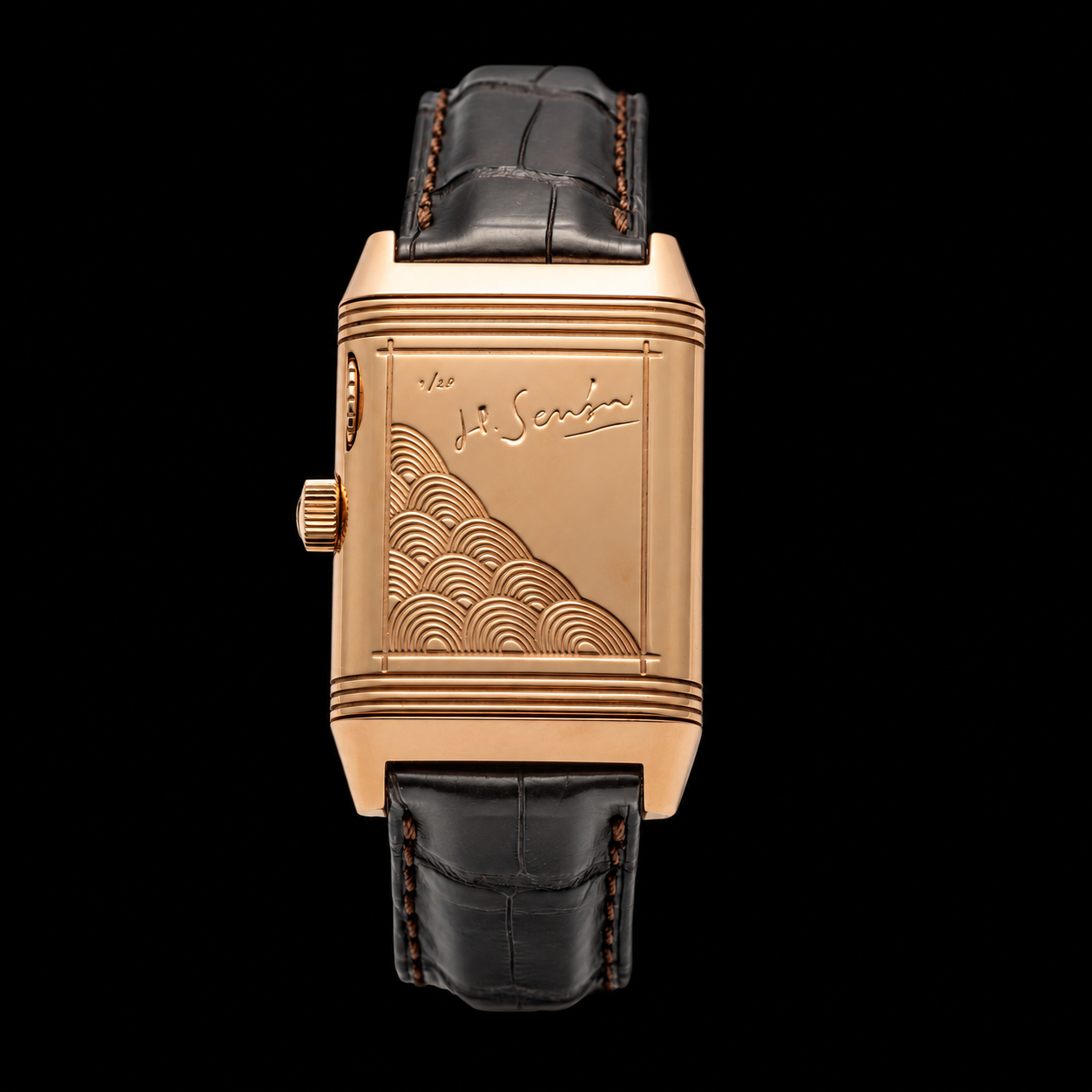
Not twelve individual animal watches but one design showing the full Chinese zodiac in white over a blue ground, by the Japanese painter Hiroshi Senju — an unusual choice of a living, named contemporary artist rather than a historical master. 46.6 × 29.4 mm, snap-on case-back, closed position reveals a plain gold dial with black Arabic numerals. Calibre 849, 123 parts, 19 jewels, 35-hour reserve. Sources disagree slightly on the edition size — Antiquorum’s cataloguing gives 29 pieces on case reference 246.2.79, while a separate retailer listing (commercial reference Q3772402) gives 28; one recorded example was numbered in the high twenties, consistent with the smaller 28-piece figure.
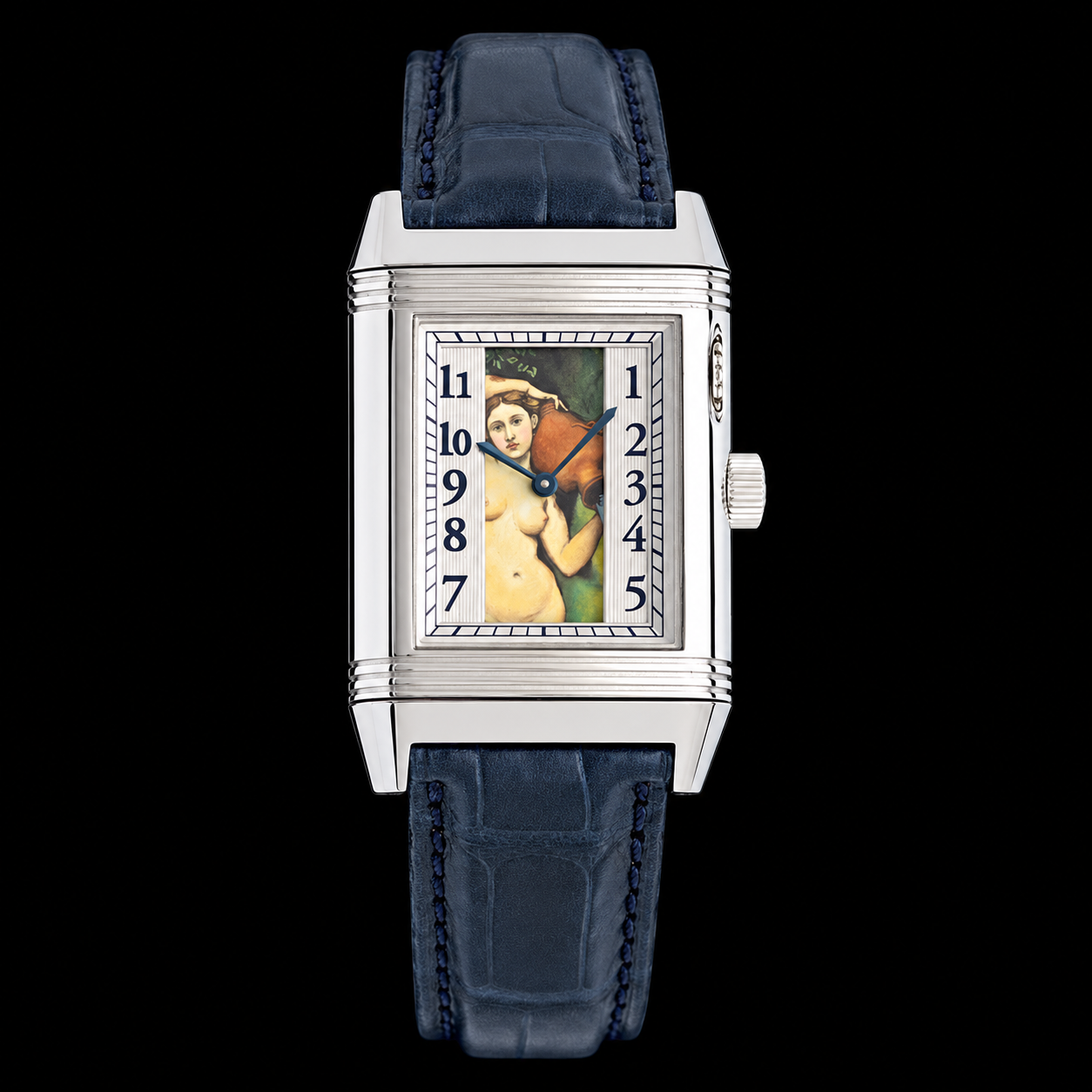
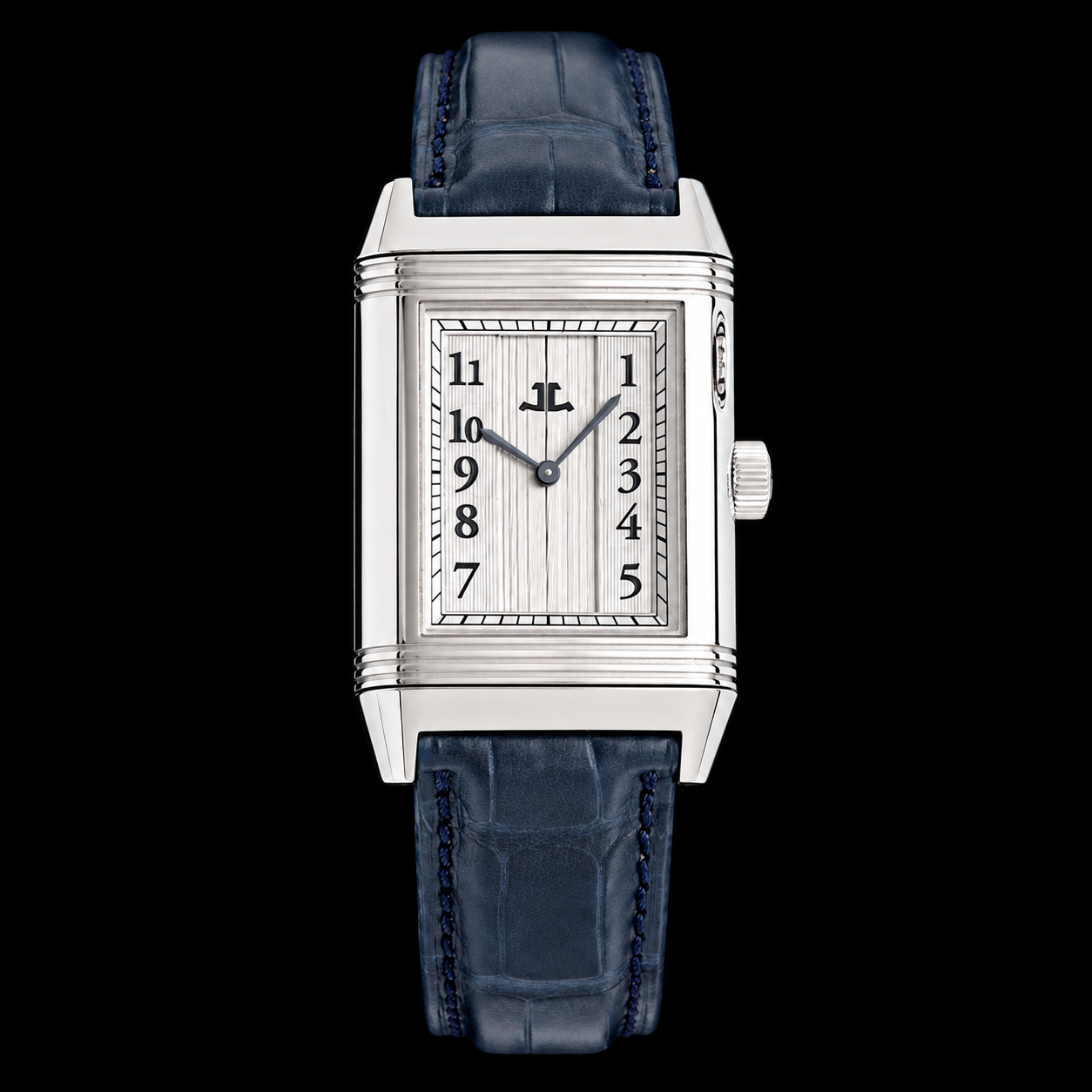
A nude holding an upturned pitcher, water flowing out — Ingres’s 19th-century academic classic, reproduced in miniature enamel. This example’s case-back was left plain, though JLC could decorate the reverse as well on request. Other Famous Nudes subjects share the platinum case reference 246.6.79; this piece likely does too, though it hasn’t been individually confirmed.
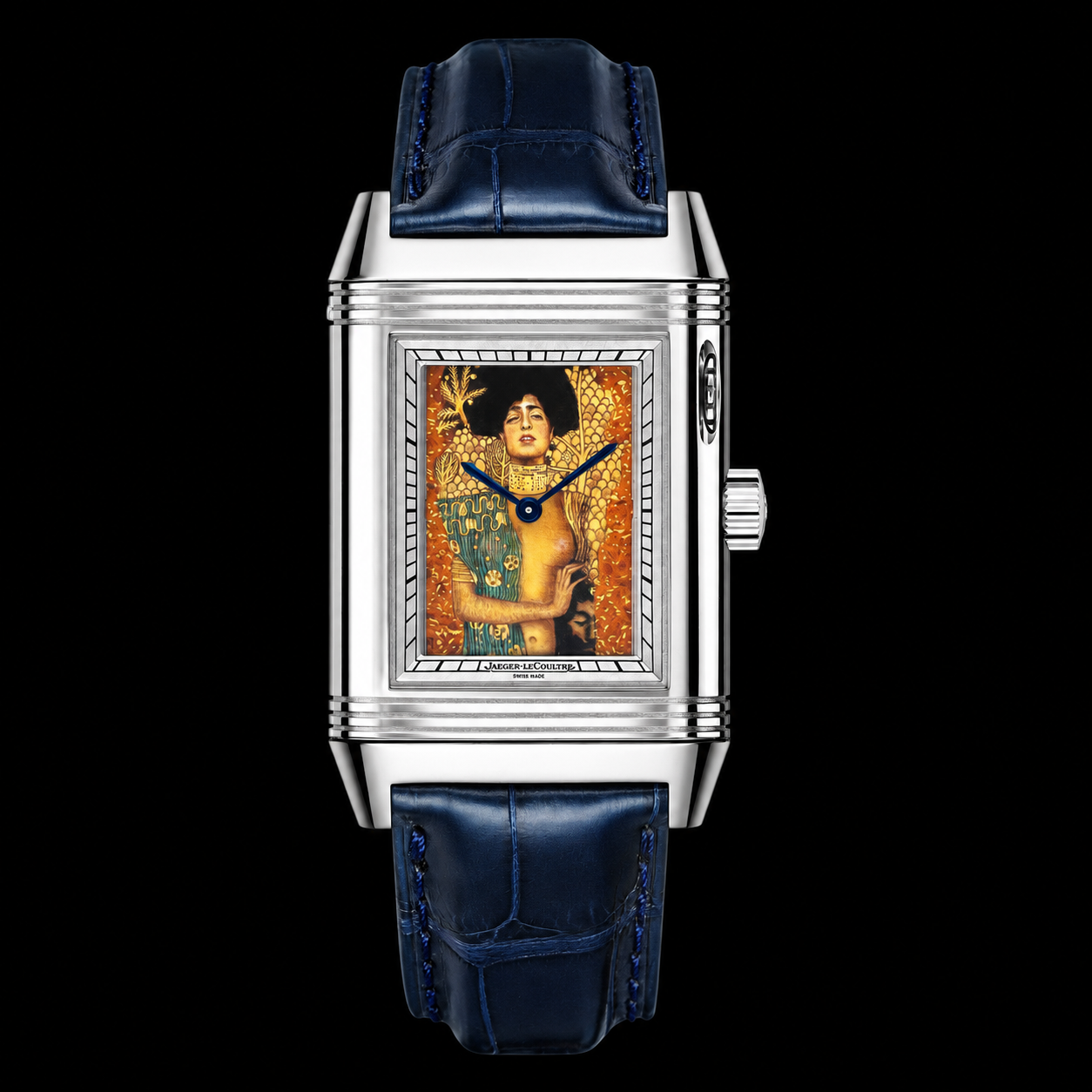
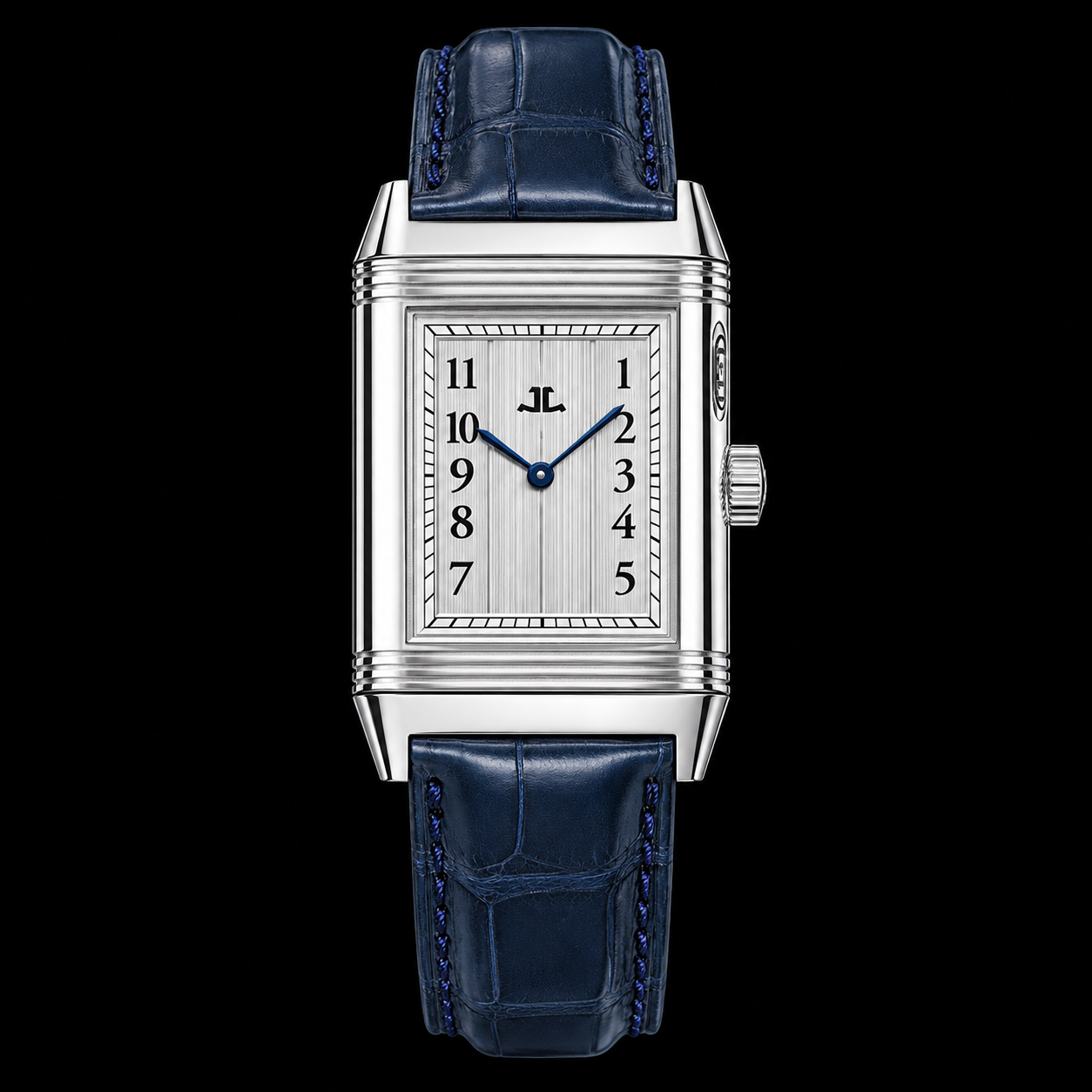
Klimt’s gilded, unsettling Judith, one of the Vienna Secession’s defining images, shrunk onto a Reverso dial — the earlier of two Klimt subjects in the octet, the other being The Kiss.
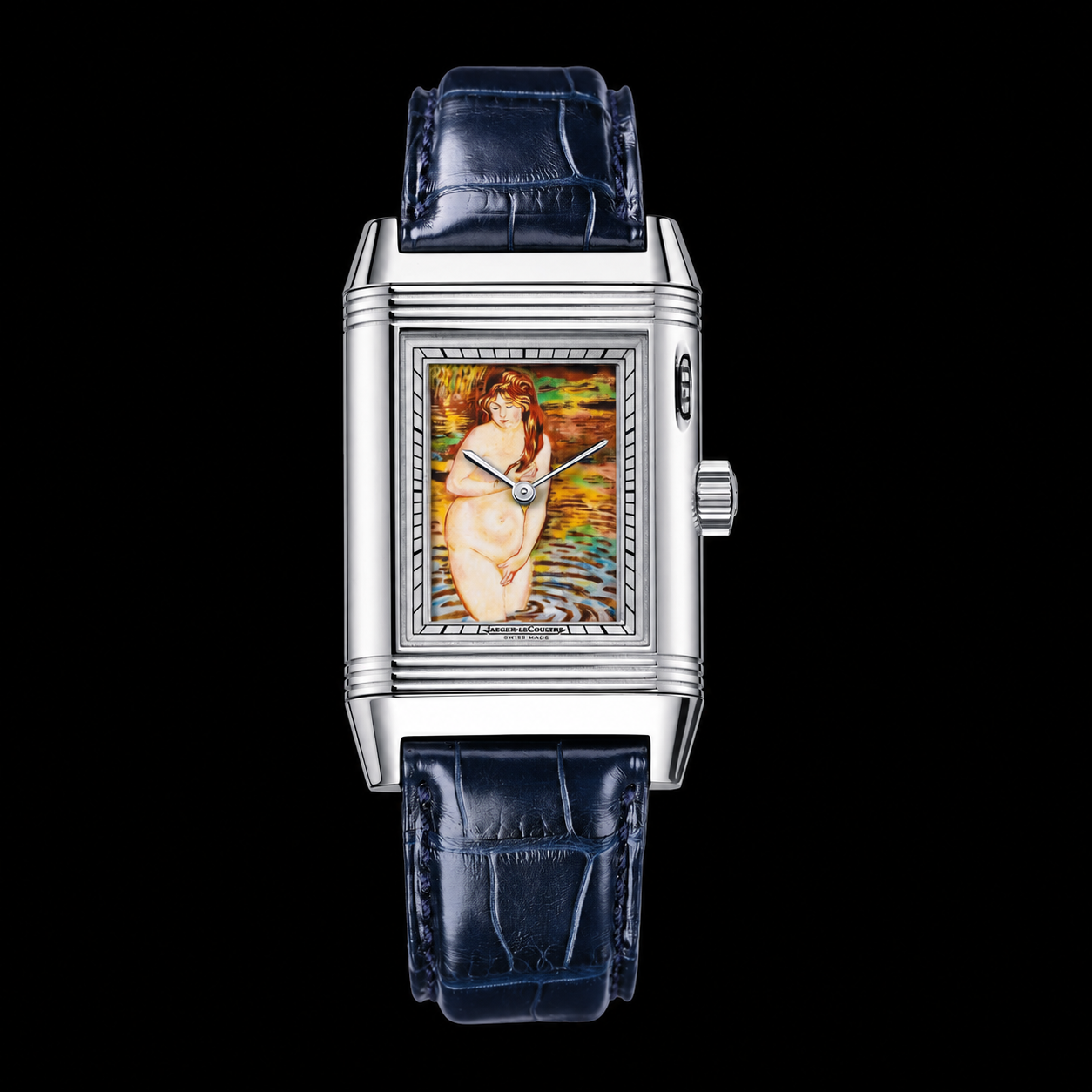
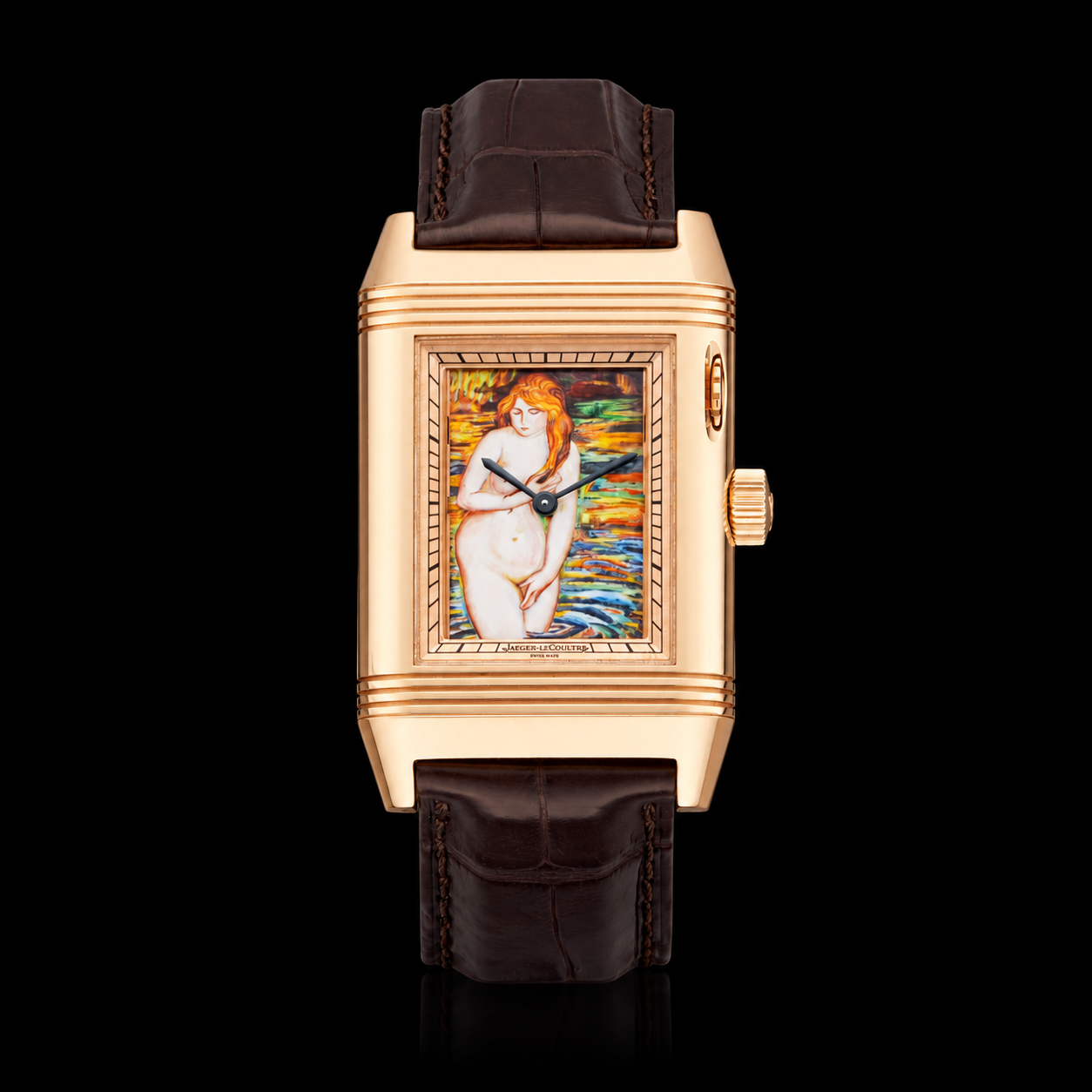
Renoir’s La Baigneuse, one of his many bather studies, completing the roster of named Famous Nudes subjects alongside Ingres, Klimt, and Botticelli. Made in both platinum (ref. 377 64 01, 950 platinum) and pink gold (ref. 246.2.79) — the pink gold example catalogued by Sotheby’s dated circa 2007.
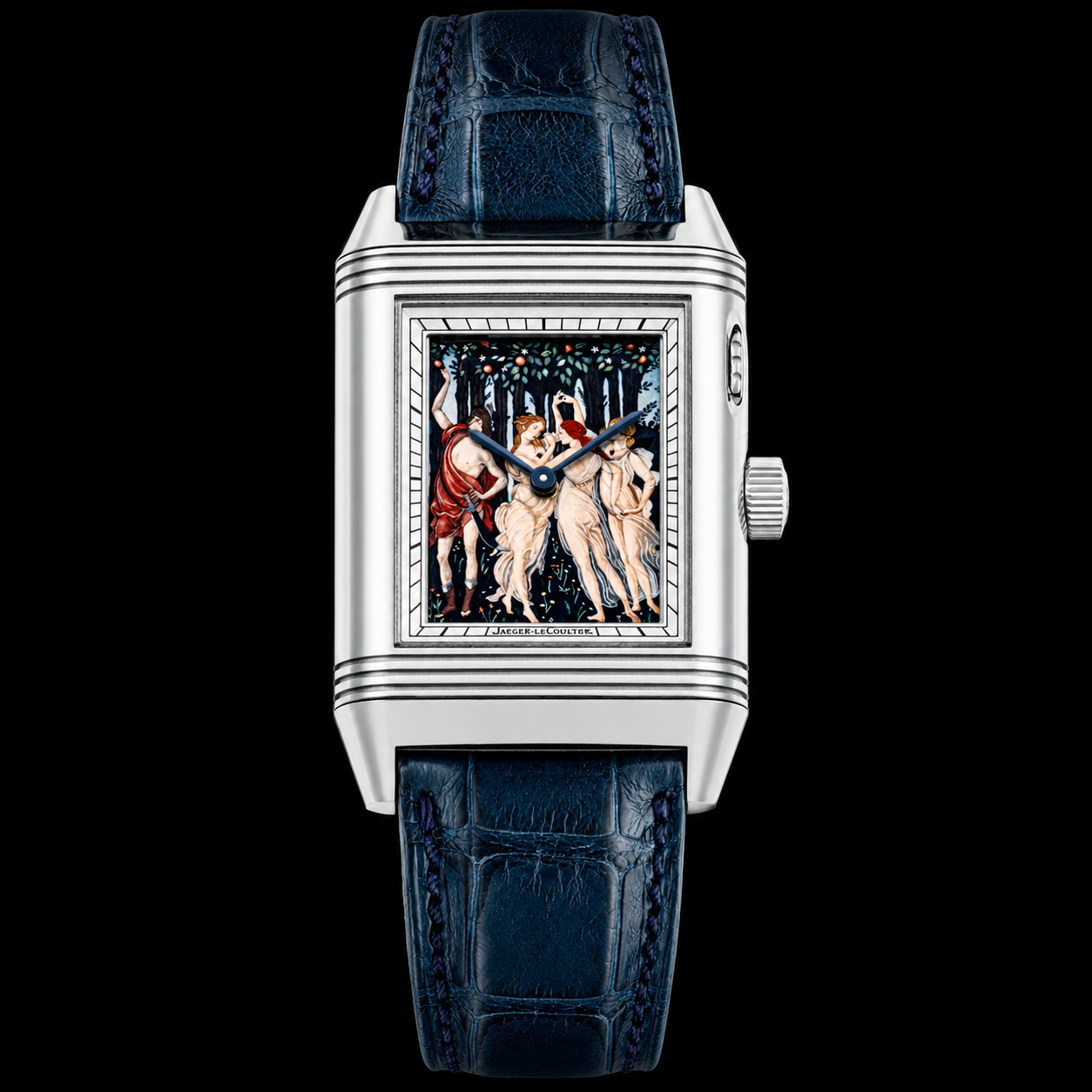
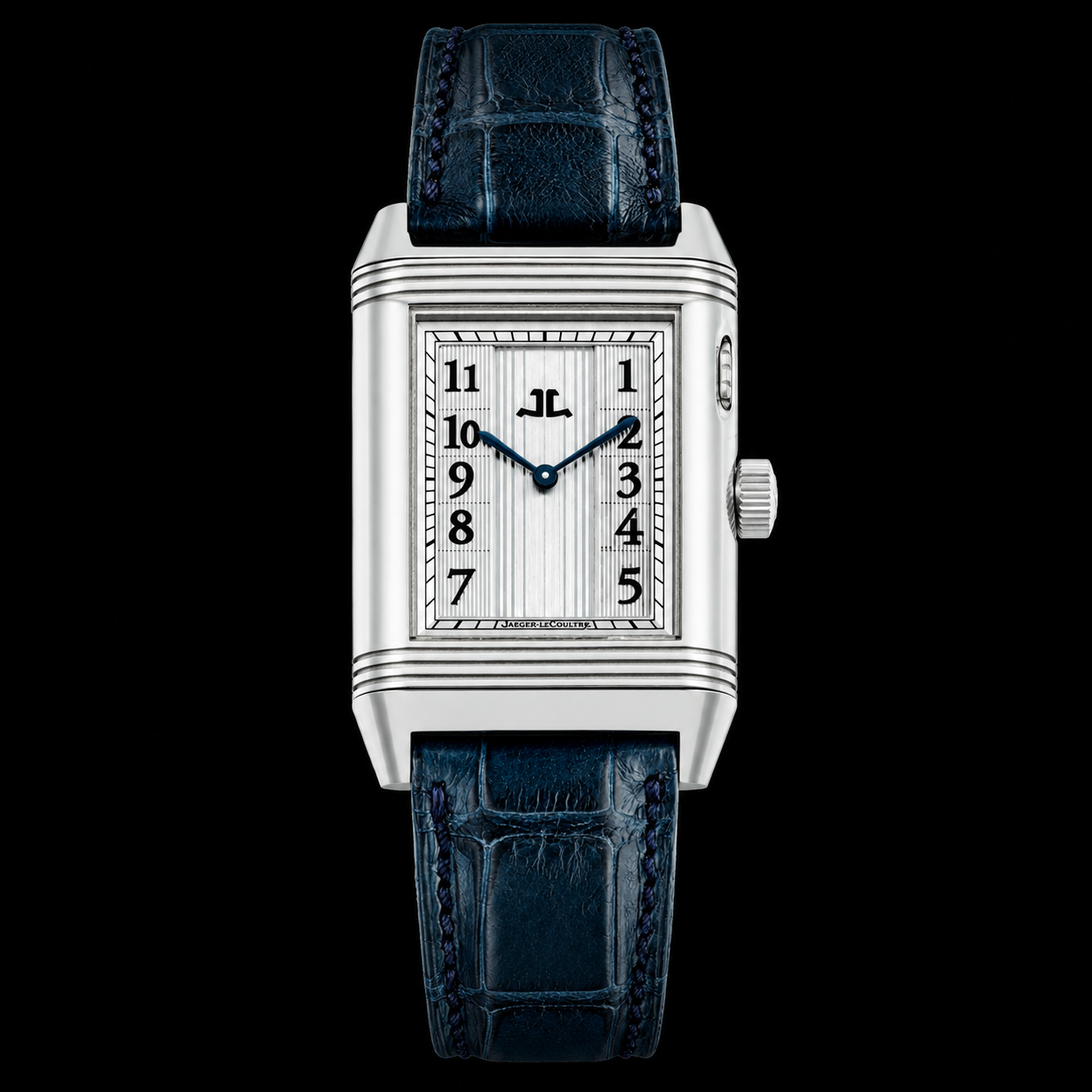
Botticelli’s Primavera (c. 1480), one of the most reproduced paintings in Western art, reduced to a Reverso dial — confirmed via Christie’s cataloguing of an example on the platinum Famous Nudes case reference 246.6.79.
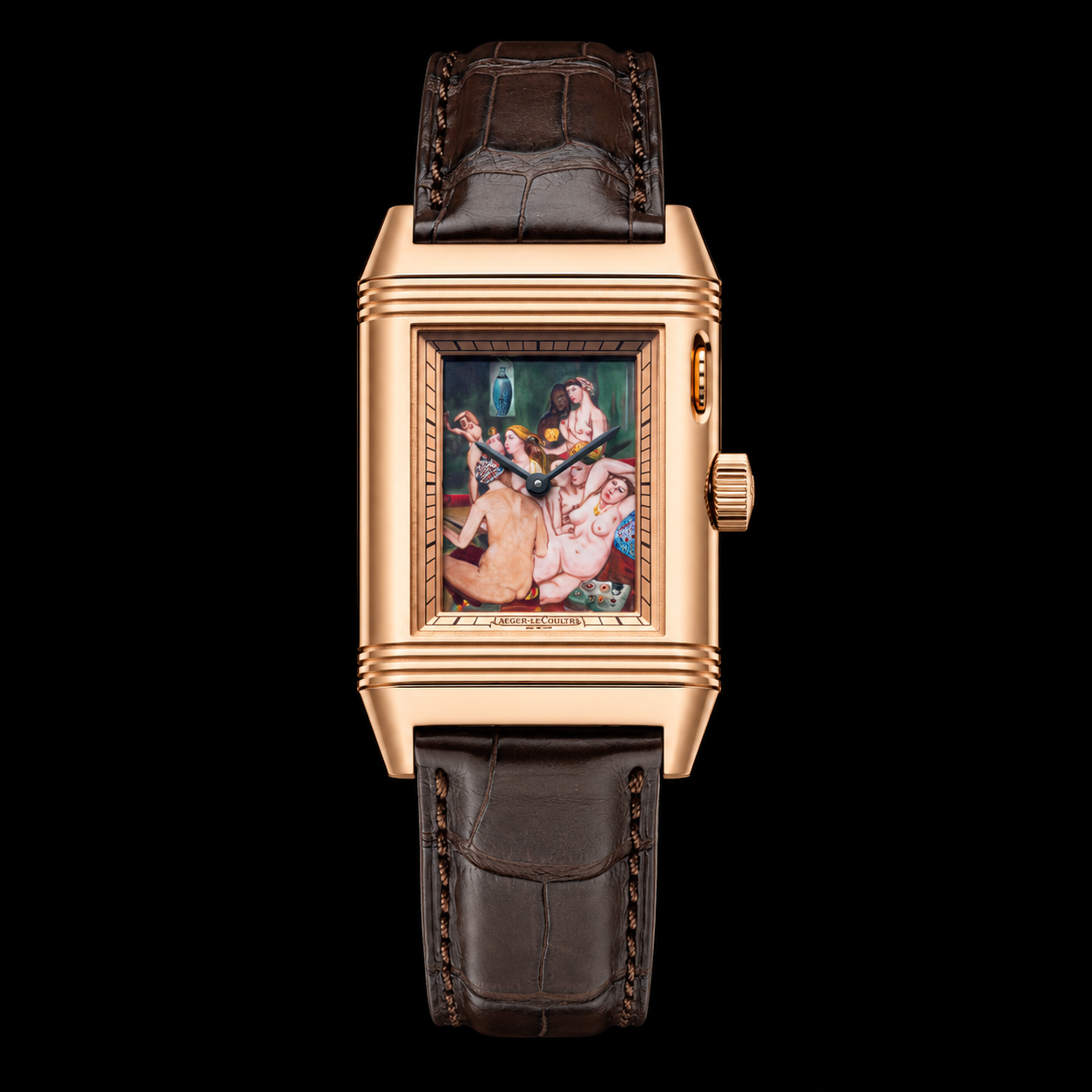
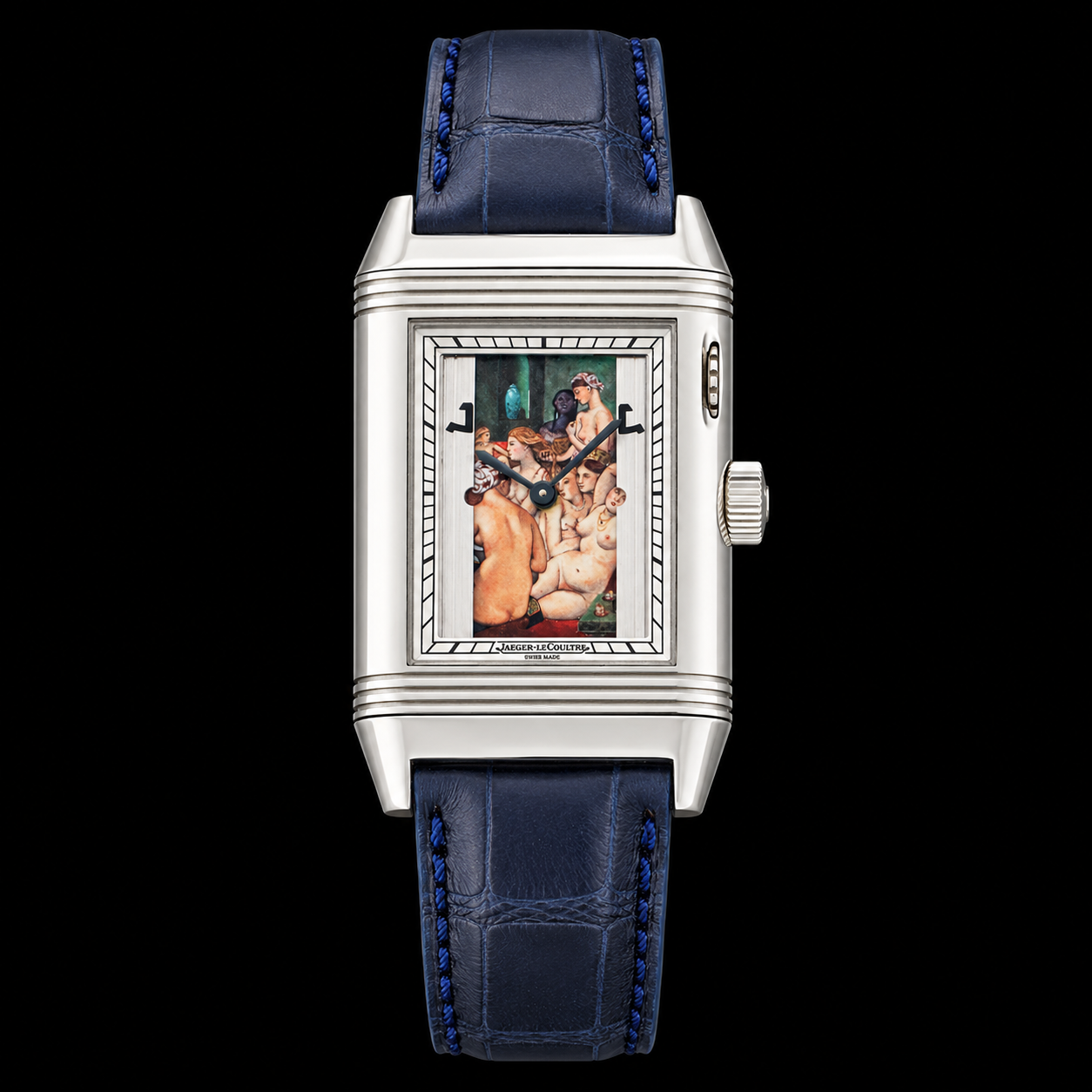
A second Ingres subject in the octet alongside The Source: Le Bain Turc (1862), Ingres’s crowded, circular late-career harem scene. Made in at least two metals — a platinum example on the standard Famous Nudes case reference 246.6.79 (Sotheby’s dates one to circa 2006), and a pink gold version on 246.2.79 (Antiquorum) — suggesting Famous Nudes subjects were produced in small pink gold runs of 5 alongside the platinum editions.
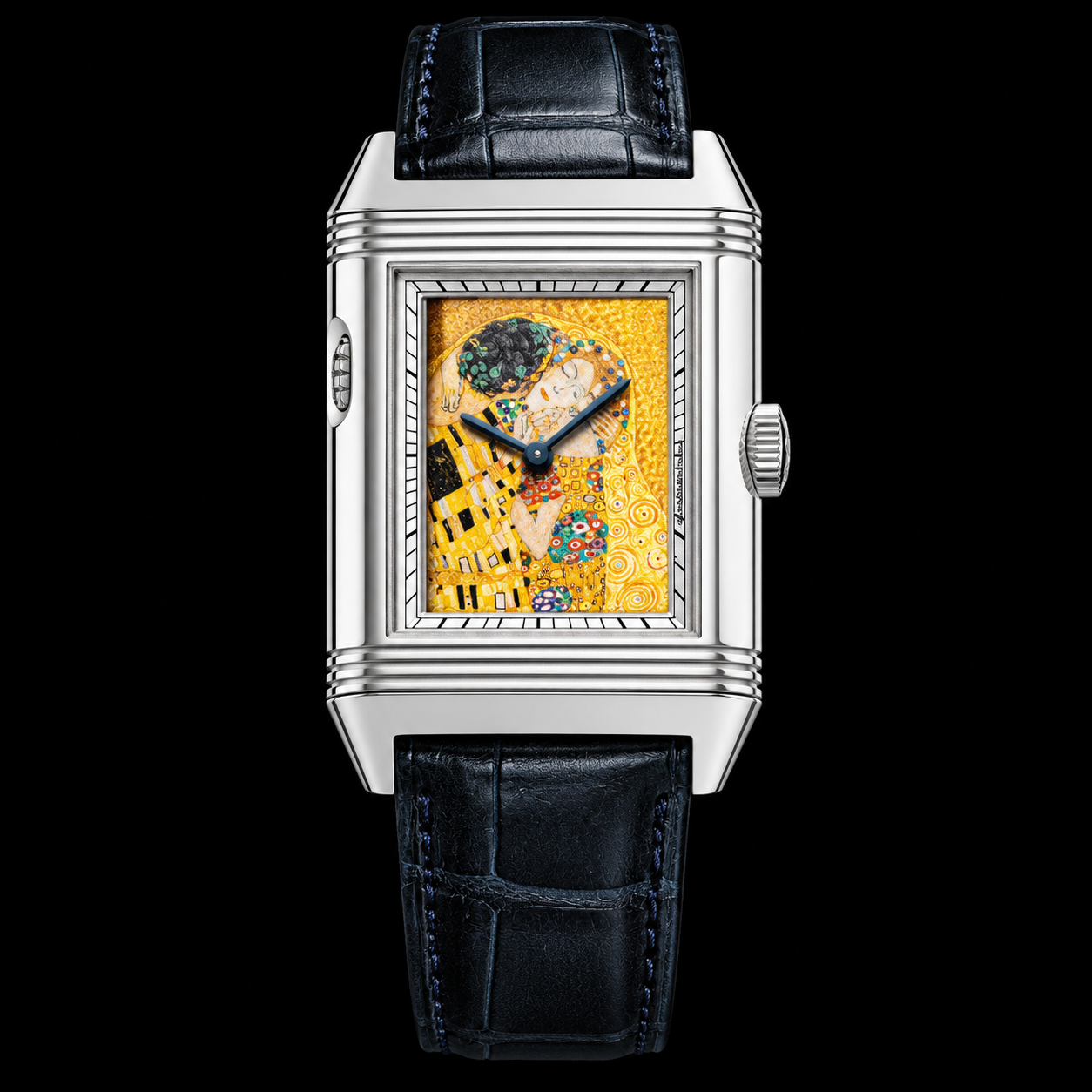
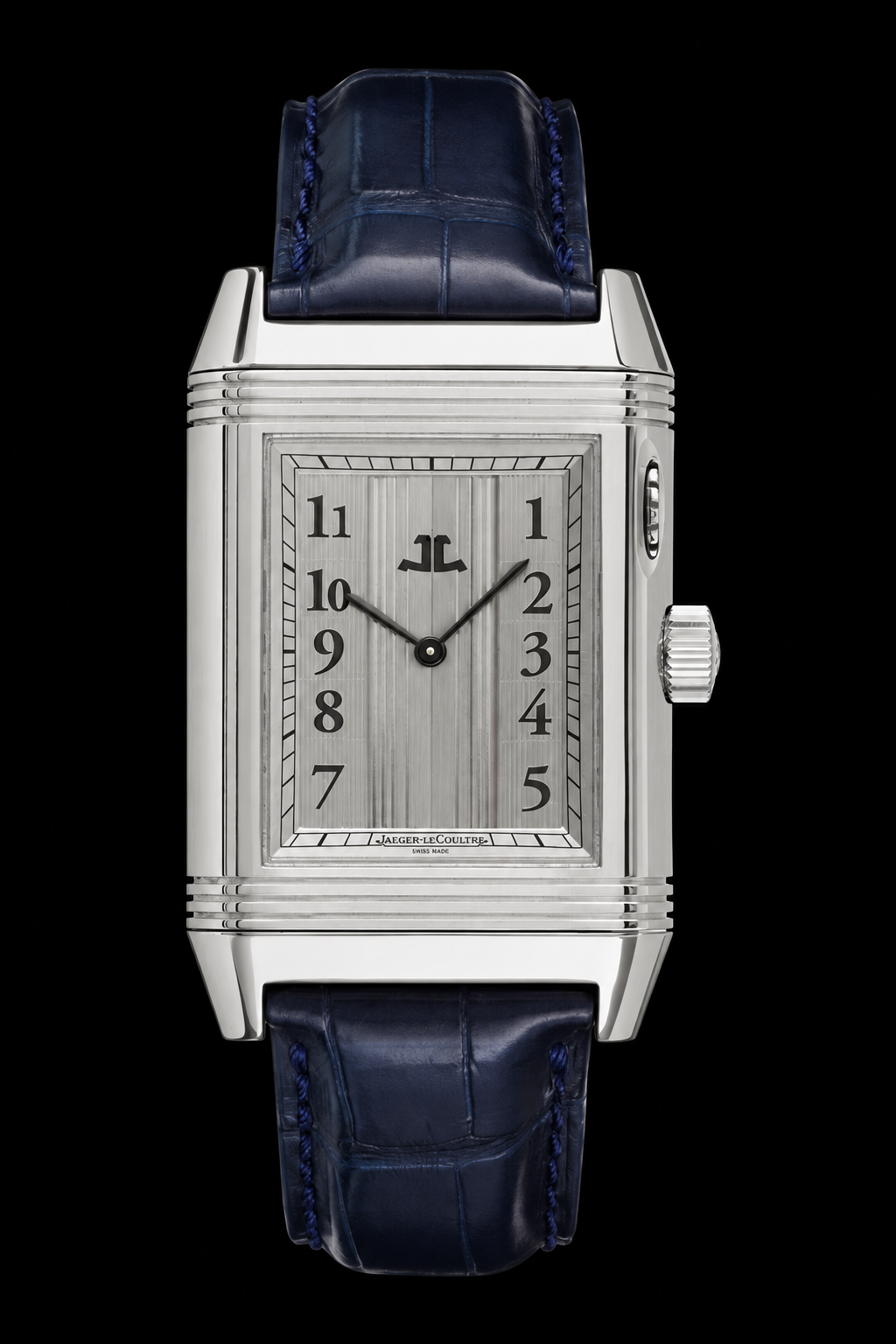
A second Klimt subject alongside Judith and Danaë: his best-known image, The Kiss (1907–1908), on the same 246.6.79 platinum case — but in a run of 10 rather than the 3 or 5 pieces documented for other Famous Nudes subjects, suggesting edition size varied by design rather than being fixed across the whole series. Distinct commercial reference (Q3772434) from the pink gold Danaë (Q3772408), confirming these are two separate Klimt watches within the range rather than metal variants of one design.
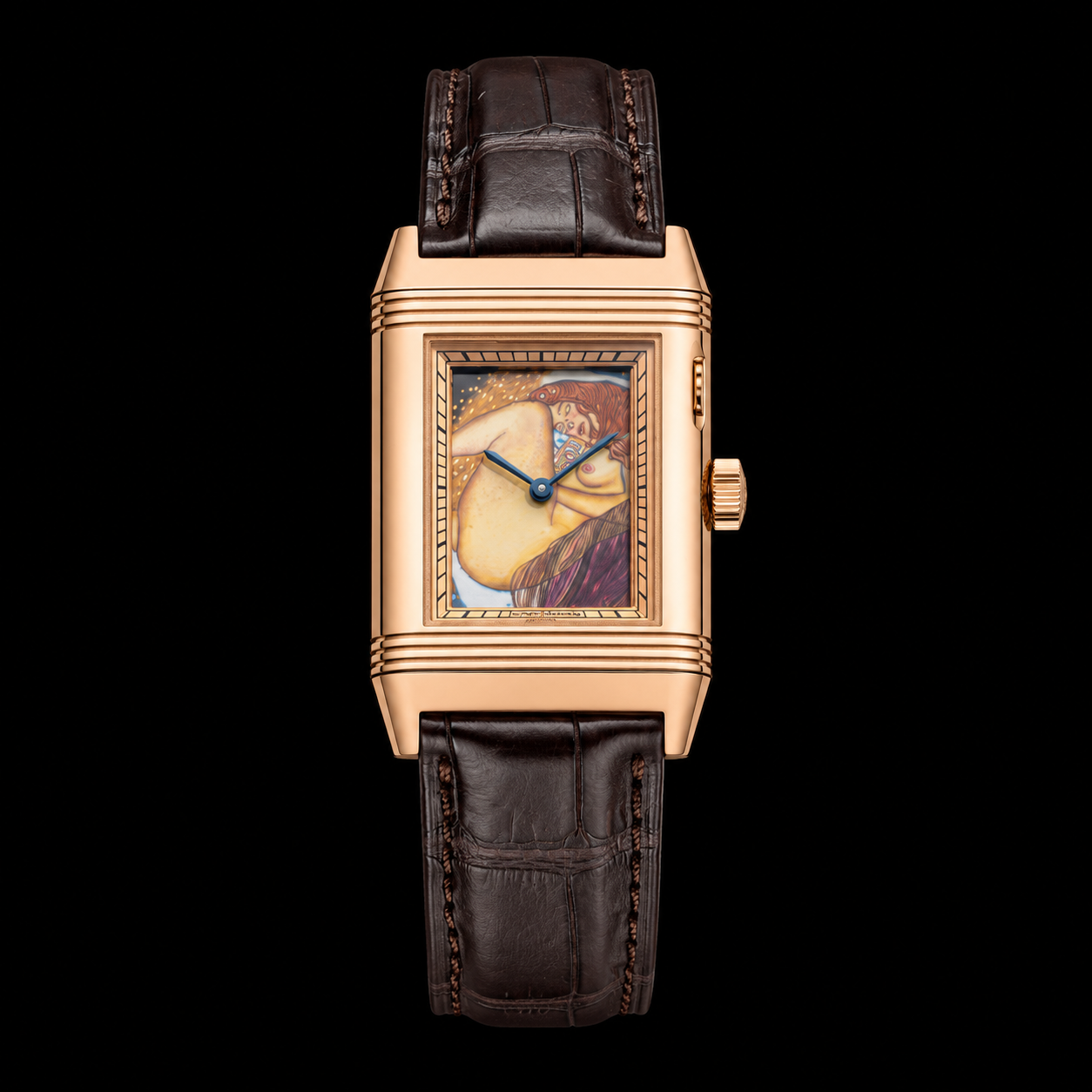
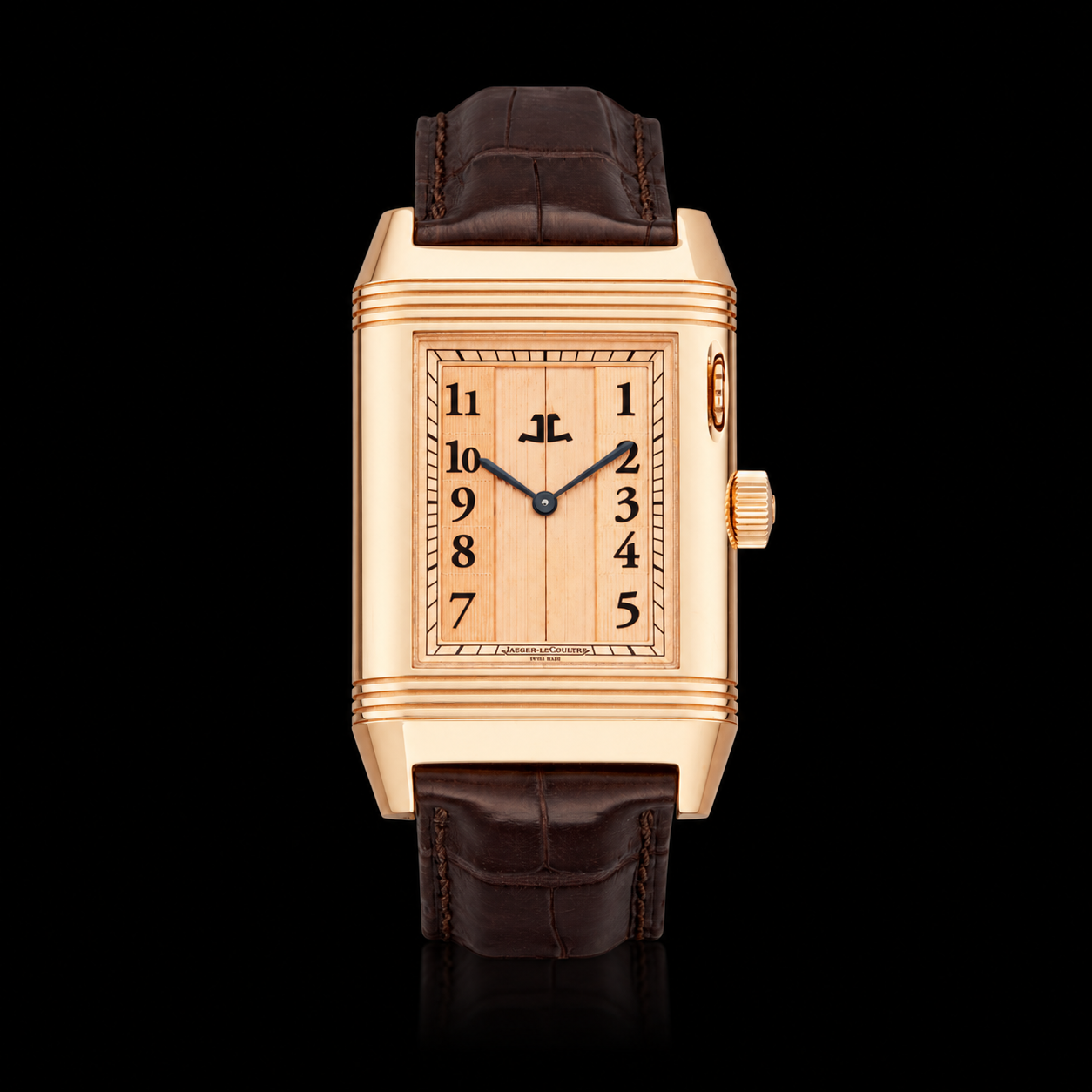
A third Klimt subject in the range, distinct from Judith and The Kiss: his Danaë (1907–1908), reinterpreting the Greek myth of Zeus visiting the imprisoned princess Danaë as a shower of gold, from which she conceived Perseus — Klimt turns the myth into a curled, fetal-shaped figure wrapped in purple fabric, the gold stream running through it, described by the Klimt Foundation as a deliberately sensual reworking of the source story. Phillips dates the Famous Nudes project generally to 2006, the year both the Reverso’s 75th anniversary and the Éclipses model itself arrived, though individual examples were evidently completed and sold later — this one, case No. 2’542’744, dates to around 2012. Pink gold, approximately 29 × 47 mm, manual calibre 849 (roughly 35-hour reserve), five pieces; listed at €72,000 in Jaeger-LeCoultre’s own October 2012 European price list.
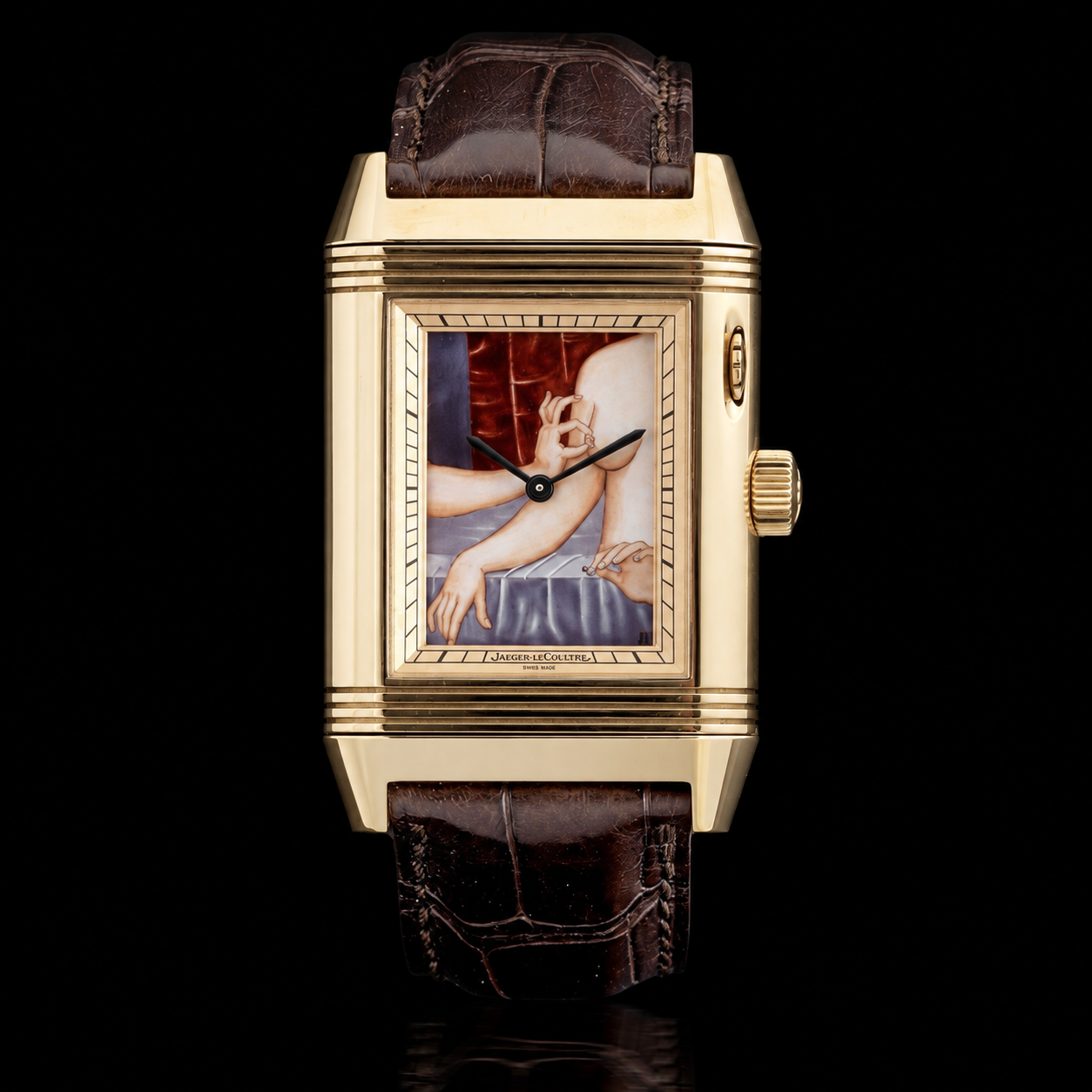
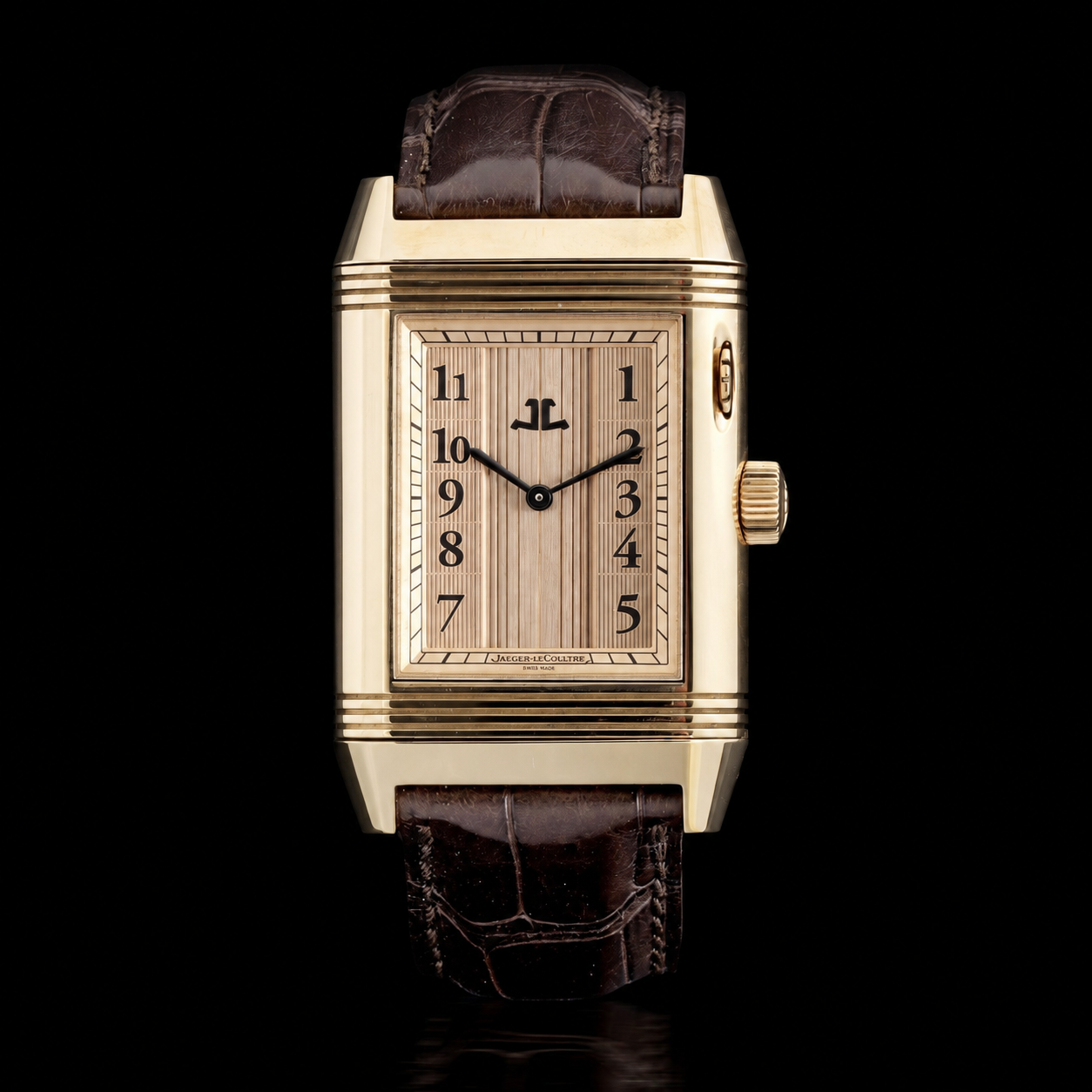
The one Famous Nudes subject in this archive not attributed to a named painter — the original, a Second School of Fontainebleau work from around 1594 now in the Louvre, has never had its artist identified, despite entering the museum’s collection in 1937. It shows two women, believed to be Gabrielle d’Estrées (mistress of King Henry IV of France) and her sister the Duchess of Villars, sitting in a bath; the intimate hand gesture is generally read as a symbol of Gabrielle’s pregnancy with Henry’s illegitimate child, the ring she holds a further reference to the king. Rose gold, calibre 849, 29 × 39 mm, black Arabic numerals printed directly onto the rose gold shutters. Limited to 5 pieces; one example was originally sold by Jaeger-LeCoultre on 30 April 2009 and later resold at Bonhams in June 2016 for £27,500 including premium.
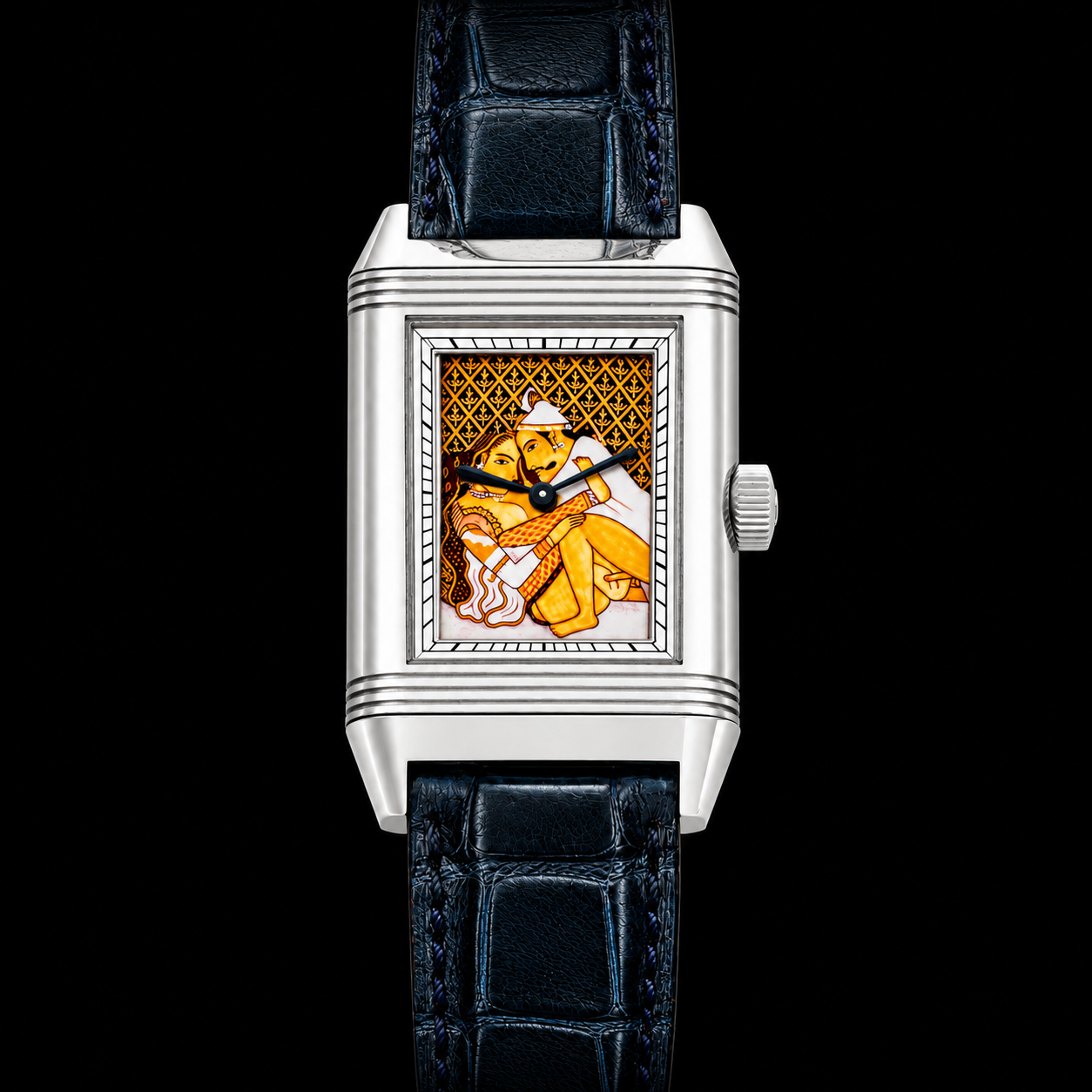
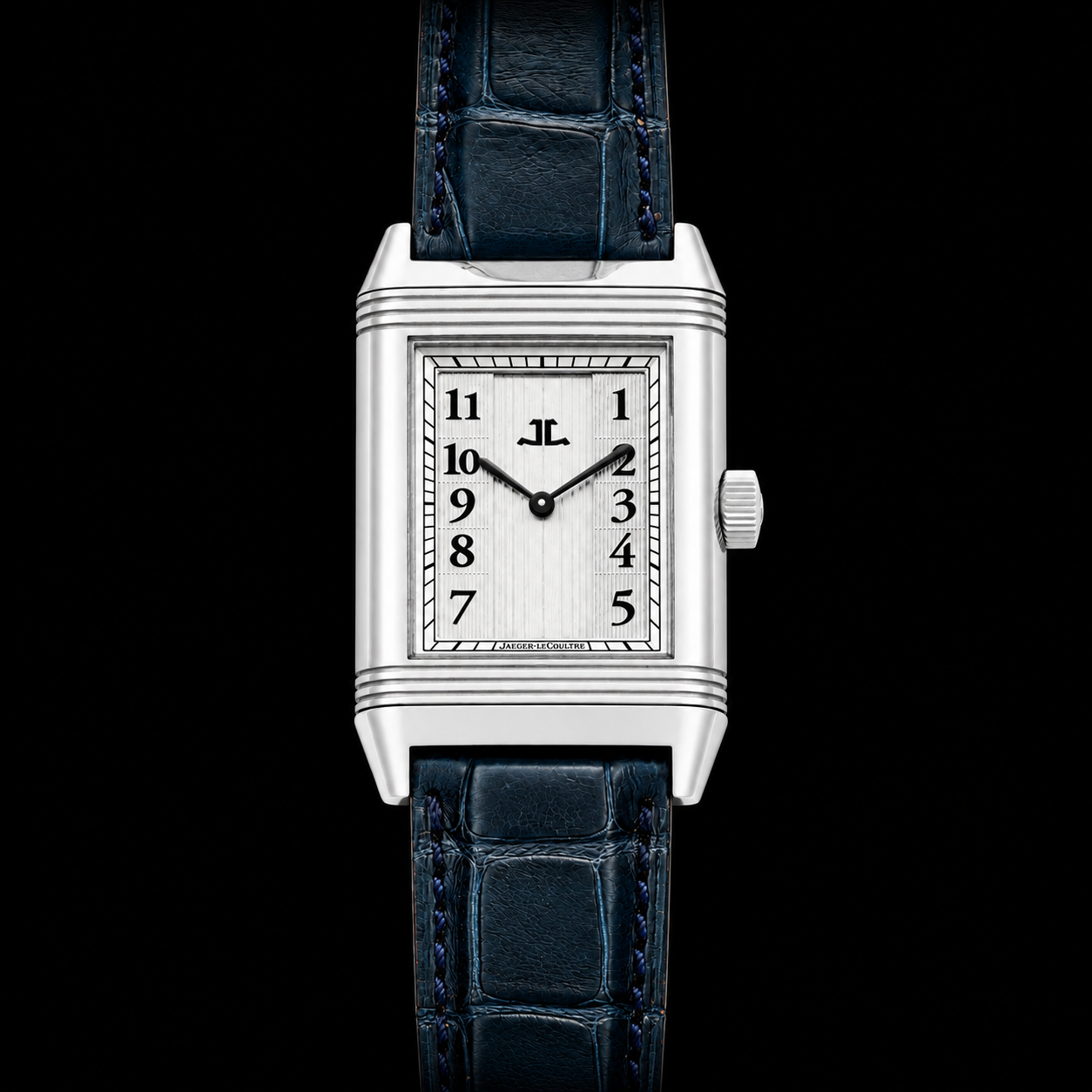
Catalogued by Christie’s simply as an unnamed “erotic scene,” on the platinum Famous Nudes case (case No. 2’454’653), one of 3 pieces — matching the run size reported elsewhere for the Ingres Source. Also produced in pink gold, following the same dual-metal pattern as other Famous Nudes subjects. Other, secondary sources describe a Famous Nudes subject drawn from the Kama Sutra; this may be the same piece, though the auction house’s own description doesn’t use that name, so the two aren’t stated as identical with certainty.
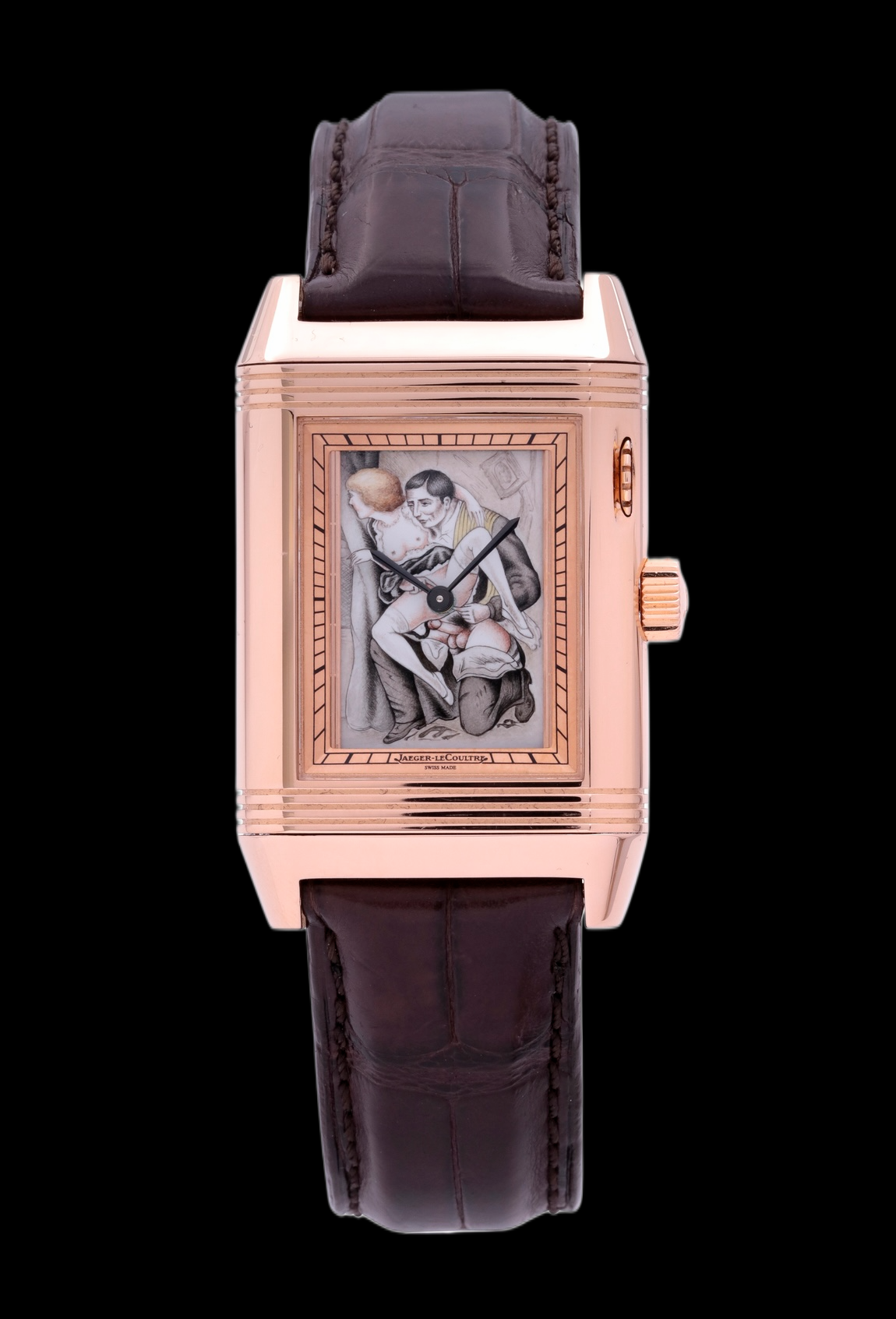
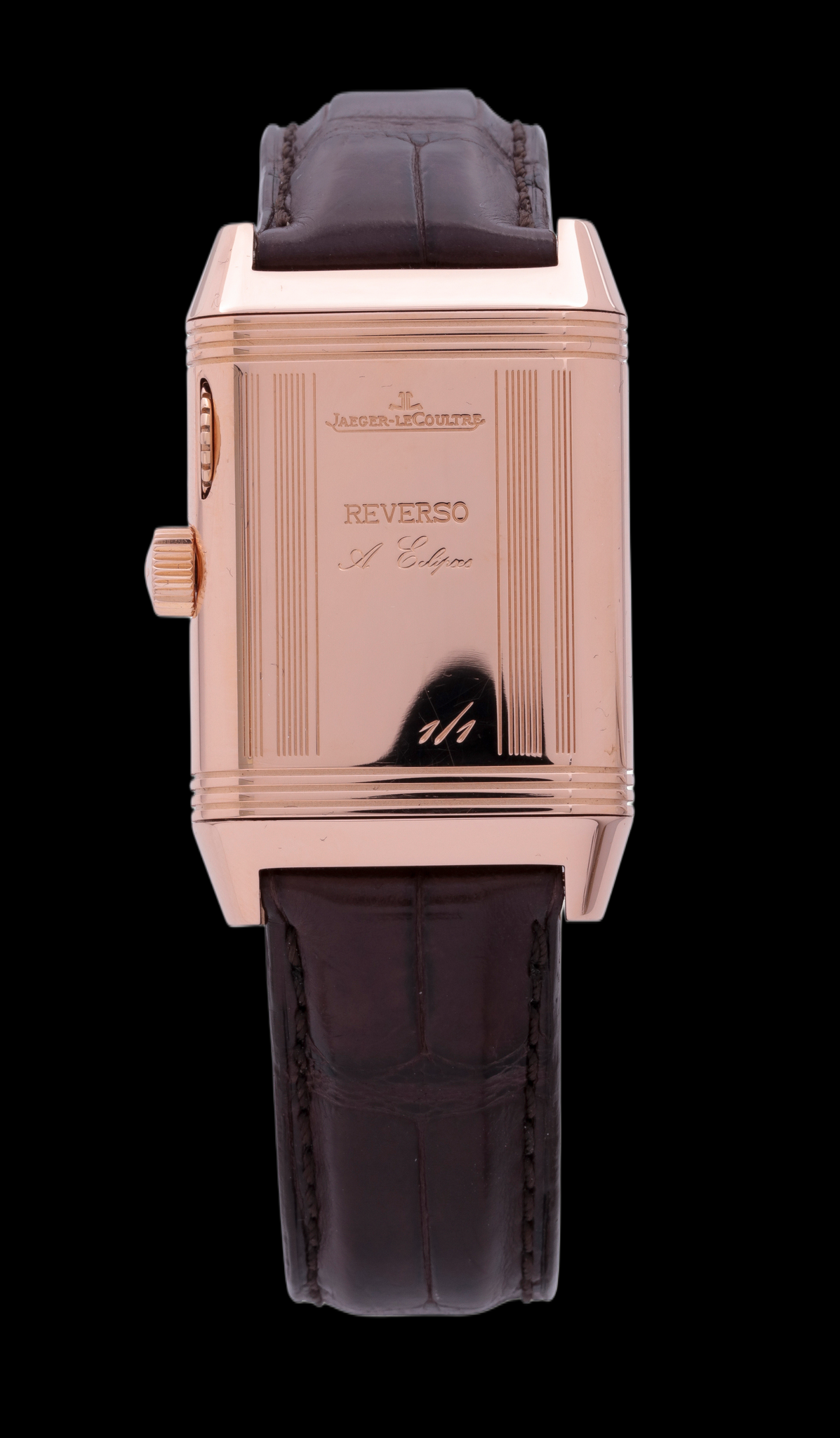
Not part of the numbered Famous Nudes run at all: a one-off pink gold Éclipses with its own erotic enamel scene, on the separate 246.2.79 case reference. Catalogued by Christie’s as a genuine unique piece — likely a bespoke commission in the same spirit as Zep’s Titeuf watch below.
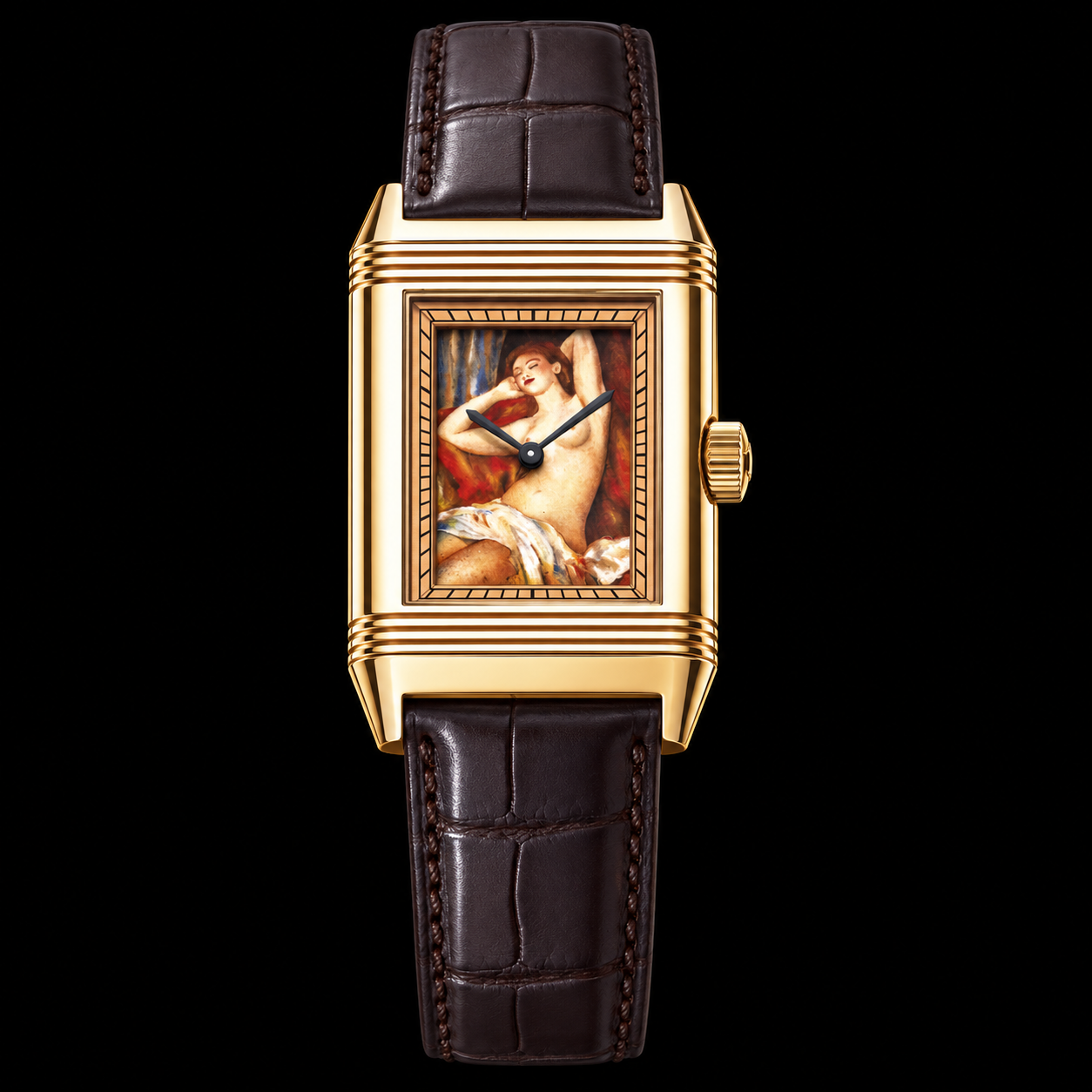
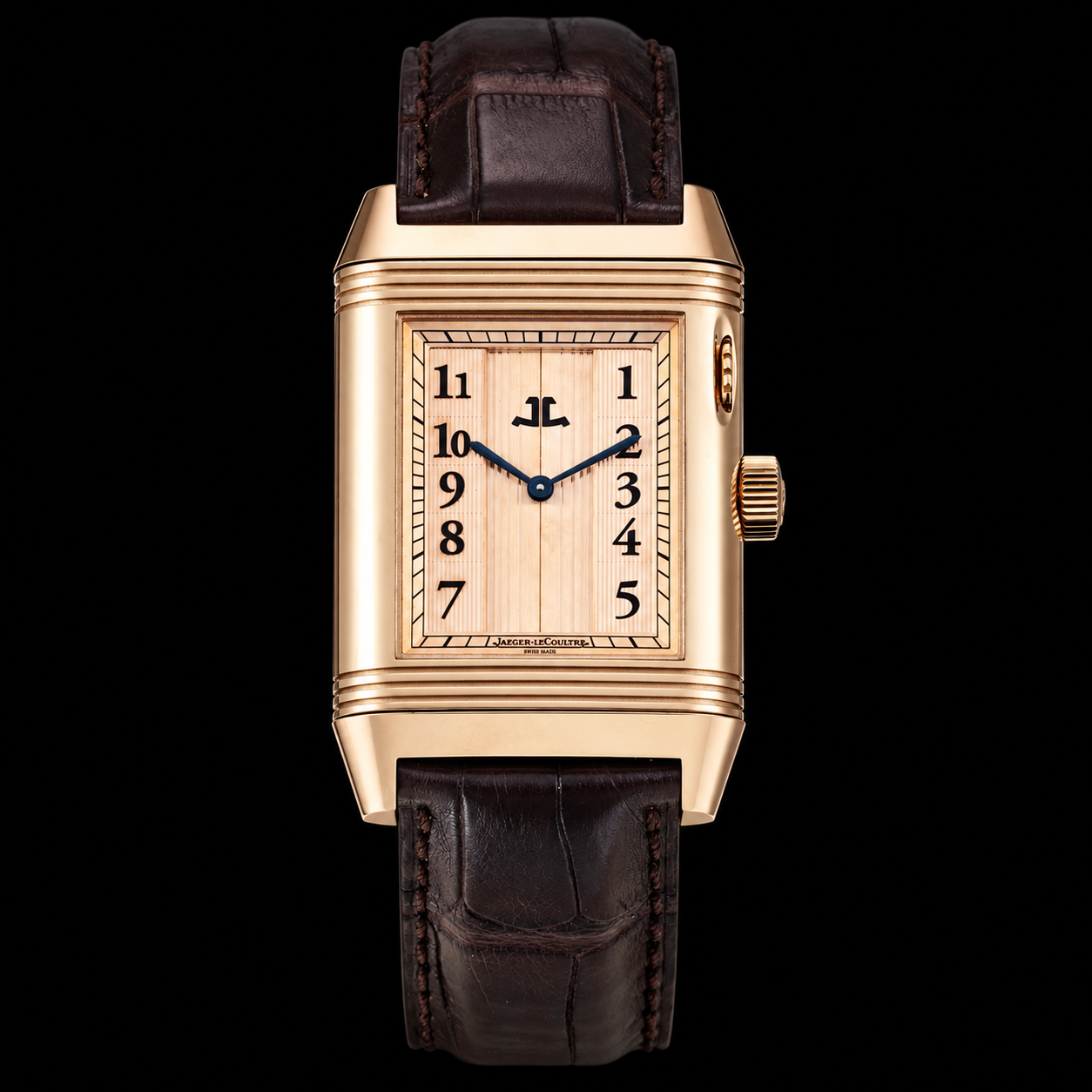
A reclining-nude subject in the Famous Nudes run, made in both pink gold and platinum, limited to 5 pieces per metal. Sotheby’s catalogued the pink gold example only by its French title, without naming the original painting or artist behind it.
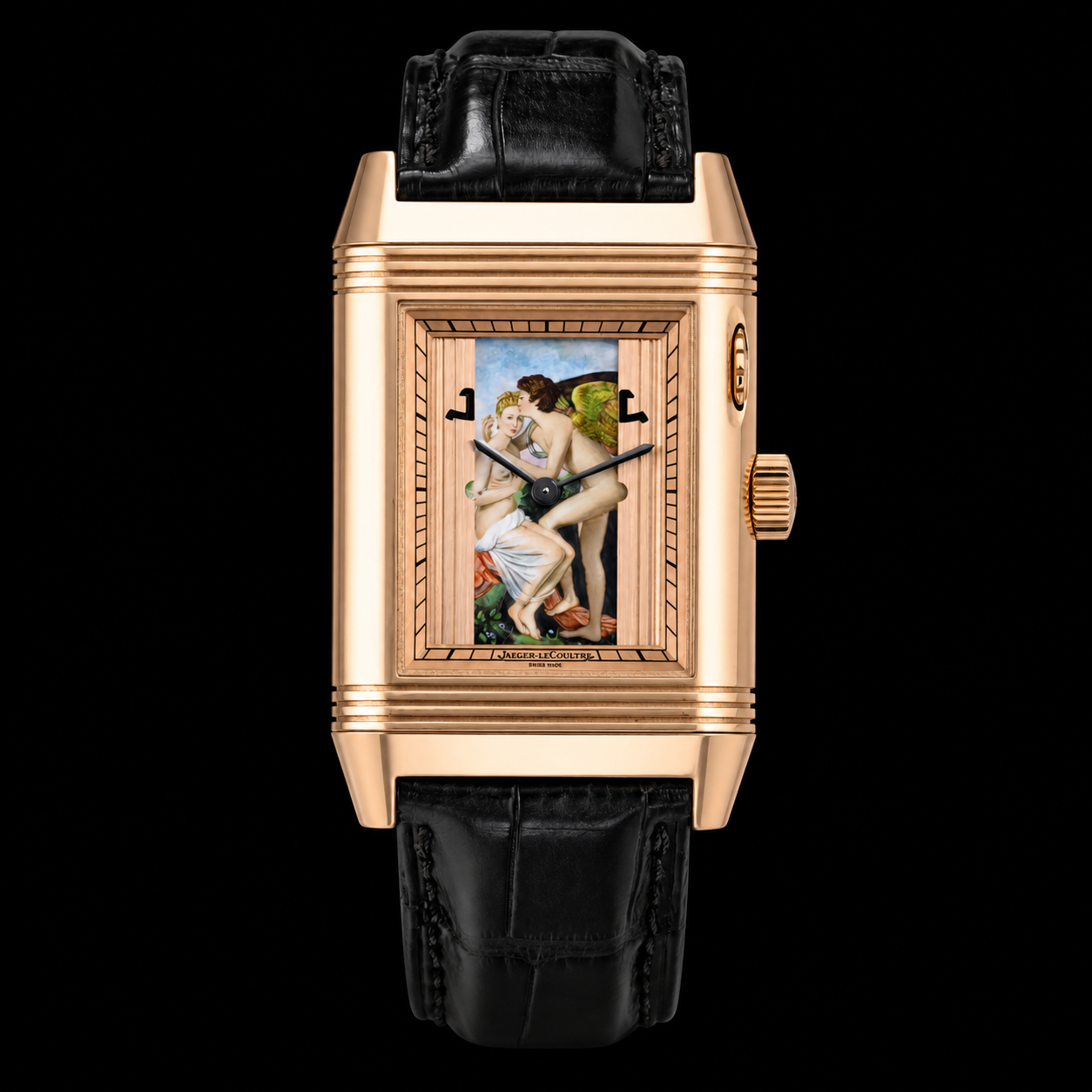
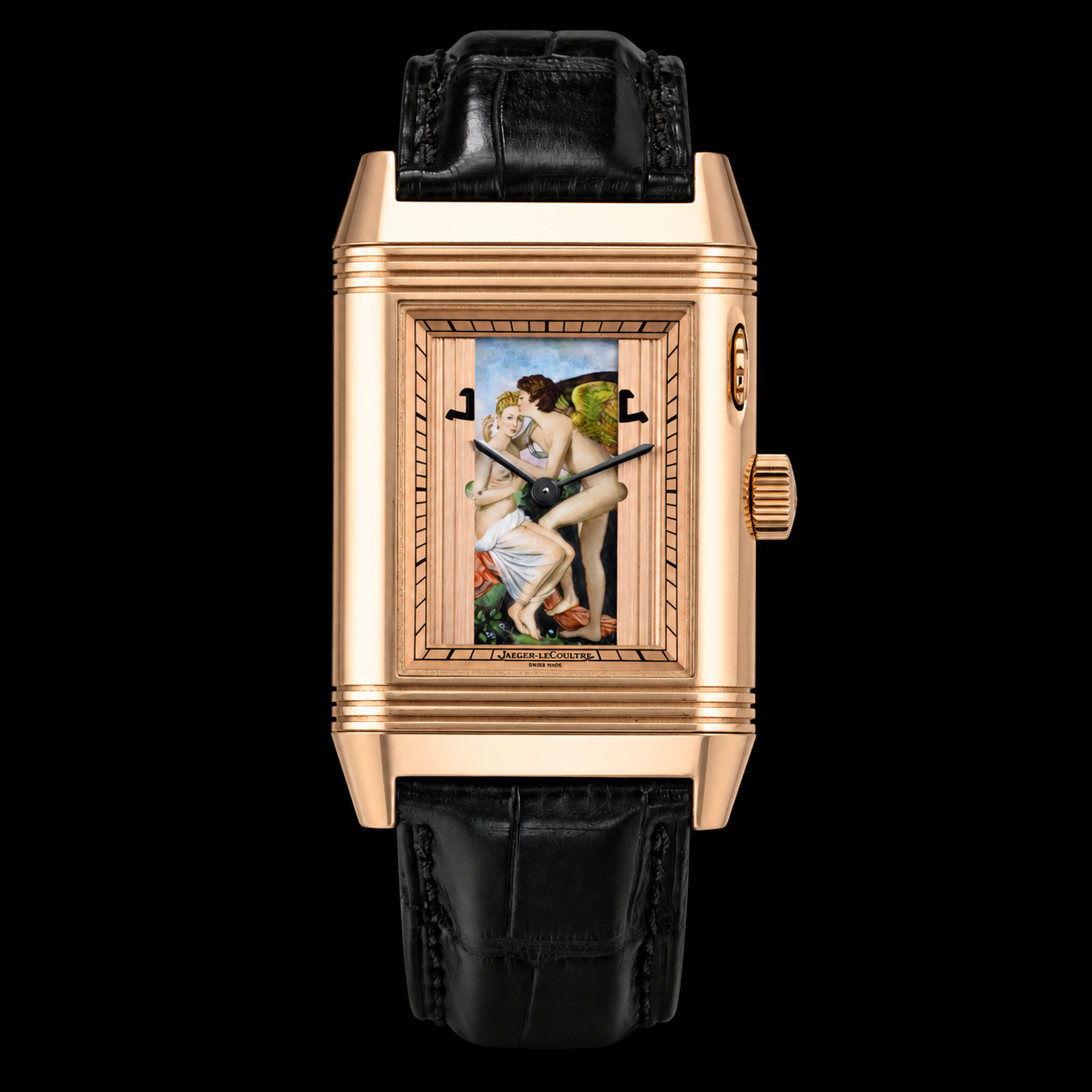
The one confirmed subject in the entire Éclipses range that isn’t a nude at all, despite being catalogued within the “Famous Nudes” series: the Angel Gabriel’s announcement to the Virgin Mary. Sotheby’s own catalogue note names the scene directly and confirms a run of 5 examples. Why a religious Annunciation scene sits inside a line explicitly branded around nude paintings isn’t explained by the source — possibly a cataloguing inconsistency on Jaeger-LeCoultre’s own part, or evidence that “Famous Nudes” had become a loose umbrella name for the pink gold 5-piece runs generally, not a strict thematic rule.