The First Series
From a borrowed Tavannes movement to a watch discontinued and nearly forgotten. Everything here is vintage; nothing here was ever called a "Reverso Classic".
Born of a contract signed in Lausanne by Chauvot, the Geneva casemakers A. & E. Wenger, and César de Trey with his son Pierre. Chauvot took SFr 2.50 for every watch sold. They projected 5,000 pieces a year in steel and gold, in two sizes, and wanted stock in shops for Christmas 1931. Article 14 of that contract quietly permitted movements from Tavannes, Movado or Jaeger/LeCoultre: an escape clause in case Le Sentier could not deliver in time, which is exactly what happened. It was also marketed hard on toughness: a 1940 advertisement called it la montre idéale aux armées, built in Staybrite steel, “absolutely stainless, and of a hardness proof against any test”. No seconds hand, and the dial signed simply “Reverso”: no Jaeger, no LeCoultre, because there was no LeCoultre movement inside to claim.
Source: Basha, JLC: A Guide for the Collector
A women’s Reverso existed from the very beginning, which is telling: there was no meaningful market of female polo players. It appears only in the first series (1931–33) and then vanishes, making it one of the scarcer vintage configurations. The line went further than the wrist: Artcurial’s 2011 sale included a c.1933 Staybrite pendant Reverso (a keyless bag watch, case no. 14494, movement no. 38029, 34 × 23 mm), confirming the ref. 205 pendant listed in the period tables.
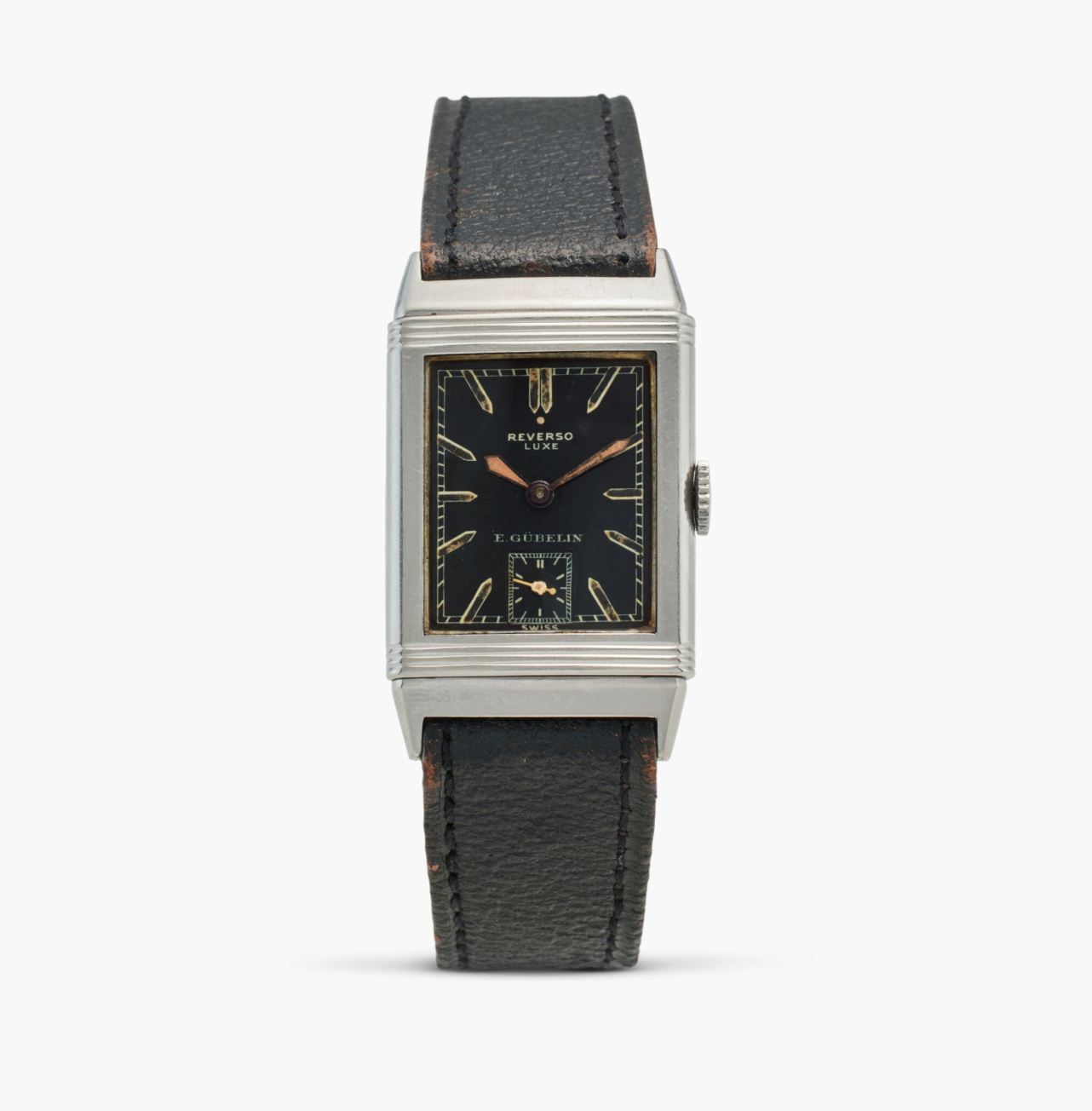
The upgrade tier, and quietly a landmark. The De Luxe was fitted with a synthetic sapphire crystal, among the earliest known uses of sapphire in a commercial wristwatch, and a movement adjusted to two or more positions. Given that the whole watch existed because mineral glass shattered, solving the problem with sapphire rather than steel is a neat piece of irony.
Source: Basha, JLC: A Guide for the Collector
Two years in, LeCoultre finally had its own rectangular movement, and immediately made two: the 410 with small seconds at six, and the 411 with a sweeping centre seconds. This is also the moment the dials start carrying names: Reverso-LeCoultre, Jaeger, and after 1937 Jaeger-LeCoultre. Retailer signatures appear too: Gübelin, Türler, Cartier, sometimes instead of the manufacture’s own.
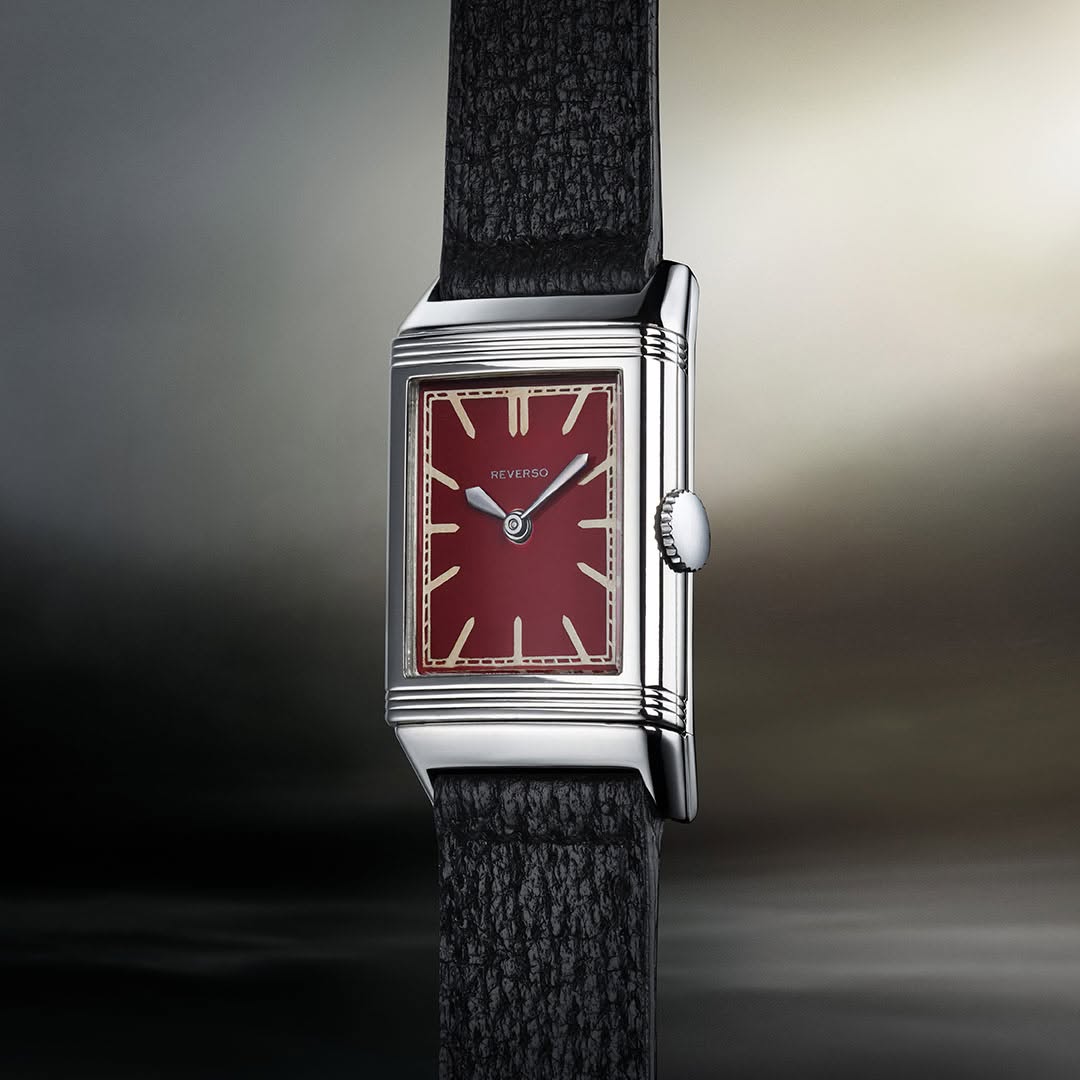
The detail that most surprises people about vintage Reversos: they were not all silver. Artcurial’s 2011 Jaeger-LeCoultre sale catalogued a run of lacquered colour dials from the very first years: a burgundy ladies’ model in gold and steel from 1931, a black-lacquer piece for E. Gübelin, an extremely rare blue dial with painted Arabic numerals, and a red lacquered dial signed Gübelin on a Lisica calibre 864. Several of the black-lacquer dials were made by Stern, the Geneva dial house that would later own Patek Philippe. The modern Tribute Rouge and Bleu are not inventions; they are revivals.
Source: Artcurial, Jaeger-LeCoultre Unique Auction, Paris, 29 November 2011
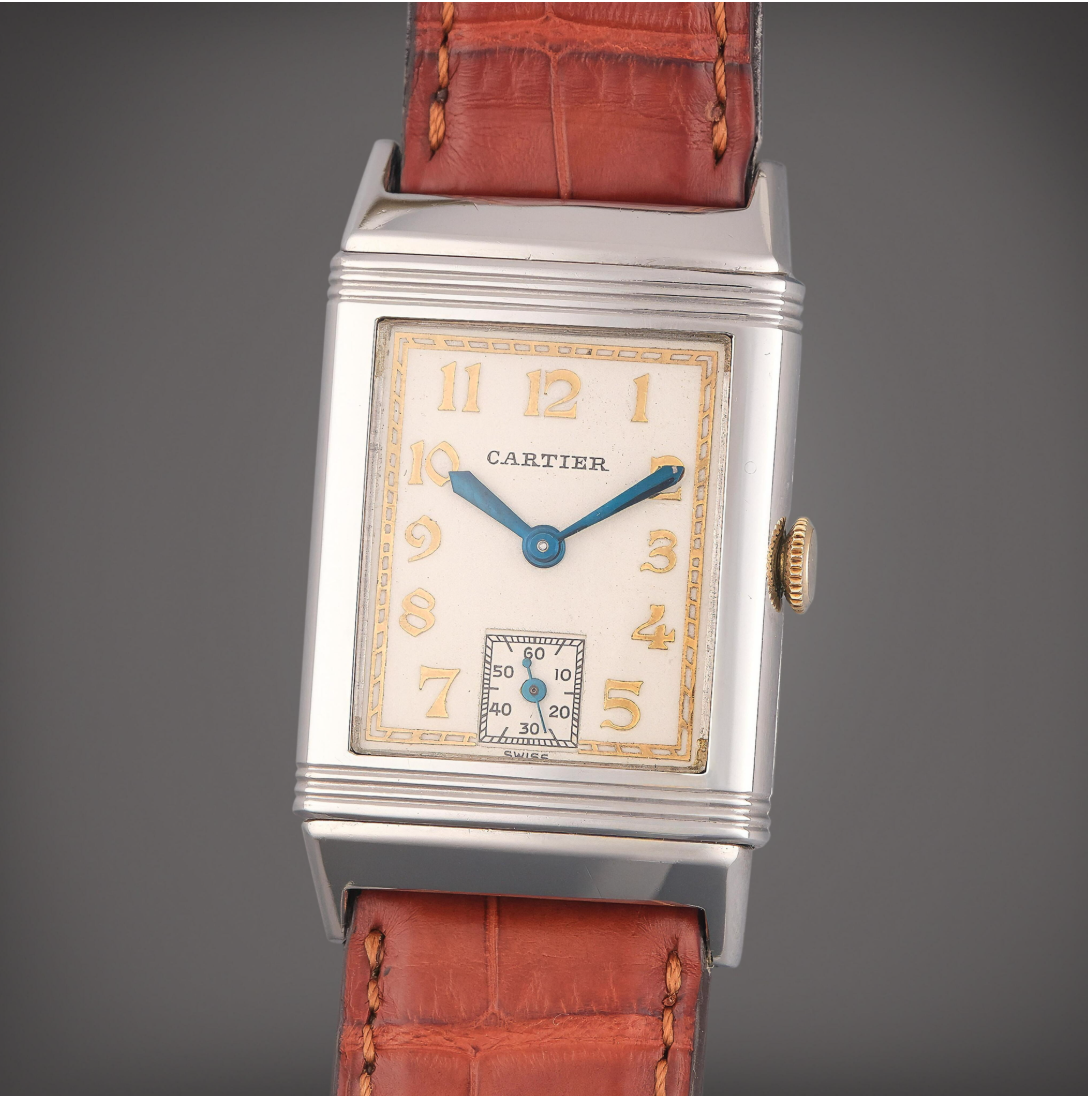
A whole shadow catalogue of Reversos wearing other names. The Artcurial sale included pieces signed for E. Gübelin, for Golay Fils & Stahl on a Lisica calibre EF51, and, most intriguingly, a c.1948 example signed European Watch & Clock Co. Inc. of New York, running an EWC-numbered movement on an extensible steel and black-lacquer bracelet. EWC was Cartier’s American arm, which puts a Cartier-affiliated Reverso in New York at the very end of the model’s first life. Note also that “Lisica” appears repeatedly as a calibre signature: the name under which the bought-in movements were marked.
Source: Artcurial, Paris, 29 November 2011
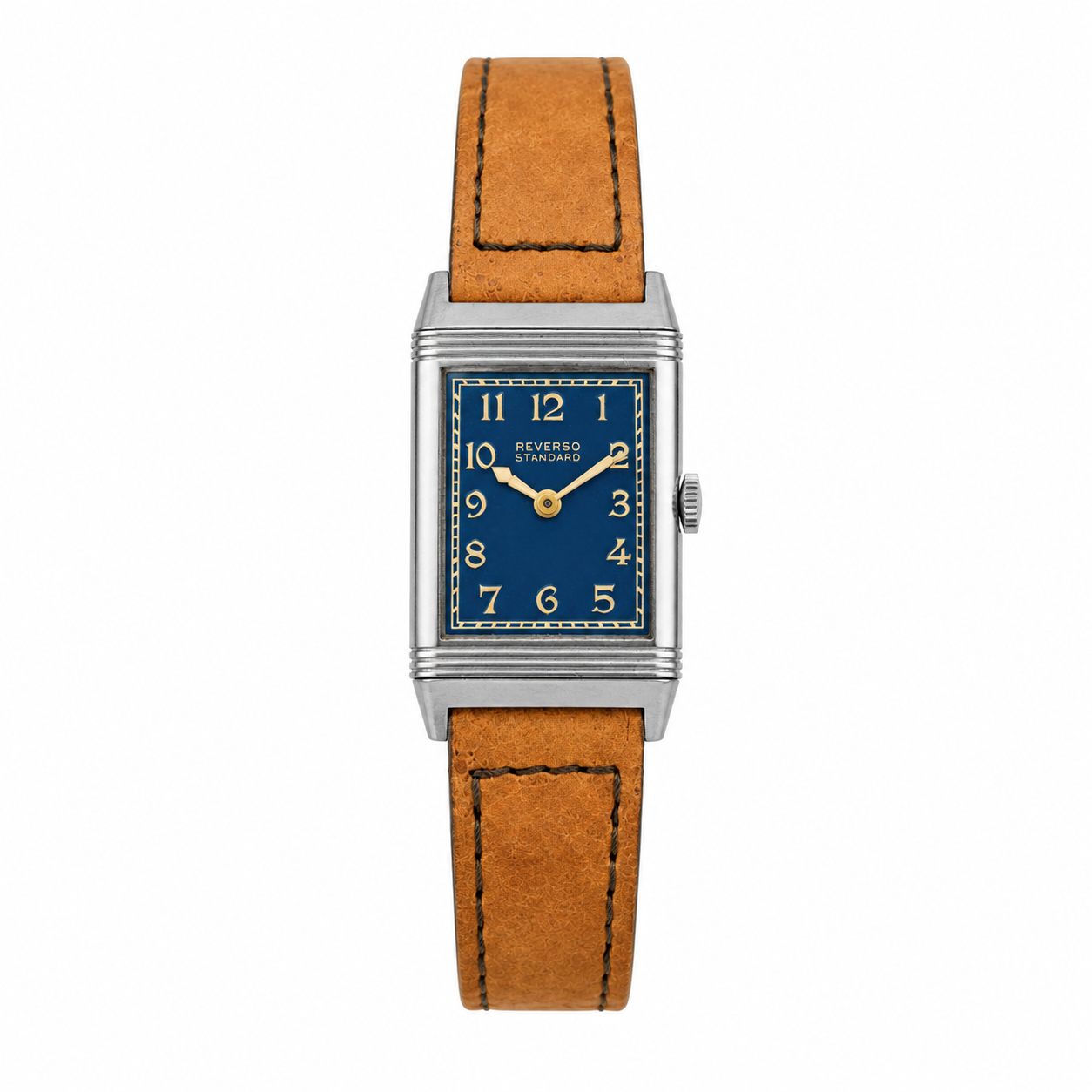
The period sales literature defines the two grades precisely: the luxury version had a specially-made movement, sapphire glass, a finer dial and a top-quality leather strap; the standard had a robust but plainer movement and ordinary glass. Dials came silver-plated with Gothic numerals, with hour symbols, with hour symbols and a Gothic 12, and in luminous variants of each. A period catalogue page sets out the core references plainly: ref. 2201 with the 11-line USC movement (centre seconds), ref. 201 with the 11-line UL, and ref. 651 with the 9-line UO, each available all-steel, all-gold, or with a steel cradle and gold case. The fuller grid runs men’s De Luxe centre seconds 1101–1108, men’s De Luxe subsidiary 101–108, ladies’ cord-strap De Luxe 901–908, with Standard equivalents 2201–2208, 201–208 and R701–R708.
Source: Basha, from the 1940 French catalogue
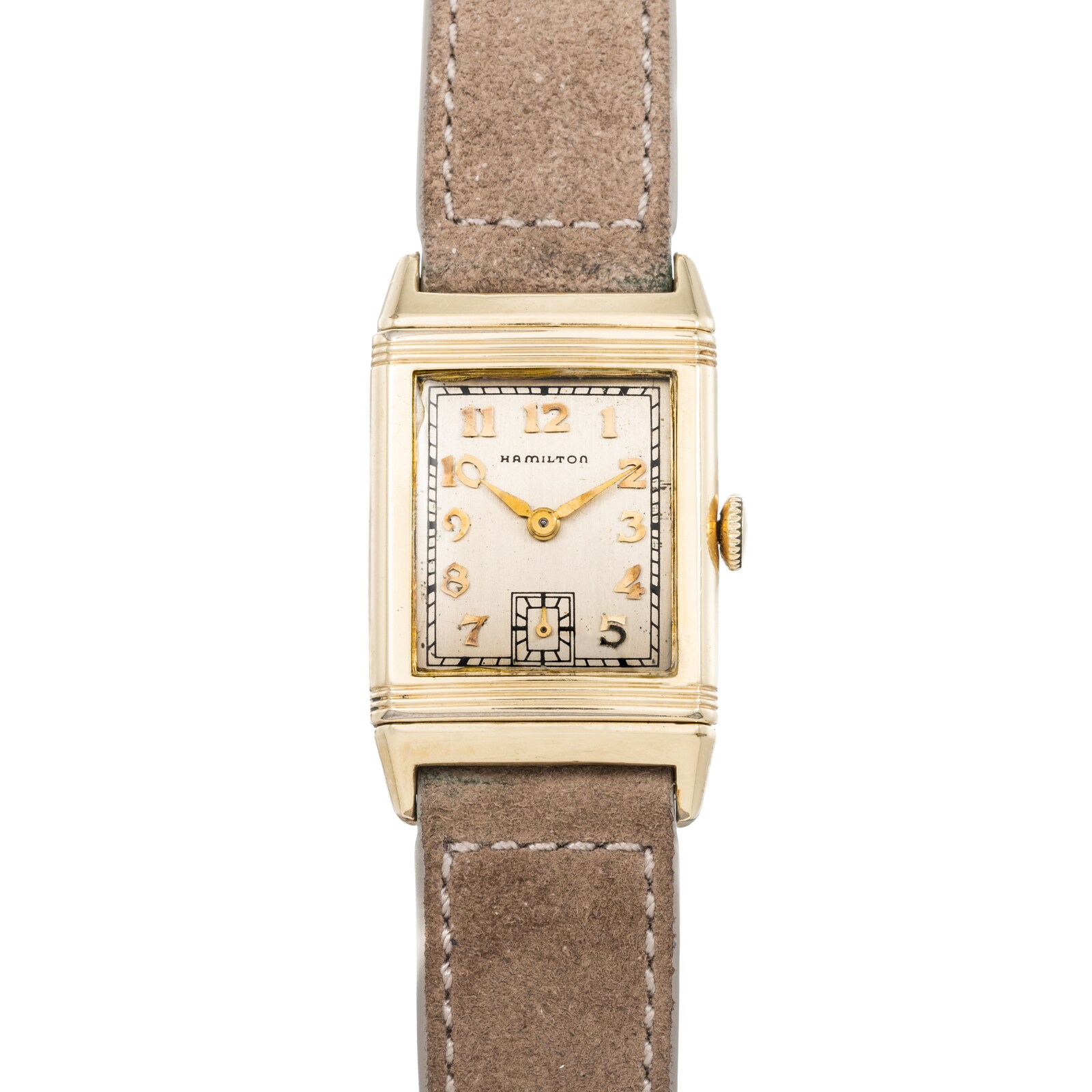
Proof of how quickly the idea travelled. The patent was licensed out through the 1930s and Jaeger-LeCoultre supplied other firms directly. Patek Philippe carried a reversible watch in its range. Geneva bought movements from Le Sentier at the time, as did Cartier. Preferential retailers such as Gübelin sold Reversos signed with their own name on the dial, and the New York importer European Watch & Clock Co. did the same, its watches carrying EWC-marked movements. Some of the finest early dials came from Stern Frères of Geneva. In the United States Hamilton sold the Reverso under its own name for years. There was a reason for the American arrangement: a US instrumentation company already owned the protected name “Jaeger” and consignments were turned back by customs, so Reversos bound for America carried only the LC signet on movement and dial until an agreement was reached in the early 1980s.
The Long Silence & the Rescue
Twenty-four years out of the catalogue, two hundred forgotten cases, and the slow, cautious rebuild of a watch nobody at the manufacture was sure anyone still wanted.
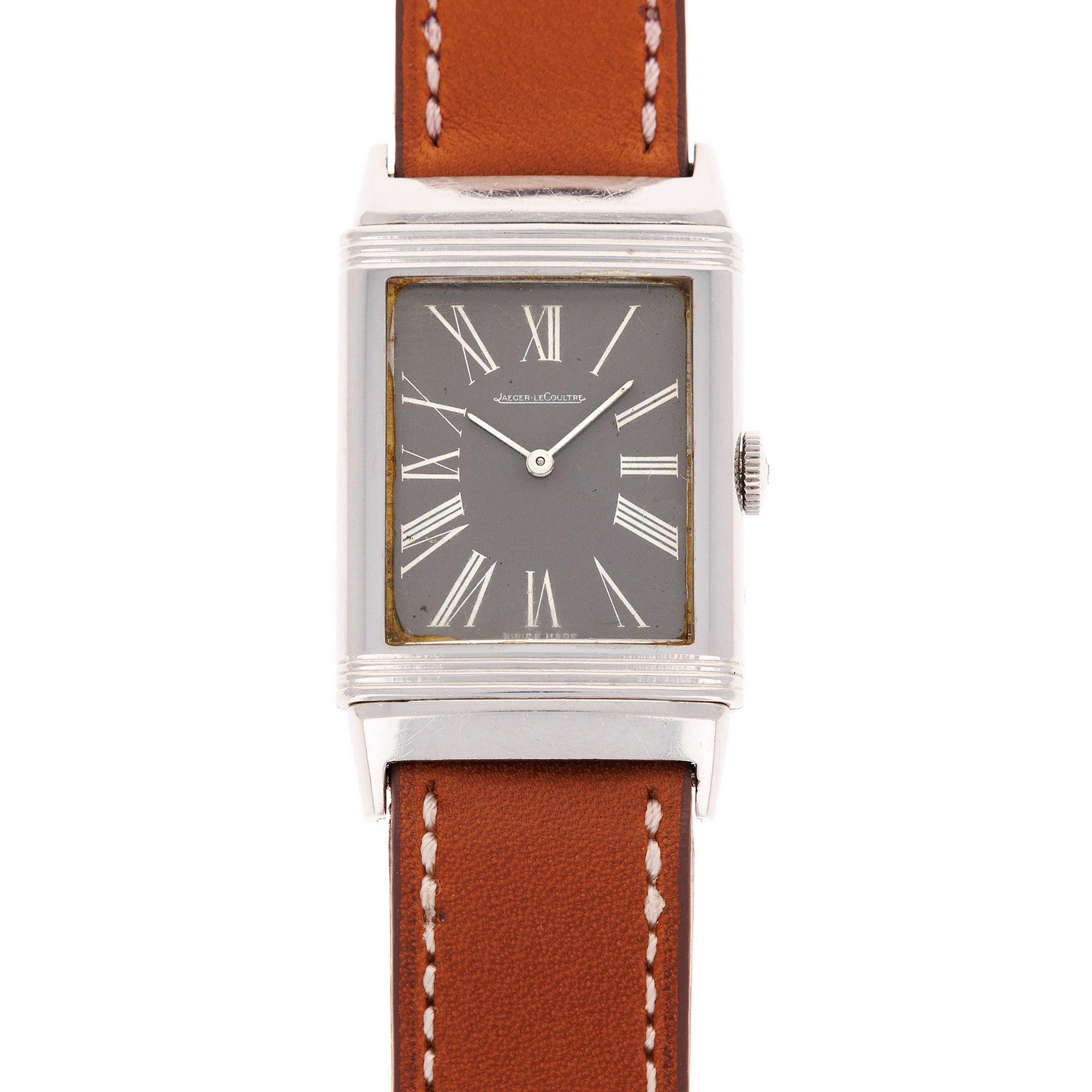
Not a catalogue model, but a rescue, and the sequence is worth having exactly. It began with a phone call from Léon Constantin, just back from Milan, asking how many Reversos were left in stock; the general manager was out, so a secretary took the message. The answer: 200 steel cases, no movements. Days later Giorgio Corvo, JLC’s sole representative for Italy and then the most trend-setting watch market in the world, called and said simply, “I’ll take them all.” Le Sentier rang his Milan office three times to confirm he was serious, then tried to talk him out of it: the 9- and 11-line movements were long out of production and restarting was unthinkable in 1972. So Corvo solved it himself, fitting a movement into a case in Milan and carrying the result back to Switzerland as proof. A new dial was drawn for the run, white or grey, signed LeCoultre: one hundred of each. They sold out in a month.
Source: Corvo family interview, Hodinkee archive film
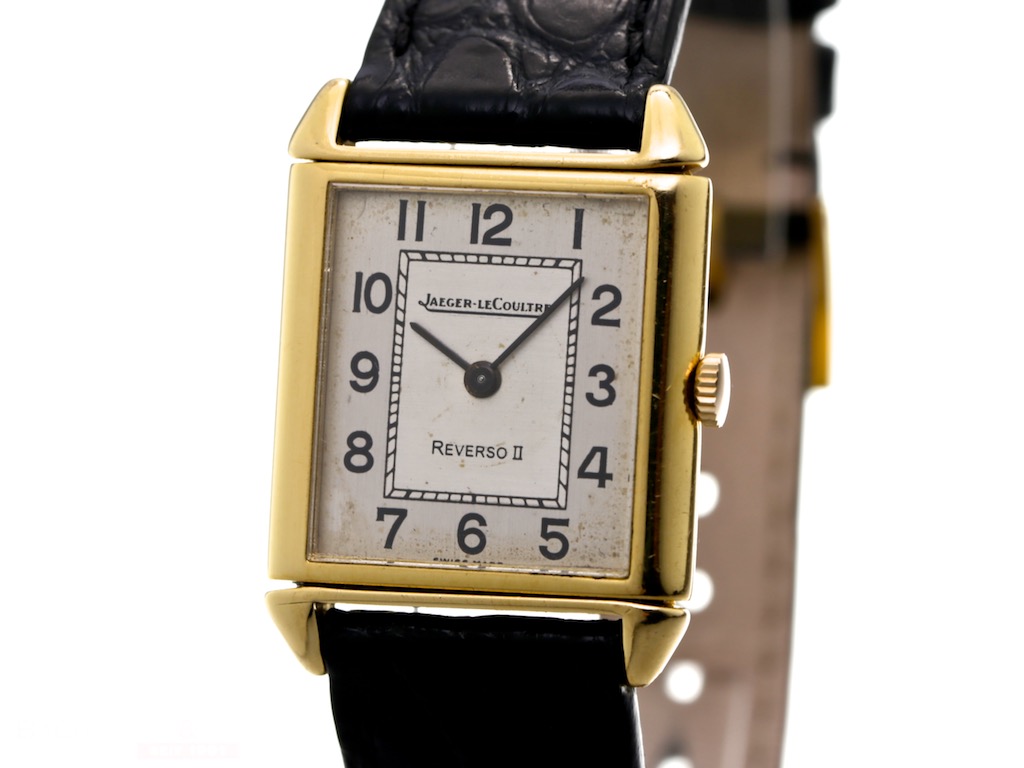
The official relaunch, for the manufacture’s 150th anniversary. Wider and squarer than the classic proportions, and, almost uniquely in the whole history of the line, without the three-line gadroon motif above and below the dial. Buyers wanted the rectangle back, so it was retired quickly. Its shape resurfaced 25 years later as the Squadra.
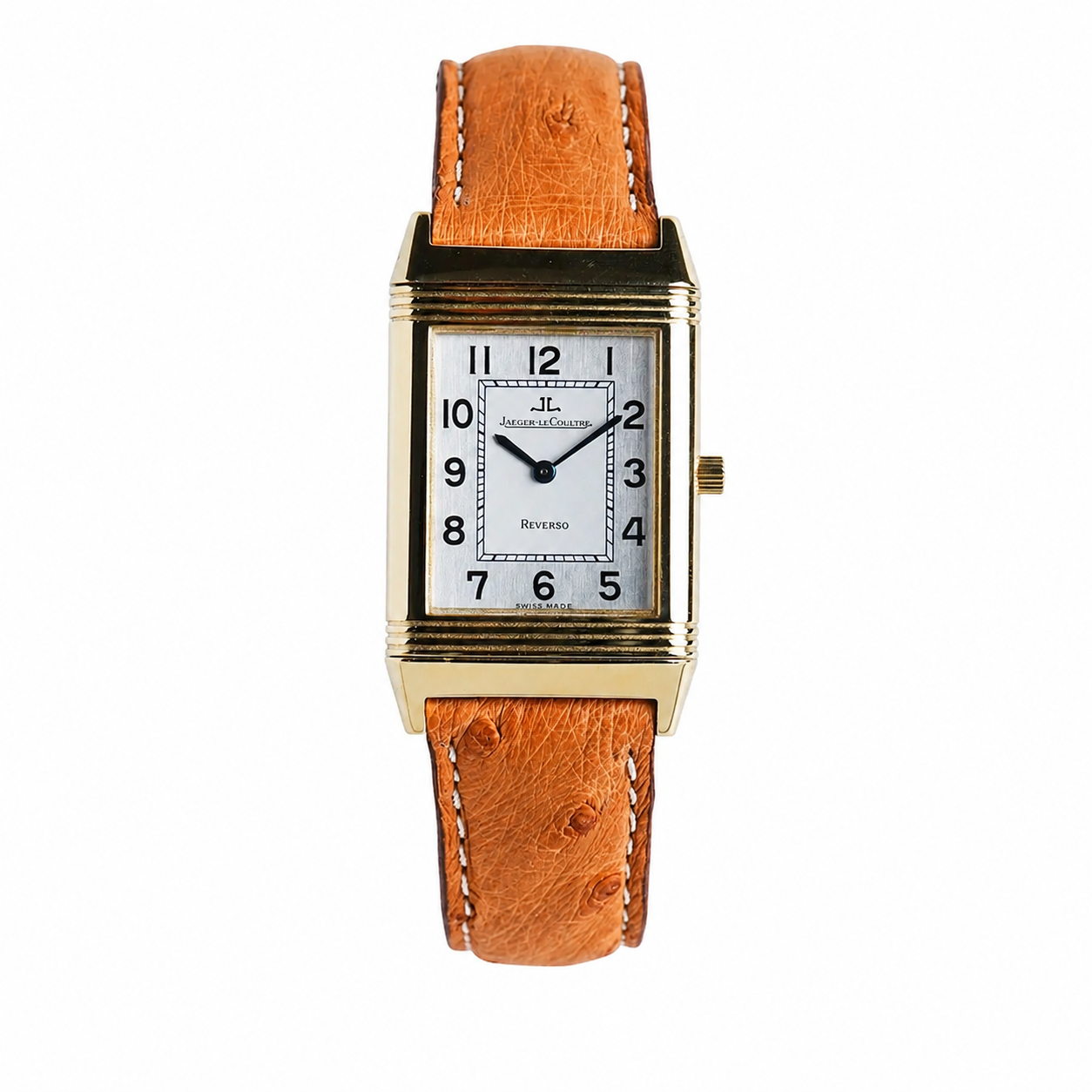
The watch that made every modern Reverso possible, and it took Daniel Wild five years. The pin-in-groove guidance of 1931 gave way to a skid system (an eagle-tail-shaped skate that returns inside the cradle and cannot be disengaged) while a “guard ring”, effectively a second case, carried the movement on four sealed beryllium screws. The silhouette stayed identical to the millimetre while the part count went from roughly 30 to over 50. It was water-resistant for the first time, and able to pivot at any point along the cradle rather than only at the far end. One of the most complicated cases in watchmaking, hidden inside something that looks unchanged since 1931.
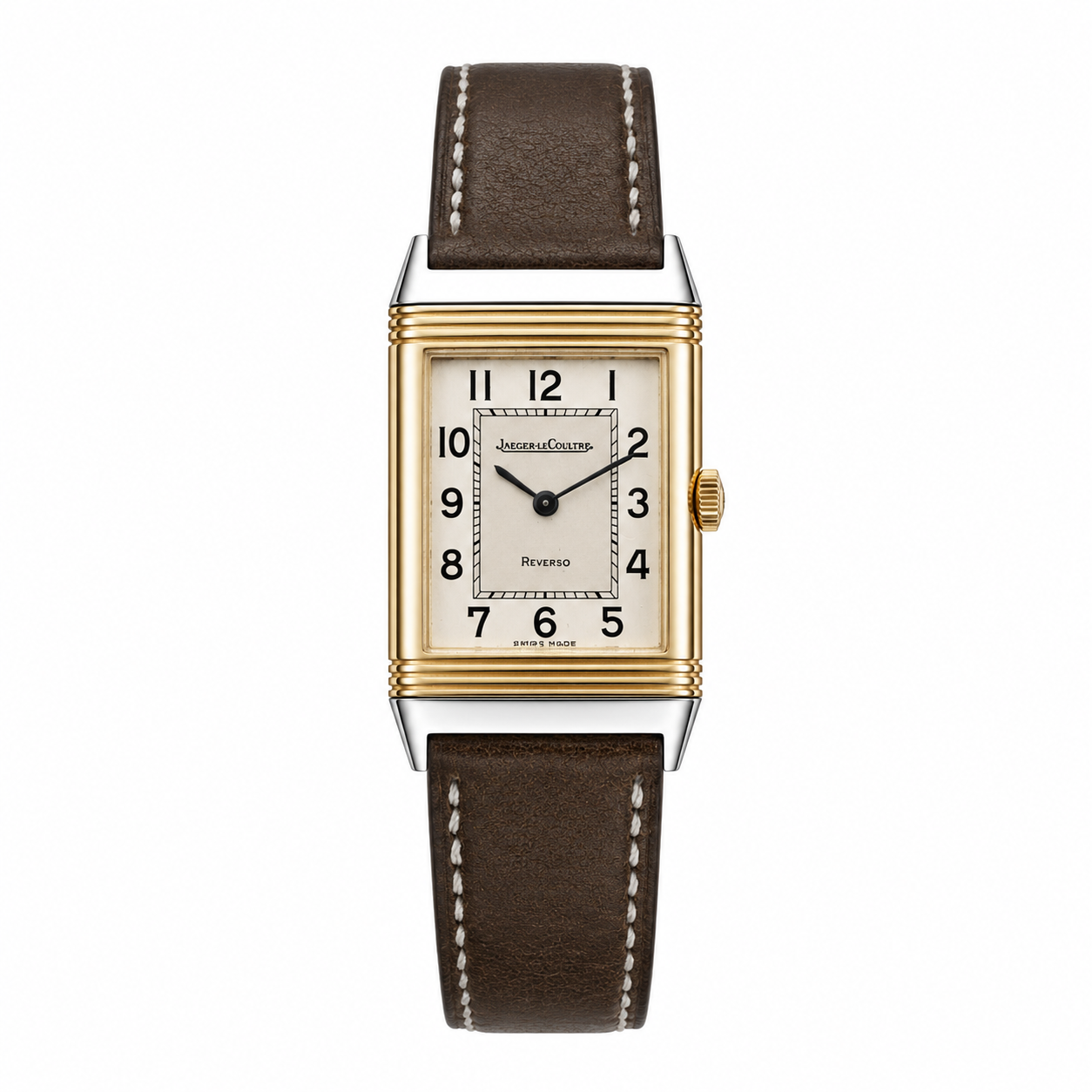
The first modern civilian Reverso: original proportions, but a completely new dial (black numerals on white, rail-track minute ring) which broke deliberately with the coloured, index-marked dials of the 1930s. A smaller “Dame” version arrived alongside it, same rectangle, on strap or bracelet.
The Complication Decade
Six anniversary limited editions, 500 pieces each, one new complication roughly every two years. The decade that turned a design classic into a horological platform.
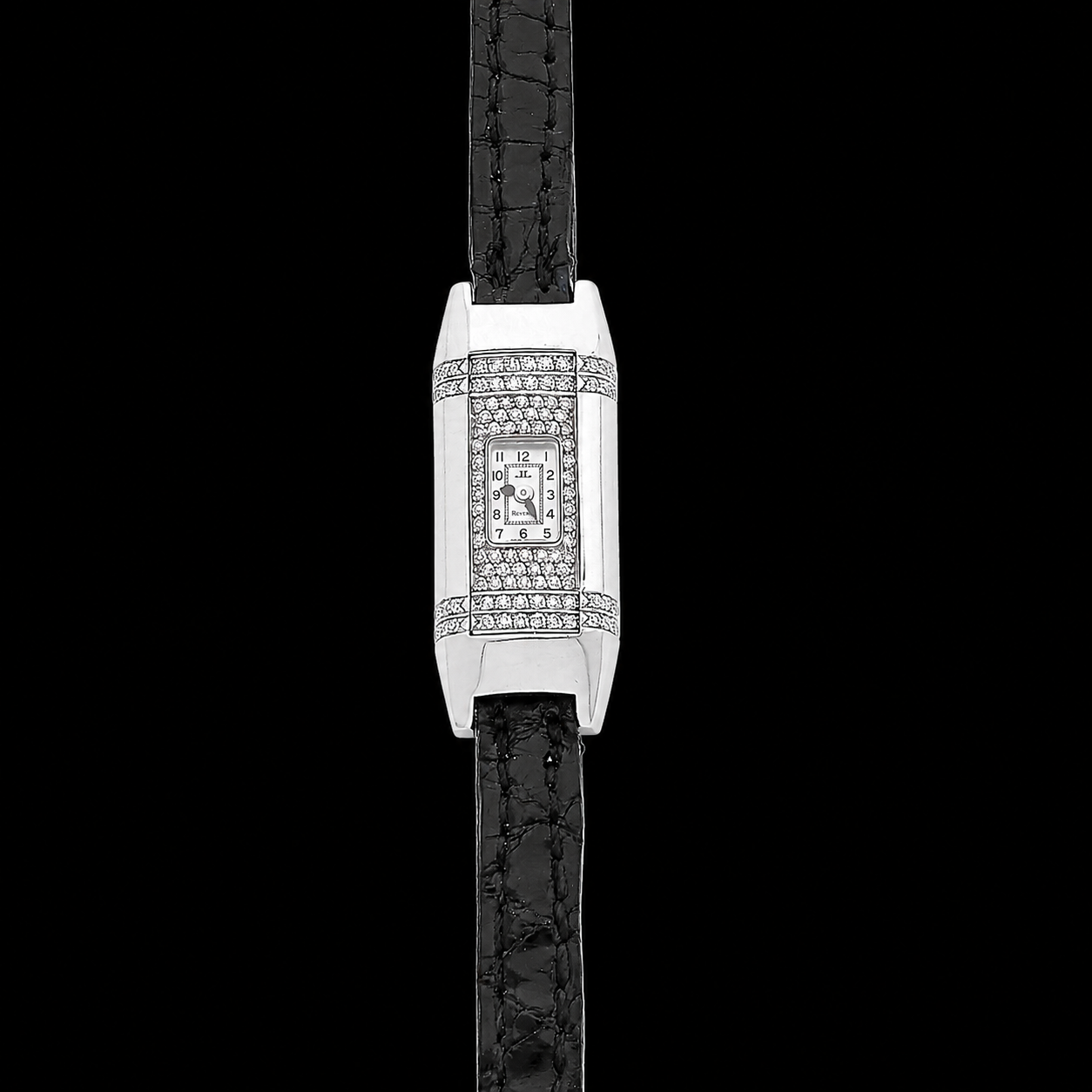
Predating the better-known Grande Reverso 101 by well over a decade: a white-gold ladies’ Reverso with the case entirely set in diamonds (roughly 4.2 carats), running the 1929 calibre 101, still the smallest mechanical movement ever series-produced. The winding crown sits on the back of the case rather than the side. Example number 1 appeared at Artcurial in 2011.
Source: Artcurial, Paris, 29 Nov 2011, lot 471
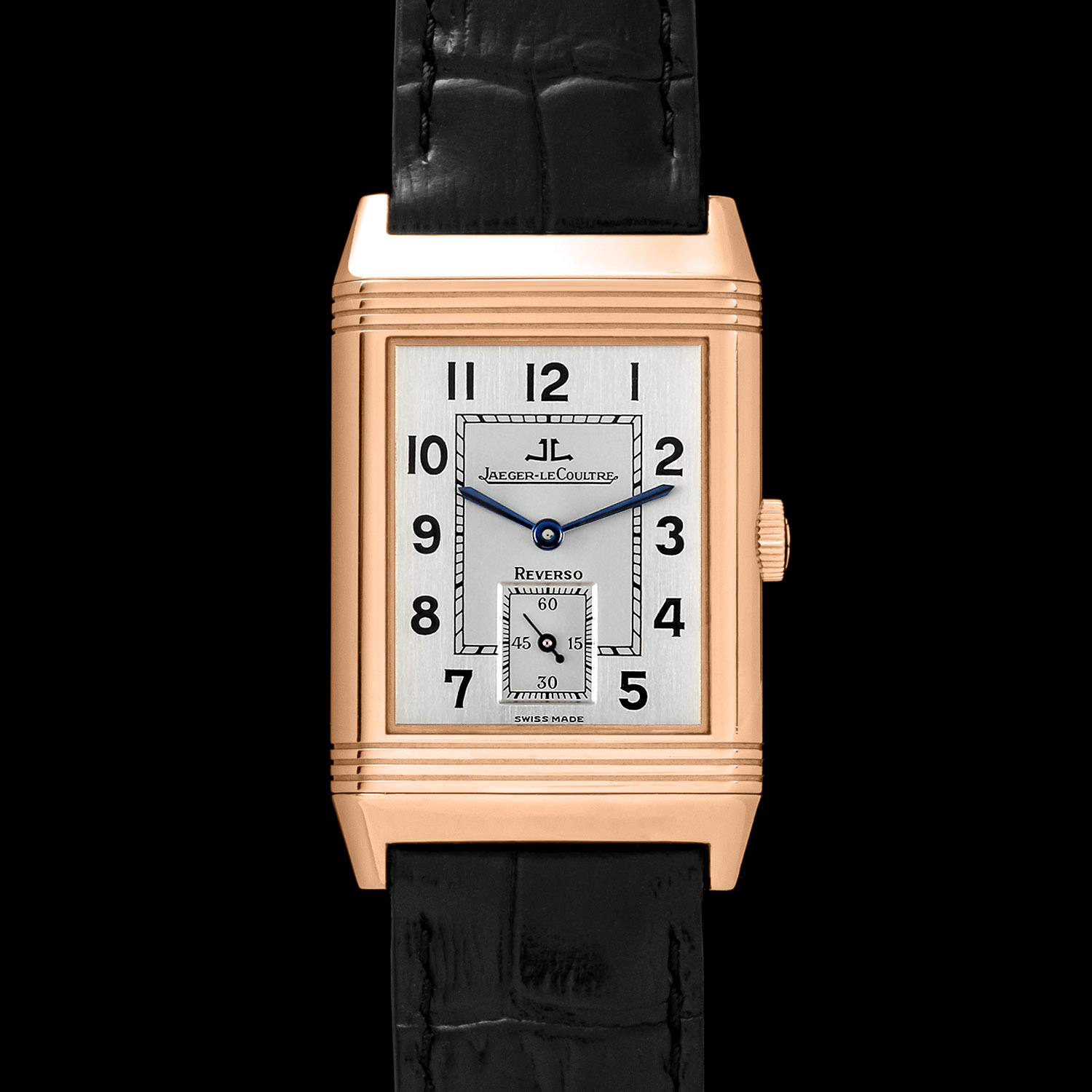
The bigger case that gave the complications somewhere to live, and it stayed in production until 2016. It exists because the 60th-anniversary watch needed a complication calibre the existing case simply could not take: design head Janek Deleskiewicz wanted a display back, the movement grew, and Günter Blümlein approved the then-radical decision to enlarge the Reverso itself. Its calibre 822 was drawn deliberately in the spirit of the 1930s cal. 410, a modern movement wearing a period face.
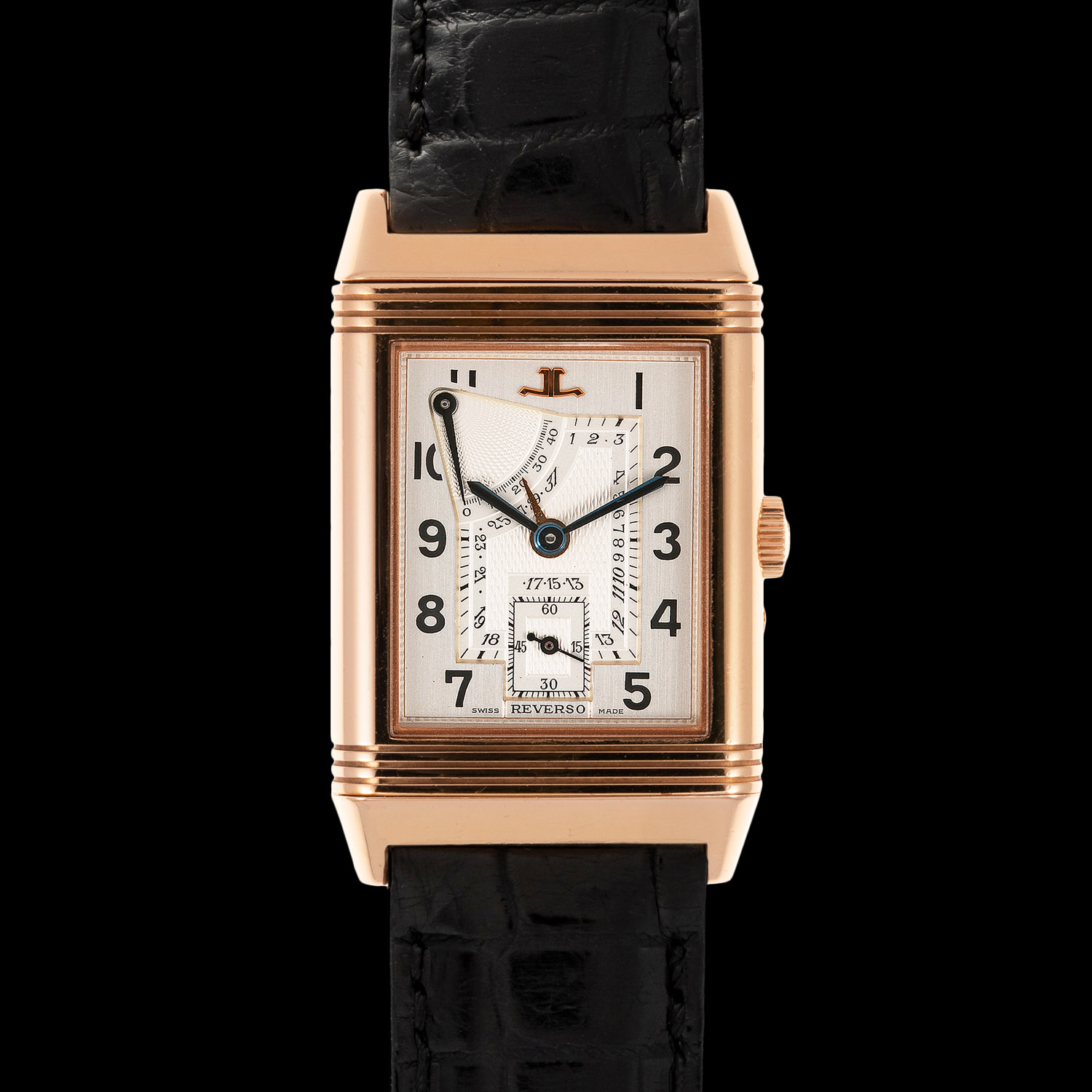
The hinge point of the entire modern collection. First Reverso with a complication and the first with a sapphire display back instead of blank steel, and the first of six 500-piece anniversary editions running through the decade. A documented example (no. 480/500, sold at Artcurial in 2011) records the detail: 26 × 42 mm pink gold case, silver guilloché dial, small seconds at six, a pink gold date hand and power reserve at ten, blued steel hands, and calibre 824 with its plate and bridges in 14K pink gold, visible through the sapphire back.
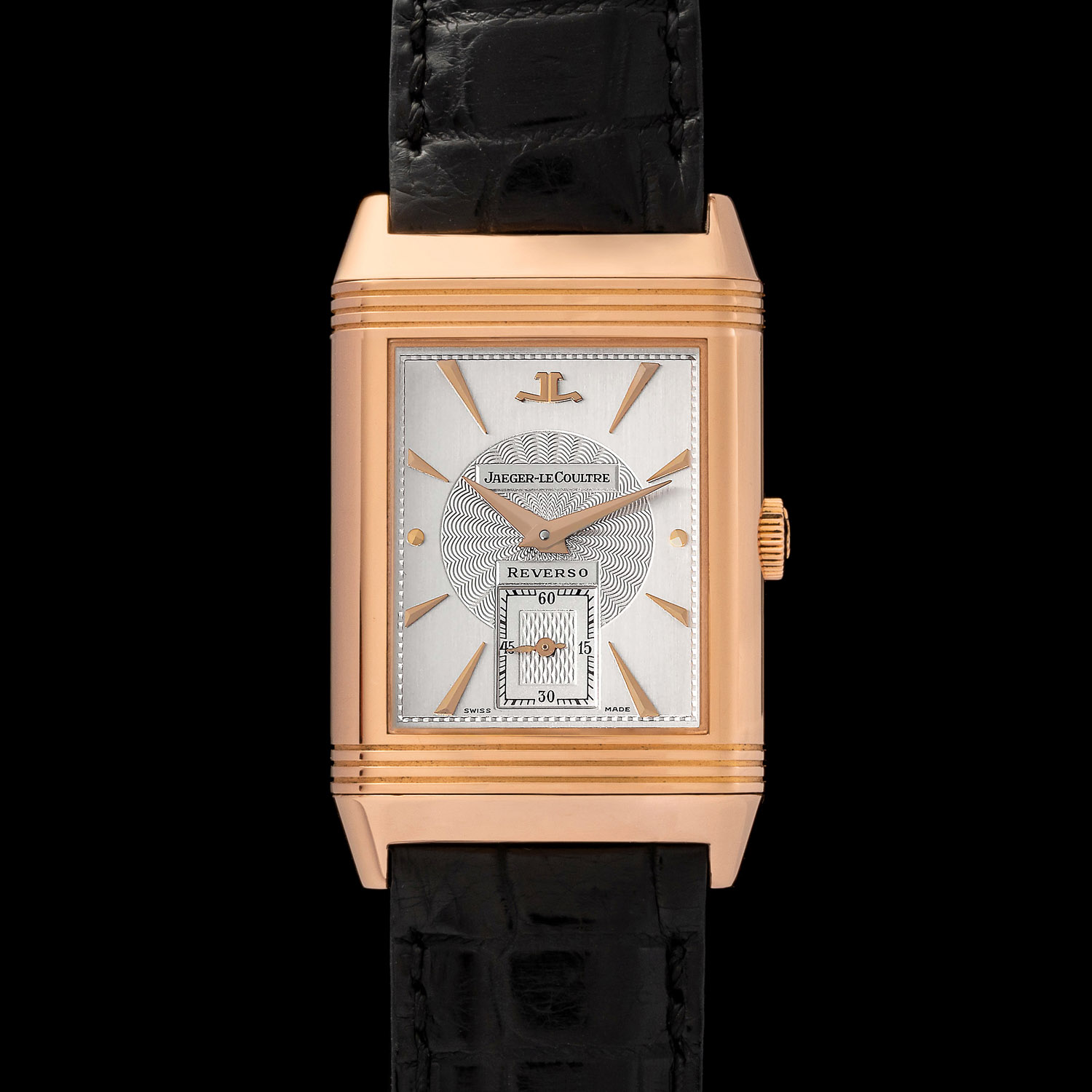
One of the rarest of the period: a hand-engraved movement shown off through the display back, made in tiny numbers and easy to miss in the shadow of the anniversary pieces.
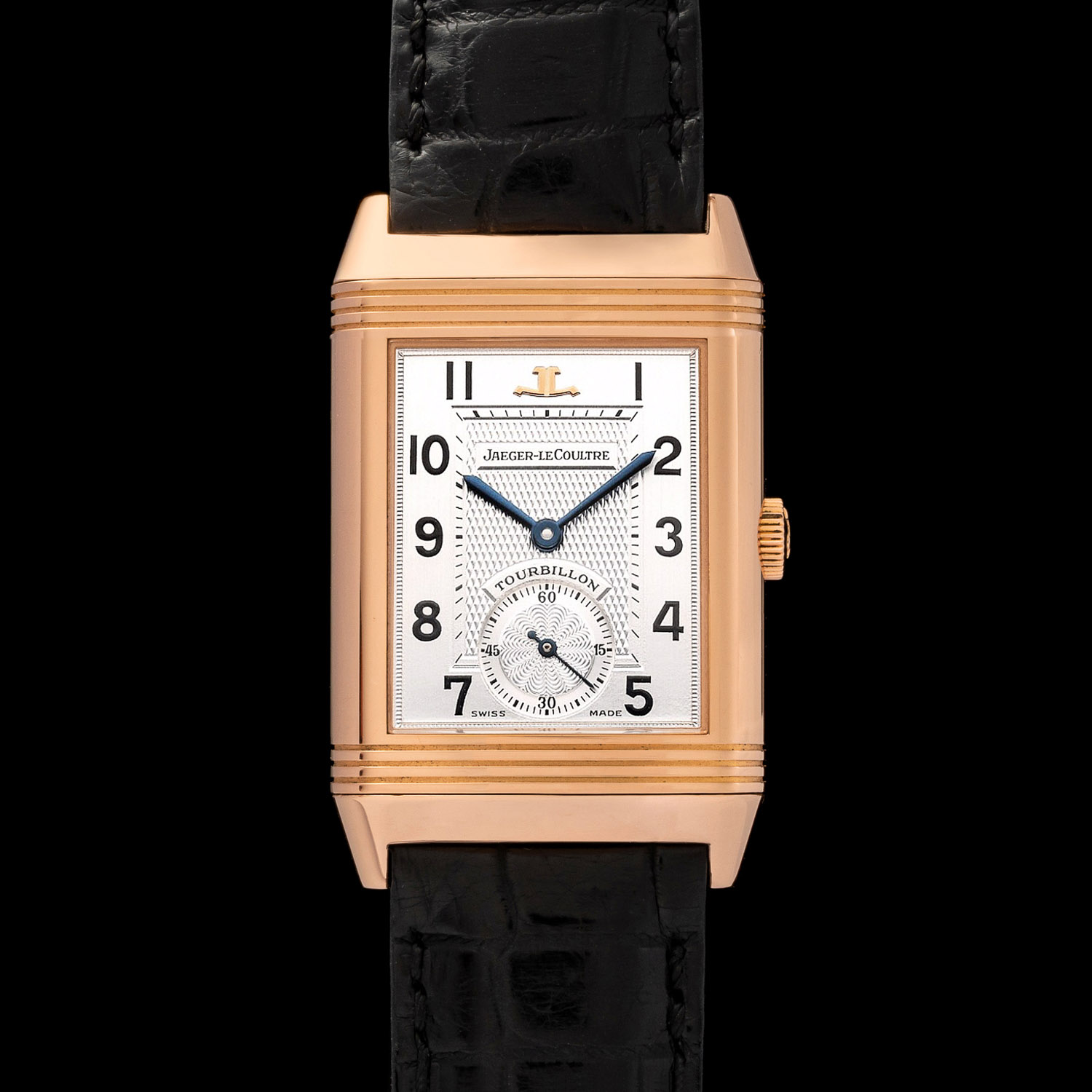
JLC’s first tourbillon in modern times, and it went into the rectangle, not a round case. The tourbillon and power-reserve indication sit on the reverse, so the complication is the thing you turn the watch over to see.
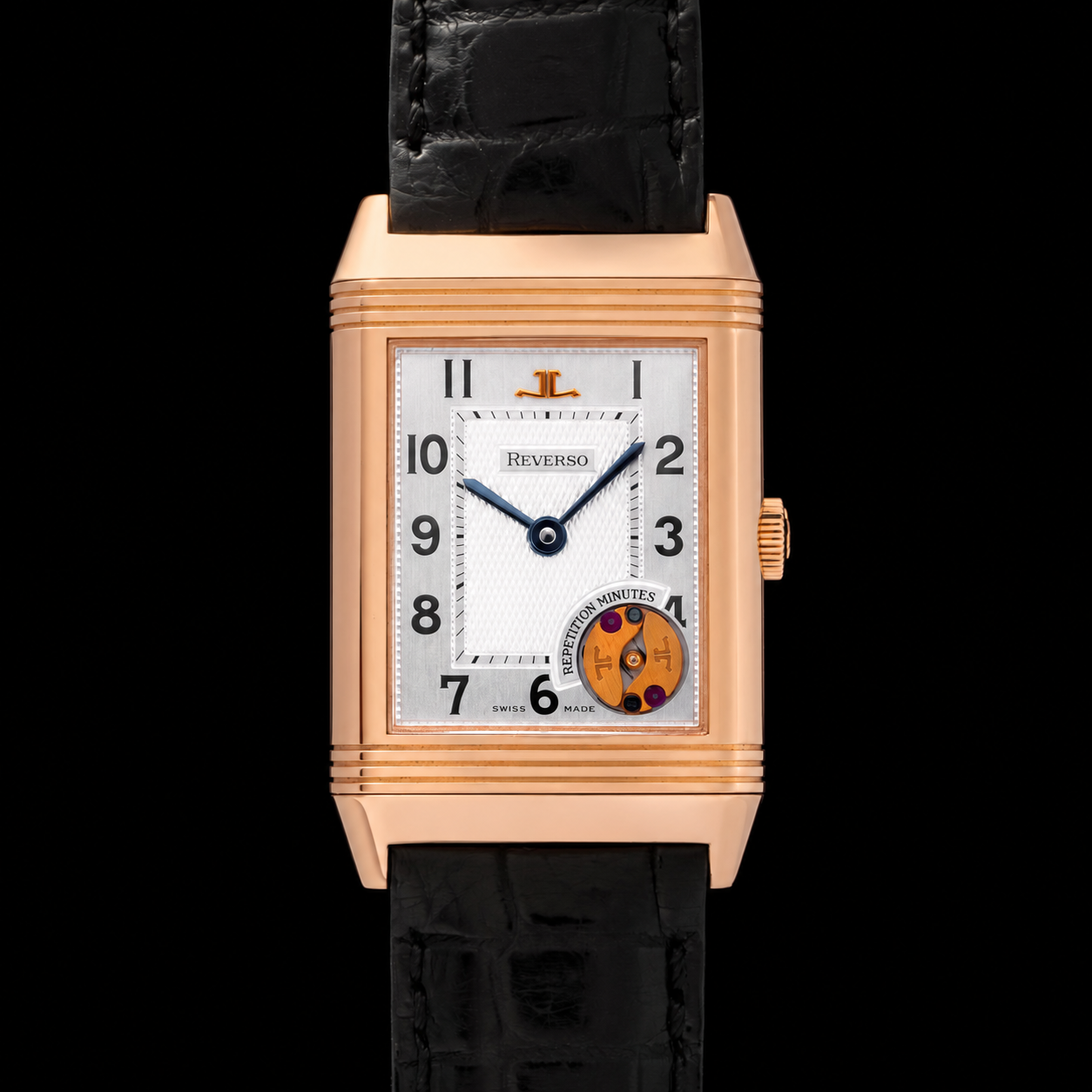
The world’s first rectangular minute-repeater movement. Gongs want to be round; making them sing inside a rectangle is a problem most houses simply declined to take on.
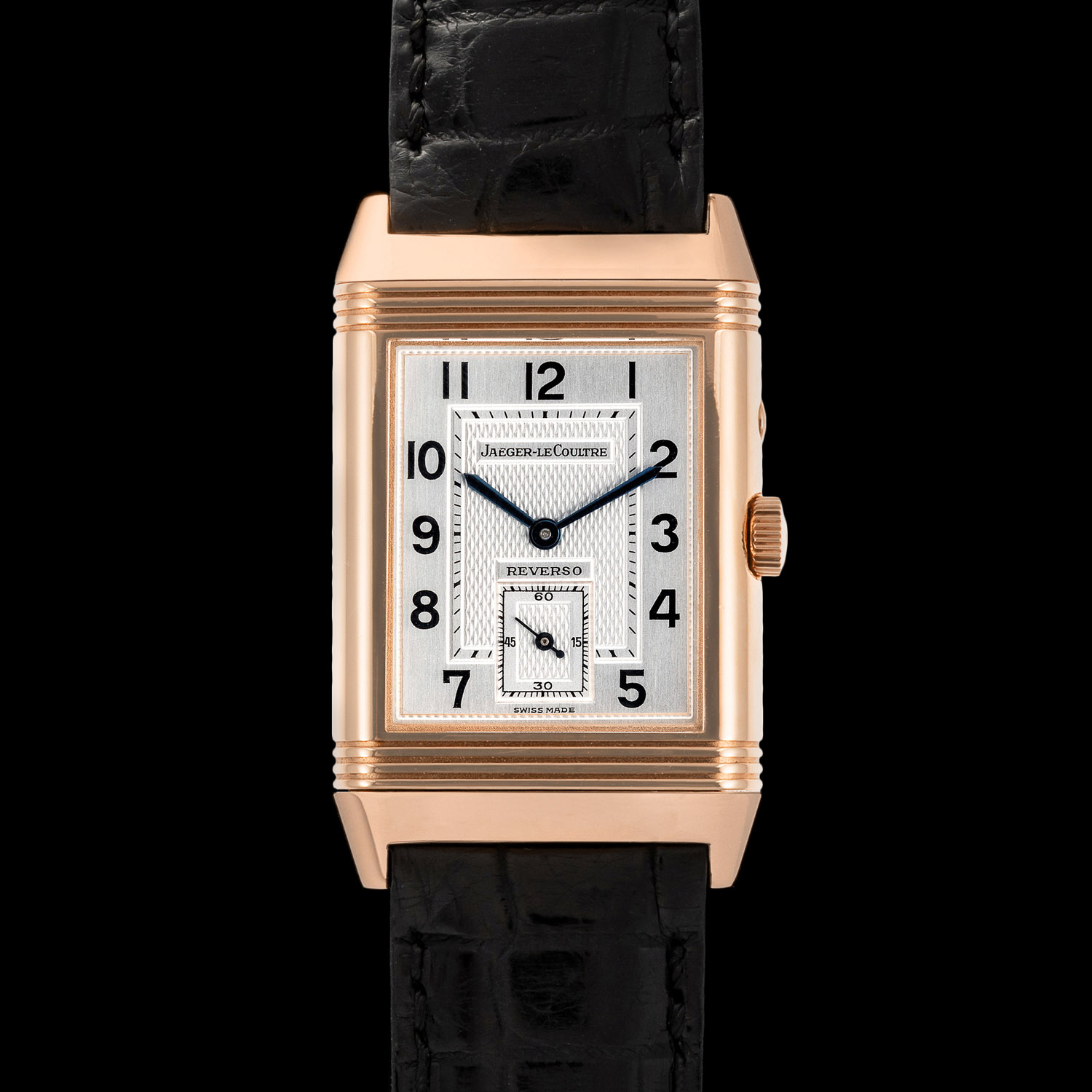
The most consequential Reverso since 1931, and it began on a restaurant tablecloth. Jaeger-LeCoultre’s own account has the concept sketched over lunch in a small restaurant in the Vallée de Joux: what if the famous watch offered two watch faces? The answer was calibre 854: the time here on the front, the time elsewhere on the back, from one movement. Three years later the women’s Reverso gained two faces of its own, one for day and one for night, as the Duetto. Everything called Duoface or Duetto since descends from that lunch.
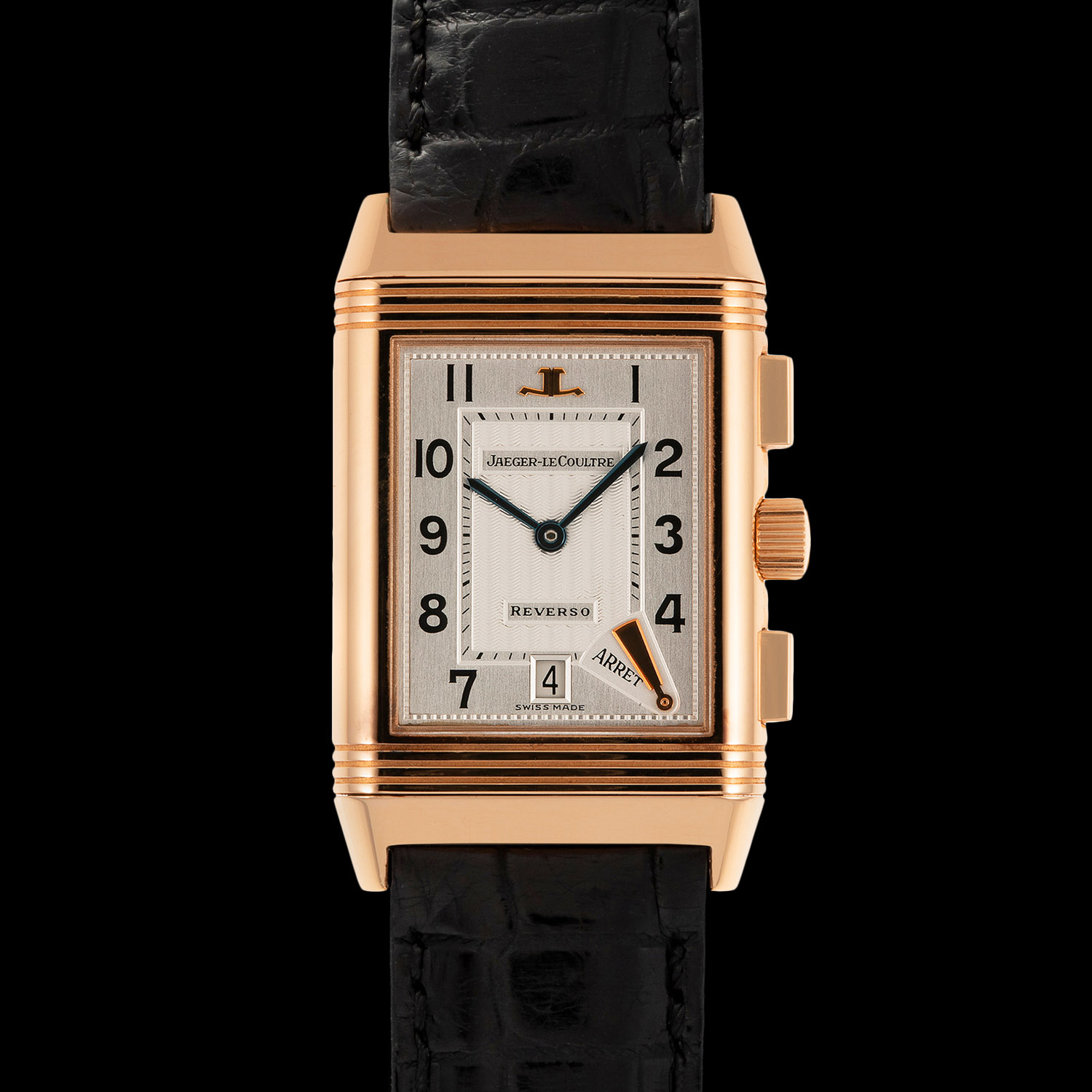
A chronograph split across two dials, with a retrograde hand that sweeps back to zero instead of running in circles, the sensible answer when your dial is a rectangle. Cal. 829 is the direct ancestor of the 2023 Tribute Chronograph’s cal. 860.
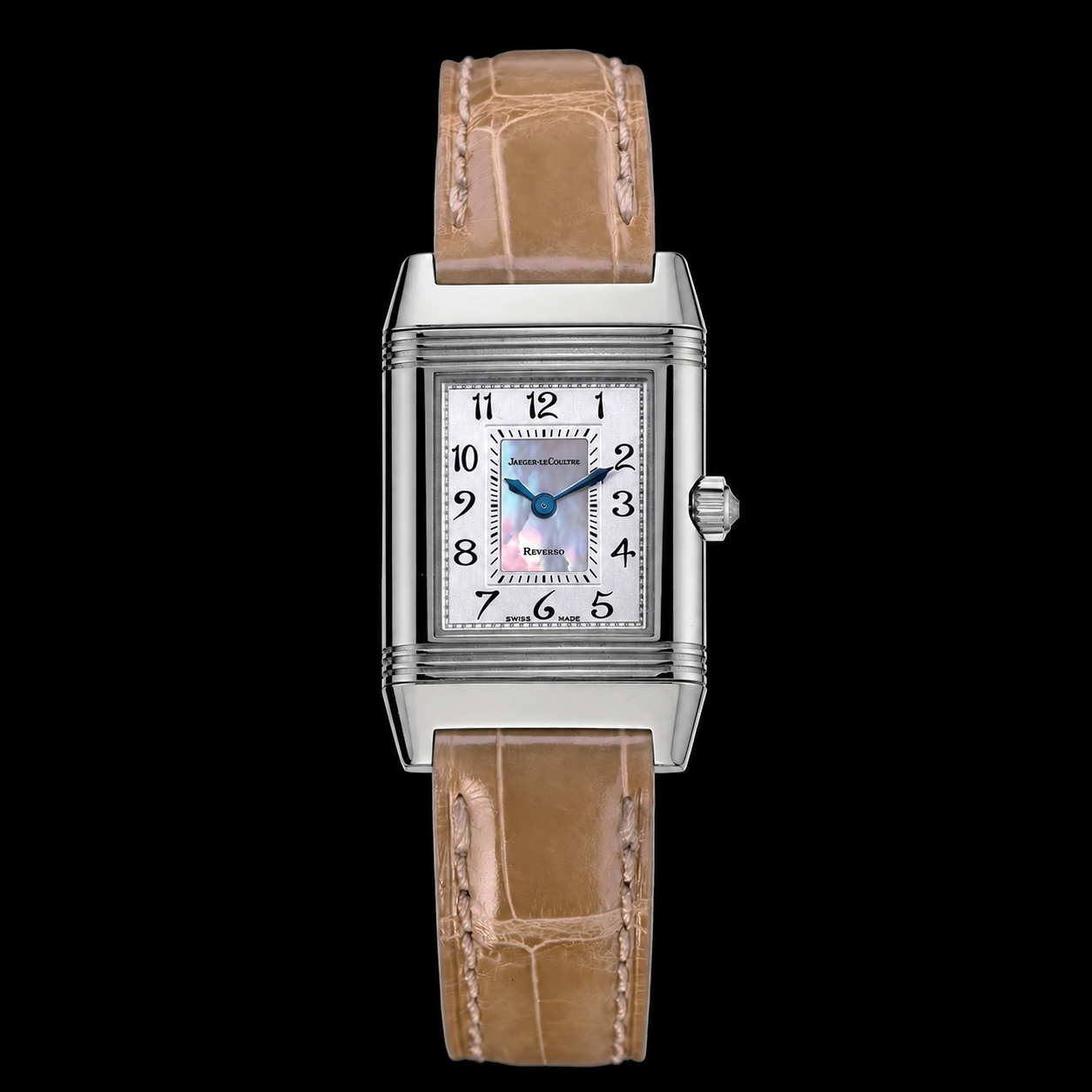
The Duoface idea rewritten for women: a discreet dial for daytime on the front, a more decorative one for the evening on the back, one movement driving both. The name is still in use today.
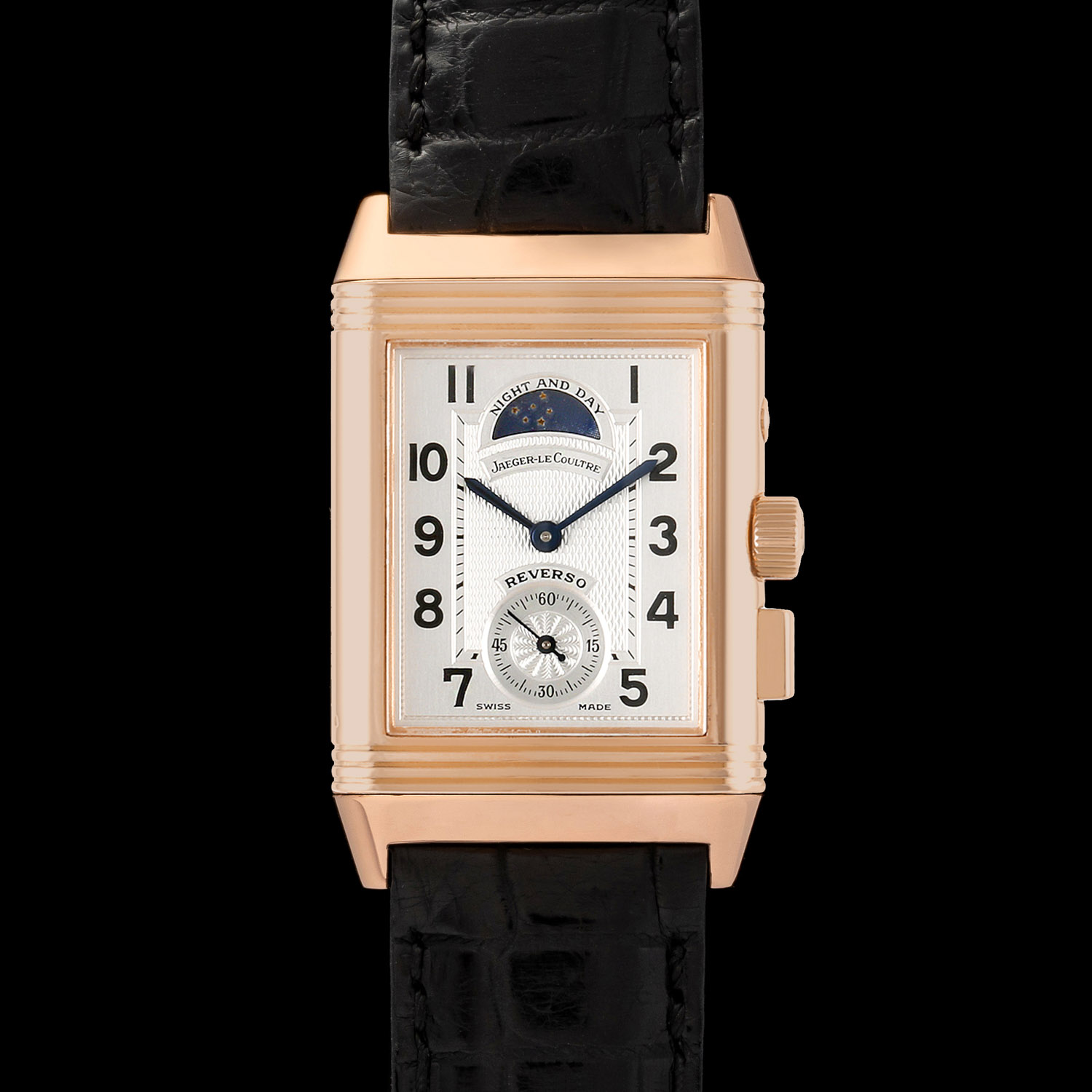
The Reverso’s first true travel watch: dual time with a city-name selector on the back and day/night indication on both faces. JLC would not seriously revisit world time in a Reverso for another 27 years.
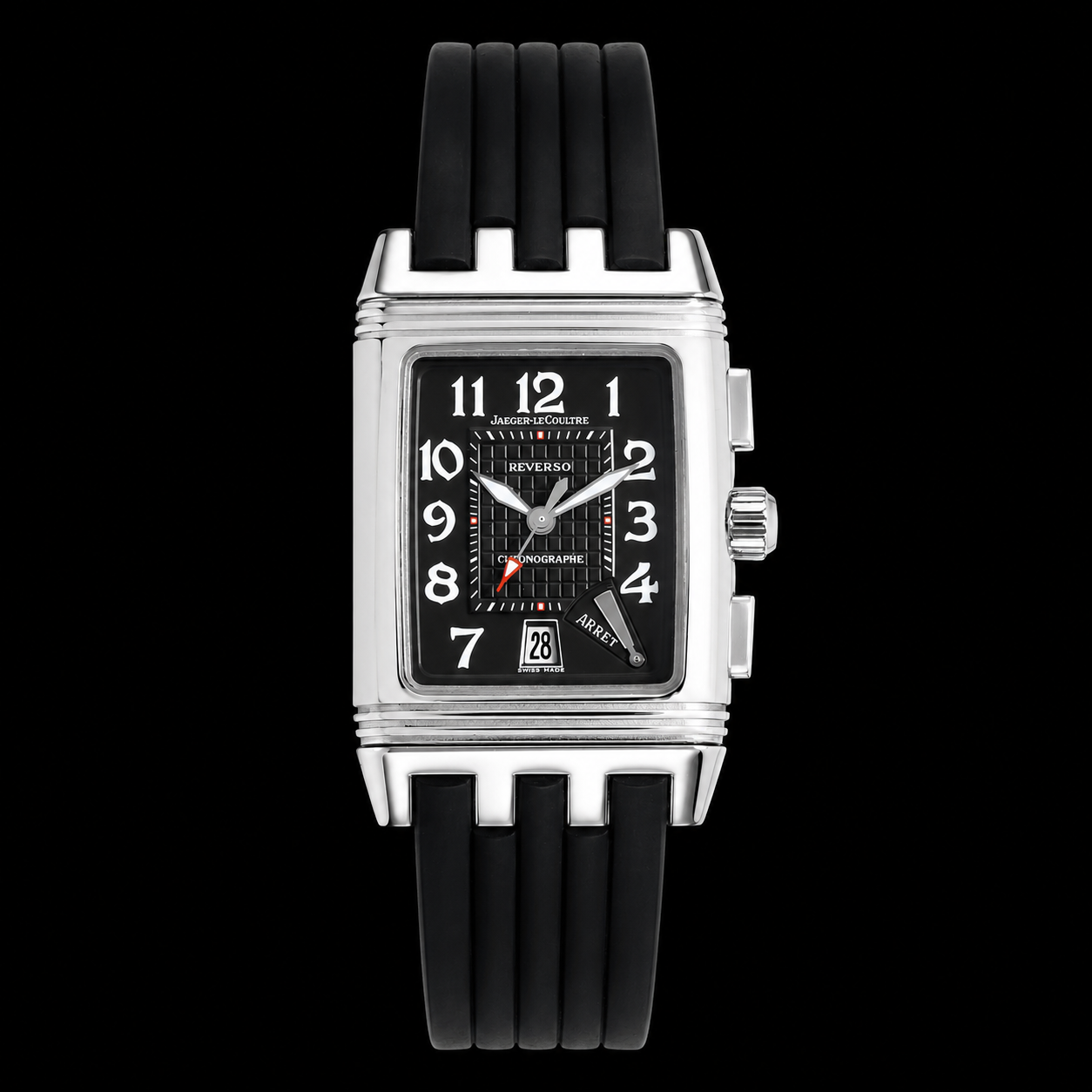
A deliberate attempt to reach a different buyer: rounded, curved, more athletic, and the first Reverso family to use automatic movements. It ran until the Squadra replaced it in 2006.
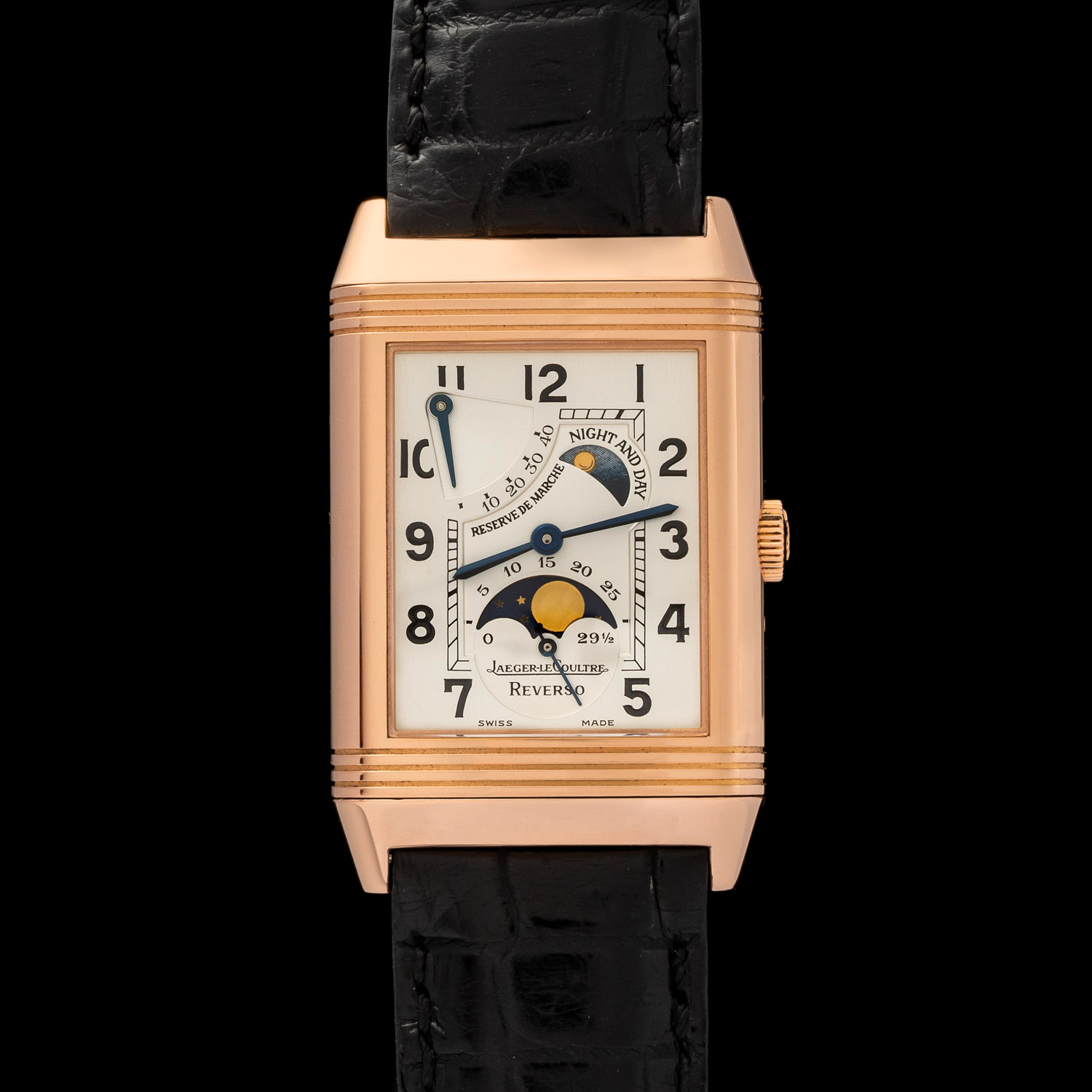
Power reserve, moon phase and a night-and-day display, in the larger Grande case.
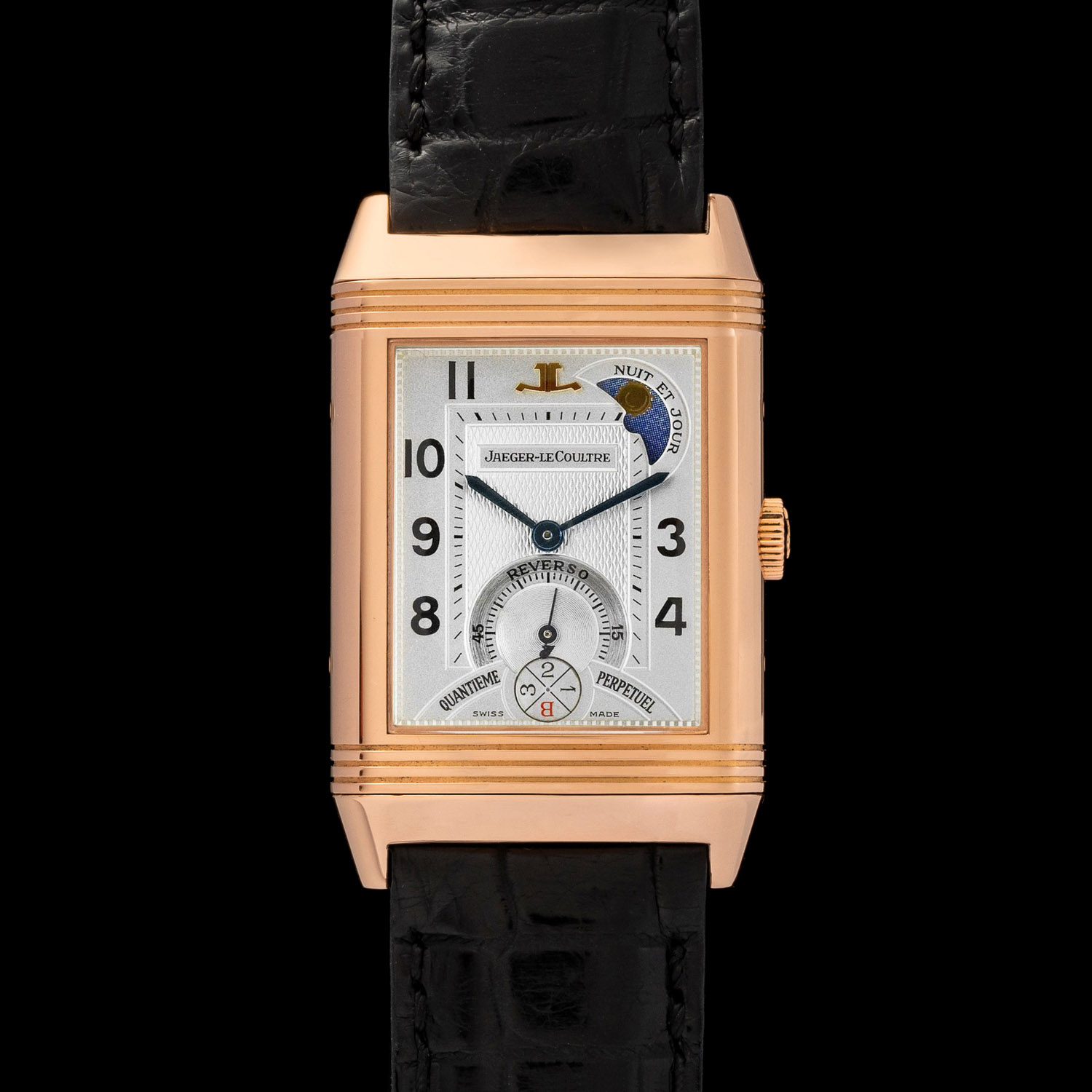
The sixth and final watch of the 500-piece anniversary series, released for the millennium: leap-year indication on the front, month, day, date and moon phase on the back.
Bigger, Sportier, Grander
Gran’Sport, Grande Taille, XGT, Grande, Squadra. The Reverso spent the 2000s growing, and building the most complicated watches it has ever carried.
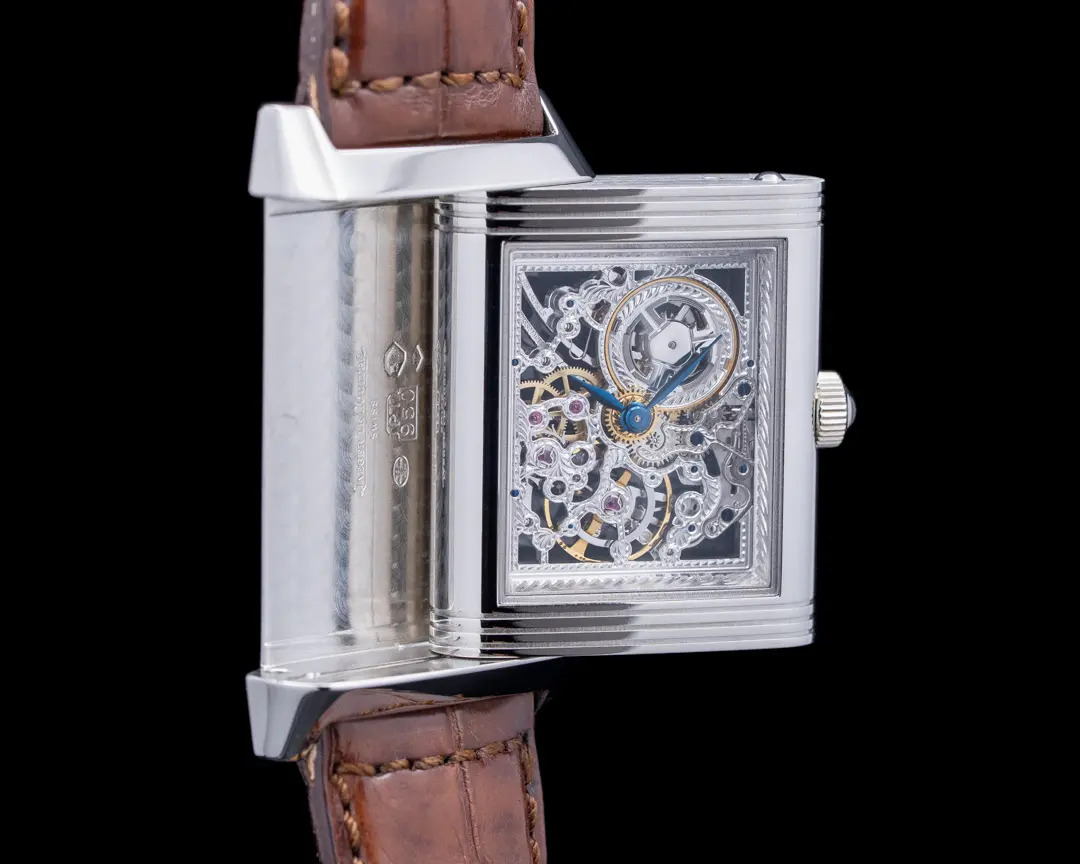
The first of a pair of platinum Reversos for the new century: a skeletonised movement with hand-engraved bridges and an engraved barrel that lets you see the mainspring, behind a sapphire back. One came back through The Collectibles in Hong Kong in 2026.
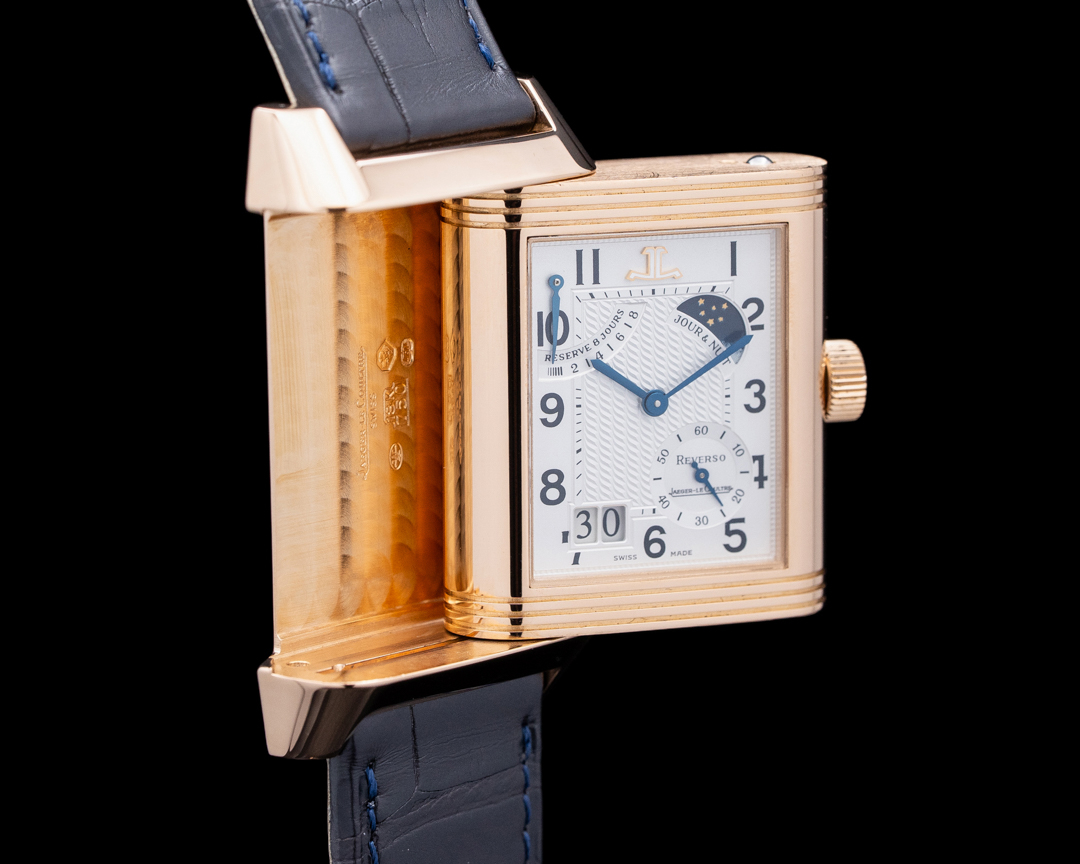
Seventy years, eight days. A double-barrel movement paired with a high-frequency balance gave over a week of running power, and its patented large date opened the whole Grande Reverso chapter that followed. Cal. 879 is the direct ancestor of the 2025 Tribute Geographic’s cal. 834.
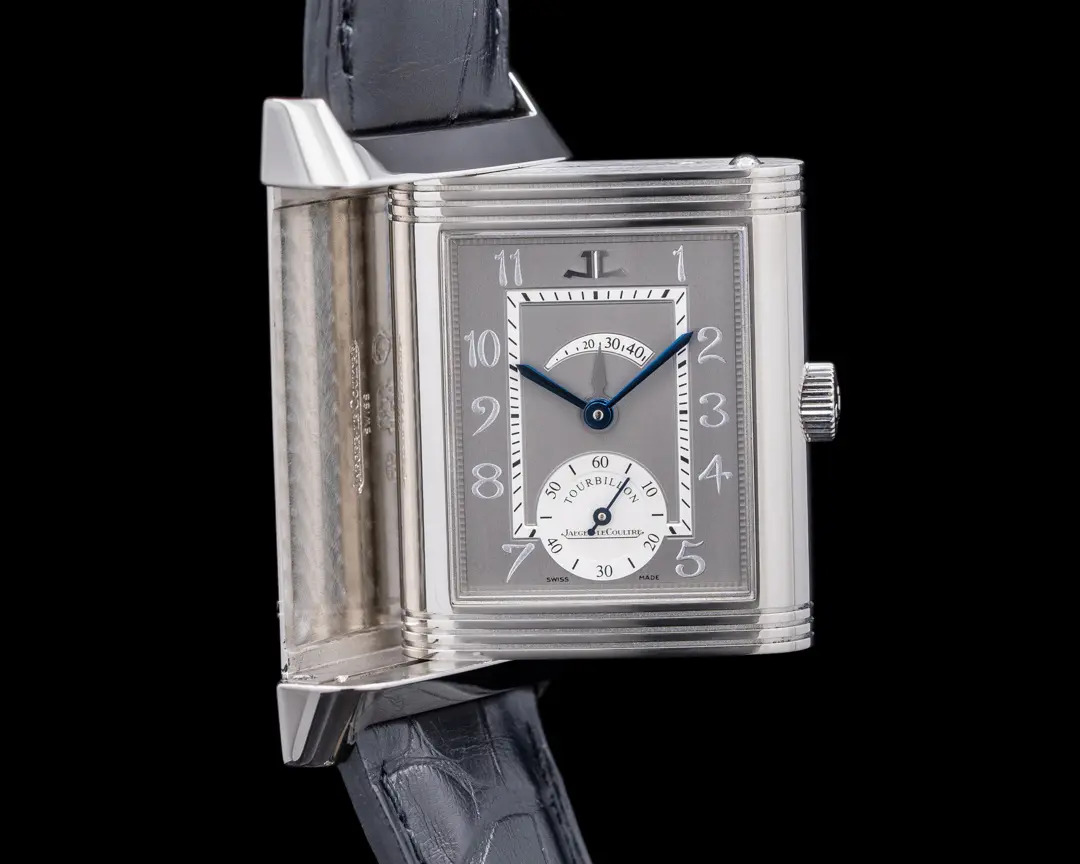
The companion to Number One: a quiet grey dial on the front, with the tourbillon kept for the back. One came back through The Collectibles in Hong Kong in 2026.
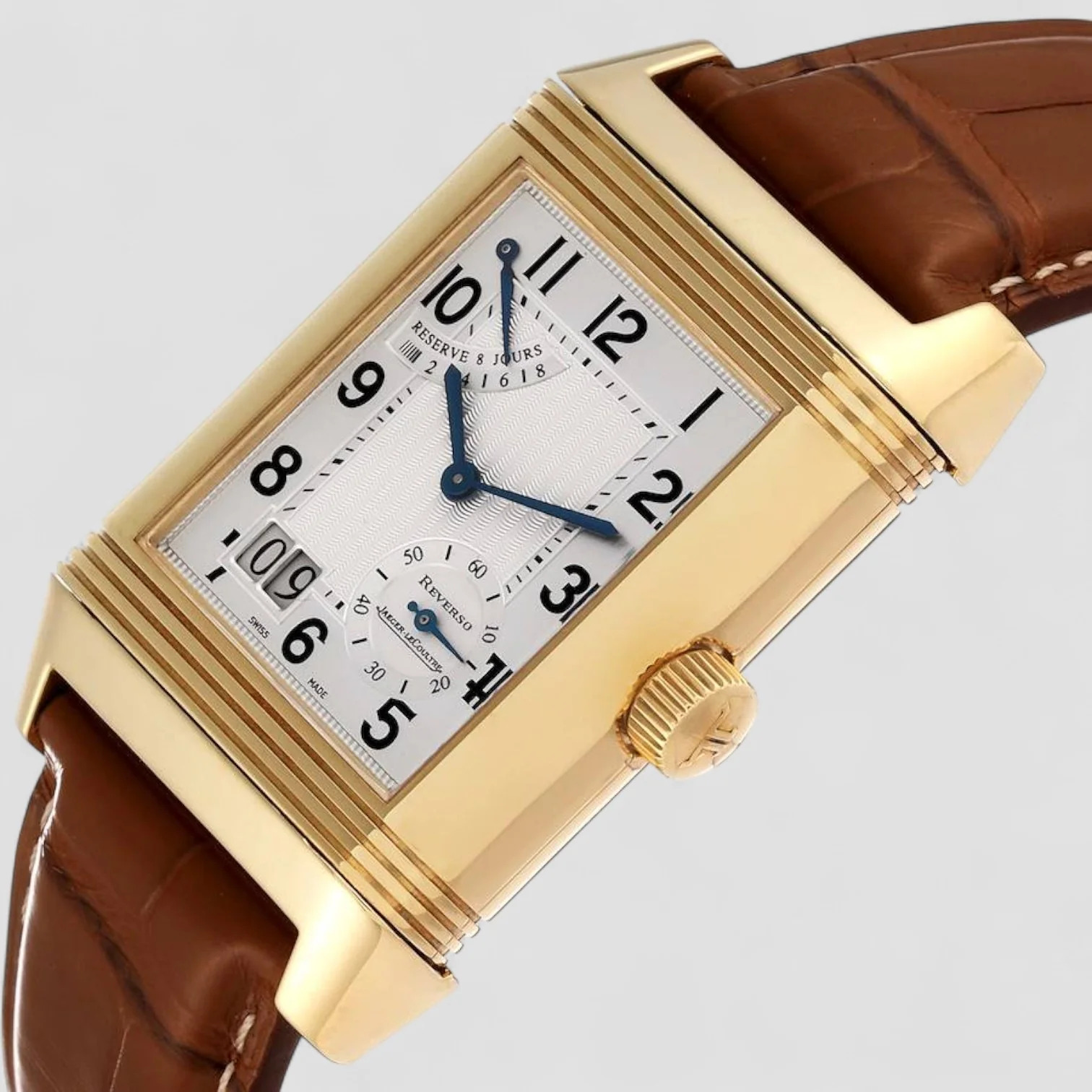
A whole family in one year: Grande Automatique, Grande Date, Grande GMT and Grande 8 Days. This is the point where the Reverso stopped being one watch with variants and became a range with tiers.
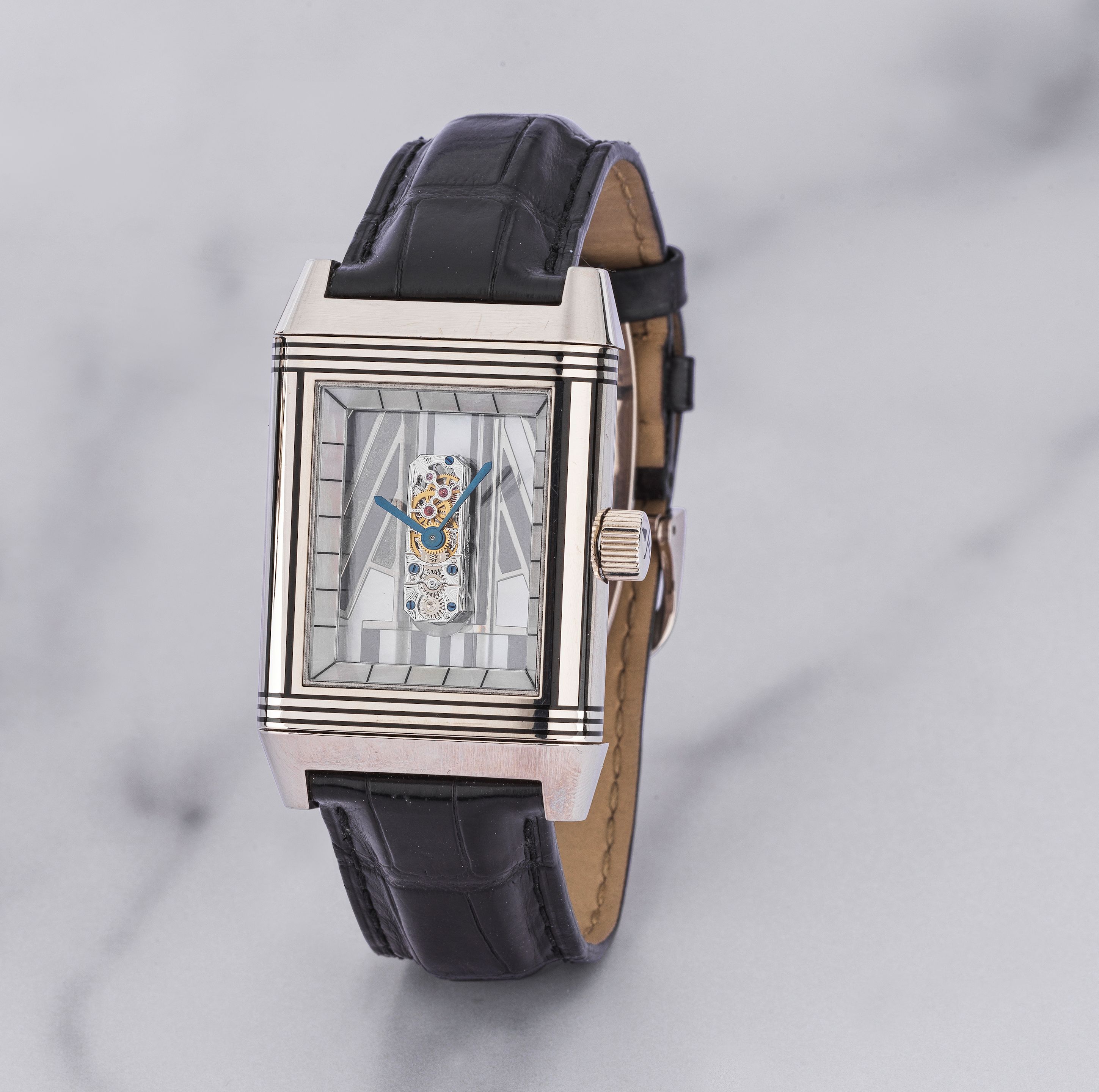
The 1929 calibre 101 (still the smallest mechanical movement ever put into series production) fitted into a Reverso. A jeweller’s watch with a watchmaker’s heart.
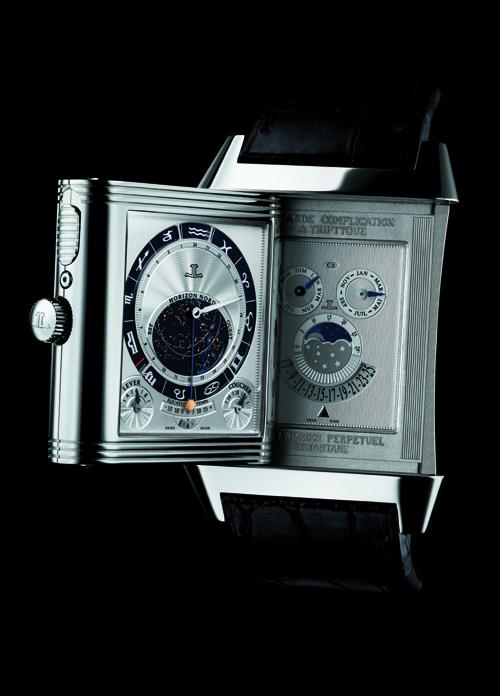
The world’s first watch with three dials driven by a single movement: front, back, and a third display hidden inside the cradle itself. Three dimensions of time at once: civil, sidereal and perpetual, with a tourbillon and an equation of time. Six new patents.
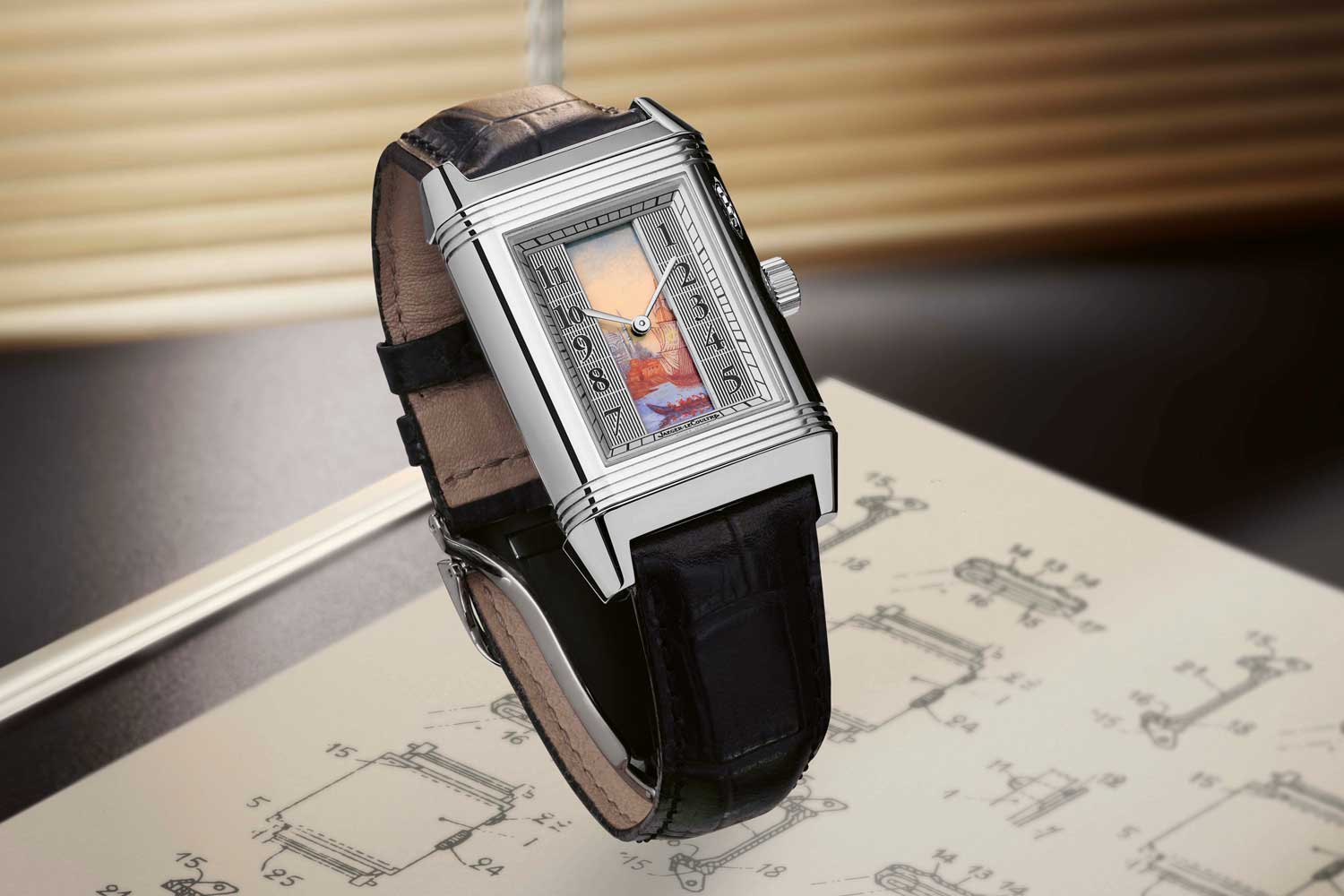
A miniature shutter over the case-back that opens to reveal the decoration beneath. The case-back is treated as something to be unveiled rather than simply seen.
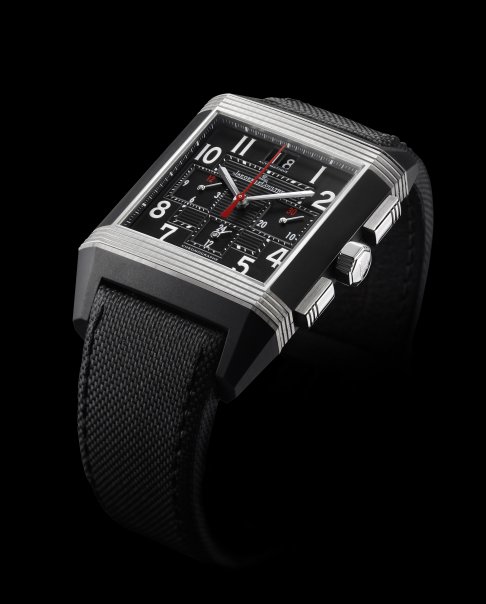
The square Reverso, and the one with the best origin story: its proportions came from Chauvot’s original 1931 drawings, which showed the Reverso as a square rather than a rectangle. Those seventy-five-year-old sketches were pulled from the archive and overscaled into something their author could never have foreseen: the flagship Squadra Chronograph GMT ran 35 mm across and a stupendous 50.5 mm lug to lug, with the godrons repeated on the chronograph pushers and the octagonal crown for grip. It replaced Gran’Sport as the sports line. Hometime, Chronograph GMT, World Chronograph, and from 2009 a Lady and Lady Duetto. Retired in the 2016 reset with no direct successor.
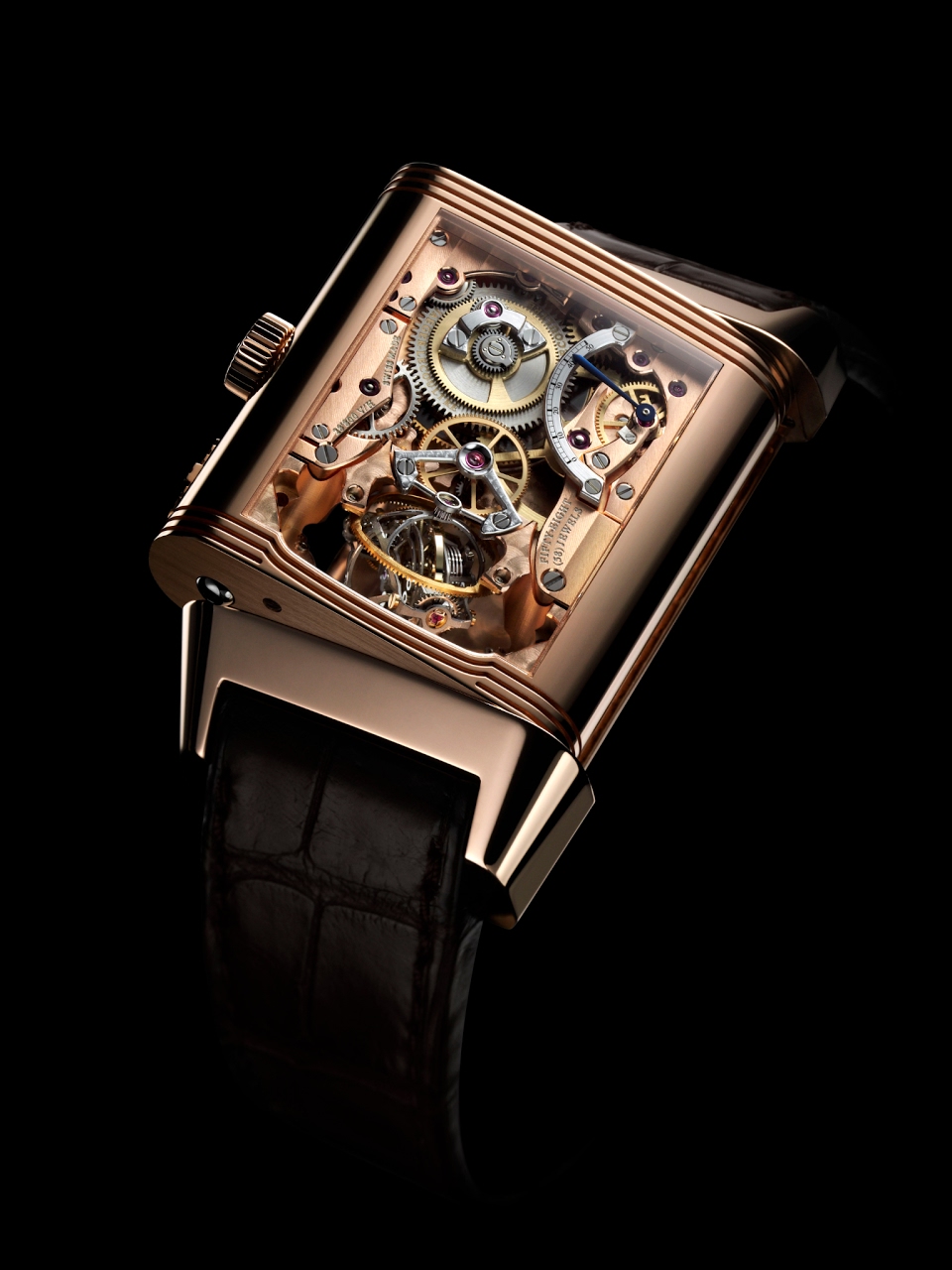
A spherical multi-axis tourbillon (inner carriage one rotation every 18.75 seconds, outer carriage one per minute) squeezed into a rectangle. The first wristwatch to run a cylindrical hairspring. It took first and second place at the 2009 International Chronometry Competition.
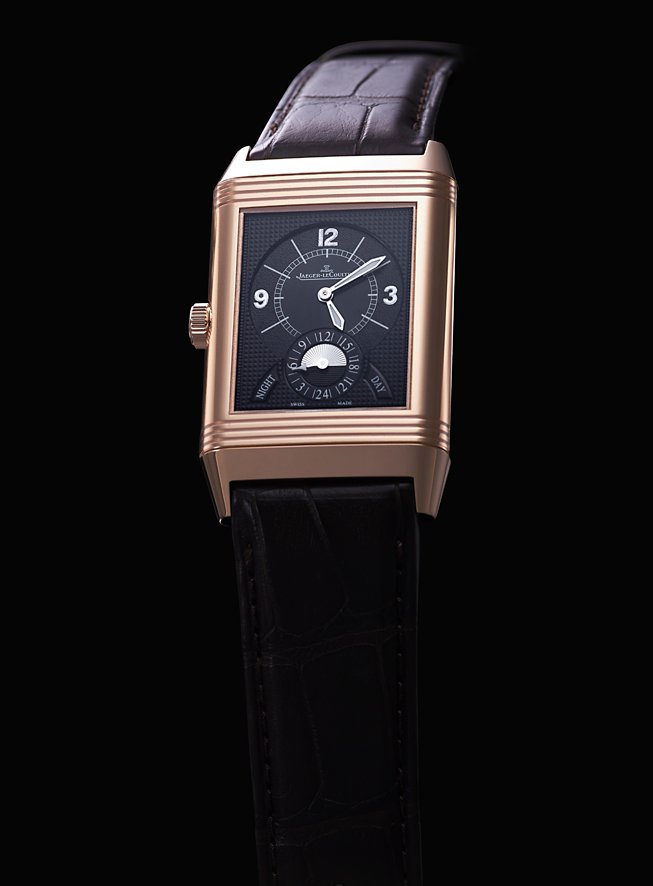
The Grande Reverso family at full stretch: the Duo Date on calibre 986 (2009), the time-only 976, the Duo “Night & Day”, and a Grande Reverso Calendar in 2012. The Duo Date runs a guilloché silver front with date at twelve and small seconds at six, and a black reverse with luminous hands and a day/night indicator; 31 × 52 mm. Edition size needs care: a pink-gold example at Artcurial in 2011 was numbered 286/500, which conflicts with the 1,500-piece figure quoted elsewhere; most likely 500 per metal rather than 1,500 overall, but treat it as unresolved.
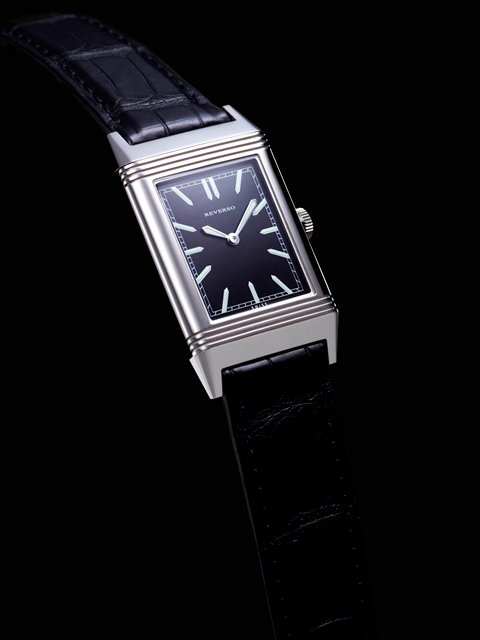
Made for the 80th birthday and still the modern watch that looks most like 1931: no seconds, no clutter, a black dial with applied batons, and only 7.3 mm thick. Followed by Rouge, Bleu and 1948 variants, and a skeletonised SQ on cal. 849.
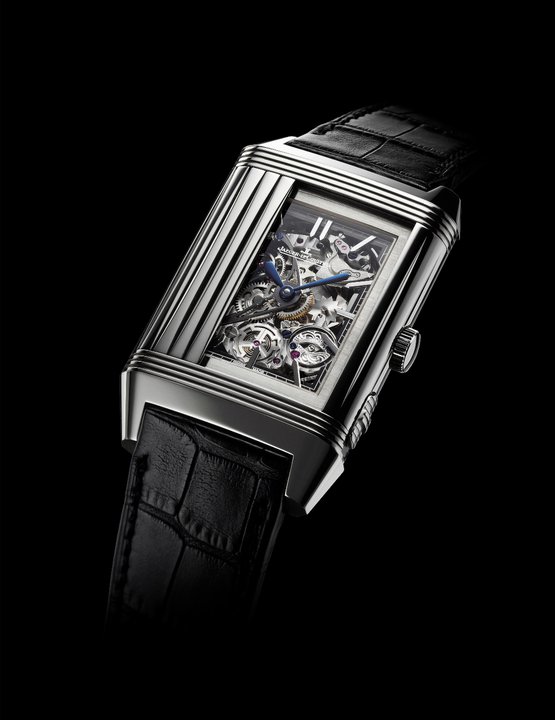
A minute repeater hidden behind a sliding metal curtain that opens as you activate it, the mechanism imitating the case’s own gesture. Trebuchet hammers strike gongs fixed to the sapphire crystal.
The Modern Rationalisation
SIHH 2016 swept away a fragmented line-up and replaced it with three clear families: Classic, Tribute, and One. Almost everything sold today descends from this reset.
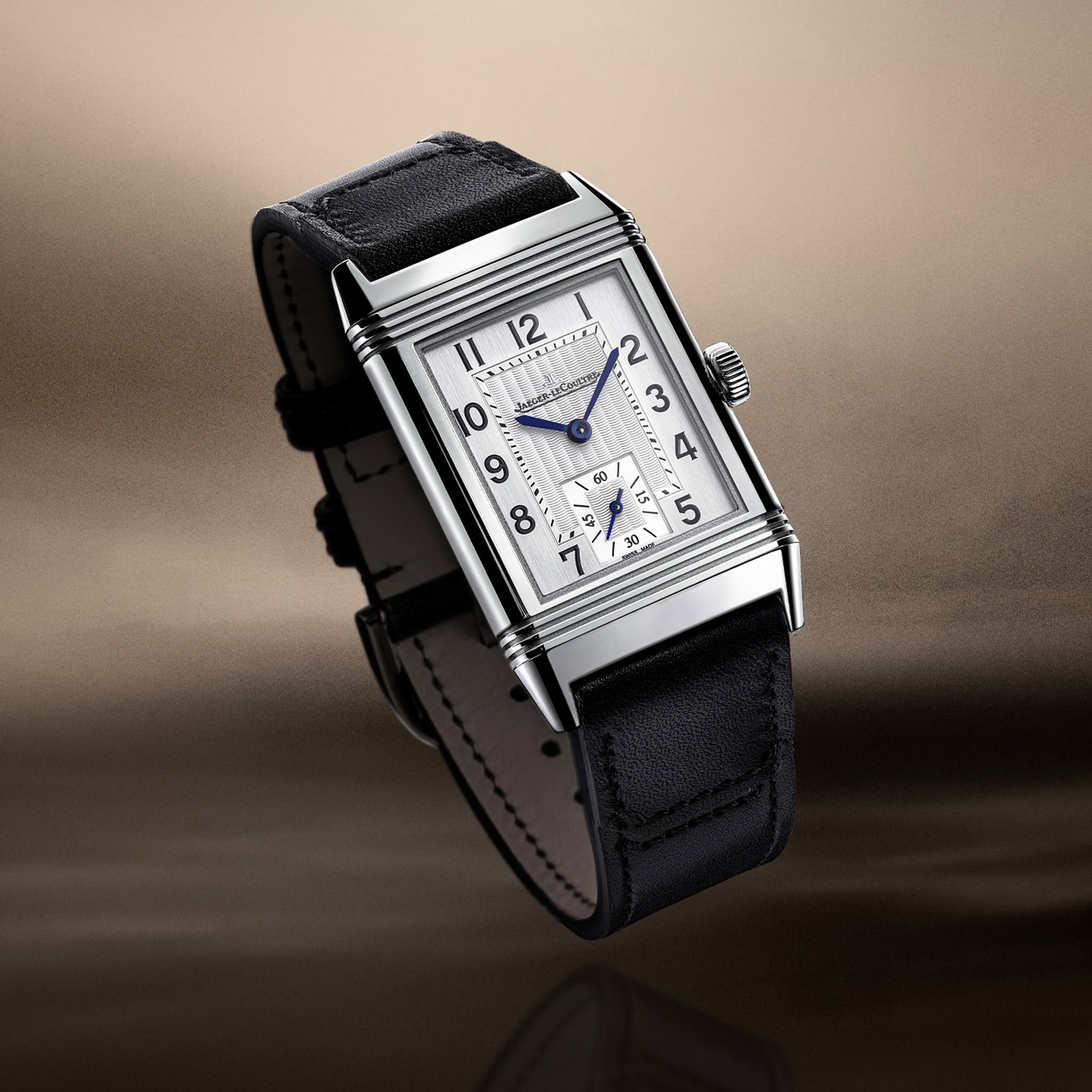
The 2016 reset in one family. Three sizes, each available Monoface, Duoface or Duetto, quartz at first and then hand-wound. This is the modern entry point to the collection.
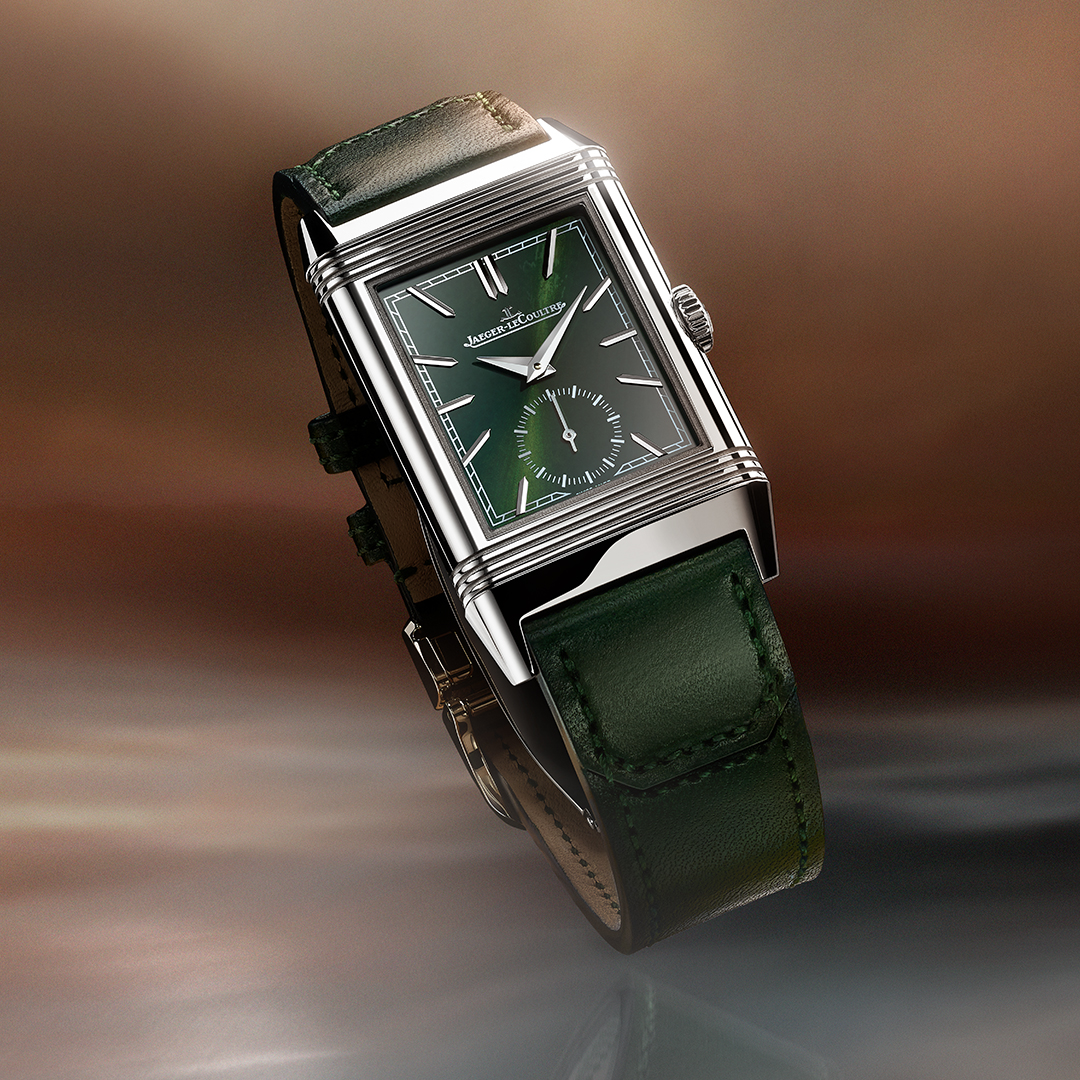
The heritage-facing tier: closest in detail to the 1930s watches, with better finishing and in-house calibres. Launched with Tribute Calendar and Tribute Duoface; Tribute Moon (2017), Small Seconds and Tribute Tourbillon on the new cal. 847 (2018) followed.
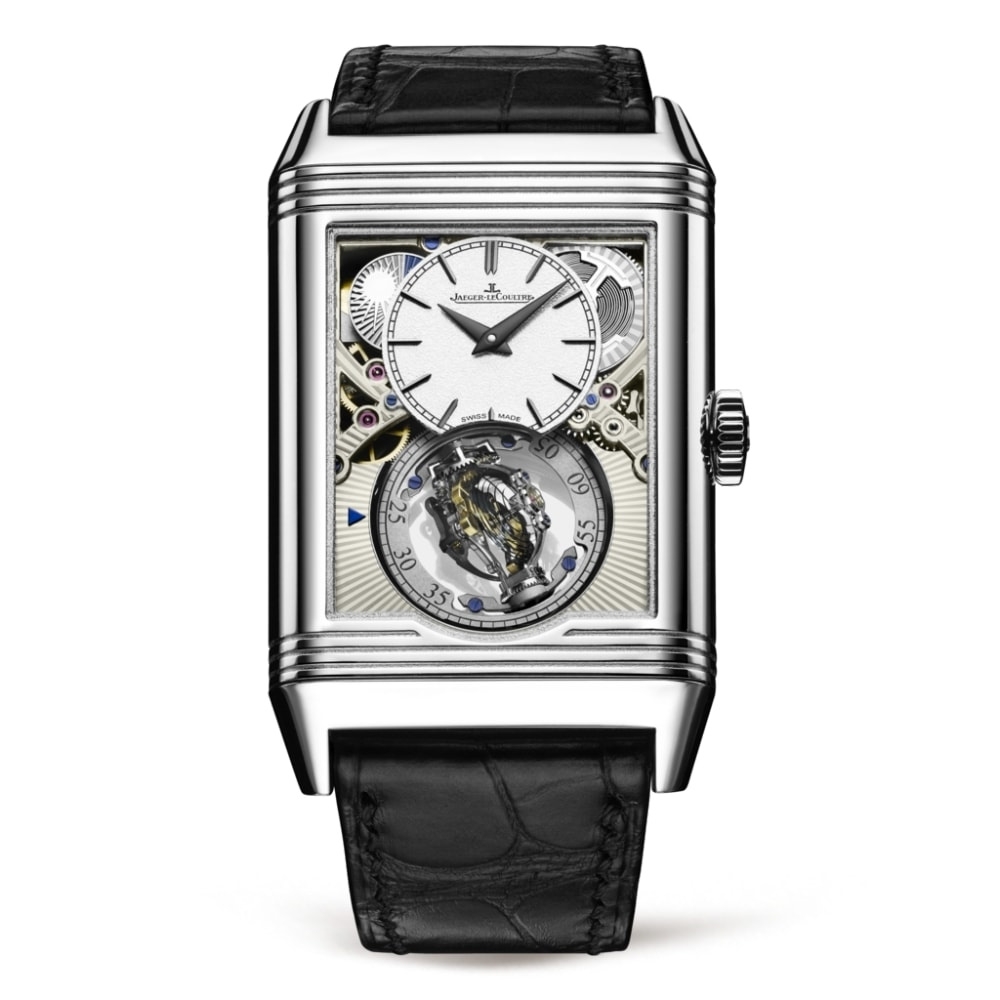
The 85th-anniversary piece, and around 30% smaller in width and thickness than the 2008 Gyrotourbillon 2. A bi-axial flying tourbillon with a hemispherical balance spring and the non-circular Gyrolab balance wheel, engineered to cut air friction.
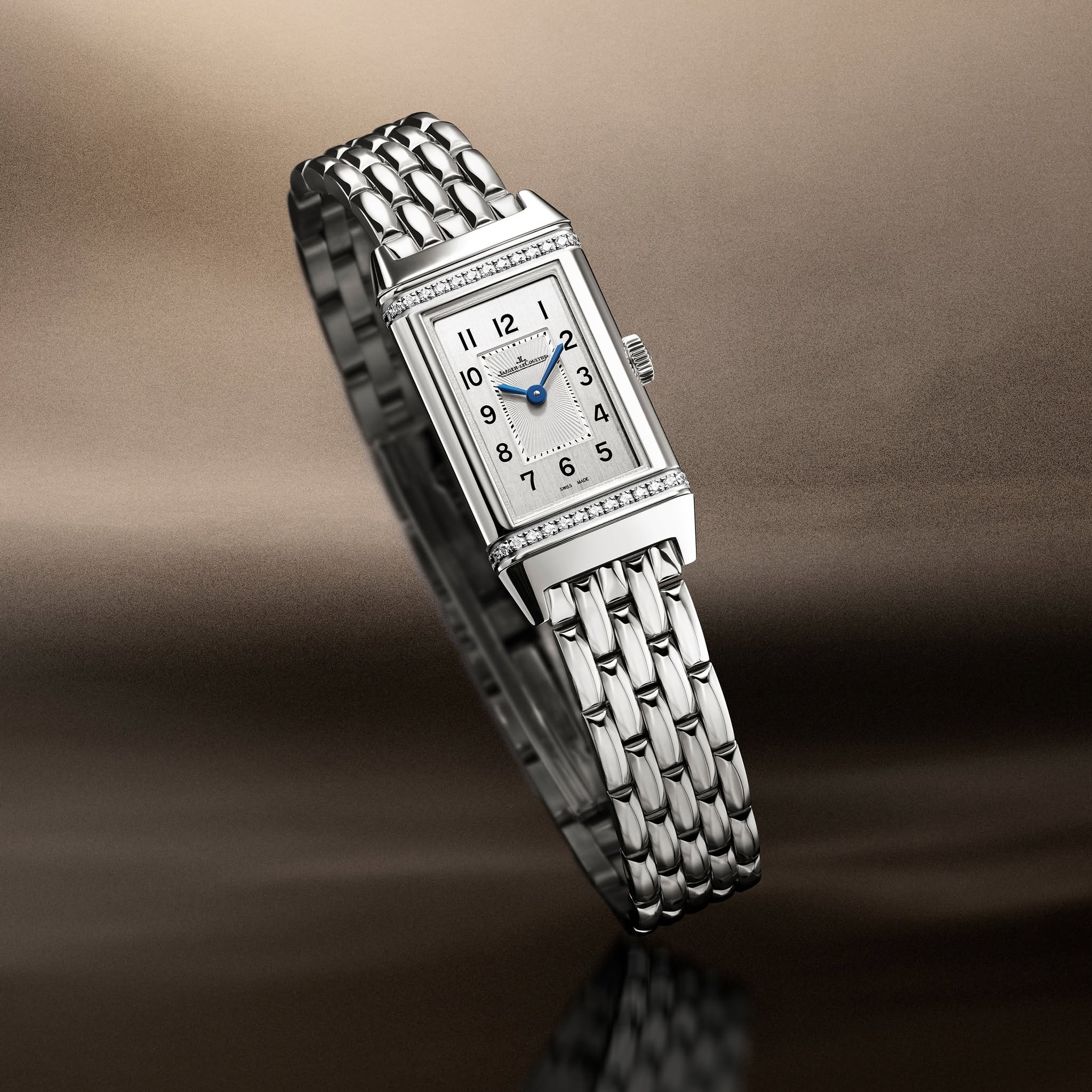
An all-new women’s line replacing the old “Lady” naming, and a deliberate break from the golden ratio: the One is a slim 2:1 rectangle, echoing the narrow ladies’ Reversos of the 1930s. Launched as Réédition, Cordonnet and Duetto Moon.
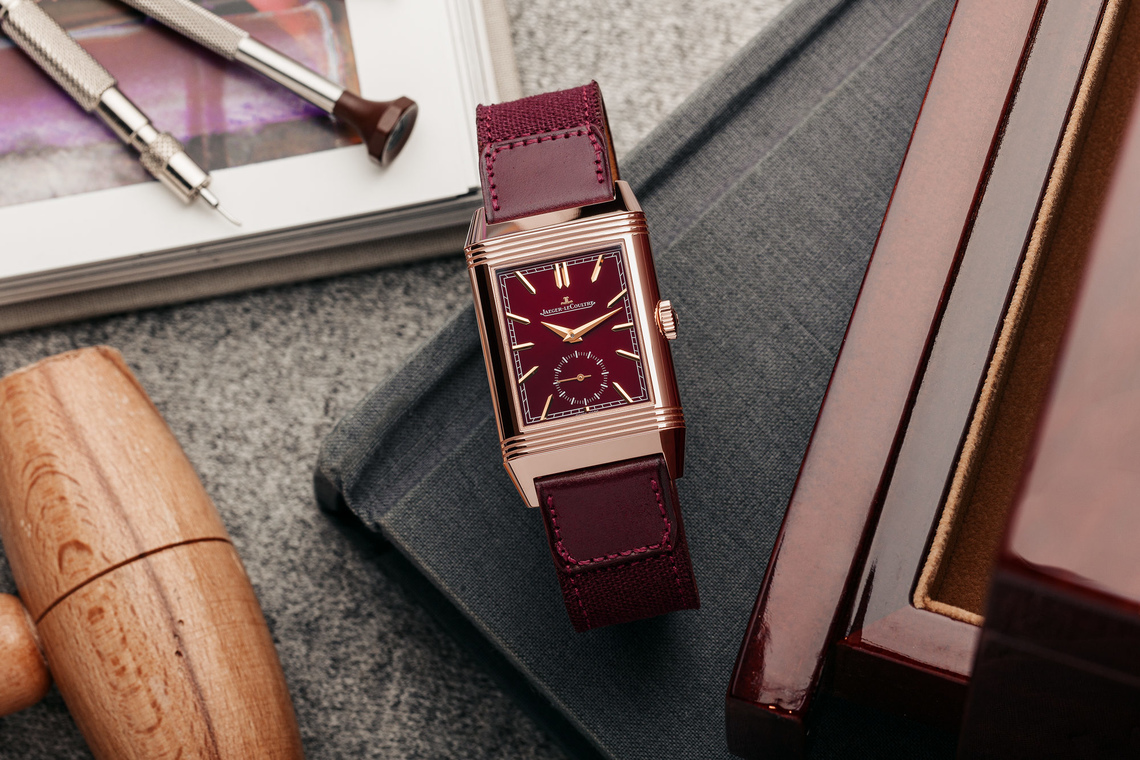
Straps hand-made by the Argentine polo bootmaker Casa Fagliano, a direct, literal thread back to the field the watch was invented on.
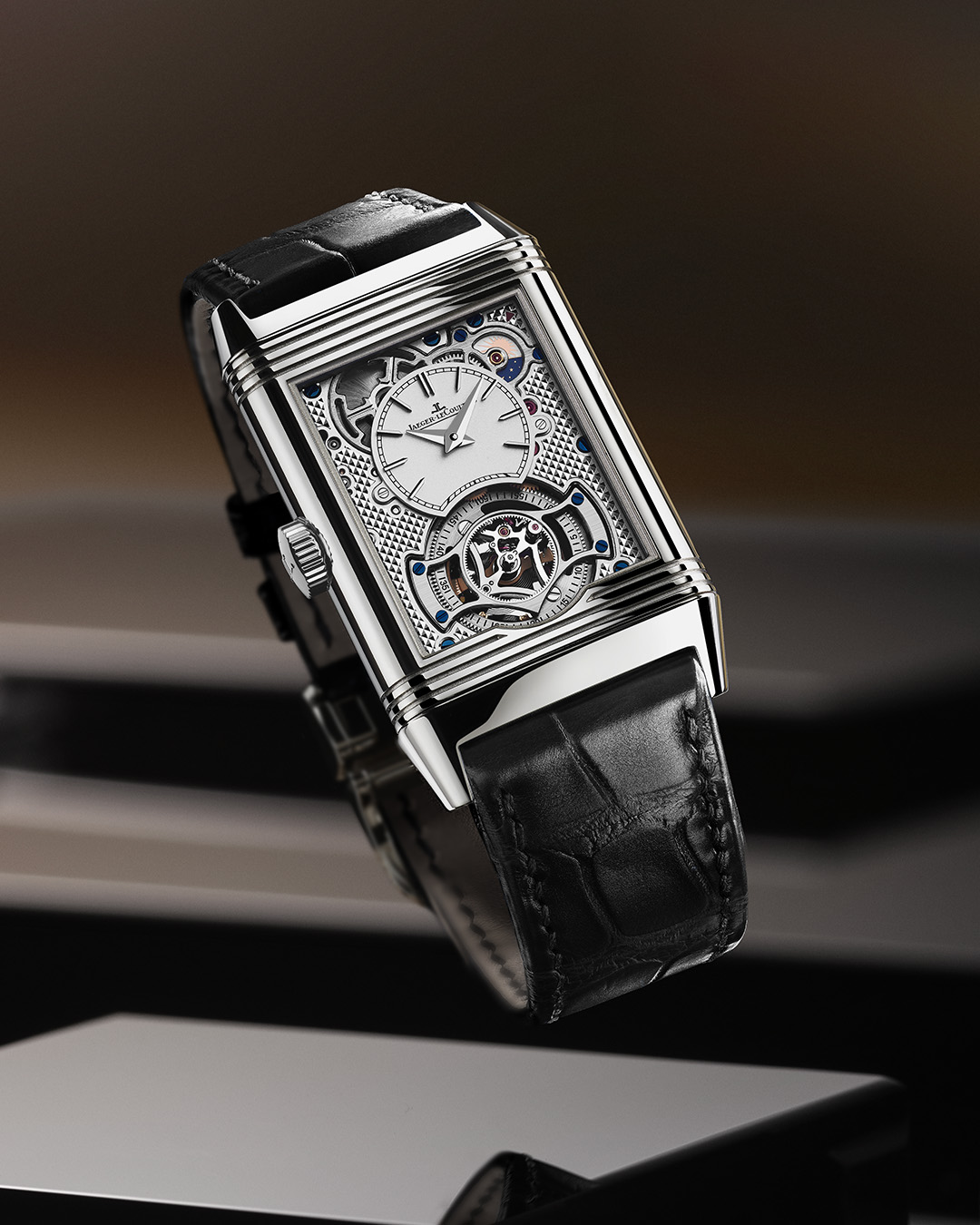
Built for Jaeger-LeCoultre’s own 185th anniversary: the Duoface’s second dial and a flying tourbillon fused into one 50-piece run.
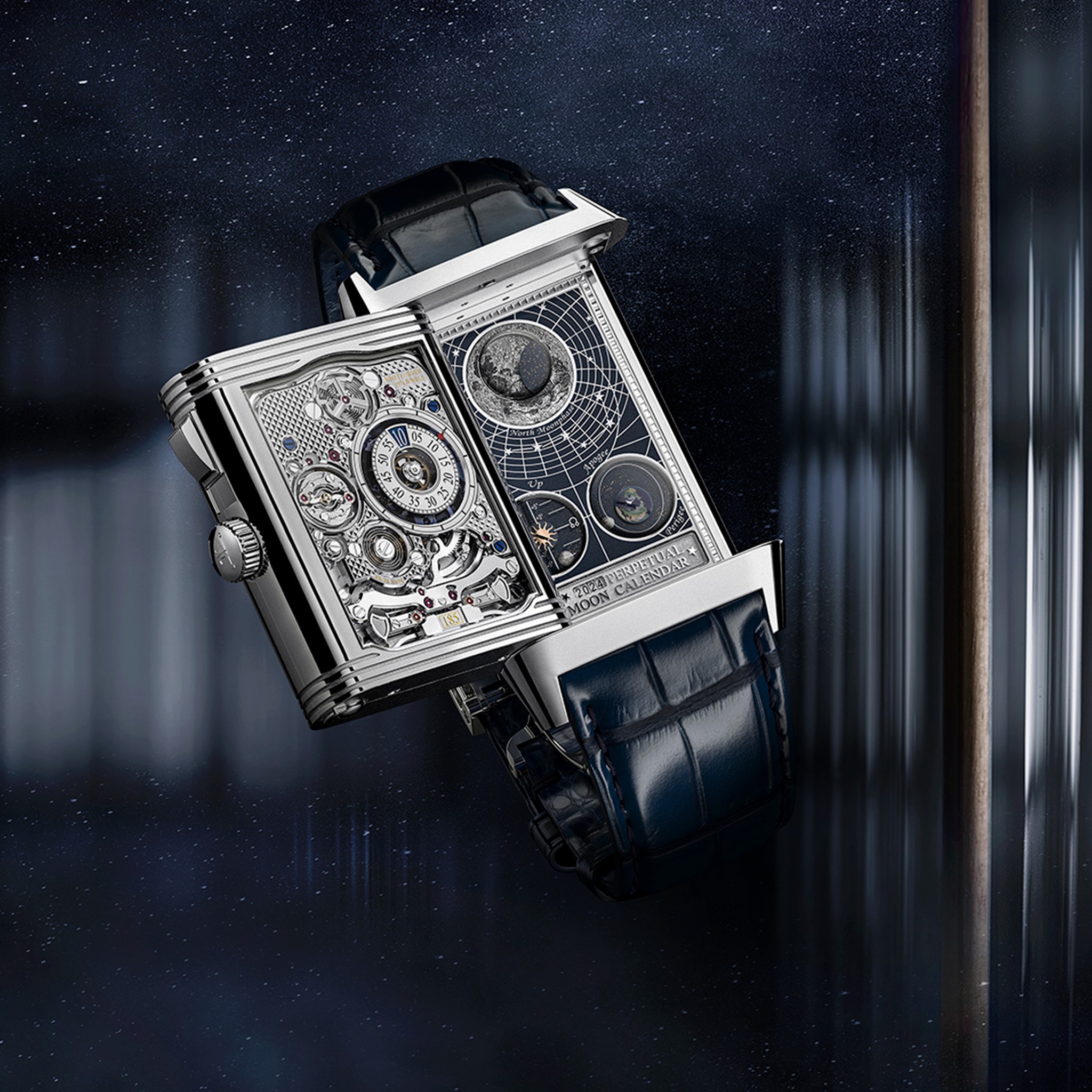
The most complicated Reverso ever built and the world’s first wristwatch with four functioning display faces. Eleven complications: perpetual calendar and flying tourbillon on the main dial, minute repeater with a digital jumping hour on the second face, and a triple-cycle astronomical display (synodic, draconic and anomalistic) set into the cradle itself. Twelve patents.
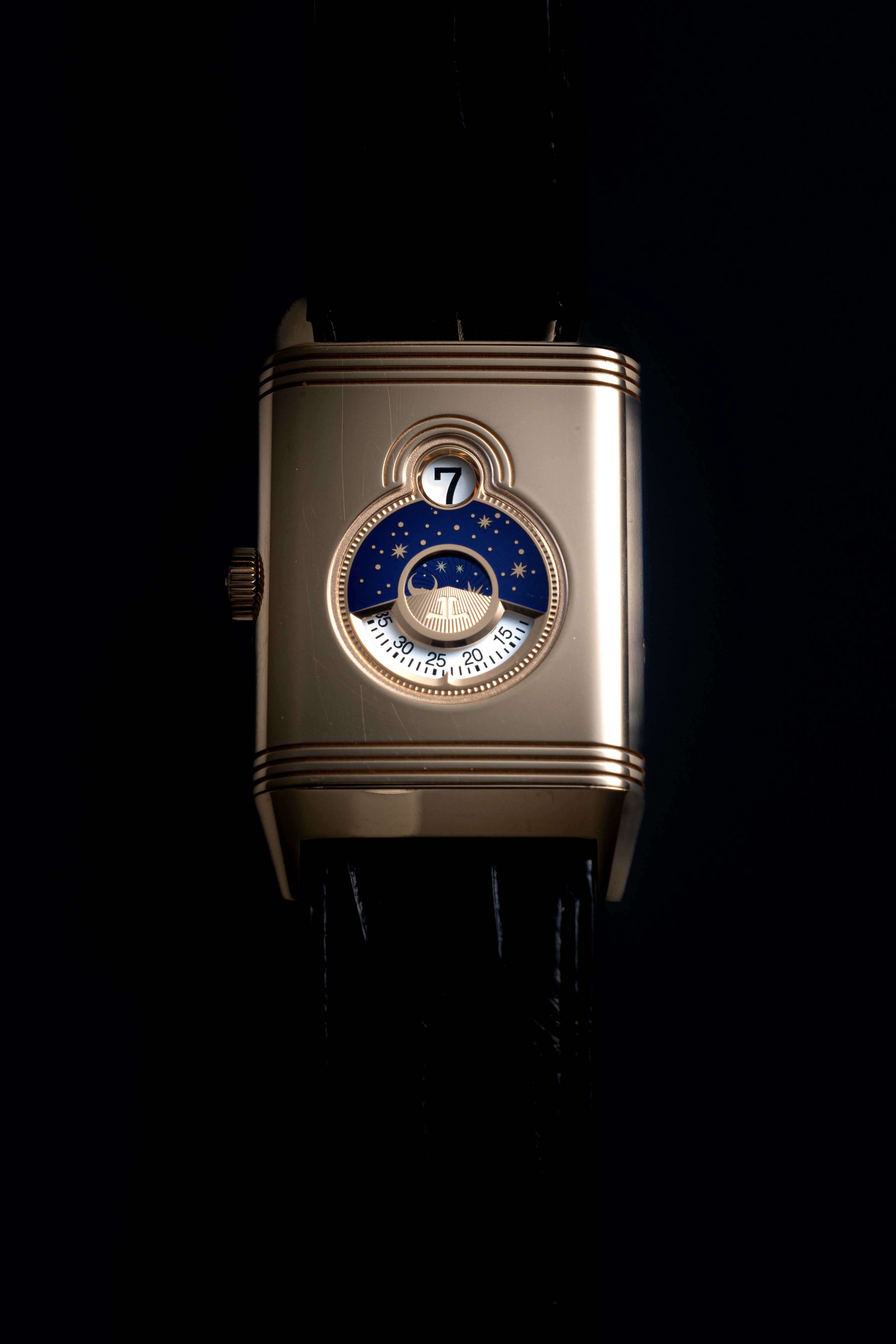
Ninetieth, in Swiss-French, continuing the Soixantième/Septantième naming. Moon phase and date on the front; on the back, a complication never before put on a Reverso: a semi-jumping digital hour beside a rotating minute disc and a day/night indicator, over a hand-engraved star field in deep blue lacquer.
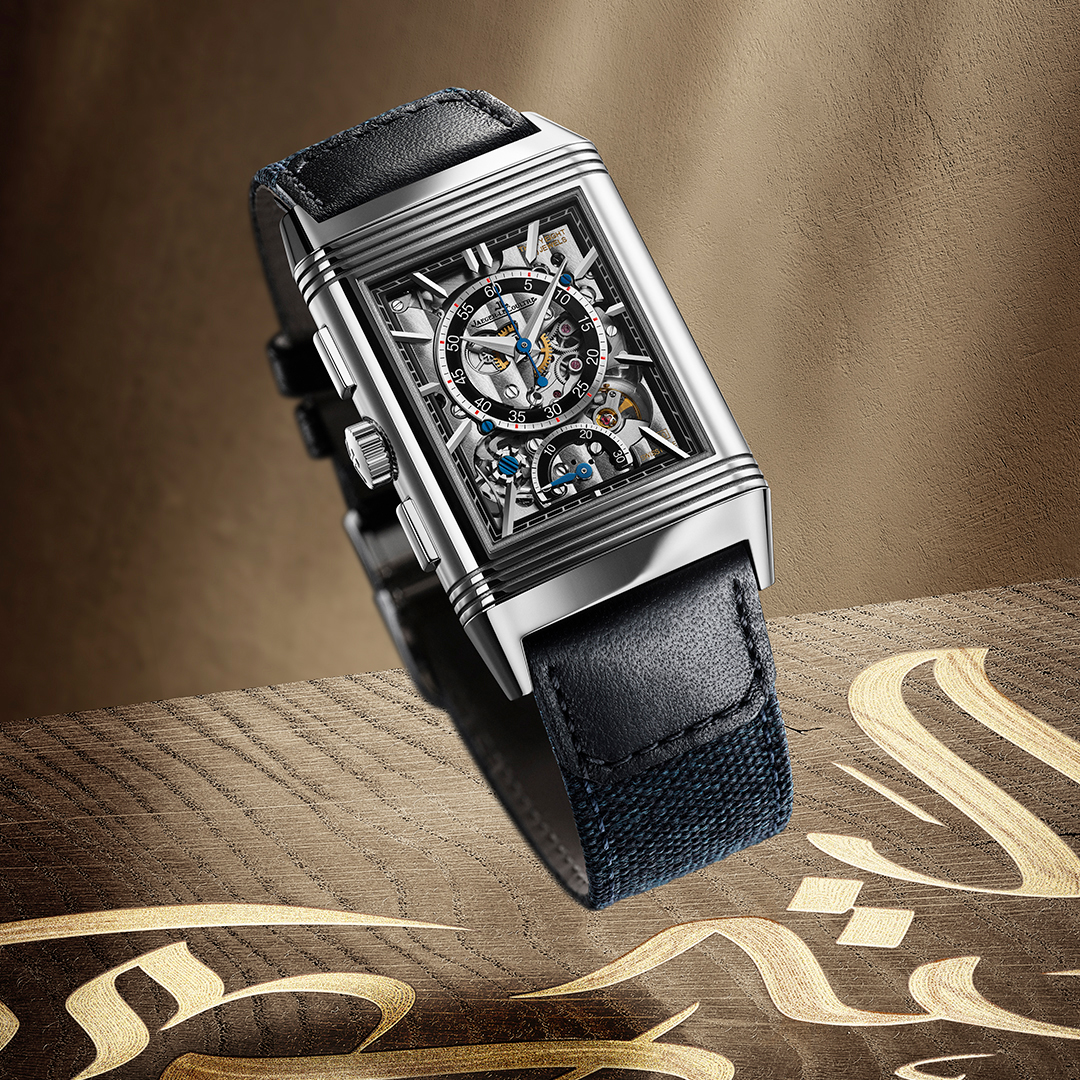
Twenty-seven years after the Chronographe Rétrograde, the chronograph returns: cal. 860 integrating a chronograph with a double-sided time display in a case under 12 mm thick, despite over 300 components. Steel or pink gold.
Polo Club & the Valley of Inventions
The most recent chapters, and the one still being written.
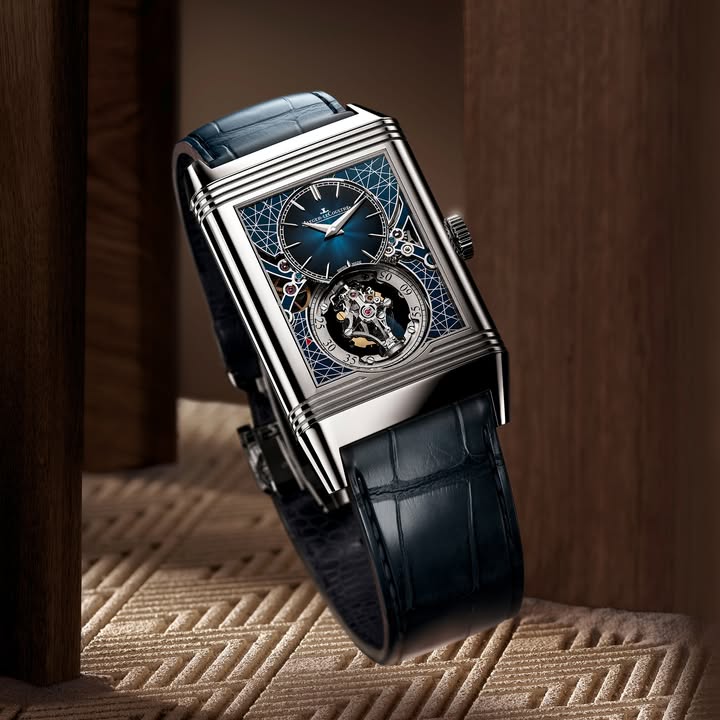
A Hybris Artistica piece built around the case-back as a canvas for the Métiers Rares atelier, reissued in white gold in the 2025 line-up.
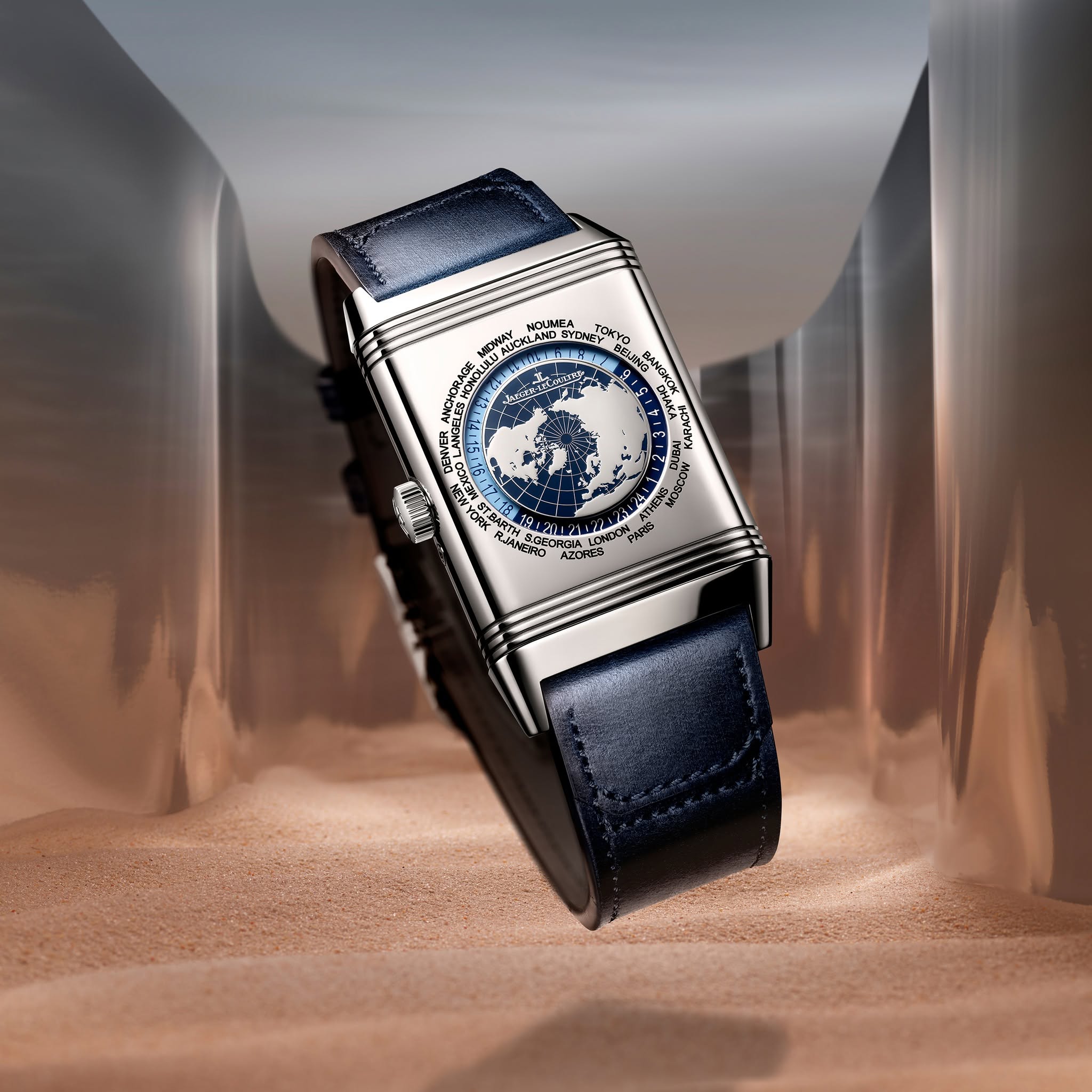
World time returns to the Reverso for the first time since the 1998 Géographique, solved for a rectangle with a new in-house calibre and a patented Grande Date. Steel joined the standing catalogue; pink gold was capped at 150.
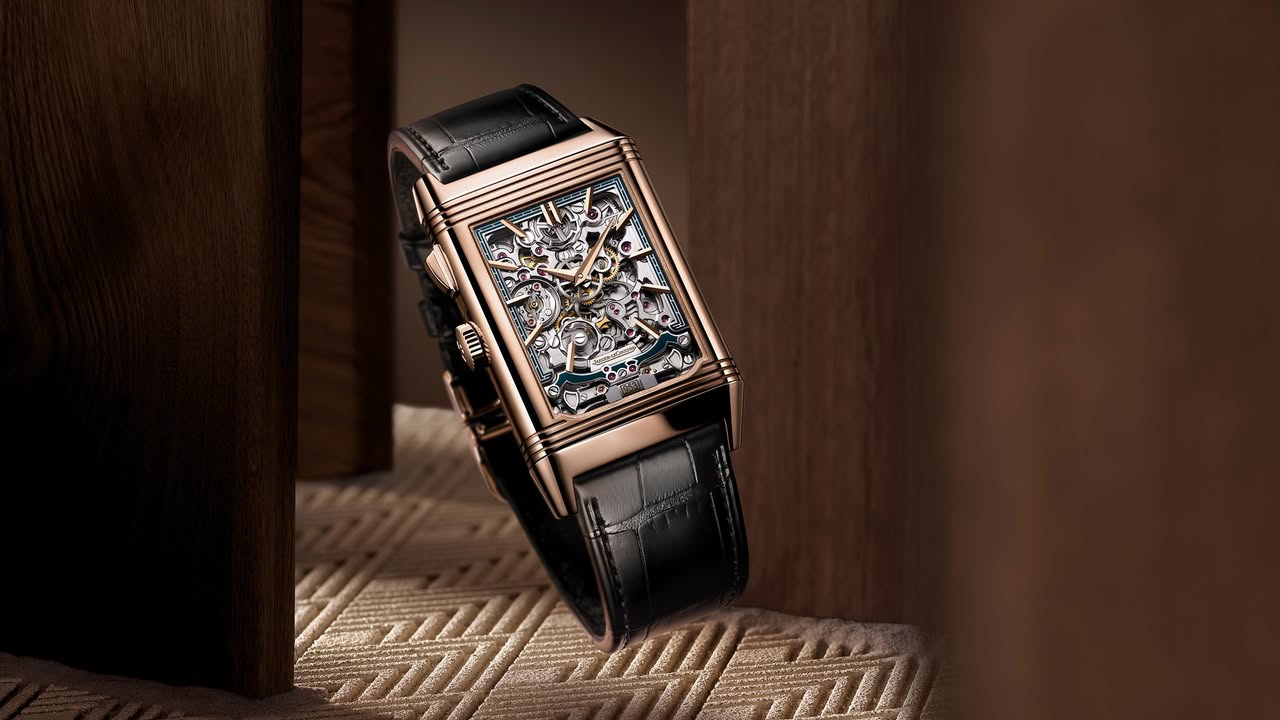
An entirely new integrated repeater movement, shown open-worked through the back, earning seven new patents on the way to market. Evidence that the hardest Reverso complications are still being developed, not just reissued.
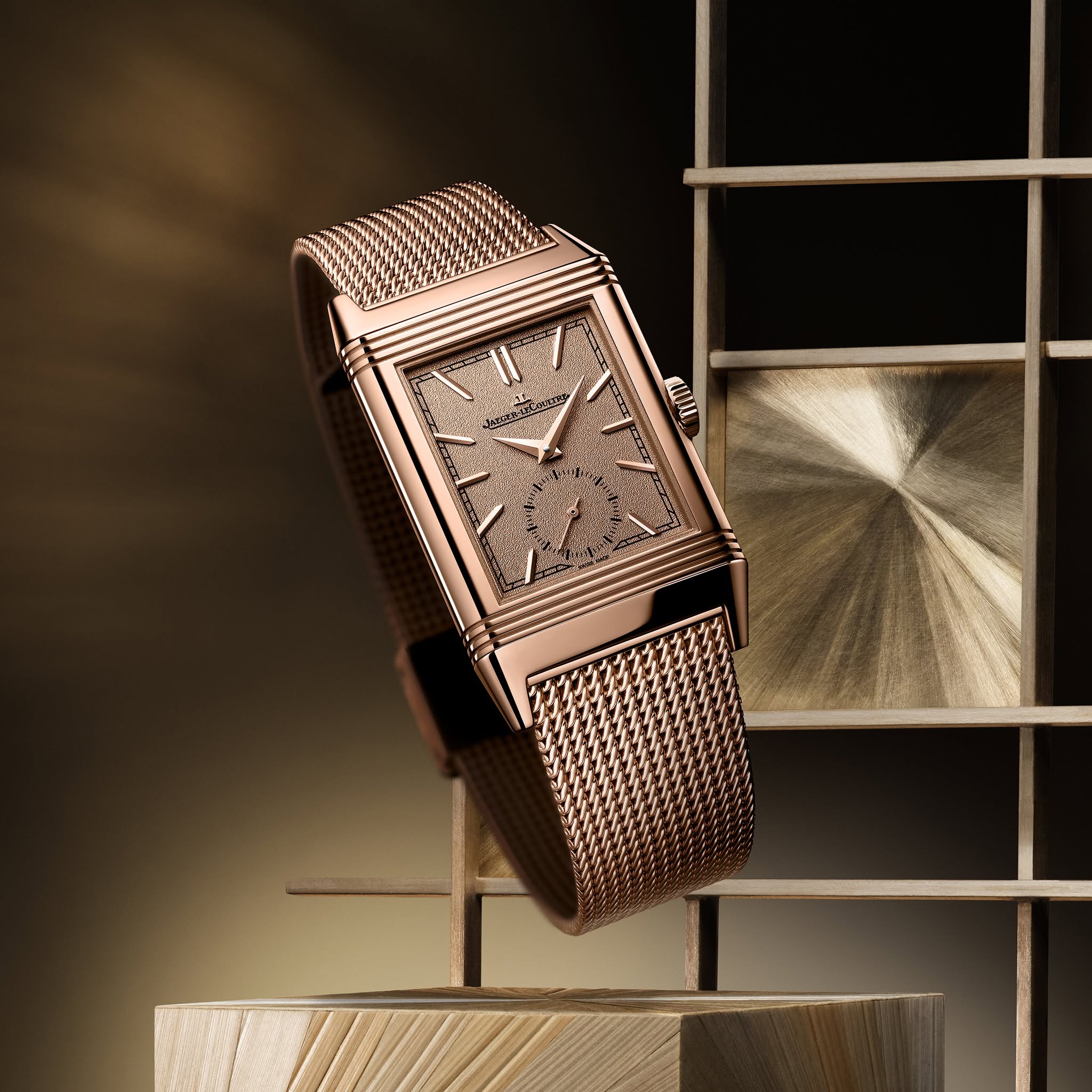
A slim single-faced Tribute, no second dial and no case-back complication, offered in gold on a Milanese mesh bracelet.
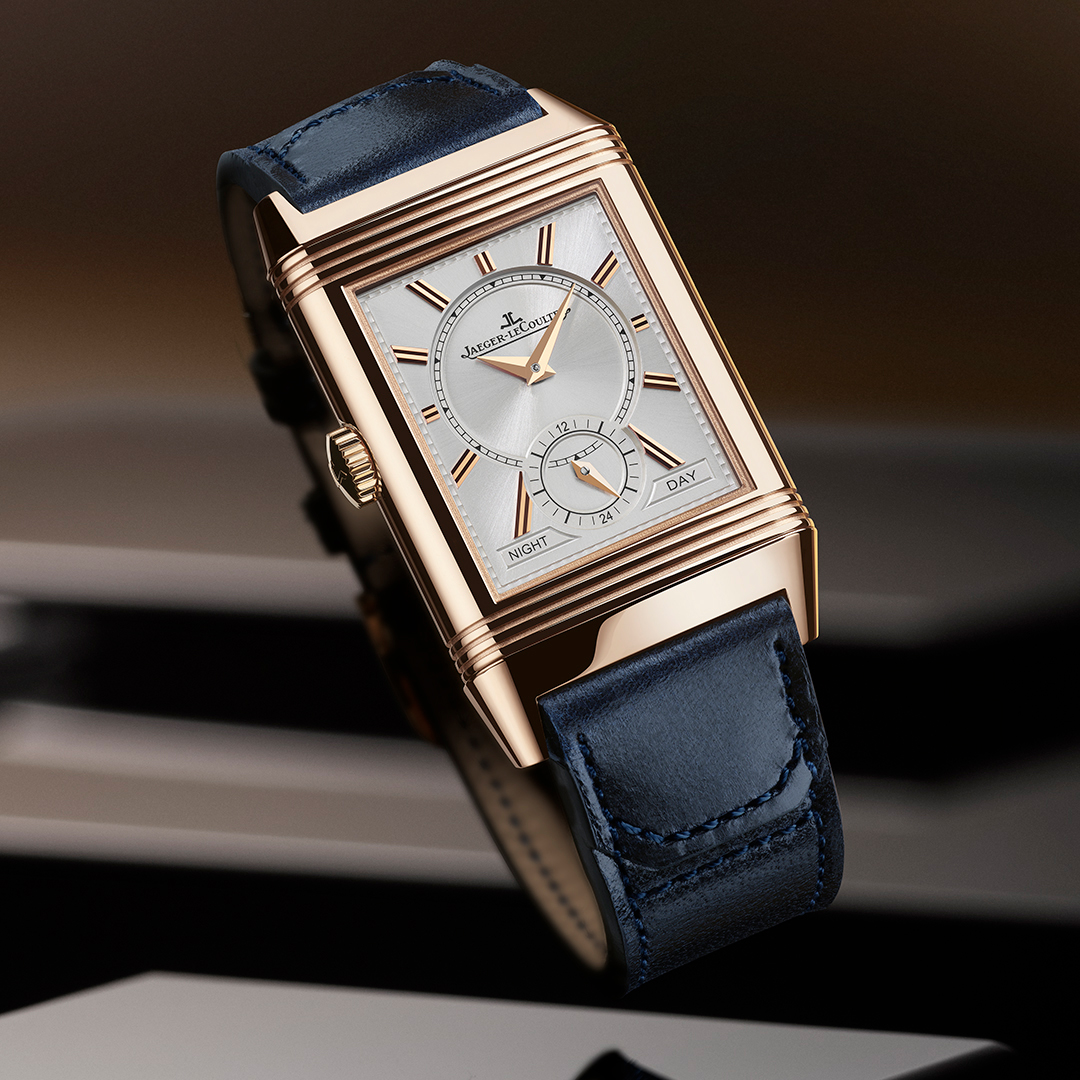
The 1994 Duoface reinterpreted in pure black or vivid blue, gaining a small-seconds register up front and a 24-hour day/night display on the reverse.
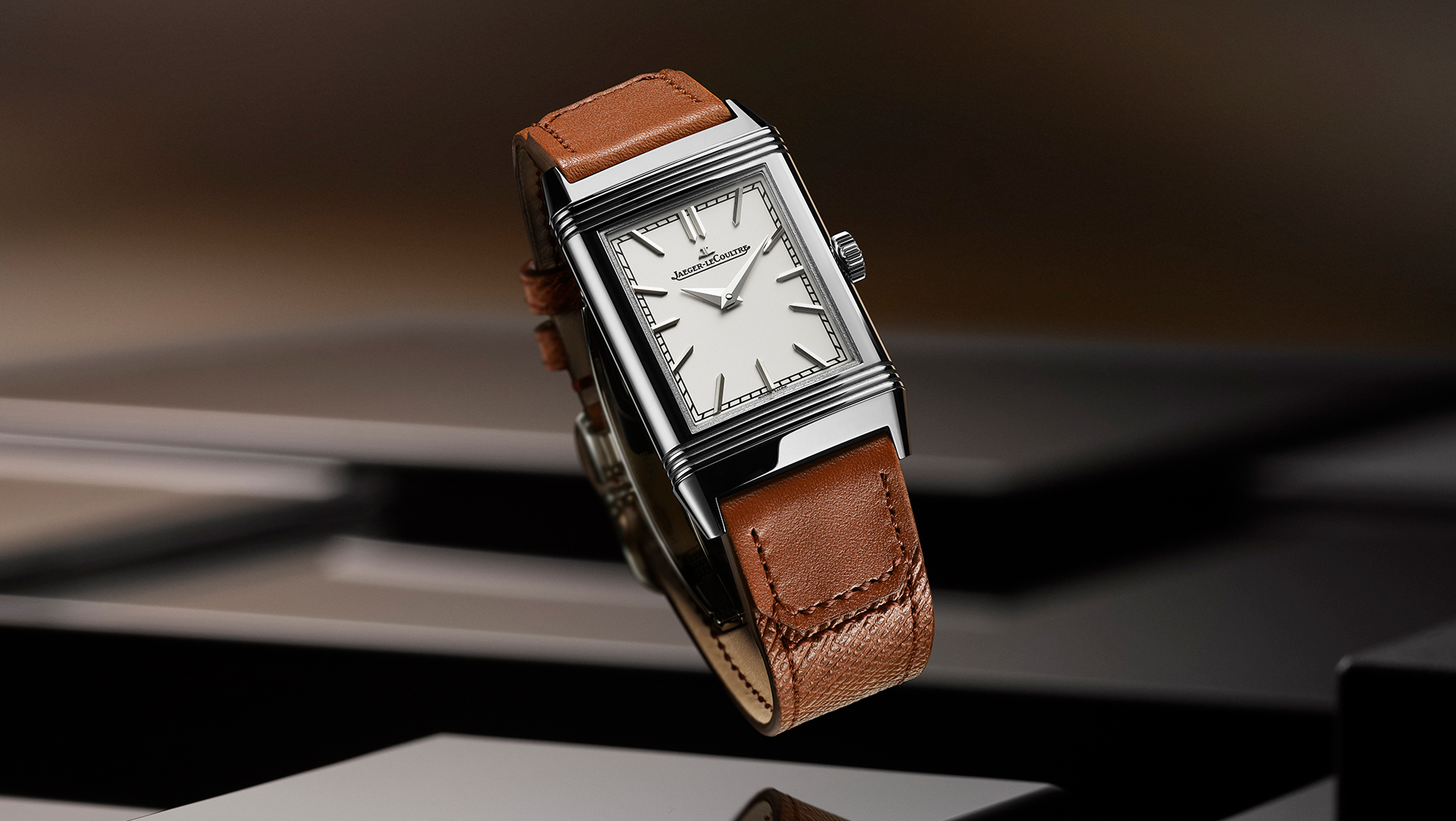
A deliberate return to vintage scale, closer to the sizes worn in the 1930s, when even men’s watches were slim. Part of a 2026 core-collection refresh alongside an updated Tribute Small Seconds.
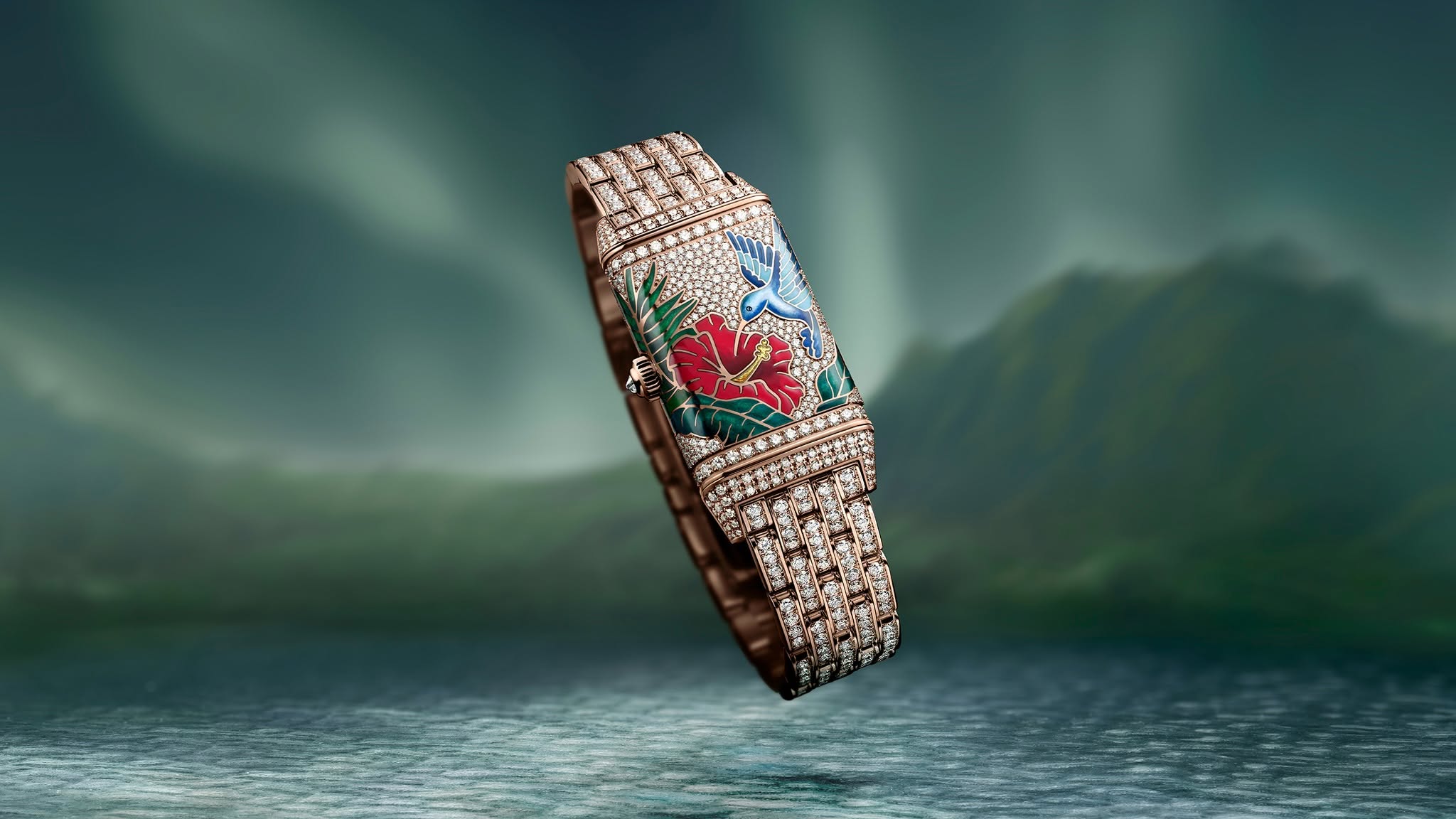
The first capsule of a new series celebrating natural scenery: three Reverso One pieces inspired by Hawaii and Japan — “Hibiscus Syriacus” and “Hibiscus Rosa” with hummingbirds, in pink or white gold, with mother-of-pearl dials.
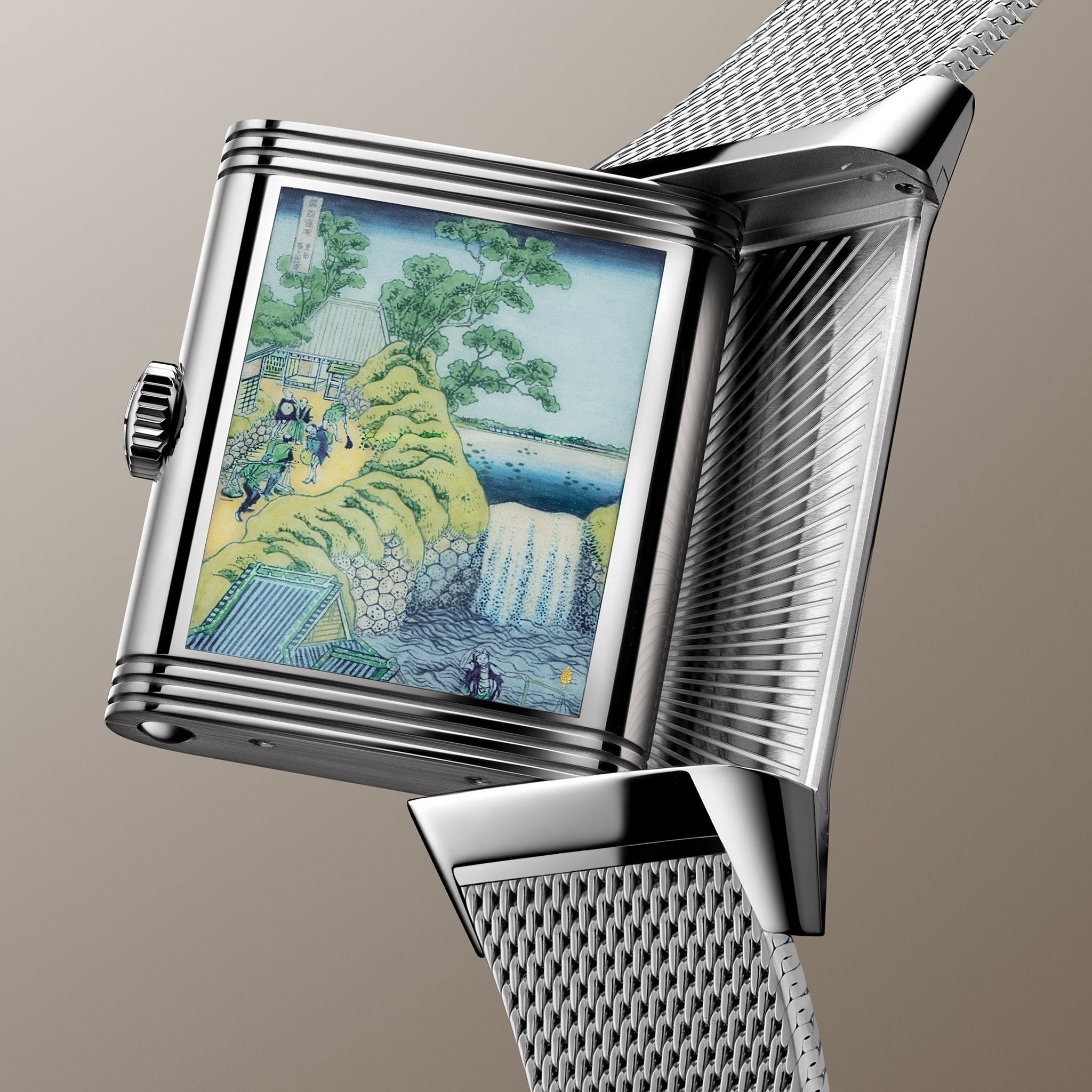
The completion of an eight-artwork cycle begun in 2021: the last four of Hokusai’s A Tour of the Waterfalls of the Provinces, each miniature built from fourteen layers of enamel, roughly 100 hours per watch, on hand-guilloché flinqué dials.