A collector's archive · since 1931
The Reverso was built to turn its back on danger. Collectors turned that same blank steel into a canvas — initials, crests, enamel, engravings. This is where those second faces, and the stories behind them, are kept.
Click the case to turn it over — front dial, back story.
The Genesis
A cracked watch glass on an Indian polo ground started it all. What began as a fix for a sporting problem became one of the most personal, and most technically ambitious, watches ever made.
Travelling through India over the winter of 1930–31, Swiss businessman César de Trey fell in with a set of British army officers for whom polo was a way of life, and whose watch glasses rarely survived a match. One of them, freshly out of a crystal, put the challenge to him directly: build something that could take the hit. De Trey brought the problem home to Jacques-David LeCoultre, who called on French designer René-Alfred Chauvot to solve it. Chauvot's answer was a case that slid free of its cradle on two spring-loaded studs and span a full 180 degrees, hiding the crystal behind a blank steel back. The patent (for "a watch capable of sliding in its support and being completely turned over") was filed on the 4th of March, 1931. They named it Reverso, Latin for "I turn around."
The reverse plate was only ever engineered to survive impact, an anonymous slab of steel. Owners saw something else in it. The earliest documented enamelled Reverso dates to 1936, a yellow-gold case decorated with a portrait scene, and it marks the moment the "protective" back quietly became the more personal of the watch's two faces. Monograms, crests, and miniature enamels followed within a few years, well before the idea had a name.
Edmond Jaeger's Paris workshop and the LeCoultre manufacture in Le Sentier had already been supplying each other for decades. The Reverso's case had come from exactly this partnership. In 1937 the two firms formally merged into a single maison, Jaeger-LeCoultre, giving the watch that made the union necessary a permanent home.
For its 60th birthday, the Reverso grew up: a larger "Grande Taille" case, a display case-back, and, for the first time in the line's history, complications on the dial side, starting with a power-reserve indicator and a date window. The limited "60ème" model is now considered the watch that turned a single design classic into an entire collection.
Nearly a century on, the Reverso has stayed in continuous production, carried dozens of different calibres, and remained watchmaking's clearest example of one mechanical idea becoming an entire identity. In 2025, Jaeger-LeCoultre revisited its own origin story with the "1931 Polo Club" theme. And every case still leaves the workshop with a blank back, which means, by design, no two ever have to end up the same.
War, silence, a forgotten box of cases, a watch with four faces, and countless stories — there's a lot more between 1931 and today.
Read the Full StoryFeatured Stories
Every Reverso here was engraved, enamelled, or otherwise personalized by a collector's own imagination, memory, or story. Click a case to read what's on the back, or visit Stories for the full set.
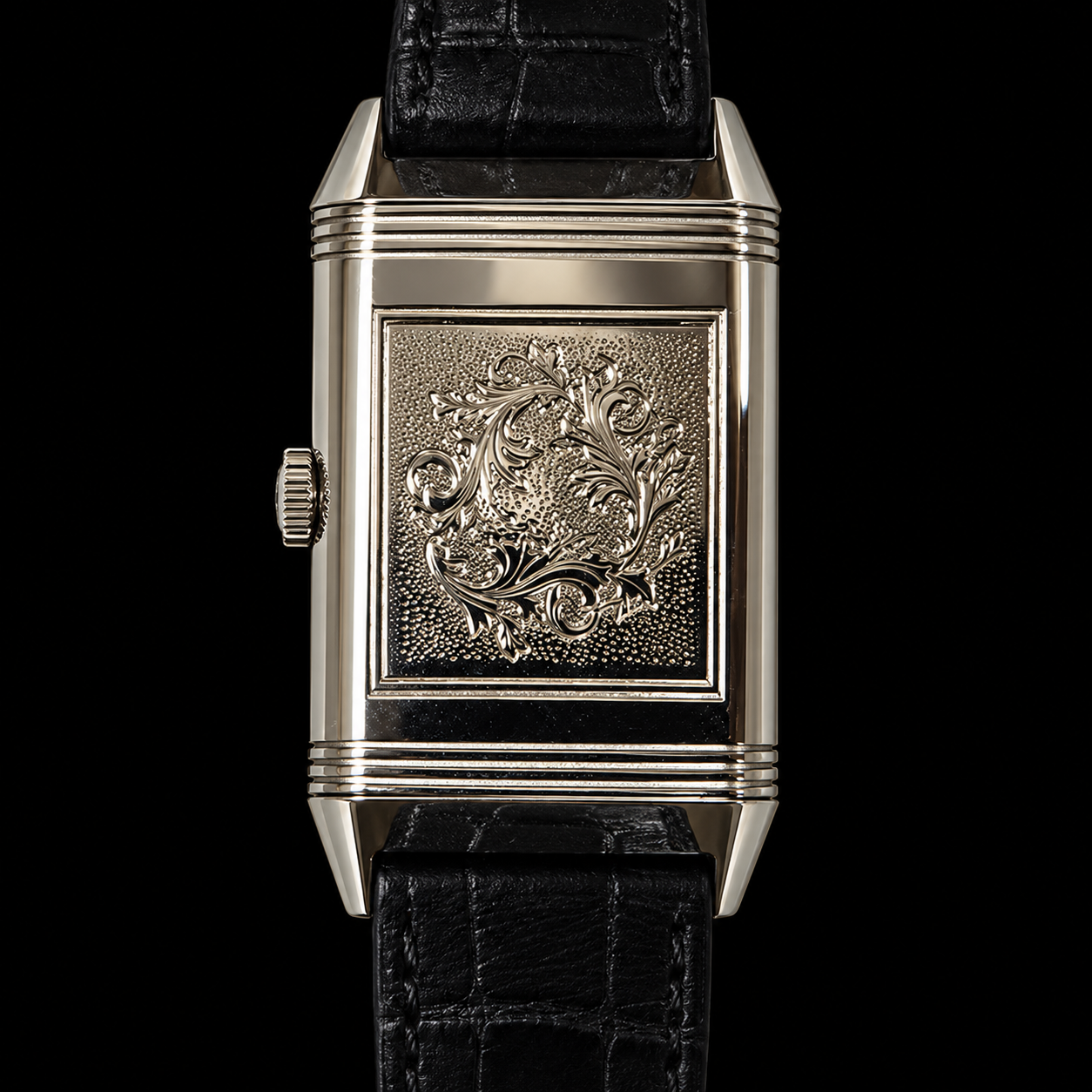
Mitch fell in love with one side of a Reverso and couldn’t live with the other. So he asked Jaeger-LeCoultre a question they don’t usually say yes to — and one of only eight became something else entirely.
Read the Full Story
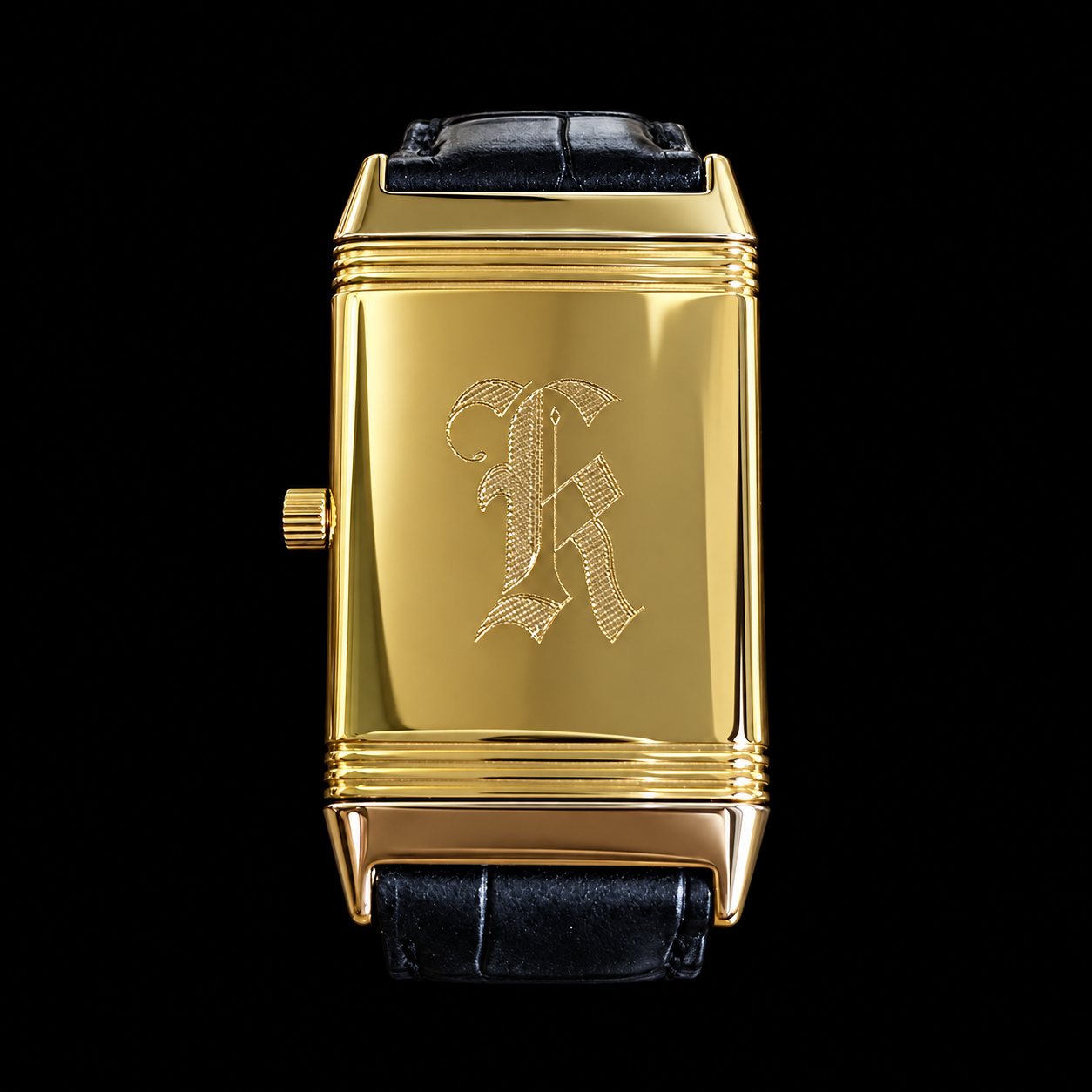
The very first JLC Randy ever bought is already written into his will — engraved with the family initial, and meant for his son one day. It turned out to be the start of a collection nineteen watches deep, and counting.
Read the Full Story
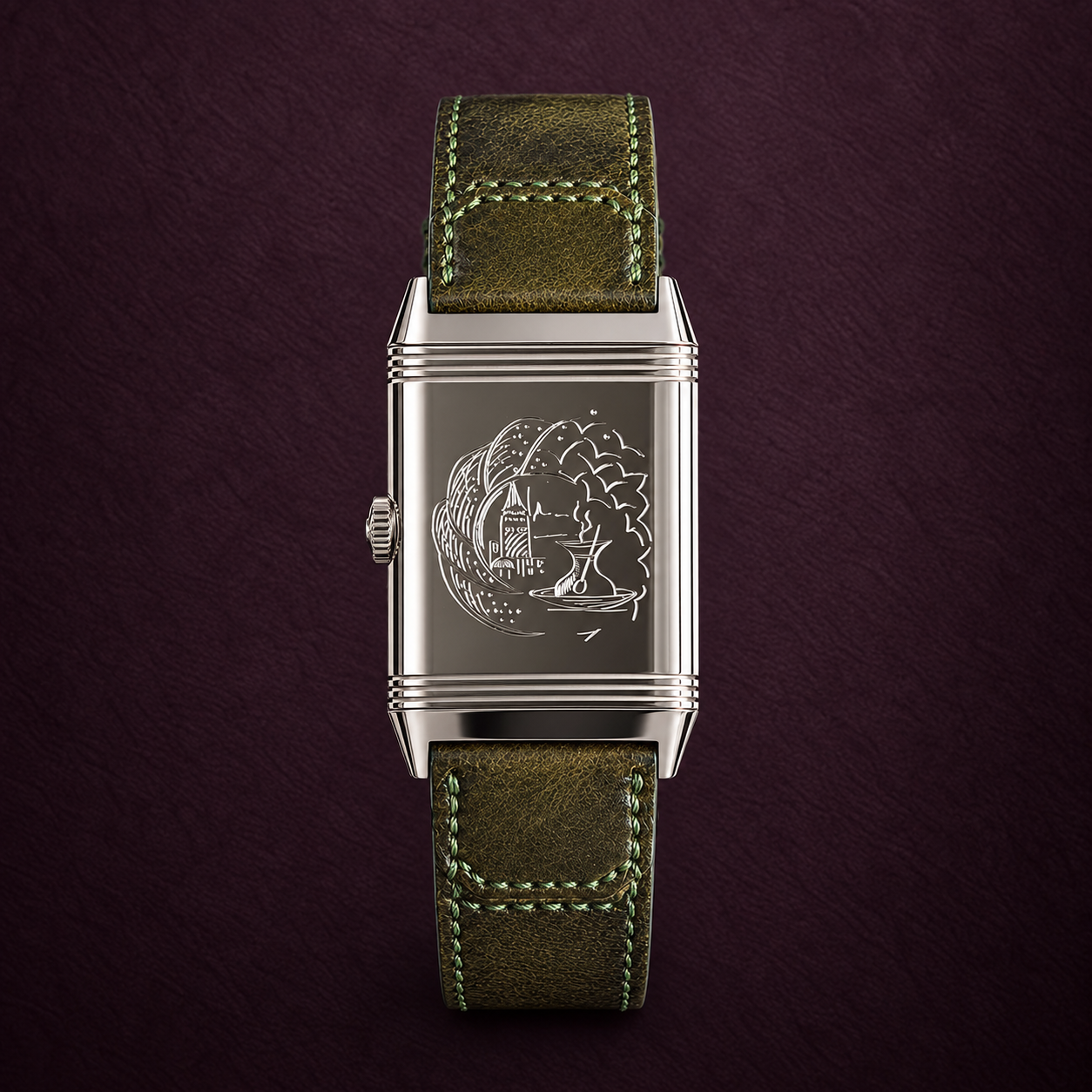
Edi and Deni wanted an engraving that meant something, not a postcard — no bridge, no mosque, no obvious skyline. Istanbul jeweler Sevan Bıçakçı turned a conversation about tea, simit, and seagulls by the Bosphorus into three tiny works of art, and one of them became theirs.
Read the Full StoryShowing 3 of 43 stories
View All the StoriesAdd Your Watch
Every submission is read by hand before it appears on the site, so nothing appears without a real person approving it first.